
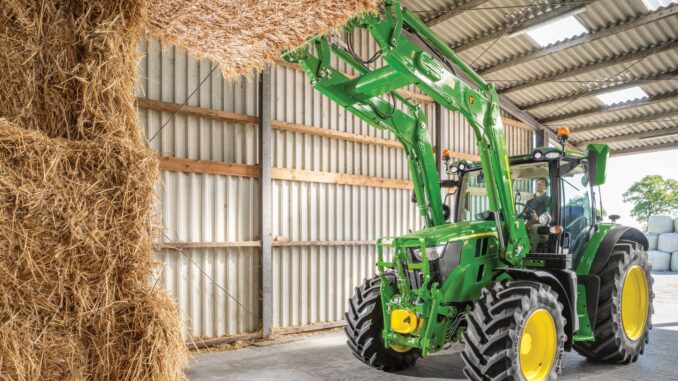
The John Deere 2210 is a sub-compact utility tractor built for homeowners and acreage owners who need more capability than a lawn tractor but still want a machine that is manageable for routine DIY care. It combines a diesel engine, hydrostatic drive, hydraulic system, PTO capability, and compact chassis, so the repair approach is broader than on a simple riding mower.
This guide is written for USA and Canada owners who want practical help with John Deere 2210 repair, troubleshooting, maintenance, parts lookup, diagrams, and manuals. It focuses on symptom-first diagnosis, realistic DIY repairs, service intervals, and the common parts owners usually buy first.
John Deere 2210 model overview
The John Deere 2210 sits in Deere’s 2000 Series compact utility tractor range and is best understood as a small diesel CUT rather than a lawn tractor. That means owners are dealing with engine, fuel, cooling, transmission/hydraulic, front axle, electrical, and PTO-related systems in one machine.
Typical use cases include mowing larger properties, light loader work, garden prep, material handling, towing, and seasonal property maintenance. Because the tractor uses a hydrostatic transmission/hydraulic system with separate filters and fluid requirements, good maintenance has a direct effect on drive performance, hydraulic response, and long-term reliability.
General overview of the John Deere 2210
The most important systems on the John Deere 2210 are the diesel engine and fuel system, the air intake and cooling system, the transmission/hydraulic system, the front axle, and the electrical starting circuit. When owners report a no-start, weak drive, overheating, or poor PTO performance, the fault usually sits in one of those groups rather than in a single random component.
Common service parts owners regularly buy for this model include engine oil filter M806418, fuel filter CH15553, primary air filter M113621, secondary air filter M123378, hydraulic oil filter LVA12812, transmission oil filter AL221066, filter kit LVA21196, ignition switch LVA803436, battery MCYP25876, and filler cap AM123508.
John Deere 2210 troubleshooting approach
The best way to diagnose a John Deere 2210 is to start with the symptom the owner actually sees: slow cranking, no start, low power, weak hydraulics, overheating, fluid leaks, abnormal vibration, or poor mowing results. That approach prevents unnecessary parts swapping and usually narrows the problem to fuel delivery, electrical supply, filtration, hydraulic restriction, or basic wear items.
Main symptom groups for this tractor are starting issues, running issues, cut-quality or PTO issues, vibration and noise, overheating and leaks, transmission or drive problems, and electrical or safety-switch faults. Organizing repair work by those categories makes it much easier to decide what can be checked at home and what should go to a Deere dealer or diesel-equipped repair shop.
Emergency John Deere 2210 repair needs
Some John Deere 2210 problems need immediate attention because they create a safety risk or can damage expensive assemblies quickly. Stop using the tractor if it has major oil loss, coolant loss, strong vibration, burning smells, charging failure, hydraulic starvation, steering-related front axle issues, or a PTO/driveline condition that causes abnormal noise under load.
John Deere 2210 starting issues
A starting problem usually shows up as no crank, slow crank, or crank-without-start. It matters because repeated cranking can flatten the battery, overheat wiring, and mask the real issue if the tractor also has fuel or safety-circuit faults.
-
Common causes: weak battery, dirty terminals, failed ignition switch, fuel restriction, air in fuel system, bad key switch, or safety interlock faults.
-
Basic checks: inspect battery connections, confirm battery condition, verify fuel supply, listen for normal cranking speed, and check whether the issue changes with PTO or range controls repositioned.
-
Park safely, remove the key, and inspect battery terminals for corrosion or looseness.
-
Confirm there is clean diesel fuel in the tank and the filter service is not overdue.
-
Check whether the key switch feels normal and whether dash lights behave consistently.
-
Re-try starting only after the safety controls and battery connections have been checked.
John Deere 2210 cut-quality and PTO problems
On a John Deere 2210 used for mowing, poor cut quality often appears as uneven grass height, ragged tips, clumping, or weak deck performance. These symptoms matter because they can point to dull blades, belt slip, PTO engagement issues, or deck setup faults rather than an engine problem.
-
Common causes: dull or bent blades, worn deck belt, plugged underside of deck, wrong tire pressure, poor deck leveling, or low engine speed under load.
-
Basic checks: inspect blades, clean deck buildup, confirm tire pressures, verify full PTO engagement, and check for obvious belt wear before replacing harder-to-reach parts.
-
Shut the tractor off and remove the key before inspecting the deck area.
-
Check the blade edges and look for bends or impact damage.
-
Clean packed grass from the deck shell and discharge area.
-
Confirm the PTO engages cleanly and the belt is not glazed or frayed.
John Deere 2210 vibration and noise
Excess vibration on a John Deere 2210 is never something to ignore. Strong vibration can turn a simple blade, driveline, or mounting problem into bearing, shaft, or housing damage if the tractor keeps working under load.
-
Common causes: bent blades, loose hardware, worn PTO components, damaged driveline parts, wheel issues, or debris wrapped around rotating parts.
-
Basic checks: stop immediately, inspect rotating components, look for fresh metal marks, and do not continue operating until the source is identified.
-
Shut down as soon as abnormal vibration starts.
-
Inspect blades, driveline areas, and visible hardware for looseness or impact damage.
-
Check tires and wheels for obvious damage or missing hardware.
-
Restart only if the source is found and corrected.
John Deere 2210 overheating and leaks
Overheating or fluid leakage can damage the John Deere 2210 faster than many owners expect. The cooling system capacity is modest at about 3 L, and the engine crankcase, hydraulic system, and front axle all depend on clean fluid at the correct level.
-
Common causes: low coolant, blocked radiator fins, engine oil loss, hydraulic leakage, loose hose clamps, or neglected fluid service.
-
Basic checks: inspect levels cold, clean debris from cooling surfaces, look under the machine for fresh leaks, and verify filter changes are current.
-
Let the tractor cool fully before opening the cooling system.
-
Check coolant level and inspect hoses and clamps.
-
Check engine oil, hydraulic/transmission oil, and front axle oil levels.
-
Clean radiator and screen areas before assuming a deeper cooling fault.
John Deere 2210 transmission and drive problems
Drive complaints on a John Deere 2210 often show up as weak pulling power, sluggish motion, poor hydraulic response, or unusual hydrostatic noise. Because the hydraulic and transmission functions depend on clean fluid and correct filtration, delayed service can quickly make the machine feel weak or inconsistent.
-
Common causes: overdue hydraulic filter changes, wrong fluid, low hydraulic level, contamination, or internal hydrostatic wear.
-
Basic checks: verify fluid type and level, inspect for leaks, confirm service history, and note whether the problem worsens hot, cold, uphill, or under PTO load.
-
Confirm the tractor has the correct Low Viscosity Hy-Gard fluid in the system.
-
Check for overdue hydraulic and transmission filter service.
-
Inspect underneath for leaks around filters, lines, and housings.
-
If performance remains weak after fluid and filter checks, internal diagnosis is usually dealer-level work.
John Deere 2210 electrical problems
Electrical faults on the John Deere 2210 can affect starting, lighting, charging, and interlock behavior. Many are simple connection or switch issues, but owners should be cautious because repeated testing with poor connections can create heat damage in terminals and wiring.
-
Common causes: weak battery, bad battery cables, failed ignition switch, bulb failure, corroded connectors, or charging-system issues.
-
Basic checks: inspect terminals, verify battery condition, check fuse and connector condition, and replace failed bulbs with the correct part number.
-
Disconnect the battery before major electrical work.
-
Inspect the ignition switch and cable ends for looseness or corrosion.
-
Replace failed lamps with the matching Deere numbers where possible.
-
If the tractor repeatedly drains batteries, test the charging system rather than guessing.
DIY or dealer for the John Deere 2210
The John Deere 2210 is very DIY-friendly for routine service and straightforward wear-item replacement, but the line is usually crossed when the job involves internal hydraulic diagnosis, engine internals, front axle teardown, or electrical testing beyond basic continuity and battery checks. Owners comfortable with compact tractor maintenance can do a lot at home, but hydrostatic and diesel-fuel-system faults still justify dealer support in many cases.
Good DIY jobs on a John Deere 2210
-
Engine oil and filter changes.
-
Fuel and air filter service.
-
Hydraulic and transmission filter replacement where access is straightforward.
-
Battery replacement, lamp replacement, and terminal cleaning.
-
Greasing fittings and changing front axle oil.
Advanced DIY or dealer jobs on a John Deere 2210
-
Hydraulic performance diagnosis after filter and fluid service does not fix the problem.
-
Fuel-system bleeding or injection-related diagnosis on a hard-starting diesel.
-
Front axle seal or internal axle repairs.
-
Wiring-harness tracing, charging-system faults, and intermittent safety-circuit problems.
Skill level guide
-
Beginner: engine oil, air filter, battery, bulb, and grease-point service.
-
Intermediate: fuel filter service, hydraulic filter changes, blade service on attached mower equipment, and front axle oil changes.
-
Advanced: hydrostatic diagnosis, electrical tracing, engine compression or injection diagnosis, and drivetrain teardown.
John Deere 2210 parts, OEM numbers, and ordering details
Before ordering John Deere 2210 parts, gather the full model name, the Product Identification Number (PIN), any attachment model number, and the engine model or serial details when the repair touches engine-specific components. That matters because compact tractors often have serial-range breaks, attachment-specific variations, and filter or switch differences that look identical online until the PIN is checked.
OEM parts are the safer choice for filters, belts, switches, seals, and other fit-sensitive or safety-related items, while good aftermarket options can make sense for batteries, some blades, lamps, and other commodity-style service parts if the cross-reference is exact. For a machine like the John Deere 2210, buying by appearance alone is a common ordering mistake.
John Deere 2210 diagrams and manuals
The best source for a John Deere 2210 operator’s manual, parts catalog, and technical publications is John Deere’s official manuals portal, which allows owners to download, view, or purchase operator, technical, and parts publications.
Useful sources include:
-
John Deere Manuals and Training for official operator’s manuals, technical manuals, and publications lookup.
-
John Deere 2210 Quick Reference Guide PDF for service parts, fluids, capacities, and common electrical part numbers.
-
John Deere 2000 Series 2210 Filter Overview PDF for filters, intervals, and major capacities.
-
John Deere Compact and Utility Tractor Parts for parts support, seasonal maintenance guidance, and Deere parts access.
Use the quick-reference PDFs for routine ordering and service intervals, then move to the official manuals portal when you need model-specific operating procedures, illustrated parts breakdowns, or deeper repair information. For anything serial-number sensitive, the dealer parts counter is still one of the fastest ways to confirm the exact fit.
How to locate John Deere 2210 model, PIN, and engine numbers
These numbers matter because they help match the correct parts, serial-range updates, and service instructions. On compact tractors, the wrong filter, switch, belt, or attachment part often comes from skipping the identification step.
-
Park the tractor on level ground, shut it down, and clean dirty identification areas before reading tags.
-
Locate the tractor Product Identification Number tag on the machine frame area indicated by Deere documentation or dealer support for the 2210 family.
-
Record the full model designation exactly as shown, including any serial or PIN suffix details.
-
Locate the engine model and serial information on the engine data label before ordering engine-specific parts.
-
If the tractor has a mower deck or other attachment, record the deck or attachment model and serial separately because those parts often do not cross over by tractor model alone.
Buying John Deere 2210 parts online and in stores
The best buying strategy is to confirm the Deere OEM number first, then compare sellers only after the part number is locked in. That avoids ordering by generic product title, which is one of the main reasons owners end up with the wrong filter, switch, or electrical part.
-
Online: use Deere part numbers, verify serial compatibility, and compare kit pricing for routine service items such as filter pack LVA21196.
-
Dealer counter: best for PIN-sensitive parts, hydraulic components, and confusing supersessions.
-
Retail stores: acceptable for fluids, batteries, and some consumables only when the packaging clearly cross-references the John Deere 2210 or the exact OEM number.
Useful links:
Step-by-step John Deere 2210 fitting guide
How to change the John Deere 2210 engine oil and filter
This job helps prevent hard starting, internal wear, and premature engine damage. Deere lists an engine oil capacity of about 2.1 L with filter and calls for an initial change at 50 hours, then every 200 hours.
-
Run the engine briefly to warm the oil, then park safely and remove the key.
-
Place a drain pan under the drain point, remove the drain plug, and let the oil fully drain.
-
Remove the old oil filter M806418, oil the gasket on the new filter, and install it hand-tight per normal filter practice.
-
Refit the drain plug and add the correct engine oil gradually until the dipstick reads correctly.
-
Start the engine, check for leaks, shut down, and recheck the level after the oil settles.
How to replace the John Deere 2210 fuel filter
A fresh fuel filter helps with hard starting, low power, and rough running caused by restricted fuel flow. Deere lists fuel filter CH15553 and a 500-hour replacement interval.
-
Shut the tractor down and clean the area around the filter before opening the fuel system.
-
Remove the old filter carefully so dirt does not enter the fuel line or housing.
-
Install the new CH15553 filter in the correct orientation.
-
Recheck fittings and watch for leaks on restart.
-
If the engine still cranks excessively or runs poorly, further bleeding or fuel-system diagnosis may be needed.
How to service the John Deere 2210 air filters
Air filter service protects engine power and reduces black smoke or restricted running. Deere lists primary filter M113621 and secondary filter M123378 in the quick reference materials.
-
Open the hood and access the air cleaner housing.
-
Remove the primary filter and inspect it for heavy dust loading or damage.
-
Replace the primary element if needed, and inspect the secondary element without unnecessarily contaminating it.
-
Clean the housing sealing surfaces and reinstall carefully so the filter seats fully.
-
Inspect intake hoses and clamps while you are there, because loose intake plumbing can mimic filter problems.
How to replace the John Deere 2210 hydraulic filter
Hydraulic filter service helps preserve drive power, steering response, and hydraulic performance. Deere lists hydraulic oil filter LVA12812, transmission/hydraulic fluid capacity of about 13 L, and an initial 50-hour then 200-hour service interval.
-
Park the tractor safely and make sure the area around the filter is clean.
-
Position a drain pan because some fluid loss is normal during filter removal.
-
Remove the old filter, confirm the old gasket came off, and install the new LVA12812 filter.
-
Top off with the correct Low Viscosity Hy-Gard fluid if needed and recheck the level.
-
Restart the tractor, cycle hydraulic functions if equipped, and inspect for leaks or delayed response.
Maintenance to prevent repeat John Deere 2210 problems
Regular maintenance is what keeps a John Deere 2210 from developing the same starting, running, and hydraulic complaints over and over. On this model, skipped filter changes and neglected cooling cleanup can quickly show up as low power, hot running, or weak hydrostatic performance.
Focus areas include:
-
Starting reliability: keep the battery, terminals, ignition switch, and fuel filter in good condition.
-
Engine performance: inspect air filters and intake hoses, and change oil on schedule.
-
Overheating prevention: keep cooling surfaces clean and coolant at the correct level.
-
Drive performance: maintain the correct hydraulic fluid and filter intervals.
-
Electrical reliability: replace weak bulbs, secure connectors, and do not ignore slow-crank symptoms.
John Deere 2210 maintenance schedule
The official quick-reference material gives a solid baseline for year-round John Deere 2210 maintenance. The intervals below should still be checked against the operator’s manual for your exact machine and attachment setup.
Daily or before each use
-
Check engine oil level.
-
Inspect for fluid leaks and obvious loose hardware.
-
Check fuel level and general machine condition.
-
Inspect radiator and screen areas for debris.
After the first 50 hours
-
Change engine oil and engine oil filter.
-
Replace hydraulic oil filter LVA12812.
-
Replace transmission oil filter AL221066 where applicable per Deere filter overview.
-
Change transmission/hydraulic oil if required by the official service chart being used for your machine configuration.
Every 200 hours or yearly
-
Change engine oil and filter.
-
Replace hydraulic oil filter.
-
Change transmission/hydraulic oil and service related filtration per Deere guidance for the 2210 quick-reference schedule.
-
Grease fittings as required during normal service intervals.
Every 500 hours
-
Replace fuel filter CH15553.
-
Check primary air filter M113621 and replace as needed.
-
Check intake hoses and clamps.
-
Change front axle oil; Deere lists this every 500 hours or annually.
Every 2 years or 2000 hours
-
Flush and replace coolant with the correct Deere coolant specification noted in maintenance guidance.
Seasonal checklist
-
Spring: inspect fluids, clean radiator area, test battery, and inspect belts, hoses, tires, and PTO-related items before heavy use.
-
Mid-season: recheck filters, grease points, and hydraulic response if the tractor is mowing or hauling often.
-
Fall or off-season: fix leaks, change overdue fluids, charge the battery, and store the tractor clean rather than packed with debris.
Repair, upgrade, or replace the John Deere 2210?
For many owners, the John Deere 2210 is worth repairing when the machine is structurally sound and the issue is limited to maintenance items, electrical parts, filters, tires, deck wear parts, or accessible hydraulic service. The replace-or-upgrade decision usually becomes more serious when repairs stack into engine, hydrostatic, axle, and attachment needs at the same time.
Repair if
-
The problem is a routine service item, switch, battery, filter, lamp, belt, or leak caught early.
-
The tractor starts, drives, and hydraulics function normally after maintenance corrections.
-
You already have compatible attachments and the tractor still fits your property needs.
Upgrade if
-
You need more lift, PTO capability, or hydraulic capacity than the 2210 comfortably provides.
-
Repeated attachment changes or heavier workloads are pushing the tractor beyond its ideal homeowner role.
Replace if
-
The tractor has severe engine, hydrostatic, and axle issues together.
-
Repair costs are approaching the value of a sound used replacement machine in your area.
-
Parts confusion, poor maintenance history, and multiple neglected systems make the project uneconomical.
John Deere 2210 FAQ
1. Why will my John Deere 2210 not start?
The usual starting pattern is either no crank, slow crank, or normal cranking without firing. Start with the battery, cable condition, key switch behavior, fuel supply, and overdue filter service before assuming a major diesel problem.
2. Why does my John Deere 2210 crank slowly?
Slow cranking usually points to a weak battery, poor cable connections, or corrosion at the terminals. A battery or connection issue is far more common than an internal engine fault on a tractor that was running normally before storage.
3. Why does my John Deere 2210 crank but not fire?
If the starter turns the engine normally but it will not fire, suspect fuel delivery, stale or contaminated diesel, filter restriction, or air-related service issues first. A clogged fuel filter or neglected maintenance is a common place to start on a compact diesel.
4. What battery does a John Deere 2210 use?
Deere’s quick-reference guide lists battery part number MCYP25876 for the 2210. Always compare the physical size, terminal layout, and exact application before ordering from an aftermarket supplier.
5. What is the John Deere 2210 engine oil filter part number?
The engine oil filter listed for the 2210 is M806418. Deere’s quick-reference and filter-overview documents both show that filter as part of the routine engine oil service schedule.
6. How much engine oil does a John Deere 2210 take?
Deere lists the crankcase with filter at about 2.1 L, which is roughly 2.2 qt in the quick-reference sheet. Fill gradually, then verify on the dipstick rather than relying only on the bottle measurement.
7. What hydraulic fluid does the John Deere 2210 use?
The quick-reference guide lists John Deere Low Viscosity Hy-Gard for the transmission and hydraulic system. Deere gives the approximate capacity as 13.0 L, but level should always be confirmed on the machine after service.
8. What is the John Deere 2210 hydraulic filter part number?
The hydraulic oil filter is listed as LVA12812. Deere says to replace it initially after 50 hours and then every 200 hours.
9. What is the John Deere 2210 transmission filter part number?
Deere’s 2000 Series 2210 filter overview lists transmission oil filter AL221066. That is one reason owners should check the Deere documents rather than guessing from generic online listings.
10. What fuel filter does a John Deere 2210 use?
The fuel filter listed by Deere is CH15553. The same documents show a 500-hour replacement interval.
11. What air filters fit the John Deere 2210?
Deere lists primary air filter M113621 and secondary filter M123378 for the 2210. The primary element is checked at 500 hours, while the secondary is replaced as needed.
12. Why is my John Deere 2210 losing power?
Low power usually comes from restricted air or fuel flow, overdue service, overheating, or hydraulic load dragging the tractor down. Start with filters, cooling cleanup, and fluid checks before assuming a deeper engine problem.
13. Why is my John Deere 2210 overheating?
The tractor can run hot if the radiator area is packed with debris, coolant is low, or there is a leak that went unnoticed. Because the cooling system is relatively small, even modest fluid loss can matter.
14. Why is there oil under my John Deere 2210?
Oil under the tractor could be engine oil, hydraulic/transmission fluid, or front axle oil. Identify the fluid source before ordering parts, because the machine has several separate service systems with different filters and lubricants.
15. Why does my John Deere 2210 move weakly or feel sluggish?
Weak motion often points to hydraulic or hydrostatic service issues, especially low fluid level, wrong fluid, overdue filter replacement, or contamination. If fresh service does not improve the tractor, deeper hydrostatic diagnosis is usually needed.
16. Why are my John Deere 2210 hydraulics slow?
Slow hydraulics often track back to fluid condition, fluid level, or filter restriction. Heat-related changes in performance can also help separate a basic service issue from internal hydraulic wear.
17. Can I use aftermarket filters on a John Deere 2210?
You can use aftermarket filters only if the cross-reference is exact and the supplier is reputable. OEM is still the safer choice for fit-sensitive service parts, especially when the tractor’s hydraulic performance depends on the correct filter specification.
18. Where can I get a John Deere 2210 operator’s manual?
The official source is Deere’s Manuals and Training page, where operator’s manuals, technical manuals, and parts publications can be searched and purchased or downloaded where available. That is the best place to start before using third-party document sites.
19. Where can I find John Deere 2210 parts diagrams?
Start with Deere’s official manuals and parts resources, then use the model quick-reference guide for the most commonly ordered items. For serial-range questions, the dealer parts counter is often faster than trying to decode a generic marketplace listing.
20. Is the John Deere 2210 a good DIY tractor to maintain?
Yes, for routine service and straightforward wear items it is a very manageable machine for a careful owner. Oil service, filters, battery work, and basic inspections are realistic DIY jobs, while hydrostatic or internal diesel diagnosis is a different level.
21. How often should I change the John Deere 2210 engine oil?
Deere lists an initial engine oil and filter change at 50 hours and then every 200 hours after that. Owners who use the tractor lightly should still avoid stretching service far past the annual mark.
22. How often should I change the John Deere 2210 hydraulic filter?
The hydraulic filter service interval is initially at 50 hours and then every 200 hours. Staying on top of that interval is important because weak drive and hydraulic complaints often start with neglected service.
23. How often should I change the John Deere 2210 fuel filter?
Deere lists the fuel filter replacement interval at 500 hours. If fuel quality is poor or the tractor has sat for long periods, owners often inspect the fuel system earlier rather than waiting for a running problem.
24. How often should I change the John Deere 2210 front axle oil?
The quick-reference guide says front axle oil should be changed every 500 hours or annually. That service is easy to overlook, but it matters on a compact tractor that does loader work or frequent 4WD use.
25. How often should I replace the John Deere 2210 coolant?
Maintenance guidance referenced through Deere-compatible procedures shows coolant service at 2000 hours or every two years. Coolant should also be addressed sooner if contamination, low freeze protection, or visible leakage is found.
26. Why is my John Deere 2210 vibrating while mowing?
Vibration while mowing usually points to bent blades, damaged deck hardware, debris wrapped around rotating parts, or a driveline issue on the mower setup. Stop immediately and inspect before continuing because vibration can damage bearings and spindles.
27. Why does my John Deere 2210 cut unevenly?
An uneven cut usually comes from blade wear, deck buildup, tire-pressure differences, or deck adjustment problems rather than from the tractor engine itself. Always inspect the easy mechanical causes before replacing parts.
28. Why is my John Deere 2210 smoking?
Smoke can be linked to restricted air flow, overfueling symptoms, contaminated fuel, overheating, or oil-related issues. Start with air filter inspection, cooling cleanup, and basic fluid checks before moving into more advanced diesel diagnosis.
29. Why does my John Deere 2210 keep killing batteries?
Repeated battery failure can come from a weak battery, corroded cable ends, loose terminals, or a charging issue. Replacing the battery without checking charging performance often only delays the problem.
30. Can I buy a John Deere 2210 filter kit?
Yes. Deere lists filter kit LVA21196, which includes engine oil filter M806418, fuel filter CH15553, hydraulic filter LVA12812, and primary air filter M113621.
31. What lights fit the John Deere 2210?
The Deere quick-reference guide lists AM120326 for the left headlight, AM120327 for the right headlight, AM879645 for the left tail light, and AM879646 for the right tail light. Matching the exact part number is the easiest way to avoid fitment mistakes.
32. Is OEM better than aftermarket for John Deere 2210 parts?
For filters, switches, and other fit-sensitive or system-critical parts, OEM is usually the safer choice. Aftermarket can be acceptable for batteries and some consumables, but only when the cross-reference is exact.
33. What should I check before ordering John Deere 2210 parts online?
Check the full model name, PIN, engine information for engine-related parts, and the attachment model if the repair is on the deck or other implement. Ordering without those details is one of the main ways owners end up with the wrong part in hand.
34. When is a John Deere 2210 repair no longer worth it?
A repair becomes harder to justify when the tractor has stacked problems across the engine, hydrostatic system, axle, and attachments at the same time. If several major systems are worn and the machine also has a poor maintenance history, replacement may make more sense.
John Deere 2210 common engine overheating causes
On a John Deere 2210, engine overheating is almost always linked to blocked radiator/screen airflow, low or incorrect coolant, leaks or hose issues, or a failing thermostat/water pump, with heavy debris buildup being the number one real‑world cause.
Most common 2210 overheating causes
-
Radiator and screen packed with debris
Dust, grass, weeds, and chaff plug the fine passageways and the internal screen in front of the radiator, so air cannot move through and carry heat away. Owners often find that blowing the fins from the front is not enough; the grille and side panels may need to come off so the radiator stack can be blown out properly from the fan side. -
Low coolant level or wrong coolant mix
If coolant is low from small leaks or was filled incorrectly, there is not enough liquid to move heat away from the engine, and hot spots form in the head and block. A weak mixture or mixed coolant types also reduces heat transfer and can encourage internal scale that narrows coolant passages. -
Thermostat sticking or not fully opening
A thermostat that only cracks open or sticks closed restricts flow through the radiator so the coolant cannot shed heat fast enough under load, especially when mowing or using PTO implements. Overheating that happens mainly under sustained work but not at light load is a classic symptom of a partially opening thermostat. -
Failing or inefficient water pump
If the pump impeller is corroded, loose on the shaft, or the bearings are failing, coolant circulation falls off and hot spots appear even though the radiator and coolant look fine. In some cases there is also seepage or noise from the pump before a total failure. -
Fan, shroud, or belt problems
On any compact tractor, a loose/worn fan belt or damaged fan/shroud cuts airflow across the radiator stack and reduces cooling efficiency. Even if coolant is full and clean, poor airflow will let temperatures climb rapidly when the tractor is worked hard. -
General neglect: filters and heavy loading
Running a 2210 hard with clogged air and oil filters increases engine load and heat output, making marginal cooling issues show up as overheating. Overworking the tractor in too high a range or with a bogged engine (sustained black smoke) can also drive coolant temperatures up, especially if the radiator is already dusty.