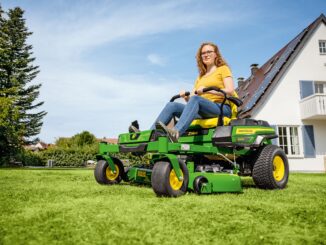
Torque and horsepower are key measures of compact tractor performance, with torque providing raw pulling force and horsepower indicating work rate over time. In compact tractors, torque often matters more for real-world tasks like plowing or loader work, while horsepower shines in sustained high-speed operations.
Core Definitions
Horsepower (HP) measures how quickly work gets done, calculated as torque multiplied by engine speed (RPM) divided by 5252: HP=Torque×RPM5252.
Torque, in foot-pounds (ft-lbs) or Newton-meters (Nm), is the rotational force for overcoming resistance, like starting a heavy load or digging into soil.
They complement each other—high torque without HP limits speed, and vice versa stalls under load.
Tractor Applications
Torque excels in low-RPM tasks: plowing, hauling, or lifting on uneven ground, preventing stalls in dense material.
Horsepower drives PTO tools (e.g., mowers, tillers) or road transport, maintaining speed across acres.
Compact tractors (under 50 HP) prioritize low-end torque curves for small farms, where lugging power beats peak speed.
Choosing for Performance
Look beyond peak HP—seek torque at usable RPMs (e.g., 1,200-2,000) and “backup torque” percentage for sustained pull.
A 45 HP tractor with strong torque often outperforms a 50 HP model in heavy soil.
Balance both with tractor weight, tires, and hydraulics for optimal small-farm efficiency.
Defining the Fundamentals: What Are We Measuring?
At its core, the difference between torque and horsepower is the difference between force and the rate at which that force is applied.
Torque is a measure of rotational force. In the context of an engine, it is the twisting force generated by the crankshaft as the pistons fire. It is typically measured in pound-feet (lb-ft) or Newton-meters (Nm). Imagine trying to loosen a stubborn bolt with a wrench. The force you apply to the handle, multiplied by the length of the wrench, creates torque.
If the bolt is rusted shut, you need high torque to break it free. In a tractor, torque is the raw pulling power. It is what allows the machine to push a heavy blade through dense clay, pull a loaded wagon up a steep incline, or turn a large tiller through rocky ground.
Torque is the “muscle” of the engine. It is felt immediately when the throttle is opened and the load is applied. High torque at low RPMs is particularly valuable in agricultural settings where the engine rarely operates at redline but must constantly overcome resistance.
Horsepower, on the other hand, is a measure of power—the rate at which work is done. One horsepower is historically defined as the ability to lift 550 pounds one foot in one second. In modern engineering terms, it is a derived unit calculated from torque and engine speed (RPM).
The formula is straightforward: Horsepower=Torque×RPM5252 This equation reveals the intrinsic link between the two metrics. Horsepower tells us how fast the work can be accomplished. If torque is the strength to lift a heavy box, horsepower is the ability to lift that box quickly and repeatedly.
In a tractor, horsepower determines the maximum speed at which the machine can perform a task and how much work it can sustain over time without stalling. It dictates how fast a loader can raise a bucket, how quickly a mower deck can spin to cut thick grass, or how fast the tractor can travel down a road while pulling a trailer.
The relationship between the two
The interplay between torque and horsepower is best visualized through an engine’s performance curve. As engine speed (RPM) increases, torque typically rises to a peak and then falls off. Horsepower, however, continues to rise as long as the torque does not drop faster than the RPM increases.
Because horsepower is a function of both torque and RPM, an engine can produce high horsepower in two distinct ways: by generating massive torque at low speeds, or by generating moderate torque at very high speeds.
For compact tractors, the former is almost always the preferred characteristic. These machines are designed for heavy, slow work rather than high-speed racing. A diesel engine, which powers the vast majority of compact tractors, is engineered to produce a broad, flat torque curve.
This means that the engine delivers strong pulling power across a wide range of RPMs, particularly in the lower to mid-range. This is crucial because tractors often operate in “lug” conditions, where the load causes the engine speed to drop.
An engine with a flat torque curve will maintain its pulling force even as the RPMs dip, preventing the operator from having to constantly shift gears to keep the engine in its power band.
Conversely, a gasoline engine might have a peakier torque curve, requiring the operator to keep the engine spinning at higher RPMs to access its full power. While this might yield a higher peak horsepower figure on paper, it can result in a machine that feels sluggish when starting a heavy load from a stop.
Therefore, when evaluating a compact tractor, looking solely at the peak horsepower number can be misleading. A tractor with slightly lower peak horsepower but significantly higher low-end torque will often outperform a higher-horsepower competitor in heavy-duty applications like plowing or digging.
Torque: The Heavy Lifting
When we talk about the practical application of torque in a compact tractor, we are discussing the machine’s ability to handle resistance. This is the domain of ground engagement and hydraulic lifting.
Consider the task of tilling a field. The tiller blades encounter varying levels of resistance depending on soil moisture, compaction, and root density. As the blades hit a hard patch of clay, the resistance spikes.
If the tractor lacks sufficient torque, the engine will bog down, the RPMs will plummet, and the tiller will stall. The operator would be forced to reduce the depth of the cut or shift to a lower gear, slowing the entire operation.
A tractor with high torque output, however, will absorb this shock, maintaining its speed and depth with minimal fluctuation in engine speed. This “torque reserve” is what makes a tractor feel powerful and responsive.
Similarly, in loader work, torque is essential for breaking out material. When a bucket is filled with heavy dirt or gravel, the weight shifts the center of gravity and creates a moment arm that the hydraulic cylinders must overcome.
While the hydraulics provide the immediate lifting force, the engine must supply the torque to drive the hydraulic pump. If the engine cannot deliver enough torque, the hydraulic pressure drops, the lift speed slows, and the tractor may struggle to tilt the bucket back.
This is why compact tractors used for loading often feature engines with high torque ratings at low RPMs, allowing them to lift heavy loads smoothly without revving the engine to the limit.
Furthermore, torque is critical for traction. The amount of weight a tractor can transfer to its drive wheels is limited, but the torque applied to those wheels determines how effectively that weight is converted into forward motion.
Excessive torque without sufficient traction leads to wheel spin, wasting fuel and damaging the soil. However, adequate torque ensures that the tractor can utilize its weight efficiently to pull implements through tough terrain.
This is why many compact tractors feature four-wheel drive systems; the torque is distributed to all four wheels, maximizing the grip and allowing the engine’s full torque potential to be utilized for propulsion.
Horsepower: Speed and Sustained Work
While torque gets the job started, horsepower keeps it going. In the context of compact tractors, horsepower is the metric that defines the machine’s versatility and speed.
One of the primary applications where horsepower shines is in PTO (Power Take-Off) driven implements. The PTO shaft transfers engine power directly to attachments like rotary mowers, balers, and wood chippers.
These implements require a constant, high-speed rotation to function correctly. A rotary mower, for instance, needs the blades to spin at a specific speed to cut grass cleanly. If the engine lacks sufficient horsepower, the blades will slow down when hitting thick grass, resulting in a ragged cut and potential clogging.
Here, horsepower ensures that the implement maintains its operating speed regardless of the load.
Horsepower also dictates the tractor’s transport speed. While a tractor is rarely used for highway driving, there are times when moving between fields or around a large property requires traveling at 15 to 20 miles per hour.
A tractor with higher horsepower can maintain these speeds while towing a trailer or running a rear blade without straining the engine. This is particularly important for operators who need to cover large areas efficiently. A machine with low horsepower might be capable of the work, but it will take significantly longer to complete the task, reducing overall productivity.
Moreover, horsepower is a key factor in hydraulic flow rates. Many modern compact tractors use the engine to drive a hydraulic pump that powers the loader, backhoe, and other auxiliary functions.
The flow rate of the hydraulic fluid (measured in gallons per minute) is directly related to the engine’s horsepower. Higher horsepower generally translates to faster hydraulic response times.
This means the loader can raise and lower more quickly, and the backhoe can dig with greater speed and precision. For operators who rely on frequent loader cycles, a higher horsepower rating can translate directly into time saved over the course of a day.
The Myth of “More is Better”
A common misconception among buyers is that a higher horsepower rating automatically equates to a better tractor. While horsepower is an important metric, it is not the sole determinant of performance. In fact, chasing the highest horsepower number can sometimes lead to a poor purchasing decision for specific applications.
Compact tractors are often sold with a range of engine options. A manufacturer might offer a 25-horsepower model and a 35-horsepower model. On paper, the 35-horsepower model seems superior.
However, if the 35-horsepower engine achieves that power through higher RPMs and has less low-end torque than the 25-horsepower engine, it may actually perform worse in heavy draft work like plowing or digging.
The larger engine might feel “peaky,” requiring the operator to keep the throttle wide open to access its power, leading to higher fuel consumption and increased wear on the engine components.
Additionally, a higher horsepower engine often comes with a larger physical footprint and increased weight. This can be a disadvantage for operators working in tight spaces, such as between garden beds or in a barn.
The added weight can also increase soil compaction, which is detrimental to crop growth in agricultural settings. For light-duty tasks like mowing a lawn or clearing light snow, a smaller, lower-horsepower tractor with a high-torque engine is often more maneuverable, fuel-efficient, and cost-effective.
It is also important to consider the transmission. A tractor with a high-horsepower engine paired with a weak transmission will not be able to utilize that power effectively. The transmission acts as the bridge between the engine and the ground.
If the gears cannot handle the torque, they will strip or fail. Conversely, a tractor with a robust transmission and a moderate-horsepower engine can often outperform a machine with a mismatched powertrain. Therefore, the quality of the drivetrain and the characteristics of the torque curve are just as important as the peak horsepower number.
Diesel vs. Gasoline: The Fuel Factor
The choice of fuel type also plays a significant role in the torque and horsepower dynamic. Almost all compact tractors are powered by diesel engines, and for good reason. Diesel engines are inherently more efficient at converting fuel energy into mechanical work, particularly at low RPMs.
They achieve this through a higher compression ratio and the nature of diesel combustion, which produces a longer burn duration and higher cylinder pressures.
As a result, diesel engines typically produce significantly more torque per cubic inch of displacement than gasoline engines. A 25-horsepower diesel engine will often produce more torque than a 35-horsepower gasoline engine.
This makes diesel the preferred choice for tractors that need to pull heavy loads or operate in demanding conditions. The torque curve of a diesel engine is also flatter, providing consistent power across a wider RPM range. This allows the operator to stay in a comfortable gear for longer periods without needing to shift constantly.
Gasoline engines, while generally lighter and cheaper to purchase, tend to have a narrower power band. They often require higher RPMs to develop their peak torque and horsepower. While they can be suitable for light-duty tasks like mowing or light loader work, they are less ideal for heavy draft work.
Furthermore, gasoline engines are generally less fuel-efficient under heavy load, which can increase operating costs over time. For a compact tractor intended for serious agricultural or construction work, the diesel engine’s superior torque delivery and fuel economy usually outweigh the initial cost savings of a gasoline model.
Selecting the Right Machine: A Practical Guide
When choosing a compact tractor, the decision should be driven by the specific tasks the machine will perform. There is no single “best” combination of torque and horsepower; rather, there is an optimal balance for each use case.
For heavy draft work such as plowing, tilling, or deep digging, prioritize torque. Look for an engine that advertises high torque at low RPMs. The peak horsepower number is secondary here. A machine with a strong torque reserve will handle the variable resistance of the soil without bogging down. In this scenario, a smaller engine with a high torque output is often preferable to a larger, high-RPM engine.
For PTO-driven applications like mowing, baling, or wood chipping, horsepower becomes more critical. These implements require sustained power at a constant speed. A higher horsepower rating ensures that the PTO can maintain the necessary RPMs even under heavy load. If the primary use is mowing large acres of tall grass, a tractor with higher horsepower will cut faster and more efficiently.
For loader work, a balance is required. Torque is needed to break out material and lift heavy loads, but horsepower is necessary to cycle the hydraulics quickly and transport the load. A tractor with a broad torque curve and moderate-to-high horsepower is ideal. The ability to lift quickly and move the load without stalling is the hallmark of a well-balanced machine.
For transport and general utility, horsepower is the dominant factor. If the tractor will spend most of its time driving between locations, towing trailers, or performing light grading, a higher horsepower engine will provide the speed and responsiveness needed to complete tasks efficiently.
It is also worth considering the transmission type. Hydrostatic transmissions, common in compact tractors, offer infinite speed control and are excellent for loader work and mowing.
However, they can be less efficient at high speeds compared to gear-drive transmissions. A gear-drive tractor with a high-torque engine might be more efficient for field work, while a hydrostatic model with a balanced powertrain might be better for mixed-use applications.
The Future of Compact Tractor Power
As technology advances, the relationship between torque and horsepower in compact tractors is evolving. Modern diesel engines are becoming increasingly sophisticated, utilizing technologies like common rail fuel injection and turbocharging to optimize the torque curve.
Turbochargers, in particular, allow engines to produce high torque at very low RPMs, effectively shifting the power band downward. This means that a smaller displacement engine can now produce the same torque as a larger naturally aspirated engine, improving fuel efficiency and reducing emissions.
Electric compact tractors are also beginning to emerge. Electric motors offer a unique advantage: they can deliver maximum torque instantly from zero RPM. This eliminates the need for a complex transmission to manage power delivery and provides unparalleled responsiveness.
While battery technology currently limits the runtime of electric tractors, their torque characteristics make them ideal for low-speed, high-load applications. As battery density improves, electric tractors could redefine the performance standards for compact machinery, offering torque levels that far exceed traditional diesel engines.
However, regardless of the power source, the fundamental physics remain the same. The ability to generate force (torque) and the rate at which that force is applied (horsepower) will continue to be the defining metrics of tractor performance. Understanding these concepts allows operators to make informed decisions, ensuring that the machine they choose is not just powerful on paper, but effective in the field.
Summary
In the debate between torque and horsepower for compact tractors, the answer is rarely a binary choice. Both metrics are essential, serving different but complementary roles in the machine’s operation. Torque provides the raw muscle needed to overcome resistance, making it the king of heavy draft work and low-speed power.
Horsepower provides the speed and endurance required for PTO operations, transport, and sustained work.
A successful tractor selection process involves looking beyond the headline horsepower number and analyzing the engine’s torque curve, the transmission capabilities, and the specific demands of the intended tasks. A machine with the right balance of torque and horsepower will not only perform its duties more efficiently but will also offer a smoother, more responsive driving experience.
Whether you are a farmer tilling acres of land, a landscaper maintaining a golf course, or a homeowner clearing a driveway, understanding the nuances of these two power metrics is the first step toward unlocking the full potential of your compact tractor. By aligning the machine’s power characteristics with your operational needs, you ensure that your investment delivers maximum value, productivity, and reliability for years to come.