
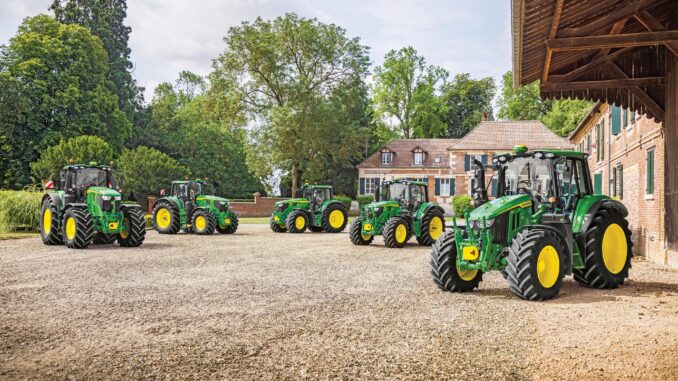
The John Deere 4520 is a compact utility tractor covered in John Deere’s North American operator’s manual for the 4120, 4320, 4520, and 4720 series, with 4520 models identified by PIN 650001 and up. It is aimed at owners who need a practical guide to John Deere 4520 repair work, troubleshooting, maintenance intervals, parts lookups, and the best places to find diagrams and manuals before ordering parts or starting a repair.
For USA and Canada owners, the John Deere 4520 sits in Deere’s compact utility range and combines diesel power, hydraulic capability, PTO-driven implements, and either eHydro or PowrReverser operating systems depending on configuration. That mix makes it useful for mowing, loader work, property maintenance, light ground-engaging tasks, and year-round acreage work, but it also means faults can come from several systems rather than one simple cause.
John Deere 4520 model overview
The John Deere 4520 is a compact utility tractor with a 2.4 L four-cylinder diesel engine and MFWD/4WD configuration information commonly listed in Deere reference materials and tractor databases for this model family. Deere’s operator manual structure for the 4520 also shows how the tractor is organized around engine, fuel, cooling, transmission/hydraulic, electrical, PTO, steering, brakes, and 3-point hitch service areas.
In practical owner terms, that means most John Deere 4520 problems fall into one of a few familiar categories: no-start or hard-start faults, poor running under load, hydraulic or drive complaints, PTO and attachment issues, and electrical or interlock problems. Starting diagnosis from the visible symptom usually saves time and prevents replacing good parts unnecessarily.
General overview of the John Deere 4520 systems
Within Deere’s compact utility lineup, the John Deere 4520 is a heavier-duty homeowner and acreage machine rather than a basic lawn tractor, so owners often work on service items that support both engine health and hydraulic performance. The official manual breaks service into engine, transmission, steering and brakes, electrical, and miscellaneous maintenance sections, which is a useful structure for any repair plan.
Key John Deere 4520 systems owners should understand include:
-
Engine and fuel system: diesel engine, air intake, fuel filter, fuel bleeding, cooling system, fan/alternator belt.
-
Hydraulic and transmission system: transmission/hydraulic oil, suction oil filter, front axle lubrication, MFWD-related checks.
-
Electrical system: battery, fuses, starter circuit, lighting, key switch, safety-system testing.
-
PTO and hitch system: rear PTO, optional mid-PTO functions, 3-point hitch, hydraulic selective control valves, drawbar and implement hookup points.
Common John Deere 4520 service parts owners regularly buy include the engine oil filter RE519626, transmission oil filter LVA13038, primary air filter AP33330, secondary air filter AP33331, fuel filter RE508202 or RE533026 depending on engine variant, fan/alternator V-belt DZ118732, wet-discharge battery TY26442, and home maintenance kit LVA21203.
John Deere 4520 troubleshooting approach
A good John Deere 4520 troubleshooting routine starts with the symptom the owner can see, hear, or feel, then narrows the problem down to the most likely system. Deere’s own operator material includes troubleshooting coverage for the engine, electrical system, brakes, steering, heater and air conditioning system, and machine error codes, which confirms that diagnosis should be symptom-led rather than purely part-led.
Main symptom groups for this tractor include:
-
Starting issues and cranking problems.
-
Running issues such as weak power, stalling, smoke, or rough operation.
-
Hydraulic, transmission, or drive complaints.
-
Electrical and safety-switch faults.
-
Overheating, cooling, and fluid-leak problems.
-
PTO, hitch, and implement-operation issues.
Emergency John Deere 4520 repair needs
Some John Deere 4520 faults should be dealt with immediately because they affect safe operation or can cause expensive secondary damage. Examples include fuel leaks, hydraulic leaks under pressure, overheating, failed steering or braking response, driveshaft or belt damage, and safety-system failures that allow the tractor to operate unpredictably.
John Deere 4520 starting issues
If the John Deere 4520 will not crank, cranks slowly, or starts and dies, the problem matters because repeated starting attempts can drain the battery, overheat cables, and mask the original fault. Diesel starting complaints also need prompt attention because air in the fuel system and poor voltage often create misleading symptoms.
Common causes:
-
Weak or failing battery TY26442.
-
Dirty or loose battery terminals.
-
Blown fuse or key-switch circuit fault.
-
Fuel filter restriction, using RE508202 or RE533026 depending on engine version.
-
Air in fuel system after filter service.
-
Safety interlock issue involving neutral-start or PTO/seat switch logic.
Basic checks:
-
Confirm the battery is fully charged and the terminals are clean and tight.
-
Verify the tractor is in the proper start condition and recheck PTO, seat, and neutral-start conditions.
-
Inspect fuses and obvious wiring connections.
-
Check whether the fuel filter is overdue and whether the machine recently ran out of fuel or had filter work done.
-
Bleed the fuel system only as described in the operator’s manual after fuel-side service.
John Deere 4520 running and power-loss problems
A John Deere 4520 that starts but lacks power, surges, smokes, or stalls under load can usually still move, which tempts owners to keep using it. That is risky because airflow restriction, fuel starvation, or cooling-system neglect can quickly turn a minor service issue into injector, belt, or overheating damage.
Common causes:
-
Clogged primary or secondary air filter.
-
Dirty radiator screen or cooling fins.
-
Restricted fuel filter.
-
Old engine oil or overdue oil filter service.
-
Fan/alternator belt wear or slipping.
Basic checks:
-
Clean the grille, side screens, radiator screen, and visible cooling fins.
-
Inspect the air filters and replace them if contaminated or overdue.
-
Check engine oil level and service history.
-
Inspect the fuel filter service date and fuel quality.
-
Look for a loose, cracked, or glazed V-belt DZ118732.
John Deere 4520 vibration and noise
Unexpected vibration on a John Deere 4520 can point to driveline, wheel, PTO, or engine-belt issues, and it should not be ignored because rotating components can damage surrounding parts if they fail completely. Noise under PTO load, steering movement, or road travel often helps narrow the fault to one area.
Common causes:
-
Loose wheel hardware.
-
Tire or wheel issues including pressure imbalance.
-
Belt wear or pulley problems.
-
PTO driveline or attached implement imbalance.
-
Front axle or steering linkage wear.
Basic checks:
-
Stop using the tractor until the source area is narrowed down.
-
Check visible wheel hardware, tire condition, and tire pressures.
-
Inspect the belt and pulleys at the front of the engine.
-
Disconnect PTO-driven implements and retest safely if appropriate.
-
Inspect steering and front axle linkage for looseness or damage.
John Deere 4520 overheating and leaks
Overheating and fluid leaks are high-priority John Deere 4520 faults because this tractor depends on clean airflow, correct coolant level, and healthy hydraulic lubrication to protect expensive components. A cooling or hydraulic issue that seems minor during light work can become serious fast when using a loader, mower, or PTO attachment.
Common causes:
-
Low coolant or neglected cooling system service.
-
Debris-packed radiator screen and fins.
-
Split radiator or fuel hoses.
-
Engine, transmission, or hydraulic filter sealing issues.
-
Front axle or hydraulic fluid leaks.
Basic checks:
-
Park safely and let the machine cool before opening any cooling components.
-
Check coolant level and visible hose condition.
-
Clean external debris from screens and radiator surfaces.
-
Trace leaks to the highest wet point before ordering parts.
-
Do not continue operating if hydraulic steering, braking, or cooling performance changes noticeably.
John Deere 4520 transmission and drive problems
Drive complaints on the John Deere 4520 may show up as weak travel, poor response, front-wheel-assist concerns, or unusual hydrostatic behavior on eHydro-equipped tractors. Because transmission and hydraulic functions are closely linked, low oil, overdue filter changes, or internal wear can show up in more than one way at the same time.
Common causes:
-
Low transmission/hydraulic oil.
-
Overdue hydraulic oil filter LVA13038.
-
Delayed transmission/hydraulic fluid service.
-
Front axle lubrication issue on MFWD machines.
-
Linkage or control adjustment issue requiring deeper diagnosis.
Basic checks:
-
Verify the correct fluid level before further use.
-
Review whether the 400-hour or annual transmission service has been missed.
-
Inspect for filter damage, leak points, or contaminated oil.
-
Check front axle oil level if MFWD performance seems abnormal.
-
Escalate to a dealer if drive performance changes suddenly or includes grinding, slipping, or fault-code behavior.
John Deere 4520 electrical problems
Electrical faults on the John Deere 4520 often show up as no-crank complaints, lighting failures, intermittent instrument issues, or false safety-switch symptoms. The manual includes fuse replacement, battery service, lighting service, and safety-system testing, which makes electrical diagnosis manageable for owners if they work methodically.
Common causes:
-
Weak battery or corroded terminals.
-
Blown fuses.
-
Faulty key or switch issue; Deere lists key RE183935 and rotary switch LVA21501 in the replacement guide.
-
Damaged lighting components such as headlight bulb R136239.
-
Interlock-system or seat/PTO/neutral-start switch faults.
Basic checks:
-
Start with battery state and cable cleanliness.
-
Inspect fuses before condemning larger components.
-
Verify whether the symptom changes with seat position, PTO position, or transmission range settings.
-
Replace simple failed lighting or key items only after matching the part number to the tractor’s configuration.
-
Hand complex harness or intermittent control faults to a dealer or experienced technician.
DIY or dealer for a John Deere 4520?
The John Deere 4520 is DIY-friendly for routine service and some straightforward repairs, but it crosses into dealer territory when hydraulic, transmission, steering, fuel-injection, or major electrical diagnosis is involved. The practical line is simple: if the repair requires only normal hand tools, safe access, and no calibration or system-splitting, many owners can do it; if it involves pressure testing, driveline teardown, or hidden electrical faults, dealer support is the safer route.
Good DIY jobs on a John Deere 4520
-
Engine oil and filter service using RE519626.
-
Air filter replacement using AP33330 and AP33331.
-
Fuel filter replacement followed by proper bleeding as instructed by Deere.
-
Cleaning screens, fins, battery terminals, and cab air filters if equipped.
-
Replacing battery, bulbs, key, or other basic service items.
Advanced DIY or dealer jobs on a John Deere 4520
-
Hydraulic oil and suction filter service if access, cleanliness, or fluid handling is a challenge.
-
Fan/alternator belt replacement when access is tight or belt routing is unclear.
-
Safety-switch diagnosis beyond basic continuity checks.
-
Steering, brake, MFWD, front axle, or hydrostatic/PowrReverser diagnosis.
-
Fuel-system issues beyond simple filter service and bleed procedure.
Skill levels
-
Beginner: air filters, battery service, screen cleaning, fluid-level checks, bulb replacement.
-
Intermediate: engine oil and filter service, fuel filter replacement, cab filter service, basic belt inspection, parts-number verification.
-
Advanced: hydraulic service, front axle service, electrical diagnosis, transmission-control issues, cooling-system repairs.
John Deere 4520 parts, OEM numbers, and ordering details
Before ordering John Deere 4520 parts, gather the full model name, the tractor Product Identification Number, the engine model and serial number, and any attachment or cab details that affect fit. Deere’s operator manual includes a Product Identification section and the replacement parts guide also splits some items by engine variant, which is a strong reminder that one 4520 may not use exactly the same fuel filter or related service parts as another.
OEM parts are usually the safest choice for John Deere 4520 belts, filters with engine-variant splits, electrical switches, and anything tied to safety or exact fit. Aftermarket parts can be reasonable for batteries, some filters, bulbs, and selected wear items, but only when the cross-reference clearly matches the tractor PIN, engine version, and equipment level.
John Deere 4520 diagrams and manuals
The best John Deere 4520 repair planning starts with the correct manual and parts diagrams, not a generic listing site. Deere provides both operator information and a model-specific replacement parts guide, and those two sources cover most owner-level service planning very well.
Useful sources:
-
John Deere operator’s manual — best for safety, controls, service intervals, maintenance procedures, and troubleshooting structure for the 4520 series.
-
John Deere 4520 replacement parts guide PDF — best for fast lookup of common service part numbers and interval notes.
-
John Deere compact utility tractor parts page — useful for current Deere parts and seasonal maintenance support.
-
Jensales John Deere 4520 service manual listing — useful when an owner needs a dedicated service manual source beyond the operator’s manual.
How to find John Deere 4520 serial and engine numbers
These numbers matter because John Deere 4520 parts can change by production range, configuration, or engine version, and Deere specifically includes a Product Identification section in the operator’s manual for this reason. Recording the PIN and engine details before ordering parts saves time and reduces the risk of buying the wrong filter, switch, or driveline component.
-
Park the tractor safely and shut it down fully before searching for tags.
-
Find the tractor Product Identification Number and record it exactly as shown in the machine identification area referenced by Deere.
-
Locate the engine identification information on the engine itself and note the full model and serial details.
-
Check whether the tractor has a cab, mid-PTO, loader, or other equipment that may affect parts choice.
-
Take clear phone photos of each tag before ordering online or visiting the dealer counter.
Buying John Deere 4520 parts online and locally
The best John Deere 4520 buying strategy is to confirm the OEM part number first, then compare seller availability. For serial-sensitive items, the Deere dealer counter is often still the fastest and cheapest path once returns and downtime are considered.
-
Online: use Deere’s manual and parts resources first, then match the exact OEM number before buying from a third-party seller.
-
Dealer counter: best for engine-variant fuel filters, hydraulic items, switches, and anything that may change by PIN.
-
Retail stores: acceptable for common consumables such as batteries, bulbs, and some filters only when the packaging clearly cross-references the John Deere 4520 and the OEM number.
Useful links:
John Deere 4520 fitting guide for common parts
These are some of the highest-value John Deere 4520 DIY jobs because they solve common starting, running, and reliability issues without major disassembly. Always use the operator’s manual for torque, safety, and fluid details before starting.
Change the John Deere 4520 engine oil and filter
This service supports starting quality, lubrication, and long engine life, and Deere lists RE519626 as the engine oil filter with a 200-hour or annual interval.
-
Warm the engine briefly, park safely, and shut it off.
-
Drain the engine oil into a suitable container.
-
Remove the old oil filter and install the new RE519626 filter with a lightly oiled gasket.
-
Refill with the correct grade and quantity specified by Deere, then start and inspect for leaks.
-
Recheck the oil level after shutdown and top off if needed.
Replace the John Deere 4520 air filters
Air filter service helps with hard starting, black smoke, and power loss, and Deere lists AP33330 as the primary element and AP33331 as the secondary element.
-
Open the air cleaner housing carefully to avoid dropping dirt into the intake.
-
Remove the primary element and inspect the secondary element behind it.
-
Clean the housing and dust area without forcing debris into the engine side.
-
Install new elements in the correct order and reseal the housing properly.
-
Reset your service record and inspect intake hoses for cracks or loose clamps.
Replace the John Deere 4520 fuel filter
Fuel filter replacement is a common fix for weak running and stalling, but the correct filter depends on engine version: RE508202 for some engines and RE533026 for others.
-
Confirm the engine model before ordering the filter.
-
Shut the tractor down safely and contain any spilled diesel.
-
Remove the old filter and install the correct new element.
-
Bleed the fuel system exactly as Deere describes in the operator’s manual.
-
Start the engine and check carefully for leaks and stable running.
Inspect and replace the John Deere 4520 V-belt
A worn belt can contribute to charging issues and cooling-system problems, and Deere lists belt DZ118732 in the replacement guide.
-
Shut the tractor down and allow hot engine parts to cool.
-
Inspect the belt for cracks, glazing, frayed edges, or low tension.
-
Note the routing before removal, using a photo if needed.
-
Install the replacement belt and verify proper seating in all pulleys.
-
Run the engine briefly and recheck tracking, tension, and charging/cooling performance.
John Deere 4520 maintenance to prevent repeat failures
Regular maintenance matters more on a John Deere 4520 than on a simple lawn tractor because engine, cooling, hydraulic, and electrical systems all work together during heavy property tasks. Most repeat faults come from delayed filter changes, debris buildup, poor battery care, or letting minor leaks continue too long.
Focus areas:
-
Starting reliability: keep the battery, connections, fuel filter, and air filters in serviceable condition.
-
Cooling and fire prevention: clean the grille, side screens, and radiator fins regularly, especially in dusty mowing or loader work.
-
Drive performance: monitor transmission/hydraulic oil level and change fluid and filter on schedule.
-
Electrical reliability: test safety systems and repair corroded terminals or blown fuses early.
-
PTO and implement performance: inspect driveline condition, hitch hardware, and hydraulic couplers before problems spread.
John Deere 4520 maintenance schedule
Deere’s operator manual groups service intervals for the 4520 into as-needed, after first 10 hours, every 10 hours or daily, every 50 hours, every 200 hours, every 400 hours, every 600 hours, yearly, every 1200 hours, and every two years or 2000 hours. The replacement parts guide also confirms key intervals for engine oil, transmission oil and filter, fuel filter, and air filters.
Daily or before each use
-
Check engine oil level.
-
Check coolant level.
-
Clean grille, side screens, and radiator screen if dirty.
-
Check transmission/hydraulic oil and front axle oil levels as needed.
-
Walk around the tractor for leaks, loose hardware, and tire issues.
After first 10 hours
-
Follow Deere’s initial break-in service items and inspection points listed in the operator’s manual service-interval section.
-
Recheck machine condition, fasteners, and early-use adjustments according to the official schedule.
Every 50 hours
-
Change front axle oil where scheduled in the manual.
-
Grease service points and hitch lubrication points as required.
-
Review axle, steering, and front-end wear before it becomes a larger repair.
Every 200 hours or yearly
-
Change engine oil and engine oil filter RE519626.
-
Inspect and service the cooling system and radiator hoses.
-
Review battery condition and electrical-system health.
Every 400 hours or yearly
-
Change transmission/hydraulic oil and transmission oil filter LVA13038.
-
Replace the fuel filter, using the correct part number for the engine version.
-
Check front axle service items and overall driveline condition.
Every 600 hours or yearly
-
Replace the primary and secondary air filters AP33330 and AP33331.
-
Inspect intake hoses and the restriction-indicator-related air intake condition.
Seasonal checklist for the John Deere 4520
-
Spring: change overdue fluids and filters, test the battery, clean cooling surfaces, and inspect belts and hoses before heavy mowing or loader use.
-
Mid-season: keep screens clean, watch for hydraulic seepage, and inspect tires and wheel hardware during peak workload periods.
-
Fall or pre-storage: clean the machine thoroughly, prepare fuel and engine for storage, and correct any leaks or charging issues before downtime.
Repair, upgrade, or replace a John Deere 4520?
For most owners, a John Deere 4520 is worth repairing when the tractor is fundamentally sound and the issue is limited to service parts, controls, cooling, or routine wear items. Upgrade or replacement becomes more realistic when the machine has repeated hydraulic, driveline, or electrical failures that stack up into major labor and downtime.
Repair if:
-
The issue is a filter, belt, battery, switch, leak, or normal maintenance item.
-
The tractor still has good hydraulic response, steering, and drivetrain performance.
-
Parts are easy to verify by PIN and engine number.
Upgrade if:
-
The John Deere 4520 is still sound but your work now needs more loader capacity, cab comfort, or attachment capability.
-
You are repeatedly stretching the tractor beyond its original property-maintenance role.
Replace if:
-
The tractor has major transmission, hydraulic, or structural issues plus high hours and multiple deferred service items.
-
Repair costs are approaching the value of a better-condition replacement tractor in your market.
John Deere 4520 troubleshooting FAQ
1. Why will my John Deere 4520 not start?
The most common starting causes are low battery voltage, dirty cable connections, an interlock issue, air in the fuel system, or a restricted fuel filter. Start with the battery and safety conditions first, then move to fuel delivery only after the electrical basics are ruled out.
2. Why does my John Deere 4520 crank but not fire?
A diesel 4520 that cranks but will not fire often has a fuel-delivery issue rather than a spark issue, because this model uses a diesel engine. Check for a recently changed fuel filter, air introduced during service, stale fuel, or a filter that does not match the engine version.
3. Why does my John Deere 4520 start and then stall?
This usually points to restricted fuel flow, air in the fuel system, or occasionally an electrical or interlock-related issue that appears after startup. If the problem started right after maintenance, recheck the fuel filter installation and bleed procedure first.
4. Why is my John Deere 4520 hard to start when cold?
Cold-start complaints often show up when battery condition is marginal, cranking speed is low, or the fuel and air systems are not in good shape. Make sure the battery is strong, the air filters are clean, and the fuel filter is not overdue.
5. Why is my John Deere 4520 losing power under load?
Power loss under load usually comes from restricted air intake, fuel restriction, overdue service, or cooling-system debris that makes the engine struggle as temperatures rise. Clean the cooling package, inspect the air filters, and review engine and fuel-filter service history.
6. Why is my John Deere 4520 blowing black smoke?
Black smoke generally suggests the engine is getting more fuel than clean air, so dirty air filters or intake restriction are common first checks. Start with the primary and secondary air elements and inspect the intake path before assuming a deeper engine problem.
7. Why is my John Deere 4520 overheating?
The usual causes are blocked screens, dirty radiator fins, low coolant, hose problems, or a belt issue affecting airflow and cooling-system performance. Stop work quickly because continued overheating can lead to much more expensive repairs.
8. Why is my John Deere 4520 leaking hydraulic oil?
Hydraulic leaks can come from hoses, fittings, filter seals, or other points in the transmission/hydraulic system. Clean the area first, trace the leak to the highest wet point, and avoid running the tractor if steering or drive performance changes.
9. Why does my John Deere 4520 move weakly or hesitate?
Weak travel can be caused by low transmission/hydraulic fluid, overdue filter service, or a deeper hydrostatic or transmission-control problem depending on configuration. Check fluid level and service records first, then stop short of guesswork if the problem appeared suddenly.
10. Why is the John Deere 4520 front axle making noise?
Front axle noise can come from lubrication issues, linkage wear, tire-related loading differences, or driveline problems under MFWD use. Check oil level and visible mechanical condition before continued use.
11. Why does my John Deere 4520 battery keep going flat?
A weak battery, dirty terminals, poor charging, or a belt problem can all leave the tractor unable to recharge properly. Inspect the battery first, then the belt and cable condition, before replacing more expensive parts.
12. What battery does a John Deere 4520 use?
Deere’s replacement parts guide lists TY26442 as the 12-volt wet-discharge battery for the 4520. Always confirm fit and terminal layout against your tractor before buying an aftermarket equivalent.
13. What oil filter fits a John Deere 4520?
The Deere replacement parts guide lists RE519626 as the engine oil filter for the John Deere 4520. It is paired with an engine oil change interval of every 200 hours or annually in Deere’s guide.
14. What transmission filter fits a John Deere 4520?
The guide lists LVA13038 as the transmission oil filter for this tractor. Deere also ties that filter to the 400-hour or annual transmission/hydraulic service interval.
15. What air filters does a John Deere 4520 use?
The engine air filters listed by Deere are AP33330 for the primary element and AP33331 for the secondary element. Deere lists them with a 600-hour or annual replacement interval.
16. What fuel filter does a John Deere 4520 use?
That depends on engine version, which is why checking the engine model first matters. Deere lists RE508202 for engines 4024TLV10 and 4024TLV01, and RE533026 for engine 4024HLV11.
17. What belt fits a John Deere 4520?
The Deere replacement guide lists V-belt DZ118732 for the 4520. Deere also notes a listed length of 2365 mm and width of 21 mm, which is useful when cross-checking parts listings.
18. Why is my John Deere 4520 charging poorly?
Charging problems often trace back to battery condition, terminal corrosion, or a slipping fan/alternator belt. Check those basics first because they are simpler and more common than alternator failure.
19. Why do the lights on my John Deere 4520 not work?
Start with the fuse, bulb, and switch circuit rather than the entire harness. Deere lists headlight bulb R136239 and rotary switch LVA21501 in the replacement guide, which helps narrow the simple failures first.
20. Why does my John Deere 4520 PTO not engage properly?
PTO complaints can be caused by switch logic, operator-seat conditions, control issues, or an attached implement problem rather than an internal PTO failure. Use Deere’s PTO and safety-system testing sequence before assuming the PTO hardware itself is bad.
21. Why is my John Deere 4520 safety switch causing problems?
The operator’s manual specifically includes testing steps for neutral-start, seat, and PTO-related safety functions, which shows these systems can directly affect start and run behavior. If the symptom changes depending on seat position or PTO setting, interlock diagnosis should move high on the list.
22. Why does my John Deere 4520 blow a fuse repeatedly?
A fuse that keeps failing usually means a short, rubbed wire, water intrusion, or a failing component on that circuit. Replacing fuses repeatedly without tracing the cause can damage wiring further, so this is often where DIY should stop.
23. Why is my John Deere 4520 steering hard?
Hard steering can be related to hydraulic oil level, front axle issues, or steering-system faults. Because steering is safety-critical, any sudden change should be treated as a priority repair rather than a monitor-and-see issue.
24. Why are my John Deere 4520 brakes weak?
The manual includes a dedicated steering and brakes service section, which shows brake complaints should be addressed systematically and not ignored. Weak brakes can create an immediate safety issue, especially on slopes or when towing.
25. Can I use aftermarket filters on a John Deere 4520?
You can, but only if the filter cross-reference matches the exact Deere number and your engine or tractor configuration. For variant-sensitive items such as the fuel filter, OEM is the safer choice unless the cross-reference is very clear.
26. Where can I find John Deere 4520 parts diagrams?
The fastest Deere-backed sources are the operator information site and the 4520 replacement parts guide PDF. For more detailed exploded listings, Deere’s parts channels and dealer parts support remain the most reliable starting point.
27. Where can I get a John Deere 4520 manual?
The official operator’s manual is available through Deere’s online manual system for the 4520 series. A separate service-manual source is also available through Deere-focused literature sellers such as Jensales.
28. How often should I change John Deere 4520 engine oil?
Deere’s replacement parts guide states every 200 hours or annually, whichever comes first. That interval is one of the most important routine tasks for long engine life.
29. How often should I change John Deere 4520 hydraulic oil and filter?
Deere lists the transmission/hydraulic oil and transmission oil filter service at every 400 hours or annually in the replacement guide. If the tractor works hard or contamination is suspected, inspect condition sooner even if the full interval has not arrived.
30. How often should I replace John Deere 4520 air filters?
Deere lists the engine air filters at every 600 hours or annually. In dusty mowing or loader conditions, inspection needs to happen much sooner even if replacement is not yet due.
31. How often should I replace the John Deere 4520 fuel filter?
The replacement parts guide lists the fuel filter at every 400 hours or annually. Earlier replacement makes sense if contaminated fuel, poor running, or storage-related problems are suspected.
32. Should I repair or replace my John Deere 4520?
If the machine mainly needs filters, a battery, a belt, cooling cleanup, or straightforward electrical parts, repair usually makes sense. If it needs major hydraulic or driveline work on top of long-term neglect, replacement can be the more rational choice.
33. Is the John Deere 4520 a good DIY tractor to maintain?
Yes, for owner-level service tasks such as filters, fluids, battery work, cooling cleanup, and basic inspection. It becomes less DIY-friendly when diagnosis moves into hydraulics, transmission behavior, or complex electrical faults.
34. What should I check before ordering John Deere 4520 parts online?
Record the model, PIN, engine model, engine serial, and any cab or attachment details first. Then match the exact OEM number from Deere documentation before buying from a third-party seller.
35. What is the best first step when troubleshooting a John Deere 4520?
Start with the symptom the tractor is showing rather than the part you think is bad. That method matches Deere’s own troubleshooting layout and usually leads to faster, cheaper, more accurate repairs.