
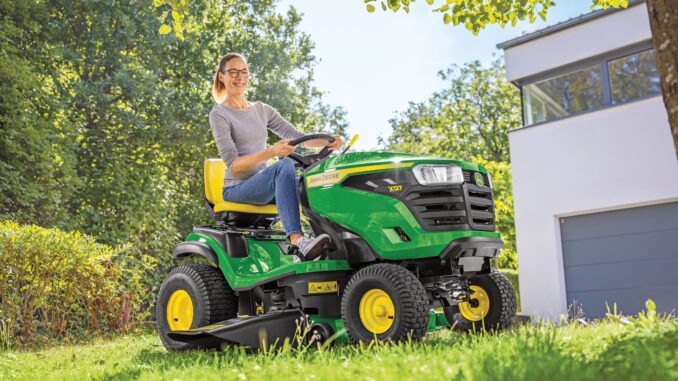
The John Deere 110 mower is an older lawn and garden tractor rather than a modern 100 Series lawn tractor, and it was built from 1963 to 1974 in Horicon, Wisconsin, with 7 hp or 8 hp single-cylinder Kohler gasoline engines depending on year and configuration. That makes this guide especially useful for homeowners in the USA and Canada who are running a vintage machine and need realistic advice on routine maintenance, common failures, safe DIY repairs, and the point where dealer or specialist help makes more sense.
The John Deere 110 mower was designed as a compact garden tractor for home property work, and Deere offered it with a 38-inch mid-mount mower deck plus other attachments such as a snowblower, blade, and loader. In practical terms, owners usually need help with starting faults, rough running, belt and variator wear, cut-quality issues, vibration, electrical faults, and general service items that keep an older machine dependable.
And See
General overview of the John Deere 110 mower
The John Deere 110 mower sits in Deere’s early 100 Series lawn and garden tractor line, and TractorData classifies it as a garden tractor rather than a light-duty lawn tractor. It used a two-wheel-drive chassis, manual steering, manual brakes, an independent mid PTO with manual idler pulley clutching, and either a 3-speed or 4-speed gear transmission paired with a mechanical CVT/variator system depending on version and year.
The key systems owners usually deal with on a John Deere 110 mower are:
-
Engine and fuel system: Kohler single-cylinder gasoline engine, gravity-fed fuel setup, air filter, ignition coil/points on many versions, and spark plug service parts.
-
Mower system: 38-inch mid-mount deck, blades, deck belt, spindle and pulley wear points, and PTO engagement linkage.
-
Drive system: variable-speed drive arrangement with primary and secondary variator components listed by serial range, plus gear transmission and drive belt wear points.
-
Electrical system: 12-volt system, battery, ignition switch area, wiring, starter-generator or starter-related components depending on serial range, and safety-related starting circuit faults common on older tractors.
Several service parts that owners commonly buy for the John Deere 110 mower include air filters AM31400, AM30800, or AM31034 depending on engine and serial range, ignition coil AM38002 or AM31029, spark plugs AM514T or AP19170, starter motor part references AM879743/TY25234/SE501870, battery TY6192 or TY25878, primary variator M82258 or M40015 depending on serial range, and secondary variator M77988 or M44121 depending on serial range.
John Deere 110 mower troubleshooting approach
The best way to diagnose a John Deere 110 mower is to start with the symptom the owner actually sees, because one visible problem can come from several different causes on an older machine. For example, a no-start condition may be fuel related, ignition related, battery related, or caused by worn wiring and switches, while poor mowing can come from blade condition, deck setup, PTO slip, or belt wear rather than the deck itself.
The main symptom groups worth separating are:
-
Starting issues
-
Running or power-loss issues
-
Cut-quality problems
-
Vibration and abnormal noise
-
Overheating, smoke, or leaks
-
Drive and traction problems
-
Electrical and charging problems
Emergency and immediate John Deere 110 mower repair needs
Some faults on a John Deere 110 mower need attention before the machine is used again because they create a safety risk or can rapidly damage hard-to-find vintage parts. The most urgent examples are severe vibration, fuel leaks, electrical shorts, belt or variator failures, locked mower components, and steering or brake problems.
4.1 Starting issues
When the John Deere 110 mower will not crank or cranks without starting, the problem matters because repeated attempts can drain the battery, overheat cables, or mask a fuel leak or ignition fault. On older tractors, poor connections and aged ignition components are just as common as basic tune-up issues.
Common causes:
-
Weak or failing 12-volt battery.
-
Dirty or loose battery terminals and ground points.
-
Bad spark plug, incorrect plug gap, or weak ignition coil/points system.
-
Fuel contamination, stale gasoline, blocked fuel flow, or dirty air filter.
-
Fault in starter or starter-generator related components on the specific serial range.
Basic checks:
-
Confirm battery voltage and clean both cable ends.
-
Check for fresh fuel and open fuel flow.
-
Remove and inspect the spark plug for fouling or no spark.
-
Inspect visible wiring for corrosion, cracked insulation, or loose connectors.
-
If the engine still will not start, move on to ignition and carburetor diagnosis rather than repeated cranking.
4.2 John Deere 110 mower cut-quality problems
If the John Deere 110 mower leaves uneven grass, strips, or a ragged finish, the issue matters because continued use can overload the deck drive, worsen belt slip, and stress spindle parts. A poor cut is often a setup or wear issue rather than an engine problem.
Common causes:
-
Dull, bent, or unbalanced blades.
-
Belt slip or worn deck belt.
-
Incorrect deck leveling.
-
Packed grass under the deck shell.
-
Worn spindle bearings or loose pulleys.
Basic checks:
-
Inspect blades for edge wear, bends, or imbalance.
-
Clean grass buildup from the underside of the deck.
-
Check belt condition and pulley alignment.
-
Level the deck side-to-side and confirm front pitch.
-
Stop using the mower if a spindle feels loose or noisy.
4.3 Vibration and noise
Heavy vibration on a John Deere 110 mower should be treated as an immediate stop-work issue because it can damage the PTO, deck, variator, engine mounts, and even the tractor frame over time. Vintage tractors often develop multiple small looseness points, so one obvious noise may not be the only fault.
Common causes:
-
Bent or badly unbalanced blade.
-
Loose deck pulley or spindle.
-
Worn variator or drive components.
-
Loose engine mounting hardware.
-
Damaged tires or wheel hardware.
Basic checks:
-
Shut the machine off immediately if vibration rises suddenly.
-
Inspect blades and deck pulleys first.
-
Check engine mounting bolts and visible drive hardware.
-
Spin pulleys by hand to feel for roughness or play.
-
Do not continue mowing until the source is confirmed.
4.4 John Deere 110 mower overheating and leaks
Overheating, smoke, or fuel and oil leaks need quick attention because air-cooled engines depend heavily on clean cooling fins, correct mixture, and good lubrication. On an older John Deere 110 mower, debris, stale fuel, and aged seals are common triggers.
Common causes:
-
Blocked cooling fins or debris around the engine.
-
Dirty air filter causing rich running.
-
Oil leak from old gaskets or seals.
-
Fuel seepage from lines, fittings, or carburetor issues.
-
Incorrect oil level or neglected service.
Basic checks:
-
Let the engine cool completely before inspection.
-
Remove debris from the engine shrouds and cooling area.
-
Check oil level and condition.
-
Inspect fuel lines and carburetor area for wetness or smell.
-
Repair leaks before further use.
4.5 Transmission and drive problems
When a John Deere 110 mower loses pulling power, changes speed poorly, or will not move correctly, focus on the belt and variator system before assuming the gearbox itself has failed. The machine used mechanical CVT/variator drive components and serial-range-specific primary and secondary variator parts, so wear or misadjustment here is common.
Common causes:
-
Worn primary or secondary variator.
-
Stretched or damaged drive belt.
-
Linkage adjustment issues.
-
Transmission wear on heavily used machines.
-
Tires with poor traction or incorrect pressure.
Basic checks:
-
Inspect drive belt condition and tension.
-
Verify speed-control linkage movement.
-
Look for seized or sloppy variator pulleys.
-
Check tire condition and inflation.
-
If the tractor still slips under load, plan for deeper driveline inspection.
4.6 John Deere 110 mower electrical problems
Electrical faults on the John Deere 110 mower often show up as no-crank problems, weak charging, intermittent spark, or dead lights, and they matter because old wiring can create unreliable operation or fire risk. Corrosion and brittle insulation are especially common on tractors this old.
Common causes:
-
Weak battery or poor cable connections.
-
Failing ignition coil or points/condenser setup.
-
Worn starter-related components.
-
Corroded grounds and terminals.
-
Damaged harness sections.
Basic checks:
-
Clean and tighten all accessible electrical connections.
-
Inspect ground strap and battery cables carefully.
-
Check spark quality before replacing random parts.
-
Separate charging issues from ignition issues during testing.
-
Replace cracked or overheated wiring sections promptly.
DIY or dealer repair decision guide
The line on a John Deere 110 mower usually falls between basic mechanical service, which many owners can handle at home, and deeper engine, transmission, or electrical restoration work, which may require vintage Deere knowledge, pullers, meters, and fabrication skills. Because the tractor is old enough that parts can vary by serial range, diagnosis matters more than guesswork.
Good DIY jobs
-
Air filter, spark plug, and battery replacement.
-
Blade sharpening or replacement.
-
Deck cleaning and leveling.
-
Basic belt inspection and some straightforward belt changes.
-
Fuel line replacement and simple tune-up work.
-
Cleaning grounds, terminals, and visible wiring connections.
Advanced DIY or dealer jobs
-
Carburetor rebuild and precise tuning.
-
Ignition points/condenser and coil diagnosis if spark remains weak.
-
Variator and drive-system rebuilds using serial-specific parts.
-
Transmission internal work.
-
Engine internal repairs, governor work, or crankshaft-related issues.
-
Structural welding, steering rebuilds, or hard-to-source electrical restoration.
Skill level guide
-
Beginner: air filter, spark plug, battery, blade removal, deck cleaning, tire pressure, basic visual checks.
-
Intermediate: belt replacement, deck leveling, fuel line service, carb cleaning, simple wiring repairs.
-
Advanced: ignition timing/points work, variator rebuild, charging diagnostics, engine teardown, gearbox repairs.
John Deere 110 mower parts, OEM vs aftermarket, and what information you need
Before ordering parts for a John Deere 110 mower, gather the full model name, the tractor serial number or PIN, the engine model and specification numbers, and the mower deck or attachment size. This is especially important because several commonly purchased parts change by serial range, including air filters and primary or secondary variator parts.
OEM parts are usually the safer choice for belts, variator parts, ignition parts, and any fit-sensitive or safety-related components because serial-break changes are common on the John Deere 110 mower. Aftermarket parts can be fine for batteries, some tune-up items, and some blades or filters, but only when the seller clearly cross-references the exact Deere number and serial range.
Where to find parts diagrams and service manuals
The most useful sources for John Deere 110 mower parts and literature are the official Deere publications system, model-reference pages, and Deere-focused parts retailers with maintenance breakdowns.
-
Official Deere technical publications: John Deere Technical Information Store for operator and service literature references.
-
Model reference and specs: TractorData John Deere 110 for production years, serial location, transmission type, and attachment overview.
-
Maintenance parts guide: Green Farm Parts John Deere 110 maintenance guide for commonly purchased service parts and serial-sensitive maintenance references.
-
Vintage service manual source: John Deere 110/112 service manual PDF for deeper workshop information on early serial ranges.
How to locate model, serial and engine numbers
These numbers matter because the John Deere 110 mower changed across its long production run, and parts listings on this model are often tied to serial breaks.
-
Stand at the operator area and look below the steering column for the tractor serial number plate.
-
Record the full model identification exactly as shown on the tag.
-
Check the engine shrouding or engine identification plate for the Kohler model, spec, and serial information.
-
Confirm the mower deck size, because TractorData lists the common mid-mount deck as 38 inches on the 110.
-
Match all numbers before ordering any variator, ignition, or air-cleaner parts.
Buying John Deere 110 mower parts online and in stores
The safest buying strategy is to identify the exact Deere number first, then shop by that number instead of only by model name, because the John Deere 110 mower had serial-range changes and many aftermarket catalogs are broad.
-
Online: verify the OEM number, serial range, engine application, and return policy before ordering.
-
Dealer counter: best for serial-sensitive parts, diagrams, and confirmation of superseded Deere numbers.
-
Retail stores: acceptable for oil, spark plugs, batteries, and some filters only when the packaging clearly cross-references the exact application.
Useful starting points include John Deere Technical Information Store, Green Farm Parts, and TractorData.
Step-by-step fitting guide for common parts on the John Deere 110 mower
Replacing the air filter
This job helps starting, power, and cleaner running on the John Deere 110 mower, especially if the tractor has been sitting or operating in dusty conditions.
-
Shut the engine off and let it cool.
-
Open the air-cleaner housing and remove the old element.
-
Compare the old filter to the new one, checking the Deere number and size.
-
Wipe dust from the housing without pushing dirt into the intake.
-
Install the new filter and secure the housing properly.
Replacing the spark plug
A fresh spark plug often fixes hard starting, misfire, or weak idle on an older John Deere 110 mower.
-
Remove the spark plug lead carefully.
-
Use the correct socket to remove the old plug.
-
Check the old plug for fouling, oiling, or heavy carbon.
-
Gap the replacement plug to the specification in the manual for your engine version.
-
Install by hand first, tighten correctly, and refit the plug lead.
John Deere 110 mower blade service
Blade service improves cut quality and reduces vibration, and it should be one of the first checks when the mower leaves ragged grass.
-
Disconnect the spark plug lead before working under the deck.
-
Raise or safely support the deck for access.
-
Remove the blade hardware and mark blade orientation.
-
Sharpen evenly or replace the blade if bent or badly worn.
-
Reinstall securely and confirm the blade is balanced before mowing.
Inspecting drive or variator components
This check is useful when the John Deere 110 mower slips, changes speed poorly, or loses pulling power.
-
Park on level ground and block the wheels.
-
Inspect the drive belt for glazing, cracks, or stretching.
-
Check primary and secondary variator pulleys for free movement and visible wear.
-
Inspect linkage for sticking, looseness, or incorrect travel.
-
Stop and plan a deeper repair if any pulley is seized, badly worn, or misaligned.
Maintenance to prevent John Deere 110 mower problems returning
Regular maintenance matters even more on the John Deere 110 mower than on newer tractors because age, storage conditions, and parts wear all stack together on vintage equipment. Preventive service lowers the chance of no-start calls, poor mowing, belt failure, overheating, and electrical faults.
Focus areas:
-
Starting reliability: keep the battery charged, the plug fresh, the air filter clean, and fuel fresh.
-
Cut quality: sharpen blades, clean the deck underside, and correct deck level before blaming the engine.
-
Fire and overheating prevention: remove debris from engine cooling areas and fix fuel or oil leaks immediately.
-
Drive performance: inspect belts, variator hardware, and linkage before they fail under load.
-
Electrical reliability: clean terminals and repair brittle or corroded wiring before intermittent faults become major ones.
John Deere 110 mower maintenance schedule and year-round checklist
A precise schedule can vary by year and engine version, but the official literature and maintenance-parts guidance both support a routine built around pre-use checks, regular tune-up service, and closer inspection of filters, ignition, belt-drive parts, and lubrication points. For an older machine, service intervals should become more frequent in dusty, hot, or heavy-use conditions.
Daily / before each use
-
Check engine oil level.
-
Inspect for fuel, oil, or loose hardware.
-
Check tire condition and inflation.
-
Make sure the deck and discharge area are clear.
-
Confirm the battery cables are secure.
Every 8 to 10 hours
-
Clean debris from the engine cooling area.
-
Check blade condition and deck cleanliness.
-
Inspect belts for early wear or glazing.
Every 25 hours
-
Inspect and clean the air filter element, or replace if dirty.
-
Check spark plug condition.
-
Inspect fuel lines and clamps.
-
Lubricate linkages and moving chassis points as required by the manual.
Every 50 hours or yearly
-
Replace tune-up items as needed, especially air filter and spark plug references that match the serial range.
-
Check battery health and charging condition.
-
Inspect primary and secondary variator parts for wear.
-
Inspect the mower deck hardware, spindle play, and pulley condition.
Every 200 hours or similar major-service interval
-
Perform a more complete driveline inspection.
-
Check steering, brakes, and wheel bearings carefully.
-
Inspect engine mounts, frame points, and attachment mounting hardware.
-
Address oil leaks, charging faults, or repeated ignition problems before the next season.
Seasonal checklist
-
Spring: fresh fuel, battery check, spark plug inspection, air filter service, blade sharpening, deck cleanup.
-
Mid-season: belt inspection, deck leveling, cooling-fin cleanup, fastener check.
-
Fall or end of season: fuel stabilization or draining plan, full cleaning, battery maintenance, and a parts list for winter repairs.
Repair, upgrade, or replace?
Repair usually makes sense on a John Deere 110 mower when the tractor is structurally solid, the engine has acceptable compression, and the needed work is limited to tune-up parts, deck service, belts, or manageable electrical fixes. Upgrade or partial restoration makes sense when the machine is mechanically sound but needs serial-specific variator, ignition, or deck work to become dependable again, while replacement becomes more logical when the tractor has combined engine, driveline, structural, and parts-availability problems.
Repair if…
-
The machine mainly needs service parts, blades, belts, battery, or wiring cleanup.
-
The engine starts and runs reasonably well after tune-up work.
-
The deck and driveline are complete and not heavily damaged.
Upgrade if…
-
You want a more dependable vintage tractor for regular mowing.
-
The tractor needs several medium-cost repairs but still has good core components.
-
You value the heavier garden-tractor platform and attachment capability.
Replace if…
-
The frame, steering, brakes, engine, and driveline all need major work at once.
-
Critical serial-specific parts are missing or uneconomical to source.
-
You need modern convenience, easier parts supply, and less downtime.
Expanded troubleshooting FAQ
1. Why will my John Deere 110 mower not start?
The most common causes are a weak battery, dirty cable connections, stale fuel, a fouled spark plug, or ignition problems in the coil or points system. Start with the battery, visible wiring, fuel freshness, and spark quality before moving to deeper carburetor or ignition diagnosis.
2. Why does the John Deere 110 mower crank but not fire?
That usually means the engine is turning but not getting usable spark or the right fuel mixture. Check for spark at the plug, confirm fuel is reaching the carburetor, and inspect the plug for wetness or carbon fouling.
3. Why does my John Deere 110 mower have weak spark?
Weak spark often points to a tired coil, worn points, poor grounding, or old wiring connections on a vintage tractor. On older machines, cleaning grounds and confirming correct ignition adjustment can matter as much as replacing the plug.
4. Why does the engine start and then die?
That pattern often suggests fuel flow restriction, carburetor contamination, or a venting problem rather than a major mechanical failure. Fresh fuel, a clean air filter, and basic carburetor inspection are the first things to check.
5. Why is the John Deere 110 mower running rough?
Rough running is commonly caused by old fuel, a dirty filter, ignition weakness, or carburetor issues. Because these tractors are old, also inspect for intake leaks, loose wiring, and overdue tune-up parts.
6. Why does the John Deere 110 mower lose power in tall grass?
Tall or wet grass can overload a small vintage tractor, but blade condition, deck cleanliness, and belt grip also matter. Dull blades and a packed deck make the engine work harder and can feel like an engine problem when the real issue is under the mower.
7. Why is my John Deere 110 mower cutting unevenly?
Uneven cutting usually comes from dull blades, a deck that is out of level, uneven tire pressure, or worn deck parts. Check setup first before replacing parts.
8. Why does the John Deere 110 mower leave strips of grass?
Strips often mean the blade edge is poor, the deck is carrying buildup, or the tractor is moving faster than the deck can cut cleanly. Inspect blade lift and deck cleanliness before assuming major deck damage.
9. Why is the cut ragged instead of clean?
A ragged cut usually points to dull blades rather than a deck timing issue on this type of tractor. Sharpen or replace the blades and avoid mowing when the grass is too wet.
10. Why is the John Deere 110 mower vibrating so much?
Sudden vibration usually means a bent blade, loose pulley, failing spindle, or driveline issue that should be checked before further mowing. Do not keep using the tractor until the source is found, because that can damage more parts.
11. Why do I hear rattling from the deck area?
Deck rattles often come from loose blade hardware, worn spindle bearings, loose shields, or pulley problems. Check the simplest fasteners first, then spin pulleys and spindles by hand with the engine safely disabled.
12. Why does the John Deere 110 mower belt keep slipping?
A glazed or worn belt, weak tension, pulley wear, or contamination can all cause slip. If the deck or drive system is misaligned, a new belt alone may not solve the problem.
13. Why won’t the John Deere 110 mower move properly?
Loss of movement or poor pulling often points to the belt and variator system before the gearbox itself. Inspect belt condition, linkage travel, and the primary and secondary variator parts for wear or sticking.
14. Why does the John Deere 110 mower change speed unpredictably?
The mechanical CVT/variator system depends on free-moving pulleys and correct linkage travel. Worn or sticky variator components can make speed changes erratic even if the engine is running well.
15. Why is the transmission noisy?
Noise can come from the transmission, but it can also come from nearby drive hardware, belts, pulleys, or worn mounting points. Separate true gearbox noise from deck or variator noise before planning a major repair.
16. Why does the John Deere 110 mower overheat?
Air-cooled engines overheat when cooling fins are blocked, oil level is wrong, or the engine is running poorly. Clean debris first and then look for tune-up or mixture issues.
17. Why is there smoke from the engine area?
Smoke can come from oil leaks burning on hot surfaces, overfilled oil, rich running, or more serious engine wear. Check whether the smoke smells like oil or raw fuel before diagnosing further.
18. Why is my John Deere 110 mower leaking fuel?
Fuel leaks usually come from aged lines, loose clamps, carburetor seepage, or tank-related fittings on old machines. Stop using the tractor until the leak is fixed because of fire risk.
19. Why is the battery always dead?
A dead battery can mean the battery itself is worn out, but charging problems, parasitic drain, or poor cable connections are also common. Clean and test connections before assuming the charging system is at fault.
20. Why won’t the John Deere 110 mower charge the battery?
Charging faults can come from starter-generator or related charging components depending on serial range, as well as wiring and grounding problems. Confirm the battery is good first, then test the charging side of the system.
21. Why does the starter seem weak?
Weak cranking often comes from voltage drop through dirty cables, a tired battery, or worn starter-related parts. On an older tractor, cable condition matters a lot because corrosion can hide inside the insulation ends.
22. Why does the John Deere 110 mower backfire?
Backfiring can be caused by ignition timing issues, stale fuel, carburetor mixture problems, or exhaust leaks. Tune-up work and ignition checks are usually the starting point.
23. Why does my John Deere 110 mower stall under load?
Stalling under load usually means the engine is short on fuel, spark, airflow, or the deck is overloaded by dull blades and buildup. Work through the engine basics before assuming internal engine trouble.
24. Why does the John Deere 110 mower surge at idle?
Idle surge often points to carburetor contamination, air leaks, or governor adjustment issues. Start with fuel quality and cleaning before changing adjustment settings blindly.
25. Why are replacement parts hard to match?
The John Deere 110 mower ran for many years and uses serial-break differences on some parts, especially filters and variator components. Always use the serial number and engine data when ordering.
26. Can I use aftermarket parts on a John Deere 110 mower?
Yes, but aftermarket parts are safest for common consumables when the seller clearly cross-references the Deere number and application. For fit-sensitive drive or ignition parts, OEM is usually the safer bet.
27. How often should I service the air filter?
The maintenance-parts guide identifies the air filter as a regular service item, and dusty use means it will need more frequent attention. Inspect it often and replace it when cleaning no longer restores good airflow.
28. How often should I replace the spark plug?
There is no single answer for every surviving tractor, but plug condition should be checked as part of routine service and replaced whenever fouling, wear, or hard starting shows up. Vintage engines benefit from conservative tune-up intervals.
29. Why does the John Deere 110 mower feel weak on hills?
These tractors are older two-wheel-drive machines, so loss of traction, belt slip, and engine power loss can all show up as poor hill performance. Check tire condition, drive components, and engine tune together.
30. Should I repair or replace my John Deere 110 mower?
Repair is usually worthwhile when the tractor is complete, structurally solid, and mainly needs routine or medium-level work. Replace it when major engine, driveline, structural, and parts-sourcing issues stack up beyond the tractor’s practical value for your needs.
31. What deck size is most commonly associated with the John Deere 110 mower?
TractorData lists a 38-inch mid-mount mower deck as the common mower attachment for the John Deere 110. That is important when ordering blades, belts, and deck hardware.
32. Where is the serial number on a John Deere 110 mower?
TractorData says the serial number plate is below the steering column. That should be the first place to check before ordering any model-sensitive parts.
33. What engine does the John Deere 110 mower use?
TractorData lists 7 hp Kohler 277 cc single-cylinder gasoline and 8 hp Kohler 305 cc single-cylinder gasoline versions for the John Deere 110 depending on year and configuration. That is why engine model information matters when buying tune-up parts.
34. Does the John Deere 110 mower have hydrostatic drive?
No, TractorData lists 3-speed or 4-speed gear transmissions combined with a mechanical CVT/variator system rather than a modern hydrostatic transmission. That changes how owners should diagnose movement and speed-control issues.
35. Is the John Deere 110 mower good for regular homeowner use today?
It can still be a useful homeowner machine if it is complete, correctly maintained, and used within the limits of an older garden tractor. Owners who enjoy DIY maintenance and vintage equipment usually get the most from it.