
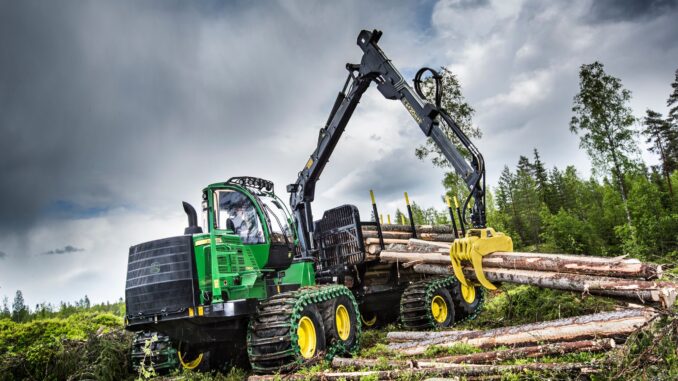
John Deere skidders sit in the construction and forestry lineup, alongside feller bunchers, loaders, and harvesters, and share many core systems with other Deere forestry machines: a diesel engine, transmission and axles, hydraulic system, winch or grapple, and an operator station with modern electronics. Typical use is in logging and thinning operations, often in remote locations and harsh conditions, which means high wear on hydraulics, driveline, tires, pins, and electrical components.
This John Deere Skidder Service and Repair Guide covers symptom‑based troubleshooting, emergency checks you can safely do in the field, a DIY vs dealer decision guide, parts and diagrams, how to find and order the right components, and a large FAQ section aimed at owner‑operators and mechanics who want a clear, structured reference.
General overview of the John Deere skidder
In Deere’s forestry range, skidders are purpose-built machines designed to drag logs from the cutting area to the landing, with variants like cable skidders (with winch and chokers) and grapple skidders (with hydraulic grapple and boom). Most modern Deere skidders use turbocharged diesel engines, powershift transmissions, heavy-duty axles with differential locks, and high-flow hydraulic systems to operate grapples, winches, steering, and blade.
Key systems on a John Deere skidder include:
-
Engine and fuel system: diesel engine, fuel filters, injection system, turbocharger, cooling system.
-
Transmission and driveline: powershift transmission, driveshafts, differentials, planetary hubs.
-
Hydraulic system: pumps, control valves, hoses, cylinders for steering, grapple, arch or blade, winch.
-
Winch or grapple system: winch drum, cable, fairleads, clutches, grapple arms, rotator, and associated hydraulics.
-
Electrical and control system: wiring harnesses, safety interlocks, control modules, display, work lights.
-
Brakes and steering: service brakes, park brake, articulation joint steering with hydraulic cylinders.
-
Frame and undercarriage: articulation joint, pins and bushings, blade, guards, and axles.
Common service parts that owners and operators frequently replace or carry include fuel filters, engine oil filters, hydraulic filters, air filters, fan belts, hoses, O‑rings, brake components, winch cable, grapple pins and bushings, and lighting components such as sealed work lights and switches.
Troubleshooting approach for John Deere skidders
On a John Deere skidder, diagnosis should always start from what you see and feel as the operator: warning lights, noises, sluggish movements, leaks, and changes in engine or hydraulic performance. Rather than guessing at the bad part, note the symptom, when it appears, and what else changes at the same time (RPM, load, temperature, terrain).
For John Deere skidders, the main symptom categories you will deal with are:
-
Starting issues and cold‑start problems.
-
Running issues: loss of power, stalling, smoke, fuel problems.
-
Hydraulic problems: slow or weak grapple, steering, blade, or winch.
-
Vibration and noise from driveline, axles, or winch.
-
Overheating and fluid leaks (engine, transmission, hydraulic).
-
Transmission and drive issues: no movement, slipping, or harsh shifts.
-
Electrical issues: dead displays, lights, sensors, warning alarms, and safety interlocks.
Throughout this John Deere Skidder Service and Repair Guide, each section is organized around these real‑world symptoms so you can quickly narrow down likely causes and decide whether it is a field fix, workshop job, or dealer repair.
Emergency and immediate repair needs on a John Deere skidder
Some problems need immediate attention because they affect safe operation or can cause rapid, expensive damage if ignored. For a skidder, this often means anything involving steering and braking, hydraulic leaks under pressure, overheating, critical driveline noises, or major electrical faults affecting safety systems.
Starting issues – John Deere skidder
Starting problems on a John Deere skidder often show up as slow cranking, no cranking at all, or cranking without firing, especially in cold weather or after sitting. This matters because repeated cranking on a weak battery or poor fuel condition can damage starters and leave you stranded in a difficult location.
Common causes:
-
Weak or discharged batteries.
-
Poor battery cable connections or grounds.
-
Faulty starter motor or solenoid.
-
Blocked fuel filters or gelled fuel.
-
Faulty key switch, relays, or safety interlocks.
Basic checks you can do:
-
Check battery voltage with a meter or load tester and charge or replace if necessary.
-
Inspect battery terminals and ground straps, clean and tighten as needed.
-
Verify that neutral and park brake interlocks are properly set before cranking.
-
Check fuses and relays related to starting circuits.
-
Inspect fuel filters and water separators for contamination and replace if needed.
Hydraulic performance problems – John Deere skidder
Hydraulic issues often show as slow or weak grapple, winch, steering, or blade movements, chattering noise, or sudden loss of function. This matters because low hydraulic performance can make the machine unsafe or unusable in steep or loaded conditions.
Common causes:
-
Low hydraulic oil level or wrong oil.
-
Plugged hydraulic filters.
-
Air in the hydraulic system.
-
Worn pump or internal leaks in cylinders and valves.
-
Contamination from failed components or dirty oil.
Basic checks you can do:
-
Park safely, lower all attachments, and check hydraulic oil level and condition.
-
Inspect for obvious leaks around hoses, fittings, and cylinders.
-
Replace hydraulic filters if they are due or contaminated.
-
Cycle all hydraulic functions slowly to purge minor air pockets.
-
Listen for pump whine and feel for heat in hydraulic components, which can indicate restriction or internal leakage.
Vibration and noise on John Deere skidders
New or increasing vibration, grinding, or knocking noises from the engine, driveline, or winch should be treated seriously. Prolonged operation with these symptoms can damage bearings, gears, axles, or engine internals.
Common causes:
-
Worn driveline U‑joints or yokes.
-
Loose or damaged wheel and hub components.
-
Failing bearings in winch, grapple, or pulleys.
-
Engine misfires, mounts, or harmonic balancer issues.
-
Loose guards or structural components.
Basic checks you can do:
-
Inspect U‑joints, yokes, and driveline guards for play and wear.
-
Check wheel and hub fasteners for proper torque and signs of looseness.
-
Identify whether the noise changes with engine speed, ground speed, or winch operation.
-
Inspect winch drum, cable, and fairleads for damage or mis‑spooling.
-
If vibration is severe or tied to transmission, stop and schedule dealer inspection.
Overheating and fluid leaks – John Deere skidder
Overheating and fluid leaks, especially from engine coolant, hydraulic oil, or transmission fluid, can quickly lead to catastrophic failures. Any persistent overheating or heavy leak should be considered a shutdown condition until the cause is identified.
Common causes:
-
Blocked or dirty coolers and radiators.
-
Low coolant or air in the cooling system.
-
Faulty fan drive, fan belt, or thermostat.
-
Leaking hoses, seals, or fittings in engine or hydraulic systems.
-
Overloaded machine or extended operation in high ambient temperatures without proper cleaning.
Basic checks you can do:
-
Safely stop, idle down, and let the machine cool before opening any caps or covers.
-
Inspect radiator, oil coolers, and screens for debris and clean them thoroughly.
-
Check coolant level and look for signs of leaks around hoses and water pump.
-
Inspect fan belts and fan drive components for damage or slippage.
-
Verify hydraulic and transmission oil levels and look for wet areas or leaks.
Transmission and drive problems – John Deere skidder
Transmission issues may appear as no movement in certain gears, slipping, harsh shifts, or loss of drive on hills. Because skidder drivelines are complex, it is important to avoid prolonged operation with noticeable drive problems.
Common causes:
-
Low transmission or axle oil levels.
-
Clogged filters or restricted coolers.
-
Worn clutches or gears in the powershift transmission.
-
Differential or planetary failures.
-
Electronic control or sensor faults.
Basic checks you can do:
-
Confirm correct transmission fluid level and type.
-
Inspect for leaks at transmission, axles, and hubs.
-
Note whether the issue occurs in all gears or only specific ranges.
-
Check for active fault codes or warning lights on the display.
-
If severe, park the machine and consult a qualified Deere dealer or forestry shop.
Electrical problems and safety systems
Electrical problems on a John Deere skidder can show as dead displays, inoperative lights, repeating fault codes, or non‑functional safety interlocks. Because safety systems rely on the electrical network, diagnosing and correcting faults is critical.
Common causes:
-
Corroded connectors in harsh forestry environments.
-
Damaged wiring looms due to chafing or impact.
-
Faulty sensors or switches on doors, seats, or pedals.
-
Weak batteries or charging system faults.
-
Control module software or hardware issues.
Basic checks you can do:
-
Inspect battery terminals, alternator connections, and main grounds.
-
Check fuses and relays in the electrical panel and replace blown fuses with correct ratings.
-
Look for damaged or pinched wiring, especially around articulation, cab, and frame.
-
Confirm seat, door, and park brake switches are functioning and not bypassed.
-
For persistent or complex electrical faults, consult the technical manual or dealer diagnostics.
DIY or dealer? John Deere skidder repair decision guide
With a John Deere skidder, the line between DIY and dealer work is largely drawn by safety, complexity, and the need for specialized tools or diagnostics. Owner‑operators can safely handle routine service, inspections, filter and fluid changes, minor hydraulic repairs, and basic electrical work, but major driveline, structural, and control system repairs are best left to Deere dealers or specialized forestry shops.
Good DIY jobs:
-
Regular engine oil and filter changes.
-
Fuel filter and water separator service.
-
Air filter replacement and intake inspection.
-
Hydraulic and transmission filter changes.
-
Greasing pins, joints, and driveline components.
-
Replacing lights, switches, and simple sensors.
-
Winch cable replacement and adjustment (following proper safety procedures).
Advanced DIY or dealer jobs:
-
Internal hydraulic pump or valve repairs.
-
Transmission and axle internal repairs.
-
Major engine work beyond basic external components.
-
Structural repairs on frame, articulation joint, and major welding.
-
Complex electrical diagnostics involving control modules and CAN networks.
-
Rebuilding winch or grapple rotators.
Skill level guide:
-
Beginner: daily inspections, greasing, simple filter changes, light bulb replacements.
-
Intermediate: full service (fluids and filters), minor hose and fitting replacement, basic electrical troubleshooting, winch cable work.
-
Advanced: hydraulic pump or component replacement, transmission or axle work, in‑depth electrical diagnostics with Deere software and special tools.
Parts needed, OEM vs aftermarket, and information required
Before ordering parts for a John Deere skidder, you need exact identification for the machine and its components. This includes the full model designation (for example, 640G III, 748L, or similar), the Product Identification Number (PIN), and, for engine‑specific items, the engine model and serial number. Many parts changed across production runs, so PIN‑specific lookup is critical.
You should gather:
-
Full skidder model name and series (e.g. G‑Series, L‑Series).
-
Product Identification Number (PIN) from the machine frame plate.
-
Engine model and serial number for engine components.
-
Attachment or option details (grapple type, winch brand, blade type).
Below is an example of a key service and repair parts table for a typical John Deere skidder. Always confirm part numbers for your exact model and PIN before ordering.
For John Deere skidders, OEM parts are usually recommended for belts, filters, critical hydraulic components, braking components, and any fit‑sensitive parts like pins, bushings, and seals. Aftermarket parts can be acceptable for some filters, bulbs, and batteries, provided they cross‑reference correctly and meet or exceed Deere specifications.
Where to find parts diagrams and service manuals for John Deere skidders
For accurate parts diagrams and service instructions, you should rely on Deere’s official documentation and reputable third‑party resources:
-
John Deere official parts catalog and operator’s manuals: available through the Deere parts website or regional Deere portals, where you can search by model or PIN.
-
Quick reference guides for construction and forestry equipment: Deere provides maintenance charts and quick reference PDFs for many skidder models, including service intervals and lubrication points.
-
Deere Technical Publications: through the official technical publications site, you can purchase or access digital technical manuals for specific skidder models.
-
Reputable Deere‑focused parts sites: independent parts suppliers often host exploded parts diagrams and cross‑reference catalogues; look for sites that clearly reference official Deere part numbers and model‑specific pages.
Use these sources to verify part numbers, view assembly diagrams, and follow recommended service procedures.
How to locate model, serial, and engine numbers on a John Deere skidder
Correct identification numbers ensure you get the right parts and avoid expensive returns or downtime. John Deere skidders have several plates and labels that provide model and serial information.
Follow these steps:
-
Locate the Product Identification Number (PIN) plate on the machine frame; this is typically on the main frame near the front or articulation joint, or near the operator’s station.
-
Note the full model designation stamped or printed on the same plate, including series letters and any suffixes.
-
Open the engine compartment and look for the engine data plate on the side of the engine block or valve cover; this plate lists engine model and serial number.
-
For winch and grapple components, check for separate data plates on the winch housing or grapple frame, which may have their own model and serial numbers.
-
Record all these numbers in your maintenance log so you do not need to climb around the machine every time you order parts.
Buying John Deere skidder parts online and in stores
A good strategy is to use online tools to identify exact OEM part numbers, then decide whether to order from a Deere dealer or a trusted aftermarket supplier. For complex, PIN‑specific components like hydraulics, electronics, and driveline parts, buying directly through a Deere dealer or official online parts portal is usually safest.
Consider the following approach:
-
Online ordering: use official Deere parts sites or reputable forestry parts suppliers; always enter your model and PIN to confirm compatibility.
-
Dealer counter: ideal for complex parts, assemblies, or when you need help interpreting diagrams and updates; bring your PIN and a list of symptoms.
-
Retail stores: may be suitable for general consumables like oil, grease, universal filters, and batteries, but verify that any packaged part clearly lists compatibility with your skidder or equivalent specifications.
Common URLs to bookmark include your regional John Deere parts portal, the Deere construction and forestry quick reference guides page, and a trusted third‑party forestry parts supplier.
Step‑by‑step fitting guide for common John Deere skidder service jobs
Below are four high‑impact DIY jobs that many owner‑operators can tackle safely, with basic tools and good preparation.
Engine oil and filter change on a John Deere skidder
Changing engine oil and filter regularly is one of the best ways to extend engine life and maintain reliability under heavy forestry loads.
-
Park the skidder on level ground, engage the park brake, lower all attachments, and shut down the engine.
-
Allow the engine to cool, then place a suitable drain pan under the oil drain plug.
-
Remove the drain plug and allow oil to fully drain; replace the plug with a new sealing washer if required.
-
Remove the engine oil filter using an appropriate filter wrench and clean the mounting surface.
-
Lightly oil the gasket of the new filter, install it by hand until the gasket contacts, then tighten according to the filter instructions.
-
Refill with the recommended grade and quantity of engine oil, start the engine, check for leaks, and verify the oil level after a short run and cool‑down.
Fuel filter and water separator service on a John Deere skidder
Clean fuel and effective water separation are critical for modern diesel engines, especially in cold or wet logging environments.
-
Park the machine safely and relieve any fuel system pressure according to the operator’s manual.
-
Place a container under the fuel filter or water separator to catch spills.
-
Remove the old filter or bowl, noting orientation and connections, and dispose of fuel safely.
-
Install the new filter or cleaned bowl with fresh O‑rings and seals, filling with clean fuel if recommended.
-
Use the priming pump or bleed procedures to remove air from the system until a steady stream of fuel appears.
-
Start the engine and check for leaks; monitor for any hesitation that might indicate trapped air.
Hydraulic filter change on a John Deere skidder
Hydraulic filters protect expensive pumps and valves from contamination; timely replacement reduces wear and unexpected failures.
-
Park the skidder, lower all attachments, and shut down the engine, ensuring hydraulic pressure is relieved.
-
Identify the main hydraulic filter housing and place a pan or absorbent mats beneath it.
-
Remove the used filter or element, noting its orientation and any seals or O‑rings.
-
Clean the housing and sealing surfaces, then install the new filter with light oil on the gasket.
-
Check hydraulic oil level, top up if necessary, and run the machine briefly to circulate fluid while monitoring for leaks.
-
After cycling all hydraulic functions, recheck oil level and inspect filters and fittings again.
Winch cable replacement on a John Deere skidder
A damaged or worn winch cable is a serious safety hazard; replacing it correctly helps prevent failures during logging operations.
-
Park the machine on level ground, engage park brake, and ensure the winch area is clear of people and obstacles.
-
Release tension on the existing cable and carefully unspool it from the drum, avoiding kinks and sudden releases.
-
Disconnect the cable from the drum anchor point, noting how it is secured, and remove the old cable.
-
Attach the new cable to the drum anchor according to manufacturer instructions, using correct hardware and secure fastening.
-
Slowly spool the cable onto the drum under light tension, keeping wraps tight and even across the drum.
-
Inspect the full length for proper winding and test the winch operation under a light load before returning to normal work.
Maintenance to prevent problems from returning
Preventive maintenance on a John Deere skidder is not just about following a schedule; it is about targeting the specific failure modes common in forestry work: contamination, overheating, vibration, and mechanical wear.
Key focus areas:
-
Starting reliability: maintain strong batteries, clean terminals, healthy fuel filters, and good cold‑start procedures.
-
Hydraulic performance: keep oil and filters clean, promptly fix leaks, and clean coolers and screens regularly.
-
Overheating prevention: routinely clean radiator and cooler stacks, check fan drives and belts, and avoid running with clogged screens.
-
Driveline and steering performance: grease all joints and pins on schedule, inspect U‑joints and articulation, and address unusual play early.
-
Electrical reliability: protect connectors from moisture and debris, repair damaged harnesses, and keep fuses and relays clean and properly seated.
By consistently working on these areas, you reduce costly downtime and extend the life of your skidder.
Maintenance schedule and year‑round checklist for John Deere skidders
Always refer to the official maintenance chart for your specific John Deere skidder model, but the following is a typical structure adapted to forestry operations.
Daily / before each use
-
Walk‑around inspection for leaks, loose components, and damage.
-
Check engine oil, coolant level, and fuel level.
-
Inspect hydraulic and transmission oil levels.
-
Clean debris from radiator, coolers, and intake screens.
-
Check tire condition and inflation; inspect winch cable or grapple for damage.
After 8–10 hours of operation
-
Grease specified pins and joints, particularly in grapple, blade, and articulation.
-
Inspect air intake system and precleaner; empty dust collector if equipped.
-
Check for loose guards, shields, and steps.
-
Inspect lights and warning alarms to ensure they function properly.
Every 25 hours
-
Inspect hydraulic hoses and fittings for wear, chafing, or leaks.
-
Check and clean battery terminals and ensure secure mounting.
-
Inspect driveline components (U‑joints, shafts) for play and lubrication needs.
-
Verify park brake function and adjust if necessary (per manual).
Every 50 hours or yearly
-
Change engine oil and filter according to usage and conditions.
-
Inspect and, if needed, replace fuel filters and water separator elements.
-
Check and clean or replace air filter elements (primary/secondary) as required.
-
Inspect winch, grapple, or blade mounts and structural components for cracks or wear.
-
Inspect cab and operator controls, including seat belts and safety switches.
Every 200 hours or as specified
-
Replace hydraulic and transmission filters according to the service schedule.
-
Sample and, if recommended, change hydraulic and transmission fluids.
-
Inspect and service brake systems, including lines and actuators.
-
Check steering articulation joint pins and bushings for excessive wear.
-
Inspect cooling system hoses and clamps; flush coolant if due according to calendar and hours.
Seasonal checklist (preseason, in‑season, end‑of‑season)
Preseason:
-
Perform full service (fluids and filters) if hours or time are due.
-
Inspect and test all safety devices, including alarms and interlocks.
-
Inspect and repair any structural or guard damage from previous season.
In‑season:
-
Increase frequency of cooling system cleaning in dusty or hot conditions.
-
Monitor tires or chains for wear and damage.
-
Keep a log of any recurring issues to address in planned downtime.
End‑of‑season:
-
Thoroughly clean machine, especially coolers, undercarriage, and winch areas.
-
Perform needed repairs while the machine is off‑season.
-
Store with full fuel tank and treated fuel if storage will be extended.
-
Disconnect or maintain batteries according to storage recommendations.
Repair, upgrade, or replace your John Deere skidder?
Deciding whether to repair, upgrade, or replace a John Deere skidder depends on machine age, hours, current market value, and the cost and risk of major failures. Because skidders are capital‑intensive, many owner‑operators choose to repair and selectively upgrade as long as the frame, drivetrain, and hydraulics remain fundamentally sound.
Repair if:
-
The problem is limited to consumables like hoses, filters, belts, or moderate hydraulic leaks.
-
The engine and transmission have good compression, oil pressure, and shifting performance.
-
Structural components are intact and free from major cracks or frame damage.
Upgrade if:
-
You need better lighting, auxiliary hydraulics, or improved operator comfort for longer shifts.
-
You want to add safety features like better guards, cameras, or additional alarms.
-
Modern attachments or grapples can significantly improve productivity on an otherwise solid machine.
Replace if:
-
The machine has multiple major issues (engine, transmission, hydraulics, frame) and repair costs approach or exceed value.
-
Parts support is limited or declining for your exact model, leading to chronic downtime.
-
Your work requirements have outgrown the machine’s capacity and upgrading would not close the gap.
Expanded troubleshooting FAQ – John Deere Skidder Service and Repair Guide
1. Why will my John Deere skidder not start?
A skidder that will not start usually suffers from battery, fuel, or safety interlock issues. Check battery charge, cable connections, and ensure all safety switches (neutral, park brake, seat or door where fitted) are correctly set. If the engine cranks but does not fire, suspect fuel filters, air in the fuel system, or cold‑weather fuel problems.
2. Why does my John Deere skidder crank slowly?
Slow cranking commonly points to weak batteries, poor cable connections, or a failing starter. Inspect and clean terminals, test the batteries under load, and check for voltage drops in cables. In very cold conditions, engine oil viscosity and block heater use also play a role.
3. Why does my John Deere skidder start and then stall?
If the skidder starts and quickly stalls, look at fuel delivery and air intake issues. Clogged fuel filters or water‑contaminated fuel can cause short‑run stalling, as can restricted air filters. Also check for fuel tank venting problems, which can create vacuum and starve the engine.
4. What causes white smoke from my John Deere skidder?
White smoke often indicates unburned fuel in cold conditions or coolant entering the combustion chamber. If smoke appears only at startup and clears, it may be normal for cold operation. Persistent white smoke with coolant loss can point to head gasket, liner, or cooler issues that require dealer diagnosis.
5. Why does my John Deere skidder blow black smoke under load?
Black smoke typically means excess fuel or insufficient air. Under heavy load, some smoke is expected, but heavy, constant black smoke suggests restricted air filters, turbocharger problems, or overfueling. Check air filters first, then inspect turbo hoses and boost leaks.
6. Why is my John Deere skidder down on power?
Loss of power can be caused by fuel restrictions, air intake problems, turbo issues, or drivetrain drag. Start by checking filters, fuel quality, and air intake. Then look for dragging brakes, low tire pressure, or hydraulic pumps under constant high load.
7. Why does the engine in my John Deere skidder overheat?
Overheating is typically caused by dirty coolers, low coolant, failed fan drive or belts, or heavy loading beyond cooling capacity. Clean radiator and cooler cores thoroughly, verify coolant level and concentration, and inspect fan operation. Persistent overheating calls for deeper inspection of thermostat and water pump.
8. Why is my John Deere skidder losing coolant?
Coolant loss can result from external leaks, internal engine issues, or overflow from overheating. Inspect hoses, clamps, radiator, and water pump first. If no obvious leaks exist and coolant disappears, consider head gasket or cooler problems and consult a dealer.
9. Why does my John Deere skidder show low oil pressure?
Low oil pressure warnings must be taken seriously. Possible causes include low oil level, incorrect oil viscosity, worn bearings, or faulty sensors. Immediately check oil level and condition; if level is correct, shut down and seek professional diagnosis rather than risking engine damage.
10. Why is my John Deere skidder hydraulics slow or weak?
Slow or weak hydraulics often stem from low oil level, dirty filters, or worn pumps. Confirm hydraulic oil level, replace filters if due, and check for air in the system. If particular functions are weak, inspect those cylinders and valves for internal leakage.
11. Why does my John Deere skidder hydraulics chatter or squeal?
Hydraulic noise like chattering or squealing may indicate cavitation, aeration, or relief valve operation. Check for low oil levels, clogged suction screens, and restricted filters. Persistent noise should be investigated to avoid pump damage.
12. Why does my John Deere skidder steering feel stiff or jerky?
Stiff or jerky steering suggests issues with the steering hydraulic circuit. Check hydraulic oil level, inspect for leaks around steering cylinders and articulation joint, and look for loose pins or excessive play. If steering feels unsafe, park and address the issue before continuing work.
13. Why does my John Deere skidder grapple move slowly?
A slow grapple may be caused by low hydraulic flow, worn cylinders, or partially closed flow controls. Check for hydraulic leaks and confirm system pressure and flow according to the manual. Focus on the grapple valve and cylinder seals if other functions operate normally.
14. Why won’t the winch on my John Deere skidder pull properly?
Weak winch performance can result from low hydraulic pressure (if hydraulically driven), worn winch clutches, or cable drag. Verify hydraulic system health, inspect winch controls, and ensure the cable is not binding on the drum. Internal winch repairs are typically dealer‑level.
15. Why does my John Deere skidder vibrate at certain speeds?
Speed‑dependent vibration often points to driveline imbalance or worn U‑joints. Visually inspect driveline components, check for missing weights or damage, and ensure all guard bolts are tight. If vibration grows severe, stop operation to prevent further damage.
16. Why do I hear a grinding noise from my John Deere skidder axles?
Grinding noises from axles suggest bearing, gear, or brake issues. Check oil levels in axles and hubs and look for metal particles in the oil. Internal axle repairs require significant disassembly and are best handled by an experienced shop.
17. Why do my John Deere skidder brakes feel weak or fade?
Weak brakes can be caused by low brake fluid or hydraulic pressure, worn components, or overheating. Inspect for leaks, check relevant reservoirs, and look for damaged lines. Because braking is safety‑critical, do not continue operation with poor brakes; schedule professional repair.
18. Why is my John Deere skidder transmission slow to engage?
Delayed engagement can indicate low transmission oil, clogged filters, or internal clutch wear. Verify oil level and condition, change filters if due, and note whether delays occur in all gears or specific ranges. Persistent issues usually require dealer diagnostics.
19. Why does my John Deere skidder jerk when shifting?
Harsh or jerky shifts may result from incorrect engine speed during shifting, software calibrations, or internal clutch problems. Ensure you are following recommended shift practices and verify transmission calibration per the manual. If jerks persist, consult a dealer.
20. Why won’t my John Deere skidder move in certain gears?
Loss of drive in specific gears points to internal transmission faults or control issues. Check for diagnostic codes, verify oil level and filters, and confirm that controls are functioning correctly. Avoid trying to “force” the machine in other gears; seek professional help.
21. Why do the warning lights stay on in my John Deere skidder?
Warning lights that stay on usually signal active faults detected by the control system. Use the display or diagnostic tools to read fault codes and consult the operator or technical manual for interpretation. Resolve underlying issues instead of ignoring warning lights.
22. Why has the display on my John Deere skidder gone blank?
A blank display can arise from blown fuses, power supply issues, or failed display modules. Check fuses, power connections, and grounds at the display and control modules. If the display itself has failed, replacement may require dealer programming.
23. Why do my John Deere skidder lights keep failing?
Frequent light failures may be caused by vibration, moisture ingress, or incorrect replacement bulbs. Use high‑quality, vibration‑resistant work lights, seal connectors properly, and check mounting hardware. Consider upgrading to more robust lighting if failures are frequent.
24. Why does my John Deere skidder battery keep going flat?
Repeatedly flat batteries suggest parasitic draws, poor charging, or battery age. Test the alternator output, check for devices left on, and measure parasitic current draw with a meter. Replace batteries that no longer hold charge under load.
25. Why does my John Deere skidder throw repeated electrical fault codes?
Recurring codes hint at intermittent wiring issues, sensors on the edge of failure, or system‑wide voltage problems. Inspect critical harness runs for chafing, ensure solid grounds, and address any moisture intrusion. Persistent faults may require dealer diagnostics and software checks.
26. Why is my John Deere skidder leaking hydraulic oil?
Hydraulic leaks often occur at hose ends, cylinder seals, or fittings subjected to high stress or vibration. Inspect the leak area carefully, tighten fittings, and replace damaged hoses or seals. Always depressurize the system before working on hydraulic components.
27. Why is there oil under my John Deere skidder transmission?
Oil under the transmission can be from transmission, engine, or hydraulic sources. Determine which oil is leaking by color and smell, then inspect seals, pans, and drains. Any significant leak from driveline components should be repaired promptly to avoid failures.
28. Why are my John Deere skidder tires wearing unevenly?
Uneven tire wear can result from improper inflation, misalignment, or operating conditions like constant heavy side‑loading. Maintain recommended tire pressures, inspect articulation and alignment, and watch for overloading or continuous operation on extreme slopes.
29. How often should I grease my John Deere skidder?
Follow your machine’s lubrication chart, but most critical points require greasing daily or every 10 hours of operation in harsh conditions. This includes articulation joints, grapple pivots, blade pins, and driveline components. Skipping greasing accelerates wear and increases repair costs.
30. How often should I change fluids on my John Deere skidder?
Engine oil is typically changed every 250 hours or as recommended, while hydraulic and transmission fluids may have longer intervals like 1,000 hours or specified years. Always follow the official manual and adjust intervals for extreme conditions.
31. What type of engine oil should I use in my John Deere skidder?
Use the viscosity grade and specification recommended in your operator’s manual, typically a high‑quality diesel engine oil suited for your climate and emissions system. Avoid mixing brands and ensure oil meets or exceeds Deere specifications.
32. Can I use universal hydraulic oil in my John Deere skidder?
Only use hydraulic oils that meet the specific requirements listed in your manual. While some universal fluids may be acceptable, using the wrong oil can affect performance and durability. When in doubt, choose Deere‑branded or carefully cross‑referenced fluids.
33. How can I improve cold‑weather starting on my John Deere skidder?
To improve cold‑weather starting, ensure batteries are in good condition, use appropriate oil viscosity, and use block heaters or intake heaters if equipped. Treat fuel to prevent gelling and keep filters clean to reduce restriction.
34. How can I extend the life of my John Deere skidder hydraulic system?
Keep oil and filters clean, avoid running with low oil, fix leaks promptly, and regularly clean coolers and screens. Avoid sudden impacts with attachments and do not operate with known hydraulic faults, as these stress pumps and valves.
35. When should I consider a professional inspection for my John Deere skidder?
Seek professional inspection when you encounter repeated warning codes, major driveline noises, persistent overheating, or any safety‑critical issues like poor brakes or steering. A scheduled dealer inspection can identify developing problems before they cause extended downtime.