
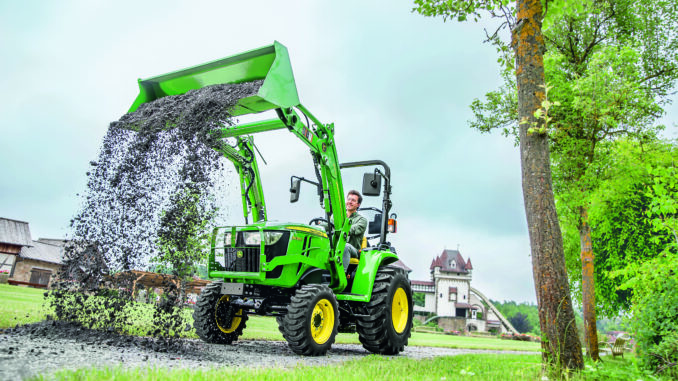
The John Deere 855 is a compact utility tractor built for owners who need more capability than a lawn tractor but still want a machine that can handle mowing, loader work, light grading, snow removal, and property maintenance around homes, acreages, and small farms. It uses a diesel engine, an open-center hydraulic system, independent PTO, and compact-tractor features such as 3-point hitch capability and optional front-wheel drive, which makes it more versatile than Deere’s lighter lawn and garden models.
This guide is written for homeowner and DIY users in the USA and Canada who want practical help with repair decisions, symptom-based troubleshooting, routine maintenance, and common service parts for the John Deere 855. The focus is on what the owner actually sees first—hard starting, weak hydraulics, overheating, vibration, poor mowing performance, charging problems, or drive complaints—and then on the most likely causes and realistic next steps.
John Deere 855 model overview
The John Deere 855 sits in Deere’s older compact utility tractor range alongside the 755 and 955, and the factory operator’s manual groups those machines together because they share many service procedures and operating systems. For owners in North America, that matters because many maintenance intervals, hydraulic checks, and troubleshooting steps overlap across those models, but the 855 has its own capacities and parts fitment details that should still be confirmed by PIN and attachment setup before ordering parts.
Key systems on the John Deere 855 include the diesel engine and fuel system, the cooling system, the hydraulic/transmission system, the PTO and mower/implement drive, and the electrical and safety interlock systems. The operator’s manual also identifies service areas such as air cleaner elements, fuel filter, hydraulic oil filter, fan belt, fuses, battery, safety interlock system, MFWD oil, and cooling system service, which gives a good picture of where owners typically spend their maintenance time.
Common service parts owners often look for include engine oil filter, fuel filter, air cleaner elements, hydraulic oil filter, fan/alternator belt, fuses, light bulbs, battery, mower blades, and mower deck belts if the tractor is used with a mid-mount mower. Because deck and attachment combinations vary, mower belts and blades should always be matched to the exact mower deck model rather than the tractor model alone.
Troubleshooting approach for the John Deere 855
The most effective way to diagnose a John Deere 855 is to start with the symptom, not the part. A no-start problem, for example, may come from fuel delivery, air in the diesel system, battery condition, safety interlocks, or a shutoff issue, while poor mowing can come from deck setup, worn blades, belt slip, PTO issues, or engine speed problems.
Main symptom groups for the John Deere 855 usually include:
-
Starting issues, such as cranking slowly, not cranking, or cranking without starting.
-
Running issues, such as rough running, smoke, weak power, or stalling under load.
-
Mowing and PTO problems, such as poor cut, belt slip, uneven cutting, or weak implement performance.
-
Vibration and noise, including deck vibration, driveline noise, front axle noise, or rattling shields and mounts.
-
Overheating and leaks, especially coolant leaks, hydraulic seepage, plugged cooling fins, or fuel seepage around the filter and sediment bowl.
-
Transmission, hydraulic, and drive complaints, such as weak hydro response, poor lift, steering issues, or MFWD concerns.
-
Electrical and safety-switch problems, such as blown fuses, lighting faults, charging issues, or interlock failures.
Emergency repairs on the John Deere 855
Some faults on the John Deere 855 need immediate attention because they affect safe operation or can damage expensive systems quickly. Examples include fuel leaks, coolant loss, hydraulic hose failure, severe vibration, charging problems that leave the tractor unable to restart, and overheating caused by debris-packed screens or low coolant.
Starting issues
When the John Deere 855 will not crank or cranks but will not fire, the risk is often less about immediate damage and more about avoiding unnecessary parts-swapping. Since the manual specifically includes safety interlock checks, fuel-system bleeding, battery service, and fuse replacement procedures, those are the first areas to verify before assuming a major engine problem.
Common causes:
-
Weak or failing battery.
-
Corroded battery connections or poor grounds.
-
Blown fuse or electrical fault.
-
Safety interlock issue.
-
Air in the diesel fuel system or restricted fuel supply.
Basic owner checklist:
-
Check battery condition, cable tightness, and ground cleanliness.
-
Verify the safety interlock system and controls are in the correct starting position.
-
Check the fuel level and inspect the sediment bowl/filter area.
-
Inspect fuses before replacing harder-to-reach components.
-
If fuel delivery was interrupted, follow the bleed procedure from the manual rather than extended cranking.
John Deere 855 overheating and leaks
Overheating on the John Deere 855 matters immediately because the tractor uses a liquid-cooled diesel engine with radiator screens and cooling fins that must stay clear for proper heat rejection. Ignoring coolant loss or debris-packed screens can turn a minor service issue into head-gasket, hose, or engine damage.
Common causes:
-
Low coolant level.
-
Plugged grille screen, radiator screen, or cooling fins.
-
Loose hose clamps or aging radiator hoses.
-
Failing fan belt or incorrect belt tension.
-
Coolant leak at hose, radiator, or water-pump area.
Basic owner checklist:
-
Stop work and let the engine cool before opening the cooling system.
-
Check coolant level and look for obvious wet spots at hoses and clamps.
-
Clean the grille, screen, and radiator/oil-cooler fins carefully.
-
Inspect the fan/alternator belt for looseness, cracking, or glazing.
-
Do not continue mowing or loader work if temperature rises again after cleaning.
John Deere 855 vibration and noise
Severe vibration on the John Deere 855 should be addressed right away because it can damage mower spindles, PTO driveline parts, sheet metal, and fasteners, and it can also signal a problem with wheels, front axle parts, or attached implements. A machine that suddenly begins vibrating after striking an object or after blade service should not be used until the source is identified.
Common causes:
-
Bent or unbalanced mower blade.
-
Loose blade hardware or deck spindle issue.
-
Loose wheel hardware.
-
Damaged PTO driveline or attachment component.
-
Engine shield, muffler, or sheet metal looseness.
Basic owner checklist:
-
Shut the tractor down and inspect the implement that was running when vibration started.
-
Check wheel bolt torque and look for obvious loose hardware.
-
Inspect blades and spindles if using a mid-mount mower.
-
Spin pulleys by hand with the engine off and key removed to feel for roughness.
-
Escalate quickly if vibration appears to come from the engine, PTO clutch, or driveline.
Transmission and hydraulic problems
Drive and hydraulic complaints on the John Deere 855 can become expensive if low fluid, clogged filtration, or contamination is ignored. The operator’s manual includes hydraulic oil level checks, hydraulic oil and filter changes, screen cleaning, MFWD oil service, and steering troubleshooting, which are strong clues that regular fluid care is critical on this model.
Common causes:
-
Low hydraulic/transmission oil.
-
Plugged screen or restricted hydraulic filter.
-
Old fluid causing sluggish performance.
-
External hydraulic leak.
-
Internal wear in pump, steering, transmission, or lift components.
Basic owner checklist:
-
Check hydraulic/transmission oil level before further operation.
-
Look for leaks around hoses, fittings, filter base, and axle/transmission housing.
-
Review service history for hydraulic oil and filter changes.
-
Note whether the issue affects steering, 3-point lift, PTO engagement, or travel speed.
-
Stop DIY work if the problem points to internal hydrostatic or hydraulic failure.
John Deere 855 electrical problems
Electrical problems on the John Deere 855 range from simple fuse and bulb issues to charging and interlock faults that can leave the tractor dead in the field. Because the manual specifically covers fuses, bulbs, battery replacement, jump-starting, and safety interlock checks, owners should work through those basic items before condemning switches or the charging system.
Common causes:
-
Blown fuse.
-
Dirty battery terminals or weak battery.
-
Failed bulb or light socket.
-
Bad ground connection.
-
Fault in the charging system or interlock circuit.
Basic owner checklist:
-
Inspect the battery first, including posts, cables, and grounds.
-
Check fuses with the correct rating.
-
Test lights and warning indicators one by one rather than assuming a single root cause.
-
Verify the safety interlock system if the machine has a no-crank condition.
-
Move to charging-system testing only after battery and connection checks are done.
John Deere 855 DIY or dealer repair guide
The normal line on the John Deere 855 is fairly clear: routine service, accessibly mounted wear parts, filters, belts, fluids, blades, fuses, bulbs, and simple electrical checks are realistic DIY tasks, while injection-system work, internal hydraulic repairs, hydrostatic transmission diagnosis, engine internal repairs, and precise steering or front axle rebuild work are better left to experienced mechanics or a Deere-capable shop.
Good DIY jobs
-
Engine oil and filter service.
-
Fuel filter replacement and fuel-system bleeding.
-
Air cleaner service.
-
Battery cleaning or replacement.
-
Fuse and bulb replacement.
-
Cleaning radiator screen, cooling fins, and general debris buildup.
-
Mower blade and deck-belt service on the attached mower, if equipped.
Advanced DIY or dealer jobs
-
Injection pump or injector diagnosis.
-
Internal hydraulic or hydrostatic transmission repair.
-
PTO clutch or internal driveline repair.
-
Steering gear or front axle internal work.
-
Major engine teardown or head-gasket repair.
-
Electrical diagnosis that goes beyond fuses, battery, and visible wiring issues.
Skill level guide
-
Beginner: Filters, oil, battery service, fuses, bulbs, screen cleaning, visual inspections.
-
Intermediate: Fuel bleeding, belt replacement, mower blade service, fluid changes in multiple housings, minor wiring repairs.
-
Advanced: Hydraulic diagnosis, steering/front axle teardown, diesel fuel-system work, PTO and transmission repairs.
Parts for the John Deere 855
Before ordering parts for a John Deere 855, gather the full model name, the tractor Product Identification Number, the engine serial number, and the exact mower deck or attachment model if one is fitted. The operator’s manual specifically includes places to record the Product Identification Number and engine serial number, which is a strong reminder that serial-sensitive parts are common on compact tractors of this era.
The table below lists common service and repair categories owners often need for the John Deere 855. Exact OEM numbers can vary by serial number, engine configuration, and attached mower or implement, so Deere’s parts catalog or a dealer lookup by PIN is the safest way to confirm final part numbers before ordering.
OEM parts are usually the best choice for belts, hydraulic filters, safety-related switches, steering components, and other fit-sensitive parts because those items are less forgiving when dimensions or material quality are off. Aftermarket parts can make sense for batteries, some filters, bulbs, and mower blades when the cross-reference is exact and the supplier is reputable.
Manuals and diagrams for the John Deere 855
The best starting points for John Deere 855 documentation are Deere’s official parts resources, the factory-style operator’s manual, and a technical manual for deeper repair work. Each source serves a different purpose, and owners usually need more than one of them for accurate diagnosis and parts ordering.
Useful sources include:
-
John Deere Parts Catalog for exploded diagrams, serial-sensitive part lookup, and current part-number supersessions.
-
Operator’s manual copy for 755/855/955 for service intervals, operating checks, capacities, and routine maintenance procedures.
-
Technical manual reference for 655/755/855/955 family for deeper troubleshooting, repair boundaries, and workshop-level procedures.
-
Cross Creek Tractor John Deere parts section for aftermarket sourcing and cross-reference shopping when OEM lookup has already been confirmed.
How to find John Deere 855 serial numbers
These numbers matter because Deere often ties part fitment and service detail to serial number breaks, and the operator’s manual specifically provides places to record both the Product Identification Number and engine serial number. Without those identifiers, ordering filters is usually manageable, but ordering hydraulic, electrical, or attachment-specific parts becomes much riskier.
-
Park the tractor safely, shut the engine off, and clean dirt from likely tag locations first.
-
Locate and record the tractor Product Identification Number from the machine identification plate referenced in the manual.
-
Find and record the engine serial number from the engine identification area noted by the operator’s manual index.
-
If a mower or other attachment is fitted, locate its own model and serial tag because deck belts, blades, and some driveline parts depend on the implement rather than the tractor.
-
Take clear photos of every tag before ordering parts online or visiting a dealer counter.
Buying John Deere 855 parts
The best strategy is to confirm the OEM number first and then decide where to buy, rather than shopping by description alone. That approach reduces the most common mistakes on older Deere compact tractors, especially when multiple deck sizes, serial breaks, and superseded part numbers are involved.
-
Online: use Deere’s official parts catalog first, then compare pricing from Deere-focused parts sellers after the number is confirmed.
-
Dealer counter: best for PIN-sensitive hydraulic, electrical, steering, and driveline parts, or when an older number may have been superseded.
-
Retail stores: acceptable for batteries, engine oil, coolant, bulbs, and some filters only when packaging clearly cross-references the John Deere 855 or the exact OEM number.
Useful links include John Deere Parts Catalog, Cross Creek Tractor, and the operator’s manual source for maintenance confirmation before buying.
John Deere 855 fitting guide for common parts
These are high-value DIY jobs because they solve a large share of common John Deere 855 owner complaints without requiring tractor teardown. Always park on level ground, lower attachments, shut the engine off, remove the key, and let hot components cool before starting service.
Changing the John Deere 855 engine oil and filter
This service helps with hard starting, accelerated engine wear, and poor long-term reliability, and the operator’s manual includes engine oil and filter service as a scheduled task.
-
Warm the engine briefly so the oil drains more completely, then shut it down safely.
-
Drain the engine oil into a suitable pan and remove the old oil filter.
-
Lightly oil the new filter gasket and install the new filter by hand to the correct tightness.
-
Refill with the correct engine oil and recheck the level after running the engine briefly.
-
Inspect for leaks and record the service interval.
John Deere 855 fuel filter replacement and bleeding
This job matters when the tractor loses power, stalls from fuel restriction, or will not restart after filter service. Since the manual includes both fuel filter replacement and fuel-system bleeding, do both parts of the job rather than replacing the filter and hoping trapped air clears on its own.
-
Shut the fuel supply off if equipped and clean around the filter area first.
-
Remove the old filter and install the replacement carefully to avoid dirt entering the system.
-
Reopen fuel flow and inspect the sediment bowl or related fittings for contamination or leakage.
-
Follow the manual’s bleed procedure to remove air from the diesel fuel system.
-
Start the tractor and confirm smooth running before returning to work.
Servicing the John Deere 855 air cleaner
Air-cleaner service helps restore power and reduces smoke and restriction-related running problems. The operator’s manual has separate air-cleaner coverage for the 855/955 tractors, which shows this is a model-specific maintenance point rather than a generic tractor task.
-
Open the air-cleaner housing carefully so dirt does not fall into the intake.
-
Remove the outer and inner elements as required by the service condition and inspection results.
-
Clean the housing and inspect seals and hose connections.
-
Install the correct replacement elements and close the housing securely.
-
Recheck the air restriction indicator if equipped.
John Deere 855 mower blade or deck-belt service
If your John Deere 855 is used with a mid-mount mower, this is one of the most important fixes for poor cut quality, striping, vibration, and belt slip.
-
Confirm the exact mower deck model before ordering blades or the deck belt.
-
Remove the deck or gain safe access according to the deck layout and tractor setup.
-
Inspect blades for bends, edge loss, and balance problems, and inspect the belt for glazing, cracking, or stretching.
-
Replace worn parts and check spindle and idler condition before reassembly.
-
Level the deck and test cut at full PTO speed after service.
John Deere 855 maintenance to prevent repeat failures
Regular maintenance prevents many John Deere 855 problems from recurring because the tractor depends on clean fuel, unrestricted cooling airflow, correct fluid levels, and timely filter changes. Most recurring owner complaints on older compact tractors trace back to deferred service, contamination, neglected belts, poor battery care, or mower setup issues rather than catastrophic failure.
Focus areas:
-
Starting reliability: keep battery terminals clean, maintain the battery, and service the fuel filter and air cleaner on time.
-
Cooling and fire prevention: clean debris from the tractor and especially from screens, radiator areas, and engine compartments after use.
-
Drive and hydraulic performance: check hydraulic/transmission oil level regularly and stay current on hydraulic oil and filter service.
-
Electrical reliability: test the safety interlock system and replace damaged wiring, corroded terminals, and incorrect fuses promptly.
-
Mowing quality: keep blades sharp, confirm deck level, and replace deck belts before they begin slipping badly.
John Deere 855 maintenance schedule
The factory operator’s manual lays out service intervals by break-in, 10 hours or daily, 50 hours or weekly, 200 hours, 500 hours, every 2 years, and as needed. Owners should follow the official chart first and increase frequency when operating in dusty, hot, heavy-load, or debris-prone conditions.
Daily or before each use
-
Check engine oil level.
-
Check coolant level.
-
Check hydraulic oil level.
-
Check the fuel filter sediment bowl.
-
Clean grille and radiator screen / cooling-air areas as needed.
-
Check safety interlock system.
After first 50 hours / break-in
-
Change engine oil and filter.
-
Check fan belt tension.
-
Check radiator hose clamps.
-
Check wheel bolt torque.
-
Review general machine condition for loose hardware and leaks.
Every 50 hours or weekly
-
Check battery electrolyte level.
-
Check MFWD oil level if equipped.
-
Tighten wheel bolts / confirm wheel hardware condition.
-
Check tire pressure.
-
Lubricate grease fittings and key linkage points.
Every 200 hours
-
Change engine oil and filter.
-
Clean fuel filter sediment bowl.
-
Check fan belt tension.
-
Clean oil cooler and radiator cooling fins.
-
Lubricate the 3-point hitch.
Every 500 hours
-
Replace fuel filter.
-
Check primary air filter and air-filter hose clamps.
-
Change hydraulic oil and filter, including screen cleaning as outlined in the service section.
-
Change MFWD oil if equipped.
-
Have fuel injectors and valve-clearance items evaluated if your machine is due and symptoms point that way.
Every 2 years
-
Change radiator coolant.
Seasonal checklist
-
Spring: change overdue fluids, test battery condition, check mower deck setup, and clean cooling areas before mowing season.
-
Mid-season: recheck belt condition, blade sharpness, tire pressure, and debris buildup if the tractor is doing mowing and loader work in hot weather.
-
Fall or pre-winter: service fuel and cooling systems, inspect lights, and prepare the tractor or implements for snow or storage duty.
Repair, upgrade, or replace the John Deere 855?
For most owners, a John Deere 855 is worth repairing when the tractor is structurally sound, the engine and hydraulics are fundamentally healthy, and the needed work is concentrated in maintenance items, wear parts, hoses, belts, or external components. Upgrade decisions usually come down to attachment capability, operator comfort, and hydraulic features, while replacement becomes more sensible when several major systems need expensive work at the same time.
Repair if…
-
The issue is mainly filters, fluids, belts, battery, hoses, bulbs, blades, or deck service.
-
The tractor starts, drives, lifts, and runs implements well once routine maintenance is caught up.
-
The chassis, steering, and hydraulic system are basically sound.
Upgrade if…
-
You need newer attachment support, more hydraulic capacity, or better operator comfort than the John Deere 855 offers.
-
Your current machine is reliable but your workload has expanded beyond its practical limits.
Replace if…
-
The tractor has major engine, hydrostatic/hydraulic, and steering or axle problems at the same time.
-
Parts availability is not the issue, but labor and downtime now exceed the value you get from keeping the machine.
John Deere 855 troubleshooting FAQ
1. Why will my John Deere 855 not start?
A John Deere 855 that will not start usually comes down to battery condition, cable connection problems, safety interlock faults, fuel restriction, or air in the diesel fuel system. Start with the battery, fuse checks, fuel supply, and the interlock system before assuming a major engine issue.
2. Why does my John Deere 855 crank but not fire?
If it cranks but does not fire, suspect fuel delivery or trapped air before anything else. The operator’s manual specifically includes fuel-system bleeding, which is a strong clue that air intrusion after filter service or running low on fuel is a common no-start cause.
3. Why is my John Deere 855 cranking slowly?
Slow cranking usually points to a weak battery, dirty cable ends, poor ground, or high resistance in the starting circuit. Cold weather can make the problem show up sooner because diesel engines need stronger cranking speed than many gas lawn tractors.
4. Why does my John Deere 855 lose power under load?
Power loss often comes from a restricted air cleaner, fuel filter restriction, dirty sediment bowl, or overdue maintenance. If the tractor also smokes or struggles with PTO load, check airflow and fuel delivery first.
5. Why is my John Deere 855 hard to start when cold?
Cold-weather starting gets harder when battery strength is marginal, fuel quality is poor, or compression and fuel delivery are not at their best. Use the cold-weather procedures in the manual and make sure the battery and fuel system are in top shape before winter work.
6. Why is my John Deere 855 overheating?
Overheating usually means low coolant, packed screens, dirty radiator fins, loose belts, or a cooling-system leak. The first owner checks are coolant level, airflow through the screen and fins, and fan-belt condition.
7. Why is coolant leaking on my John Deere 855?
Coolant leaks often show up at hoses, clamps, radiator connections, or aging cooling-system components. Do not keep working the tractor until the source is found because even a small leak can quickly become a serious overheat problem.
8. Why is my John Deere 855 leaking hydraulic oil?
External leaks commonly come from hoses, fittings, seals, filter bases, or housing gaskets. Clean the area first so you can tell where fresh oil appears, then stop using the tractor if steering, lift, or drive performance is already affected.
9. Why does the steering on my John Deere 855 feel weak or erratic?
Weak steering often points to low hydraulic oil, contaminated fluid, filter restrictions, or internal hydraulic wear. Check fluid level and service history first because those are the most realistic DIY starting points.
10. Why won’t the 3-point hitch lift on my John Deere 855?
A weak or non-lifting hitch usually indicates a hydraulic supply problem, low fluid, a filter or screen issue, or internal hydraulic wear. Note whether steering and other hydraulic functions are also weak, because that helps separate a general hydraulic issue from a hitch-specific one.
11. Why is my John Deere 855 battery not charging?
Charging complaints often involve the battery itself, loose or corroded connections, belt problems, or charging-system component failure. Check battery condition and belt tension before condemning the alternator or regulator side of the system.
12. Why do fuses keep blowing on my John Deere 855?
Repeated fuse failure means there is an electrical fault, not just a bad fuse. Use only the correct amp rating and inspect wiring, sockets, and accessories for shorts or rubbing damage.
13. Why are the lights not working on my John Deere 855?
The most likely causes are blown bulbs, blown fuses, bad grounds, or corroded connections. Work from the simple items outward because older compact tractors often have more than one small electrical issue at once.
14. Why does my John Deere 855 vibrate while mowing?
Mowing vibration usually comes from bent blades, blade imbalance, spindle problems, or a damaged deck belt or pulley. Stop using the mower until you inspect the deck because vibration can quickly damage bearings and mounts.
15. Why is the cut uneven on my John Deere 855?
Uneven cut is commonly caused by dull blades, wrong tire pressure, deck out of level, worn spindle parts, or insufficient PTO speed. Owners often replace blades before checking deck level, but both need to be correct for a clean cut.
16. Why does my John Deere 855 leave strips of grass?
Striping or uncut streaks usually mean the blades are dull, the deck is dirty underneath, the belt is slipping, or ground speed is too fast for conditions. Wet or overly tall grass can make the symptom worse even when the deck is mechanically sound.
17. Why does the mower belt keep slipping on my John Deere 855?
If the deck belt slips, check for glazing, stretching, contamination, seized idlers, or incorrect routing. Because deck belts depend on the specific mower model, make sure the replacement belt matches the exact deck rather than ordering by tractor model only.
18. Why does my John Deere 855 break mower blades or loosen blade hardware?
Blade damage usually follows impacts with roots, rocks, or hidden debris, but worn spindle assemblies and improper installation can also contribute. Any repeated blade issue should trigger a closer check of spindle condition and deck alignment.
19. Why does my John Deere 855 make a rattling noise?
Rattling can come from shields, loose sheet metal, worn deck parts, loose wheel hardware, or attachments that are not secured correctly. Try to identify whether the noise changes with engine rpm, tractor movement, or PTO engagement, because that narrows the search quickly.
20. Why is there a squealing belt on my John Deere 855?
A squeal usually points to belt slip, wrong tension, contamination, or pulley bearing drag. That can apply to the tractor’s fan/alternator belt or the mower deck belt, so identify which system is making the sound first.
21. Why does my John Deere 855 smoke?
Smoke color matters: black often suggests excess fuel or restricted air, while white or unusual smoke can point to fuel, compression, or cold-running issues. Check the air cleaner and maintenance history first, then escalate if smoke remains after basic service.
22. Why does my John Deere 855 stall after starting?
Stalling after startup often means fuel flow is restricted, air is trapped in the system, or contamination has reached the filter/sediment bowl area. The fix is usually in the fuel side before it is in the engine internals.
23. Why won’t my John Deere 855 move properly?
Poor movement can come from low hydraulic/transmission oil, filter restriction, linkage issues, or deeper hydrostatic trouble. Start with the fluid level and service history before assuming internal transmission failure.
24. Why does my John Deere 855 feel weak on hills?
Hill weakness can reflect normal compact-tractor limits, but it can also indicate low power, hydro wear, low fluid, or traction setup issues. Make sure the engine reaches proper operating speed and the hydraulic system is serviced correctly before drawing conclusions.
25. Why is MFWD not helping on my John Deere 855?
If equipped, MFWD problems can involve engagement issues, low front axle oil, linkage trouble, or internal front-drive wear. Because front-drive repairs can get more technical, start with oil level and external checks before going deeper.
26. Why does my John Deere 855 PTO not work right?
A PTO problem may show up as slow engagement, weak implement performance, or no driven output at all. First confirm engine speed, control operation, and whether the problem is in the tractor PTO system or in the attached implement’s belt, shaft, or gearbox.
27. Why does my John Deere 855 use more fuel than expected?
Higher fuel use often follows dirty air filters, extended idling, heavy PTO loads, poor maintenance, or engine issues that reduce efficiency. Compare current performance with a fully serviced baseline before assuming serious engine wear.
28. How often should I service my John Deere 855?
The operator’s manual organizes service by break-in, 10 hours or daily, 50 hours, 200 hours, 500 hours, every two years, and as-needed items. For many homeowner users, that means daily checks before work, yearly fluid planning, and closer tracking of hours for oil, fuel, hydraulic, and coolant service.
29. What maintenance matters most on an older John Deere 855?
The biggest priorities are clean fuel, good battery condition, clean cooling airflow, correct fluid levels, and timely oil, filter, and hydraulic service. On an older compact tractor, neglected basics create far more trouble than owners often expect.
30. Should I use OEM parts on my John Deere 855?
OEM is usually the safer choice for fit-sensitive parts such as belts, hydraulic filters, and safety-related components. Aftermarket parts are usually more acceptable for batteries, bulbs, and some filters or blades when the cross-reference is exact.
31. Is the John Deere 855 a good DIY tractor?
Yes, within limits. The John Deere 855 is owner-serviceable for many routine tasks, but once the issue moves into injection, internal hydraulics, hydrostatic work, or major engine repair, dealer-level skill and tooling become much more important.
32. Where can I find a John Deere 855 manual?
The most useful combination is an operator’s manual for maintenance and operating information plus a technical manual for deeper repair work. Deere’s parts catalog is the third resource you will use most because it helps confirm diagrams and part-number supersessions.
33. How do I know which mower parts fit my John Deere 855?
You need the exact mower deck model and serial information, not just the tractor model. Blades, belts, spindle parts, and some hardware are tied to the deck itself, which is why owners so often get the wrong parts when they shop only by “John Deere 855 mower belt.”
34. When should a John Deere 855 go to a dealer?
Dealer or specialist help is the right move when you have internal hydraulic problems, repeated no-start issues after basic checks, fuel-injection faults, charging problems that survive battery and wiring checks, or heavy vibration you cannot isolate safely. Those repairs can get expensive fast if diagnosis starts with random parts replacement.