
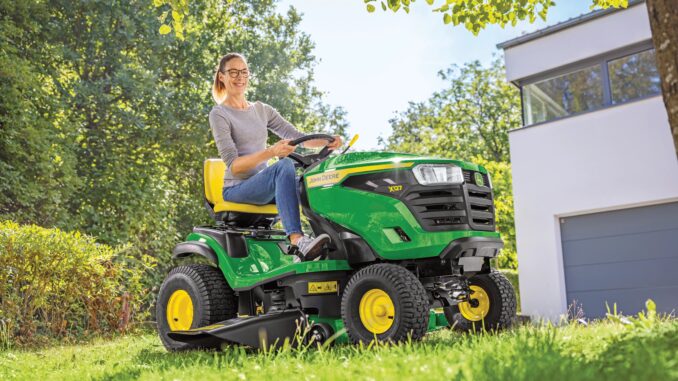
The John Deere 120 repair, troubleshooting, and maintenance guide below is built for homeowner and DIY users in the USA and Canada who need practical help with common faults, service parts, manuals, and realistic repair boundaries on the L120 lawn tractor.
This model sits in John Deere’s L100-series residential lawn tractor range, and Deere’s operator information plus quick-reference material confirms common maintenance items such as the oil filter, fuel filter, spark plugs, deck belt, traction belt, blades, and battery used on L120 machines with the 48-inch 3-in-1 deck.
John Deere 120 model overview
The John Deere 120 most commonly referenced by homeowners in North America is the L120 lawn tractor, a residential machine designed for mowing medium to larger home properties rather than commercial groundcare work. Deere’s operator manual table of contents for the L120 shows owner-service coverage for engine, transmission, mower, electrical system, tire pressure, safety system, belt replacement, mower removal, and blade service, which makes it a good fit for capable DIY owners doing routine maintenance and straightforward repairs.
And See:
For most owners, this guide matters because the same few systems cause the majority of problems: fuel and air delivery, ignition, mower belt and blades, transmission drive belt, battery/starting circuit, and safety interlocks. It also helps owners locate correct parts, diagrams, and manuals before ordering anything, which is important because Deere lists model-specific consumables and some engine-specific filter variations even within the L120 range.
General overview of the John Deere 120
Within the Deere residential lineup, the L120 belongs to the L100-series family and is supported through Deere owner-information pages, operator manuals, quick-reference guides, and the JDParts ecosystem. Deere’s L120 owner support page points owners to manuals and service information, while the operator manual contents confirm sections covering oil service, air cleaner service, spark plugs, fuel filter replacement, transmission checks, mower belt replacement, blade service, and electrical checks.
The key systems on the John Deere 120 are:
-
Engine and fuel system, including oil filter, air cleaner, fuel filter, spark plugs, and cooling-fin cleaning points.
-
Mower system, including the 48-inch deck belt, blades, gauge wheels, deck leveling, and spindle-related cut quality issues.
-
Drive system, including the traction drive belt and transmission checks listed by Deere in the operator literature.
-
Electrical and safety system, including ignition switch, battery, headlight bulb, key, and machine safety system checks.
Common service parts owners regularly buy for the John Deere 120/L120 with 48-inch deck include oil filter AM125424 or packaged GY20577, fuel filter AM116304 or AM107314 depending on engine marking, spark plug M78543, traction drive belt GX20006, mower deck belt GX20305, standard blade GX20250, mulch blade GX20819, ignition switch GY20074, battery TY25878, and deck maintenance kit GY21087.
John Deere 120 troubleshooting approach
The best way to diagnose a John Deere 120 is to start with the symptom the owner actually sees: no crank, cranks but will not start, rough running, weak cutting, vibration, poor drive, or electrical failure. Deere’s operator material is organized the same way in practice, because the service contents break maintenance and repair tasks into engine, transmission, mower, and electrical systems rather than asking owners to guess the failed part first.
Main symptom groups on this model are:
-
Starting issues, such as no crank, slow crank, hard starting, or repeated battery drain.
-
Running issues, such as surging, poor power, misfire, black smoke, or stalling under load.
-
Cut-quality problems, such as uneven cut, uncut strips, belt slip, or poor deck discharge.
-
Vibration and noise, often linked to blades, belt damage, pulleys, or loose hardware.
-
Overheating and leaks, especially when cooling fins, intake screens, or fuel/oil service items are neglected.
-
Transmission and drive complaints, including weak movement, slipping, or poor hill performance.
-
Electrical and safety-switch faults, including ignition-switch issues, dead battery complaints, or no-start safety interlock problems.
John Deere 120 emergency repair needs
Some faults on the John Deere 120 need immediate attention because they create a safety issue or can quickly damage expensive components. Stop using the tractor at once if blades strike objects, the deck vibrates heavily, fuel is leaking, wiring is overheating, the engine loses lubrication, or the machine moves unpredictably.
John Deere 120 starting issues
A starting problem matters immediately when the engine will not crank, only clicks, or cranks weakly enough to overheat the starter or drain the battery. On this model, the most common owner-level causes are battery condition, ignition-switch faults, dirty or stale fuel, plugged fuel filter, worn spark plugs, and safety interlock problems.
Common causes:
-
Weak or failed battery TY25878.
-
Faulty ignition switch GY20074 or worn key switch contacts.
-
Restricted fuel filter AM116304, AM107314, or packaged GY20709 depending on engine version.
-
Fouled or worn spark plugs M78543.
-
Safety system not satisfied, such as PTO engaged or brake/seat switch issue.
Basic checks:
-
Confirm PTO is off, brake is applied, and the operator controls are in a valid start position.
-
Check battery terminals for looseness or corrosion and test battery voltage before replacing parts.
-
Inspect the fuel filter and confirm fresh gasoline is present.
-
Remove and inspect both spark plugs for fouling, wear, or fuel wetness.
-
If the tractor still will not crank or repeatedly blows fuses, move to wiring diagnosis rather than continuing to crank it.
John Deere 120 cut-quality problems
Poor cut quality usually shows up as ragged grass tips, uneven height, strips left standing, or weak discharge from the 48-inch deck. This matters because owners often misdiagnose the issue as an engine problem when the real cause is blade condition, deck level, belt wear, or packed debris under the deck.
Common causes:
-
Dull, bent, or mismatched blades GX20250 or mulch blades GX20819.
-
Worn or stretched mower belt GX20305 or GX21833 on some 2005 machines.
-
Deck out of level or gauge wheel setup incorrect.
-
Grass buildup under the deck affecting airflow.
-
Bent blade spindle area after impact, requiring closer inspection.
Basic checks:
-
Inspect blades for sharpness, bends, and correct installation orientation.
-
Check deck belt condition for glazing, cracking, or sidewall wear.
-
Level the deck and compare both sides before adjusting anything else.
-
Clean the deck underside and discharge area fully.
-
If vibration accompanies poor cutting, inspect blade balance and spindle condition before mowing again.
John Deere 120 vibration and noise
New vibration or metallic noise is a stop-and-check symptom because blade, pulley, or belt failures can quickly damage the deck or throw hardware. Deere specifically includes checks for bent blades, blade service, sharpening, and balancing in the operator literature, which shows how often this symptom traces back to mower hardware rather than deeper engine damage.
Common causes:
-
Bent or unbalanced blades.
-
Damaged mower belt or traction belt.
-
Loose deck hardware or pulley issues.
-
Debris wrapped around blade shafts or pulleys.
-
Engine mounting or chassis hardware looseness after long use.
Basic checks:
-
Shut off the engine, remove the key, and inspect blades before restarting.
-
Check blade bolts and visible deck fasteners for looseness.
-
Inspect both GX20305 deck belt and GX20006 traction belt for obvious damage.
-
Spin pulleys by hand with the belt removed if needed to identify rough bearings or wobble.
-
Do not keep mowing with severe vibration because it can escalate from a blade issue to spindle or deck-shell damage.
John Deere 120 overheating and leaks
Overheating on this tractor often starts with blocked cooling fins, a dirty air-intake screen, old oil, or fuel-system restrictions that make the engine work harder than it should. Fuel or oil leaks also need immediate attention because they increase fire risk and can lead to engine damage if the oil level drops.
Common causes:
-
Cooling fins and air-intake screen packed with grass and dust.
-
Oil overdue for service or oil filter restricted.
-
Fuel seepage from filter or line connections.
-
Running with low oil level.
Basic checks:
-
Clean the intake screen and engine-cooling areas with the engine off and cool.
-
Check oil level before every use and top up if needed.
-
Replace oil filter and oil on schedule if service history is unknown.
-
Inspect around the fuel filter, cap, and lines for dampness or fuel smell.
-
If smoke, heavy oil leakage, or repeated overheating continues, stop and escalate to an engine diagnostic rather than continuing to mow.
John Deere 120 transmission and drive problems
Drive complaints usually show up as weak forward motion, slipping on grades, delayed engagement, or a tractor that seems to lose pulling ability after the engine is fully warm. Because Deere lists both transmission checks and a separate traction drive belt on the L120 parts sheet, owners should inspect belt condition and linkage basics before assuming the transmission itself has failed.
Common causes:
-
Worn traction drive belt GX20006.
-
Linkage issues or poor pedal return.
-
Transmission problem requiring deeper diagnosis.
-
Tire pressure mismatch affecting traction and cut height perception.
Basic checks:
-
Inspect the GX20006 traction drive belt for wear, glazing, and contamination.
-
Verify tire pressures match the operator manual guidance.
-
Check for free movement at the drive controls and linkage points.
-
Review Deere’s transmission-check procedure before condemning the unit.
-
If the tractor barely moves after belt and linkage inspection, dealer-level transmission evaluation is usually the safer path.
John Deere 120 electrical problems
Electrical faults often appear as intermittent starting, dead lights, blown fuse complaints, or a machine that shuts off when the operator changes position. On the L120, common owner-service electrical parts include the ignition switch GY20074, battery TY25878, headlight bulb AD2062R, and key GY20680.
Common causes:
-
Weak battery or dirty cable ends.
-
Ignition switch GY20074 failure.
-
Headlight bulb AD2062R failure.
-
Safety-switch or seat-switch related issues.
-
Damaged wiring near moving or hot components.
Basic checks:
-
Charge and test the battery before replacing switches.
-
Inspect the ignition-switch connector and harness for looseness or heat damage.
-
Confirm the machine safety system behaves normally with PTO, brake, and seat inputs.
-
Replace bulbs and obvious damaged terminals as basic repairs.
-
If the issue is intermittent and wiring-related, a wiring-diagram-based repair is better than guessing with new parts.
DIY or dealer for a John Deere 120
For the John Deere 120, the usual line is simple: routine service, belts, blades, filters, spark plugs, deck cleaning, and basic electrical consumables are realistic DIY work, while internal transmission faults, major engine repairs, or hard-to-trace wiring faults are better left to a dealer or experienced technician.
Good DIY jobs on the John Deere 120
-
Engine oil and oil filter service.
-
Air cleaner and fuel filter replacement.
-
Spark plug replacement.
-
Blade removal, sharpening, balancing, and replacement.
-
48-inch deck belt replacement and deck leveling.
-
Battery, bulb, and ignition-switch replacement.
Advanced DIY or dealer jobs
-
Repeated no-start problems after battery, spark, and fuel checks.
-
Internal transmission diagnosis or replacement.
-
Charging-system faults requiring meter-based testing through the harness.
-
Engine internal repair, compression-related faults, or severe oil burning.
-
Structural deck or spindle housing repair after major impact.
Skill level guide
-
Beginner: Air filter, oil service, spark plugs, battery, blades, deck cleaning.
-
Intermediate: Deck belt replacement, deck removal/installation, fuel filter replacement, ignition switch replacement, deck leveling.
-
Advanced: Electrical diagnosis with wiring diagrams, transmission faults, engine tear-down, recurring no-start diagnostics after basic checks fail.
Parts for the John Deere 120
Before ordering parts for a John Deere 120, gather the exact model designation, tractor serial number or PIN, engine model marking, and deck size or deck serial number. Deere’s own parts and owner-information material stresses that machine identification and engine identification matter because filter and belt choices can vary across production runs and engine versions.
For OEM versus aftermarket, OEM parts make the most sense for belts, ignition and safety components, fit-sensitive deck parts, and anything where Deere identifies engine- or serial-specific variation. Aftermarket parts can be reasonable for consumables such as spark plugs, batteries, some filters, and blades, but only when the cross-reference is exact for the L120 and the correct engine version.
John Deere 120 parts diagrams and manuals
The most useful manual and diagram sources for this model are Deere’s owner-information page, the official operator manual, Deere manuals/training pages, and Deere quick-reference or parts catalog sheets.
Recommended sources:
-
John Deere L120 owner information for the official starting point to manuals, service information, and owner resources.
-
Official L120 operator manual for service intervals, mower removal, belt replacement, blade service, transmission checks, and electrical service contents.
-
John Deere manuals and training for official operator, technical, and parts publications beyond the basic owner page.
-
L120 / L130 48-inch deck quick reference guide for fast access to service part numbers and intervals.
-
JDParts and Deere parts catalog system for model-number lookup guidance and parts catalog access.
How to identify a John Deere 120 correctly
Correct identification matters because the machine model, tractor serial number, deck serial number, and engine marking determine the right filters, belts, blades, and some service parts. Deere’s lawn mower parts guidance says the model number is shown on the identification tag and the serial number appears on the tag, while the engine number is found directly on the engine itself.
Use this process:
-
Locate the tractor identification tag on the machine and confirm the full model reads L120 rather than only relying on hood decals.
-
Record the serial number or PIN from that tag before ordering anything.
-
Locate the deck identification if the mower deck has been swapped or replaced over time.
-
Find the engine model and serial directly on the engine shrouding or engine label area.
-
Match those numbers against Deere diagrams or dealer records before ordering engine-specific parts such as fuel filters.
Buying John Deere 120 parts
The smartest buying strategy is to use official diagrams first, confirm the OEM part number, and then decide whether the item is worth buying as OEM or as a carefully matched aftermarket equivalent. That approach reduces repeat orders and avoids common mistakes with filters, belts, and deck parts that look similar but vary by engine or deck version.
-
Online: Verify the OEM number first and use official sources such as John Deere owner information, Deere manuals and training, and John Deere lawn mower parts lookup.
-
Dealer counter: Best for serial-sensitive parts, unclear supersessions, safety-system components, and anything tied to engine variation.
-
Retail stores: Fine for spark plugs, battery replacements, and some filters only when the packaging clearly cross-references the exact John Deere L120 part and engine version.
Fitting common John Deere 120 parts
These are the highest-impact DIY jobs on the John Deere 120 because they address the faults owners see most often: hard starting, poor cutting, weak deck performance, and belt-related mowing issues.
John Deere 120 air cleaner service
A dirty air cleaner can cause hard starting, rich running, smoke, and reduced power under load.
-
Park safely, switch off, remove the key, and let the engine cool.
-
Open the air-cleaner housing and remove the old element.
-
Clean loose debris from the housing without pushing dirt into the intake.
-
Install the correct replacement air-cleaner package, such as GY20575 where applicable.
-
Reassemble the housing securely and inspect nearby cooling areas for grass buildup.
John Deere 120 spark plug replacement
Replacing worn spark plugs often fixes rough starting, misfire under load, and weak idle quality.
-
Remove the plug leads carefully and clean around the plug wells first.
-
Remove both old plugs and compare their condition for signs of rich running, oiling, or uneven combustion.
-
Install the correct replacement plugs, listed by Deere as M78543 in the quick-reference material.
-
Tighten correctly for the plug and engine type, then refit the leads securely.
-
Start the engine and confirm smooth running before mowing.
John Deere 120 blade service
Blade service fixes ragged cutting, uncut strips, and vibration caused by dull or unbalanced blades.
-
Remove the deck or raise access safely using approved support methods.
-
Remove the blades and inspect for bends, cracks, and excessive wear.
-
Sharpen evenly or replace with the correct GX20250 standard blades or GX20819 mulch blades as needed.
-
Balance the blades before reinstalling because Deere specifically includes blade balancing in the service topics.
-
Reinstall securely and test cut quality on a small area first.
John Deere 120 48-inch deck belt replacement
Replacing the deck belt restores blade drive when the mower slips, squeals, or stops cutting properly under load.
-
Remove the mower deck following the operator-manual procedure.
-
Note belt routing before removal and inspect pulleys and guides at the same time.
-
Remove the worn belt and install the correct GX20305 belt, or GX21833 where the specific model year requires it.
-
Refit the belt around pulleys exactly as routed and confirm all keepers are in place.
-
Reinstall the deck, set belt tension as applicable, and verify level before mowing.
John Deere 120 maintenance to prevent repeat faults
Regular maintenance on the John Deere 120 prevents most repeat failures because the common trouble spots are service items Deere already identifies in its operator and quick-reference material. Owners who stay ahead on oil, filters, blade condition, deck cleanliness, and belt wear usually avoid the no-start, rough-run, and poor-cut complaints that send neglected tractors into bigger repairs.
Focus areas:
-
Starting reliability: Keep the battery charged, replace worn spark plugs, and change fuel filters on schedule.
-
Cut quality: Sharpen or replace blades, level the deck, and replace worn mower belts before they fail.
-
Fire and overheating prevention: Clean intake screens, cooling fins, and grass buildup around the engine and deck.
-
Drive performance: Watch the traction drive belt and inspect controls if the tractor starts slipping.
-
Electrical reliability: Keep terminals clean and address intermittent switch or safety-system faults early.
John Deere 120 maintenance schedule
Deere’s official L120 operator manual and quick-reference materials provide the best baseline for service intervals, including checks before use and recurring service at 25-hour intervals for several key items.
Daily or before each use on a John Deere 120
-
Check engine oil level.
-
Check machine safety system.
-
Check tire pressure.
-
Look for fuel, oil, belt, or hardware issues before mowing.
After the first hours / early ownership checks
-
Reinspect belt condition, blade tightness, and visible hardware after early use, especially on a newly purchased used machine.
-
Confirm deck level and cut height consistency once the tractor is in regular service.
-
Clean the machine so developing leaks or wear are easier to spot.
Every 25 hours on the John Deere 120
-
Change engine oil and oil filter according to the Deere quick-reference guide.
-
Replace or inspect the fuel filter listed for the engine version.
-
Inspect or replace spark plugs as needed; Deere lists M78543 in the service sheet.
-
Clean or inspect air-cleaner elements based on engine type and operating conditions.
Every 100 to 200 hours or as specified
-
Replace the mower deck belt GX20305 at the 100/200-hour reference listed in Deere’s quick-reference sheet or earlier if worn.
-
Inspect traction drive belt GX20006 and replace when signs of wear appear.
-
Service blades and deck components more often if the tractor hits debris or cuts abrasive, sandy ground.
Seasonal John Deere 120 checklist
-
Spring: Change oil and filter, inspect battery condition, fit sharp blades, and level the deck before first heavy mowing.
-
Mid-season: Clean cooling fins and deck underside, inspect both belts, and correct any cut-quality decline early.
-
Fall or end of season: Clean the tractor thoroughly, inspect filters and plugs, and note any parts needed before storage or next season.
Repair, upgrade, or replace the John Deere 120
For most homeowners, repairing a John Deere 120 still makes sense when the chassis, engine, and deck shell are basically sound and the needed work is limited to normal wear parts, belts, filters, blades, switches, or battery-related fixes. The case for replacement becomes stronger when the machine has multiple major faults at once, such as a weak transmission, major engine wear, heavy deck damage, and neglected maintenance history.
Repair the John Deere 120 if
-
The issue is limited to service items such as plugs, filters, blades, belts, battery, or ignition switch.
-
The tractor still has a solid deck shell, acceptable compression, and usable transmission performance.
-
OEM parts are readily available and the total repair cost stays proportionate to the machine’s value.
Upgrade if
-
You want better cut performance through fresh blades, deck maintenance kit GY21087, or a mulch setup using Deere-listed deck options.
-
You mow enough acreage that routine maintenance improvements are cheaper than replacing the machine.
-
The tractor is mechanically sound but needs a catch-up service to become reliable again.
Replace if
-
The machine has simultaneous engine, transmission, and deck-structure problems.
-
Parts costs plus labor approach the value of a better used or newer tractor.
-
Safety-related wear, severe corrosion, or repeated breakdowns make dependable operation unlikely.
John Deere 120 troubleshooting FAQ
1. Why will my John Deere 120 not start?
The first checks are the battery, safety interlocks, ignition switch, fuel condition, fuel filter, and spark plugs. On the L120, Deere lists common starting-related service items such as the battery, ignition switch, fuel filter, and M78543 spark plugs, so these are the logical owner-level starting points before deeper diagnosis.
2. Why does my John Deere 120 click but not crank?
A click with no crank usually points to a weak battery, poor cable connection, or a starter circuit issue rather than a fuel problem. Clean and tighten battery terminals, charge and test the battery, and verify the brake and PTO interlocks are in the correct start position before moving further.
3. Why does my John Deere 120 crank but not fire?
When the engine cranks but does not fire, think fuel delivery, spark, or safety-related shutdown rather than the mower deck. Check for stale fuel, a restricted fuel filter, fouled spark plugs, and obvious disconnected ignition components first.
4. Why does my John Deere 120 start and then stall?
A start-then-stall complaint often comes from restricted fuel flow, contaminated fuel, or an ignition problem that appears once the engine begins running. Recheck the filter type against the engine marking because Deere lists different fuel filter references for different engine versions.
5. Why is my John Deere 120 hard to start when hot?
Hot-start problems usually mean ignition or fuel-delivery weakness rather than a blade or deck issue. Inspect plug condition, fuel filter restriction, battery health, and debris buildup around the cooling system because excessive heat can worsen marginal components.
6. Why is my John Deere 120 running rough?
Rough running usually starts with dirty air intake parts, worn spark plugs, stale fuel, or partial fuel restriction. Service the air cleaner, inspect both plugs, and replace the fuel filter if the service history is unclear.
7. Why does my John Deere 120 lose power while mowing?
Loss of power under load can come from a dirty air filter, old plugs, deck drag from buildup, or blades trying to cut too much grass with poor airflow. Clean the underside of the deck, inspect the air cleaner, and confirm the blades are sharp and not bent.
8. Why is my John Deere 120 blowing black smoke?
Black smoke usually suggests an overly rich condition, restricted airflow, or severe overloading. Start by inspecting the air cleaner and cleaning cooling and intake areas, then check whether the engine is being overloaded by heavy wet grass or a dragging deck.
9. Why is my John Deere 120 backfiring?
Backfiring can be linked to ignition issues, fuel problems, or improper shutdown conditions, especially when tune-up items are overdue. Fresh plugs, clean filters, and correct engine tune state are the first owner-level fixes to try.
10. Why does the John Deere 120 battery keep going flat?
A repeatedly flat battery can be caused by battery age, dirty terminals, poor charging, or a switch/wiring fault that keeps drawing power. Test the battery first before replacing electrical parts, because Deere lists the battery as a routine service item and weak batteries are common on older residential tractors.
11. Why is my John Deere 120 leaving uncut strips?
Uncut strips usually mean dull blades, incorrect deck level, slow blade speed from belt slip, or airflow disruption under the deck. Inspect blades, clean the deck, and check the GX20305 belt before changing other parts.
12. Why does my John Deere 120 cut unevenly?
An uneven cut is commonly caused by deck level problems, tire pressure mismatch, damaged blades, or bent deck hardware. Deere specifically includes tire pressure checks and deck service topics in the operator manual, which is why those should be checked before assuming spindle failure.
13. Why does my John Deere 120 tear the grass instead of cutting cleanly?
Grass tearing is a blade-condition problem first, not usually an engine problem. Sharpen or replace the blades, balance them, and confirm the deck belt is still driving the blades at full speed.
14. Why is the John Deere 120 mower deck belt slipping?
The 48-inch deck belt can slip because of wear, glazing, contamination, weak routing, or pulley issues. If the belt shows cracking or sidewall polish, replace it with the correct GX20305 belt and inspect the pulleys at the same time.
15. What is the correct John Deere 120 deck belt part number?
Deere lists GX20305 as the mower deck belt for the L120 48-inch 3-in-1 deck, and also lists GX21833 as a package belt for some 2005 models. That is why the exact tractor and deck identification still matters before ordering.
16. Why does my John Deere 120 vibrate when the blades engage?
Blade-engaged vibration usually points to bent blades, unbalanced blades, belt problems, or pulley and spindle issues in the mower deck. Stop mowing and inspect blades first because Deere’s own service topics specifically highlight bent-blade checks, sharpening, and balancing.
17. Why does my John Deere 120 vibrate all the time?
Constant vibration can come from engine mounting issues, blade imbalance, damaged belts, or rotating deck components with worn bearings. Separate engine-only vibration from mower-engaged vibration to narrow the fault more quickly.
18. Why is my John Deere 120 making a squealing noise?
A squeal usually means a slipping belt or a pulley bearing beginning to fail. Check both the GX20305 mower deck belt and GX20006 traction belt, then inspect visible pulleys for wobble or roughness.
19. Why does my John Deere 120 overheat?
The operator manual service contents point owners to the air-intake screen and engine fins because airflow blockage is a common overheating cause on this style of tractor. Clean those areas first and confirm the oil level is correct before suspecting a more serious internal problem.
20. Why is oil leaking from my John Deere 120?
Oil leakage can come from overfilling, filter sealing issues, loose fittings, or engine gasket problems. Check the oil filter area first after a recent service because the filter is a routine replacement point on this model.
21. Why does my John Deere 120 smell like fuel?
A fuel smell means you should stop and inspect the fuel cap, fuel filter, and line connections immediately. Fuel leaks are both a fire risk and a cause of poor starting or stalling if air enters the system.
22. Why will my John Deere 120 not move?
If the engine runs but the tractor will not move, inspect the traction drive belt, drive controls, and transmission-related basics first. Deere lists GX20006 as the traction drive belt, so belt condition is a sensible first inspection point before assuming transmission failure.
23. Why is my John Deere 120 weak on hills?
Weak hill performance may mean belt wear, reduced traction, incorrect tire pressure, or a transmission that is losing performance under load. Check the simple items first because belt and tire issues are cheaper and more common than internal transmission failure.
24. Why does the John Deere 120 jerk when driving?
Jerky movement can result from linkage issues, belt grab, or transmission problems that need closer diagnosis. Inspect the traction belt and control linkage for smooth travel before moving into major parts replacement.
25. Why do the headlights on my John Deere 120 not work?
Headlight failure is often just a bulb or connection issue on older residential tractors. Deere lists AD2062R as the headlight bulb for the L120 parts sheet, so start with the bulb and connector before suspecting switch or harness faults.
26. Why does my John Deere 120 shut off when I get off the seat?
That behavior usually indicates the safety system is still functioning, especially if the PTO is engaged or the tractor is not in a safe condition. If it shuts off unexpectedly during normal use, inspect the seat switch and related safety-circuit connections rather than bypassing the system.
27. Why does my John Deere 120 keep blowing fuses?
Repeated fuse failure points to a short, pinched wire, or failing electrical component rather than a routine service issue. At that point, using the correct wiring information is safer than trial-and-error part replacement.
28. What oil filter does a John Deere 120 use?
Deere lists AM125424 as the oil filter on the L120 parts sheet and also references packaged filter option GY20577 in Deere quick-reference material. Confirm the exact machine and engine details if your tractor has been modified or serviced with non-original components before.
29. What spark plug does a John Deere 120 use?
Deere’s L120 quick-reference material lists M78543 spark plugs, with quantity two shown for the application. Plug brand may vary in aftermarket catalogs, but the Deere number is the safest cross-reference starting point.
30. What fuel filter does a John Deere 120 use?
That depends on the engine version, because Deere lists AM116304 for one engine marking and AM107314 for other listed engine markings, with GY20709 as a packaged reference in the quick-reference guide. This is one of the clearest examples of why engine identification matters before ordering.
31. How often should I change John Deere 120 oil?
Deere’s quick-reference materials for the L120 list engine oil and filter service at every 25 hours. Even so, owners should still check the oil level before each use, because Deere’s operator material separately lists engine oil level checks as a regular pre-use task.
32. How often should I replace the John Deere 120 deck belt?
The Deere L120 48-inch deck reference lists the GX20305 mower deck belt at a 100/200-hour interval, but belts should be replaced earlier if inspection shows wear or slippage. Real-world replacement timing depends heavily on mowing conditions, debris exposure, and storage conditions.
33. Where can I find a John Deere 120 parts diagram?
The best places are Deere’s owner-information page, the Deere parts lookup system, and Deere manual and publication pages. Using official diagrams first is the easiest way to avoid ordering the wrong belt, blade, or filter.
34. Where can I get a John Deere 120 operator manual?
John Deere hosts operator manual access through its manuals system, and the L120 operator manual is available through the official manual pages indexed under OMGX21647. Deere’s owner-information page is also a good starting point because it points owners toward current manual access and support information.
35. Is the John Deere 120 worth repairing?
It usually is when the needed work is limited to normal wear parts like blades, belts, filters, plugs, switches, or battery service. If the tractor has major transmission weakness, engine wear, and deck damage all at once, replacement often makes more financial sense.