
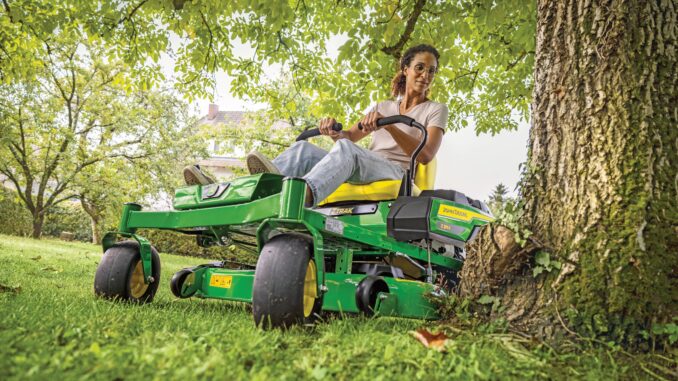
The John Deere Z960M is a commercial-grade ZTrak zero-turn mower often used by professionals, but many acreage owners and serious DIY users in the USA and Canada also buy it for large properties, estate mowing, and heavy weekly cutting work. This guide is written in a practical, owner-first format so readers can identify symptoms, decide what they can realistically fix at home, find the right parts, and use the correct manuals and diagrams before ordering or repairing anything.
The Z960M sits in John Deere’s Z900 M Series lineup and is built around a 31 hp Kawasaki FX921V gasoline engine, hydrostatic drive, and either 60-inch or 72-inch commercial deck configurations depending on version. Deere also lists side-discharge, Mulch On Demand, and rear-discharge deck variants for this model, which matters because deck parts, blades, and belts are not always the same across versions.
John Deere Z960M model overview
For most owners, the John Deere Z960M is best understood as a heavy-duty zero-turn mower with five systems that affect nearly every repair decision: the engine and fuel system, the mower deck and blade drive, the hydrostatic drive system, the electrical and safety system, and the frame/operator controls. If a mower will not start, cuts poorly, loses drive, or vibrates badly, the fault is usually found in one of those systems rather than in a random isolated part.
Common service parts owners regularly buy for the John Deere Z960M include the engine oil filter AM107423, spark plug M802138, primary air filter M131802, secondary air filter M131803, fuel filter AM116304 or UC21217 depending on fuel-system configuration, traction drive belt TCU34299, and PTO clutch AUC18216. On 60-inch deck versions, common deck wear parts include flat mower belt TCU35604, spindle kit TCA24880 or AUC12478 by serial range, gauge wheel TCU18744 or UC28193 depending on deck type, and several blade options including TCU15881, UC15158, M128485, and M133381.
Troubleshooting the John Deere Z960M by symptom
The fastest way to troubleshoot a John Deere Z960M is to start with the symptom the owner actually sees: hard starting, rough running, weak cut quality, drive loss, abnormal vibration, fluid leaks, or electrical/safety lockout behavior. That symptom-first method is more useful than replacing parts at random, especially on a mower with multiple deck and serial-number variations.
Main symptom groups on this model are:
-
Starting issues and no-crank complaints.
-
Running issues such as surging, power loss, or stalling.
-
Cut-quality problems including stragglers, scalping, and uneven discharge.
-
Vibration and noise from blades, spindles, pulleys, or engine components.
-
Overheating, debris buildup, or oil and hydraulic leaks.
-
Transmission and steering concerns involving weak tracking, poor hill performance, or one side losing pull.
-
Electrical and safety-switch issues involving the ignition switch, brake switch, PTO circuit, or battery.
Immediate John Deere Z960M repair needs
Some faults on the John Deere Z960M should be dealt with immediately because they can create a safety problem or quickly damage expensive components. Severe deck vibration, hydraulic leaks, hot muffler-area debris buildup, loose blades, and repeated belt shredding all fall into that category.
1. John Deere Z960M starting issues
If the engine will not crank or only cranks intermittently, the mower is unusable and the problem may involve the battery, ignition switch, brake switch, wiring, or operator-starting logic. The Z960M uses Deere’s Brake & Go starting system, so owners should verify the parking brake is fully engaged before assuming a major electrical failure.
Common causes:
-
Weak or failed 12 V battery TY25221B.
-
Faulty ignition switch AUC15805.
-
Faulty brake switch TCA15398.
-
Loose battery cables, corroded terminals, or damaged harness connectors.
-
Failed PTO clutch circuit or switch-related interlock issue.
Basic checks:
-
Confirm the parking brake is fully engaged and the machine is following the normal starting sequence.
-
Inspect battery terminals for looseness or corrosion, then verify battery condition.
-
Check whether the hour meter and electrical accessories power up with the key on.
-
Inspect the brake switch area and ignition switch connections for obvious damage.
-
If the starter still will not engage, move from DIY testing to meter-based electrical diagnosis or dealer support.
2. John Deere Z960M cut-quality problems
When a John Deere Z960M leaves streaks, scalps turf, or throws clippings unevenly, the root cause is usually blade condition, deck contamination, height setup, or belt/spindle wear rather than an engine problem. Poor cut quality often gets worse quickly if the mower is used with dull blades or a deck packed with debris.
Common causes:
-
Dull, bent, or wrong-style blades for conditions.
-
Debris buildup under the deck or under spindle covers.
-
Worn deck belt TCU35604 or TCU31194/UC21914 on other deck versions.
-
Incorrect deck leveling or height-of-cut setup.
-
Worn gauge wheels, rollers, or spindle assemblies.
Basic checks:
-
Clean the underside of the deck and inspect blade edges.
-
Verify the blade type matches the deck and mowing conditions, such as standard, high-lift, or low-lift.
-
Inspect belt condition, tension, and pulley alignment.
-
Check anti-scalp wheels, rollers, and deck level.
-
Test the mower in a small area after cleaning and blade inspection before ordering major parts.
3. John Deere Z960M vibration and noise
Strong vibration is one of the most important symptoms to stop for immediately because it can damage spindle bearings, belt components, the PTO clutch, and deck hardware. Owners often notice it after striking an object, running with bent blades, or continuing to mow with failing spindle parts.
Common causes:
-
Bent, cracked, or unbalanced blades.
-
Worn spindle kits TCA24880 or AUC12478 depending on serial range.
-
Failed idler pulleys or damaged sheaves.
-
Debris wrapped around blade spindles.
-
Loose deck hardware or damaged belt components.
Basic checks:
-
Shut the engine off and inspect blades before restarting.
-
Spin spindle and idler components by hand with the machine safely secured and key removed.
-
Look for belt glazing, frayed edges, or heat damage.
-
Check for recent impact damage on the deck shell, pulley guards, and blade hardware.
-
If vibration remains after blade service, treat spindle or clutch diagnosis as an advanced repair.
4. Overheating, debris, and leaks on the John Deere Z960M
This mower uses an air-cooled engine, so blocked cooling areas and heavy debris accumulation can create overheating risk even when the engine itself is mechanically sound. Deere’s owner information and service materials also emphasize checking for hydraulic leaks, oil leaks, fuel leaks, and abnormal debris buildup during routine inspections.
Common causes:
-
Grass packing around engine cooling areas and muffler.
-
Low engine oil or overdue oil changes.
-
Hydraulic fluid loss or hose seepage.
-
Dirty air filter elements M131802 or M131803.
-
Fuel leaks at lines, clamps, or filter connections.
Basic checks:
-
Inspect the machine cold for fuel, oil, or hydraulic seepage before use.
-
Clean debris from the deck top, spindle cover areas, and engine cooling zones.
-
Check engine oil level and service history.
-
Inspect the air filter housing and dust unloader valve.
-
Stop using the mower immediately if a fuel leak or major hydraulic leak is found.
5. John Deere Z960M transmission and drive problems
Weak hill performance, slow response, poor tracking, or one side failing to pull usually points to hydrostatic drive issues, belt problems, brake drag, or adjustment trouble rather than to the engine alone. Because the Z960M uses a hydrostatic system with integrated pumps and wheel motors, diagnosis becomes more expensive if owners continue operating it after drive symptoms begin.
Common causes:
-
Worn traction drive belt TCU34299.
-
Brake drag or linkage issues.
-
Hydraulic system wear or internal transmission problems.
-
Control lever/tracking adjustment issues.
-
Low performance caused by overheated or heavily stressed hydraulic components.
Basic checks:
-
Inspect the traction drive belt for cracking, glazing, or contamination.
-
Verify the parking brake fully releases after startup.
-
Compare pull and response side to side in an open, safe area.
-
Check for visible leaks or damaged linkage around the drive system.
-
Move to dealer diagnosis for persistent hydrostatic weakness or one-wheel no-drive complaints.
6. Electrical and safety problems on the John Deere Z960M
Electrical faults on this model often appear as intermittent no-start, PTO engagement issues, dead lighting, or strange shutdown behavior. Because commercial mowers see vibration and outdoor exposure, connectors, switches, and grounds deserve close inspection before larger components are replaced.
Common causes:
-
Failed ignition switch AUC15805.
-
Faulty brake switch TCA15398.
-
Weak battery or poor cable connections.
-
PTO clutch AUC18216 problems.
-
Harness damage from vibration, rubbing, or corrosion.
Basic checks:
-
Verify battery condition and cable tightness.
-
Check whether the machine starts consistently with the brake firmly applied.
-
Inspect visible wiring around switches, clutch, and battery area.
-
Test PTO engagement behavior only after blade and deck safety checks are complete.
-
Use a wiring diagram or dealer support if the issue becomes a continuity-testing job rather than a visual inspection job.
DIY vs dealer on the John Deere Z960M
On the John Deere Z960M, the usual line is simple: routine service and straightforward deck wear-part replacement are realistic DIY jobs, while hydrostatic, advanced electrical, and internal engine work are usually better left to a dealer or highly experienced technician. That boundary matters because this is a commercial mower with heavy components, serial-number breaks, and expensive systems that are easy to misdiagnose.
Good DIY jobs
-
Engine oil and oil filter service using AM107423 and the correct oil specification.
-
Replacing primary and secondary air filters.
-
Fuel filter replacement when the correct filter is matched to the machine’s configuration.
-
Blade inspection, sharpening, and replacement.
-
Deck cleaning, deck leveling, and gauge wheel inspection.
-
Replacing common deck belts when routing is confirmed from the correct diagram.
Advanced DIY or dealer jobs
-
PTO clutch replacement AUC18216.
-
Spindle kit replacement when shafts, housings, or deck hardware are damaged.
-
Repeated belt-failure diagnosis involving pulley alignment or deck damage.
-
Hydrostatic drive diagnosis or internal transmission repair.
-
Electrical continuity testing beyond simple battery and switch checks.
-
Internal engine work or severe oil leak repair.
Skill level guide
-
Beginner: Air filter service, deck cleaning, blade inspection, battery terminal cleaning.
-
Intermediate: Oil service, spark plug replacement, fuel filter replacement, deck belt replacement, deck leveling.
-
Advanced: PTO clutch work, spindle rebuilds, electrical diagnosis with a meter, drive-system troubleshooting.
John Deere Z960M parts, OEM numbers, and ordering details
Before ordering parts for a John Deere Z960M, owners should confirm the full model name, product identification number, engine model, deck size, and deck style because Deere lists serial-number breaks and deck-specific parts across this platform. Ordering by “Z960M belt” alone is not enough when 60-inch side-discharge, 60-inch Mulch On Demand, 60-inch rear-discharge, 72-inch side-discharge, and 72-inch rear-discharge versions all exist.
OEM parts are the safer choice for belts, PTO components, switchgear, spindle parts, and anything where fit or safety matters. Aftermarket parts can be acceptable for batteries, some blades, and some filters, but only if the cross-reference is exact and the deck/version match has been verified first.
John Deere Z960M diagrams and manuals
The best manual and diagram strategy for the John Deere Z960M is to use Deere’s owner information page first, then confirm part numbers in the official replacement parts guide, and only then cross-check on dealer or aftermarket lookup sites. That sequence reduces the risk of buying the wrong deck belt, blade, or switch for the machine’s serial range.
Recommended sources:
-
John Deere Z960M owner information page — Deere’s central page for owner information, service references, and links to manuals and parts resources.
-
John Deere Z960M replacement parts guide PDF — Best for fast OEM number lookup on filters, belts, blades, switches, battery, clutch, and spindle parts across deck versions.
-
John Deere Z960M product/specifications page — Useful for engine, deck, transmission, size, fuel, and maintenance-related overview information.
-
Jacks Small Engines Z960M parts diagrams — Helpful as a visual aftermarket lookup source when confirming exploded views, though Deere OEM numbers should still be checked first.
Finding model, PIN, and engine numbers on the John Deere Z960M
These numbers matter because Deere specifically notes that owners should use the operator’s manual that matches the machine’s serial number and because parts can change across serial breaks. A mower with the same Z960M badge may not use the same spindle kit, key, or fuel cap as another serial range.
-
Look for the product identification label on the mower and record the full PIN before ordering parts.
-
Note the full machine model exactly as shown, including deck configuration when known.
-
Record the engine model as FX921V from the machine/engine identification information and confirm any engine serial details on the engine itself before ordering engine-specific parts.
-
Measure or confirm deck width as 60-inch or 72-inch and note whether it is side-discharge, Mulch On Demand, or rear-discharge.
-
Keep those numbers in a phone note or maintenance log so future filter, belt, and blade orders are quicker and more accurate.
Buying John Deere Z960M parts online and locally
For most owners, the best buying strategy is to identify the OEM number first and shop second. That matters more on a John Deere Z960M than on many homeowner mowers because deck and serial variations can make visually similar parts incorrect.
-
Online: Start with Deere owner resources and parts guides, then confirm the exact OEM number before buying from a dealer or trusted parts retailer.
-
Dealer counter: Best choice for serial-sensitive items such as spindle kits, keys, fuel caps, safety switches, or deck-version questions.
-
Retail stores: Fine for common consumables like spark plugs, oil, or batteries if the package clearly cross-references the Deere number and engine model.
Useful links:
John Deere Z960M fitting guide for common DIY parts
Replacing the air filters on a John Deere Z960M
This job helps with hard starting, poor running, and dirt protection for the engine.
-
Park the mower safely, remove the key, and access the rear-mounted air-filter housing.
-
Open the housing, remove the primary and secondary elements, and inspect the housing for dust or chaff.
-
Squeeze and clean the dust unloader valve if fitted with debris.
-
Install the correct secondary and primary elements in the proper order, making sure both seat fully.
-
Refit the housing and check that it seals correctly before restarting.
Changing the engine oil and filter on the John Deere Z960M
This service protects the Kawasaki engine and is one of the most valuable routine DIY jobs on the mower.
-
Warm the engine briefly, park safely, and place a drain pan under the drain point.
-
Open the drain, loosen the fill/dipstick cap, and allow the oil to drain fully.
-
Remove the old AM107423 oil filter and clean the sealing surface.
-
Lightly oil the new filter seal, install the new filter hand-tight, and close the drain.
-
Refill with the specified oil, then start the engine and check for leaks before rechecking the level.
Replacing blades on the John Deere Z960M
Fresh blades improve cut quality faster than almost any other deck repair.
-
Secure the mower, remove the key, and access the underside of the deck safely.
-
Inspect each blade for bends, cracks, severe dullness, or uneven wear.
-
Replace with the correct blade style for the deck and mowing condition, such as high-lift, standard, or low-lift.
-
Tighten hardware to the correct specification from the operator or technical literature for the specific deck.
-
Test for smooth operation and stop immediately if vibration appears after replacement.
Replacing a deck belt on the John Deere Z960M
A worn deck belt can cause weak blade speed, poor discharge, and uneven cutting.
-
Confirm the deck width and deck style before ordering the belt.
-
Remove guards as needed and photograph belt routing before removal.
-
Inspect idlers, spring tension, and spindle pulleys while the belt is off.
-
Install the correct Deere belt and verify it sits fully in all pulley grooves.
-
Refit guards, rotate the system by hand where safe, and test at low load first.
Preventive maintenance on the John Deere Z960M
Regular maintenance prevents most repeat problems on the John Deere Z960M because many failures begin with dirt buildup, overdue filters, neglected blades, or early belt wear. This is especially true on commercial-style zero turns where long mowing hours magnify small issues quickly.
Focus areas:
-
Starting reliability: Keep the battery, ignition circuit, brake switch, and fuel system in good condition.
-
Cut quality: Keep blades sharp, the underside of the deck clean, and the deck level correct.
-
Fire and overheating prevention: Remove dry grass and debris from deck tops, spindle covers, engine cooling areas, and muffler zones.
-
Drive performance: Watch for traction belt wear, brake drag, and leaks before they become hydrostatic complaints.
-
Electrical reliability: Inspect visible wiring, switch connections, and battery terminals routinely.
John Deere Z960M maintenance schedule
Deere states that owners should use the operator’s manual that matches the machine serial number because maintenance schedules can vary by serial number. The intervals below follow the Deere owner-information emphasis and the replacement parts guide intervals visible for the Z960M platform.
Daily / before each use
-
Check engine oil level.
-
Check fuel level and look for fuel, oil, or hydraulic leaks.
-
Inspect for loose, damaged, or missing parts and make sure guards are in place.
-
Check mower deck and discharge areas for excess debris buildup.
-
Inspect blades and tires/casters visually before mowing.
Every 8 hours / daily commercial use
-
Clean debris from under spindle covers and around deck components.
-
Lubricate grease points where applicable and keep grease fittings clean before greasing.
-
Inspect the parking brake operation and general machine condition.
Every 50 hours or annual interval
-
Change engine oil according to the interval shown in the Deere parts guide for the machine’s applicable schedule.
-
Review engine condition, leaks, and service records before heavy seasonal use.
Every 100 to 300 hours
-
Replace the engine oil filter AM107423 according to the applicable service interval shown by Deere.
-
Replace the fuel filter at the applicable 300/600-hour interval depending on configuration.
-
Replace the primary air filter M131802 at 300 hours where required.
Every 500 to 1000 hours
-
Replace the secondary air filter M131803 at 500 hours.
-
Replace spark plug M802138 at 1000 hours.
-
Review higher-hour wear items such as PTO clutch, spindle assemblies, and traction belt if performance symptoms appear.
Seasonal checklist
-
Spring or start of season: Full inspection, oil service if due, blade service, deck cleaning, and air-filter inspection.
-
Mid-season: Recheck deck belt, blade condition, grease points, and debris accumulation around engine and deck areas.
-
End of season: Clean thoroughly, repair leaks, note worn parts, and store with maintenance records updated.
Repair, upgrade, or replace the John Deere Z960M?
For a structurally sound John Deere Z960M, repairs usually make sense when the problem is limited to service parts, deck wear parts, switches, or external components because Deere continues to support the model with owner resources and replacement parts information. Replacement becomes easier to justify when the machine has repeated hydrostatic problems, severe deck or frame damage, or repair needs that approach the value of a better-condition commercial mower.
Repair if…
-
The issue is a belt, blade, filter, switch, battery, or spindle-level problem.
-
The engine and hydro drive are fundamentally sound.
-
The deck shell and frame are still in good structural condition.
Upgrade if…
-
You need a different deck setup such as Mulch On Demand or rear discharge for the property and clipping-management conditions.
-
The machine is usable but productivity or cut finish no longer matches the work.
-
You are repeatedly adapting the mower for tasks better suited to another deck or setup.
Replace if…
-
The mower has major hydrostatic failure, severe frame/deck damage, or expensive combined faults.
-
It needs repeated dealer-level repairs with poor long-term reliability.
-
The total repair spend is approaching the value of a stronger replacement machine in your market.
John Deere Z960M troubleshooting FAQ
1. Why will my John Deere Z960M not start?
A no-start on the John Deere Z960M usually begins with the battery, brake-starting logic, ignition switch, or safety circuit rather than with a major engine failure. Start by confirming the parking brake is fully engaged, then inspect the battery connections and key-switch response. If the electrical system is live but cranking is inconsistent, the brake switch or ignition switch becomes more likely.
2. Why does my John Deere Z960M crank but not fire?
If the engine cranks but will not fire, common checks are fuel delivery, spark, and air intake condition. A clogged filter, stale fuel, or a spark-plug problem can all produce this symptom. Owners should also confirm the correct fuel filter is fitted for the mower’s fuel-system configuration.
3. Why does my John Deere Z960M start and then stall?
Stalling after startup often points to fuel restriction, air-filter blockage, or an issue that worsens as the engine tries to take load. Check the fuel filter, inspect the air filters, and make sure the machine is not packed with debris around the engine. If it only stalls when the blades engage, include deck drag and PTO-related checks.
4. Why is my John Deere Z960M running rough?
Rough running can come from a dirty air-filter system, aging spark plugs, or fuel-delivery trouble. Since the mower uses a dual-element air cleaner, both the primary and secondary filters matter. A mower that has been used in dusty conditions should have the housing and dust valve inspected as well.
5. Why is my John Deere Z960M low on power?
Power loss usually shows up when the engine is under mowing load and often traces back to air restriction, blade drag, overdue service, or deck contamination. On a commercial deck machine, heavy buildup under the deck can feel like an engine problem even when the engine is healthy. Start with airflow, service items, and deck condition before assuming internal engine wear.
6. Why does my John Deere Z960M cut unevenly?
Uneven cutting is commonly caused by worn blades, wrong blade type, poor deck level, or worn anti-scalp/gauge components. The mower’s deck options also matter because blade choices differ by deck size and style. Clean the deck, inspect blade condition, and confirm the deck is level before replacing larger components.
7. Why does my John Deere Z960M leave streaks?
Streaking usually means the blades are dull, the blade speed is low, or the deck is loaded with debris. A slipping belt can also reduce blade performance enough to leave thin uncut strips. On high-hour machines, spindle wear should also be considered if the blades appear to track inconsistently.
8. Why is my John Deere Z960M scalping the lawn?
Scalping usually means the cutting height is too low for the terrain or the anti-scalp support setup is not doing its job well. Uneven deck adjustment and worn rollers or gauge wheels can make the problem worse. It is also more noticeable on rough ground when operators try to mow too fast.
9. Why does my John Deere Z960M throw clippings poorly?
Weak discharge often comes from dull blades, wrong blade style, wet grass, or a deck cavity that is coated in compacted debris. High-lift, standard, and low-lift blades perform differently, so the correct blade matters. A worn deck belt can also reduce blade speed and hurt discharge quality.
10. Why is my John Deere Z960M vibrating so much?
Serious vibration usually means a bent blade, damaged spindle, failing idler, or impact-related deck damage. This is a stop-now symptom because continued mowing can damage the belt system, clutch, and spindle hardware. Check blade condition first, then move to spindle and pulley inspection.
11. Can bent blades damage a John Deere Z960M deck?
Yes, bent or badly unbalanced blades can overload spindles, shake hardware loose, and accelerate wear in the deck drive system. Even if the mower still cuts, continuing to run it with a bent blade can create a much larger repair. That is why vibration complaints should be handled quickly.
12. Why does my John Deere Z960M keep breaking deck belts?
Repeated belt failure usually means there is another issue behind it, such as pulley misalignment, seized bearings, wrong belt choice, or debris damage. Simply fitting another belt without checking idlers, spindle drag, and routing often leads to another failure. Confirm the belt part number against the exact deck version first.
13. How do I know which deck belt my John Deere Z960M needs?
The right belt depends on deck width and deck style, not just the Z960M model name. Deere lists different belt numbers for 60-inch, 72-inch, and rear-discharge configurations. Record the deck type and serial details before ordering.
14. Which blades fit the John Deere Z960M?
Blade choice depends on the deck width and whether the mower uses a side-discharge, Mulch On Demand, or rear-discharge deck. Deere lists multiple blade options including high-lift, standard, and low-lift patterns. Matching the blade to both deck and mowing condition gives better results than choosing by size alone.
15. Why does my John Deere Z960M PTO not engage?
If the PTO will not engage, look at the clutch, switch circuit, wiring, and safety-related electrical issues. Because the PTO clutch is a listed service component on the model, clutch failure is possible, but battery voltage and switch problems should be checked first. Avoid assuming the clutch is bad until the electrical side has been checked.
16. What does the brake switch do on a John Deere Z960M?
The brake switch is part of the mower’s starting and safety logic and can prevent normal startup if it fails or does not register correctly. Deere lists TCA15398 as the brake switch in the Z960M replacement guide. If the mower acts inconsistent about starting with the brake applied, this switch is worth inspecting.
17. Why does my John Deere Z960M lose drive on one side?
One-side drive loss points to a more serious issue than normal belt wear and often involves the hydrostatic side, linkage, or brake drag. Start with visible checks, but avoid prolonged use because internal transmission problems can become expensive quickly. Persistent one-side weakness is usually a dealer-level diagnosis job.
18. Why is my John Deere Z960M slow on hills?
Poor hill performance may reflect hydro wear, traction issues, brake drag, or mowing conditions that exceed safe slope limits. Deere lists a 20-degree slope operating limit, reduced to 10 degrees with a material collection system installed. If the mower has recently become weaker on slopes, inspect the drive belt and general drive condition before assuming that behavior is normal.
19. Is the John Deere Z960M hydrostatic?
Yes, Deere lists the Z960M as a hydrostatic zero-turn mower with integrated hydraulic pumps and wheel motors. That gives smooth steering response and commercial maneuverability, but it also means major drive issues are usually more complex than on a simple belt-drive lawn tractor. Owners should separate belt and linkage checks from internal hydro diagnosis.
20. Why is my John Deere Z960M tracking poorly?
Poor straight-line tracking can come from adjustment, tire-related differences, brake drag, or wear in the control system. Deere notes that the machine includes from-the-seat tracking adjustment, so setup should be checked before assuming a transmission failure. If tracking changes suddenly, inspect for damage or drive-side problems.
21. Why is my John Deere Z960M overheating?
Because the engine is air-cooled, overheating usually starts with blocked cooling airflow, packed debris, or neglected service. Grass buildup around the engine and muffler areas is a common cause. Dirty air filters and low oil can also add heat stress.
22. How often should I change oil on a John Deere Z960M?
The exact interval should be taken from the operator’s manual that matches the mower serial number, but Deere’s replacement parts guide shows oil service intervals in staged schedules tied to machine use. For practical ownership, many users review oil condition and service timing closely during heavy mowing season. Serial-specific manual guidance should override any generic schedule.
23. How often should I replace the oil filter on a John Deere Z960M?
Deere lists AM107423 as the oil filter and shows replacement intervals of 100/200/300 hours depending on the applicable maintenance schedule. That is why owners should not copy a generic interval from another Z900 model without checking the right manual. Serial number and duty cycle still matter.
24. How often should I replace the air filters on a John Deere Z960M?
The Deere replacement guide lists the primary air filter M131802 at 300 hours and the secondary air filter M131803 at 500 hours. In dusty work, inspection may need to happen much sooner even if replacement is not yet due. A clogged air system can affect both engine performance and engine life.
25. How often should I replace the spark plugs on a John Deere Z960M?
Deere lists spark plug M802138 and shows a 1000-hour replacement interval in the parts guide. That does not mean owners should ignore plug condition until then if the engine develops rough running or hard-start symptoms. Inspection still makes sense during major service work.
26. Which battery does a John Deere Z960M use?
The Deere parts guide lists TY25221B as the 12 V battery for Canada and USA applications. When buying aftermarket, match voltage, size, and terminal layout exactly rather than buying by appearance. Battery-related starting symptoms are common and easy to misread as switch failure.
27. Where can I find a John Deere Z960M operator’s manual?
The best starting point is Deere’s official owner information page for the Z960M, which links owners toward the correct manuals and support resources. Deere also notes that the correct operator’s manual should match the machine serial number. That is especially important on a model with serial-number-related part changes.
28. Where can I find John Deere Z960M parts diagrams?
Owners should start with Deere resources for official part numbers and then use exploded-view parts sites as a visual aid. The Deere replacement parts guide is fast for common service items, while an exploded-view lookup helps confirm where components sit in the assembly. For serial-sensitive parts, dealer confirmation is still the safest route.
29. Is aftermarket OK for John Deere Z960M parts?
Aftermarket can be fine for some consumables, but OEM is the safer choice for belts, safety switches, clutch parts, and fit-sensitive components. On a commercial mower, poor-fit belts and marginal spindle parts can create repeat failures. Cross-reference accuracy matters more than headline price.
30. What is the engine in a John Deere Z960M?
Deere lists the Z960M with a Kawasaki FX921V engine rated at 31 hp gross power at 3,600 rpm. It is an air-cooled, vertical-shaft gasoline engine with a dual-element canister-style air cleaner system. That engine choice is one reason the mower is popular for heavy commercial-style cutting work.
31. What deck sizes were offered on the John Deere Z960M?
Deere lists the Z960M with 60-inch and 72-inch deck options, including side-discharge, 60-inch Mulch On Demand, and rear-discharge versions. This is one of the biggest reasons owners must identify the exact deck before ordering blades or belts. A “Z960M deck belt” search alone is too broad.
32. Does the John Deere Z960M have a fuel shutoff?
Deere’s specification page lists a fuel tank switch or shut-off valve for the Z960M. That can be useful during service work or when isolating fuel-supply issues. Owners working on filters or lines should confirm valve position before assuming a larger problem.
33. What should I check daily on a John Deere Z960M?
Daily checks should include engine oil, fuel level, leaks, loose or missing parts, debris buildup, blade condition, and general machine safety condition. Deere also emphasizes routine inspection of guards and basic operating checks. These small inspections catch many expensive problems early.
34. Is the John Deere Z960M a homeowner mower?
The Z960M is fundamentally a commercial zero-turn mower, not a light homeowner machine, even though some large-property owners use it at home. Its deck, frame, hydrostatic system, and support structure are designed for heavier mowing demands. That is why dealer-level repair costs can be higher than on smaller residential models.
35. When should I stop DIY repair and use a dealer for my John Deere Z960M?
Move to dealer support when the fault involves hydrostatic drive weakness, internal engine concerns, repeated belt failure without a clear cause, advanced electrical diagnosis, or major PTO/spindle damage. Those repairs can become expensive if guessed at. A good DIY rule is to handle routine service and visible wear items, then stop when testing requires specialized tools or system-level diagnosis.