
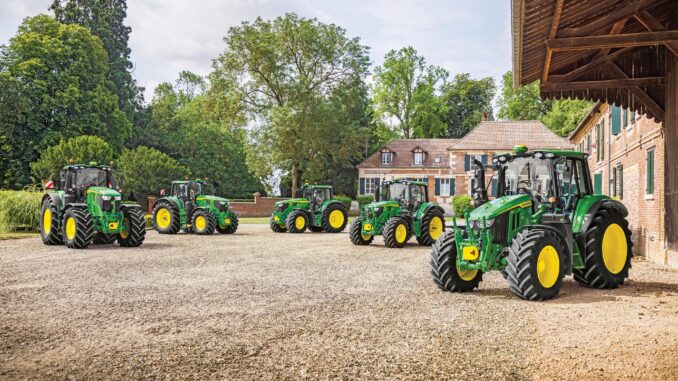
The John Deere 325G is a compact track loader built for heavier homeowner, acreage, farm, and property work rather than ordinary lawn-tractor jobs, with a 74 hp turbocharged diesel engine, hydrostatic drive, rubber tracks, and a rated operating capacity of 2,590 lb. This guide is written for USA and Canada owners who want a practical, symptom-first reference covering repairs, troubleshooting, maintenance, parts, and realistic DIY limits before a problem turns into a bigger bill.
John Deere 325G model overview
The John Deere 325G sits in Deere’s G-Series compact track loader lineup and is designed for digging, grading, moving material, landscaping, snow work, and attachment-driven jobs where better flotation and traction than a wheeled skid steer are useful. Deere lists key features such as a turbocharged Yanmar 3.3 L four-cylinder engine, two-speed transmission, hydrostatic pumps and motors, planetary reduction final drive, wet-disk park brake, and a Quik-Tatch attachment system.
For owners, the most important systems are the diesel fuel system, intake and cooling package, hydraulic system, undercarriage and track system, electrical/safety interlocks, and the attachment coupler and auxiliary hydraulics. If any one of those systems falls behind on maintenance, the usual result is hard starting, power loss, hydraulic sluggishness, track problems, overheating, or lockout warnings rather than one dramatic failure.
Common service parts owners routinely buy include the outer engine air filter AT338105, inner engine air filter AT336803, engine oil filter, primary fuel filter/water separator, final fuel filter, hydraulic oil filter, battery, accessory drive belt, and cab air filters where equipped. On this model, filters and fluids matter more than “performance upgrades,” because contamination and heat are the fastest route to expensive hydrostatic and hydraulic repairs.
John Deere 325G troubleshooting approach
The best way to diagnose a John Deere 325G is to start with the symptom the operator actually sees: no crank, cranks but will not start, weak power, hydraulic lockout, overheating, one track slow, unusual vibration, warning lights, or attachment performance problems. That symptom-first approach helps separate simple owner checks from issues that need pressure testing, electronic diagnostics, or dealer tooling.
Main symptom groups for the John Deere 325G usually include:
-
Starting and no-start issues.
-
Running problems such as low power, stalling, or excessive smoke.
-
Hydraulic and attachment performance issues.
-
Track, drive, and steering problems.
-
Vibration, noise, or undercarriage wear problems.
-
Overheating and cooling-package problems.
-
Electrical warnings, safety interlock faults, and lockout issues.
Emergency John Deere 325G repair needs
Some faults on the John Deere 325G need immediate attention because they affect safety or can damage major components quickly. Stop using the machine if the loader arm safety system will not lock properly, the machine overheats, hydraulic oil is pouring out, a track is de-tracking or badly loose, or warning lights show low oil pressure or charging failure.
1. John Deere 325G starting issues
A no-start or no-crank problem usually looks simple from the seat, but on this machine it can come from battery condition, keyless switch module, operator-presence interlocks, fuel delivery, or preheat-related issues. Ignoring repeated hard starts can flatten the battery, overwork the starter, and hide a fuel contamination or air-filter restriction problem.
Common causes:
-
Weak or failing 12-volt battery.
-
Dirty or loose battery terminals.
-
Seat, lap bar, or door switch not satisfied.
-
Fuel restriction or water in fuel.
-
Glow-plug/preheat issue in cold weather.
-
Low rail-side fuel supply from clogged filters.
Basic checks:
-
Verify battery voltage and terminal tightness before chasing sensors.
-
Confirm the seat, lap bar, and door are in the correct operating position and watch for related warning lights.
-
Check fuel level, drain water if needed, and inspect the primary fuel filter/water separator.
-
Make sure the machine is not showing active service or diagnostic codes on the display.
2. John Deere 325G hydraulic lockout and weak function
If the boom, bucket, or auxiliary hydraulics feel slow or stay locked out, the problem may be as simple as an interlock issue or as serious as hydraulic contamination or overheating. Because this model uses hydraulic lockout and auxiliary lockout systems, owners should always rule out operator-presence and switch problems before assuming pump failure.
Common causes:
-
Hydraulic lockout still active.
-
Seat or lap bar interlock fault.
-
Low hydraulic oil level.
-
Restricted hydraulic filter.
-
Hot hydraulic oil from a clogged cooling package.
-
Worn couplers or attachment flow issue.
Basic checks:
-
Cycle the machine correctly and confirm the park brake and hydraulics are fully released.
-
Check hydraulic oil level and inspect for visible hose leaks.
-
Clean debris from the cooling package and look for overheating warnings.
-
Disconnect and reconnect auxiliary couplers if the attachment only works intermittently.
3. John Deere 325G vibration and undercarriage noise
Vibration, rumbling, or banging on a compact track loader often points to the undercarriage rather than the engine. On the 325G, track tension, worn rollers or idlers, damaged lugs, packed debris, and attachment imbalance are common causes that should be checked early before they turn into expensive rail or drive-component wear.
Common causes:
-
Loose or over-tight tracks.
-
Worn rollers or idlers.
-
Debris packed into the undercarriage.
-
Damaged track carcass or missing rubber lugs.
-
Attachment imbalance or loose mounting.
Basic checks:
-
Clean the undercarriage fully before judging noise or track alignment.
-
Check track tension to Deere spec rather than guessing by eye.
-
Inspect rollers, idlers, and sprocket engagement for abnormal wear.
-
Remove the attachment and test again if the vibration changes with engine speed or travel.
4. John Deere 325G overheating and leaks
Overheating on the John Deere 325G is often tied to debris in the cooling package, airflow restriction, belt issues, or low fluid levels rather than an immediate major engine failure. The machine also has automatic shutdown with alarm protection, which is helpful, but owners should not rely on shutdowns as a maintenance strategy.
Common causes:
-
Dirty radiator, oil cooler, or cooling package.
-
Low coolant level.
-
Failing accessory drive belt.
-
Hydraulic oil overheating due to debris load.
-
External coolant, fuel, or hydraulic leak.
Basic checks:
-
Blow out and clean the cooling package carefully and regularly.
-
Check engine coolant, engine oil, and hydraulic oil levels before each use.
-
Inspect the accessory belt and fan area.
-
Stop operation immediately if warning lights or high-temp readings continue after cleaning.
5. John Deere 325G drive and tracking problems
If one side feels weak, the machine pulls, or travel speed drops, think first about track condition, tension, final-drive oil service, and undercarriage drag before assuming a hydrostatic motor has failed. A compact track loader can feel “underpowered” in travel simply because the undercarriage is dirty or the tracks are adjusted incorrectly.
Common causes:
-
Incorrect track tension.
-
Debris packed in rollers and sprockets.
-
Final-drive or planetary service overdue.
-
Hydraulic or hydrostatic issue.
-
Brake or control fault.
Basic checks:
-
Clean the undercarriage and recheck performance.
-
Inspect track tension and visible drive-component wear.
-
Review service history for planetary gear case oil and hydraulic filter changes.
-
Move to dealer diagnosis if one side remains weak after basic checks.
6. John Deere 325G electrical and safety faults
This machine uses multiple switches and warnings, including seat, lap bar, door open, battery not charging, hydraulic filter restriction, and air-filter restriction indicators. When the John Deere 325G acts dead or partially disabled, an interlock or electrical issue is often more likely than a major mechanical failure.
Common causes:
-
Low battery or charging fault.
-
Corroded battery connections.
-
Door, lap bar, or seat switch issue.
-
Sensor or wiring fault.
-
Restricted filter triggering warning lights.
Basic checks:
-
Start with the battery and grounds.
-
Watch which warning lights remain on after key-on.
-
Check that the door shuts and latches fully if equipped with a cab.
-
Use dealer diagnostics if codes persist or functions remain locked out.
Summary:
How to troubleshoot 325G hydraulic performance issues
Troubleshoot a John Deere 325G hydraulic-performance complaint in this order: confirm the symptom, eliminate basic oil/filter/coupler problems, check for overheating or electrical control faults, then have pressures and flow tested before replacing major parts. Slow or weak functions are not automatically a failed hydraulic pump.
Safety first
Hydraulic oil can remain under very high pressure even after shutdown, and a pinhole leak can inject fluid through skin. Keep hands away from suspected leaks, lower the boom/attachment to the ground, shut the engine off, relieve residual pressure using the approved operator procedure, and use cardboard or wood—not fingers—to locate a leak.
Do not loosen hoses, test ports, relief valves, or fittings while the system is pressurized. A dealer or qualified hydraulic technician should perform pressure/flow testing and any adjustment of relief valves or pump controls.
Identify the pattern
The symptom narrows the likely fault considerably:
Step-by-step checks
1. Confirm operating conditions
Run the machine on level ground, with the attachment safely lowered before inspection. Establish whether the issue affects:
-
Boom lift only, bucket curl only, auxiliary hydraulics only, travel only, or everything.
-
One direction but not the opposite direction.
-
Cold operation, hot operation, or both.
-
A particular attachment versus all attachments.
-
Full engine speed versus low idle.
A 325G that simply feels slow at low engine speed may not have a hydraulic fault. Make sure the engine is reaching normal working RPM and that no engine derate, overheating warning, or active diagnostic code is reducing performance.
2. Check hydraulic-oil level and condition
Check the oil according to the correct operator-manual procedure and machine position. Low oil can produce slow, jerky or noisy functions and may draw air into the system.
Inspect the oil for:
-
Milky appearance: possible water contamination.
-
Foam or bubbles: possible air entry or aeration.
-
Very dark oil or burnt odour: heat damage or severe service.
-
Metallic glitter or visible debris: possible component wear; stop operating and obtain professional diagnosis.
-
Incorrect/unverified fluid: use only the oil specification suited to the machine and ambient temperature.
John Deere’s 325G maintenance guide calls for a daily/10-hour hydraulic-oil-level check, a hydraulic-oil sample and hydraulic-filter replacement at 500 hours, and hydraulic-oil replacement at 1,000 hours; it also lists replacement of the hydraulic reservoir breather at 1,000 hours.deere+1
3. Verify filter and breather service
A restricted hydraulic filter can cause poor performance, especially under load, and a neglected reservoir breather can contribute to tank-pressure or vacuum issues. Check service records rather than relying only on appearance.
For the applicable 325G guide, Deere identifies hydraulic oil filter AT435649 with a stated 500-hour interval; confirm the part number against the machine’s PIN because configurations and serial-number breaks matter.deere+1
If the filter is due, unknown, or you suspect contamination:
-
Replace it using a correct, quality filter.
-
Inspect the removed filter media only if you have the right procedure and equipment.
-
If it contains metal or heavy debris, do not treat the filter change as the complete repair—investigate the source before running the machine hard.
4. Inspect leaks, hoses, and quick couplers
With the machine off and pressure relieved, inspect:
-
Loader-arm, bucket and auxiliary hoses for abrasion, swelling, cracks, wet fittings or damaged guards.
-
Cylinder rods for scoring, corrosion or damaged seals.
-
Quick couplers for dirt, damage, leakage, incomplete engagement or a stuck internal poppet.
-
Auxiliary attachment hoses for pinching or reversed/mismatched connections.
-
The area around the pump, control valve, reservoir and filter base.
For an auxiliary-only performance complaint, disconnect and reconnect both couplers after cleaning them. A coupler that looks connected but is not fully seated can restrict flow severely. If possible, test the machine with a known-good attachment, then test the suspect attachment separately. That distinguishes a machine issue from an attachment motor, cylinder, hose, valve, or coupler problem.
5. Check cooling and oil temperature
Hydraulic power drops when oil gets excessively hot because viscosity falls and internal leakage rises. On a compact track loader, debris accumulation in the cooling package is a common practical cause.
Check for:
-
Dust, mulch, chaff or mud packed in the radiator/cooler stack.
-
Restricted airflow through screens and the engine compartment.
-
Cooling fan operation and warning indicators.
-
High hydraulic-oil temperature or engine-temperature warnings.
-
A problem that appears only after 20–60 minutes of work.
The 325G operating information describes a reversing-fan function that can be manually activated for a 10-second cleaning cycle when hydraulic oil temperature is above 12°C/54°F; that feature can help clear loose debris, but it is not a substitute for physically cleaning a plugged cooler stack.hartoil
6. Rule out EH-control and electrical faults
The 325G uses electrohydraulic controls, so a weak, delayed, intermittent or missing command can imitate a hydraulic failure. Check the machine display for diagnostic codes and note whether the problem coincides with warning lamps, safety-interlock behaviour, rain/washing, vibration, or a weak battery.
Inspect:
-
Battery terminals, battery condition and main grounds.
-
Fuses and relays related to machine controls.
-
Joystick, solenoid, sensor and harness connectors for corrosion, loose locks, pulled wires or oil/water ingress.
-
Seat bar, seat switch, restraint and parking-brake interlock operation.
If functions are intermittent rather than consistently weak—and especially if one circuit unexpectedly stops without hydraulic noise—diagnostic codes and electrical checks should come before replacing hydraulic components. Deere’s diagnostic documentation for the 325G covers DTC decoding, CAN-bus circuits and hydraulic calibration/testing procedures.manualsmarket+1
When pressure/flow testing is needed
After oil level, filter, cooling, couplers, obvious leakage and electronic faults have been eliminated, a qualified technician should test:
-
Main system pressure.
-
Charge pressure and hydrostatic circuit performance where travel is affected.
-
Auxiliary flow and pressure under load.
-
Loader-circuit pressure and relief-valve performance.
-
Hydraulic oil temperature.
-
Case-drain flow from pumps/motors, where appropriate.
-
Cylinder internal bypass/holding capability.
These tests separate problems such as:
-
Worn hydraulic pump or drive motor.
-
Internal control-valve leakage or sticking spool.
-
Faulty relief valve.
-
Failed auxiliary solenoid or valve section.
-
Excessive cylinder bypass.
-
Restriction on the pump inlet/suction side.
-
Incorrect calibration or inadequate EH control command.
Do not adjust pressure-relief valves “to make it stronger.” Excess pressure can damage pumps, motors, hoses, cylinders and attachments, and it can create a serious safety hazard.
Useful fault examples
Example: All functions become weak only after an hour of brush-cutting.
Start with the cooling package, oil temperature, oil condition and filter history. A packed cooler or overheated oil is more plausible than a sudden pump failure, particularly if performance returns after cooling down.
Example: Loader functions are normal, but a grapple is slow and weak.
Clean and reseat the auxiliary couplers, inspect the attachment hoses, confirm the correct auxiliary setting, and test another attachment. If a known-good attachment also performs poorly, test auxiliary flow and pressure; if it works normally, diagnose the grapple.
Example: The boom is intermittent but travel remains normal, and a warning code appears.
Prioritize DTC retrieval, joystick/interlock checks, solenoid connectors, battery voltage and wiring. An EH-control issue is a strong possibility.
Stop operating and arrange service if
-
Hydraulic oil is foamy, burnt, milky, or visibly metallic.
-
A hose is damaged, bulging, leaking under pressure, or has exposed reinforcement.
-
The machine overheats repeatedly after the cooling package is cleaned.
-
Performance degrades rapidly, the pump becomes unusually noisy, or severe vibration occurs.
-
The boom, attachment, or travel drive moves unpredictably.
-
You find metal debris in the hydraulic filter or reservoir.
-
A pressure/flow test is required and you do not have the correct gauges, fittings, procedures and training.
The best economical sequence is: inspect and document the symptom → check oil/filter/breather → clean cooling system → inspect couplers and hoses → read codes/electrical inputs → conduct professional hydraulic pressure and flow testing. This avoids replacing expensive pumps, valves, or cylinders based on symptoms alone.
What common fault codes appear for John Deere 325G hydraulics
For a John Deere 325G, the hydraulic-related codes you are most likely to encounter concern hydraulic-oil temperature, oil pressure/level, filter restriction or bypass, and electrohydraulic control circuits. The exact display prefix and full code depend on the machine’s serial-number range and controller, so treat the code as a diagnostic starting point rather than a parts-replacement instruction.manualsmarket+1
Common hydraulic-related codes
Deere’s diagnostic-code material identifies SPN 1638 as the hydraulic-oil-temperature signal and SPN 1762 as the hydraulic-oil-pressure signal. Deere controller-code tables also associate 1638.0 with high hydraulic-oil temperature, 1713.0 with a restricted hydraulic filter, 2602.1/18 with low hydraulic-oil level, and 523916 variations with filter-bypass or filter-restriction conditions.manuals.deere+1
Reading the code correctly
A Deere code is normally shown as a controller/source plus an SPN and FMI, for example:
[Controller] 1638.03
-
1638 identifies the monitored component or parameter—in this example, hydraulic-oil temperature.
-
03 is the Failure Mode Identifier: usually a voltage/signal issue, rather than proof that the oil itself is hot.
-
The controller prefix identifies which ECU set the code. On a 325G, that distinction matters because the same-looking SPN can be a sensor-circuit, control-command, or communication issue depending on the source module.
This is why 1638.00 and 1638.03 need different responses:
The general Deere code listings describe FMI 03 and 04 as out-of-range-high and out-of-range-low sensor-voltage faults in applicable sensor circuits.manuals.deere+1
What the code points to
Hydraulic temperature: SPN 1638
This is one of the most useful codes when a 325G becomes slow only after working for a while. If you have an actual high-temperature code, do not assume the sensor is defective. First:
-
Park safely and allow the machine to cool.
-
Clean the radiator, hydraulic cooler, screens and air passages thoroughly.
-
Check hydraulic-oil level and look for leaks or foaming.
-
Confirm the fan operates and that debris is not packed between cooler cores.
-
Check oil type, oil condition and hydraulic-filter service history.
-
Resume only with a light functional test; if the warning returns, have actual oil temperature, system pressure and flow tested.
The 325G has a manually activated reversing-fan cycle that runs for 10 seconds once hydraulic oil is above 12°C/54°F. It can expel loose surface debris, but it will not remedy a cooler pack that is tightly plugged with dirt or oily chaff.hartoil
Hydraulic filter: SPN 1713 or 523916
A filter-restriction or bypass warning deserves prompt attention because it can mean the filter has loaded with contaminants—or that cold, incorrect or severely degraded oil is being forced through/bypassing it.
-
Verify the correct filter and its replacement date.
-
Replace the filter if due, unknown, or confirmed restricted.
-
Check the reservoir breather as part of the service.
-
If the warning immediately returns, avoid continued hard operation and arrange a contamination/pressure diagnosis.
-
If the removed filter contains metallic debris, treat it as a potential pump, motor or component-wear warning—not merely a routine filter-service event.
For the referenced 325G maintenance information, Deere specifies a hydraulic-oil check daily/at 10 hours, hydraulic-filter service at 500 hours, and reservoir-breather/hydraulic-oil service at 1,000 hours, subject to operating conditions and fluid-analysis results.deere+1
Hydraulic pressure: SPN 1762
A pressure-signal code can mean one of two broad things:
-
Electrical/sensor problem: damaged cable, connector issue, failed pressure sensor, poor supply/ground, or a controller communication fault.
-
Actual pressure problem: low oil, restricted suction/filter path, pump wear, relief-valve/control-valve defect, internal leakage, or severe overheating.
Begin with oil level, leaks, filter condition, active codes, battery/ground condition and sensor wiring. If those checks do not resolve it—or the loader is weak/noisy—use a dealer or qualified hydraulic technician for pressure and flow measurements. Do not alter relief-valve settings based only on a dashboard code.
Codes that imitate hydraulic faults
A machine can have no “hydraulic” SPN at all but still show weak or intermittent hydraulic function because its electrohydraulic controls are not receiving or transmitting a proper command. Pay particular attention to:
-
Low system/battery voltage.
-
Corroded battery terminals or ground straps.
-
Damaged joystick or auxiliary-control wiring.
-
Seat/seat-bar/parking-brake interlock faults.
-
Auxiliary-valve solenoid circuit faults.
-
CAN-bus communication failures.
The 325G diagnostic documentation includes electronic diagnostics, CAN-bus wiring, and hydraulic calibration/testing, reflecting the fact that many apparent hydraulic failures require both electrical and hydraulic checks.manualsmarket+1
Best information to record
Before clearing codes, write down or photograph:
-
The full code, including controller prefix, SPN and FMI.
-
Whether it is active or stored.
-
Engine hours and outside temperature.
-
Which function was being used: boom, bucket, travel, auxiliary, or all functions.
-
Whether the machine was cold or fully hot.
-
Any symptoms: overheating warning, weak hydraulics, jerky travel, noise, leakage, or stalled attachment.
That full string is essential—for example, 1638.00, 1638.03, and 1638.16 are not interchangeable faults.
How to read fault codes on the 325G display
What filters need replacing during John Deere 325G hydraulic service
How to check hydraulic pressure on a John Deere 325G
On a John Deere 325G, hydraulic-pressure testing should normally be done by connecting a correctly rated gauge or flow-test kit to the specified factory test port or to the auxiliary couplers with the correct test equipment. Because auxiliary system pressure is about 3,450 psi / 23,787 kPa, and hydraulic injection injuries are serious, do not improvise with generic low-pressure gauges, loose adapters, or a dead-headed circuit.manuals.deere+1
What you need
For a meaningful test, use:
-
A calibrated hydraulic pressure gauge rated above 5,000 psi / 350 bar.
-
Correct Deere-compatible diagnostic quick-connect fittings/adapters.
-
A hose rated for the system’s working pressure.
-
Ideally, a hydraulic flow meter/load valve rated for the machine’s pressure and intended flow.
-
The 325G operation-and-test/diagnostic manual matched to the machine’s PIN.
-
PPE: eye protection, gloves appropriate for handling oil, and absorbent material for spills.
The standard 325G hydraulic system is published at 78 L/min (21 gpm), while a high-flow-equipped machine can provide 120 L/min (32 gpm). The published system pressure at the couplers is 3,450 psi.deere
Safest test approach
1. Decide what you are testing
Do not test “hydraulic pressure” as one single value without first identifying the affected circuit:
For an attachment-performance complaint, testing at the auxiliary couplers with a proper flow-meter/load valve is usually the cleanest starting point. It checks both pressure and flow and helps distinguish the loader from a faulty attachment.
2. Inspect before installing a gauge
Before opening the hydraulic system:
-
Park on firm, level ground.
-
Lower the boom and attachment fully to the ground.
-
Engage the park brake and shut down.
-
Check hydraulic-oil level and condition.
-
Inspect hoses, couplers and fittings for damage or leaks.
-
Confirm the hydraulic filter is not overdue and that no filter-restriction or hydraulic-temperature code is active.
-
Clean the entire area around the test port/coupler; contamination introduced during a test can cause an expensive failure.
If the loader displays a pressure-sensor or electrohydraulic-control fault, diagnose that electrical code first. A dashboard pressure code does not prove the mechanical pressure is low.
Connecting the test equipment
Test through the auxiliary couplers
This is the most practical field test only when using a purpose-built loader flow/pressure tester.
-
Shut the engine off and relieve hydraulic pressure using the exact procedure in the machine operator manual.
-
Clean both auxiliary quick couplers and the tester’s fittings.
-
Connect the flow meter/load valve between the machine’s auxiliary couplers, ensuring the meter’s flow-direction arrow matches the commanded flow direction.
-
Secure all hoses and the tester so they cannot whip, twist or contact moving machine parts.
-
Keep the test valve initially fully open—do not start with the circuit blocked.
-
Start the machine from the operator’s seat, make sure no one is near the tester, then command the required auxiliary flow.
-
Allow oil temperature and engine RPM to reach the defined test condition in the factory manual.
-
Read pressure and flow with the load valve gradually applied, stopping immediately for leakage, abnormal noise, overheating, violent hose movement or abnormal machine response.
-
Compare the result with the specification for your machine’s PIN and hydraulic option.
The 325G’s advertised 3,450 psi is “system pressure at couplers,” which makes it a useful reference for an auxiliary-coupler test—but it is not automatically the correct expected reading at every internal test port or in every operating condition.deere
Test at dedicated factory ports
For main pump, charge-pressure, loader-section, hydrostatic-drive, and cylinder-circuit diagnosis, use only the factory-designated test ports and the procedure in the matching technical manual.
This requires knowing:
-
The machine’s PIN/serial range.
-
Standard-flow versus high-flow configuration.
-
Which circuit is under test.
-
Target engine speed and oil-temperature condition.
-
Whether the test is a standby, relief, charge, pilot, servo, case-drain, flow, or cylinder-drift test.
The 325G technical documentation is divided into repair and operation/test material; its diagnostic material covers hydraulic testing and calibration, while Deere’s technical-information store provides the official route to manuals matched to the equipment.techpubs.deere+1
Do not use these methods
Avoid all of the following:
-
Connecting a gauge with an uncertain pressure rating.
-
Inserting a gauge into a line without knowing whether it measures supply, return, pilot or case-drain pressure.
-
Dead-heading an auxiliary circuit with a plug, capped hose, closed ball valve or unapproved attachment.
-
Holding a loader function against relief for longer than the manufacturer’s exact test procedure allows.
-
Adjusting a relief valve, pump compensator or hydrostatic setting to chase a gauge reading.
-
Looking for high-pressure leaks with hands or bare skin.
-
Working beneath an unsupported boom or attachment.
Deere’s safety information warns to avoid high-pressure fluids, while Deere loader guidance states that pressure must be relieved before disconnecting hydraulic lines and that high-pressure oil can penetrate skin.manuals.deere+1
Interpreting results
A true hydraulic diagnosis often needs both pressure and flow. A gauge alone can show normal relief pressure even when the pump cannot sustain the flow needed to operate an attachment under load.
When to stop and use a technician
Use a John Deere dealer or a qualified compact-equipment hydraulic specialist if you need to test anything beyond auxiliary-coupler performance, especially:
-
Hydrostatic drive/charge pressure.
-
Pump case-drain flow.
-
Main relief/compensator adjustment.
-
Internal loader-valve pressure.
-
Electrohydraulic calibration.
-
A machine with metal in the filter or oil, repeated overheating, pump noise, or uncontrolled movement.
The most economical field diagnosis is usually a professional pressure-and-flow test at the auxiliary couplers, followed by circuit-specific tests only if the results prove the machine—not the attachment—is at fault.
How to relieve hydraulic pressure first
On most John Deere 325G compact track loaders, the main fuse/relay panel is in the operator-station electrical compartment behind the right-side access panel or right-hand cab/console trim, while the principal grounds are at the battery negative cable-to-chassis connection and engine/frame ground straps in the engine/battery area. Exact locations and fuse assignments can vary by PIN range and cab configuration, so verify against the diagram on the fuse-panel cover and the operator manual matched to your serial number.deere+1
Fuse and relay location
Main fuse/relay panel
Start at the right side of the operator station:
-
Park the machine, lower the attachment, apply the park brake, and turn the key off.
-
Open the right-side service/access panel or remove the relevant right-hand console/trim cover.
-
Look for the fuse-and-relay block with a removable cover.
-
Check the inside of the cover first—Deere normally identifies fuse positions, ratings, and protected circuits there.
Do not rely on an online fuse diagram alone. The 325G has serial-number breaks and optional electrical equipment, so the correct fuse layout must match your machine PIN. Deere’s official Technical Information Store provides the operator manuals, parts catalogues, and technical publications needed to match information to the machine.deere+1
Battery-area protection
Also inspect the battery compartment for:
-
The main positive supply cable.
-
Fusible-link or high-amperage main fuse protection, if fitted.
-
Corrosion or heat damage at the terminal, cable lug, and main-power connection.
-
Loose battery hold-down hardware that may allow vibration damage.
A main feed issue can leave some display functions alive while preventing joystick, hydraulic-control, solenoid, or starter circuits from receiving stable voltage.
Main ground points
The critical checks are usually not a single “ground point,” but the entire ground path from the battery to chassis and engine.
Best inspection method
-
Disconnect battery power using the approved procedure before unbolting ground cables.
-
Remove the ground fastener and inspect both the ring terminal and the metal contact surface.
-
Clean corrosion and oxidation back to clean metal without removing excessive material.
-
Refit securely; protect the exposed exterior from corrosion as appropriate, but keep the actual electrical contact face clean.
-
Inspect the full cable length, especially where it bends near the battery, frame, engine, and under clamps.
-
Repeat the same process for the engine-to-frame bonding strap.
A connection can look acceptable from outside but fail under load because corrosion has migrated under the crimp or insulation. If controls are intermittent, perform a voltage-drop test under load, rather than only checking continuity with the machine switched off.
Useful diagnostic clue
-
Display dead, no crank, or multiple systems dead: Begin at the battery, main fuse/fusible link, battery negative-to-frame ground, and key-switch power feed.
-
Engine starts but hydraulics/joysticks are disabled: Check safety interlocks, fuse/relay feeds, port-lock/enable circuitry, controller grounds, and HCU/joystick connectors.
-
Issue appears after rain, washing, or vibration: Inspect the right-side console electrical compartment, joystick plugs, harness junctions, and ground points for moisture, loose terminals, or rubbed wiring.
-
One function only fails: Identify the specific fuse/relay/solenoid circuit from the panel-cover legend or serial-specific wiring diagram before disturbing unrelated wiring.
Important cautions
-
Use only the original fuse rating—never fit a larger fuse to stop repeat blowing.
-
Do not bridge fuses or relays with wire.
-
Do not probe controller connectors with a test light or jumper wire; use a high-impedance digital multimeter and the correct wiring diagram.
-
If you find a repeatedly blown fuse, melted terminals, water in a controller, or multiple CAN/joystick/HCU codes, stop and trace the harness or use a Deere-qualified technician.
The fuse-cover legend plus your exact machine PIN is the reliable way to identify individual locations and functions; generic diagrams may look similar but can be wrong for a particular 325G configuration.
Where are the main relays located on a 325G
DIY or dealer?
The practical line on the John Deere 325G is that owners can handle routine servicing, filter changes, visual inspections, basic battery and belt work, and some undercarriage care, but hydrostatic, electronic diagnostic, injector, final-drive internal, and loader-hydraulic repairs are usually dealer or advanced-shop territory. The machine is simply more complex than a lawn tractor, and a wrong diagnosis can get expensive fast.
Good DIY jobs:
-
Engine oil and filter change.
-
Fuel filter and water separator service.
-
Air filter replacement.
-
Battery replacement and terminal cleaning.
-
Cooling package cleaning.
-
Track cleaning and basic tension checks.
Advanced DIY or dealer jobs:
-
Hydraulic leak tracing beyond visible hose faults.
-
Final-drive or hydrostatic repairs.
-
Injector or high-pressure fuel-system work.
-
Electrical faults requiring code reading and circuit tracing.
-
Loader-arm, boom-lock, or safety-system repairs.
Skill level guide:
-
Beginner: fluid checks, greasing, battery care, air filters, cleaning.
-
Intermediate: engine oil service, fuel filters, belt inspection, track tension checks.
-
Advanced: electrical diagnosis, hydraulic component replacement, undercarriage component work, calibration-related jobs.
John Deere 325G parts, OEM numbers, and ordering info
Before ordering parts, gather the full machine model, Product Identification Number (PIN), engine model and serial number, and any cab or attachment configuration details that could affect filters, switches, or accessories. That matters because the 325G had option variations such as cab packages, control packages, track widths, cold-start kits, and accessory items that can change the exact part you need.
Common John Deere 325G service parts
OEM parts are the safest choice for belts, filters tied to service-interval claims, safety switches, hydraulic filters, and fit-sensitive intake parts because Deere’s maintenance intervals are written around Deere-approved parts and fluids. Aftermarket can be reasonable for batteries, some air filters, and some maintenance consumables, but only when the supplier cross-references exactly to the 325G PIN and engine setup.
Manuals and parts diagrams
The official operator’s manual is the first stop for daily checks, warning lights, safe operation, and scheduled maintenance intervals. Deere’s Technical Information Store and JD Parts resources are the best sources for serial-sensitive diagrams, while reputable Deere-focused parts sellers are useful for quick filter lookups and cross-references.
Useful sources:
-
John Deere Technical Information Store for official manuals and Deere publication access.
-
325G specification sheet PDF for core specs, options, warnings, and equipment overview.
-
JD Parts / Deere parts catalog for exploded diagrams and PIN-sensitive parts lookup.
-
Sloan Express 325G filters or AllSkidSteers 325G parts for aftermarket cross-reference checking.
How to locate John Deere 325G serial and engine numbers
These numbers matter because Deere compact equipment often uses PIN breaks and option codes that affect filters, switches, doors, batteries, and hydraulic-related parts. Ordering by “325G only” is sometimes enough for common consumables, but not always enough for repair parts.
Steps:
-
Find the machine PIN plate on the loader frame area specified by Deere for identification tags and record it exactly.
-
Confirm any attachment model and serial number separately, because buckets and powered attachments are their own parts systems.
-
Locate the engine model and serial information on the engine tag and record both.
-
Note whether the machine has canopy or cab, standard or high-flow-related option content, and track width if relevant.
-
Use the full PIN when checking Deere diagrams or talking to a dealer counter.
Buying John Deere 325G parts online and in stores
The best buying strategy is to use Deere diagrams to confirm the OEM number first, then shop that number rather than shopping only by model name. That reduces bad-fit orders, especially on filters, electrical items, and option-sensitive parts.
-
Online: best for price checking and common service items, but always confirm the OEM number against your PIN first, using Deere resources or a trusted dealer.
-
Dealer counter: best for serial-sensitive parts, warning-switch issues, hydraulic components, and anything tied to service bulletins or superseded numbers.
-
Retail stores: fine for batteries and some fluids or cross-referenced filters, but only if packaging clearly lists the exact machine or OEM number.
Useful links:
Step-by-step fitting guide for common John Deere 325G parts
Change the engine air filters
This job helps fix power loss, black smoke, hard starting in dusty conditions, and intake restriction warnings.
-
Park safely, lower the attachment, shut off the engine, and let dust settle.
-
Open the engine service area and locate the air cleaner housing.
-
Remove the outer element first and inspect the housing for dirt or damage.
-
Replace the inner element only if required or at the proper replacement point; do not damage the sealing surfaces.
-
Refit the housing correctly and make sure it seals fully before restarting.
Replace the John Deere 325G fuel filters
This is one of the highest-impact service jobs for hard starting, poor throttle response, and fuel-starvation complaints.
-
Park safely and shut off the machine.
-
Turn the fuel shutoff to the off position if equipped as shown in service walkthroughs.
-
Remove the old filter or separator carefully and catch spilled diesel.
-
Install the new filter correctly, making sure the element and housing seat properly.
-
Turn the fuel supply back on, follow the proper prime/start procedure, and check for leaks.
Change engine oil and oil filter on the John Deere 325G
Fresh oil is one of the cheapest ways to protect the turbocharged diesel engine on this machine.
-
Warm the engine briefly, park safely, and shut down.
-
Drain the engine oil into a suitable container.
-
Remove and replace the oil filter with the correct PIN/engine-specific part.
-
Refill with the correct oil grade and quantity specified in the operator’s information.
-
Start the machine, verify oil pressure, shut down, and recheck the level for final top-off.
Check and adjust John Deere 325G track tension
This job matters because track tension directly affects ride quality, wear rate, de-tracking risk, and drive efficiency.
-
Clean the undercarriage thoroughly so packed mud or stone does not mislead the check.
-
Park on level ground and inspect both tracks for obvious damage first.
-
Measure and adjust track sag or tension using Deere’s procedure rather than tightening by feel.
-
Recheck both sides evenly and inspect rollers and idlers while you are there.
-
Test-drive slowly and recheck if the machine was severely packed with debris beforehand.
Maintenance to prevent repeat John Deere 325G problems
Regular maintenance on the John Deere 325G mainly prevents contamination, heat buildup, and undercarriage wear, which are the three patterns behind many expensive CTL repairs. Owners who stay ahead on filters, cooling-package cleaning, track checks, and fluid levels usually avoid the most common no-start, low-power, and hydraulic complaints.
Focus areas:
-
Starting reliability: keep the battery healthy, fuel clean, and filters current.
-
Engine and hydraulic temperature control: keep the cooling package clean and fluid levels correct.
-
Drive performance: maintain track tension and keep the undercarriage clean.
-
Hydraulic reliability: change hydraulic filters on time and watch for leaks early.
-
Electrical reliability: keep battery connections clean and address warning lights early rather than masking them.
John Deere 325G maintenance schedule
The intervals below should be checked against the exact operator’s manual for the machine PIN, but Deere maintenance listings for the 325G show a clear pattern of daily checks, initial 50-hour service, regular 500-hour filter work, and 1000-hour fluid and breather service.
Daily / before each use
-
Check coolant level.
-
Check engine oil level.
-
Check hydraulic oil level.
-
Lubricate boom linkage.
-
Lubricate cylinder pivot points.
-
Lubricate Quik-Tatch linkage.
After first 50 hours
-
Drain and refill hydrostatic planetary gear case oil on the 325G.
-
Check and clean dust unloader valve.
-
Check track tension.
Every 500 hours
-
Drain and refill engine oil.
-
Replace oil filter.
-
Replace primary fuel filter and water separator.
-
Replace final fuel filter.
-
Replace hydraulic oil filter.
Every 1000 hours
-
Drain and refill hydraulic oil.
-
Drain and refill hydrostatic planetary gear case oil.
-
Replace hydraulic oil reservoir breather.
-
Replace fuel tank breather.
-
Check coolant condition.
Longer interval items
-
Check and adjust engine valve lash every 1500 hours.
-
Drain and refill cooling system every 6000 hours.
Seasonal checklist for USA and Canada owners
-
Spring or heavy-use season start: clean the cooling package, inspect the battery, service air filters, and check all fluid levels.
-
Mid-season: inspect track tension, watch for undercarriage wear, and clean packed debris often.
-
Fall or winter prep: test the battery, consider block-heater use in cold regions, and make sure fuel filtration and water separation are up to date.
Repair, upgrade, or replace?
For the John Deere 325G, repairing makes sense when the machine is structurally sound and the issue is limited to maintenance items, hoses, filters, battery, belts, sensors, or undercarriage wear caught early. Upgrading makes sense when your work now demands high-flow hydraulics, better guarding, or more lifting capacity, while replacement becomes more logical if the machine needs major hydrostatic, engine, and undercarriage work at the same time.
Repair if:
-
The problem is isolated and the machine has good engine, hydraulic, and drive performance otherwise.
-
The fault is in service items, cooling, battery/charging, or routine wear parts.
Upgrade if:
-
You need higher-spec options such as more attachment capability or better cold-weather/equipment packages.
-
Your jobs have outgrown the machine’s hydraulic flow or operating-capacity envelope.
Replace if:
-
The machine has severe undercarriage wear plus major hydraulic or engine problems.
-
Downtime is now costing more than the payment on a better-fit machine.
John Deere 325G troubleshooting FAQ
1. Why will my John Deere 325G not start?
Start with the basics: battery condition, cable connections, fuel supply, and whether the seat, lap bar, and door interlocks are satisfied. This machine also uses warning lights and code readouts, so any active lockout or diagnostic message should be taken seriously before replacing parts at random.
2. Why does my John Deere 325G crank but not fire?
That usually points more toward fuel delivery, water contamination, restricted filters, or cold-start/preheat issues than a dead battery. If the engine cranks normally but will not catch, fuel filter service is one of the first practical checks.
3. Why is my John Deere 325G hard to start in cold weather?
Cold weather makes weak batteries, poor fuel quality, and marginal glow/preheat performance much more noticeable. Deere offered a cold-start package with a heavier-duty battery and block heater, which tells you cold-start support is a real need on this model in northern climates.
4. Why is the battery going flat on my John Deere 325G?
A weak battery, poor charging, corroded terminals, or repeated short-run use can all cause this. The machine uses a 12-volt system with charging warnings, so a battery-not-charging light should push you toward charging-system checks, not just another battery.
5. Why does my John Deere 325G show a door, seat, or lap bar warning?
Those warnings are tied to the machine’s operator-presence and safety logic. If the door does not latch properly, the lap bar is not in the correct position, or a switch is faulty, the loader may lock out drive or hydraulics even though the engine runs.
6. Why are the hydraulics locked out on my John Deere 325G?
First confirm that the machine has been started and released through the normal operating sequence and that the park brake and interlocks are satisfied. If lockout remains, check the warning lights and rule out a seat, lap bar, door, or electrical issue before suspecting a hydraulic failure.
7. Why is my John Deere 325G low on hydraulic power?
Low hydraulic power can come from low hydraulic oil, filter restriction, overheating, attachment coupler issues, or internal wear. Owners should start with fluid level, filter history, and cooling-package cleanliness because those are the most common and least expensive causes.
8. Why is my attachment slow on the John Deere 325G?
Attachment performance problems are often caused by coupler connection issues, restricted flow, hydraulic overheating, or simply using an attachment that needs different hydraulic capacity than the machine is set up for. Always make sure the quick couplers are fully seated and the machine is not in a lockout state.
9. Why does my John Deere 325G overheat?
A clogged cooling package is one of the most likely causes, especially in dusty or mulch-heavy work. Low coolant, belt problems, and hydraulic heat load can contribute too, so cleaning and fluid checks should come before deeper diagnosis.
10. Why does the John Deere 325G shut down with an alarm?
Deere lists automatic engine shutdown with alarm as part of the machine’s protection features. If shutdown happens, treat it as a real warning about temperature, oil pressure, or another monitored condition rather than trying to restart repeatedly and continue working.
11. Why is my John Deere 325G losing engine power?
Restricted air filters, fuel filter restriction, dirty cooling components, or fuel contamination are common service-related causes of power loss. A turbocharged diesel that cannot breathe or get clean fuel will often feel lazy before it fails outright.
12. Why is there black smoke from my John Deere 325G?
Black smoke usually suggests an air restriction, excess fueling under load, or an engine working too hard for the available airflow. Check the primary and secondary air filters and the general condition of the intake system before assuming injector trouble.
13. Why is my John Deere 325G using more fuel than normal?
Fuel use often climbs when air filters are restricted, the cooling package is dirty, the undercarriage is dragging, or the machine is being worked harder because of attachment or terrain conditions. A neglected undercarriage on a compact track loader can indirectly raise fuel use by adding rolling resistance.
14. Why does my John Deere 325G track poorly or pull to one side?
Uneven track tension, packed debris, roller or idler wear, or a hydrostatic issue can all make the machine pull. Clean and inspect the undercarriage first, because mechanical drag is more common than a major drive failure.
15. Why did a track come off my John Deere 325G?
A de-tracked machine often has incorrect tension, worn undercarriage parts, severe debris packing, or a damaged track. Do not keep driving it, because that can quickly damage the track, sprocket area, and side components.
16. Why is my John Deere 325G ride rough?
Ride quality is strongly affected by track tension, undercarriage wear, terrain, and attachment weight. An over-tight or debris-packed undercarriage can make the machine feel harsh even if the engine and hydraulics are fine.
17. Why is my John Deere 325G vibrating badly?
Bad vibration can come from damaged tracks, worn rollers or idlers, packed debris, loose attachment hardware, or less commonly engine-related issues. Remove any packed material first and inspect the undercarriage before chasing deeper causes.
18. Why is my John Deere 325G making a grinding or rumbling noise?
Grinding or rumbling often points to undercarriage wear, debris in the drive path, or final-drive related concerns. If the noise changes with travel speed rather than engine rpm, the undercarriage and drive side deserve attention first.
19. Why is the hydraulic oil getting hot on my John Deere 325G?
Hydraulic oil temperature rises when the cooling package is dirty, the system is overworked, fluid is low, or flow is being restricted. Because this machine monitors hydraulic oil temperature, owners should react early when temp warnings appear.
20. Why is the hydraulic filter warning on?
Deere lists a hydraulic oil filter restriction warning on the machine. That means the filter may be due, the oil may be contaminated, or there may be a system issue causing restriction, and ignoring it can shorten pump and valve life.
21. Why is the air filter restriction light on for my John Deere 325G?
That warning usually means the primary air filter is loaded with dust or the intake path is restricted. Replacing filters without checking the housing and intake path can leave the real restriction in place.
22. How often should I change oil on a John Deere 325G?
Deere maintenance information for the 325G shows engine oil and oil filter replacement at 500 hours, with other interval notes depending on oil and filter specification. The safest approach is to confirm the exact interval in the operator’s information for your PIN and oil spec.
23. How often should I change the fuel filters on a John Deere 325G?
The 325G maintenance listing shows the primary fuel filter/water separator and final fuel filter as 500-hour service items. In real-world use, poor fuel quality or water contamination can justify earlier attention.
24. How often should I change the hydraulic filter on a John Deere 325G?
The hydraulic oil filter is listed at 500 hours in the 325G maintenance breakdown. If the machine has contamination, overheating, or warning-light issues, do not stretch that interval.
25. How often should hydraulic oil be changed in a John Deere 325G?
The 325G maintenance listing shows hydraulic oil drain and refill at 1000 hours. That interval assumes proper maintenance and clean operation, so contaminated systems may need more frequent service.
26. How often should I check track tension on my John Deere 325G?
Track tension should be checked early in ownership and then regularly as part of normal maintenance, with Deere listing a track-tension check at the initial 50-hour service on the 325G. Frequent checks make sense anytime you run in mud, demolition debris, stone, or on slopes.
27. Can I use aftermarket filters on a John Deere 325G?
You can, but it is smarter to stay with OEM or top-tier cross-referenced filters for critical systems. That is especially true where Deere interval claims and system protection depend on filter efficiency and correct sealing.
28. What battery does a John Deere 325G use?
Deere lists a 12-volt battery with 750 CCA and 150-minute reserve capacity in the base spec, while the cold-start package includes a heavier-duty 925 CCA battery. That gives owners a good baseline when replacing a weak battery in standard or cold-climate use.
29. Does the John Deere 325G have a block heater option?
Yes, Deere lists a block heater kit and a broader cold-start package for this model. That is especially relevant for Canadian users and northern U.S. owners who depend on winter starts.
30. Is a John Deere 325G a realistic DIY machine?
Yes, for maintenance and light repair work, but not in the same way as a riding mower or small garden tractor. Once the problem involves hydrostatics, electronic diagnostics, safety lockouts, or internal hydraulic components, dealer-level support is often the smarter choice.
31. When should I stop using my John Deere 325G immediately?
Stop immediately for overheating, low oil pressure warnings, serious hydraulic leaks, de-tracking, severe undercarriage noise, or any boom-lock/safety fault. Those are the kinds of issues that can damage expensive components quickly or create a direct safety risk.
32. Is the John Deere 325G good for property owners in the USA and Canada?
Yes, as long as the owner truly needs a compact track loader rather than a lawn tractor or compact utility tractor. Its traction, lift capacity, attachment flexibility, and diesel power make it useful for landscaping, acreage work, material handling, and snow-duty jobs, but maintenance standards need to match that heavier-duty role.
33. What is the first maintenance habit that prevents the biggest John Deere 325G problems?
Keeping the cooling package clean is one of the best habits because heat affects both engine and hydraulic reliability. Right alongside that, staying on top of fuel and air filtration prevents many of the starting and power complaints owners see first.
34. What should I check before ordering John Deere 325G parts?
Always check the full model, PIN, engine serial information, and any option details that affect fit. That extra minute is cheaper than ordering the wrong hydraulic filter, switch, or cab-related part.
35. Where can I find a John Deere 325G manual or parts diagram?
The most reliable places are Deere’s Technical Information Store and JD Parts, with aftermarket suppliers useful for cross-reference once you know the OEM number. For publication-quality maintenance details, the official Deere sources should come first.