
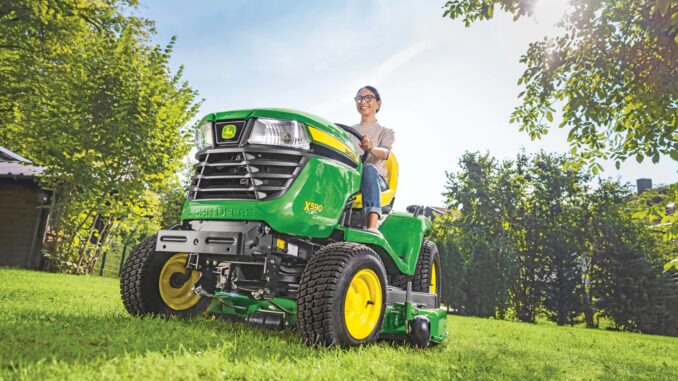
The John Deere L100 Series was a line of residential lawn tractors aimed at homeowners who needed more capability than a small entry-level mower but did not require a full-size garden tractor. These machines were primarily designed for routine grass cutting, towing light yard carts, collecting clippings, and seasonal property work on typical suburban and rural-residential lawns.
This page serves as a central directory for John Deere L100 Series model-specific guides, maintenance information, and troubleshooting content. It is intended to help owners identify their tractor, understand the broad differences among L100 Series models, and find the appropriate maintenance or repair topic for their machine. For wider information covering Deere residential mowing equipment, see the General John Deere Lawn and Garden Tractor Guide.
About the John Deere L100 Series Lawn and Garden Tractor Series
The John Deere L100 Series was a residential lawn tractor family sold in North America primarily during the early and mid-2000s. It occupied the entry-to-mid-level end of John Deere’s riding mower range: more substantial than a basic small lawn mower, but generally lighter-duty than an X500 Series garden tractor, an X700 Series diesel garden tractor, or classic heavy-duty models such as the 318 and 420.
The range included models with approximately 17 to 23 horsepower gasoline engines. Early and lower-specification machines used single-cylinder Briggs & Stratton engines, while higher-specification tractors used larger Briggs & Stratton V-twin or Kohler V-twin engines. Deck sizes were generally 42 inches or 48 inches, making the series suitable for small to medium acreage, larger suburban lawns, and properties with open mowing areas.
The L100 was the principal gear-drive model, using a five-speed manual transaxle. Most other L100 Series tractors used hydrostatic drive systems, allowing the operator to vary ground speed using foot controls rather than selecting fixed gears. Hydrostatic models were often more convenient for lawns with trees, landscaping, garden beds, frequent reversing, and repeated changes in mowing speed.
These tractors were 2WD residential lawn tractors rather than true heavy-duty garden tractors. They could tow lightweight carts, lawn sweepers, spreaders, aerators, and similar lawn-care equipment, but owners should be cautious about heavy hauling, aggressive ground engagement, steep slopes, or large rear-mounted tillers. The transmission, frame, steering, and axle components were designed primarily around mowing use.
Typical equipment included electric PTO deck engagement, a mower deck height-control system, adjustable seat, headlights, reverse implement operation capability on many versions, cup holder storage, and a stamped Edge cutting deck. Higher-powered models commonly paired larger engines with 48-inch decks for faster coverage on open lawns.
In John Deere’s broader lawn and garden range, the L100 Series is best viewed as a discontinued residential lawn tractor family. It sits below the more refined and durable X300 Series lawn tractors, below the X500 Series garden tractors in frame and transmission capability, and well below the X700 Series heavy-duty garden tractors. It remains popular in the used market because of its straightforward mechanical layout, wide parts availability, and relatively simple owner-service requirements.
John Deere L100 Series Lawn and Garden Tractor Models
And See:
| Repair Guide | Serial Number Lookup | Winter Guide |
| LT133 | ||
| LT155 | LT155 | |
| LT160 | ||
| STX 38 | STX38 |
The L100 Series model range changed over time, and exact engine, deck, transmission, tire, and electrical specifications can vary by production year and serial-number range. Confirm the model and serial number before ordering engine parts, belts, blades, ignition components, mower deck parts, or hydrostatic-drive components. John Deere published manuals covering the L100, L108, L110, L111, L118, L120, and L130 together, while the L105 and L107 are commonly treated as related later L100-family variants.manuals.deere+2
L100 Series Lawn and Garden Tractor Maintenance Guides
Routine Service and Checks
Regular maintenance matters especially on older L100 Series tractors because many examples now have long service histories, unknown ownership records, or years of seasonal use. Begin with a complete inspection when purchasing a used machine or returning one to service after winter storage.
Engine oil level should be checked before use, with the oil and filter changed at the interval specified for the engine installed in the tractor. The exact oil capacity and filter arrangement differ between single-cylinder and V-twin models. Replace the air filter when dirty, inspect the foam pre-cleaner where fitted, and check the fuel filter, fuel lines, tank vent, and carburetor area for deterioration or debris.
Gasoline-engine service normally includes spark plug inspection or replacement, ignition lead inspection, cooling-fin cleaning, battery terminal cleaning, and checking the charging system. V-twin engines require particular attention to cooling airflow around both cylinder banks, because leaves, grass clippings, and oily debris can restrict air movement and contribute to overheating.
The L100 Series lawn and garden tractor service interval checklist can cover seasonal oil service, air-filter care, battery testing, lubrication points, belt checks, blade inspection, tire pressures, and safety-switch testing. DIY maintenance for L100 Series lawn tractors can also help owners establish a repeatable service routine before mowing season.
Hydrostatic-drive tractors should be kept clean around the transmission and cooling fan area. Avoid assuming that a weak hydrostatic transmission can be repaired merely by adding oil; many L100 Series transaxles have limited routine-service provisions, and the correct diagnosis depends on the exact transmission model and its condition.
Mower Deck, Cutting Quality, and Belt Care
The mower deck is the most heavily used attachment on an L100 Series tractor. Inspect it regularly for bent blades, loose blade bolts, cracked pulleys, worn belt guides, spindle noise, deck-shell corrosion, and grass buildup. A dirty deck holds moisture and clippings against the steel shell, increasing the chance of rust-through on older tractors.
Sharpen blades in matched sets and keep them balanced. A blade that is sharp but badly unbalanced can create vibration that damages spindles, pulleys, deck bearings, and mounting hardware. Replace blades that are bent, cracked, heavily worn, or damaged around the center mounting hole.
Deck leveling should be checked whenever the machine develops an uneven cut, scalps one side of the lawn, leaves strips of uncut grass, or cuts noticeably lower at the front or rear. Confirm tire pressures first, because uneven inflation can make a properly adjusted deck appear out of level.
Mower deck maintenance and cutting quality on L100 Series tractors can address deck cleaning, blade service, height adjustment, deck leveling, and cutting-pattern diagnosis. Deck belt and spindle service for L100 Series lawn and garden tractors can focus on belt routing, belt wear, pulley alignment, spindle noise, and deck removal procedures.
Steering, Axle, and Chassis Maintenance
L100 Series tractors use a relatively simple residential steering and front-axle arrangement. Steering play often develops gradually through wear in tie-rod ends, steering gears, steering shafts, bushings, front axle pivot points, wheel bushings, and spindle components. Check steering response before working near landscaping, fences, slopes, or road edges.
Inspect the front wheels for wobble, rough rotation, worn bushings, damaged wheel retainers, and dry or damaged axle spindles. Check the tie rods for looseness and verify that the steering wheel moves the front wheels smoothly from lock to lock.
Toe-in and wheel alignment affect steering stability, tire wear, and mowing accuracy. A tractor that pulls to one side, wanders during mowing, or wears one front tire more rapidly may have a damaged steering component, loose linkage, mismatched tires, or an alignment issue.
Steering and front axle maintenance across L100 Series lawn and garden tractors can provide a hub for front-wheel service, tie-rod inspection, steering-play diagnosis, front-axle checks, and chassis fastener inspection.
L100 Series Lawn and Garden Tractor Troubleshooting Guides
Starting, Engine, and Fuel / Ignition Problems
A no-start condition on an L100 Series tractor may come from a discharged battery, corroded battery terminals, weak starter, failed solenoid, faulty ignition switch, blown fuse, damaged wiring, or an open safety-switch circuit. The brake or clutch switch, PTO switch, seat switch, and reverse-operation safety system should all be considered during diagnosis.
If the engine cranks but will not start, check fuel quality, fuel flow, spark, air-filter condition, choke operation, carburetor condition, and engine compression. Old gasoline is a common cause of hard starting, surging, fuel starvation, and carburetor blockage on machines that sit through winter or are used only intermittently.
Stalling under load can indicate a dirty air filter, restricted fuel flow, weak ignition, carburetor adjustment or contamination, overheating, incorrect governor operation, dull blades, overloaded mowing conditions, or a belt/deck problem that places excessive load on the engine. V-twin models may also require separate inspection of both spark plugs, both ignition circuits, and cooling airflow around both cylinders.
L100 Series lawn and garden tractor starting problems – diagnostics and fixes can serve as the primary no-start resource. Engine and fuel system issues across L100 Series tractors can cover stale fuel, carburetor faults, ignition problems, overheating, surging, loss of power, and intermittent stalling.
Mower Deck, PTO, and Cutting Performance Problems
If the deck will not engage, begin with the PTO switch, wiring, fuse, battery condition, electric PTO clutch, safety circuit, deck belt condition, and pulley movement. A weak battery or charging problem can sometimes affect electric PTO operation even when the engine still starts.
Blades that stop under load may point to a worn or slipping deck belt, seized spindle, damaged pulley, weak PTO clutch, grass buildup, severely dull blades, or mowing conditions that exceed the machine’s practical capacity. Reduce ground speed in tall grass and avoid trying to remove excessive height in a single pass.
Uneven cutting, scalping, streaking, vibration, and deck noise should be addressed promptly. Check tire pressures, deck level, blade condition, blade timing where applicable, spindle bearings, pulley condition, deck hangers, and the mower-deck shell. A sudden vibration after striking an object often means a bent blade, damaged spindle, bent pulley, or distorted deck component.
PTO and deck engagement problems on L100 Series lawn tractors can cover electrical and mechanical deck-engagement checks. Cut quality and deck vibration issues on L100 Series models can focus on uneven cutting, scalping, striping, noisy spindles, blade balance, and deck-level adjustment.
Drive, Transmission, and Traction Problems
Gear-drive L100 tractors can develop drive problems from clutch adjustment issues, worn drive belts, idler-pulley failures, worn shifter linkage, damaged transaxle components, or problems releasing the brake and clutch system fully. A tractor that creeps with the clutch depressed or fails to move in one gear should be inspected before continued use.
Hydrostatic models may suffer from slow travel speed, weak hill performance, inconsistent forward or reverse movement, overheating, belt slip, a damaged cooling fan, linkage problems, or a worn hydrostatic transaxle. Verify that the parking brake is fully released, the drive belt is correctly routed, the idler system moves freely, and the transmission cooling area is clear of grass and debris.
Loss of traction is not always a transmission failure. Worn rear tires, low tire pressure, wet grass, steep slopes, loose soil, a heavy cart, and a deck that is set too low can all reduce performance. These tractors are primarily mowing machines, so avoid treating them as heavy ground-engagement garden tractors or using them beyond their towing and slope capabilities.
Drive and transmission problems on L100 Series lawn and garden tractors can help owners separate belt, linkage, brake, and transaxle faults. Traction and hill performance issues across L100 Series models can cover tire condition, slope safety, hydrostatic-drive limitations, towing load, and wet-ground operation.
Attachments and Implements for the L100 Series Lawn and Garden Tractor Series
The L100 Series was primarily built around a mid-mount mower deck, but many owners also used compatible yard-care accessories. Common equipment includes 42-inch and 48-inch mower decks, bagging systems, mulch kits, lawn sweepers, utility carts, broadcast spreaders, aerators, dethatchers, sprayers, and light tow-behind equipment.
Some versions could be equipped for snow work with a front blade or snow blower, depending on the tractor model, production year, mounting hardware, PTO/belt arrangement, tire equipment, and available Deere accessory packages. Snow use adds significant load to a residential tractor, so owners should confirm compatibility carefully and inspect belts, traction tires, battery condition, and drive components before the season begins.
Compatibility depends on more than the tractor’s horsepower. Check deck width, frame and front-hitch configuration, attachment-mounting points, belt routing, pulley size, electric PTO capacity, rear hitch arrangement, tire clearance, electrical connections, and the condition of the tractor itself. An accessory that fits physically may still exceed the practical limits of a lighter residential chassis or hydrostatic transmission.
The L100 Series is generally better suited to light towing and lawn-care attachments than to heavy rear implements. Rear tillers, large plows, substantial loaders, and other high-draft ground-engagement equipment are normally more appropriate for true garden tractors with stronger frames, transmissions, and attachment systems.
Attachments and implement options for L100 Series lawn and garden tractors can organize information by mowing, bagging, towing, lawn renovation, and winter work. Setting up and using snow equipment and yard attachments on L100 Series tractors can provide seasonal preparation guidance, setup checks, and operating limitations.