A compact tractor is indispensable if you own a small farm, manage a landscaping business, or simply want a powerful machine to deal with the upkeep of your property.
This guide covers every aspect of compact tractors—from the basics of what they are, to choosing the right model, to keeping it in good condition for as many years as possible.
For Specific Manufacturers and Models, please click links below:
What Is a Compact Tractor?
Definition & Size Class
A compact tractor is a small, versatile agricultural machine typically ranging from 15 hp to 50 hp. It sits between the very light “sub‑compact” machines (under 15 hp) and the larger “utility” tractors (over 50 hp).
| Category | Approx. Horsepower | Typical Weight | Common Uses |
|---|---|---|---|
| Sub‑compact | < 15 hp | 800 – 1,200 lb | Small lawns, garden carts |
| Compact | 15 – 50 hp | 1,500 – 4,500 lb | Property maintenance, light farming |
| Utility | > 50 hp | 4,500 + lb | Large fields, heavy tillage |
Key Features That Differentiate It From Utility or Sub‑Compact Tractors
| Feature | Compact Tractor | Sub‑Compact | Utility |
|---|---|---|---|
| Engine Power | 15‑50 hp | < 15 hp | > 50 hp |
| Three‑Point Hitch | Standard (often 50 mm) | Often absent or limited | Heavy‑duty, 50 mm or larger |
| PTO (Power Take‑Off) | 540 rpm (sometimes 1,000 rpm) | Rare | Multiple PTO speeds, higher torque |
| Transmission | Hydrostatic, manual, CVT options | Mostly manual | Often manual or advanced hydrostatic |
| Cab/Enclosure | Optional ROPS, sometimes enclosed cab | Usually open | Enclosed cab with heating/cooling |
Typical Tasks & Environments Where They Shine
- Landscaping & Lawn Care: Mowing large properties, mulching, brush clearing.
- Small‑Scale Farming: Tilling garden beds, planting rows, hauling feed.
- Snow Removal: Attaching a snow blower or rotary plow for residential driveways.
- Construction & Site Prep: Moving pallets, operating a backhoe attachment, grading small areas.
Because of their size, compact tractors can maneuver in tight spaces—tight garden rows, narrow alleys, or around existing structures—while still delivering enough power to run a wide variety of implements.
Manufacturers Maintenance and Repair Guide
When people choose a compact tractor, they pay close attention to how easy it will be to maintain and repair over many years, not just its headline specs.
Buyers usually start with overall reliability and build quality, because fewer breakdowns mean less time and money spent in the workshop.
They look for brands (and specific models) with strong durability reputations, long powertrain warranties, and proven engines and drivetrains that are known to reach high hours with routine servicing only.
Many also value manufacturers that design and build their own engines and key components because this often translates into better parts integration and long-term support.
Day‑to‑day serviceability is another core concern. Owners want clear access to filters, fluids, belts, grease points, radiators, and mower decks so they can perform basic maintenance tasks quickly without special tools.
Good manuals, clear service intervals, and straightforward procedures for oil and filter changes, axle and hydraulic fluid checks, and air filter replacement all make a manufacturer more attractive.
People also pay attention to how easy it is to keep radiators and screens clean, because overheating from clogged fins is a common cause of premature failures on modern compact tractors.
Parts and dealer support from the manufacturer weigh heavily in purchase decisions. Shoppers look for widely available, reasonably priced OEM and aftermarket parts, plus a strong dealer network with quick turnaround on common items.
They also consider how brand‑specific features (such as proprietary quick‑attach systems or electronics) might affect future repairs, preferring standard, widely supported systems where possible.
Finally, they value good technical support and responsive warranties, because when something does fail, having a helpful dealer and cooperative manufacturer often matters as much as the tractor’s specifications.
Power & Performance
Power Ranges & PTO Options – Quick Overview
Compact tractors are generally divided into three horsepower families:
| Horsepower band | Typical use‑case | Typical PTO speed |
|---|---|---|
| 15 – 25 HP | Light mowing, garden work, small‑scale landscaping | 540 RPM |
| 26 – 35 HP | Medium‑size mowing decks, front‑end loaders, light tillage | 540 RPM (some models also offer 1000 RPM) |
| 36 – 45 HP | Larger implements such as multi‑row mowers, heavier loaders, modest field work | 540 RPM ± 1000 RPM (dual‑speed PTO) |
Why it matters – The horsepower band determines the heaviest implement you can run reliably, while the PTO speed dictates which attachments (e.g., mower decks, balers, augers) will operate safely. Selecting a tractor whose power and PTO match your most demanding task helps avoid stalling, excessive fuel consumption, and premature wear.
Want the full details?
Our dedicated sub‑pillar dives deeper into:
- How to choose between 540 RPM and 1000 RPM PTOs
- Matching specific implements to each horsepower band
- Model‑by‑model comparisons of power output and PTO capability
Transmission Types
The transmission is the conduit that turns engine power into usable motion. It determines how smoothly a tractor accelerates, how easily it climbs a hill, and how much effort the operator must exert. Because every compact‑tractor buyer has a different mix of tasks, terrain, and budget, this pillar explains the four core transmission families in a way that stands alone from the more granular “sub‑pillar” breakdown you’ll find later in the guide.
1. Gear‑Drive (Sliding‑Gear)
- How it works – A set of steel gears is moved by a shift fork. The operator uses a clutch pedal and a gear lever to lock the tractor into a fixed ratio.
- Who it serves – Users who need raw torque, durability, and the lowest purchase price. Ideal for heavy loader work on flat or gently rolling fields.
- Key take‑aways – Cheapest, simplest to service, but requires clutch operation and manual gear changes.
2. Hydrostatic (HST)
- How it works – Engine power drives a hydraulic pump; pressurised fluid runs a hydraulic motor that turns the wheels. Speed is controlled by a foot pedal, and direction changes with a forward/reverse lever—no clutch needed.
- Who it serves – Landscapers, mowers, and anyone who values seamless speed control and quick direction changes, especially on hilly terrain.
- Key take‑aways – Provides infinite speed variability and low operator fatigue, but carries a higher upfront cost and needs regular hydraulic‑fluid maintenance.
3. Synchro‑Shuttle (SST)
- How it works – A conventional gear set offers two ranges (Low and High). Within the selected range, a shuttle lever toggles forward or reverse, letting the operator change direction without re‑engaging the clutch.
- Who it serves – Operators who want a middle ground: more flexibility than a pure gear‑drive, yet a lower price than a full hydrostatic system. Great for mixed‑use farms that switch between digging and transport.
- Key take‑aways – Two‑speed flexibility and fast forward/reverse, but still requires a clutch pedal when shifting between Low and High.
4. Powershift / eHydro
- How it works – Electro‑hydraulic clutch packs engage and disengage gears automatically. The driver selects a gear via a lever or console button; no clutch pedal is involved.
- Who it serves – Professional contractors and high‑intensity applications where rapid, on‑the‑fly gear changes boost productivity (e.g., snow removal, large‑scale landscaping).
- Key take‑aways – Lightning‑fast shifts and no clutch pedal, delivering the smoothest operator experience, but it commands the highest price and requires dealer‑level service.
5. Choosing Between Them – The Decision Lens
| Decision Factor | Gear‑Drive | Hydrostatic | Synchro‑Shuttle | Powershift / eHydro |
|---|---|---|---|---|
| Initial Cost | Low | Medium‑High | Medium | High |
| Operator Fatigue | Highest (clutch) | Lowest (pedal only) | Moderate | Lowest |
| Terrain Suitability | Flat‑to‑moderate | Steep/hilly | Mixed | Heavy‑duty, frequent shifts |
| Maintenance Complexity | Simple (oil) | Moderate (hydraulic fluid) | Simple‑moderate | High (electronics & hydraulics) |
| Resale Value | Good | Highest | Good | Highest |
| Best For | Budget‑focused, heavy torque | Precise speed control, slopes | Balanced performance | Premium productivity |
Loader Compatibility & Front‑End Work
What Loaders Are and Why They Matter
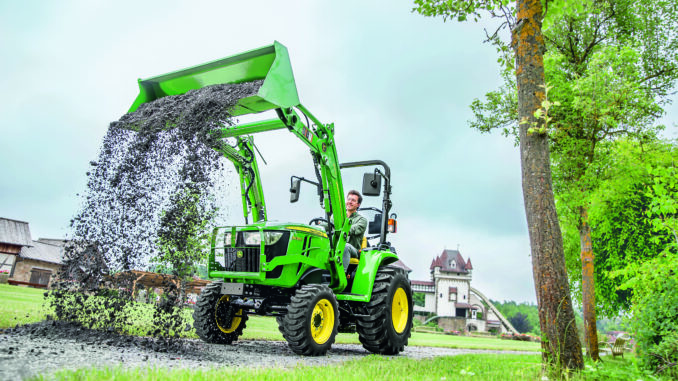
A front‑end loader is a bucket‑style attachment mounted on the three‑point hitch. It lets the tractor lift, move, and dump materials such as soil, gravel, mulch, or debris.
Key Specs
| Spec | Why It Matters |
|---|---|
| Lift Capacity | Determines the maximum weight the loader can raise safely. Typically expressed in pounds (e.g., 1,500 lb). |
| Dump Height | Height the bucket can raise before dumping—important for loading trucks or containers. |
| Hydraulic Flow Rate | Faster flow = quicker bucket lifts. Look for ≥ 10 GPM for smoother operation. |
| Bucket Width & Volume | Wider buckets move more material per pass, but require more lift capacity. |
Popular Loader Attachments
- Standard Bucket – General purpose digging and moving.
- Grapple – Grabs irregular objects like logs or brush.
- Bale Spears – Handles round or square bales for farm work.
- Forks – Lifts pallets, hay bales, or large bags.
How to Choose a Loader That Fits Your Tractor
- Match Lift Capacity to Tractor HP – A rule of thumb: Lift Capacity ≈ 30 × HP (e.g., a 20 hp tractor can safely handle a 600‑lb loader).
- Check Hitch Compatibility – Most compact tractors use a 50 mm three‑point hitch; ensure the loader’s pins match.
- Consider Hydraulic Requirements – Verify that the tractor’s hydraulic pump can supply the flow rate the loader demands.
- Assess Ground Clearance – If you’ll work on uneven terrain, a loader with higher ground clearance reduces the risk of digging in.
Popular Compact Tractor Models & Use Cases
Below we present representative, brand‑neutral categories for each horsepower band. The goal is to illustrate typical capabilities without endorsing a specific manufacturer.
15 – 25 HP
| Typical Buyers | Core Tasks | Example Model Characteristics |
|---|---|---|
| Homeowners with large lawns, hobby gardeners | Mowing, light tillage, small loader work, snow blowing | 18 hp engine, hydrostatic transmission, rear PTO 540 rpm, lift capacity ~600 lb |
| Small‑scale property managers | Grass cutting, leaf collection, light haulage | 22 hp, manual 6‑speed gearbox, optional front loader |
25 – 40 HP
| Typical Buyers | Core Tasks | Example Model Characteristics |
|---|---|---|
| Hobby farms (1‑5 acres) | Row cropping, moderate loader work, snow clearing, small backhoe | 30 hp, hydrostatic or manual, rear PTO 540 rpm, lift capacity ~1,200 lb |
| Professional landscapers | Medium‑size mowing decks, mulching, trenching, material moving | 35 hp, CVT transmission, mid‑PTO option, lift capacity 1,400 lb |
40 + HP
| Typical Buyers | Core Tasks | Example Model Characteristics |
|---|---|---|
| Small commercial farms, construction sites | Heavy loader work, large‑area mowing, land clearing, backhoe operation | 45‑50 hp, hydrostatic with high‑flow hydraulics, rear PTO 540 rpm + 1,000 rpm, lift capacity 1,800‑2,200 lb |
| Municipal maintenance crews | Snow plowing, road grading, bulk material handling | 55 hp (upper compact limit), robust frame, reinforced PTO, optional cab enclosure |
Note: The exact model names vary by brand (e.g., Kubota, John Deere, Massey Ferguson, Mahindra). Use the Compact Tractor Buyer’s Handbook PDF for a side‑by‑side comparison chart once you’ve narrowed your horsepower range.
Compact Tractor Model Comparisons
Feature Table (Sample)
| Model | HP | Transmission | Lift Capacity | Loader Type | PTO Speed(s) | Best For |
|---|---|---|---|---|---|---|
| Model A | 20 | Hydrostatic | 650 lb | Standard bucket | 540 rpm | Residential mowing, light loader |
| Model B | 30 | 6‑speed manual | 1,250 lb | Grapple, bucket | 540 rpm | Hobby farm, medium loader |
| Model C | 45 | CVT | 1,900 lb | Heavy‑duty bucket, forks | 540 rpm & 1,000 rpm | Small commercial farm, snow plow |
In‑Depth Comparisons
Horsepower vs. Lift Capacity
Higher horsepower generally allows a greater lift capacity because the engine can drive a larger hydraulic pump. However, hydraulic flow rate and pump size are equally important. A 30 hp tractor with a high‑flow pump can sometimes lift more than a 35 hp unit with a low‑flow pump.
Transmission Impact on Usability
- Hydrostatic – Best for frequent direction changes (e.g., loader work, mowing).
- Manual – Preferred for long‑haul tasks where fuel efficiency matters.
- CVT – Offers a middle ground, good for operators who want smooth control without the premium price of hydrostatic.
Attachment Compatibility Breakdown
- Rear PTO – Works with most mower decks, rototillers, and balers.
- Mid‑PTO – Needed for certain mid‑mount mowers and specialty implements.
- Independent PTO – Rare, but useful for high‑speed rotary tools or custom equipment.
Buying New vs. Used
Advantages of Buying New
| Benefit | Why It Matters |
|---|---|
| Warranty | Covers defects for 1‑3 years, reducing repair costs. |
| Latest Technology | Modern engines meet stricter emissions standards, often run cleaner and quieter. |
| Dealer Support | Access to genuine parts, service contracts, and financing options. |
| Customization | Choose transmission, PTO speed, and accessories at the factory. |
Advantages of Buying Used
| Benefit | Why It Matters |
|---|---|
| Lower Cost | Significant savings (often 30‑50 % off MSRP). |
| Value for Light Use | If you only need occasional mowing, a well‑maintained used unit can be economical. |
| Immediate Availability | May be ready for pickup without waiting for dealer lead times. |
Risks with Used Tractors
- Hidden Wear – Engine hours, hydraulic leaks, or worn PTO shafts may not be obvious.
- Service History Gaps – Lack of records makes it hard to verify proper maintenance.
- Outdated Emissions – Older models may not meet current regulations in some regions.
Trade‑Offs by Use Case
| Use Case | New or Used? | Key Considerations |
|---|---|---|
| Hobbyist (occasional mowing) | Used (good condition) | Verify hours, test PTO, check hydraulic fluid. |
| Small Farm (daily work) | New (or low‑hour used) | Warranty important; ensure parts availability. |
| Professional Landscaping (intensive use) | New (or certified pre‑owned) | Reliability, service contracts, and up‑to‑date emissions. |
Compact Tractor Buying Guide
Define Your Needs
- Property Size & Terrain – Flat lawns vs. hilly fields affect required horsepower and traction.
- Primary Tasks – Mowing, tilling, loader work, snow removal, or a combination.
- Frequency of Use – Daily, weekly, seasonal? This influences new vs. used decision.
Key Specs to Evaluate
| Spec | What to Look For |
|---|---|
| Horsepower | Match to the heaviest task (e.g., a 30 hp unit for a 1‑acre tillage job). |
| Torque | Higher torque improves pulling power at low speeds—critical for loaders. |
| PTO Type & Speed | Ensure compatibility with your main implement. |
| Transmission | Hydrostatic for frequent direction changes; manual for efficiency. |
| Hydraulics | Minimum 10 GPM flow for most loaders; higher flow for heavy-duty work. |
| Ground Clearance | At least 12‑14 inches for rough terrain. |
| Weight & Stability | Heavier units provide better traction but may compact soil. |
Attachments Checklist
| Category | Typical Attachments |
|---|---|
| Loaders | Standard bucket, grapple, bale spears, forks |
| Mowers | Rotary deck (3‑ft to 6‑ft), mulching kit |
| Backhoes | Small backhoe, trenching bucket |
| Cultivators/Tillers | Rototiller, cultivator, subsoiler |
| Utility | Pallet fork, snow blower, brush cutter |
Questions to Ask Before You Buy
- Is the dealer authorized for the brand?
- What is the warranty length and coverage?
- Are genuine parts readily available locally?
- Can I test the PTO and hydraulic flow on site?
- Does the model have a ROPS (Roll‑Over Protective Structure) and seat belt?
Budgeting & Financing Tips
| Tip | Explanation |
|---|---|
| Set a Price Range | Determine the maximum you’re comfortable spending, then factor in taxes, delivery, and optional accessories. |
| Compare New vs. Certified Pre‑Owned | Certified pre‑owned often includes a limited warranty and inspection. |
| Financing Options | Many dealers offer 0 % APR for 12‑24 months on new units; compare with credit‑union loans. |
| Total Cost of Ownership | Include fuel, maintenance, insurance, and possible storage fees over 5‑years. |
Maintenance & Seasonal Service Tips
Keeping a compact tractor in peak condition all year round protects your investment, maximises uptime, and ensures safe operation. Below is a re‑organized, detailed seasonal checklist that you can print, paste on the wall of your garage, or save as a reminder on your phone.
Routine (Year‑Round) Maintenance
| Task | Recommended Interval | Why It Matters |
|---|---|---|
| Engine oil & filter | Every 50 hrs or once per year (whichever comes first) | Fresh oil lubricates moving parts, removes contaminants, and prevents premature wear. |
| Fuel filter | Inspect every 75 hrs; replace if dirty or at least every 150 hrs | Prevents debris from reaching the injector or carburetor, preserving power and fuel efficiency. |
| Air filter | Check every 75 hrs; replace when visibly dirty (typically every 150 hrs) | Clean airflow maintains optimal combustion and protects the engine from dust ingress. |
| Hydraulic fluid | Check level monthly; replace every 300 hrs or 2‑3 years | Guarantees smooth loader operation and protects the pump from wear. |
| Greasing points | Grease all pivot, PTO, and loader pins every 25 hrs or monthly | Reduces friction, prevents rust, and extends component life. |
| Coolant level & condition | Inspect monthly; flush & refill every 2 years | Avoids overheating, especially during heavy‑load work or hot summer days. |
| Tire pressure & tread | Check before each use; adjust to manufacturer’s PSI (usually 12‑15 psi for turf) | Proper pressure gives optimal traction, reduces soil compaction, and improves fuel economy. |
| Battery health | Test voltage quarterly; clean terminals as needed | A strong battery prevents starting issues and ensures reliable electrical power for lights, PTO, and accessories. |
| Safety devices (ROPS, seat belt, lights) | Visual inspection each season | Guarantees compliance with safety regulations and protects the operator. |
Season‑Specific Checklist
Spring –
| Item | Action | Tips |
|---|---|---|
| Battery | Fully charge; clean terminals; check electrolyte level (if lead‑acid). | Cold nights can drain batteries; a charger keeps it ready for early work. |
| Belts & Hoses | Inspect for cracks, fraying, or looseness; replace any showing wear. | Pay special attention to the fan belt and hydraulic hoses. |
| PTO & Transmission | Run the PTO at idle for a few minutes, listen for abnormal noises; shift through all gears. | Lubricate the PTO clutch if the manual recommends it. |
| Cooling System | Flush radiator, refill with fresh coolant (mix 50/50 antifreeze/water). | Remove any debris that may have collected over winter. |
| Oil Change | Perform if you haven’t done one in the last 50 hrs or 12 months. | Use the viscosity grade specified in the owner’s manual (often SAE 10W‑30 for temperate climates). |
| Filter Replacements | Replace fuel and air filters if they haven’t been changed in the past 150 hrs. | A clean air filter improves fuel efficiency by up to 5 %. |
| Tires | Check pressure, inspect tread depth, look for punctures or sidewall cracks. | Rotate tires if the manufacturer recommends rotation for even wear. |
| Safety Inspection | Verify ROPS bolts are tight, seat belt fastens securely, headlights and taillights work. | Test the horn and any backup alarms. |
| Cleaning | Wash the entire tractor, remove rust spots, apply a thin coat of corrosion‑inhibiting spray. | A clean surface makes future inspections easier. |
Summer –
| Item | Action | Tips |
|---|---|---|
| Cooling System | Monitor coolant temperature; top‑off if level drops. | Keep an eye on the temperature gauge during long mowing sessions. |
| Hydraulic Fluid | Check for foaming or discoloration; replace if fluid looks milky. | High ambient temps can accelerate fluid breakdown. |
| Air Filter | Replace if dusty (common in dry summer conditions). | Consider a high‑capacity filter for dusty fields. |
| Fuel Quality | Use fresh gasoline or diesel; add a fuel stabilizer if storing for > 30 days. | Summer heat can cause fuel evaporation and phase separation. |
| Lubrication | Re‑grease all pins after heavy use (especially loader and PTO). | Use lithium‑based grease for high‑temperature stability. |
| Tire Pressure | Re‑check daily; heat can increase pressure by 2‑3 psi. | Adjust to the lower end of the recommended range to avoid over‑inflation. |
| Shade & Rest | Allow the engine to idle for a minute before shutting down after heavy work. | Prevents heat soak and prolongs engine life. |
| Safety Gear | Wear hearing protection and UV‑blocking sunglasses when operating outdoors. | Sun exposure can cause fatigue; stay hydrated. |
Fall –
| Item | Action | Tips |
|---|---|---|
| Fuel Stabilizer | Add to the tank if you plan to store the tractor over winter. | Prevents gum formation and keeps the fuel system clean. |
| Oil Change | Perform before long periods of inactivity. | Fresh oil protects internal components from moisture condensation. |
| Battery | Charge fully; disconnect if storing for > 30 days to avoid sulfation. | Store the battery in a cool, dry place away from direct sunlight. |
| Hydraulic System | Flush and replace fluid if it shows signs of contamination. | Cold weather can thicken old fluid, reducing performance. |
| Tire Care | Inflate to the upper end of the recommended PSI; inspect for cracks caused by UV exposure. | Consider applying a tire protectant spray. |
| Cleaning & Wax | Wash thoroughly, then apply a protective wax coating to metal surfaces. | Wax repels water and reduces rust during damp months. |
| Cover & Shelter | If possible, store the tractor in a garage or under a waterproof cover. | Use a breathable cover to prevent moisture buildup underneath. |
| Safety Checks | Verify ROPS bolts, seat belt, lights, and horn function before the next season. | Document any issues now so you can address them before spring. |
Winter –
| Item | Action | Tips |
|---|---|---|
| Engine Block Heater | Connect and set to low‑heat mode (≈ 120 °F) if you expect sub‑zero starts. | Reduces engine wear and eases cold starts. |
| Antifreeze | Ensure coolant mixture is 50/50 ethylene glycol/water for freeze protection down to ‑20 °F. | Check the freeze‑point with a thermometer if you live in extreme cold. |
| Fuel | Keep the tank at least ¾ full to minimise condensation; add winter‑grade fuel additive if needed. | Diesel users should use anti‑gel additives in temperatures below ‑10 °C. |
| Battery | Keep the battery on a trickle charger or maintain a charge of ≥ 12.6 V. | Cold reduces battery capacity by up to 50 %; a charger prevents dead starts. |
| Oil Viscosity | Switch to a winter‑grade oil (e.g., SAE 5W‑30) if your climate routinely falls below ‑10 °C. | Thinner oil circulates faster at low temperatures, protecting engine bearings. |
| Tire Pressure | Increase pressure by 2‑3 psi to compensate for colder, denser air. | Over‑inflated tires can reduce traction on icy surfaces; balance carefully. |
| Snow & Ice Removal | Equip a snowblower attachment or rotary plow (ensure PTO is rated for the required torque). | Test the attachment on a short run before tackling deep drifts. |
| Storage (If Not Using) | Drain the fuel system or add a stabilizer, disconnect the battery, and store the tractor in a dry, insulated shelter. | Cover with a breathable tarp; place a moisture‑absorbing desiccant nearby. |
| Safety Gear | Wear insulated gloves, thermal clothing, and non‑slip boots. Use headlights and auxiliary lights for reduced daylight. | Keep a first‑aid kit and a mobile phone within reach in case of emergencies. |
Quick Reference Card (Print‑Friendly) – PDF
SPRING      • Charge & clean battery
            • Inspect belts, hoses, PTO
            • Flush coolant, change oil
            • Replace fuel/air filters
            • Check tire pressure & tread
            • Grease all pins

SUMMER      • Monitor coolant temp
            • Replace air filter (dust)
            • Top‑off hydraulic fluid
            • Use fuel stabilizer for storage
            • Re‑grease after heavy use
            • Keep tires properly inflated

FALL        • Add fuel stabilizer
            • Oil change before idle period
            • Charge/disconnect battery
            • Flush hydraulics if needed
            • Inflate tires to max PSI
            • Wash & wax metal surfaces

WINTER      • Use block heater
            • Verify 50/50 antifreeze mix
            • Keep tank ≥¾ full, add anti‑gel (diesel)
            • Maintain battery charge
            • Switch to winter‑grade oil
            • Increase tire pressure 2‑3 psi
            • Store in dry shelter if not used
Print this card, tape it to the inside of the tractor’s cab, and tick off each item as you complete it. Consistent seasonal care will keep your compact tractor reliable, efficient, and safe for many productive years.
Frequently Asked Questions (FAQs)
Below is a comprehensive FAQ designed for anyone researching / using compact tractors.
General Basics
Q1: What exactly is a compact tractor?
A compact tractor is a small, versatile agricultural machine (typically 15 – 50 hp) that sits between sub‑compact lawn tractors and larger utility tractors. It offers a three‑point hitch, a PTO, and enough power to run a wide range of implements such as mowers, loaders, and tillers.
Q2: How does a compact tractor differ from a regular lawn mower?
Unlike a standard riding mower, a compact tractor has a PTO (Power Take‑Off) that can drive external equipment, a three‑point hitch for loaders and other attachments, and a higher horsepower range (15 – 50 hp versus 5 – 12 hp for most mowers). This makes it capable of tasks beyond mowing, like digging, hauling, and snow removal.
Q3: Do I need a license to operate a compact tractor?
Regulations vary by country and region. In many U.S. states, a compact tractor under 25 hp can be operated without a special license, but larger models (30 hp + ) may require a farm vehicle endorsement or a commercial driver’s license. Always check local laws before purchasing.
Choosing the Right Size
Q4: Which horsepower range should I pick for a 2‑acre hobby farm?
For a 2‑acre property where you’ll be tilling, mowing, and using a front‑end loader occasionally, a 25 – 40 hp compact tractor is usually ideal. It provides enough torque for a medium‑size loader and can comfortably run a 3‑ft to 4‑ft mower deck.
Q5: Can a 15 hp compact tractor handle a snow blower?
Yes, provided the snow blower is rated for a 540 rpm PTO and the tractor’s PTO torque meets the blower’s requirements (usually listed in the blower’s spec sheet). However, a 15 hp unit may struggle with deep, wet snow; a 20 hp‑plus model offers more reliable performance.
Q6: Is a higher‑horsepower tractor always better?
Not necessarily. Higher horsepower brings increased fuel consumption, higher purchase price, and possibly a larger footprint that makes maneuvering in tight spaces harder. Choose the smallest horsepower that can reliably perform your heaviest anticipated task.
Power Take‑Off (PTO) & Attachments
Q7: What does “540 rpm PTO” mean?
A 540 rpm PTO rotates at 540 revolutions per minute and is the industry‑standard speed for most mower decks, rototillers, balers, and many other implements. If an attachment specifies 540 rpm, any compact tractor with a 540 rpm rear PTO will be compatible.
Q8: Do I need a mid‑PTO for a front‑mount mower?
Most front‑mount mowers are designed for a rear PTO, but some specialty front‑mount mowers require a mid‑PTO located near the tractor’s center. Check the mower’s specifications; if it lists “mid‑PTO,” you’ll need a tractor that offers that option.
Q9: Can I use a 1,000 rpm PTO on a compact tractor?
Only if the tractor’s PTO is rated for 1,000 rpm. Some compact tractors offer a dual‑speed PTO (540 rpm + 1,000 rpm) or an independent PTO that can be switched between speeds. Using the wrong speed can damage both the tractor and the implement.
Transmission Types
Q10: Which transmission is best for a beginner?
A hydrostatic transmission is the most beginner‑friendly because it provides seamless, stepless speed control and eliminates the need for a clutch pedal. You can simply push a lever forward or backward to change direction.
Q11: Are manual transmissions more fuel‑efficient?
Generally, yes. Manual gearboxes allow the engine to stay in its optimal RPM range for a given load, which can improve fuel economy by 5‑10 % compared with hydrostatic units, especially during prolonged, steady‑state work.
Q12: What is a CVT and when should I consider it?
A Continuously Variable Transmission (CVT) uses a belt or chain between adjustable pulleys to give an infinite number of gear ratios. It blends the smoothness of hydrostatic control with slightly better fuel efficiency. CVTs are a good choice if you want smooth control but are willing to pay a modest premium.
Loader & Front‑End Work
Q13: How much weight can a compact tractor lift?
Lift capacity varies by model, but a quick rule of thumb is Lift Capacity ≈ 30 × Horsepower (in pounds). For example, a 20 hp tractor typically lifts around 600 lb, while a 40 hp unit can lift roughly 1,200 lb. Always verify the manufacturer’s official rating.
Q14: Do I need a separate hydraulic pump for a loader?
No. Compact tractors come with a built‑in hydraulic pump that powers the loader. However, the pump’s flow rate (measured in gallons per minute, GPM) determines how quickly the loader bucket raises. Most loaders require at least 10 GPM for smooth operation.
Q15: What attachments are essential for a compact tractor?
- Standard bucket – General material handling.
- Grapple – Ideal for brush, logs, and irregular debris.
- Bale spears – For moving round or square bales on farms.
- Forks – Useful for pallets, hay bales, and large bags.
Maintenance & Seasonal Care
Q16: How often should I change the oil on a compact tractor?
Change the engine oil and filter every 50 hours of operation or once per year, whichever occurs first. Using the manufacturer‑specified oil grade helps protect the engine under varying loads.
Q17: What is the recommended hydraulic fluid change interval?
Most manufacturers suggest replacing hydraulic fluid every 300 hours or every 2‑3 years, whichever comes first. Regularly checking fluid level and looking for discoloration can prevent premature pump wear.
Q18: How do I winterize a compact tractor?
- Add a fuel stabilizer to the tank.
- Drain or replace coolant if you’ll store the tractor in freezing temperatures.
- Run the engine briefly after adding antifreeze to circulate it.
- Store the tractor in a dry, sheltered area and cover it with a breathable tarp.
- Install a block heater (if equipped) to keep the battery warm.
Q19: What routine greasing points should I check?
Typical greasing locations include:
- Pivot points on the three‑point hitch.
- PTO shaft bearings.
- Loader cylinder pins.
- Wheel hub bearings (if not sealed).
Grease every 25 hours or monthly, whichever is sooner.
Buying New vs. Used
Q20: Should I buy a new or used compact tractor?
Buy new if you need a full warranty, the latest emissions standards, and the ability to customize transmission, PTO, and accessories at the factory.
Buy used if you have a limited budget and the unit has a documented service history, low engine hours (< 500 hrs), and no major hydraulic or engine issues.
Q21: What red flags indicate a used tractor may need costly repairs?
- Excessive oil leaks or smoke from the exhaust.
- Unusual noises from the PTO or transmission.
- Cracked or warped hydraulic hoses.
- Missing or heavily worn tires.
- Lack of service records or unknown engine hour count.
Q22: Are there financing options for compact tractors?
Many authorized dealers offer 0 % APR financing for 12‑24 months on new models, as well as lease‑to‑own programs. Credit unions and agricultural loan programs also provide competitive rates, especially for farm‑related purchases.
Compatibility & Accessories
Q23: Can I mount a backhoe on a compact tractor?
Yes, provided the tractor’s three‑point hitch can support the backhoe’s weight and the hydraulic flow meets the backhoe’s demand (often 12‑15 GPM). Verify the backhoe’s required lift capacity and ensure the tractor’s lift rating exceeds it.
Q24: What size mower deck should I choose?
A 3‑ft to 4‑ft deck works well with 15‑25 hp tractors for residential lawns. For 30‑40 hp units, a 4‑ft to 5‑ft deck offers faster coverage without overloading the engine. Larger decks (> 6 ft) typically require 40 + hp tractors.
Q25: Do compact tractors have a cab, and do I need one?
Some models offer an optional enclosed cab with heating, air conditioning, and sound insulation—useful for cold climates or long‑duration work. If you primarily work in mild weather or short bursts, an open cab with a ROPS (Roll‑Over Protective Structure) and seat belt is sufficient.
Troubleshooting
Q26: My tractor stalls when I engage the PTO—what’s wrong?
Common causes include: insufficient engine power for the attached implement, a clogged PTO clutch, low hydraulic pressure, or an overloaded implement. Check the implement’s torque requirements against the tractor’s rated PTO torque, and inspect the PTO clutch for wear.
Q27: Why is my loader lifting slower than before?
Possible reasons: low hydraulic fluid level, contaminated fluid, a failing hydraulic pump, or a restriction in the hydraulic lines. Replace the fluid if it looks dirty and verify the pump’s output pressure.
Q28: The engine runs hot after a few hours—how can I fix it?
Inspect the cooling system for blocked radiators, low coolant level, or a malfunctioning fan. Clean radiator fins, flush the cooling system, and ensure the thermostat opens at the correct temperature.
Miscellaneous
Q29: Are compact tractors covered by insurance?
Yes. Many agricultural insurers offer farm equipment policies that cover liability, theft, fire, and accidental damage. Some homeowner’s policies may also extend coverage for smaller tractors used on private property—check with your insurer.
Q30: How long do compact tractors typically last?
With regular maintenance, a well‑built compact tractor can exceed 10 years and accumulate 2 000 – 3 000 engine hours. Proper storage, timely oil changes, and diligent greasing dramatically extend service life.
Q31: Where can I find genuine replacement parts?
Authorized dealer networks and the manufacturer’s official parts catalog are the safest sources. Online marketplaces may carry aftermarket parts, but verify compatibility and warranty implications before purchasing.
Q32: What safety equipment should I use?
- ROPS (Roll‑Over Protective Structure) – mandatory in many jurisdictions.
- Seat belt – always wear while operating.
- Hearing protection – especially when using loud implements like rotary mowers or blowers.
- Protective eyewear – to guard against debris when using loaders or backhoes.
Q33: Can I use a compact tractor for commercial landscaping?
Absolutely, provided the tractor meets the power and attachment requirements of your jobs and you comply with local licensing and insurance regulations. Many professional landscapers favor 30 – 45 hp models for their balance of power and maneuverability.
Q34: How do I transport a compact tractor on a trailer?
Secure the tractor on a flatbed trailer using wheel chocks, tie‑down straps, and a ramp for loading. Ensure the trailer’s weight rating exceeds the tractor’s curb weight plus any loaded attachments.
Q35: What is the resale value of a compact tractor after five years?
Resale value depends on brand reputation, condition, hours, and market demand. Generally, a well‑maintained compact tractor retains 60 %–70 % of its original MSRP after five years.
Resources & Tools
- Glossary of Compact Tractor Terms – Definitions of horsepower, PTO, ROPS, CVT, etc.
- Spec Calculators – Quick online tools to estimate lift capacity (HP × 30) and PTO torque.
- Local Dealer Finder – Enter your ZIP/postal code to locate authorized dealers near you.
- Compact Tractor Buyer’s Handbook (PDF) – Full specs cheat‑sheet, buying checklist, maintenance planner, and attachment guide (download link in the hero section).
Buyer’s Handbook
Download now: “Compact Tractor Buyer’s Handbook”
- Inside you’ll find:
- Detailed spec tables for popular models.
- A printable maintenance calendar.
- A budgeting worksheet with financing tips.
- A checklist for evaluating used tractors.