
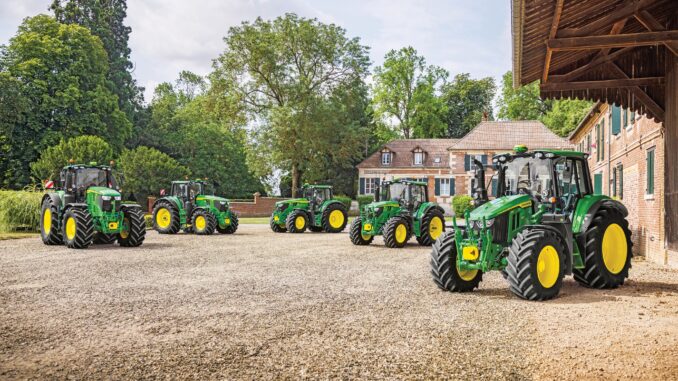
John Deere telehandlers sit in that middle ground between “big farm machine” and “multi‑purpose yard tool”, and many owners now tackle a lot of day‑to‑day maintenance themselves.
This John Deere Telehandler Service and Repair Guide is written for homeowner and small‑farm users in the USA & Canada who want practical, symptom‑first help with repairs, troubleshooting and routine maintenance. You’ll find clear boundaries on what to DIY, which jobs belong at the dealer, and how to identify and order the right parts with confidence.
Introduction / Model overview
John Deere telehandlers are telescopic handlers designed for lifting, loading and material handling around the farm, smallholding, or commercial yard. They typically combine a diesel engine, hydrostatic or powershift transmission, hydraulic boom, and a quick‑attach headstock for forks, buckets and other implements. That mix of systems means lots of potential failure points—but also plenty of straightforward maintenance tasks the average owner can handle.
This John Deere Telehandler Service and Repair Guide focuses on what you actually see and hear in daily use: starting problems, hydraulic and boom issues, drive/traction faults, electrical warnings, and leaks. For each symptom you’ll get simple checklists, parts information, and pointers to diagrams and manuals. The guide also includes a maintenance schedule, DIY fitting steps for common parts, and a large troubleshooting FAQ tailored to typical telehandler use.
General overview of the John Deere telehandler
In the Deere lineup, telehandlers sit alongside tractors and loaders as dedicated material‑handling machines, often used with pallets, bales, feed bags, and bulk materials. They share some systems with tractors (engine, driveline, hydraulics) but add a telescopic boom and stabilizers that must be kept in top condition for safe lifting. Typical telehandler models include compact yard units up to larger farm‑spec machines with higher lift and reach.
Key systems you’ll deal with on a John Deere telehandler include:
-
Engine and fuel system – diesel engine, fuel filters, lift pump, injectors.
-
Drive system – transmission, axles, prop shaft, differentials.
-
Hydraulic system – pump, spool valves, boom lift/tele extend cylinders, auxiliary circuits.
-
Boom and headstock – telescopic sections, wear pads, pivot pins, quick‑attach coupler.
-
Steering and braking – steering cylinders, brake discs, master cylinder.
-
Electrical and safety – battery, alternator, sensors, ECU, safety switches, load‑moment and boom angle systems.
Common service parts John Deere telehandler owners actually buy include:
-
Engine oil filter, fuel filter, hydraulic filter, and cabin air filter.
-
Engine serpentine belt and alternator belt.
-
Hydraulic hoses and O‑rings for leaky circuits.
-
Boom wear pads and pins/bushings.
-
Brake pads/discs and steering joints.
-
Batteries, key switches, relays and work lights.
Exact part numbers will vary by telehandler model and serial, so always cross‑check against your machine’s PIN and engine details before ordering.
Troubleshooting approach for John Deere Telehandler Service and Repair Guide
On a telehandler, diagnosis should always start with the symptom the owner sees, not guesses about which part has failed. Listen to what the machine is doing (or not doing), note any warning lights or messages, and work methodically from the simplest causes to more complex ones.
Typical symptom categories for John Deere telehandlers include:
-
Starting issues – engine cranks but won’t fire, no crank, hard starting when cold or hot.
-
Running issues – loss of power, smoke, stalling under load.
-
Hydraulic and boom problems – slow or jerky boom movement, creep, failure to lift or extend.
-
Drive and steering issues – poor traction, no drive, stiff or wandering steering.
-
Vibration and noise – driveline knocks, hydraulic whine, squeaks from boom or headstock.
-
Overheating and leaks – coolant, hydraulic oil, or fuel leaks and rising temperatures.
-
Electrical and safety system faults – warning lights, limp mode, safety interlocks preventing operation.
In each area, start with basic checks: fluids, filters, obvious damage, and simple electrical tests, then move toward component‑level diagnosis only when the fundamentals are ruled out.
Emergency and immediate repair needs on a John Deere telehandler
Some problems on a telehandler are annoying but not immediately dangerous; others require you to stop work right away. Anything that affects lifting safety, braking, steering, structural integrity, or the ability to shut the machine down cleanly should be treated as urgent.
Starting issues – John Deere Telehandler Service and Repair Guide
What it looks like: the telehandler won’t crank, cranks very slowly, or cranks but refuses to start, often right when you need it in the yard. A non‑starting machine can strand loads in the air or block access routes, so it’s worth addressing quickly.
Common causes:
-
Battery discharged or failing.
-
Loose or corroded battery terminals and ground straps.
-
Faulty ignition/key switch or starter solenoid.
-
Fuel system problems (air in lines, blocked filter).
-
Safety interlocks preventing start (seat/neutral switches, boom position).
Basic checks:
-
Verify the battery voltage with a meter and charge or boost if low.
-
Inspect battery terminals and grounds, clean and tighten if corroded or loose.
-
Listen for a click at the starter; if silent, check key switch and fuses.
-
Confirm gear selector is in neutral and any safety devices (park brake, boom position) are correctly set.
-
If it cranks but won’t fire, check fuel level, look for leaks, and inspect the fuel filter for blockage.
Hydraulic and boom problems – John Deere Telehandler Service and Repair Guide
What it looks like: boom won’t lift, is very slow, moves in jerks, or creeps down when raised with a load. Because boom faults can lead to dropped loads or instability, treat them as safety‑critical.
Common causes:
-
Low hydraulic oil level or contaminated fluid.
-
Blocked hydraulic filter.
-
Faulty hydraulic pump or worn pump drive.
-
Leaking boom cylinder seals or hoses.
-
Malfunctioning control valve or auxiliary circuit.
Basic checks:
-
Park on level ground, lower the boom fully and safely.
-
Check hydraulic fluid level and top up with the correct oil if low.
-
Inspect for obvious hose leaks, damaged fittings or wet areas on cylinders.
-
Listen for pump noise; excessive whining often points to cavitation or low fluid.
-
If boom creeps, avoid lifting heavy loads and arrange dealer inspection for cylinder and valve issues.
Vibration and noise in John Deere telehandlers
What it looks like: knocking from the driveline under load, vibration felt through the seat or steering wheel, or squeaking from the boom and headstock. Persistent vibration can signal wear that eventually leads to catastrophic failures.
Common causes:
-
Worn universal joints or prop shaft bearings.
-
Loose wheel nuts or damaged tyres.
-
Worn boom or headstock pins and bushings.
-
Dry boom wear pads or pivot points.
-
Misaligned or loose accessories on the headstock.
Basic checks:
-
Inspect wheels and tyres for damage, flat spots and correct nut torque.
-
Look under the machine at the prop shaft, checking for play in joints.
-
Check boom and headstock pivot pins for movement and grease points for dryness.
-
Remove any loose items from the headstock and test with a standard implement.
-
If vibration persists, reduce speed and load and book the machine into a dealer.
Overheating and leaks – John Deere Telehandler Service and Repair Guide
What it looks like: temperature gauge climbing, warning lights, or visible fluid on the ground. Overheating can damage engines, pumps and seals, so it’s best to stop the machine when temperatures go beyond normal operating range.
Common causes:
-
Low coolant level or blocked radiator.
-
Fan belt loose or broken.
-
Low hydraulic fluid from leaks.
-
Fuel leaks at lines or injectors.
-
Damaged hoses, seals or gaskets.
Basic checks:
-
Allow the engine to cool and visually inspect the radiator and coolant level.
-
Check the fan belt for tension and cracking, replace if necessary.
-
Look around the machine for wet spots indicating leaks (coolant, fuel, hydraulic oil).
-
Clean debris from radiator and oil cooler fins to restore airflow.
-
Do not continue working with unresolved leaks; fix or have them repaired before returning to service.
Drive and steering problems in John Deere telehandlers
What it looks like: poor traction, delayed engagement when selecting drive, or stiff, wandering steering. Loss of drive or steering control is a major safety issue, especially with loads at height.
Common causes:
-
Low transmission oil or contaminated fluid.
-
Worn clutches or failed hydrostatic components.
-
Faulty drive‑shaft, axles or differential.
-
Steering cylinder leaks or air in the steering circuit.
-
Misaligned wheels or worn steering joints.
Basic checks:
-
Confirm transmission oil is at the recommended level and condition.
-
Check for leaks around axles, hubs and steering cylinders.
-
Visually inspect drive‑shaft and joints for play, damage or missing guards.
-
If steering feels odd, reduce speed and avoid road travel until checked.
-
Persistent drive/steering issues usually require dealer‑level diagnostics.
Electrical and safety system problems – John Deere Telehandler Service and Repair Guide
What it looks like: dash warning lights, beepers, intermittent shut‑downs, or inability to lift or drive because a safety circuit has tripped. Modern telehandlers rely heavily on sensors and controllers, so electrical reliability is vital.
Common causes:
-
Weak battery or poor charging from alternator.
-
Loose or corroded earth points.
-
Faulty relays, fuses or wiring harness damage.
-
Defective safety switches on seat, boom angle, or load sensors.
-
controller/ECU faults.
Basic checks:
-
Check battery status and clean up earth connections.
-
Inspect key fuses and relays related to lift and drive.
-
Look for obvious harness chafing or crushed wiring at hinge points.
-
Reset any operator‑level safety overrides according to the manual.
-
If warning lights remain, log the codes or messages for your dealer.
DIY or dealer? Repair decision guide for John Deere Telehandler Service and Repair Guide
On a telehandler, the practical “line” between DIY and dealer work is drawn around high‑risk systems: boom, load‑handling structure, braking, and complex hydraulics and electronics. Routine servicing and simple bolt‑on repairs are firmly in DIY territory; anything that affects lifting safety, structural components, or needs controller programming is normally dealer‑level.
Good DIY jobs:
-
Engine oil and filter changes.
-
Fuel and air filter replacement.
-
Greasing boom and pivot points.
-
Basic electrical tasks like bulbs, simple switches and batteries.
-
Checking and topping up fluids (coolant, hydraulic, transmission).
Advanced DIY or dealer jobs:
-
Boom cylinder replacement or resealing.
-
Structural repairs to boom, chassis or headstock.
-
Transmission repairs and internal hydraulic work.
-
ECU or controller diagnostics and reprogramming.
-
Brake system overhaul beyond pad/disc replacement.
Skill level guide:
-
Beginner: Regular greasing, visual inspections, simple filter changes, checking tyre pressures.
-
Intermediate: Belt changes, battery and key switch replacement, minor hydraulic hose swaps, boom wear pad replacement.
-
Advanced: Internal hydraulic repairs, driveline overhauls, structural welding and ECU troubleshooting (usually best left to dealer workshops).
Parts needed, OEM vs aftermarket, and information to gather
Before ordering any parts for your John Deere telehandler, gather the key identity details. This avoids mis‑orders, ensures parts fit correctly and protects safety‑critical systems.
You’ll need:
-
Full model name (e.g. type and variant stamped on the machine plate).
-
Product Identification Number (PIN), usually appearing on documentation and the machine plate.
-
Engine model and serial number.
-
Any option codes or boom/headstock variants that affect parts (e.g. different boom lengths or auxiliary circuits).
Key service and repair parts for John Deere Telehandler Service and Repair Guide
Below is a typical example of the kinds of parts you’ll see in a telehandler service kit. Replace these with the exact OEM numbers for your specific telehandler once you’ve cross‑referenced via Deere’s parts systems or your dealer:
OEM vs aftermarket guidance:
-
Use OEM for belts, brake components, hydraulic filters, structural pads, and any safety‑critical or fit‑sensitive parts.
-
Aftermarket can be acceptable for engine oil, fuel and air filters, batteries and bulbs provided they are cross‑referenced properly against your model and PIN.
-
For hoses and wear parts, reputable hydraulic or fabrication shops can build equivalents, but ensure pressure ratings and dimensions match Deere specifications.
Where to find parts diagrams and service manuals for John Deere Telehandler Service and Repair Guide
The best way to confirm parts and procedures is to use official John Deere documentation and reputable aftermarket sources. A typical approach:
-
Operator’s manual – covers daily checks, basic maintenance, safety information, and machine controls.
-
Parts catalog – shows exploded diagrams of assemblies, every part number, and how components fit together.
-
Technical/service manual – provides torque specs, diagnostic trees, wiring diagrams and detailed repair procedures.
-
Dealer or specialist parts sites – often have telehandler‑specific pages with common wear parts grouped together.
Useful sources include:
-
John Deere Technical Information Store (TIS) – for purchasing operator, parts and service manuals as official PDFs.
-
John Deere Parts Portal (via your regional Deere site) – for online parts lookup and diagrams once you enter your model and PIN.
-
Your local John Deere dealer’s website – many offer online parts catalogs or request forms specifically for telehandlers.
-
A reputable Deere‑focused parts retailer – look for one that lists John Deere telehandler models explicitly and provides clear cross‑reference charts.
Each link or portal will help you confirm the correct part number, view installation diagrams, and check notes about serial number breaks or option‑dependent components.
How to locate model, serial and engine numbers
Model, serial and engine numbers are your key to ordering the right parts and accessing the correct manual set. Telehandlers generally have at least two plates or decals: one for the machine itself (PIN plate) and one for the engine.
Typical locations and steps:
-
Stand on the left‑hand side of the machine and look for a metal identification plate on the chassis, frame rail, or cab step area. Note the full model designation and PIN.
-
Check inside the cab near the seat base, dashboard or door frame for an additional decal with model and serial details.
-
Open the engine hood and look for the engine plate or sticker on the block or rocker cover; record the engine model and serial.
-
For boom or headstock variations, inspect the boom base or headstock area for option codes or secondary plates indicating configuration.
-
Store photos of all plates on your phone and keep a written record in your maintenance file for quick reference when ordering parts.
Buying parts online and in physical stores
A good buying strategy for John Deere telehandler parts balances convenience with the need for accuracy. Routine service items can often be sourced online or from ag retailers, but complex or serial‑specific components are best handled through a Deere dealer.
Online:
-
Use OEM part numbers from the parts catalog whenever possible.
-
Check whether parts listings specify serial number ranges and model variants.
-
Choose sellers that specialize in Deere or telehandler equipment and offer clear return policies.
Dealer counter:
-
Best for hydraulic components, structural parts, option‑specific items and any part tied to a PIN range.
-
Dealer staff can cross‑check your PIN, confirm technical bulletins or superseded part numbers, and advise on upgrades vs original spec.
Retail stores:
-
Suitable for generic consumables (engine oil, grease, washer fluid, standard batteries) where packaging clearly lists compatibility with your engine type or telehandler class.
-
Always match viscosity and performance specs (e.g., diesel‑rated oil) to your manual.
Useful URLs to bookmark in your browser include your regional Deere home page, the John Deere Technical Information Store, and your preferred Deere dealer’s site for parts and service availability.
Step‑by‑step fitting guide for common John Deere Telehandler Service and Repair Guide jobs
Below are four high‑impact DIY jobs most telehandler owners can handle with basic tools and care. Always park on level ground, lower the boom fully, engage park brake, and remove the key before working on your machine.
Engine oil and filter change
What it fixes: maintains lubrication and prevents premature engine wear, especially in hard yard and farm use.
-
Warm the engine briefly so the oil flows, then shut down and secure the machine.
-
Place a suitable drain pan under the engine sump and remove the drain plug carefully.
-
Once oil has drained, replace the drain plug with a new washer if specified.
-
Remove the old oil filter, clean the sealing surface and fit a new filter, lightly oiling the seal.
-
Refill with the correct grade and quantity of engine oil and check for leaks after initial start‑up.
Fuel filter replacement
What it fixes: hard starting, loss of power under load, or rough running caused by restricted fuel flow.
-
Depressurize the fuel system if required by your manual and place absorbent material under the filter.
-
Remove the old filter cartridge or housing according to the design.
-
Clean the mounting area and install the new filter, paying attention to arrow direction or alignment marks.
-
Prime the fuel system using the hand primer or ignition sequence recommended by the manual.
-
Start the engine and run for a few minutes to clear air; check for leaks around fittings.
Hydraulic return filter change on John Deere telehandlers
What it fixes: prevents contamination in hydraulic circuits, helping avoid pump, valve and cylinder wear.
-
Lower all implements and boom fully, then shut down and wait for hydraulic pressures to dissipate.
-
Locate the return filter canister or cartridge, usually near the hydraulic tank.
-
Place a drain tray, remove the filter housing carefully and extract the old element.
-
Clean the inside surfaces and install the new filter, checking any seals or O‑rings.
-
Reassemble, run the machine briefly, and recheck hydraulic oil level, topping up as needed.
Battery replacement and basic electrical maintenance
What it fixes: weak cranking, intermittent starting, and random electrical issues due to low voltage.
-
Note radio and controller settings if needed, then switch off the machine completely.
-
Disconnect the negative (ground) cable first, followed by the positive.
-
Remove the old battery, clean the tray and cable terminals.
-
Install the new battery, ensuring correct polarity, and secure it properly.
-
Connect the positive then negative cables, apply protective grease to terminals, and test starting.
Maintenance to prevent problems reoccurring
Regular maintenance on a John Deere telehandler is the best way to avoid disruptive breakdowns and protect expensive systems. Focus on realistic, repeatable tasks that owners can build into weekly routine.
Key focus areas:
-
Starting reliability – keep battery, terminals, and fuel system in good condition; change filters on schedule.
-
Hydraulic and boom performance – maintain fluid levels, change hydraulic filters, and grease pins to avoid wear and sticking.
-
Fire and overheating prevention – clean radiators, oil coolers and engine compartments; fix leaks promptly.
-
Drive performance – monitor tyres, axles, and transmission fluid, and address noise or vibration early.
-
Electrical reliability – check main earths, watch for harness chafing, and keep connectors dry and protected.
Good records of what you’ve done, when, and at what hours make troubleshooting easier and help resale value.
Maintenance schedule and year‑round checklist for John Deere Telehandler Service and Repair Guide
Always base your maintenance on the official chart in your telehandler’s operator’s manual. The outline below is typical for many machines and should be adapted to the specific intervals Deere specifies for your model.
Daily / before each use
-
Walk‑around inspection for leaks, obvious damage and loose parts.
-
Check engine oil level and coolant level.
-
Verify hydraulic fluid level and look for hose or cylinder leaks.
-
Inspect tyres for damage and correct inflation.
-
Test lights, horn, and safety devices as per manual.
After short running periods (e.g. every 8 hours)
-
Clean debris from radiator and intake screens.
-
Wipe dirt from boom sliding faces and inspect wear pads.
-
Check the condition of work tools (forks, buckets, attachments) and headstock locking.
-
Grease any daily lubrication points if specified.
Every 25 hours
-
Lubricate boom and pivot pins on the schedule listed in the manual.
-
Check battery terminals and cable routing.
-
Inspect brake and steering lines for seepage or damage.
-
Review tyre tread and sidewalls for cuts or bulges.
Every 50 hours or yearly
-
Change engine oil and filter if your manual recommends a 50‑hour interval (some models may vary).
-
Inspect and clean or replace the engine air filter as required.
-
Check fan belt condition and tension.
-
Lubricate steering joints and driveline points.
Every 200 hours (or as specified)
-
Replace fuel filter and hydraulic return filter.
-
Inspect prop shaft joints and driveline components thoroughly.
-
Check and adjust boom wear pads and headstock bushings.
-
Review overall hydraulic performance and inspect cylinders for wear.
Seasonal checklist (pre‑season / in‑season / end‑of‑season)
-
Pre‑season: full service, fluid top‑up, filter checks, and safety system tests before peak workload periods.
-
In‑season: weekly attention to cooling systems, boom lubrication, and tyre health.
-
End‑of‑season: thorough cleaning, corrosion protection, battery maintenance, and proper storage where applicable.
Repair, upgrade, or replace?
With a John Deere telehandler, the decision to repair, upgrade or replace depends on hours, condition, and how critical the machine is to your operation. Structural and safety‑critical issues often justify major repair or replacement; minor convenience upgrades can stretch the useful life of the machine significantly.
Repair if:
-
Problems are limited to wear parts (filters, hoses, pads, belts, tyres).
-
The underlying machine is structurally sound and not excessively rusted or cracked.
-
Repair costs are modest compared to the telehandler’s value and you rely on it regularly.
Upgrade if:
-
You want improved lighting, auxiliary hydraulics, new attachments or better cab comfort.
-
Boom or headstock wear can be resolved with new pads, bushings or couplers.
-
Safety systems can be modernized without replacing the machine entirely.
Replace if:
-
The boom, chassis or key structural components show significant cracking or severe corrosion.
-
Major hydraulic or transmission failures recur despite previous repairs.
-
Parts availability for your specific telehandler model becomes a serious issue and downtime is unacceptable.
Expanded troubleshooting FAQ – John Deere Telehandler Service and Repair Guide
1. Why will my John Deere telehandler not start?
A non‑starting telehandler usually comes down to battery, fuel delivery, or safety interlocks. Begin by checking battery voltage and terminal condition, and confirm the park brake is on and gear selector is in neutral. Make sure the boom is in an allowed position if your machine has boom‑related start interlocks. If it cranks but won’t fire, inspect the fuel level and filter and look for air leaks in the lines.
2. Why does my John Deere telehandler crank slowly?
Slow cranking typically points to a weak battery, poor connections, or a failing starter motor. Check your battery with a meter and confirm that it holds voltage under load. Clean the battery terminals and grounds, ensuring tight contact with the chassis. If voltage is healthy but cranking remains sluggish, have the starter and main cables checked by a technician.
3. Why does my John Deere telehandler start then stall?
When a telehandler starts but stalls quickly, fuel restriction is often the culprit. A blocked fuel filter, contaminated fuel, or air in the lines can all cause this pattern. Replace the fuel filter if it’s overdue and prime the system according to the manual. If stalling occurs mainly under load, you may have a failing lift pump or injector issue that warrants dealer diagnostics.
4. What causes loss of power in my John Deere telehandler?
Loss of power under load can be due to engine, fuel, or hydraulic problems. Check for clogged air and fuel filters first, as they’re easy to address. Observe exhaust smoke: black suggests fuel over‑fueling or air restriction, while white or blue may indicate more serious engine issues. If the engine seems fine but power to lifting or driving is poor, you may have hydraulic or transmission faults.
5. Why is my John Deere telehandler smoking excessively?
Excessive smoke colour gives clues about the underlying issue. Black smoke usually indicates too much fuel or restricted air, so inspect the air filter and intake system. Blue smoke hints at oil burning, often from worn rings or turbo seals. White smoke can be caused by unburnt fuel or coolant leaks, which should be investigated promptly to avoid engine damage.
6. Why won’t the boom lift on my John Deere telehandler?
A boom that refuses to lift could be due to low hydraulic fluid, a faulty pump, or a control valve issue. Start by checking hydraulic level with the boom fully lowered and topping up with the specified oil. Look for leaks along hoses and at cylinder connections. If the pump is making unusual noise or there’s no response at all from the lever, professional hydraulic diagnostics are recommended.
7. Why is the boom on my John Deere telehandler moving very slowly?
Slow boom movement is often linked to restrictive filters, low oil, or internal valve wear. Confirm hydraulic fluid level, then inspect and replace the hydraulic return or suction filters according to schedule. If movement remains slow and jerky, the pump or spool valves may be worn. Avoid forcing the machine to work hard in this state to prevent further damage.
8. Why does the boom on my John Deere telehandler creep down?
Boom creep—where the boom slowly lowers without command—usually indicates internal leakage in boom cylinders or control valves. There is limited DIY scope here beyond checking for external leaks and fluid levels. Because this is a safety‑critical issue that can result in dropped loads, you should reduce lifting and have a dealer test the cylinder and valve assemblies.
9. Why is my John Deere telehandler’s boom jerky or noisy?
Jerky boom action is often a sign of air in the hydraulic system, worn boom pads, or lack of lubrication on pivot points. Bleed the hydraulic system if recommended by your manual and ensure all pivot points are greased regularly. Inspect boom wear pads for damage or excessive play. If the boom still moves in jumps, consult a hydraulic specialist to investigate valve or cylinder faults.
10. Why does my John Deere telehandler have poor drive or no traction?
Poor drive can result from low transmission oil, slipping clutches or hydrostatic issues. Check the transmission fluid level and ensure the correct grade is used. Inspect the tyres for proper inflation and tread—worn or unsuitable tyres can give the impression of weak drive. If the drive cuts out intermittently or only in certain ranges, transmission diagnostics are needed.
11. Why does my John Deere telehandler make a knocking noise when moving?
Knocking noises under load usually come from the driveline or boom structure. Inspect the prop shaft and universal joints for play, rust dust, or missing clips. Check wheel nuts and hubs to rule out loose wheels. Also look at boom pins and headstock components for movement or wear. Until the source is confirmed, reduce speed and avoid carrying loads at height.
12. Why is my John Deere telehandler vibrating at higher speeds?
High‑speed vibration is often caused by tyre imbalance, damaged rims, or driveline wear. Inspect tyres for flat spots, bulges or foreign objects and ensure correct pressure. Check that wheels are properly aligned and balanced if road travel is frequent. If vibration persists, have a technician inspect the prop shaft and axle components to prevent long‑term damage.
13. Why is my John Deere telehandler overheating?
Overheating in a telehandler can be due to blocked radiators, low coolant, failed fans or heavy loads combined with poor airflow. Clean the radiator fins and any screens regularly, especially in dusty environments. Check coolant level and look for leaks around hoses and the water pump. If the cooling system is sound but overheating continues, the thermostat or head gasket may need professional attention.
14. Why is there hydraulic oil leaking on my John Deere telehandler?
Hydraulic leaks come from hoses, fittings, seals and sometimes the tank. Identify the source by cleaning the area and watching where fresh oil appears during operation. Small weeps can sometimes wait until the next service, but active drips from high‑pressure hoses, cylinders or the tank should be repaired promptly. Always relieve pressure and follow safety guidance before working near hydraulic components.
15. Why is there diesel fuel leaking on my John Deere telehandler?
Diesel leaks are both a fire risk and an environmental concern. Check the fuel tank, lines, connections and injectors for signs of wetness or staining. Tighten accessible clamps and replace cracked hoses where safe to do so. Tank or injector leaks, or any leak in hard‑to‑reach areas, are best handled by a dealer or qualified mechanic due to the fire risk and potential for further damage.
16. Why are the brakes weak on my John Deere telehandler?
Weak brakes may be caused by worn pads, contaminated discs, low braking system pressure or air in the lines. If your telehandler uses service brakes with hydraulic assistance, check fluid levels and look for leaks. Listen for unusual noises when braking and inspect visible components for wear. Because braking is safety‑critical, any persistent weakness should trigger professional inspection.
17. Why is the steering on my John Deere telehandler stiff or wandering?
Steering issues often originate in steering cylinders, joints, or tyre condition. Check for leaks at steering cylinders and ensure joints are greased. Examine tyres for uneven wear or incorrect pressures. If the steering feels sticky or intermittent, a hydraulic or mechanical fault could be present, and you should avoid road use until it’s diagnosed.
18. Why are warning lights showing on my John Deere telehandler dashboard?
Dashboard warning lights indicate system‑level faults based on sensor readings. Refer to your operator’s manual to identify which light corresponds to which system. Common warnings include engine, hydraulic, transmission and load handling alerts. Do not ignore persistent warnings; log them and work with a dealer to interpret any stored fault codes and take corrective action.
19. Why does my John Deere telehandler go into limp mode?
Limp mode is a protective strategy where the telehandler limits power or movement to prevent damage. It’s usually triggered by critical sensor readings or fault codes. While you may be able to reset the machine temporarily, the underlying cause must be addressed. Record any messages or codes and arrange diagnostics so the problem isn’t allowed to escalate.
20. Why do lights and electrical accessories keep failing on my John Deere telehandler?
Repeated electrical failures in lights and accessories often stem from poor ground connections, corrosion, or harness damage. Inspect earth straps to the chassis and clean them thoroughly. Check connectors for moisture or dirt and apply appropriate protection. If the same circuit fails repeatedly, there may be wire chafing or overload; a dealer can trace and repair the harness.
21. How often should I change engine oil on my John Deere telehandler?
The correct engine oil interval depends on the model and usage, but many telehandlers are on 250‑hour or annual schedules, with shorter initial intervals for new machines. Check your operator’s manual for the specific hour‑based recommendation. Heavy or dusty use, or frequent short trips, may justify shorter intervals. Always use the oil grade specified by Deere for your engine.
22. How often should I change hydraulic filters on my John Deere telehandler?
Hydraulic filters are typically changed at regular hour intervals—commonly between 500 and 1000 hours depending on the machine and filter type. Your manual gives the definitive interval for both suction and return filters. If hydraulic performance drops or contamination is suspected, filters may need changing sooner. Never reuse old filters or gamble with hydraulic cleanliness.
23. How often should I grease boom pins and joints on my John Deere telehandler?
Boom pins and joints usually need greasing at relatively short intervals because they carry heavy loads and move frequently. Many manuals specify daily or weekly lubrication in heavy use. Follow the chart and don’t skip grease points; dry pins and pads speed up wear, cause slop and can eventually compromise boom stability.
24. Can I use aftermarket hydraulic oil in my John Deere telehandler?
You can use aftermarket hydraulic oil provided it meets or exceeds the specification listed by Deere in your manual. Check the label for viscosity and performance codes that match the manual. Mixing different types is risky; ideally stick to one compatible oil and avoid cheap fluids with unclear specs. When in doubt, choose genuine Deere hydraulic oil.
25. Can I replace hydraulic hoses myself on my John Deere telehandler?
Simple hydraulic hose replacements are sometimes within reach for experienced DIY owners, especially low‑pressure return lines. Always depressurize the system, use rated hoses and fittings, and torque connections correctly. However, boom and high‑pressure hoses are critical, and mistakes can be dangerous. Many owners wisely have boom hoses made and installed by professional shops or dealers.
26. Can I weld cracks on the boom of my John Deere telehandler?
Boom cracks are serious and should never be treated casually. Structural repairs that involve welding usually need engineering approval and specialized procedures. Unapproved welds may weaken the boom, break unexpectedly and endanger people and property. If you see cracks or suspect structural damage, stop using the telehandler and consult Deere or a qualified structural repair service.
27. How do I choose the right battery for my John Deere telehandler?
The right battery must match the original specifications for capacity, voltage, cold cranking amps and physical size. Check the existing battery’s label and the operator’s manual for recommended ratings. Ensure terminal type and orientation match your cables. Many owners stick to OEM or premium aftermarket batteries, especially in cold climates, to ensure reliable starting.
28. How do I know which parts fit my John Deere telehandler?
Correct parts fitment starts with the model name and PIN. Use these at the Deere parts portal or dealer counter to look up parts diagrams. Pay attention to serial number breaks noted in the catalog, as part numbers often change at specific PIN ranges. When ordering online, confirm the listing explicitly mentions your telehandler model and, where possible, your PIN range.
29. How do I get a service manual for my John Deere telehandler?
Service manuals are usually available through the John Deere Technical Information Store, where you can purchase official PDFs or printed manuals. Some dealers also sell manual kits that include operator, parts and service manuals together. Avoid unofficial copies from unreliable sources; genuine manuals provide the most accurate and up‑to‑date procedures.
30. What regular checks should I do before using my John Deere telehandler?
Before use, walk around the machine and check fluids, tyres, visible hoses and pins, as well as lights and safety features. Verify that the boom, headstock and attachments are secure, and test the brakes and steering at low speed. Make these checks part of your routine and log any changes in behaviour or new noises so they can be addressed early.
31. How should I store my John Deere telehandler when not in use?
For storage, park the telehandler on level ground, lower the boom fully, engage the park brake and secure the machine. Clean off mud and debris, especially around the radiator and boom sections. If you expect a long lay‑up period, consider battery maintenance, fuel treatment and periodic start‑ups to keep systems healthy. Covered or indoor storage helps prevent corrosion.
32. Can I use my John Deere telehandler on public roads?
Road use depends on local regulations and the telehandler’s equipment (lights, mirrors, brakes, tyres). Check regional rules for agricultural machines and verify your telehandler meets road‑legal requirements. Regularly inspect road‑critical systems like brakes, steering, tyres and lights. If in doubt, consult your dealer or local authority before road travel.
33. How do I keep my John Deere telehandler’s cab comfortable and safe?
Cab comfort and safety rely on clean filters, intact seals and functioning HVAC systems. Replace cabin air filters according to schedule and keep windows and seals in good condition. Ensure seat belts or restraint systems are usable and not damaged. A clean cab improves visibility and reduces fatigue, which in turn helps safe operation.
34. How often should I check tire pressure on my John Deere telehandler?
Tyre pressure should be checked at least weekly during heavy use and before any significant road travel. Under‑inflated or over‑inflated tyres affect stability, traction and wear. Use the pressure values from the operator’s manual, and adjust for load or conditions as Deere recommends. Inspect tyres visually at each walk‑around check.
35. When should I consider replacing my John Deere telehandler instead of repairing it?
Replacement becomes sensible when structural or major system repairs cost more than the machine’s remaining value, or when downtime seriously harms your operation. Multiple recurring failures in critical systems are a warning sign. If parts support is declining and you rely heavily on the telehandler, upgrading to a newer model with strong dealer backing can be the better long‑term choice.