
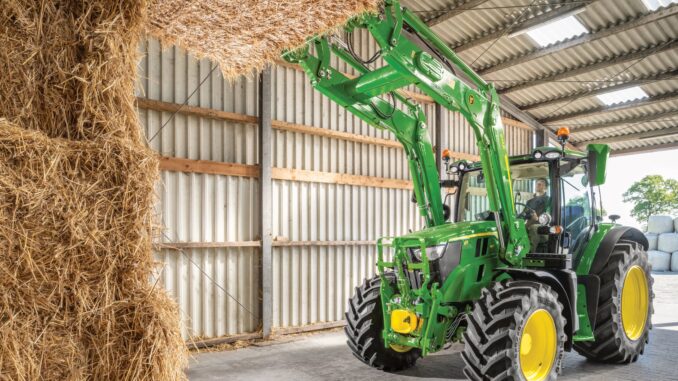
The John Deere 4320 is a North American compact utility tractor covered under Deere’s 4120/4320/4520/4720 operator’s manual family, with the 4320 identified from PIN 620001 upward and offered with key systems such as diesel engine service, PowrReverser or eHydro transmission operation, MFWD, PTO, hydraulics, and standard service intervals from daily checks through 2000-hour items. This guide is written for homeowner and DIY users in the USA and Canada who want a practical, symptom-first article that helps them separate realistic home maintenance from repairs that are better handled by a Deere dealer or experienced tractor technician.
John Deere 4320 model overview
The John Deere 4320 sits in Deere’s compact utility tractor lineup rather than the lawn and garden range, making it better suited to heavier mowing, loader work, property maintenance, light field work, and year-round attachment use than a basic lawn tractor. Deere’s operator literature for this model family covers engine, fuel, cooling, transmission, hydraulic, PTO, electrical, brake, steering, and storage procedures, which makes the 4320 a machine owners can maintain well if they stay on top of intervals and catch symptoms early.
General overview of the John Deere 4320
The 4320 uses a diesel-powered compact tractor platform with either a 12×12 PowrReverser transmission or eHydro drive depending on configuration, and Deere’s published specifications list gross horsepower for the 4320 at 35.9 kW (48.1 hp). For troubleshooting, the important systems are the engine and fuel system, mower or PTO-driven implement system, transmission and hydraulics, front axle and MFWD system, and the electrical/safety interlock system that includes neutral start, seat, PTO, and park brake functions.
Owners commonly buy service and repair parts such as oil filter RE519626, fuel filter RE508202, suction filter LVA13038, in-line hydraulic filter LVA14167, primary air filter AP33330, secondary air filter AP33331, fan belt R515222, PTO switch AM118802, seat switch AM124426, park brake switch LVA13307, and battery TY26442. Deere’s own maintenance guide page also notes Low Viscosity Hy-Gard fluid TY22000 as the typical hydraulic/transmission oil product reference for this model family.
John Deere 4320 troubleshooting approach
Troubleshooting should start with the exact symptom the owner sees, not the part they assume is bad, because the 4320 uses multiple linked systems and one issue can imitate another. On this model, the main symptom groups are starting issues, poor running or stalling, PTO or implement performance problems, vibration and unusual noise, overheating or fluid leaks, transmission and drive complaints, and electrical or safety switch faults.
A good first pass is to ask three questions: what changed, when did it start, and did it happen after service, storage, refueling, or attachment installation. That approach often narrows faults quickly on machines like the 4320 where dirty cooling packs, weak batteries, clogged filters, misadjusted safety circuits, or low hydraulic oil can create larger-looking problems.
Emergency and immediate John Deere 4320 repair needs
4.1 John Deere 4320 starting issues
If the tractor will not crank, only clicks, or starts and dies, stop and diagnose before repeated attempts because excessive cranking can flatten the battery, overheat wiring, or mask an air-in-fuel problem. Deere specifically includes neutral start, seat, PTO, and battery service checks in the operator literature, which shows how important the starting and safety circuits are on this model.
Common causes:
-
Weak battery or dirty terminals.
-
Faulty seat, PTO, park brake, or neutral start switch.
-
Restricted fuel filter or air introduced after filter replacement.
-
Ignition switch or starter trouble.
Basic checks:
-
Confirm PTO is off, range and reverser are in the correct position, and brake/park conditions match the starting procedure.
-
Check battery connections for looseness or corrosion.
-
Inspect whether fuel filter service was recently done and bleed the system if required after filter work.
-
Test safety switches in the order Deere outlines in the operating section.
4.2 John Deere 4320 running and power-loss problems
A 4320 that starts but lacks power, smokes, surges, or stalls under load should be checked promptly because continued use can increase soot loading, overheat the engine, or contaminate hydraulic and PTO work quality. On compact diesels, restricted air flow, fuel starvation, overheating, and poor maintenance are far more common than catastrophic engine failure.
Common causes:
-
Plugged primary or secondary air filter.
-
Dirty fuel filter or air in fuel system.
-
Dirty radiator screen, fins, or side screens causing heat buildup.
-
Wrong operating rpm for PTO or heavy implement load.
Basic checks:
-
Inspect and service the air filter system.
-
Replace the fuel filter if service history is unknown and bleed fuel correctly.
-
Clean the grille, radiator screen, and fins.
-
Verify the symptom appears only under PTO or hydraulic load, which helps separate engine issues from implement drag.
4.3 Vibration and noise
Vibration, rattling, or new driveline noise matters immediately because loose hardware, damaged PTO components, worn front axle parts, or failing belts can damage nearby systems quickly. Deere’s manual specifically calls for checking wheel hardware, fan/alternator belt condition, and safe PTO/driveline operation, which are all common sources of owner-reported noise.
Common causes:
-
Loose wheel bolts or implement mounting hardware.
-
Worn or damaged fan/alternator belt.
-
PTO shaft or attachment driveline imbalance.
-
Steering linkage or front axle wear.
Basic checks:
-
Stop the tractor and inspect wheel, loader, and implement fasteners.
-
Remove debris and inspect belts, pulleys, and guards.
-
Run the tractor with the implement disconnected if safe to isolate the source.
-
Do not continue operating with severe vibration until the cause is found.
4.4 Overheating and leaks
Overheating, coolant loss, hydraulic leaks, or diesel leaks should be addressed at once because Deere highlights fire prevention, cooling system service, hose inspection, and safe handling of fuel and hydraulic systems throughout the operator manual. A compact tractor often survives hard work well, but it does not tolerate clogged cooling packs or neglected hose problems for long.
Common causes:
-
Blocked grille, side screens, radiator screen, or fins.
-
Low coolant or deteriorated upper/lower radiator hoses.
-
Fan belt wear or slippage.
-
Hydraulic seepage at filters, hoses, or fittings after service.
Basic checks:
-
Shut down and let the system cool before opening anything.
-
Check coolant level and inspect upper and lower radiator hoses.
-
Clean screens and fins thoroughly.
-
Trace fresh leaks before topping off repeatedly.
4.5 John Deere 4320 transmission and drive problems
Transmission hesitation, weak travel, strange hydro response, or front-wheel-drive complaints deserve quick attention because low fluid, filter restriction, or linkage issues can rapidly turn into expensive hydraulic damage. Deere includes transmission/hydraulic oil level checks, front axle oil checks, suction filter service, and separate operating guidance for PowrReverser and eHydro models, which shows these systems must be matched to the correct machine version.
Common causes:
-
Low transmission/hydraulic oil.
-
Restricted suction or in-line hydraulic filter.
-
Incorrect operation or linkage issue on PowrReverser controls.
-
MFWD engagement or axle oil issue.
Basic checks:
-
Verify whether the tractor is PowrReverser or eHydro before diagnosing.
-
Check hydraulic/transmission fluid level with the correct oil.
-
Inspect service history for hydraulic filters and suction screen replacement.
-
Check front axle oil level if MFWD performance seems wrong.
4.6 Electrical and safety problems
Electrical faults on the 4320 often appear as no-crank, intermittent shutdown, dead lights, fuse blowing, or PTO refusal rather than dramatic total failure. Because Deere provides procedures for fuses, battery service, bulbs, and safety switch testing, owners should treat the electrical system as a logical circuit problem rather than a guessing game.
Common causes:
-
Dirty battery terminals or failing battery TY26442.
-
Bad PTO, seat, park brake, or neutral start switch.
-
Ignition switch RE61717 or key-related issues.
-
Blown fuse or corroded lighting connectors.
Basic checks:
-
Test battery condition and clean the terminals.
-
Inspect fuses before replacing switches.
-
Confirm the exact safety condition that blocks starting or PTO engagement.
-
Replace switches only after verifying the circuit logic.
DIY or dealer repair guide
The realistic line on a John Deere 4320 is that routine servicing, visual diagnosis, filters, fluids, battery work, and some switch replacement are solid DIY jobs, while hydraulic internals, transmission faults, steering wear diagnosis, and engine tear-down work are usually dealer or specialist territory. This is especially true because Deere’s operator manual gives owners substantial maintenance coverage, but not full workshop-level repair procedures for internal component overhaul.
Good DIY jobs
-
Engine oil and filter changes.
-
Fuel filter replacement and fuel bleeding.
-
Air filter service.
-
Battery, fuse, and bulb replacement.
-
Cooling pack cleaning, hose inspection, and basic belt inspection.
Advanced DIY or dealer jobs
-
Hydraulic filter and transmission service if you are inexperienced with contamination control.
-
Starter or ignition circuit diagnosis beyond basic testing.
-
Front axle, steering linkage, or brake work.
-
eHydro or PowrReverser performance diagnosis.
Skill level guide
-
Beginner: filters, fluids, battery cleaning, air filter service, screen cleaning.
-
Intermediate: fuel bleeding, fan belt replacement, switch replacement, hydraulic filter service.
-
Advanced: electrical diagnosis with a meter, hydraulic troubleshooting, steering or transmission repairs.
Parts for a John Deere 4320
Before ordering parts, gather the full model name, tractor Product Identification Number, engine identification, transmission type, and any attachment or mower information tied to the job. Deere’s operator manual identifies the 4320 compact utility tractor as PIN 620001 and up in this manual family, which matters because compact tractors often have serial-break changes that affect filters, switches, and driveline parts.
OEM parts are usually the safest choice for belts, safety switches, hydraulic filters, and fit-sensitive components where incorrect dimensions or calibration can create new problems. Aftermarket parts can be acceptable for batteries, some filters, bulbs, and selected maintenance items as long as the cross-reference matches the exact 4320 configuration and serial range.
John Deere 4320 manuals and parts diagrams
The most useful sources for this tractor are Deere’s official operator manual, Deere technical publications pages, JDParts support, and a Deere-focused maintenance or parts page that lists common service parts.
-
John Deere operator manual / Technical Information Store — best for official operating, maintenance, service interval, and troubleshooting coverage for the 4120/4320/4520/4720 family.
-
John Deere operator manual table of contents — useful for quickly locating sections on safety switches, transmission service, cooling, electrical work, and storage.
-
Green Farm Parts 4320 maintenance guide — helpful for commonly purchased service parts and quick OEM number lookups.
-
John Deere Technical Manual PDF listing — useful as a pointer to workshop-level service information, though owners should verify accuracy and publication source before relying on third-party copies.
How to locate John Deere 4320 serial numbers
These numbers matter because filters, switches, service kits, and some drivetrain or hydraulic parts may vary by serial break or by transmission version. The operator manual specifically includes a Product Identification section so owners can record identification numbers before ordering parts or seeking dealer support.
-
Find the tractor Product Identification Number plate and record the full PIN exactly as shown.
-
Record the model as John Deere 4320 and note whether the tractor is cab or open station, plus PowrReverser or eHydro.
-
Locate the engine identification label and write down the engine model and serial number before ordering engine service parts.
-
Record any mower, loader, or rear attachment model information separately because implement parts are not identified by tractor model alone.
-
Keep photos of all tags and old part numbers to reduce ordering mistakes.
Buying John Deere 4320 parts
A good parts-buying strategy is to start with the OEM number, then confirm fit by PIN and transmission type before comparing price or aftermarket options. That is especially important on the 4320 because hydraulic, electrical, and drivetrain items are more version-sensitive than simple consumables.
-
Online: use Deere manual and parts references first, then confirm exact OEM cross-references on reputable sites such as Deere manuals, Green Farm Parts, and Sloan Express.
-
Dealer counter: best for serial-specific hydraulic, switch, steering, axle, and transmission-related parts where one wrong digit can waste time and money.
-
Retail stores: acceptable for common consumables like batteries, bulbs, some oils, or cross-referenced filters if the packaging clearly lists the exact application.
John Deere 4320 fitting guide
Engine oil and filter
This job protects the engine and is one of the best DIY tasks on the 4320 because Deere includes engine oil and filter service in the operator manual’s routine service section.
-
Warm the engine briefly so the oil flows better, then park safely and shut down.
-
Drain the old oil into a suitable pan and remove the old filter.
-
Install the new RE519626 filter after lightly oiling the gasket.
-
Refill with the correct oil and check the level.
-
Start, inspect for leaks, shut down, and recheck the level.
John Deere 4320 fuel filter replacement
This is a high-impact job because a restricted diesel fuel filter causes hard starting, low power, and stalling symptoms.
-
Shut the tractor down safely and clean around the filter head before opening the system.
-
Remove the old fuel filter and install the new RE508202 element.
-
Reassemble carefully so no dirt enters the system.
-
Bleed the fuel system using Deere’s procedure after filter replacement.
-
Start the engine and verify smooth running without leaks.
Air filter service on the John Deere 4320
Air filter service helps restore power and reduces smoke on tractors working in dusty mowing, loader, or property-maintenance conditions.
-
Open the housing and remove the primary element first.
-
Inspect the primary AP33330 and secondary AP33331 elements for heavy dust, damage, or oil contamination.
-
Replace elements as needed rather than over-cleaning fragile media.
-
Check hoses and the restriction indicator if equipped.
-
Reassemble carefully so the housing seals correctly.
John Deere 4320 fan belt inspection and replacement
A worn fan/alternator belt can cause charging problems, squeal, and overheating, so it is worth checking anytime the cooling system or charging system acts up.
-
Let the engine cool completely before working near the belt.
-
Inspect the R515222 belt for cracking, glazing, contamination, or poor tension.
-
Replace the belt if worn rather than trying to nurse it through another season.
-
Confirm the belt is seated correctly in all pulleys.
-
Start the engine and verify quiet running and normal charging behavior.
Maintenance to prevent John Deere 4320 problems
Regular maintenance prevents most 4320 complaints because the common trouble spots are predictable: filters, cooling airflow, battery condition, hydraulic fluid cleanliness, and safety-switch function. Owners who stay ahead of those areas usually avoid the bigger failures that turn a simple service issue into a no-start or hydraulic repair bill.
Focus areas:
-
Starting reliability: keep the battery charged, terminals clean, and safety switches functioning.
-
Engine performance: replace air and fuel filters before restriction becomes severe.
-
Overheating prevention: clean grille, side screens, radiator screen, and fins regularly.
-
Drive performance: maintain correct hydraulic/transmission oil and change filters on schedule.
-
Electrical reliability: inspect fuses, lighting, ignition components, and corrosion points before they become intermittent faults.
John Deere 4320 maintenance schedule
Deere’s operator manual lays out service intervals as after the first 10 hours, every 10 hours or daily, every 50 hours, every 200 hours, every 400 hours, every 600 hours, yearly, every 1200 hours, and every two years or 2000 hours. The exact tasks vary by use and configuration, but the schedule structure below follows Deere’s published interval framework for this model family.
Daily / before each use
-
Check engine oil level.
-
Check coolant level.
-
Clean grille, side screens, radiator screen, and fins as needed.
-
Inspect tire condition, wheel hardware, and visible leaks.
-
Perform the daily operating checklist and confirm safety systems work.
After first 10 hours
-
Check machine condition after break-in and inspect accessible hardware and operating functions.
Every 50 hours
-
Grease the tractor and 3-point hitch points.
-
Service the air filter system as conditions require.
Every 200 hours
-
Change engine oil and filter.
-
Replace the fuel filter element if due under the maintenance chart.
-
Check front axle oil level and transmission/hydraulic oil condition.
Every 400 hours
-
Perform scheduled transmission/hydraulic and related service items listed for the tractor configuration.
Every 600 hours
-
Carry out deeper periodic service items from Deere’s chart for engine, drivetrain, and chassis inspection.
Yearly
-
Service the cooling system and inspect hoses, belts, and battery condition.
-
Replace cab air filter if equipped and inspect electrical items.
Every 1200 hours
-
Complete the longer-interval service items from Deere’s official chart.
Every two years or 2000 hours
-
Perform the major time-based fluid and cooling-system service items Deere lists for this family.
Seasonal checklist
-
Spring: change overdue filters, check battery condition, inspect tires, and clean the cooling pack before mowing or loader season.
-
Mid-season: recheck screens, air filtration, and hydraulic oil level in dusty or hot work.
-
Fall/winter prep: inspect coolant protection, battery health, lighting, and storage procedures before cold-weather starts or extended downtime.
Repair, upgrade, or replace
For a John Deere 4320, repair usually makes sense when the tractor is structurally sound, starts and drives well apart from one system fault, and the issue is limited to maintenance items, switches, hoses, filters, or other normal wear parts. Upgrade is more sensible when your work has outgrown the tractor’s size or hydraulic capability, while replacement becomes the better answer when the machine has stacked engine, transmission, hydraulic, and electrical problems at once.
Repair if…
-
The problem is clearly isolated to routine service parts or a single subsystem.
-
The tractor has good compression, stable hydraulics, and no major structural damage.
-
You have documented maintenance history and the rest of the machine is solid.
Upgrade if…
-
You need more lift, more PTO capability, or a different transmission setup for current jobs.
-
You are constantly pushing the tractor at the top end of its intended workload.
Replace if…
-
Repairs would include major engine, transmission, and hydraulic work together.
-
The tractor has chronic neglect, parts damage from overheating, and repeated electrical faults.
-
Downtime costs more than moving into a better machine.
John Deere 4320 troubleshooting FAQ
1. Why will my John Deere 4320 not start?
The most common causes are a weak battery, dirty terminals, safety interlock problems, or fuel-system issues after filter work. Start by checking PTO position, park or neutral conditions, and battery connections, then move to seat, PTO, and neutral start switch testing before assuming the starter is bad.
2. Why does my John Deere 4320 click but not crank?
A click usually points to low battery voltage, poor cable connections, or a failing starter circuit. Clean and tighten the battery connections first, test battery condition, and only then move toward starter or ignition switch diagnosis.
3. Why does my John Deere 4320 start and then die?
This often happens when the engine gets fuel for startup but then loses supply because of a restricted filter or air in the fuel system. If the problem started after fuel filter service, bleeding the system correctly is one of the first checks to make.
4. Why does my John Deere 4320 crank slowly?
Slow cranking usually means the battery is weak, the terminals are corroded, or cable resistance is too high. Cold weather, a tired battery, or repeated short-run use can make this worse on diesel compact tractors.
5. Why does the John Deere 4320 lose power under load?
Loss of power under load usually comes from air restriction, fuel restriction, overheating, or trying to pull or run an implement at the wrong rpm. Check the air filters, fuel filter, cooling pack cleanliness, and whether the problem appears only with a PTO or hydraulic load attached.
6. Why is my John Deere 4320 blowing black smoke?
Black smoke generally suggests the engine is getting more fuel than the available air can burn cleanly. Dirty air filters, intake restriction, overloading, or poor operating rpm are more likely than major engine damage.
7. Why is my John Deere 4320 overheating?
Overheating is commonly caused by debris packed into the grille, side screens, radiator screen, or fins, though low coolant and belt problems can also contribute. On property tractors, this is especially common during mowing or loader work in dusty conditions.
8. Why is coolant leaking from my John Deere 4320?
Coolant leaks often come from aging hoses, loose clamps, the thermostat area, or general cooling-system wear. Inspect the upper hose LVU14770 and lower hose LVU14769 areas first if the leak seems to be near the radiator hoses.
9. Why is my John Deere 4320 battery going flat?
A flat battery may be caused by age, poor charging, corrosion at the terminals, or a tractor that sits too long between uses. The fan/alternator belt and battery TY26442 are both common checks when charging performance seems weak.
10. Why do the lights on my John Deere 4320 not work?
Start with the fuse, bulbs, and visible corrosion at connectors before assuming a switch or harness failure. Deere lists headlight, tail light, and worklight service parts for this tractor, which suggests lighting repairs are usually straightforward.
11. Why will the PTO not engage on my John Deere 4320?
A PTO problem may be electrical, safety-related, or operational depending on the exact symptom. Check the PTO switch, seat switch logic, park brake condition, and whether the PTO issue is electrical refusal or a mechanical driveline problem.
12. Why does my John Deere 4320 shut off when I leave the seat?
That behavior is often normal if PTO and seat-switch logic are working as designed under the wrong operating condition. If it happens unexpectedly, test the seat switch AM124426 and confirm the PTO and parking conditions match Deere’s operating procedure.
13. Why will my John Deere 4320 not move?
No-move complaints often trace to low hydraulic/transmission oil, filter restriction, control setup, or a deeper hydro/mechanical transmission problem. First confirm whether the tractor is PowrReverser or eHydro, because the diagnostic path is not the same.
14. Why does my John Deere 4320 move weakly or hesitate?
Weak travel can be caused by low hydraulic oil, dirty hydraulic filters, or internal transmission issues. Check fluid level and filter history before assuming the transmission itself is failing.
15. Why is the eHydro on my John Deere 4320 acting strangely?
The eHydro system has its own operating features such as cruise, SpeedMatch, MotionMatch, and LoadMatch on equipped tractors, so operator settings can affect perceived behavior. If performance changed suddenly rather than gradually, look first at fluid condition, filters, and any recent service event.
16. Why does my PowrReverser John Deere 4320 jerk or shift poorly?
Poor PowrReverser response can come from hydraulic condition, linkage or control issues, or operator-technique differences under load. Make sure the tractor has the correct hydraulic oil level and that the complaint is not actually engine bogging or driveline lash from the attached implement.
17. Why is MFWD not working on my John Deere 4320?
MFWD complaints may be caused by engagement issues, front axle lubrication problems, or operator misunderstanding of traction conditions. Check the engagement system and front axle oil level first before suspecting internal axle damage.
18. Why does my John Deere 4320 steer poorly?
Poor steering may result from front axle wear, steering linkage wear, low hydraulic performance, or tire-related issues. If steering effort changed suddenly, inspect for leaks and front-end damage before continuing to use the tractor heavily.
19. Why are the brakes weak on my John Deere 4320?
Brake issues can come from adjustment, wear, contamination, or a wider hydraulic concern depending on tractor configuration. Because braking is safety-critical, basic owner checks are fine, but deeper brake repairs are often better handled by a dealer or experienced mechanic.
20. Why is my John Deere 4320 vibrating while driving?
Driving vibration often comes from wheel hardware, tire issues, front axle wear, or attached equipment transmitting vibration into the chassis. Deere specifically calls for wheel hardware checks, so start there before chasing more complex causes.
21. Why does my John Deere 4320 vibrate with the PTO on?
If vibration appears only when the PTO is engaged, inspect the implement driveline, PTO shaft alignment, and attachment condition before blaming the tractor itself. A damaged mower, tiller, or other PTO implement can easily feel like a tractor problem.
22. Why is there a squealing belt on my John Deere 4320?
A squeal often points to the fan/alternator belt slipping because of wear, contamination, or poor tension. Replacing a worn R515222 belt is usually cheaper and safer than trying to stretch service life out of it.
23. Why does my John Deere 4320 have hydraulic whine?
Hydraulic whine can be normal to a degree, but louder or new whine may suggest low oil, aeration, filter restriction, or pump stress. Check fluid level and service history before using the tractor hard.
24. Why is hydraulic oil leaking on my John Deere 4320?
Leaks often come from filters, fittings, hoses, or seals disturbed during service or aging in regular use. Clean the area first so you can identify the exact source rather than guessing from where oil drips later.
25. Why is my John Deere 4320 hard to start after changing the fuel filter?
That usually means air is still trapped in the diesel fuel system after the filter change. The fix is often correct bleeding rather than repeated cranking, which only drains the battery and makes diagnosis harder.
26. Why does my John Deere 4320 smoke on startup?
A brief puff can happen on diesel startup, especially in cooler conditions, but persistent smoke points back to air, fuel, or temperature issues. Look at filter condition, coolant and warm-up behavior, and whether the smoke clears quickly or stays under load.
27. Why does my John Deere 4320 use more fuel than normal?
Higher fuel use often follows dirty air filtration, excessive idling, overloaded work, or a machine that is running hotter or less efficiently than normal. Start with maintenance basics before looking for deeper engine causes.
28. Why does my John Deere 4320 have repeated electrical problems?
Repeated electrical faults often trace back to battery health, poor grounds, corroded connectors, weak switches, or owner attempts to replace parts before testing circuits. A meter-based diagnosis is usually faster and cheaper than swapping multiple switches at random.
29. Why does the fuse keep blowing on my John Deere 4320?
A blown fuse usually signals a short circuit, rubbed wire, failed component, or wrong replacement bulb or accessory load. Replace the fuse once for testing, but if it blows again, trace the affected circuit instead of installing a larger fuse.
30. Why is the seat switch on my John Deere 4320 causing trouble?
Seat switches fail mechanically and electrically, but many seat-switch complaints are actually logic or operating-condition misunderstandings. Test the switch AM124426 and confirm the PTO and parking conditions are correct before replacing anything else.
31. Why does my John Deere 4320 need frequent air filter service?
Compact tractors used for mowing, dry loader work, gravel, or dusty property maintenance can load the air system quickly. In those conditions, the primary and secondary filters may need closer attention than the standard schedule alone would suggest.
32. How often should I service my John Deere 4320?
Deere structures service intervals for this model family around daily checks, first 10-hour service, then recurring 50, 200, 400, 600, 1200, and two-year/2000-hour items. The exact work due depends on hours, conditions, and the tractor’s configuration, so the official operator manual remains the baseline reference.
33. Can I use aftermarket filters on a John Deere 4320?
You can use aftermarket filters if the cross-reference is exact and the brand is reputable, but OEM remains the safer choice for fit-sensitive and critical systems. For hydraulic and safety-sensitive work, Deere parts reduce the chance of a mismatch.
34. Is the John Deere 4320 a good DIY tractor to maintain?
Yes, it is reasonably owner-serviceable for routine maintenance because Deere provides structured service intervals, troubleshooting sections, and procedures for major routine tasks. It becomes less DIY-friendly once the problem moves into internal hydraulics, transmission faults, or complex electrical diagnosis.
35. When should I take my John Deere 4320 to a dealer?
Dealer help makes sense when the tractor has persistent no-start issues after basic checks, hydraulic drive loss, steering or brake safety concerns, or signs of internal transmission or engine damage. Those jobs carry higher risk, higher parts cost, and more need for model-specific test procedures than most owners want to handle at home.