
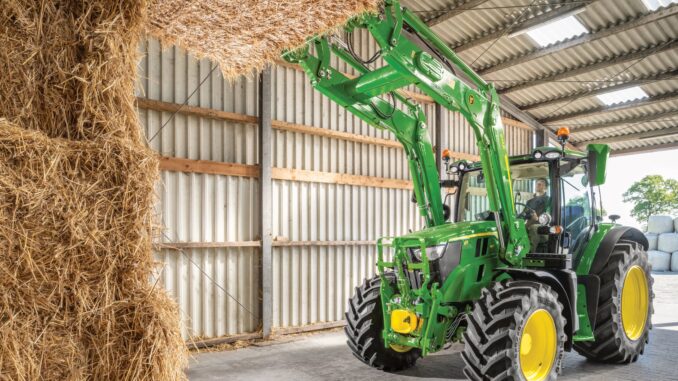
The John Deere 2032R is a 2R Series compact utility tractor aimed at property owners who need more capability than a lawn tractor but still want a machine that is manageable for mowing, loader work, light ground engagement, and year-round attachment use. This guide is written for USA and Canada owners who want a practical, symptom-first reference for common repairs, troubleshooting steps, maintenance intervals, and realistic DIY boundaries.
Compared with lighter lawn and garden tractors, the John Deere 2032R uses a diesel engine, hydrostatic drivetrain, hydraulic system, and compact-tractor chassis, so diagnosis usually needs to consider several systems working together rather than just the engine and mower deck. The sections below cover common faults, service parts, where to find manuals and diagrams, how to identify the machine correctly, and a long FAQ designed around what owners actually see in day-to-day use.
General overview of the John Deere 2032R
The John Deere 2032R sits in Deere’s 2R Series compact utility tractor range, above basic riding mowers and lawn tractors and closer to a true small farm or estate tractor in capability. It is designed to handle finish mowing with a mid-mount deck, front loader work, light rear-implement jobs, and seasonal attachment use, making it a good fit for larger residential properties, acreage owners, and light commercial property care.
The main systems owners typically deal with are:
-
Engine and fuel system: diesel engine, air filtration, fuel filters, glow/start circuit, cooling system.
-
Mower system: mid-mount AutoConnect deck on equipped tractors, deck belt and spindle/blade wear points.
-
Drive system: hydrostatic transmission, hydraulic filters, transmission oil, front axle on 4WD models, range selection and linkage.
-
Electrical and safety system: battery, switches, fuses, PTO and seat interlocks, starting circuit, and charging system.
Several service parts owners commonly buy for the John Deere 2032R include engine oil filter M806419, primary air filter M131802, secondary air filter M131803, primary fuel filter MIU800645, secondary fuel filter M811032, transmission oil filter LVA14703 or LVU800097 depending on configuration, hydraulic oil filter LVA16054, and filter pack LVA21201. Other commonly purchased items include battery 57M7166, fuel filler cap TCU32729, Hy-Gard fluid, Cool-Gard II coolant, and deck-related wear parts on mowing setups.
John Deere 2032R troubleshooting approach
Good diagnosis on the John Deere 2032R starts with the symptom, not with ordering parts. On a compact tractor like this, one complaint can have several possible causes, and changing parts too early often wastes time and money.
The main symptom groups for the John Deere 2032R are:
-
Starting issues, including no crank, slow crank, hard cold start, or starts then dies.
-
Running issues, such as low power, rough running, smoke, surging, or stalling under load.
-
Mowing and PTO issues, including poor cut, deck vibration, belt problems, or PTO engagement faults.
-
Overheating and leaks, especially around coolant hoses, radiator screens, hydraulic lines, and engine oil or fuel connections.
-
Transmission and drive problems, including weak movement, hydrostatic whining, poor 4WD performance, or steering/hydraulic complaints.
-
Electrical and safety-switch issues, including intermittent starting, blown fuses, non-working PTO circuits, or charging complaints.
A simple owner-friendly rule is to check the easy, high-probability items first: battery condition, fuel quality, fluid levels, visible leaks, debris buildup, filters, and linkage adjustment. Only after those checks should you move into deeper electrical testing, hydraulic diagnosis, or component replacement.
Emergency and immediate John Deere 2032R repair needs
Some faults on the John Deere 2032R should not be ignored because they can create safety risks or turn a moderate repair into a very expensive one. If the tractor is losing oil, coolant, or hydraulic fluid quickly, overheating, making heavy driveline noise, or showing brake/steering problems, stop using it until the issue is identified.
John Deere 2032R starting issues
When the John Deere 2032R will not crank or starts poorly, the problem may be electrical, fuel-related, or connected to safety interlocks. Continuing to crank with a weak battery or poor cable connection can overheat cables, damage terminals, and create misleading symptoms.
Common causes:
-
Weak or failing battery.
-
Dirty or loose battery terminals and ground connections.
-
Seat, PTO, brake, or range-selector safety switch not in the correct state.
-
Fuel restriction, contaminated diesel, or air in the fuel system.
-
Glow or cold-start procedure issues in cold weather.
Basic owner checklist:
-
Confirm PTO is off, range selector is in neutral, and brake/start procedure is correct.
-
Check battery terminals for looseness or corrosion and verify the battery is fully charged.
-
Confirm there is clean fuel in the tank and the shutoff path is open.
-
Inspect fuel filters and look for obvious air leaks or wet fittings.
-
If it still will not crank or repeatedly blows a fuse, move to meter-based testing or dealer diagnosis.
John Deere 2032R cut-quality problems
If the John Deere 2032R leaves strips, scalps, or cuts unevenly, the issue is usually in deck setup, blade condition, belt condition, or mowing technique rather than a major tractor fault. Poor cut quality often gets worse quickly when owners keep mowing with dull blades or a slipping deck belt.
Common causes:
-
Dull, bent, or unbalanced blades.
-
Incorrect deck level or gauge wheel setup.
-
Worn or slipping mower belt.
-
Spindle wear or blade mounting problems.
-
Excessive ground speed in heavy or wet grass.
Basic owner checklist:
-
Clean the underside of the deck and inspect blade edges.
-
Check for bent blades, loose hardware, or spindle roughness.
-
Inspect deck belt condition and tension path.
-
Verify deck level side-to-side and front-to-rear according to the operator’s manual.
-
Slow down in dense grass before assuming a mechanical failure.
John Deere 2032R vibration and noise
New vibration or sharp mechanical noise on the John Deere 2032R should be taken seriously because it can point to a failing belt, damaged blade, driveline problem, loose wheel hardware, or front-loader/frame fastener issue. Running the tractor while vibration is increasing can damage bearings, mounts, shafts, and sheet metal.
Common causes:
-
Bent or unbalanced mower blades.
-
Debris wrapped around shafts or spindle areas.
-
Loose wheel bolts or attachment hardware.
-
Worn bearings, pulleys, or universal-joint/driveline parts on attachments.
-
Engine mount or bracket looseness.
Basic owner checklist:
-
Stop the machine and inspect for obvious loose parts or fresh metal rub marks.
-
Remove packed grass, wire, or twine from rotating parts.
-
Check blades, wheels, and visible hardware for looseness or damage.
-
Isolate whether the noise appears with engine speed, tractor movement, or PTO engagement.
-
Avoid continued use until the source is identified.
John Deere 2032R overheating and leaks
Overheating, coolant smell, steam, or visible fluid leaks on the John Deere 2032R need immediate attention because diesel engines and hydraulic systems can be damaged quickly by low fluid or restricted cooling airflow. Compact tractors used for mowing often collect debris on the grille and radiator screen long before owners realize cooling airflow is restricted.
Common causes:
-
Plugged screen, radiator fins, or debris around the front intake area.
-
Low coolant level or aging hoses/clamps.
-
Hydraulic leak from a hose, fitting, or quick coupler.
-
Engine oil leak around filter, drain point, or gasket area.
-
Heavy load combined with poor airflow maintenance.
Basic owner checklist:
-
Shut down and allow the machine to cool before opening anything pressurized.
-
Clean the screen and radiator area carefully.
-
Check coolant, engine oil, and hydraulic fluid levels.
-
Trace any wet area upward to its likely source rather than just wiping it off.
-
Do not keep operating a tractor that is actively overheating or losing fluid.
John Deere 2032R transmission and drive problems
Weak drive, inconsistent hydro response, or poor pulling performance on the John Deere 2032R often comes from low hydraulic/transmission oil, restricted filters, linkage issues, or operator setup rather than immediate transmission failure. Still, continued use with low fluid or contaminated oil can shorten hydrostatic and hydraulic component life.
Common causes:
-
Low transmission or hydraulic oil.
-
Restricted hydraulic or transmission filter.
-
Range or pedal linkage adjustment problems.
-
Front axle fluid neglect on 4WD-equipped tractors.
-
Operator trying to work in the wrong range for the load.
Basic owner checklist:
-
Verify the correct range is selected for the job.
-
Check transmission and hydraulic fluid levels with the tractor on level ground.
-
Review filter service history, especially past the initial 50-hour and 200-hour marks.
-
Inspect linkages for sticking, damage, or poor return.
-
If hydro drive remains weak or noisy after fluid and filter checks, dealer testing is sensible.
John Deere 2032R electrical problems
Electrical faults on the John Deere 2032R often show up as intermittent no-start conditions, dead dash functions, charging complaints, PTO refusal, or nuisance fuse failures. Because modern compact tractors use interlocks and relays, guessing at parts can get expensive fast.
Common causes:
-
Weak battery or poor charging output.
-
Corroded grounds or damaged wiring near vibration points.
-
Blown fuse or failed relay.
-
Faulty seat, brake, or PTO switch.
-
Moisture or corrosion in connectors.
Basic owner checklist:
-
Load-test or charge the battery before blaming switches.
-
Check all visible fuses and basic relay locations.
-
Inspect wiring near the battery, starter, seat switch, and PTO controls.
-
Look for rubbed-through insulation or green corrosion in connectors.
-
Use a wiring diagram or dealer help for repeated electrical faults.
DIY or dealer? John Deere 2032R repair decision guide
The realistic DIY line on the John Deere 2032R is usually between external service work and deeper hydraulic, diesel fuel-system, or electrical diagnosis. Most owners with normal tools can handle routine maintenance and a fair number of bolt-on repairs, but jobs involving hydrostatic internals, injector issues, major wiring faults, or split-tractor work are usually better left to an experienced compact-tractor technician.
Good DIY jobs
-
Engine oil and oil filter service.
-
Air and fuel filter replacement.
-
Battery replacement and terminal cleaning.
-
Mid-mount deck blade service and deck cleaning.
-
Basic belt inspection and some deck-belt replacement jobs.
-
Greasing chassis and attachment points.
Advanced DIY or dealer jobs
-
Hydraulic leak tracing beyond an obvious hose or coupler.
-
Hydrostatic drive complaints that remain after fluid and filter service.
-
Safety-switch and relay diagnosis requiring wiring diagrams and meter testing.
-
Cooling-system leak repair that involves major disassembly.
-
Injector, high-pressure fuel, or compression-related diesel problems.
-
Loader valve, steering, or SCV issues.
Skill level guide
-
Beginner: engine oil, air filter, battery care, blade inspection, deck cleaning, greasing.
-
Intermediate: fuel filters, deck belt work, deck leveling, switch replacement, fluid and filter service on transmission/hydraulics.
-
Advanced: wiring diagnosis, hydraulic troubleshooting, seal replacement, cooling-system repairs, repeated no-start diagnostics.
Parts for the John Deere 2032R: OEM vs aftermarket
Before ordering parts for a John Deere 2032R, gather the full model name, the Product Identification Number, the engine model and serial information, and the deck or attachment model if the repair involves mowing or PTO equipment. That matters because serial breaks, deck options, and attachment variants can change the correct filter, belt, blade, switch, or hardware listing.
OEM parts are the safer choice for belts, hydraulic filters, safety switches, and fit-sensitive components because compact tractors can be more sensitive to small spec differences than lawn tractors. Aftermarket parts can make sense for batteries, some blades, fluids, and selected filters, but only when the seller clearly cross-references the John Deere number and the specific 2032R application.
John Deere 2032R manuals, diagrams and service information
The operator’s manual is the first reference because it covers controls, lubrication points, routine service, safety procedures, and identification locations. Deere’s parts catalog and JDParts resources are the best next stop when you need exploded diagrams and serial-sensitive part lookups.
Useful sources include:
-
John Deere 2032R/2038R Operator’s Manual for operating procedures, maintenance basics, controls, and safety information.
-
Earlier 2025R/2032R Operator’s Manual for model identification details and earlier production references.
-
John Deere Parts Catalog / JDParts for exploded parts diagrams and serial-number-sensitive lookups.
-
Green Farm Parts 2032R maintenance guide for quick service part references and common maintenance consumables.
If you need a technical manual or full parts catalog beyond the operator’s manual, Deere states that U.S. and Canada owners can order service literature through Deere channels and use JDParts for online parts ordering and information.
How to locate John Deere 2032R model, serial and engine numbers
These numbers matter because a John Deere 2032R can have serial-number breaks, attachment differences, and engine-related variations that affect the right parts listing. Recording them before ordering parts saves time and reduces returns.
Use this process:
-
Locate the tractor Product Identification Number plate on the tractor frame area indicated in the product-identification section of the operator’s manual.
-
Record the full tractor model designation exactly as shown, including any suffixes or regional markings.
-
If the tractor has a mower deck or other attachment, find that attachment’s model and serial tag separately rather than assuming the tractor PIN covers it.
-
Find the engine identification label or plate on the engine itself and record the model and serial details for fuel, cooling, or engine service parts.
-
Keep clear photos of every tag on your phone so you can compare them against online diagrams while ordering.
Buying John Deere 2032R parts online and in stores
The best buying strategy is to identify the exact part number from the operator’s manual or parts diagram first, then compare price and availability. That approach is especially important on the John Deere 2032R because compact-tractor parts are often more serial-sensitive than lawn tractor items.
-
Online: use Deere’s parts catalog, Shop Deere, and model-focused sellers such as Green Farm Parts to cross-check OEM numbers before ordering.
-
Dealer counter: best for hydraulic filters, switch-related parts, serial-break items, and anything where the fit is unclear from photos.
-
Retail stores: acceptable for common consumables such as batteries, oil, grease, coolant, or some aftermarket filters and blades when the packaging clearly lists the John Deere 2032R or the exact OEM cross-reference.
For time-sensitive repairs, it often makes sense to buy the critical fit-sensitive part as OEM and source fluids or general consumables locally. That reduces downtime without gambling on a questionable belt, switch, or hydraulic filter.
Step-by-step fitting guide for common John Deere 2032R parts
These are the common jobs many owners can realistically do at home with normal tools, a clean work area, and the operator’s manual nearby. Always shut the tractor down, remove the key, lower implements, and work on level ground.
Changing the John Deere 2032R engine oil and oil filter
This job helps protect the diesel engine and should be done on schedule rather than waiting for rough running or noise.
-
Warm the engine briefly so the oil drains more completely, then shut it off and park safely.
-
Place a drain pan under the drain point, remove the drain plug, and let the oil fully drain.
-
Remove the old M806419 oil filter, clean the sealing surface, and lightly oil the gasket on the new filter.
-
Install the new filter by hand, refit the drain plug, and refill with the correct engine oil grade listed in the manual.
-
Start the engine, check for leaks, shut down, and verify the oil level again.
Replacing the John Deere 2032R air filters
Air-filter service helps prevent power loss, smoke, and dust ingestion, especially if the tractor is used for mowing or loader work in dry conditions.
-
Open the air-cleaner housing and remove the outer primary element first.
-
Inspect the primary element and replace it if dirty, damaged, or restricted.
-
Remove and inspect the secondary element carefully; replace it if contaminated or according to inspection needs.
-
Wipe out the housing without forcing dirt deeper into the intake tract.
-
Reassemble carefully so the seals seat properly and no unfiltered air can bypass the elements.
Replacing the John Deere 2032R fuel filters
Fuel-filter service can cure hard starting, weak running, or power loss caused by restricted fuel flow. Diesel fuel-system cleanliness matters, so take your time and keep dirt out of every open connection.
-
Shut the tractor off and clean the filter area before loosening any fittings.
-
Remove the old primary and secondary fuel filters, catching any spilled fuel.
-
Install the new MIU800645 and M811032 filters in the correct positions for your tractor’s layout.
-
Prime or bleed the system using the procedure in the operator’s manual for your version.
-
Start the engine and check carefully for leaks or air-entry issues.
Servicing John Deere 2032R mower blades and deck area
Blade and deck service is one of the biggest cut-quality improvements an owner can make on a mowing-equipped 2032R.
-
Remove the key, lower the deck, and secure the tractor safely before working underneath.
-
Clean built-up grass from the underside of the deck shell and around the spindles.
-
Inspect blades for dull edges, bends, cracks, and loose hardware.
-
Sharpen and balance reusable blades or replace them as a set when wear is heavy.
-
Recheck belt condition and spindle play before returning the deck to service.
Preventive maintenance on the John Deere 2032R
Regular maintenance prevents many John Deere 2032R problems from turning into repair jobs. On this model, the biggest long-term payoffs usually come from clean filters, correct fluids, cooling-system cleanliness, and consistent inspection of deck, driveline, and hydraulic wear points.
Focus areas include:
-
Starting reliability: maintain battery condition, clean terminals, and replace fuel filters on schedule.
-
Engine protection: change engine oil and filter on time and keep the air system sealed.
-
Cooling and fire prevention: clean screens and radiator areas often, especially during mowing season.
-
Drive performance: monitor transmission and hydraulic fluid condition and filter intervals.
-
Mowing quality: keep blades sharp, deck clean, and deck setup correct.
-
Electrical reliability: inspect wiring around vibration points and keep battery connections tight.
John Deere 2032R maintenance schedule and year-round checklist
The official maintenance chart should always be the final word, but the published 2032R service references show a pattern of initial 50-hour transmission and hydraulic service, routine engine oil service at 200 hours or annually, fuel filters at 400 hours or annually, and air-filter replacement based on condition. Use the operator’s manual for the exact procedures and any updates tied to your tractor’s serial range.
Daily or before each use
-
Check engine oil level.
-
Check coolant level and look for leaks.
-
Check fuel supply and water or contamination concerns.
-
Inspect tires, visible hardware, and attachment mounting points.
-
Clean grille screen and remove debris from cooling areas when needed.
After initial 50 hours
-
Replace transmission oil filter.
-
Replace hydraulic oil filter and perform the initial service specified for the 2R platform.
-
Clean the suction screen where specified in the maintenance schedule.
-
Check radiator and air-intake hose clamps and inspect battery condition.
-
Lubricate joints and fittings.
Every 200 hours or yearly
-
Change engine oil and replace engine oil filter M806419.
-
Review alternator and related belt condition or adjustment where applicable.
-
Check wheel bolt torque.
-
Inspect air-restriction related components and intake system condition.
-
Replace transmission and hydraulic filters again if your manual/version specifies 200-hour recurrence after the initial service.
Every 400 hours or yearly
-
Replace primary fuel filter MIU800645.
-
Replace secondary fuel filter M811032.
-
Change transmission oil and filters where the official schedule for your version calls for it.
-
Give the machine a full hydraulic and driveline inspection before another heavy season.
Every 600 to 1000 hours and longer-term items
-
Inspect air-intake system and replace air elements as required by condition.
-
Service front axle oil and related checks according to the official chart.
-
Check brake adjustment where specified.
-
Flush and replace engine coolant at the longer interval specified in the maintenance literature.
-
Leave valve-clearance inspection and other deeper engine work to a Deere dealer when scheduled.
Seasonal checklist
-
Spring: change overdue fluids and filters, inspect deck/blades, clean cooling areas, and test the battery after winter storage.
-
Mid-season: clean screens often, grease regularly, and watch belt and blade condition closely in heavy mowing periods.
-
Fall: wash the tractor, correct leaks, inspect the fuel system, and prepare any winter attachments or storage plan.
-
Winter or off-season: keep the battery maintained, store fuel correctly, and repair deck or attachment wear before the next rush season.
Repair, upgrade, or replace a John Deere 2032R?
For most owners, a John Deere 2032R is worth repairing when the tractor is structurally sound, the engine and hydrostat are healthy, and the issue is limited to maintenance items, bolt-on parts, deck wear, hoses, switches, or normal hydraulic service. Upgrading makes more sense when the tractor is consistently undersized for the work, while replacement becomes easier to justify when the machine has multiple major system failures at once or repair costs start stacking into a large share of its market value.
Repair if…
-
The problem is limited to filters, belts, blades, hoses, battery, switches, or deck wear.
-
The tractor starts, drives, and hydraulics function normally apart from one isolated fault.
-
You have clear part identification and the repair is straightforward DIY or ordinary dealer service.
Upgrade if…
-
You need more lift capacity, PTO capability, traction, or attachment compatibility than the 2032R comfortably delivers.
-
Your work has shifted from residential acreage tasks toward heavier compact-tractor jobs.
-
Repeated attachment changes or productivity limits are costing time every season.
Replace if…
-
The tractor has severe engine, hydrostatic, and hydraulic issues together.
-
Corrosion, frame damage, or chronic neglect has affected several systems at once.
-
A newer tractor would cost only modestly more than the combined repair total and downtime risk.
John Deere 2032R troubleshooting FAQ
1. Why will my John Deere 2032R not start?
Most no-start complaints on a John Deere 2032R come down to battery condition, poor cable connections, safety interlocks, or fuel-delivery issues. Start by confirming the PTO is off, the brake and range settings are correct, and the battery is fully charged. After that, check fuel condition and filter history before assuming a major electrical fault.
2. Why does my John Deere 2032R crank slowly?
Slow cranking usually points to a weak battery, dirty terminals, poor ground connection, or cable resistance. It can also show up in cold weather when the battery is marginal and the diesel engine needs more starting effort. Clean the connections, charge-test the battery, and inspect cable condition before replacing the starter.
3. Why does my John Deere 2032R click but not crank?
A click with no crank often means the solenoid is trying to engage but available battery power is too low or cable resistance is too high. It can also happen when a safety switch or relay issue allows partial circuit activity but not full starter engagement. Check voltage under load and inspect the main battery and ground cables closely.
4. Why is my John Deere 2032R hard to start when cold?
Cold starts are harder on diesel tractors because fuel atomization and combustion conditions are less favorable. Make sure you are following the proper starting procedure from the manual and that the battery and fuel filters are in good condition. Dirty fuel filters or weak electrical performance can make a normal cold start feel like a bigger engine problem.
5. Why does my John Deere 2032R start and then die?
This usually suggests restricted fuel flow, air entering the fuel system, contaminated diesel, or an interlock-related shutdown issue. Inspect the fuel filters, look for loose fittings, and confirm clean fuel is reaching the engine consistently. If it only dies under certain seat or PTO conditions, a switch problem moves higher on the list.
6. Why is my John Deere 2032R losing power under load?
Power loss can come from restricted air or fuel filters, dirty cooling areas, poor fuel quality, or simply trying to work in the wrong range for the load. On mowing tractors, packed radiator screens can also reduce performance once engine temperature rises. Begin with filters, airflow, and operating range before suspecting injectors or internal engine wear.
7. Why is my John Deere 2032R smoking?
Diesel smoke color and timing matter, but common owner-level causes include dirty air filters, fuel issues, heavy overloading, or incomplete combustion during cold operation. Check the intake system first and make sure the tractor is reaching normal operating conditions. Persistent smoke after routine service deserves deeper diagnosis.
8. Why does my John Deere 2032R overheat?
The most common causes are blocked screens, dirty radiator fins, low coolant, hose issues, or heavy work with poor airflow. Compact tractors used for mowing can plug cooling areas faster than owners expect. Clean the cooling package and verify coolant level before running it again under load.
9. Why is my John Deere 2032R leaking hydraulic fluid?
Hydraulic leaks often come from hoses, fittings, quick couplers, or seals around hydraulic components. Because hydraulic oil loss can affect steering, loader operation, and transmission behavior, leaks should be fixed quickly. Clean the area first, then trace the leak to its highest wet point rather than guessing from where it drips.
10. Why is my John Deere 2032R leaking engine oil?
Engine oil leaks commonly appear around the oil filter, drain area, gasket surfaces, or hose-related fittings if equipped. Fresh service work is a common time for leaks if a gasket double-seats or a filter is not tightened correctly. Confirm the source before replacing parts because airflow can move oil far from the actual leak point.
11. Why won’t my John Deere 2032R move properly?
Poor movement may be caused by low hydraulic or transmission oil, overdue filters, linkage issues, or using the wrong range for the job. Hydrostatic tractors can feel weak even when the transmission itself is not damaged. Check fluid level and service history first, especially if the initial 50-hour or later filter service is overdue.
12. Why is my John Deere 2032R hydrostatic transmission noisy?
Some hydrostatic sound is normal, but a stronger whine or change in behavior can point to low oil, restricted filters, air entry, or heavy loading. If noise increases together with weak drive or jerky response, stop and check the fluid and filter situation. Continued use under those conditions can make the repair much more expensive.
13. Why does my John Deere 2032R jerk when driving?
Jerky travel can be caused by linkage issues, inconsistent hydro pedal input, low fluid, air in the hydraulic side, or internal wear. Start with the basics: correct range, correct engine speed for the job, and proper fluid level. If the problem remains after routine service, dealer diagnosis is the safer route.
14. Why is the steering heavy on my John Deere 2032R?
Heavy steering can indicate low hydraulic oil, a restriction in the hydraulic system, front axle loading issues, or a steering component problem. Check fluid level and look for leaks first because low oil can affect several functions at once. If loader and steering performance both suffer, hydraulic supply becomes the first area to inspect.
15. Why is my John Deere 2032R battery going flat?
A flat battery can come from age, poor charging output, dirty connections, parasitic draw, or repeated short runs that never fully recharge it. Start with battery age and condition, then check terminal cleanliness and charging voltage. Replacing the battery without checking the charging side can leave the same problem in place.
16. Why does my John Deere 2032R blow fuses?
Fuse failures usually mean a short to ground, chafed wire, moisture-damaged connector, or a component pulling too much current. Replace the fuse once for testing, but do not keep installing fuses until one holds because that can hide the real fault. Look around moving, vibrating, or pinched harness areas first.
17. Why won’t the PTO engage on my John Deere 2032R?
PTO engagement problems can come from switch faults, seat or brake interlock issues, wiring trouble, or mechanical issues downstream at the mower deck or attachment. Confirm the control sequence is correct, then separate an electrical no-engagement problem from a deck or driveline problem. If the PTO switch is powered but the system still refuses to operate, deeper circuit testing is needed.
18. Why does the mower deck on my John Deere 2032R cut unevenly?
Uneven mowing usually comes from dull or bent blades, incorrect deck level, low tire pressure, spindle wear, or mowing too fast for the conditions. Clean and inspect the deck first, then verify setup and tire pressures before replacing parts. Many cut complaints are adjustment issues rather than component failure.
19. Why does my John Deere 2032R leave strips of uncut grass?
Stripping often happens when blade lift is reduced by dull edges, the deck is packed with grass, or ground speed is too high for the conditions. Wet or very tall grass can exaggerate the problem even with a healthy deck. Sharp blades and a clean deck shell make a noticeable difference.
20. Why is my John Deere 2032R scalp-cutting the lawn?
Scalping usually points to deck height or level issues, anti-scalp/gauge wheel setup, uneven ground, or excessive speed over contours. Check deck pitch and wheel settings before changing blades or belts. A compact tractor is also heavier than a lawn tractor, so mowing strategy matters on rough lawns.
21. Why are the blades on my John Deere 2032R vibrating?
Blade vibration usually means a blade is bent, out of balance, loose, or the spindle has developed play. It can also happen when debris is packed heavily around one blade area. Stop mowing immediately and inspect because bearing and spindle damage can follow quickly.
22. Why does my John Deere 2032R keep breaking or throwing a deck belt?
Belt problems often come from worn pulleys, seized spindle bearings, misrouting, debris buildup, or simply an aged belt that has glazed and stretched. Installing the wrong belt length or section can create the same symptoms. Use the correct deck-specific belt and inspect pulleys before fitting another one.
23. Why is my John Deere 2032R mower deck noisy?
A noisy deck can mean dry or failing spindles, loose blade hardware, pulley wear, belt slippage, or debris striking the shell. The easiest first check is with the engine off: rotate components by hand and feel for roughness or looseness. Do not keep mowing through a bearing noise because it rarely fixes itself.
24. Why does my John Deere 2032R stall when I engage the mower?
If the engine stalls when the mower engages, the deck may be overloaded with packed grass, spindle drag may be excessive, or the engine may already be short on air, fuel, or power. Clean the deck and inspect spindle freedom first. Then make sure the engine is otherwise running cleanly before blaming the PTO controls.
25. Why does my John Deere 2032R run hot when mowing?
Mowing creates long periods of sustained load and throws debris toward the cooling package, so clogged screens and radiator fins are common. Dull blades and heavy grass also increase load and heat. Clean the cooling system and reduce mowing stress before assuming a coolant-system failure.
26. Why is the loader or hydraulics on my John Deere 2032R weak?
Weak hydraulics can be caused by low fluid, restricted filters, air entry, relief-valve issues, or wear inside hydraulic components. Owners should start with fluid level, visible leaks, and service history. If several hydraulic functions are weak at once, a system-level issue is more likely than one bad cylinder.
27. Why does my John Deere 2032R bounce or ride harshly?
Ride complaints often come down to tire pressure, ballast setup, attachment weight, speed, and terrain rather than a true mechanical fault. Compact tractors feel firmer than lawn tractors by design. Correcting tire pressures and balancing the machine for the job usually helps more than replacing parts.
28. How often should I service my John Deere 2032R?
The 2032R should be maintained by the official chart, with daily checks before use, initial 50-hour hydraulic and transmission-related service, engine oil service at 200 hours or annually, and fuel-filter service at 400 hours or annually. Air filters are often replaced based on condition rather than a simple fixed hour number. The operator’s manual should be treated as the final schedule for your exact tractor.
29. What oil filter does a John Deere 2032R use?
A commonly listed engine oil filter for the John Deere 2032R is M806419. Always confirm with your PIN and engine details before ordering because serial-sensitive applications can change parts listings. That extra check matters more on compact tractors than on many basic mower models.
30. What fuel filters does a John Deere 2032R use?
Published 2032R maintenance listings show MIU800645 as the primary fuel filter and M811032 as the secondary fuel filter. Those are good starting references, but you should still confirm them against your tractor’s identification details and parts diagram before purchase. That is especially important if the machine has had running production changes or prior service substitutions.
31. What hydraulic and transmission filters fit a John Deere 2032R?
Common 2032R maintenance references list LVA14703 and LVU800097 as transmission filter numbers seen on this model family, along with hydraulic filter LVA16054. Because compact tractor hydraulic and transmission parts can vary by serial range and configuration, verify all three against JDParts before buying. This is an area where OEM is usually the safest option.
32. Can I use aftermarket parts on a John Deere 2032R?
Yes, but use them selectively. Aftermarket is generally less risky for batteries, some blades, and some cross-referenced consumables, while OEM is the better choice for hydraulic filters, belts, switches, and fit-sensitive items. The key is matching the exact Deere number and model application rather than buying by appearance alone.
33. Where can I find parts diagrams for a John Deere 2032R?
The best source is Deere’s online parts catalog and JDParts ecosystem, which provide exploded views and serial-sensitive listings. Model-specific retailer pages can help with quick ordering, but the Deere catalog is the better authority when you need to verify fit. Use retailer listings only after you confirm the OEM number first.
34. Is the John Deere 2032R a good DIY maintenance tractor?
Yes, for routine maintenance and many external repairs. The machine is owner-serviceable for filters, fluids, blades, belts, grease points, and many visible bolt-on items, but it is still a true compact tractor with hydraulic, diesel, and interlock systems that can exceed casual DIY skill quickly. Owners do best when they stay inside that boundary.
35. When should I take my John Deere 2032R to a dealer?
Dealer service is the smart move when the tractor has persistent hydraulic weakness, hydrostatic drive issues after routine service, repeated fuse or interlock faults, overheating that is not solved by basic checks, or fuel-system problems beyond filter replacement. It also makes sense when the repair needs specialized testing, serial-number-based parts verification, or major disassembly. That is usually cheaper than misdiagnosing the problem through trial-and-error parts swapping.