
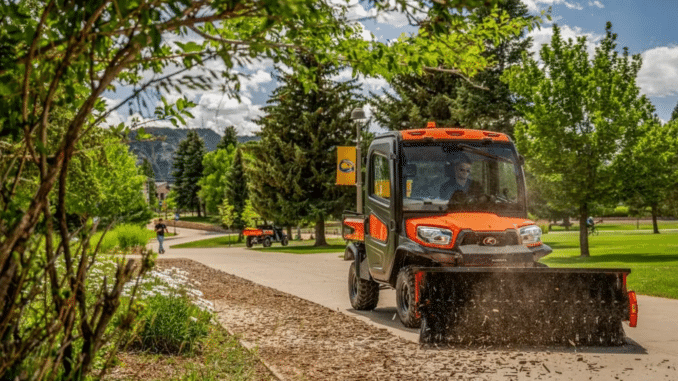
Kubota RTV and UTV Models, Maintenance and Troubleshooting Guide
Kubota RTV utility vehicles serve a wide range of owners, from farmers and acreage owners to estate managers, grounds crews and commercial operators.
The range includes smaller gasoline-powered vehicles, full-size diesel work vehicles, factory-cab models and machines with convertible passenger and cargo arrangements. Kubota also offers the gasoline-powered RTV-XG850 Sidekick, which uses a different transmission system from the hydrostatic diesel range.kubota+1
For Specific Model Guides, please click on links below:
| Kubota Current RTV Series | Kubota Legacy Gasoline Series | Kubota Legacy Diesel Series |
| Kubota Numeric RTV-X Series | Kubota RTV Accessories All Series | Kubota RTV Serial Number Lookup Guide |
Choosing the right information starts with identifying the vehicle correctly. An RTV500, RTV-X900, RTV-X1100C and RTV-XG850 may share the Kubota badge, but their engines, transmissions, service requirements and diagnostic procedures are not interchangeable.kubota+2
This guide brings together current and legacy Kubota RTV models, explains the main differences between families, and organizes the maintenance, troubleshooting and accessory information owners need.
Use it as the starting point for model-specific ownership guides, routine servicing checklists and symptom-based diagnostic articles. Within the broader Kubota Equipment Guides directory, this page serves as the main navigation point for Kubota RTV and UTV information.
About Kubota RTV Utility Vehicles
Kubota’s utility-vehicle range is not one mechanically identical platform offered in different sizes. It includes several distinct combinations of engine, transmission, chassis and operator configuration.
The smaller gasoline models illustrate this clearly. The legacy RTV400Ci uses an air-cooled, single-cylinder gasoline engine and CVT Plus transmission. The RTV500 uses a liquid-cooled, two-cylinder gasoline engine and VHT Plus hydrostatic transmission. The later RTV520 also combines a liquid-cooled gasoline engine with a variable hydrostatic transmission.kubotausa+1
Full-size diesel RTV-X vehicles use Kubota diesel engines and VHT-X transmissions. Depending on the model and generation, the range includes open-station vehicles, integrated factory cabs, extended cargo beds and convertible two- or four-person arrangements.kubotausa+1
The RTV-XG850 Sidekick belongs in the same overall utility-vehicle directory, but its gasoline engine and CVT Plus transmission require a different maintenance and troubleshooting approach from the diesel VHT-X machines.kubota
For owners, these differences matter more than a broad “Kubota UTV” description. Before ordering filters, choosing transmission fluid or investigating a drive problem, establish the exact model and applicable documentation.
Kubota RTV vs UTV: What Is the Difference?
UTV is the broader utility-vehicle category. RTV is Kubota’s product branding, described in its product literature as “Rugged Terrain Vehicles.” Someone searching for a “Kubota UTV” will generally be looking for information about a Kubota RTV utility vehicle rather than a separate product family called the UTV series.kubotausa
Both terms are useful when researching ownership information. However, the model designation—not whether an advertisement calls the vehicle an RTV, UTV or side-by-side—determines which parts and servicing instructions apply.
Understanding Kubota RTV Families and Model Names
Several naming distinctions deserve attention:
-
RTV900 and RTV-X900 should not be treated as identical vehicles.
-
RTV1100 and RTV-X1100C belong to different model designations.
-
RTV1140CPX and RTV-X1140 need their own identification and parts checks.
-
RTV-X1120 and RTV-X1120D both appear in Kubota documentation and catalogues.
-
Current descriptive names such as RTV-X CAB, RTV-X CREW and RTV-X LONG BED should not automatically be substituted for older numeric model names.kubota+5
Suffixes, trim levels and production changes can also affect compatibility. Kubota’s accessory catalogue includes serial-number qualifications for certain RTV-X900 and RTV-X1120D applications, demonstrating why a model name alone may not be enough to order the correct equipment.kubotausa
Kubota RTV and UTV Model Directory: Current and Legacy Models
The following directory brings together the principal documented North American model names and families found in current product listings, archived Kubota literature and parts catalogues.
Coverage was checked in October 2026. “Current listing” means the name appears in the manufacturer’s current product information; it does not establish availability at every dealer. “Legacy” identifies an older documented model, without assigning an unsupported final production date.
Historical brochures do not provide a complete production register for every country, year and specification code. Accordingly, this is a directory of verified principal models and significant naming variants—not a claim that every factory ordering code or regional package is listed.
Current Kubota Utility-Vehicle Listings
Kubota’s current USA and Canada information identifies the RTV520, RTV-X diesel family, RTV-X CAB, RTV-X CREW, extended-bed models and RTV-XG850 Sidekick. Canadian listings also retain the RTV-X1130 designation alongside RTV-X LONG BED information. Availability and naming should therefore be checked against the relevant market.kubota+2
| Model / verified variant | Family / status | Engine / fuel and transmission | Seating / configuration / typical use | Example guide link text |
|---|---|---|---|---|
| RTV520 | Current mid-size gasoline listing | Liquid-cooled gasoline; VHT / VHT Plus | Two-person open station; property maintenance, tools and supplies | Kubota RTV520 maintenance and troubleshooting guide |
| RTV-X | Current full-size diesel family | Three-cylinder diesel; VHT-X | Two-person open station; farm, estate and worksite transport | Kubota RTV-X maintenance and troubleshooting guide |
| RTV-X CAB | Current full-size diesel cab model | Three-cylinder diesel; VHT-X | Two-person factory cab; weather-protected work | Kubota RTV-X CAB maintenance and troubleshooting guide |
| RTV-X CREW | Current full-size diesel crew model | Three-cylinder diesel; VHT-X | Convertible two- or four-person arrangement; crew and cargo transport | Kubota RTV-X CREW maintenance and troubleshooting guide |
| RTV-X LONG BED | Current extended-bed diesel listing | Three-cylinder diesel; VHT-X | Two-person open station; larger cargo-box volume | Kubota RTV-X LONG BED maintenance and troubleshooting guide |
| RTV-X1130 | Documented extended-bed designation; appears in Canadian listings | Three-cylinder diesel; VHT-X | Two-person open station; ProKonvert cargo box | Kubota RTV-X1130 maintenance and troubleshooting guide |
| RTV-XG850 Sidekick | Current full-size gasoline listing | Gasoline; CVT Plus | Two-person open station; work and general property transport | Kubota RTV-XG850 Sidekick maintenance and troubleshooting guide |
The engine, transmission and configuration summaries above follow Kubota’s current product information. Canadian specifications list 17.4 HP for the RTV520, 23.3 HP for the current full-size diesel models and 54 HP for the RTV-XG850; these figures must not be applied retrospectively to every earlier model carrying a related name.kubota+1
The RTV-X family also includes Basic, Standard and Premium configurations in Canadian product information. Cargo-box design, wheels, bed liners and hydraulic bed-lift equipment can differ by configuration, so these packages should be checked rather than assumed.kubota
Legacy Smaller Gasoline Models
| Model / verified variant | Family / status | Engine / fuel and transmission | Seating / configuration / typical use | Example guide link text |
|---|---|---|---|---|
| RTV400Ci | Legacy smaller gasoline model | Air-cooled, single-cylinder gasoline; CVT Plus with inertial clutch | Two-person open station; lighter property and transport duties | Kubota RTV400Ci maintenance and troubleshooting guide |
| RTV500 | Legacy smaller gasoline model | Liquid-cooled, two-cylinder gasoline; VHT Plus hydrostatic | Two-person open station; grounds, estate and property work | Kubota RTV500 maintenance and troubleshooting guide |
Kubota’s archived USA brochure confirms that the RTV400Ci and RTV500 use different engine-cooling and transmission arrangements. Its 2019 specifications give 14.6 HP for the RTV400Ci and 15.8 HP for the RTV500. Earlier RTV400Ci literature quotes 16 HP, so an unexplained horsepower figure should not be used to identify the vehicle or infer a mechanical change.srm.magic.ms+1
Earlier Diesel RTV Models
| Model / verified variant | Family / status | Engine / fuel and transmission | Seating / configuration / typical use | Example guide link text |
|---|---|---|---|---|
| RTV900 | Legacy original diesel family | Verify engine and transmission details against the specific vehicle | Original-generation work vehicle; inspect exact configuration | Kubota RTV900 maintenance and troubleshooting guide |
| RTV900XT | Legacy documented designation | Use RTV900XT-specific documentation | Property, farm and commercial work; equipment varies | Kubota RTV900XT maintenance and troubleshooting guide |
| RTV1100 | Legacy enclosed-cab family | Confirm specifications from the applicable manual | Cab-equipped work vehicle; identification essential | Kubota RTV1100 maintenance and troubleshooting guide |
| RTV1140CPX | Legacy convertible crew/cargo designation | Confirm specifications from the applicable manual | Passenger and cargo applications; verify seating arrangement | Kubota RTV1140CPX maintenance and troubleshooting guide |
Kubota’s own parts and accessory information documents RTV900, RTV900XT, RTV1100 and RTV1140 naming, while an established Kubota parts catalogue separately identifies RTV1140CPX. These names are retained here to help older-vehicle owners find the correct starting point; detailed specifications should come from the matching manual and serial-specific parts information.shop.kubotausa+2
Earlier Numeric RTV-X Models
| Model / verified variant | Family / status | Engine / fuel and transmission | Seating / configuration / typical use | Example guide link text |
|---|---|---|---|---|
| RTV-X900 | Earlier numeric RTV-X generation | Three-cylinder diesel; VHT-X | Two-person open station; General Purpose and Worksite configurations documented | Kubota RTV-X900 maintenance and troubleshooting guide |
| RTV-X1100C | Earlier numeric factory-cab RTV-X | Three-cylinder diesel; VHT-X | Two-person integrated cab with heating and air conditioning | Kubota RTV-X1100C maintenance and troubleshooting guide |
| RTV-X1120 | Documented numeric RTV-X designation | Diesel; verify exact specification and generation | General Purpose, Worksite and Deluxe naming appears in archived literature | Kubota RTV-X1120 maintenance and troubleshooting guide |
| RTV-X1120D | Documented numeric RTV-X designation | Three-cylinder diesel; VHT-X | Two-person work vehicle; specification depends on build | Kubota RTV-X1120D maintenance and troubleshooting guide |
| RTV-X1140 | Earlier numeric convertible crew model | Three-cylinder diesel; VHT-X | Converts between two-person cargo and four-person seating arrangements | Kubota RTV-X1140 maintenance and troubleshooting guide |
Kubota’s archived 2017 brochure lists 21.6 HP for the RTV-X900 and 24.8 HP for the RTV-X1120D, RTV-X1100C and RTV-X1140. It also documents the RTV-X1140’s convertible layout and the RTV-X1100C’s integrated climate-controlled cab. These are historical brochure specifications, not universal figures for today’s diesel range.kubotausa
An important configuration detail appears in the same brochure: the RTV-X900 General Purpose model has manual cargo-box dumping, while hydraulic bed-lift availability differs across configurations. “RTV-X” therefore does not automatically mean that every vehicle has the same cargo-bed mechanism.kubotausa
Identifying Your Kubota RTV Model and Serial Number
The model directory narrows the search, but the next step is matching the vehicle to its documentation.
Record the full model designation and the vehicle’s identification information before ordering parts or investigating a fault. Where an engine-specific component is involved, establish the engine identification as well.
A useful identification record includes:
-
Full model designation.
-
Vehicle serial or identification number.
-
Engine identification where relevant.
-
Operating hours.
-
Open-station or cab configuration.
-
Seating and cargo-bed arrangement.
-
Factory options and aftermarket modifications.
-
Existing manual publication details.
Do not rely solely on bonnet decals, an auction description or a seller’s abbreviated model name. Serial-specific qualifications appear in Kubota accessory information, and current parts listings contain numerous detailed configuration codes.kubotausa+1
Identification-plate locations and numbering conventions should be checked in the applicable operator’s manual rather than inferred from a different RTV. Kubota’s parts and service resources provide a route to operator’s manuals and dealer support.kubotausa
The relevant supporting guides are Kubota RTV Model and Serial Number Identification, Finding the Correct Kubota RTV Operator’s Manual, and Identifying Kubota RTV Engine and Drivetrain Configurations.
Kubota RTV Maintenance Guides
Maintenance information should follow the vehicle’s powertrain and equipment specification.
A gasoline RTV400Ci with CVT Plus, a gasoline RTV500 with VHT Plus and a diesel RTV-X with VHT-X need different servicing references. A general checklist can organize the work, but it cannot replace the correct manual’s fluid specifications, procedures and intervals.kubotausa+1
Routine Service and Pre-Use Checks
Build the routine inspection around the systems fitted to the vehicle.
Relevant categories include engine oil, air filtration, fuel-system condition, cooling equipment, transmission and axle servicing, tyres, brakes, lighting, steering, cargo-bed operation and specified lubrication points.
Cooling checks are a good example of why model identification matters. The RTV400Ci’s air-cooled engine does not have the same servicing requirements as the liquid-cooled engines documented for the RTV500, RTV520 and diesel RTV-X models.kubotausa+2
Use the applicable manual to establish both hour-based and calendar-based servicing requirements. Avoid adopting an online “RTV service schedule” unless it identifies the model and publication it covers.
Organize servicing records around:
-
Date and operating hours.
-
Inspection or service completed.
-
Fluid specification and quantity used.
-
Filter and replacement-part numbers.
-
Faults found.
-
Follow-up work required.
Kubota RTV Maintenance Schedule and Service Checklist provides the overall planning route. Kubota RTV Engine Oil, Filters and Routine Servicing should then separate instructions by model and engine.
Transmission, Drive System and Axles
Transmission maintenance must begin by distinguishing hydrostatic systems from belt-driven CVT systems.
The RTV400Ci’s CVT Plus uses a belt and inertial clutch. The RTV500 uses VHT Plus, while the documented diesel RTV-X range uses VHT-X. The RTV-XG850 uses CVT Plus. A belt-focused troubleshooting or service article is therefore not suitable for every RTV.kubota+2
Relevant inspections may include fluid levels, external leaks, control linkages, axle components, guards and accessible driveline parts, following the applicable manual.
On documented RTV-X models, CV joint protection and independent suspension are part of the chassis arrangement. Damaged protection or boots should lead to model-specific inspection rather than assumptions based on an older vehicle.kubotausa
Use Kubota RTV Transmission and Drivetrain Maintenance for the powertrain route, and Kubota RTV Axle, CV Joint and Driveline Inspection Guide for the chassis and driveline route.
Cooling, Brakes and Cargo-Bed Systems
Cooling, braking and cargo-bed maintenance need separate attention because their designs differ across the range.
Kubota’s archived documentation identifies dry-disc brakes on the RTV400Ci and wet-disc brakes on the diesel RTV-X models. It also distinguishes manual cargo-bed operation from hydraulic bed-lift equipment.kubotausa+1
A bed-lift complaint is not automatically a transmission fault simply because both systems involve hydraulic equipment. Diagnose the affected function using the correct system information.
Kubota RTV Cooling-System Maintenance and Kubota RTV Brake and Cargo-Bed Maintenance should provide model-specific procedures rather than universal capacities, adjustments or service intervals.
Kubota RTV Troubleshooting Guides
The most useful troubleshooting route starts with the symptom, then narrows the investigation by model and powertrain.
“No start,” “no drive” and “loss of power” describe different problems. Recording exactly what the vehicle does helps prevent unnecessary parts replacement.
The following sections organize the diagnostic routes. They identify investigation categories, not confirmed causes or claims that every listed symptom is common across the range.
Starting, Engine and Fuel Problems
Separate starting complaints into three groups:
-
The engine does not crank.
-
The engine cranks but does not start.
-
The engine starts but runs poorly or stalls.
The first group requires the correct starting-circuit information. The second and third need an engine-specific approach, including the relevant fuel and ignition or diesel starting systems.
A gasoline RTV500 and a diesel RTV-X cannot share an identical diagnostic procedure. Kubota documents EFI gasoline engines in the smaller gasoline range and three-cylinder diesel engines in the RTV-X range.kubotausa+1
Before following a repair article, record whether the fault occurs cold, hot, after storage, under load or intermittently.
The appropriate routes are Kubota RTV Starting Problems and Diagnostic Checks, Kubota RTV Diesel Fuel-System Troubleshooting, and Kubota RTV Gasoline Engine Running Problems.
Transmission, Shifting and Drive Problems
Describe the failure precisely:
-
Does the engine run normally while the vehicle remains stationary?
-
Does the selector fail to enter the intended range?
-
Does the vehicle move normally when cold but lose performance later?
-
Is the problem limited to a particular operating condition?
-
Is there a new noise, leak or warning indication?
These observations guide the next investigation, but they do not establish that the transmission has failed.
The correct route depends on the fitted system. CVT Plus and VHT-X are mechanically different, so instructions involving drive belts, hydraulic controls or transmission servicing must identify the models they cover.kubota+2
Kubota RTV Transmission and Shifting Problems should separate the transmission families. Kubota RTV Will Not Move: Model-Specific Diagnostic Guide should distinguish engine performance from actual loss of vehicle drive.
Do not force a selector or alter control adjustments on the basis of instructions for a different model.
Overheating and Loss of Power
First establish whether the complaint is engine overheating, reduced engine output or reduced travel performance.
These symptoms can overlap, but the article used for diagnosis must match both the affected system and the vehicle.
On liquid-cooled RTV models, model-specific cooling guidance should address the radiator, airflow path, coolant system and associated components. Air-cooled RTV400Ci guidance requires a different approach. Kubota’s RTV-X brochure specifically identifies the radiator and air intake as accessible maintenance areas.kubotausa+1
Kubota RTV Overheating Causes and Checks should organize the cooling-system investigation. Kubota RTV Loss of Power Under Load should help distinguish engine-related complaints from drivetrain performance concerns.
Electrical, Battery and Charging Problems
Electrical diagnosis should follow the correct wiring information rather than a generic “Kubota UTV” diagram.
Organize the investigation by the affected function: starting, charging, lighting, instruments or installed accessories. Record intermittent behaviour and any recent wiring or accessory changes.
Safety information also belongs in this process. Kubota publishes model- and serial-specific safety notices, including campaigns involving certain RTV400, RTV500 and RTV-X vehicles. The existence of a campaign does not mean every vehicle with that model name is affected; the identification details must be checked.kubotausa
Kubota RTV Electrical and Charging-System Troubleshooting should provide the model-specific diagnostic route. Safety interlocks must remain part of the approved operating system, not be bypassed as a repair shortcut.
Brakes, Steering, Suspension and Cargo-Bed Problems
Handling or braking complaints require the correct chassis information.
Examples worth documenting include reduced braking, unusual steering movement, suspension noise, an uneven stance, or a cargo bed that fails to operate or latch correctly. The distinction between the RTV400Ci’s documented dry-disc system and the RTV-X wet-disc system reinforces why one brake-adjustment article cannot cover every model.kubotausa+1
Use Kubota RTV Brake, Steering and Suspension Problems for chassis symptoms, and Kubota RTV Cargo Bed Will Not Lift or Lower for bed-operation complaints.
Safety-critical faults should be assessed before the vehicle returns to work. For detailed procedures, use the applicable operator’s or workshop documentation and qualified support where required. Kubota directs owners to the operator’s manual and dealer for complete safety and product information.kubotausa
Kubota RTV Accessories, Work Equipment and Compatibility
Accessory selection should begin with a compatibility check, not a broad claim that a product “fits Kubota RTVs.”
Kubota publishes a dedicated RTV accessory brochure, and its catalogues distinguish applications by model and, in some cases, serial number.kubotausa+1
Potential equipment categories include weather protection, cab equipment, lighting, cargo management, towing accessories and seasonal work equipment. The correct availability and mounting arrangement must be checked for the vehicle concerned.
Cabs and Weather Protection
A factory-integrated cab is not simply an open-station vehicle with interchangeable doors and panels.
Kubota’s RTV-X1100C brochure describes an integrated unibody cab and chassis with heating, air conditioning and defogging. Current RTV-X CAB information likewise identifies a dedicated cab-equipped diesel model.kubotausa+1
Before selecting an enclosure, establish the model, protective-structure arrangement, existing roof or windscreen, and the accessory manufacturer’s approved application.
Snow Equipment and Powered Accessories
Utility vehicles should not be treated as compact tractors with universally available rear PTOs and three-point hitches. However, specialist RTV equipment does exist.
Kubota’s archived RTV-X1100C literature documents a K-Connect system with a power module and front PTO attachment options, including snow-clearing and sweeping equipment. This is a model-specific equipment system, not evidence that every RTV accepts the same powered attachments.kubotausa
Use Kubota RTV Snow Equipment Options to separate basic plow applications from equipment requiring dedicated mounting, power or control systems.
Towing, Payload and Cargo-Bed Compatibility
Cargo volume, cargo-bed load and towing capacity describe different limits.
For example, current Canadian listings show different cargo-box volumes for standard, crew and extended-bed configurations. The RTV-X CREW’s listed volume changes with its seating arrangement. A larger box should not be interpreted as permission to exceed the applicable load rating.kubota
Check the exact vehicle and equipment documentation for:
-
Cargo-bed load rating.
-
Total vehicle payload.
-
Towing limit.
-
Hitch requirements.
-
Passenger configuration.
-
Accessory weight.
-
Approved installation and operating restrictions.
Kubota RTV Accessories and Compatibility Guide provides the overall selection route. Kubota RTV Towing, Payload and Cargo-Bed Setup Guide should address the relevant ratings without combining different models’ figures.
Choosing the Right Kubota RTV Guide
Use the article type that matches the job:
-
Unknown model: Kubota RTV Model and Serial Number Identification Guide.
-
Model research: the individual model’s specifications and ownership guide.
-
Scheduled servicing: Kubota RTV Maintenance Schedule and Service Checklist, followed by the appropriate model instructions.
-
A specific fault: the symptom guide for the correct engine and transmission family.
-
Accessory selection: Kubota RTV Accessories and Compatibility Guide.
-
Used-vehicle assessment: Kubota RTV Used Buying and Inspection Guide.
-
Comparing vehicles: Kubota RTV Model Comparison Guide.
A useful comparison should distinguish seating, cargo arrangement, transmission, cab equipment and intended work. Kubota’s own listings separate mid-size gasoline, full-size diesel and full-size gasoline vehicles, providing a more meaningful starting point than choosing by model number alone.kubota+1
Kubota RTV and UTV Frequently Asked Questions
What is the difference between a Kubota RTV and a UTV?
UTV describes the broader vehicle category, while RTV is Kubota’s branding for its Rugged Terrain Vehicles. “Kubota UTV” is therefore usually a general description of a Kubota RTV, not a separate model series.kubotausa
Are all Kubota RTV models diesel?
No. Kubota has documented gasoline models including the RTV400Ci, RTV500, RTV520 and RTV-XG850 Sidekick, alongside its diesel utility vehicles.kubota+1
Do all Kubota RTV models use hydrostatic transmissions?
No. The RTV400Ci uses CVT Plus, the RTV500 uses VHT Plus, diesel RTV-X models use VHT-X, and the RTV-XG850 is listed with CVT Plus. Always identify the transmission before following servicing or troubleshooting instructions.kubota+2
How do I identify my Kubota RTV?
Record the full model designation and vehicle identification information, then match them to the correct manual and parts listing. Serial-number qualifications in Kubota’s accessory catalogue show why the model name alone may not resolve every compatibility question.kubotausa
Where can I find maintenance information for an older Kubota RTV?
Start with the applicable operator’s manual and model-specific parts information. Kubota’s parts and service resources provide access to manuals and dealer support, while archived brochures help establish the original model and equipment configuration.kubotausa+2
Are parts and accessories interchangeable between RTV models?
Do not assume they are. Kubota’s catalogues list separate model applications and serial-number restrictions. Similar names or shared family branding are not sufficient proof of fitment.kubotausa+1
Do all Kubota RTV models have hydraulic dump beds?
No. Kubota’s archived literature identifies manual dumping on the RTV-X900 General Purpose configuration, and current Canadian RTV-X information distinguishes bed-lift equipment by trim. Check the exact vehicle configuration.kubotausa+1
What should I check before buying a used Kubota RTV?
Establish the exact identity, obtain the applicable documentation, review service records and check whether any safety campaign applies to its model and serial number. Then assess the vehicle against its actual engine, transmission, chassis and equipment specification rather than a generic RTV checklist. Kubota’s safety notices identify affected vehicles by specific model and identification details.kubotausa
Related Kubota Guides and Hubs
Use these descriptive guide titles to organize further reading:
-
Kubota Equipment Guides — the broader equipment directory.
-
Kubota RTV Maintenance Hub — routine inspections and servicing topics.
-
Kubota RTV Troubleshooting Hub — symptom-based diagnostic routes.
-
Kubota RTV Model and Serial Number Guide — identification and documentation.
-
Kubota RTV Used Buying Guide — inspection and ownership research.
-
Kubota RTV520 Guide — the smaller gasoline model route.
-
Kubota RTV-X Diesel Guide — diesel family information and model navigation.
-
Kubota RTV-XG850 Sidekick Guide — gasoline Sidekick ownership information.
-
Kubota Legacy RTV Models Guide — earlier model identification and historical resources.
The master hub establishes the range and the correct navigation route. Family guides narrow the mechanical platform, individual model pages establish the specification, and maintenance or troubleshooting articles address the specific task.