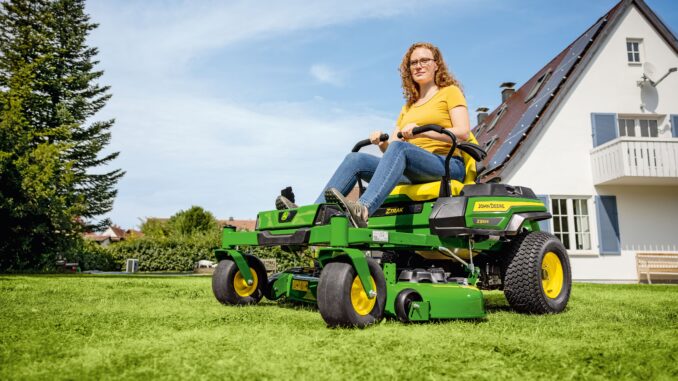
The John Deere D130 is a residential lawn tractor from Deere’s D100 Series, built for homeowners who need reliable weekly mowing, light towing, and general yard maintenance rather than commercial-duty work. It uses a familiar homeowner-tractor layout with a gasoline engine, 42-inch mower deck, belt-driven traction system, battery-and-solenoid starting circuit, and multiple safety interlocks, which means most faults can be diagnosed effectively once the symptom is identified clearly.
This guide focuses specifically on the John Deere D130 and follows the same symptom-first structure used in the other Deere guides. It covers common starting problems, poor cut quality, vibration, overheating and leaks, drive and electrical faults, parts identification, OEM versus aftermarket advice, service schedules, buying guidance, and a large troubleshooting FAQ tailored to owners in the USA and Canada.
1. General Overview of the John Deere D130
At a general level, the D130 is a homeowner lawn tractor intended for regular residential mowing and light seasonal yard work. Deere’s D100 Series operator manual places the D130 within the D105-D170 family of tractors, and the D130 parts and maintenance sheet confirms its 42-inch mower deck setup and owner-service maintenance schedule.
The D130 uses a gasoline engine, a 42-inch mower deck, a belt-driven traction system, and a conventional battery, ignition-switch, and safety-switch electrical layout. Common D130 parts listed in Deere and Deere-oriented references include 42-inch blade kit GY20850, mower belt GX20072, traction drive belt GX20006, ignition switch GY20074, key GY20680, battery TY25878, and fuel cap GX22166 or GX23465, which gives a strong picture of the machine’s most common owner-service and repair areas.
John Deere D130 General description of use
The D130 is best suited to small and medium residential lawns where ease of use, simple controls, and affordable upkeep matter more than speed or commercial longevity. It can mow, bag, mulch, and handle light towing with approved equipment, but it is not designed for brush cutting, severe slopes, or all-day professional use.
John Deere D130 General description of systems and components
-
Engine and fuel system: gasoline engine, air filter, precleaner, fuel filter, spark plug, oil filter, cooling fins, fuel tank, and carburetor/fuel-delivery parts.
-
Mower system: 42-inch deck, blades, deck belt GX20072, spindles, anti-scalp/gauge wheels, lift components, and deck-level adjustment points.
-
Drive system: traction drive belt GX20006, rear transaxle, steering system, brake linkage, and foot controls.
-
Electrical system: battery, ignition switch GY20074, key GY20680, safety interlocks, starter/solenoid, and harnesses.
Common John Deere D130 service parts
Deere’s parts and maintenance sheet for the D130 lists several routine service parts for the 42-inch setup, including blade kit GY20850, mower deck belt GX20072, oil filter GY20577, engine oil TY22029, fuel filter GY20709, and air filter options GY21056 or GY21435 depending on PIN range. Green Farm Parts also lists commonly ordered D130 parts such as inline fuel filter AM116304, oil filter AM125424, spark plugs M78543 or MIU11020, traction drive belt GX20006, 42-inch 3-in-1 blade GX22151, and optional accessories such as mulch kit AM141033 and bagging kit AM141034.
2. Troubleshooting Approach for the John Deere D130
The D130 is usually easiest to diagnose by starting with the operating symptom rather than with the part you think failed. In real use, most owner complaints fall into six broad groups: starting problems, cut-quality problems, vibration and noise, overheating and leaks, drive and traction problems, and electrical or safety-switch faults.
Before service or repair, Deere instructs owners to stop on a level surface, disengage mower blades and attachments, lower attachments to the ground, lock the park brake, stop the engine, remove the key, and wait for all movement to stop. Deere also says to disconnect the negative battery cable or remove the spark plug wire before servicing and to keep the machine clean, especially around the muffler, engine screens, deck top, and transmission area, because debris buildup increases fire risk and contributes to breakdowns.
3. John Deere D130 Emergency and Immediate Repair Needs
The most urgent D130 problems are the ones that stop safe operation or can damage the machine quickly if ignored. Those usually include no-start faults, severe deck vibration, active fuel or oil leaks, overheating, weak drive response, and electrical or interlock failures that cause unpredictable shutdowns.
3.1 John Deere D130 Starting Issues
Starting complaints are among the most common D130 problems because these tractors often sit between mowing sessions and through winter. The first step is to identify which pattern you have: no crank, cranks but will not start, or starts and then dies.
No crank
A no-crank condition usually points to low battery charge, corroded cables, fuse or key-switch problems, PTO or brake start-condition issues, or solenoid/starter faults. Deere’s operator guidance also emphasizes that all drives must be neutral and the park brake locked before start attempts, because incorrect starting conditions can make the tractor appear electrically dead even when the main parts are good.
Checks:
-
Measure battery voltage and inspect battery posts, terminals, and grounds.
-
Check fuse and relay/solenoid area for corrosion or damage.
-
Confirm park brake is fully locked and the PTO is off.
-
Inspect visible safety-switch connectors, especially around seat and brake systems.
-
Listen for solenoid click and inspect key-switch behavior if present.
John Deere D130 Cranks but will not start
If the engine turns over but never runs properly, concentrate on fuel, spark, and air. Deere’s maintenance sheet and Green Farm Parts’ D130 guide identify the core tune-up parts most closely tied to these complaints: fuel filter GY20709 or AM116304 depending on reference, air filter GY21056 or GY21435 depending on PIN range, oil filter GY20577 or AM125424 depending on source, and spark plugs M78543 or MIU11020 depending on engine configuration.
Checks:
-
Confirm fresh fuel and proper fuel level.
-
Inspect or replace the fuel filter.
-
Inspect spark plug condition and wire connection.
-
Inspect and replace dirty air-filter elements.
-
Check for stale fuel, carburetor varnish, or cap venting issues if basics appear normal.
Starts then stalls
If the D130 starts but will not stay running, the cause is often fuel starvation, a tank vent or cap issue, a vacuum leak in the fuel system, carburetor contamination, or an interlock/electrical problem. A D130 owner report specifically described a mower that ran better temporarily after loosening or affecting the tank venting path, and responders suggested running with the cap slightly loose and checking for cracks or vacuum leaks in the fuel lines and fittings.
3.2 John Deere D130 Cut Quality Problems
Poor cut quality on the D130 is usually caused by deck setup, blade condition, or belt speed rather than major engine trouble. Deere’s D100 Series manual provides exact mower-leveling measurements and explains that incorrect front-to-rear pitch can cause double cutting and brown grass tips.
Common causes:
-
Dull, bent, or mismatched blades.
-
Deck out of level side-to-side or front-to-rear.
-
Worn or slipping mower belt GX20072.
-
Incorrect anti-scalp/gauge-wheel adjustment.
-
Grass buildup under or on top of the mower deck.
Deere states that side-to-side blade-tip variation should not exceed 1/8 inch (3 mm), and the front blade tip should be 1/8 to 1/4 inch (3–6 mm) lower than the rear. These measurements matter because even small deck-angle errors can create striping, uneven cut, scalping, or torn grass tips.
3.3 John Deere D130 Vibration and Noise
Strong vibration on a D130 should always be treated seriously because it usually points to a blade, spindle, pulley, or belt problem that can get worse quickly. Deere’s safety guidance says that if abnormal vibration occurs after hitting an object, the machine should be stopped and inspected before further use.
Checks:
-
Inspect blades for bends, cracks, severe wear, or impact damage.
-
Check blade bolts and deck hardware.
-
Inspect deck belt GX20072 for cracks, glazing, stretch, or misrouting.
-
Spin spindles and pulleys by hand with ignition safely disabled to feel for roughness.
-
Inspect top-of-deck belt and spindle zones for debris because Deere identifies them as key cleanout areas.
3.4 John Deere D130 Overheating and Leaks
Heat and debris management are especially important on the D130 because dry clippings collect readily around hot and moving parts. Deere’s D100 Series manual explicitly tells owners to inspect and clean the muffler and exhaust system, engine and engine screens, top of mower deck and under shields, and on or near the transmission to reduce fire risk and improve reliability.
Checks:
-
Clean muffler and exhaust areas only after full cooldown.
-
Clean engine intake screens and cooling fins.
-
Clean top of deck under shields and around spindle/belt areas.
-
Inspect transmission/driveline area for packed debris.
-
Check for oil seepage, fuel leaks, and fuel-cap problems.
3.5 John Deere D130 Transmission and Drive Problems
Weak motion, poor hill climbing, or inconsistent pedal response on a D130 do not automatically mean the transaxle is bad. More commonly, the tractor has a traction belt problem, low tire pressure, brake drag, or driveline debris that is reducing performance.
Green Farm Parts lists traction drive belt GX20006 as a common D130 service part, so it is one of the first items to inspect when the machine feels weak or slips under load.
Checks:
-
Check tire pressures and rear tire condition.
-
Inspect traction drive belt GX20006 for glazing, cracks, contamination, or stretching.
-
Check for brake drag or linkage stiffness.
-
Inspect on and near transmission areas for debris buildup.
-
Compare flat-ground performance with uphill performance before suspecting internal transmission failure.
3.6 John Deere D130 Electrical Problems
Electrical problems on the D130 usually appear as no-start issues, intermittent shutdowns, or key-switch behavior that seems random. Because the system relies on several safety interlocks and simple low-voltage connections, corrosion or a loose connector can easily imitate a more serious failure.
Common electrical repair parts listed for the D130 include ignition switch GY20074, key GY20680, and battery TY25878, all of which are frequently involved in everyday homeowner-tractor electrical faults.
Checks:
-
Inspect battery voltage and cable condition.
-
Check fuse and visible wiring around the battery and start circuit.
-
Verify seat, brake, and PTO start-condition logic basics.
-
Inspect visible harnesses near seat, battery, and relay/solenoid areas.
4. John Deere D130 DIY or Dealer? Repair Decision Guide
Many D130 repairs are realistic DIY jobs because the tractor is mechanically straightforward and routine service access is reasonable. The line between DIY and dealer work usually appears when the problem extends beyond wear parts into internal engine, transaxle, or layered electrical diagnosis.
Good DIY jobs
-
Battery replacement and terminal cleaning.
-
Oil and filter, fuel filter, air filter, and spark plug service.
-
Blade replacement and sharpening.
-
Deck cleanout and deck-level adjustment.
-
Mower belt replacement GX20072.
-
Basic fuse, switch, and visible wiring checks.
Advanced DIY or dealer jobs
-
Persistent no-start after battery, fuel, spark, and interlock basics have been checked.
-
Internal carburetor or engine diagnosis when symptoms overlap.
-
Major transmission or transaxle repair.
-
Repeated wiring faults or hidden harness damage.
Skill level guide
-
Beginner: filters, battery, blades, cleanout, tire pressure, simple inspections.
-
Intermediate: deck leveling, belt replacement, tune-up work, switch replacement.
-
Advanced: carburetor diagnosis, driveline diagnosis, major electrical tracing, engine or transaxle repair.
5. John Deere D130 Parts Needed, OEM vs Aftermarket, and What Information You Need
The most important step before ordering D130 parts is correct identification. Deere’s operator manual says the dealer needs the machine Product Identification Number and engine serial number, and the D130 parts sheet specifically notes that some air-filter applications differ by PIN range.
Information to gather before ordering
-
Full model: John Deere D130.
-
Product Identification Number from the left side of the frame.
-
Engine serial number from the engine.
-
Deck size: 42-inch deck.
-
Existing part number if visible.
Common John Deere D130 service and repair parts
John Deere D130 OEM vs aftermarket
OEM parts are usually the better choice for belts, switches, ignition items, and any parts where exact fit or safety logic matters. Aftermarket parts can work well for blades, batteries, filters, and some tune-up parts, but only when they cross-reference directly to the D130 OEM number and the correct PIN/engine configuration.
6. John Deere D130 Where to Find Parts Diagrams and Service Manuals
The best sources for D130 repair information are Deere’s own operator and parts references, followed by Deere-oriented parts suppliers. Deere’s operator manual provides the official operating, safety, machine-cleanout, and service framework, while the maintenance sheet and parts guides identify model-specific service parts and intervals.
Useful sources:
-
D100 Series operator manual: http://pdf.lowes.com/operatingguides/759936768866_oper.pdf
-
D130 parts and maintenance sheet: http://pdf.lowes.com/useandcareguides/889818000743_use.pdf
-
Deere Technical Publications: https://techpubs.deere.com/
-
JDParts: http://JDParts.deere.com
-
Green Farm Parts D130 page: https://greenfarmparts.com/john-deere-d130-lawn-tractor-maintenance-guide/
7. John Deere D130 How to Locate the Model Number, Serial Number, and Engine Number
Deere’s operator manual states that the machine Product Identification Number is located on the left side of the frame and that the engine serial number is located on the engine itself. These numbers matter because some D130 parts vary by PIN range or engine specification.
Step-by-step guide
-
Park safely on level ground and remove the key.
-
Locate the PIN label on the left side of the frame.
-
Record the full machine number exactly as shown.
-
Locate the engine serial number on the engine and record it separately.
-
Use both numbers when ordering filters, belts, electrical parts, or engine components.
8. John Deere D130 Buying Parts Online and In Physical Stores
For the D130, the smartest buying strategy is to confirm the OEM part number first, then compare stock and price across Deere and Deere-focused sellers. Because the D130 parts sheet shows PIN-range differences for at least some filters, serial-number confirmation is especially important before buying tune-up parts.
Useful online and store-related URLs
-
JDParts: http://JDParts.deere.com
-
Deere Technical Publications: https://techpubs.deere.com/
-
Green Farm Parts D130 page: https://greenfarmparts.com/john-deere-d130-lawn-tractor-maintenance-guide/
Buying advice
-
Online: match the exact OEM number and verify the correct PIN range.
-
Dealer counter: best for serial-number-sensitive parts, fuel-system questions, and electrical items.
-
Physical retail: useful for oil, filters, blades, and belts when the packaging clearly confirms D130 fitment.
9. John Deere D130 Step-by-Step Fitting Guide for Common Parts
For most D130 owners, the most useful repairs to learn first are filters, spark plug service, blades, and belts. These solve many real-world complaints and align directly with Deere’s published maintenance schedule.
Fuel filter and air filter service
-
Park safely and allow machine to cool.
-
Replace fuel filter GY20709 or confirmed equivalent AM116304 if correct for your engine/PIN.
-
Replace air filter and precleaner using the correct PIN-range-specific elements.
-
Inspect fuel lines and air-box sealing before restart.
John Deere D130 Spark plug replacement
-
Remove spark plug wire and allow engine to cool.
-
Remove old spark plug and inspect color and deposits.
-
Install the correct replacement plug for your engine configuration.
-
Reconnect securely and test start quality.
John Deere D130 Blade replacement
-
Park safely, remove key, and disconnect the negative battery cable or spark plug wire.
-
Block blade rotation and remove blade hardware.
-
Install new blade(s) in correct orientation.
-
Tighten correctly and test for smooth operation before mowing.
Deck belt replacement
-
Lower or remove the deck as needed.
-
Photograph belt routing before removal.
-
Remove belt guards and release idler tension.
-
Remove old GX20072 belt and inspect pulleys.
-
Install new belt with correct routing and verify tracking.
10. John Deere D130 Maintenance to Prevent Problems Reoccurring
Preventive maintenance has a major effect on D130 reliability because the machine is simple enough that small neglected issues often become repeat problems. Deere’s service and machine-cleanout guidance show that many common D130 failures are tied to ignored filters, worn belts, poor lubrication, and dry debris buildup rather than rare component defects.
Focus areas
-
Starting reliability: keep battery charged, use fresh fuel, and replace filters and spark plug on schedule.
-
Cut quality: sharpen blades, level the deck correctly, and inspect deck belt condition often.
-
Fire prevention: clean muffler, engine screens, top of deck, and transmission area frequently.
-
Drive performance: monitor tire pressure, traction belt condition, and brake drag.
-
Electrical reliability: inspect battery terminals, visible harnesses, and switch connections regularly.
11. John Deere D130 Maintenance Schedule and Year-Round Checklist
The Deere D130 parts and maintenance sheet gives a clear owner-service schedule. After 8 hours, Deere lists lubricating mower spindles and pivot points, checking mower deck spindle brakes on manual PTO machines, lubricating front axle pivot and axle spindles, and lubricating front axle wheel bushings. Every 25 hours, Deere repeats the spindle and front axle lubrication points.
Yearly or every 50 hours, Deere lists engine oil and filter change, clean/replace air-filter precleaner and element, replace fuel filter, sharpen or replace mower blades, and check or replace the mower drive belt. At 200 hours, Deere calls for valve-clearance check/adjustment by a dealer.
Daily or before each use
-
Check safety devices and brakes.
-
Check fuel level and engine oil level.
-
Check tire pressure and visible hardware.
-
Remove debris from engine compartment, muffler area, top of mower deck, and near transmission.
-
Inspect for leaks and abnormal wear.
After 8 hours
-
Lubricate mower spindles and pivot points.
-
Check mower deck spindle brakes on manual PTO setups.
-
Lubricate front axle pivot and axle spindles.
-
Lubricate front axle wheel bushings.
Every 25 hours
-
Lubricate mower spindles and pivot points.
-
Lubricate front axle pivot and axle spindles.
-
Lubricate front axle wheel bushings.
Every 50 hours or yearly
-
Change engine oil and replace oil filter.
-
Clean or replace air filter and precleaner.
-
Replace fuel filter.
-
Sharpen or replace blades.
-
Check or replace mower drive belt.
Every 200 hours
-
Have valve clearance checked or adjusted by a John Deere dealer.
John Deere D130 Seasonal checklist
Spring
-
Charge battery, use fresh fuel, change oil and filter, inspect air and fuel filters, inspect blades, and check deck level.
Mid-season
-
Recheck blades, belts, tire pressures, driveline cleanout, and heat/debris-prone areas.
Fall / storage
-
Clean the entire tractor, manage fuel for storage, maintain battery charge, and store only after machine cooldown.
12. John Deere D130 Repair, Upgrade, or Replace
In most cases, a D130 is worth repairing when the frame, deck shell, engine, and transmission are still fundamentally sound. Belts, blades, filters, tune-up parts, switches, and battery service are normal ownership items on an older homeowner tractor and do not by themselves justify replacement.
Repair if
-
Problems are limited to routine service parts, deck setup, belt replacement, battery service, or minor electrical faults.
-
The frame and deck shell are structurally sound.
-
The engine and transmission still perform acceptably after routine service.
Upgrade if
-
The machine works well but would benefit from mulching, bagging, or refreshed wear parts for continued use.
Replace if
-
Major engine, transmission, and structural deck/frame issues overlap.
-
Reliability has fallen enough that downtime outweighs repair value.
-
Your property now justifies a heavier-duty tractor or zero-turn mower.
13. John Deere D130 Troubleshooting FAQ
1. Why will my John Deere D130 not start at all?
Start by identifying whether the tractor does not crank or whether it cranks but never fires. Most D130 no-start complaints begin with the battery, fuse, park-brake/PTO start conditions, and safety-switch basics rather than with major engine failure.
2. Why does my D130 only click when I turn the key?
A click usually means the solenoid is trying to engage but the battery is weak under load or the cables have too much resistance. Clean both battery terminals, inspect the frame ground, and test the battery before replacing the starter.
3. Could the ignition switch keep the D130 from starting?
Yes. Green Farm Parts lists GY20074 as the D130 ignition switch, and switches on homeowner tractors do wear over time. If the fuse and battery are good but the key circuit behaves inconsistently, the switch is a realistic suspect.
4. Could a safety switch stop it from cranking?
Yes. Deere’s operating instructions require the correct park-brake and start conditions, and a faulty seat, brake, or PTO-related interlock can stop the start circuit even when the battery is fully charged.
5. Why does my D130 crank but not start?
That usually means the issue is in fuel, spark, or air. Start with fresh fuel, fuel-filter condition, spark plug condition, and air-filter restriction before moving into carburetor or fuel-pump diagnosis.
6. What fuel filter fits the D130?
Deere’s parts sheet lists GY20709, while Green Farm Parts lists AM116304. Because the D130 has engine and PIN-range differences in some service parts, confirm with your serial and engine details before ordering.
7. What air filter fits the D130?
Deere’s parts sheet lists GY21056 for one PIN range and GY21435 for a later PIN range. That means owners should never order the D130 air filter by model alone without checking the serial range.
8. What spark plug should I use?
Green Farm Parts lists M78543 and MIU11020 as D130 spark-plug options depending on configuration. The correct plug should be confirmed by engine model and serial number rather than guesswork.
9. Why does my D130 start only with choke or die when I remove choke?
That pattern usually points to fuel-delivery or carburetor restriction problems. If the engine improves only with choke, it often means the normal fuel path is too lean because of a restriction, air leak, or venting issue.
10. Why does my D130 start and then die after 20 or 30 minutes?
A real-world D130 case described exactly this pattern, along with surging before shutdown. Suggestions there included testing with the gas cap slightly loose and checking the fuel lines and fittings for cracks or leaks because the system depends on proper vacuum and venting.
11. Could the gas cap be the problem?
Yes. In the D130 running problem discussion, loosening the cap was suggested as a test for a venting problem. A bad cap or blocked vent can restrict fuel flow enough to cause surging and stalling.
12. Why does my D130 surge before it dies?
Surging usually points to unstable fuel delivery rather than an immediate electrical cut. Check the cap vent, fuel lines, fuel filter, carburetor condition, and any vacuum leaks before assuming the engine itself is damaged.
13. Why does my D130 leave strips of uncut grass?
This usually means dull blades, poor deck level, a slipping deck belt, or mowing too fast for conditions. Start with blade condition and Deere’s deck-level measurements before blaming the engine.
14. Why are the grass tips brown after mowing?
Deere explains that incorrect front-to-rear deck pitch can cause double cutting and brown grass tips. Set the front of the deck 1/8 to 1/4 inch lower than the rear and make sure the blades are sharp.
15. What is the correct side-to-side deck level on a D130?
Deere says the outside blade-tip difference should not exceed 1/8 inch, or 3 mm. Always check tire pressure first because unequal tires can create a false deck-level problem.
16. What is the correct front-to-rear deck pitch?
The front blade tip should be 1/8 to 1/4 inch, or 3 to 6 mm, lower than the rear. That slight forward pitch improves cut quality and reduces double cutting.
17. Why does my D130 scalp the lawn?
Scalping usually comes from mowing too low, uneven ground, or anti-scalp wheels set incorrectly. Deere says those wheels should typically sit about 1/8 to 1/2 inch from the ground, and lower when mowing at 3 inches or higher.
18. Why does the mower belt keep coming off?
A stretched or worn belt, bent guide, seized idler, or incorrect routing are the most common causes. If your D130 uses the common GX20072 deck belt, make sure the replacement is the exact correct size and profile.
19. How often should I check or replace the deck belt?
Deere says to check or replace the mower drive belt yearly or every 50 hours. Heavy mowing, heat, and packed debris on top of the deck can shorten belt life.
20. Why does the tractor vibrate badly when mowing?
Severe vibration usually means a bent blade, loose hardware, spindle wear, or pulley/belt trouble. Stop using the machine and inspect it immediately, because continued mowing can damage the deck and spindle assemblies.
21. Can I straighten a bent mower blade?
No. Deere’s safety guidance says damaged blades should be replaced, not straightened or welded. A slightly bent blade can still be weakened or badly out of balance.
22. What areas should I clean most often to prevent overheating or fire?
Deere specifically points to the muffler and exhaust system, engine and engine screens, top of mower deck and under shields, and on or near the transmission. Those are the highest-value cleanout areas on a D130.
23. Why is there debris on top of the deck when the underside is clean?
Because dry clippings and dust collect under the deck shields and around the belt and spindle zones, not just beneath the deck. Deere specifically identifies the top of the mower deck and under-shield area as a critical cleanout zone.
24. Why does my D130 feel weak going uphill?
Weak uphill performance often comes from low tire pressure, traction loss, or a slipping traction belt rather than from immediate transmission failure. Since Green Farm Parts lists GX20006 as the traction belt, that is one of the first drive parts to inspect.
25. Could the transmission be bad if the tractor barely moves?
Possibly, but check the simpler causes first: traction belt condition, brake drag, tire pressure, and debris around the driveline. Residential tractors often mimic transmission failure when the real issue is external and cheaper to fix.
26. Can low tire pressure affect both cutting and traction?
Yes. Deere’s daily checks include tire pressure because tire height changes deck level and traction at the same time. It is one of the easiest high-impact checks on a D130.
27. Why does my battery keep going flat?
The usual reasons are battery age, poor charging, corroded terminals, or long storage without maintenance charging. Start with a fully charged battery and clean terminals, then test whether the issue returns after normal use.
28. Which routine parts should I keep on hand?
A practical D130 spare-parts set includes a fuel filter, air filter, spark plug, deck belt, and spare blade set. Deere and Green Farm Parts both identify these items as routine service or commonly replaced parts.
29. How often should I change the oil and filter?
Deere says yearly or every 50 hours, whichever comes first. In dusty conditions or heavy summer mowing, more frequent changes can be worthwhile.
30. How often should I replace the air filter?
The Deere sheet says to clean or replace the air-filter precleaner and element yearly or every 50 hours. If you mow dusty ground or dry leaves, inspect it far more often.
31. How often should I replace the fuel filter?
Deere lists fuel-filter replacement yearly or every 50 hours on the D130 maintenance sheet. If the fuel is old or the tractor sat unused for a long time, earlier replacement is often smart.
32. How often should I sharpen or replace the blades?
Deere lists sharpening or replacing the mower blades yearly or every 50 hours. If you hit roots, rocks, or debris, inspect them immediately instead of waiting for the scheduled interval.
33. Is the D130 worth repairing?
Usually yes, if the machine mainly needs filters, belts, blades, switches, or tune-up parts. These are normal ownership items and the D130 still has strong parts support.
34. Where do I find the model and serial number on a D130?
Deere says the machine Product Identification Number is on the left side of the frame and the engine serial number is on the engine. Record both before ordering parts.
35. When should I stop troubleshooting and take it to a dealer?
If you have already checked battery, fuse, fuel, spark, deck, visible safety switches, and simple fuel-vent issues but the tractor still has overlapping electrical, driveline, or internal engine symptoms, dealer diagnosis may save time and money. That is especially true when fuel and electrical symptoms seem to overlap.