
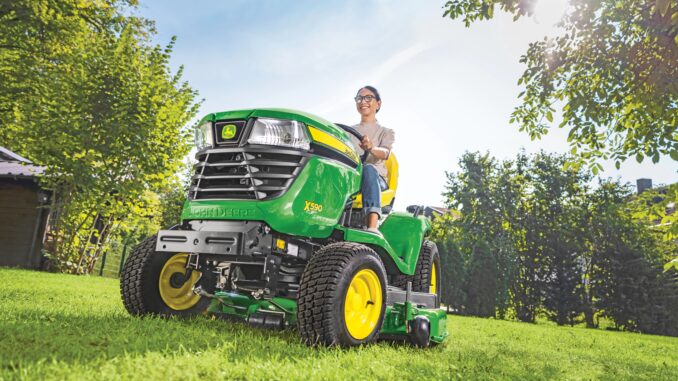
If you own a John Deere 318, you already know it is not a lightweight entry-level lawn tractor. The 318 sits in Deere’s older lawn and garden tractor range and was built with features homeowners still value today, including hydrostatic drive, hydraulic lift, electric PTO, and power steering on this model family. Depending on serial number, it used either an Onan B43G or later Onan P218 gasoline twin, both rated at 18 hp, with a 4.5-gallon fuel tank and 1.75-quart engine oil capacity.
This guide is written for DIY owners in the USA and Canada who want a practical repair, troubleshooting, and maintenance reference for the John Deere 318. It focuses on what the owner actually sees first—hard starting, weak mowing performance, vibration, no-crank issues, hydro problems, and electrical faults—then works backward toward likely causes, realistic checks, and the point where dealer or specialist help starts to make more sense.
General Overview of the John Deere 318
The John Deere 318 sits above lighter lawn tractors because it was designed as a true lawn and garden tractor, not just a mower. Deere’s technical specifications list hydrostatic transmission, hydraulic implement lift, electric PTO, and compatibility with 38-, 46-, and 50-inch mower attachments, which is why many 318s are still in service decades later.
The main systems owners deal with most often on a John Deere 318 are:
-
Engine and fuel system, including the Onan engine, inline fuel filter, air filter elements, carburetion, and ignition parts.
-
Mower system, including blades, deck belts, spindle and sheave components, deck rollers, and gauge wheels.
-
Drive and hydraulic system, including the hydrostatic transmission, transaxle oil filter, hydraulic oil, driveshaft, and linkage.
-
Electrical system, including battery, ignition switch, PTO clutch, lights, safety circuits, and starter/solenoid related faults.
Common John Deere 318 service parts that owners routinely buy include the AM101207 engine oil filter, AM116304 inline fuel filter, AM39653 transaxle oil filter, AM132420 spark plug, HE1401496 foam air filter element, HE1401912 paper air filter element, M119872 primary belt, M119685 secondary belt, and M115495 standard mower blade for the 48-inch deck maintenance sheet.
John Deere 318 Troubleshooting Approach
The fastest way to diagnose a John Deere 318 is to start with the visible symptom, not the part you think is bad. Deere’s technical manual is divided into repair sections and diagnostic sections for engine, electrical, power train, steering, brakes, and hydraulics, which reinforces that symptom-based troubleshooting is the right approach on this model.
For most owners, the main symptom groups are:
-
Starting issues, such as no-crank, crank-no-start, or starts then dies.
-
Running issues, such as surging, poor idle, lack of power, or backfiring.
-
Cut-quality problems, such as uneven cut, poor discharge, or strips of uncut grass.
-
Vibration and noise, especially from blades, deck spindles, PTO clutch area, or driveline components.
-
Overheating, burning smells, and leaks, often tied to blocked cooling fins, old oil, fuel seepage, or hydro leaks.
-
Transmission, hydraulic, and steering complaints, such as weak drive response, poor lift, or stiff/erratic steering feel.
-
Electrical and safety-switch faults, such as intermittent cranking, dead PTO, dim lights, or unexplained shutdowns.
Emergency Repairs on a John Deere 318
Some John Deere 318 problems need immediate attention because they can create a safety hazard or damage more expensive parts. The Deere service information places heavy emphasis on preparing the machine safely for repair, handling fuel carefully, supporting lifted equipment correctly, and keeping the machine free of debris, oil, and combustible buildup.
John Deere 318 Starting Issues
A starting problem matters immediately when the tractor clicks, cranks very slowly, or fires only intermittently, because repeated attempts can overheat electrical parts and hide the real fault. On older 318s, poor connections, battery condition, ignition switch issues, fuel delivery faults, or ignition problems are more common than a single dramatic component failure.
Common causes:
-
Weak or failing 12V battery; Deere lists a BCI Group 22F battery specification for the 318.
-
Dirty, loose, or corroded battery cables and grounds.
-
Faulty ignition switch; Deere lists AM38227 on the maintenance sheet.
-
Clogged inline fuel filter AM116304 or stale fuel.
-
Fouled or worn spark plugs; Deere lists AM132420 on the 48-inch deck maintenance sheet, while engine references also list NGK BPR5EFS / Champion RS14YC depending on source context.
Basic owner checks:
-
Confirm the battery is charged and cable ends are clean and tight.
-
Check that the PTO is off, brake is engaged, and controls are in the proper starting position.
-
Inspect the inline fuel filter and fuel lines for restriction, age, or seepage.
-
Remove and inspect the spark plugs for fouling, damage, or excessive wear.
-
If it still will not start, move on to ignition, solenoid, and safety-circuit testing rather than continuing random parts replacement.
John Deere 318 Cut-Quality Problems
Poor cut quality on a John Deere 318 usually shows up as scalping, streaks, ragged grass tips, or weak discharge from the deck. These issues often come from setup, blade condition, belt wear, spindle drag, or simple deck contamination rather than engine trouble.
Common causes:
-
Dull, bent, or mismatched blades.
-
Worn or slipping deck belts, especially the M119872 primary or M119685 secondary belt on the 48-inch deck setup.
-
Incorrect deck level or damaged gauge wheels/rollers.
-
Grass packed under the deck housing.
-
Spindle or sheave wear causing poor blade speed or vibration.
Basic owner checks:
-
Clean the underside of the deck with the engine off, key removed, and deck safely supported.
-
Inspect blades for bend, cracks, and edge condition.
-
Check belt routing, belt glazing, and tension condition.
-
Verify deck level with a leveling gauge or careful blade-tip measurement side to side and front to rear.
-
Replace worn blades or belts before chasing less likely causes.
John Deere 318 Vibration and Noise
Unusual vibration on a John Deere 318 should never be ignored because it can quickly damage spindle bearings, PTO components, engine mounts, and driveline hardware. Sudden vibration after blade contact with a stump, rock, or root is especially important because one bent blade can create a chain reaction of wear.
Common causes:
-
Bent or unbalanced blades.
-
Loose blade hardware or deck hardware.
-
Failing spindle bearings or jack sheave components.
-
Worn driveshaft joints or couplers.
-
PTO clutch or pulley issues.
Basic owner checks:
-
Stop using the tractor until the source is found.
-
Inspect blades and blade mounting areas first.
-
Spin deck pulleys and spindles by hand with the belt removed to feel for roughness.
-
Check visible driveshaft and PTO hardware for looseness or damage.
-
Move to advanced teardown only if the basic inspection does not reveal the fault.
John Deere 318 Overheating and Leaks
The John Deere 318 uses an air-cooled Onan engine, so cooling airflow matters more than many owners realize. Dirt packed into cooling areas, oil neglect, fuel seepage, or old hoses can quickly turn a minor issue into poor running, shutdowns, or even fire risk.
Common causes:
-
Blocked cooling fins or dirty engine shrouds on the air-cooled engine.
-
Low or old engine oil; the listed engine oil capacity is 1.75 qts.
-
Fuel line or filter leaks.
-
Hydro or transmission seepage around older seals or service points.
-
Debris buildup around hot engine and exhaust areas.
Basic owner checks:
-
Check engine oil level before further use.
-
Inspect the engine for oily dirt, fuel wetness, and blocked cooling passages.
-
Replace cracked fuel lines and old filters promptly.
-
Clean debris from engine tins, deck top, and frame ledges.
-
If overheating continues, the problem may be internal engine condition or carburetion related.
John Deere 318 Transmission and Drive Problems
Drive complaints on a John Deere 318 often appear as weak ground speed, poor response, noise, or inconsistent hydro feel. Deere lists the 318 as hydrostatic with transmission oil filter service and Low Viscosity Hy-Gard use on the maintenance sheet, so fluid condition and filter history matter.
Common causes:
-
Old or contaminated hydraulic/transmission oil.
-
Restricted transaxle oil filter AM39653.
-
Linkage wear or misadjustment.
-
Driveshaft or pump coupling wear.
-
Internal hydrostatic wear requiring specialist diagnosis.
Basic owner checks:
-
Confirm service history for hydro oil and filter.
-
Inspect for leaks and low-fluid signs.
-
Check linkage movement and return-to-neutral behavior.
-
Listen for unusual noise from the driveshaft or transaxle area.
-
Leave internal hydro repair to an experienced Deere technician or hydro specialist unless you already have the tools and background.
John Deere 318 Electrical Problems
Electrical faults on a John Deere 318 can affect cranking, charging, PTO engagement, lights, and operator safety functions. Deere’s technical manual includes dedicated electrical checkout, schematics, component locations, and diagnostic sections, which shows how interconnected these systems are on the tractor.
Common causes:
-
Weak battery or poor grounds.
-
Failing ignition switch AM38227.
-
PTO clutch or PTO switch faults.
-
Corroded terminals, especially on older machines stored outside.
-
Wiring wear, broken insulation, or safety interlock problems.
Basic owner checks:
-
Start with battery voltage and cable condition.
-
Inspect fuse, switch plugs, and obvious rubbed-through wiring.
-
Check whether the issue affects only cranking, only PTO, or the whole tractor, because that narrows the circuit quickly.
-
Use the Deere wiring diagram before replacing expensive components.
-
If you are not comfortable testing live circuits, hand it off before damaging the harness or clutch.
DIY or Dealer for the John Deere 318?
The John Deere 318 is DIY-friendly for maintenance and many straightforward repairs, but it is not a simple disposable mower. Once the job moves into hydrostatic internals, steering valve work, full electrical diagnosis, or engine internal repair, the line usually shifts from confident owner work to advanced DIY or dealer-level service because the tractor’s hydraulic and electrical systems are more involved than lighter residential models.
Good DIY jobs on a John Deere 318
-
Engine oil and filter service using AM101207 and the specified oil capacity.
-
Air filter and pre-cleaner replacement using HE1401496 and HE1401912.
-
Fuel filter replacement using AM116304.
-
Spark plug inspection and replacement.
-
Blade replacement, deck cleaning, and deck leveling.
-
Belt inspection and replacement on accessible deck systems.
Advanced DIY or dealer jobs on a John Deere 318
-
Carburetor rebuild and deeper fuel-system fault tracing.
-
PTO clutch testing and adjustment.
-
Hydrostatic transmission diagnosis or internal repair.
-
Steering hydraulic repair.
-
Driveshaft, axle, or brake teardown.
-
Internal engine repair using the Deere technical and Onan service information.
Skill level guide
-
Beginner: Oil, filters, blades, spark plugs, battery service, deck cleaning.
-
Intermediate: Deck belt replacement, electrical connection cleaning, fuel-line renewal, deck setup, basic switch testing.
-
Advanced: PTO clutch work, carburetor tuning, hydro linkage adjustment, driveline teardown, hydraulic diagnosis.
John Deere 318 Parts Needed, OEM vs Aftermarket, and What to Gather First
Before ordering any John Deere 318 parts, gather the full model name, Product Identification Number, engine model and serial number, and the exact deck or attachment size fitted to the tractor. That matters because the 318 used different engine versions across serial breaks, and attachments like 38-, 46-, and 50-inch decks can use different service parts.
OEM parts are the safest choice for belts, ignition components, safety-related switches, and fit-sensitive deck parts because routing, dimensions, and engagement characteristics matter on the John Deere 318. Aftermarket parts are usually acceptable for filters, blades, spark plugs, and batteries if the cross-reference is exact and tied to the correct tractor and engine version.
John Deere 318 Diagrams and Manuals
For repair and parts lookup, the strongest sources are Deere’s own maintenance and publications material first, then a reputable Deere-oriented reference source. The most useful options available from the sources reviewed are listed below.
-
John Deere maintenance reminder sheet for the 318 with 48-inch deck: useful for fast service parts lookup, capacities, and common maintenance items.
-
John Deere technical manual TM1590 for 316, 318, and 420 tractors: useful for diagnostics, repair procedures, wiring, hydraulic, power train, and adjustment specifications.
-
Deere online parts/publications access points referenced on the maintenance sheet, including JDParts and Technical Publications: useful for official diagrams, operator information, and model-specific lookup through Deere channels.
-
TractorData 318 engine page: useful for quick engine-version checks, serial break information, spark plug references, and oil capacity confirmation.
Useful links:
How to Locate John Deere 318 Model, Serial, and Engine Numbers
These numbers matter because John Deere 318 parts can vary by tractor serial range, engine version, and deck configuration. The Deere technical manual includes a serial number locations section covering product identification, engine, transmission, differential, and control valve locations.
Use this process:
-
Find the tractor Product Identification Number tag on the tractor frame area identified in Deere serial-number documentation.
-
Record the full John Deere 318 model designation exactly as shown.
-
Find the engine model and serial number on the Onan engine data plate or label.
-
Confirm the mower deck size fitted to the tractor, such as 38, 46, 48, or 50 inches depending on your setup and documentation.
-
Take photos of every tag before ordering parts so you do not lose the numbers halfway through the job.
Buying John Deere 318 Parts Online and In Stores
For John Deere 318 parts, the best strategy is to confirm the OEM number first, then compare price and availability. Serial-sensitive parts, engine-specific ignition items, and deck-drive components are worth verifying carefully before purchase because one wrong number can waste a week.
-
Online: Best for comparing OEM numbers, checking diagrams, and pricing common service items through Deere-linked parts channels or established mower-parts sellers.
-
Dealer counter: Best for serial-specific items, obscure electrical parts, hydro components, and anything where Deere supersessions may apply.
-
Retail stores: Fine for spark plugs, oil, grease, some batteries, and some filters if the packaging clearly cross-references the John Deere 318 or the correct Onan engine version.
Useful buying links:
Step-by-Step Fitting Guide for John Deere 318 Common Parts
These are the highest-impact DIY jobs for most John Deere 318 owners because they affect starting, running quality, mowing performance, and long-term reliability. Always prepare the machine safely with PTO off, brake engaged, engine stopped, key removed, and implements lowered before service.
Change the John Deere 318 engine oil and filter
This service helps protect the Onan engine and is one of the most important routine jobs on the tractor. Deere lists AM101207 as the oil filter and 1.75 qt engine oil capacity on the maintenance sheet.
-
Warm the engine briefly, park safely, shut it off, remove the key, and allow hot parts to settle.
-
Drain the old oil into a proper container and remove the old filter.
-
Lightly oil the gasket on the new AM101207 filter and install it hand-tight.
-
Refill with the correct amount and grade of oil, checking the dipstick as you go.
-
Start the engine, confirm oil pressure behavior, shut down, and recheck the level and for leaks.
Replace the John Deere 318 air filter elements
A dirty air filter causes hard starting, rich running, power loss, and excessive fuel use. Deere lists a foam pre-cleaner HE1401496 and paper element HE1401912 for the maintenance sheet version.
-
Open the air cleaner housing with the engine off and area cleaned first.
-
Remove the foam and paper elements carefully so dirt does not fall into the intake.
-
Inspect the housing and wipe out dust without pushing debris into the engine.
-
Install the new paper element and then the foam pre-cleaner in the correct order.
-
Refit the cover securely and check that the seal sits evenly.
Replace the John Deere 318 fuel filter
This is a smart first repair when the tractor cranks but runs poorly, surges, or dies under load. Deere lists the inline fuel filter as AM116304.
-
Shut off fuel flow if your setup allows, or clamp the line carefully using a fuel-safe method.
-
Remove the old inline filter and note the direction of flow.
-
Inspect the hose ends for cracking, hardening, or looseness.
-
Install the new filter in the correct orientation and secure the clamps.
-
Start the engine and inspect immediately for leaks.
Replace John Deere 318 blades and inspect deck belts
This job fixes rough cutting, strips of uncut grass, and vibration caused by worn blade edges or slipping belts. Deere lists M115495 standard blades, optional M135589 high-lift blades, and M119872 / M119685 belts for the 48-inch deck configuration.
-
Remove the key, disconnect the spark plug leads if desired for extra safety, and support the deck securely.
-
Remove the blades and inspect for bends, cracks, and uneven wear.
-
Install matched replacement blades and torque hardware to spec from the correct manual for your deck version.
-
Inspect both deck belts for glazing, frayed edges, cracking, or oil contamination.
-
Replace damaged belts, confirm routing, and test cut quality on a small area before normal use.
Maintenance to Prevent John Deere 318 Problems Reoccurring
Regular maintenance prevents most recurring John Deere 318 complaints because this tractor depends on clean fuel, clean air, correct oil, sound electrical connections, and a clean mower deck to stay reliable. Deere’s maintenance sheet specifically identifies the high-impact service items most owners should stay ahead of, especially oil, filters, blades, belts, grease, and hydro service parts.
Focus areas:
-
Starting reliability: Keep the battery strong, fuel fresh, plugs clean, and the fuel filter current.
-
Cut quality: Keep blades sharp, belts in good condition, and the deck level and clean.
-
Fire and overheating prevention: Remove oily debris, keep cooling areas clean, and fix leaks quickly.
-
Drive performance: Service hydro filter and fluid on schedule instead of waiting for weak response.
-
Electrical reliability: Clean grounds and inspect aging connectors before intermittent faults become no-start problems.
John Deere 318 Maintenance Schedule and Year-Round Checklist
The official Deere maintenance reminder sheet gives the clearest service intervals available in the source material for the John Deere 318 with 48-inch deck. It lists the engine oil and filter at 5/50/100/200 hours, transaxle oil filter at 50/200 hours, hydraulic oil at 200 hours, fuel filter at 200 hours, and grease as needed.
Daily / before each use
-
Check engine oil level.
-
Inspect for fuel, oil, and hydro leaks.
-
Look over blades, belts, and deck condition before mowing.
-
Remove heavy debris from engine and deck areas.
After first 5 hours
-
Change engine oil and oil filter per Deere’s 5-hour initial interval listing.
Every 50 hours
-
Change engine oil and engine oil filter.
-
Service the transaxle oil filter according to the Deere interval listing.
Every 100 hours
-
Change engine oil and engine oil filter again if following the multi-interval Deere chart for usage pattern and annual timing.
Every 200 hours
-
Change engine oil and oil filter.
-
Replace fuel filter AM116304.
-
Replace transaxle oil filter AM39653.
-
Replace hydraulic/transaxle oil with the listed Low Viscosity Hy-Gard quantity from the sheet.
Seasonal checklist
-
Spring: Change oil if due, inspect battery, install sharp blades, level the deck, and replace air/fuel filters if service history is unknown.
-
Mid-season: Clean deck underside often, monitor belt wear, and keep cooling passages clear.
-
Fall or storage season: Stabilize fuel, clean the machine thoroughly, inspect the battery, and address leaks before storage.
Repair, Upgrade, or Replace a John Deere 318?
A John Deere 318 is often worth repairing because it is a heavier, more capable machine than many newer light-duty lawn tractors, but that only holds when the frame, engine base condition, hydro system, and parts support are still reasonable. If the tractor needs multiple major systems rebuilt at once, the economics change fast even if the machine is desirable.
Repair if:
-
The engine is fundamentally sound and the problem is in maintenance parts, deck parts, wiring, or external fuel issues.
-
The hydro works well and the chassis is structurally solid.
-
You already have compatible attachments and know the tractor’s history.
Upgrade if:
-
You need better deck performance, fresher electrical reliability, or easier parts availability than your current 318 setup offers.
-
Your machine is usable but needs enough mid-level work that a cleaner 318 or a newer Deere garden tractor makes more sense.
Replace if:
-
The tractor has serious engine wear, hydro failure, and multiple attachment or electrical faults at the same time.
-
Critical parts damage has stacked up after years of neglect or poor storage.
-
You need dealer-backed simplicity more than vintage Deere durability.
John Deere 318 Troubleshooting FAQ
1. Why will my John Deere 318 not start?
A no-start John Deere 318 usually comes down to battery condition, poor cable connections, ignition switch problems, stale fuel, clogged fuel filter, or weak ignition. Start with the basics first because Deere lists the battery, ignition switch, fuel filter, and spark plug among routine service items tied closely to starting reliability.
2. Why does my John Deere 318 crank but not fire?
If the engine cranks but never fires, think fuel delivery or ignition before anything else. Check for fresh fuel, verify the inline fuel filter is flowing, and inspect spark plugs for fouling or wetness before moving deeper into carburetor or ignition testing.
3. Why does my John Deere 318 click once and not crank?
A single click often points to a weak battery, dirty cable ends, a poor ground, or a solenoid/starter circuit issue. Because the 318 uses a 12-volt system and older tractors often suffer from connection corrosion, voltage drop testing is more useful than guessing.
4. Why does my John Deere 318 start and then die?
That pattern often suggests restricted fuel flow, stale fuel, carburetor issues, or an ignition problem that shows up once the engine catches briefly. Replacing the inline fuel filter and confirming clean fuel is a smart early step before tearing into the carburetor.
5. What spark plug does a John Deere 318 use?
The Deere maintenance sheet lists AM132420, while engine references also identify NGK BPR5EFS and Champion RS14YC for John Deere 318 engine versions. Because this tractor had early and later Onan engines, confirm by engine model and serial before ordering.
6. What is the correct spark plug gap for a John Deere 318?
TractorData lists a 0.025-inch spark plug gap for both John Deere 318 engine variants shown on its engine reference page. That is a useful quick reference, but it is still smart to confirm against your exact engine documentation during tune-up work.
7. How much oil does a John Deere 318 take?
The John Deere 318 engine oil capacity is listed as 1.75 qts on both Deere’s maintenance sheet and TractorData’s engine reference. That consistency makes it one of the easier specifications to confirm.
8. What type of engine is in a John Deere 318?
The John Deere 318 used two Onan opposed-twin gasoline engines depending on serial range: the earlier B43G and the later P218. Both were rated at 18 hp, but the later engine began at serial number M00318X420001 according to TractorData’s breakdown.
9. Why does my John Deere 318 run rough at idle?
Rough idle usually points to stale fuel, partial carburetor restriction, air-filter problems, spark plug wear, or vacuum/fuel delivery issues. Since the 318 uses a dry air filter with pre-cleaner and an inline fuel filter, those service parts are easy first checks.
10. Why does my John Deere 318 surge while mowing?
Surging under load often means fuel starvation, carburetor deposits, governor response issues, or restricted airflow. Start by checking the fuel filter, air filter elements, and general tune-up condition before assuming major engine trouble.
11. Why does my John Deere 318 backfire?
Backfiring can come from ignition issues, mixture problems, poor fuel quality, or hot carbon conditions in an engine that has been running poorly. A basic tune-up and fuel-system inspection usually makes more sense than jumping straight to engine teardown.
12. Why is my John Deere 318 low on power?
Low power can be caused by dirty air filtration, poor fuel flow, weak ignition, dull blades overloading the deck, or deeper engine wear. Because the 318 is air-cooled, cooling blockage can also contribute to heat-related power loss.
13. Why does my John Deere 318 overheat?
The 318’s Onan engine is air-cooled, so blocked cooling fins, dirty shrouds, heavy debris buildup, or low/old oil are common causes. Deere’s safety and service text repeatedly stresses keeping the machine clean and free of oily debris and buildup.
14. Why does my John Deere 318 smoke?
Smoke can come from oil overfill, oil burning, restricted airflow, or fuel-system problems causing an over-rich condition. Check the oil level first, then inspect the air filter and plugs to see whether the problem looks oil-related or fuel-related.
15. Why does my John Deere 318 leak fuel?
Fuel leaks usually come from aging rubber lines, loose clamps, a failing inline filter connection, or tank/cap related issues. Deere specifically warns about fire risk around fuel and stresses clean, debris-free machines when servicing.
16. Why does my John Deere 318 cut unevenly?
Uneven cut is usually deck setup, blade condition, tire pressure, or gauge-wheel related rather than engine trouble. Deere’s maintenance sheet includes deck-related service parts such as blades, gauge wheels, and rollers because they directly affect cut quality.
17. Why does my John Deere 318 leave strips of uncut grass?
This usually points to dull blades, slow blade speed from belt slip, poor deck cleaning, or mowing too fast for conditions. Inspect the blade edges first, then the primary and secondary deck belts if you have the 48-inch deck setup.
18. Why is the cut from my John Deere 318 ragged?
Ragged grass tips usually mean blunt blades or incorrect blade speed. Sharp, balanced blades and good belt condition matter more than many owners think on the 318.
19. Why does my John Deere 318 deck vibrate?
Deck vibration usually comes from bent blades, missing balance, loose hardware, spindle problems, or pulley/sheave wear. Stop mowing immediately because continued use can damage other deck components.
20. Why does my John Deere 318 make a loud knocking noise when mowing?
A loud knock while mowing can come from blade contact, deck hardware, spindle failure, or driveline/PTO issues depending on where the sound is located. Narrow it down by disengaging the PTO and seeing whether the noise disappears before deeper disassembly.
21. Why does the PTO on my John Deere 318 not engage?
The 318 uses an electric clutch PTO, so failure can come from the PTO switch, clutch, wiring, battery voltage, or related electrical issues. Deere’s technical manual includes front PTO clutch repair and electrical system diagnosis sections for exactly this kind of fault.
22. Why does my John Deere 318 shred belts?
Belt failure usually points to pulley misalignment, seized bearings, incorrect belt type, deck contamination, or worn sheaves. OEM belts are usually the safer choice on the 318 when routing and fit are critical.
23. Which belts fit a John Deere 318 with 48-inch deck?
The Deere maintenance sheet for the 318 with 48-inch deck lists M119872 as the primary belt and M119685 as the secondary belt. Always verify the actual deck on the tractor before ordering because the 318 could use different deck sizes overall.
24. Which blades fit a John Deere 318 with 48-inch deck?
For the 48-inch deck maintenance sheet, Deere lists M115495 standard blades, M135589 high-lift blades, and M113517 mulching blades. Choose based on your mowing setup rather than assuming one style fits every use equally well.
25. Why does my John Deere 318 drive weakly uphill?
Weak drive under load often suggests old hydro fluid, restricted transaxle filter, linkage issues, or internal hydro wear. Deere’s maintenance sheet specifically includes both transaxle filter service and Low Viscosity Hy-Gard replacement intervals, which is where diagnosis should begin.
26. Why does my John Deere 318 creep when in neutral?
Neutral creep usually indicates hydro linkage or return-to-neutral adjustment problems rather than immediate internal failure. Deere’s power train diagnosis and adjustment sections are the right reference before altering linkages blindly.
27. Why is the steering on my John Deere 318 hard or erratic?
The 318 is listed with power, hydrostatic steering in Deere specifications, so hard or inconsistent steering can involve hydraulic issues, linkage wear, or system condition rather than just front axle friction. If basic front-end inspection does not explain it, this becomes advanced diagnosis quickly.
28. Why won’t my John Deere 318 charge the battery?
Charging faults can come from wiring, stator/regulator problems, poor grounds, or a weak battery that no longer accepts charge. Deere lists a 20-amp stator for the 318 in the technical specifications, which helps frame charging-system diagnosis.
29. Why are the lights dim on my John Deere 318?
Dim lights often reflect weak battery voltage, poor charging, or high resistance in old connections. Since Deere lists standard lighting and battery specs for the model, the fix is usually in electrical condition rather than the bulbs alone.
30. Why does my John Deere 318 blow fuses?
Fuse failures usually mean a short to ground, damaged insulation, a failing switch, or a component drawing more current than it should. On an older 318, inspect harness areas that flex, rub, or sit in oily dirt before replacing parts.
31. Where can I find a John Deere 318 service manual?
A John Deere technical manual reference for the 316, 318, and 420 series is available through the TM1590 material, and Deere’s maintenance sheet also points users toward Technical Publications and JDParts. For owners, that combination covers both repair procedures and routine part lookup.
32. Where can I find John Deere 318 parts diagrams?
The most reliable route is Deere’s own parts ecosystem referenced on the maintenance sheet, especially JDParts, because it is tied to official diagrams and superseded part data. Third-party lookup sites can be useful, but official Deere diagrams are the safer starting point for serial-sensitive orders.
33. How often should I service a John Deere 318?
Deere’s maintenance sheet calls for engine oil and filter at 5/50/100/200 hours, transaxle oil filter at 50/200 hours, hydraulic oil at 200 hours, and fuel filter at 200 hours. Actual timing should also reflect storage history, seasonal use, and whether the tractor is newly acquired with unknown maintenance records.
34. Is the John Deere 318 worth fixing?
Many owners still consider the John Deere 318 worth repairing because its garden-tractor construction, hydro drive, hydraulic lift, and attachment capability are stronger than many light residential riders. It is most worth fixing when the core engine, hydro, and frame are still sound and the needed work is mostly service parts or moderate repairs.
35. What repairs on a John Deere 318 should go to a dealer or specialist?
Internal hydrostatic repairs, power steering hydraulic faults, complex electrical diagnosis, and internal engine work are the main jobs that usually cross the line. Deere’s own technical manual is written for experienced technicians, which is a good reminder that not every 318 repair is a casual driveway job.