
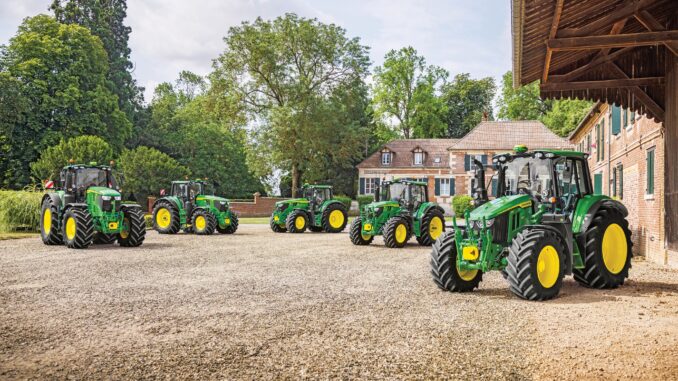
John Deere 820 repair guide overview
The John Deere 820 is a compact utility tractor from Deere’s Mannheim-built line, sold in North America from 1968 to 1973. It used a 2.5L 3-cylinder diesel engine, two-wheel drive, live 540 rear PTO, and either a 7-speed sliding gear or 8-speed collar-shift transmission, making it a practical small acreage and property-maintenance tractor rather than a modern lawn tractor.
For owners in the USA and Canada, the John Deere 820 is simple enough for routine DIY maintenance but old enough that diagnosis often starts with wear, corrosion, fuel-system contamination, and hard-to-identify serial-specific parts. This guide covers troubleshooting, maintenance, repair boundaries, parts lookup, manuals, and a detailed FAQ in a practical symptom-first format.
General overview of the John Deere 820
In Deere’s lineup, the John Deere 820 sits in the older small utility tractor category rather than the later residential mower families. Key systems owners usually work on are the diesel engine and fuel system, clutch and transmission, hydraulics and PTO, steering and brakes, and the electrical starting/charging system.
The tractor was built with a 16.5-gallon fuel tank, 10-gallon hydraulic system, open-center hydraulics, and a claimed 31 hp PTO output. Those basics matter because most owner complaints trace back to fuel delivery, clutch/transmission wear, hydraulic leaks, electrical faults, or age-related service neglect rather than complex electronics.
Common service and repair items owners typically shop for include:
-
Fuel filters and fuel-system seals.
-
Air-cleaner service parts.
-
Engine oil and hydraulic/transmission fluids.
-
Battery and charging-system parts.
-
Glow/start-related electrical items, switches, cables, and terminals.
-
Clutch, brake, steering, and PTO linkage wear items.
-
Hydraulic hoses, seals, and gaskets.
John Deere 820 troubleshooting approach
The best way to diagnose a John Deere 820 is to start with the symptom the owner actually sees: will not start, starts then dies, weak hydraulics, transmission will not pull properly, PTO problems, smoke, leaks, or charging trouble. On an older utility tractor, chasing a suspected part before checking fuel quality, battery condition, grounds, fluid levels, and linkage adjustment often wastes time and money.
Main symptom groups on this model include:
-
Starting issues.
-
Running and power issues.
-
Hydraulic and PTO problems.
-
Transmission, clutch, and drive complaints.
-
Steering, brake, and handling issues.
-
Electrical and charging faults.
-
Fluid leaks, overheating, smoke, vibration, and unusual noise.
Emergency John Deere 820 repair needs
Some John Deere 820 problems need immediate attention because they can create a safety risk or quickly damage expensive components. Stop using the tractor if steering becomes unpredictable, brakes weaken, the clutch slips badly, hydraulic oil leaks heavily, the PTO will not disengage, or you hear sharp internal knocking from the engine or transmission.
John Deere 820 starting issues
A no-start or hard-start problem usually shows up as slow cranking, no crank, white smoke with no firing, or starting only after repeated attempts. On a diesel utility tractor of this age, battery condition, cable corrosion, poor grounds, stale fuel, air in the fuel system, or compression-related wear are more common than a single “magic” failed part.
Common causes:
-
Weak or incorrect battery setup.
-
Dirty or loose battery terminals.
-
Bad ground straps or starter connections.
-
Fuel contamination or restricted fuel flow.
-
Air leaks in fuel lines.
-
Worn starter or charging issues.
-
Low compression or injector problems.
Basic owner checks:
-
Confirm both battery condition and clean cable connections.
-
Check for fuel supply, shutoff position, and obvious fuel-line leaks.
-
Inspect sediment bowl, filter condition, and tank contamination.
-
Verify cranking speed before suspecting injectors.
-
Bleed fuel system if lines or filter have been opened.
John Deere 820 running issues
If the John Deere 820 starts but smokes, lacks power, misses, or dies under load, begin with fuel and air delivery before assuming major engine failure. A restricted air path, dirty fuel, injector problems, or old maintenance often explains poor running on older diesel tractors.
Common causes:
-
Dirty air-cleaner assembly.
-
Plugged or restricted fuel filter.
-
Water or debris in diesel fuel.
-
Injector spray issues.
-
Low compression.
-
Incorrect throttle or governor linkage adjustment.
Basic owner checks:
-
Service the air-cleaner components.
-
Replace or inspect the fuel filter and clean supply components.
-
Drain contaminated fuel if water or sludge is present.
-
Check for black smoke, white smoke, or blue smoke patterns.
-
Move to injector and compression testing only after basic service checks.
John Deere 820 hydraulic and PTO problems
Weak hydraulic lift, slow operation, chatter, or PTO complaints matter because they can leave implements partly raised, reduce productivity, or point to oil contamination and internal wear. Since the 820 uses an open-center hydraulic system and live PTO arrangement, fluid condition, linkage adjustment, and clutch function are central to diagnosis.
Common causes:
-
Low hydraulic oil.
-
Dirty or aged hydraulic fluid.
-
Suction or pressure-side leaks.
-
Worn pump or internal hydraulic wear.
-
Clutch adjustment issues affecting PTO behavior.
-
Linkage wear or misadjustment.
Basic owner checks:
-
Verify hydraulic oil level and condition.
-
Look for hose, fitting, and seal leaks.
-
Check PTO engagement feel and disengagement response.
-
Inspect linkage for looseness or obvious wear.
-
Escalate to pressure testing before replacing major hydraulic parts.
John Deere 820 transmission and drive problems
Grinding shifts, poor pull, clutch slip, or difficulty engaging gears usually points to clutch wear, adjustment problems, or gearbox wear rather than a simple external part. Because the 820 used either a 7-speed or 8-speed transmission, parts identification must match the exact tractor version before ordering.
Common causes:
-
Clutch free-play out of adjustment.
-
Worn clutch components.
-
Transmission wear or damaged gears.
-
Linkage or shifter wear.
-
Brake drag or differential-related drag complaints.
Basic owner checks:
-
Verify clutch pedal free play and linkage movement.
-
Check whether grinding occurs in all gears or only certain ranges.
-
Rule out dragging brakes and tire issues.
-
Confirm transmission oil condition if applicable to the component being serviced.
-
Move to dealer or specialist teardown for internal gearbox noise.
John Deere 820 electrical problems
Electrical faults often show up as no crank, weak charging, dim lights, or intermittent starting. The tractor uses negative ground and a dual-battery 12-volt arrangement, so poor connections and aging cables can cause major symptoms even when individual components test good.
Common causes:
-
Corroded terminals.
-
Failing cables or grounds.
-
Weak batteries.
-
Charging-system faults.
-
Worn ignition/start-switch contacts.
-
Damaged wiring insulation.
Basic owner checks:
-
Clean and tighten all main electrical connections.
-
Load-test batteries before replacing starter parts.
-
Check charging output after startup.
-
Inspect harness sections near heat, vibration, and frame contact points.
-
Replace damaged cables before chasing smaller electrical faults.
DIY or dealer on a John Deere 820
The normal line on a John Deere 820 is simple: routine service, external adjustments, filters, fluids, battery work, and many leak repairs are realistic DIY jobs, while injector testing, engine internal work, clutch splits, hydraulic pressure diagnosis, and transmission teardown are better handled by an experienced tractor shop or Deere-aware dealer. That is especially true when parts are serial-number-sensitive or the repair requires splitting the tractor.
Good DIY jobs
-
Engine oil and filter service.
-
Fuel filter replacement and fuel-system bleeding.
-
Air-cleaner servicing.
-
Battery and cable replacement.
-
Light electrical repairs.
-
External hose and clamp replacement.
-
Brake and clutch linkage inspection or adjustment where procedures are clear.
Advanced DIY or dealer jobs
-
Injector removal and testing.
-
Clutch replacement.
-
Starter and charging-system bench diagnosis.
-
Hydraulic pump or internal hydraulic repair.
-
Transmission repair.
-
Steering box overhaul.
-
PTO internal repair.
Skill level guide
-
Beginner: fluids, filters, battery service, visual inspections.
-
Intermediate: linkage adjustment, hose replacement, minor wiring repair, starter removal.
-
Advanced: fuel-system diagnosis beyond filters, hydraulic testing, clutch or transmission work, engine internal repair.
John Deere 820 parts, OEM numbers, and ordering info
Before ordering John Deere 820 parts, collect the full model name, tractor serial number or PIN equivalent plate data, transmission version if relevant, and engine identification. That matters because Deere used more than one 820 designation historically, and even within the 1968–1973 utility tractor family, parts catalog accuracy depends on the exact machine version.
The serial plate on the North American 820 utility tractor is listed on the front-right of the main frame above the front axle. Official Deere parts literature for the 820 utility tractor also exists through the Deere parts catalog system, which is the safest starting point for matching assemblies and diagrams.
OEM parts are usually the safer choice for fit-sensitive or critical items like steering, clutch, transmission, hydraulic, and PTO components. Aftermarket parts can work well for batteries, some filters, hoses, lights, and general service items, but only when they cross-reference clearly to the correct 820 utility tractor and serial range.
John Deere 820 diagrams and manuals
For diagrams and manuals, the most useful starting points are Deere’s official parts catalog, Deere technical publications guidance, and established tractor reference sites that identify the correct 820 variant. The official Deere parts catalog is best for exploded diagrams and current part supersessions, while the operator’s manual references help with service intervals, lubrication points, and operating procedures.
Useful sources:
-
John Deere Parts Catalog for exploded diagrams and part-number lookup.
-
Deere technical publications ordering guidance, which points owners to JDParts or Deere service literature channels.
-
TractorData John Deere 820 page for quick specs, serial location, and manual references.
-
A 820 utility tractor parts-catalog listing referencing PC4114 for North American versions.
How to locate John Deere 820 serial and engine numbers
These identification numbers matter because Deere used the 820 name on more than one tractor family, and many components changed by serial range or subsystem. If you skip the serial and engine details, there is a real risk of ordering parts for the wrong 820 entirely.
Steps:
-
Go to the right-front side of the tractor frame near the front axle area.
-
Find the serial-number plate on the main frame above the front axle.
-
Photograph the plate before cleaning or removing nearby parts.
-
Record the full serial number and any transmission or configuration notes.
-
Then locate the engine identification markings on the engine itself and match them when ordering engine-specific service parts.
Buying John Deere 820 parts online and in stores
The smartest buying strategy is to identify the exact assembly in the Deere catalog first, then compare OEM and aftermarket options only after you know the correct part number. That reduces the common 820 problem of buying parts for the wrong generation or the wrong serial range.
-
Online: use the official Deere catalog first, then compare with reputable tractor-parts sellers after confirming the OEM number.
-
Dealer counter: best for serial-sensitive driveline, steering, hydraulic, PTO, and clutch parts.
-
Retail stores: acceptable for batteries, fluids, generic electrical supplies, and some consumables if the application is clearly matched.
Useful links:
-
Deere service literature guidance page with ordering support references.
Step-by-step John Deere 820 fitting guide
These are the most realistic high-value DIY jobs on a John Deere 820 utility tractor. Each one targets common age-related problems that affect starting, reliability, or safe use.
Change the fuel filter on a John Deere 820
A fresh fuel filter helps fix hard starting, weak running, and fuel-starvation symptoms on older diesel tractors. Dirty fuel and sediment are common on equipment of this age.
-
Shut off the fuel supply and clean around the filter area.
-
Remove the old filter carefully so debris does not enter the housing.
-
Install the new correctly matched filter and seals.
-
Reopen fuel supply and bleed the system as required.
-
Start the tractor and check for leaks or air-related stumble.
Service the John Deere 820 air-cleaner system
Air-cleaner service helps reduce smoke, poor power, and excess engine wear. A restricted intake can mimic more serious fuel or injector faults.
-
Open the air-cleaner housing and inspect all serviceable elements.
-
Clean out dust and debris from the housing and intake path.
-
Replace service parts that are oil-soaked, damaged, or heavily restricted.
-
Reassemble carefully so unfiltered air cannot bypass the cleaner.
-
Test run the tractor and note any improvement in smoke or response.
Replace battery cables and clean connections on the John Deere 820
This job often fixes slow cranking, intermittent no-start complaints, and weak charging behavior. Corrosion and voltage drop are common on older dual-battery systems.
-
Disconnect the batteries safely, removing ground connections first.
-
Inspect both positive and ground cables for corrosion, stiffness, and broken strands.
-
Clean terminal contact surfaces thoroughly.
-
Install replacement cables of the correct gauge and routing.
-
Reconnect, test cranking speed, and verify charging output after startup.
Check hydraulic hoses and external leaks on a John Deere 820
This job helps prevent loss of lift performance and messy, unsafe leaks. External hose failures are far easier to fix early than after low-oil operation damages other components.
-
Park safely, lower implements, and relieve hydraulic pressure where applicable.
-
Inspect hoses, fittings, and visible seals for wetness, cracking, or abrasion.
-
Tighten only obviously loose fittings; do not overtighten damaged connections.
-
Replace worn hoses with correctly rated hydraulic replacements.
-
Refill and recheck fluid as needed, then test the system under light load.
John Deere 820 maintenance to prevent repeat problems
Regular maintenance on the John Deere 820 is less about chasing modern service reminders and more about preventing age-related failures. Clean fuel, sound electrical connections, correct fluid levels, and frequent leak inspections do more to keep this tractor dependable than occasional major repairs.
Focus areas:
-
Starting reliability: batteries, cables, grounds, clean fuel supply.
-
Engine health: air-cleaner service, oil changes, watching smoke and leaks.
-
Hydraulic performance: correct oil level, clean fluid, hose inspections.
-
Drive performance: clutch adjustment, brake drag checks, gearbox noise awareness.
-
Electrical reliability: charging checks and corrosion control.
John Deere 820 maintenance schedule and year-round checklist
Published operator-manual references and archived manual excerpts indicate periodic checks around lubrication, fluid levels, generator lubrication, belt tension, and regular oil-level inspections. One cited operator-manual excerpt specifically mentions generator lubrication and Powr-Trol oil checks every 75 hours, which fits the maintenance style of this era of Deere utility tractors.
Daily / before each use
-
Check engine oil level.
-
Check hydraulic or Powr-Trol oil level.
-
Look for fuel, oil, and hydraulic leaks.
-
Inspect tires and visible steering/brake issues before operation.
Every 75 hours
-
Lubricate the generator with light engine oil as specified in manual excerpt.
-
Check power shaft clutch oil level where applicable to the tractor configuration.
-
Check generator drive-belt tension for proper movement.
Every season or yearly
-
Service fuel filters and clean contaminated fuel systems as needed.
-
Service the air-cleaner system.
-
Inspect battery condition, terminals, and charging performance.
-
Change fluids on time based on manual and usage severity.
Seasonal checklist
-
Spring: check batteries, fuel quality, and all fluid levels before heavy use.
-
Mid-season: inspect belts, cables, hoses, steering joints, and hydraulic leaks.
-
Fall or storage period: clean the tractor, address leaks, protect electrical connections, and store with batteries maintained properly.
Repair, upgrade, or replace the John Deere 820?
For most owners, repairing a John Deere 820 makes sense when the tractor is structurally sound, starts reasonably well, and only needs routine hydraulic, fuel, electrical, or linkage work. Upgrading makes more sense when the tractor still works but no longer fits the workload, while full replacement becomes easier to justify when engine, clutch, transmission, and hydraulic problems stack up at the same time.
Repair if:
-
The engine is fundamentally sound.
-
Problems are limited to maintenance, fuel, electrical, hoses, or adjustment work.
-
Parts are available through cataloged Deere or cross-referenced sources.
Upgrade if:
-
You need four-wheel drive, safer operator protection, or more hydraulic capability.
-
You run implements that push the 31 hp PTO class beyond comfort.
-
Downtime now costs more than the tractor’s value as a light utility machine.
Replace if:
-
The tractor needs major engine, clutch, transmission, and hydraulic work together.
-
You cannot source key serial-specific parts economically.
-
Safety, braking, or steering condition is poor enough to require extensive overhaul.
John Deere 820 troubleshooting FAQ
1. Why will my John Deere 820 not start?
Most no-start complaints on the John Deere 820 come down to battery condition, corroded cables, poor grounds, or fuel delivery issues rather than one failed mystery part. Start by checking cranking speed, cable cleanliness, fuel flow, and whether air entered the fuel system after recent service.
2. Why does my John Deere 820 crank slowly?
Slow cranking usually points to battery weakness, cable corrosion, bad grounds, or starter wear. Because the 820 uses a negative-ground electrical system with two 12-volt batteries listed in the specs, cable and connection quality matters a lot.
3. Why does my John Deere 820 start and then die?
That symptom often suggests restricted fuel flow, contaminated diesel, air leaks in the fuel system, or a partly blocked filter. Check the fuel path before assuming injector or compression trouble.
4. Why is my John Deere 820 hard to start when cold?
Cold hard starting on an older diesel utility tractor usually points to weak cranking speed, fuel-system issues, or engine wear. Begin with the batteries, cables, fuel quality, and any signs of air intrusion before moving to deeper engine tests.
5. Why is my John Deere 820 blowing white smoke?
White smoke during cranking or rough running can indicate incomplete combustion, cold starting issues, air in the fuel system, or injector problems. If it clears after startup, focus first on fuel delivery and cranking performance.
6. Why is my John Deere 820 blowing black smoke?
Black smoke usually means excess fuel or restricted air. Service the air-cleaner system first, then look at injector condition and engine loading.
7. Why is my John Deere 820 low on power?
Low power often traces back to air restriction, dirty fuel, injector issues, or general engine wear. Since the tractor is only about 32 engine horsepower, even minor maintenance neglect can make it feel weak quickly.
8. Why does my John Deere 820 miss or run rough?
Rough running is usually a fuel or combustion issue, not a transmission problem. Check filter condition, fuel cleanliness, line leaks, and then move to injector evaluation if the basics do not fix it.
9. Why is my John Deere 820 leaking hydraulic oil?
Common causes include aged hoses, loose fittings, worn seals, and years of vibration. Fix external leaks early because low oil can reduce hydraulic performance and may damage components if ignored.
10. Why are the hydraulics weak on my John Deere 820?
Weak hydraulics usually mean low fluid, contaminated oil, air leaks, pump wear, or internal leakage. Because the 820 uses an open-center system, good fluid condition and proper diagnosis matter before replacing hard parts.
11. Why does my John Deere 820 PTO not engage properly?
Poor PTO engagement can come from clutch adjustment issues, linkage wear, or internal PTO problems. Check external movement and clutch feel first before assuming an internal repair is needed.
12. Why will the John Deere 820 PTO not disengage?
A PTO that will not disengage can be a safety issue and should be addressed immediately. Linkage misadjustment, clutch trouble, or internal wear are all possibilities.
13. Why is my John Deere 820 hard to shift?
Hard shifting often indicates clutch free-play problems, linkage wear, or internal transmission wear. Since the tractor came with either a 7-speed or 8-speed transmission, diagnosis and parts ordering need to match the exact version.
14. Why does my John Deere 820 grind when shifting?
Grinding during shifts usually points to clutch drag, worn clutch parts, or poor adjustment. Check pedal travel and clutch operation before blaming the gearbox itself.
15. Why does my John Deere 820 slip under load?
If the tractor revs but does not pull well, suspect clutch slip, brake drag, or driveline wear. Clutch repairs quickly move from routine DIY into advanced work because the tractor may need to be split.
16. Why is the steering heavy on my John Deere 820?
Heavy steering can be caused by tire issues, front-end wear, poor lubrication, or steering component wear. Stop and inspect steering-related parts closely because steering faults affect safety directly.
17. Why are the brakes weak on my John Deere 820?
Weak brakes can come from wear, misadjustment, contamination, or linkage issues. Brake performance should be corrected before continued field or road use.
18. Why is my John Deere 820 vibrating?
Vibration may come from engine roughness, driveline imbalance, loose mounting hardware, worn steering components, or attached implements. Separate engine-speed vibration from ground-speed vibration to narrow the cause.
19. Why is my John Deere 820 making knocking noises?
A knock can mean anything from loose hardware to serious internal engine or transmission trouble. Shut the tractor down if the sound is sharp, heavy, or suddenly worse under load.
20. Why is my John Deere 820 overheating?
Cooling-related trouble on an older tractor usually involves maintenance, debris, coolant condition, or internal engine problems. Do not keep working the tractor hot, because that can turn a moderate repair into a major one.
21. Why is my John Deere 820 battery not charging?
Charging issues usually trace to wiring, battery condition, generator or charging-system problems, or poor connections. Manual excerpts for this era also reference generator lubrication and drive-belt tension, so belt condition should not be overlooked.
22. Why do my John Deere 820 lights look dim?
Dim lights often indicate voltage drop, bad grounds, poor charging output, or corroded terminals. Clean the system thoroughly before replacing bulbs or switches.
23. Why does my John Deere 820 keep killing batteries?
Repeated battery failure can be caused by undercharging, bad cables, poor grounds, or batteries that do not match the tractor’s needed setup. Confirm charging performance before buying another set.
24. What is the correct serial location on a John Deere 820?
The serial-number plate for the North American 820 utility tractor is listed on the front-right of the main frame above the front axle. That location should be checked before ordering parts or trying to date the tractor.
25. Where can I find John Deere 820 parts diagrams?
The best source is Deere’s official online parts catalog, which provides exploded diagrams and part lookup. For quick identification help, TractorData also lists the correct utility tractor variant and manual references.
26. Where can I get a John Deere 820 operator’s manual?
TractorData lists operator’s manual references OM-L25150 and OM-L29340 for the 820 utility tractor, while Deere’s technical publications and parts systems are the safest route for official literature and related support.
27. Are John Deere 820 parts still available?
Some parts remain available through Deere catalog channels and aftermarket tractor-parts suppliers, but availability varies by subsystem and serial range. Steering and cataloged service items are easier to source than obscure internal components.
28. Should I buy OEM or aftermarket John Deere 820 parts?
Use OEM first for steering, hydraulic, PTO, clutch, and fit-critical parts. Aftermarket can be fine for batteries, some filters, hoses, and general service items when the cross-reference is exact.
29. How often should I service a John Deere 820?
Service timing depends on the official manual and how the tractor is used, but archived manual excerpts for this era mention checks at each 75-hour run for generator lubrication, power shaft clutch oil level, and belt tension. Regular pre-use checks are also important on an older tractor.
30. What fluids should I check before using a John Deere 820?
At minimum, check engine oil, fuel supply, and hydraulic or Powr-Trol oil level before use. Also look for visible leaks and unsafe steering or brake problems.
31. Is the John Deere 820 a good DIY tractor?
Yes, within reason. Its mechanical design and older layout make routine maintenance and many external repairs DIY-friendly, but clutch, injector, hydraulic, and transmission work can quickly move into specialist territory.
32. Is the John Deere 820 worth repairing?
It often is, especially if the tractor is complete, structurally sound, and mainly needs service work, fuel-system cleaning, electrical repairs, or external hydraulic attention. It becomes harder to justify when major engine, clutch, transmission, and hydraulic repairs stack together.
33. What transmission does a John Deere 820 have?
The utility-model John Deere 820 was available with either a 7-speed sliding gear transmission or an 8-speed collar-shift transmission. That is important when diagnosing shift complaints or ordering parts.
34. What engine is in a John Deere 820?
The 1968–1973 North American utility tractor version uses a John Deere 2.5L 3-cylinder diesel engine. TractorData lists it at 151.9 cubic inches and about 32 engine horsepower.
35. What jobs should never be rushed on a John Deere 820?
Do not rush steering repairs, brake issues, PTO disengagement faults, heavy hydraulic leaks, or deep knocking noises. Those are the kinds of problems that affect safety directly or can destroy expensive components if you keep running the tractor.