
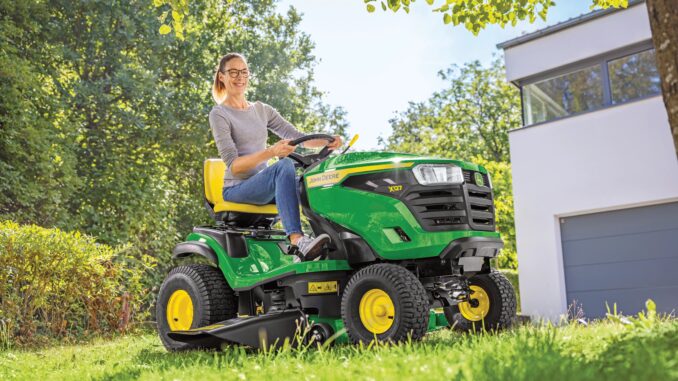
John Deere S100 Series Lawn and Garden Tractor Models and Maintenance Guide
The John Deere S100 Series is a family of residential lawn tractors built primarily for routine grass cutting, light towing, seasonal yard work, and basic property upkeep. These machines suit homeowners with small to medium lawns, larger suburban plots, and relatively level acreage where a dedicated garden tractor is not required. The series ranges from compact 42-inch-deck models for ordinary lawn mowing to wider 48-inch and 54-inch models intended to reduce mowing time on open ground.
This page serves as a central directory for John Deere S100 Series model-specific guides, service information, mower-deck care, and common troubleshooting topics. Use it alongside the General John Deere Lawn and Garden Tractor Guide, then narrow the search to the specific S100 Series tractor, deck, engine, or operating problem involved. Although these are lawn tractors rather than heavy-duty garden tractors, correct routine maintenance makes a substantial difference to cutting quality, drive performance, reliability, and working life.
About the John Deere S100 Series Lawn and Garden Tractor Series
John Deere introduced the S100 Series as the successor family to the earlier E100 Series residential lawn tractors. The range is designed around conventional front-engine, two-wheel-drive lawn-tractor layout: a single-cylinder or V-twin gasoline engine at the front, a mid-mount mower deck beneath the operator area, and a rear transaxle that drives the rear wheels.
Across the range, engine output is approximately 17.5 hp to 24 hp. The smaller S100 and S110 models use 42-inch mower decks and suit routine mowing on modest lawns. The middle of the range includes 42-inch and 48-inch deck tractors with more engine capacity, hydrostatic drive, and generally stronger suitability for regular mowing over larger areas. The S180 sits at the upper end of the family with a 54-inch mower deck and V-twin engine for faster coverage of broad, relatively open lawns.
The S100 Series is a lawn tractor line, not a full garden-tractor range. It is well suited to mowing, light yard-cart work, lawn sweeping, bagging, light tow-behind spreaders, and similar lower-load jobs. It is not the ideal platform for repeated heavy ground-engaging work, frequent heavy snow pushing, rear tillers, or demanding hauling on steep ground. Owners who regularly need those duties are usually better served by an X500 Series garden tractor, X700 Series heavy-duty garden tractor, or a compact utility tractor.
Most S100 Series models use hydrostatic transmissions, allowing speed and direction changes without manual gear shifting. The range is two-wheel drive only. Equipment levels vary by model, but features found across the family may include electric PTO deck engagement, cruise control on selected models, side-discharge and mulching options, bagger compatibility, deck wash ports, high-back seating, and John Deere’s Easy Change oil-service arrangement on certain engines. The larger models use wider mower decks and more powerful engines, but owners should still match attachment load, terrain, and towing weight to the capability of a residential lawn tractor.
Compared with the S100 Series, the X300 Series offers more refined residential lawn-tractor features and stronger chassis options, while the X500 and X700 families move into true garden-tractor and heavy-duty garden-tractor territory. The S100 Series remains the practical choice for owners whose main requirement is dependable mowing with occasional light seasonal utility work.
John Deere S100 Series Lawn and Garden Tractor Models
The core USA and Canada S100 Series lineup consists of the S100, S110, S120, S130, S140, S160, S170, and S180. The S150 name can appear in emissions documentation and secondary references, but it has not been a consistently listed mainstream retail model in the same way as the principal eight-model lineup. When working on an S150-labelled machine or any unusual regional variant, confirm the product-identification number, engine model, deck identification, and transaxle information before ordering parts or applying a service procedure.
The S100 Series replaced the earlier E100 Series in the residential John Deere lineup. For an across-time ownership history, the E100, E110, E120, E130, E140, E150, E160, E170, and E180 are predecessor models rather than S100 Series machines. They should normally be indexed separately under an E100 Series lawn tractor index, even though many ownership topics, deck layouts, engines, accessories, and basic maintenance concepts overlap with the S100 Series.
S100 Series Lawn and Garden Tractor Maintenance Guides
Routine Service and Checks
Routine servicing is particularly important on residential lawn tractors because the machine’s engine, transaxle, belts, deck, and steering components are regularly exposed to grass dust, moisture, vibration, and heat. A tractor that is only used seasonally can still develop problems through stale fuel, corroded electrical terminals, seized deck components, and neglected tire pressures.
Check engine-oil level before mowing, especially on older tractors, machines used on slopes, and units that have recently been transported or stored. Follow the engine manufacturer’s oil and filter interval rather than relying only on hours accumulated in a short mowing season. Models equipped with an Easy Change oil system should still be serviced according to the owner’s manual and should be inspected for leaks, damaged fittings, and incomplete installation after each oil-service event.
Routine service should include:
-
Checking engine oil level and condition before regular use.
-
Replacing engine oil and the applicable oil filter at the specified service interval.
-
Inspecting or replacing the air filter more often in dry, dusty, or leaf-heavy conditions.
-
Checking the fuel filter, fuel lines, fuel cap vent, and fuel quality.
-
Replacing spark plugs at the scheduled interval and inspecting ignition leads and boots.
-
Keeping engine cooling fins, blower housings, screens, and muffler areas clear of grass debris.
-
Inspecting battery terminals, charging-system wiring, safety-switch wiring, and fuses.
-
Checking tire condition and pressure before deck-level adjustments or mowing-quality diagnosis.
-
Inspecting mower-deck belts, drive belts, idler pulleys, deck wheels, and spindle areas.
-
Checking for loose hardware around the engine mounts, steering system, seat, deck-hanger points, and transaxle area.
The S100 Series lawn and garden tractor service interval checklist can provide a model-by-model service planning framework. DIY maintenance for S100 Series lawn tractors is useful for owners who want to organize oil changes, air-filter care, spark-plug replacement, battery maintenance, belt inspection, and seasonal storage into repeatable jobs. John Deere lawn tractor pre-season inspection checklist and end-of-season lawn tractor storage guide are also useful supporting resources for this series.
Mower Deck, Cutting Quality, and Belt Care
The mower deck has the greatest direct effect on the finished lawn. A tractor with a healthy engine and transmission can still cut poorly if the deck is dirty, unlevel, fitted with dull blades, or driven by a worn belt. S100 Series models commonly use 42-inch, 48-inch, or 54-inch mid-mount decks, so parts and adjustment details vary by model and deck identification number.
Inspect blades regularly for dull cutting edges, bends, cracks, excessive wear, and imbalance. Sharpening should restore the cutting edge without removing too much material from one end of the blade. Replace a blade rather than trying to straighten one that is bent, cracked, or badly worn. Unbalanced blades can cause vibration that damages spindles, deck bearings, pulleys, brackets, and belts.
Deck leveling is equally important. Check side-to-side level first, using equal tire pressures and a level working surface. Then check the front-to-rear pitch according to the specifications for the fitted mower deck. A deck that is too low at the rear can leave ragged grass, demand excessive engine power, and increase belt and blade loading. A deck that is incorrectly adjusted from side to side often leaves alternating strips of uncut or unevenly cut grass.
Keep the underside of the deck clear of wet grass buildup. Packed clippings restrict airflow, reduce discharge quality, promote corrosion, and can create a poor cut even with sharp blades. Inspect belt condition whenever the deck is removed, washed, serviced, or operating noisily. Replace belts that are glazed, cracked, frayed, oil-soaked, stretched, or repeatedly thrown from the pulleys.
Mower deck maintenance and cutting quality on S100 Series tractors can support general upkeep across the lineup. Deck belt and spindle service for S100 Series lawn and garden tractors should help distinguish deck-belt faults from engine-power or PTO faults. Blade replacement and mower deck leveling on John Deere lawn tractors is another useful maintenance topic for this family.
Steering, Axle, and Chassis Maintenance
The S100 Series uses a conventional front-steering arrangement designed for routine residential mowing. Steering looseness, hard steering, wandering, poor turning behavior, and uneven tire wear usually point to wear or damage in the front axle, steering linkage, wheel bushings or bearings, tie-rod ends, steering gear, or front tires.
Inspect the steering wheel and steering shaft for excess free play. Examine front-wheel bushings or bearings, axle pivots, tie-rod ends, steering arms, and related fasteners. A worn front-wheel bushing can allow wheel wobble and contribute to erratic mowing height, poor tracking, and rapid tire wear. Bent steering linkage or a damaged front axle can also affect toe-in and make the tractor difficult to steer in a straight line.
Before making a deck-level adjustment, verify tire pressures and inspect tire tread condition. Uneven tire pressure is one of the simplest and most frequently overlooked causes of uneven cutting. Check the chassis for grass accumulation, corrosion, loose fasteners, damaged deck-hanger brackets, and cracks around heavily loaded attachment points. Pay close attention to the hitch area if the tractor is used regularly with a cart or lawn sweeper.
Steering and front axle maintenance across S100 Series lawn and garden tractors can serve as the primary internal guide for these inspections. Front tire, wheel bearing, and toe-in checks on John Deere lawn tractors is a useful related guide. S100 Series chassis inspection and light-towing setup is also relevant for owners who use utility carts, sweepers, or other light tow-behind equipment.
S100 Series Lawn and Garden Tractor Troubleshooting Guides
Starting, Engine, and Fuel / Ignition Problems
A no-start condition on an S100 Series tractor does not automatically mean the engine has failed. The cause may be a discharged battery, dirty battery terminals, blown fuse, faulty safety interlock, damaged seat switch, brake-pedal switch issue, PTO switch position, poor starter connection, faulty solenoid, stale fuel, blocked fuel delivery, or ignition trouble.
Start with the basics. Make sure the PTO is disengaged, the operator is correctly seated where required, the brake or parking-brake condition meets the starting procedure, and the transmission controls are in the proper position. Listen carefully when the key is turned. No sound may indicate an electrical interlock, fuse, battery, cable, switch, or solenoid problem. A single click commonly points to low battery power, poor cable connections, or starter-circuit issues. Slow cranking may result from a weak battery, poor ground connection, heavy oil in cold conditions, or starter trouble.
Hard starting, surging, rough running, stalling under load, and loss of power often involve fuel quality, restricted airflow, a fouled spark plug, carburetor contamination, blocked fuel filter, damaged fuel line, restricted fuel-cap vent, water in fuel, or accumulated grass debris causing overheating. For V-twin models, problems can also arise from individual-cylinder ignition, plug, coil, or fuel-delivery faults.
Do not continue mowing when the engine is repeatedly surging, smoking, knocking, overheating, or losing substantial power. Stop the machine and inspect it before a minor maintenance issue becomes an engine, belt, or deck failure.
S100 Series lawn and garden tractor starting problems – diagnostics and fixes should be the core symptom guide for no-crank, click-no-start, crank-no-start, and intermittent-start complaints. Engine and fuel system issues across S100 Series tractors can organize fuel, air, ignition, overheating, and load-related running issues. John Deere lawn tractor battery, starter, and safety-switch troubleshooting is another useful cross-model resource.
Mower Deck, PTO, and Cutting Performance Problems
Deck problems often show up as blades that will not engage, a PTO that stops under load, belt squeal, excessive vibration, uneven cutting, poor discharge, scalping, or an engine that bogs down when the blades are engaged. The diagnosis should begin by identifying whether the issue is electrical, mechanical, setup-related, or caused by the grass conditions.
If the deck will not engage, confirm that the engine is running at the required operating speed, the PTO control is being used correctly, and the relevant safety conditions are met. Then inspect the PTO switch, wiring, fuse, connector condition, PTO clutch where fitted, deck belt, idler pulleys, and seized spindle components. A deck belt that is slipping, misrouted, damaged, or contaminated with oil can prevent normal blade speed even when the PTO system appears to engage.
If blades stop in heavy grass, first reduce forward travel speed and avoid cutting excessively tall or wet grass in one pass. Check the deck for packed clippings, dull blades, a worn belt, seized pulleys, or excessive blade damage. An engine that loses power only with the deck engaged may have both a deck problem and an engine-performance problem, so inspect both systems rather than replacing parts at random.
Scalping normally relates to deck-height selection, uneven terrain, incorrect deck leveling, worn gauge wheels, poor tire pressure, or mowing speed. Vibration can arise from bent or unbalanced blades, damaged spindles, loose pulleys, a failing idler, a loose deck component, or debris wrapped around a spindle.
PTO and deck engagement problems on S100 Series lawn tractors can provide the main diagnostic route for electrical and belt-related deck faults. Cut quality and deck vibration issues on S100 Series models should cover uneven cutting, scalping, striping, vibration, and noisy deck operation. S100 Series mower deck belt routing and replacement guide is a useful model-specific resource where deck version and serial-number range are confirmed.
Drive, Transmission, and Traction Problems
Slow travel, weak hill performance, lack of forward or reverse motion, drive-belt noise, transaxle noise, and reduced traction are common owner concerns. Because the S100 Series is a two-wheel-drive residential lawn-tractor family, performance depends heavily on correct belt condition, tire pressure, grass and soil conditions, slope angle, towing load, and the operating condition of the rear transaxle.
If the tractor will not move or moves only weakly, inspect the parking brake, bypass or freewheel control position, drive belt, belt guides, idler pulleys, pulley condition, rear-transaxle linkage, and signs of belt wear or contamination. A drive belt that is worn, stretched, glazed, broken, or out of its guides can cause slipping, delayed engagement, or apparent transmission failure.
Before assuming the transmission is faulty, remove excess load. Avoid towing a heavily loaded cart, climbing steep or wet slopes, or attempting to mow dense grass at high travel speed. A residential lawn tractor may lose traction well before the engine runs out of power. Rear tires that are underinflated, badly worn, or packed with mud can also reduce grip and affect mowing level.
Hydrostatic-drive concerns should be approached carefully. Repeated slipping, whining, overheating, or loss of drive can result from drive-belt faults, cooling blockage around the transaxle, excessive loads, incorrect bypass setting, or an internal transaxle issue. Check the operator’s manual before attempting any transmission service, as most residential lawn-tractor transaxles have limited owner-service procedures.
Drive and transmission problems on S100 Series lawn and garden tractors should guide diagnosis of no-drive, weak-drive, belt, linkage, and transaxle symptoms. Traction and hill performance issues across S100 Series models can help owners distinguish normal two-wheel-drive limitations from mechanical faults. John Deere lawn tractor drive-belt inspection and replacement is a useful supporting guide for this series.
Attachments and Implements for the S100 Series Lawn and Garden Tractor Series
The S100 Series can be configured for more than basic side-discharge mowing, but attachment choice should reflect the machine’s residential lawn-tractor design. The most suitable accessories are those that support mowing, collection, leaf handling, light material transport, and limited seasonal property work without imposing sustained heavy loads on the frame, belt drive, engine, or rear transaxle.
Typical S100 Series-compatible or commonly used lawn-care accessories include:
-
Mid-mount mower decks in 42-inch, 48-inch, and 54-inch configurations, depending on the tractor model.
-
Mulching blade sets and mulching covers or systems where specified for the fitted deck.
-
Rear bagging systems for collecting grass clippings and leaves.
-
Lawn sweepers for seasonal leaf and debris pickup.
-
Light utility carts for tools, garden waste, mulch, and other manageable loads.
-
Tow-behind broadcast spreaders and light lawn-care accessories.
-
Tow-behind aerators or dethatchers only where tractor capability, terrain, attachment weight, and operator guidance support their use.
-
Front blades or snow equipment only where specifically approved for the individual model and configuration.
-
Mounted or tow-behind sprayers where the attachment, load, and terrain remain within the tractor’s limits.
-
Sun canopies, weather enclosures, seat accessories, and non-powered comfort accessories.
Compatibility is not determined by the tractor name alone. Check the deck size, hitch type, engine output, tire type, electrical capacity, belt or PTO requirements, attachment mounting system, and the machine’s towing limitations. A 54-inch S180 may have more mowing capacity than a 42-inch S100, but neither should automatically be treated as equivalent to an X500 or X700 garden tractor for demanding ground-engaging or high-load work.
Snow attachments deserve particular care. A blade or snow blower can add substantial load, particularly in wet, compacted, deep, or icy snow. Use only approved combinations, keep tire traction in mind, avoid steep slopes, and do not overload the machine. Lawn-tractor transaxles and frames can be damaged by repeated high-load pushing, abrupt impacts, or excessive towing weight.
Attachments and implement options for S100 Series lawn and garden tractors can organize mower, bagger, cart, sweeper, spreader, sprayer, and seasonal-accessory decisions. Setting up and using snow equipment and yard attachments on S100 Series tractors can help owners assess attachment fitment, ballast, traction, storage, and safe operation.