
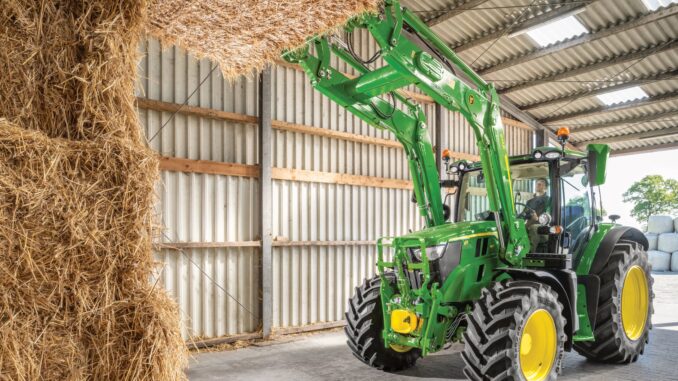
Introduction: John Deere 5410 overview
The John Deere 5410 is a utility tractor in the 5000 Series, typically used for hay work, loader tasks, light tillage, and general farm chores for small to mid‑size operations. It is commonly equipped with a 3‑cylinder diesel engine, live PTO, and either a SyncShuttle or PowrReverser transmission, with options for 2WD or MFWD (front wheel assist).
This John Deere 5410 Service and Repair Guide is written for owner‑operators in the USA and Canada who want practical help with maintenance, troubleshooting, and realistic DIY repairs. It focuses on what you see and feel as symptoms, then connects those to likely systems, parts, and diagrams you can use to identify and source replacements.
General overview of the John Deere 5410
Within the John Deere lineup, the 5410 sits in the 5210/5310/5410/5510 family of 5000 Series utility tractors. These machines bridge the gap between compact tractors and larger row‑crop tractors, often used with loaders, hay tools, rotary cutters, and small balers. The 5410’s weight, hydraulic capacity, and PTO power make it a strong choice for mixed livestock and small arable operations.
Key systems you will deal with on the John Deere 5410 include:
-
Engine and fuel system (diesel injection pump, injectors, fuel filters, lift pump)
-
Cooling system (radiator, hoses, water pump, thermostat)
-
Transmission and drive (SyncShuttle/PowrReverser, clutch, MFWD front axle, rear final drives)
-
Hydraulic system (main pump, SCV valves, three‑point hitch, power steering)
-
PTO drive (rear PTO clutch and gearing)
-
Electrical system (starter, alternator, battery, wiring harness, fuses, safety switches)
Common service parts for the John Deere 5410 that owners frequently purchase include:
-
Engine oil filter
-
Fuel primary and secondary filters
-
Hydraulic/transmission filter
-
Air filter elements (primary and secondary)
-
Fan/serpentine belt
-
Radiator hoses
-
Starter relay and key switch
-
PTO and seat safety switches
-
Batteries, light bulbs, and fuses
Always confirm part numbers against your tractor’s Product Identification Number (PIN) and engine code, as there are variations across years and transmission options.
Troubleshooting approach for John Deere 5410
With a John Deere 5410, diagnosis should start from the symptom, not the part. Begin with what you see: does it crank, start, move, lift, or leak? Then map that symptom to the system most likely involved.
Major symptom categories on a 5410 include:
-
Starting issues (no crank, slow crank, cranks but will not start)
-
Running issues (loss of power, stalling, smoke, rough running)
-
Hydraulics and three‑point problems (slow lift, no lift, weak loader)
-
Transmission and drive issues (won’t move, slipping, grinding, MFWD not engaging)
-
PTO problems (won’t turn, turns intermittently, noisy under load)
-
Overheating and fluid leaks (engine, transmission, hydraulics, fuel)
-
Electrical faults (dead electrics, blown fuses, warning lights, safety switches)
Work through a simple, repeatable checklist: observe, verify basics (fluids, filters, connections), then move to system‑specific checks. Use your operator’s manual diagrams and, where available, the technical manual for detailed component location and test procedures.
Emergency and immediate repair needs on a John Deere 5410
Some John Deere 5410 problems must be addressed immediately because they can cause expensive damage or create unsafe conditions. The sections below highlight urgent issues, what they look like, and basic checks you can do before calling a dealer.
Starting issues on John Deere 5410
A starting problem shows up as the tractor not cranking at all, cranking very slowly, or cranking normally but refusing to fire. This matters because repeated cranking can damage starters and drain batteries, and it often points to underlying fuel or electrical faults.
Common causes:
-
Weak or failing battery
-
Corroded or loose battery cables and grounds
-
Faulty starter, starter relay, or key switch
-
Fuel system air or restricted fuel filters
-
Safety switches (seat, PTO, neutral) not made
Basic checks an owner can do:
-
Check battery terminals for corrosion and tighten them; clean with a brush if needed.
-
Verify battery voltage with a multimeter or charger; recharge or replace if low.
-
Make sure transmission is in neutral, PTO is off, and seat switch is engaged correctly.
-
Inspect fuses and relays in the main fuse box; replace visibly failed ones.
-
If it cranks but will not start, check fuel level, open the bleed screws and ensure fuel flows, then inspect and replace clogged fuel filters.
Running issues and loss of power
Running problems on a John Deere 5410 often appear as low power under load, hesitation, surging, or stalling when throttled up or when using hydraulics or PTO. Ignoring these symptoms can lead to injection system wear, overheating, or accelerated engine damage.
Common causes:
-
Restricted fuel filters or contaminated fuel
-
Air leaks into the fuel system (loose fittings, cracked lines)
-
Failing lift pump or injection pump issues
-
Clogged air filter element
-
Overheating due to dirty radiator or failed fan belt
Basic checks an owner can do:
-
Inspect and replace fuel filters; bleed the system per the manual.
-
Check for fuel leaks or wet fittings around lines and filters.
-
Inspect air filter; clean or replace if dirty.
-
Confirm fan belt tension and condition; replace if frayed or loose.
-
Watch engine temperature and oil pressure gauges while working; stop if they move out of normal range.
Hydraulics and vibration/noise
A John Deere 5410 with hydraulic problems might show slow loader or three‑point movement, whining pump noise, or shuddering when operating implements. Excess vibration or strange noises can indicate failing bearings, driveline issues, or hydraulic cavitation.
Common causes:
-
Low hydraulic/transmission oil level
-
Clogged hydraulic filter or suction screen
-
Air in hydraulic system from leaks or loose connections
-
Worn loader pins or bushings causing clunks and rattles
-
Failing pump or internal hydraulic leaks
Basic checks an owner can do:
-
Check hydraulic/transmission oil level on the dipstick; top up with correct oil if low.
-
Inspect hydraulic filter condition and change if overdue.
-
Look for external leaks at hoses, couplers, and cylinders.
-
Grease loader pins and pivot points to reduce knocking and wear.
-
If pump noise is severe or hydraulics stop entirely, park the tractor and consult a dealer or hydraulic specialist.
Overheating and fluid leaks on John Deere 5410
Overheating or visible fluid leaks are always urgent on a John Deere 5410. A hot engine or a puddle under the tractor can quickly become a major repair if not addressed.
Common causes:
-
Clogged radiator fins and screens
-
Low coolant due to leaks
-
Loose or failed hoses and clamps
-
Transmission/hydraulic leaks at seals or lines
-
Fuel leaks at fittings or injector return lines
Basic checks an owner can do:
-
Shut down the tractor and allow it to cool before opening the radiator cap.
-
Inspect the radiator and screens; blow out debris with compressed air, not water.
-
Check all visible hoses and clamps for cracks or wet areas.
-
Place cardboard under suspected leak areas to pinpoint source.
-
Top up fluids only after identifying the leak; seek dealer help for pressurized or internal leaks.
Transmission, drive and PTO problems
Transmission issues in a John Deere 5410 show up as difficulty engaging gears, grinding, tractor not moving, or MFWD not pulling under load. PTO problems are seen when implements stop turning or slip under load.
Common causes:
-
Low or incorrect transmission/hydraulic oil
-
Worn clutch or misadjusted linkage (on non‑PowerReverser models)
-
MFWD engagement failures (linkage, switch, or front axle internal faults)
-
PTO clutch wear or damage
-
Damaged internal gears or shafts after shock loads
Basic checks an owner can do:
-
Confirm correct oil level and specification in transmission/hydraulics.
-
Check external linkages and switches (MFWD, PTO) for free movement and damage.
-
Listen for abnormal noises while moving and while PTO is engaged; stop if grinding or heavy clunks occur.
-
Avoid towing or pulling heavily if transmission problems arise; seek dealer inspection.
-
Never force gears; if shifting becomes difficult, address it promptly to protect internal components.
Electrical problems and safety switches
Electrical faults on a John Deere 5410 often show as intermittent starting, dead gauges, blown fuses, or warning lights that won’t clear. Safety switches can prevent starting or cause the engine to shut off unexpectedly.
Common causes:
-
Corroded grounds and battery cables
-
Chafed wiring harnesses, especially around the engine and cab mounts
-
Failed seat, PTO, or neutral safety switch
-
Shorted work light wiring or accessory circuits
-
Weak alternator or voltage regulator issues
Basic checks an owner can do:
-
Inspect and clean main ground points from battery to frame and engine.
-
Look for obvious rubbed or cut wires where harnesses contact metal edges.
-
Test seat and PTO safety switches for continuity using a simple multimeter.
-
Replace failed fuses only once; if they blow again, trace the affected circuit.
-
If warning lights or gauges fail, have the charging system load‑tested by a dealer or electrical shop.
DIY or dealer? Repair decision guide for John Deere 5410
On a John Deere 5410, the line between DIY and dealer work usually sits at anything requiring engine or transmission disassembly, hydraulic pump replacement, or specialized test equipment for injection and hydraulic pressure diagnostics. Routine maintenance and bolt‑on component replacement are realistic for experienced owners; internal repairs and complex electrical diagnostics usually belong with a dealer or qualified independent shop.
Good DIY jobs on a John Deere 5410:
-
Engine oil and filter changes
-
Fuel and air filter replacement
-
Battery replacement and cable cleaning
-
Fan belt replacement and minor coolant hose changes
-
Greasing loader, three‑point, and steering components
-
Basic electrical work (light bulbs, some switches, simple relays)
Advanced DIY or dealer jobs:
-
Clutch replacement and transmission internal repairs
-
MFWD front axle rebuilds and differential work
-
Hydraulic pump and internal valve repairs
-
Injection pump calibration and injector testing
-
PTO clutch and internal PTO gear repairs
-
Complex wiring harness diagnosis and replacement
Skill level guide:
-
Beginner: Oil changes, greasing, battery swaps, air filter changes.
-
Intermediate: Fuel system bleeding, belt replacement, external hydraulic hose changes, some switch replacement.
-
Advanced: Clutch work, transmission and axle internals, hydraulic and injection pump systems, full electrical diagnostics.
Parts needed for John Deere 5410 and what information to gather
Before ordering John Deere 5410 service parts, you should gather:
-
Full model designation (John Deere 5410, plus transmission type if known)
-
Product Identification Number (PIN) from the tractor frame
-
Engine model and serial number
-
Any loader or attachment model numbers (e.g. 540 loader)
-
Notes on MFWD vs 2WD, cab vs open station, and year of manufacture
John Deere 5410 service parts overview
Below is a general example of the kind of parts you will commonly need for a John Deere 5410. Always confirm exact numbers with your operator’s manual, parts catalog, or dealer, as part numbers can change and may vary by serial range.
OEM vs aftermarket guidance for John Deere 5410:
-
OEM parts are strongly recommended for belts, hydraulic/transmission filters, safety switches, and any fit‑critical or safety‑critical components.
-
Quality aftermarket equivalents can be acceptable for some engine oil filters, air filters, and batteries, provided they cross‑reference correctly to the John Deere specifications.
-
For critical engine and hydraulic components, stick with John Deere or reputable OEM‑equivalent suppliers to avoid compatibility and durability issues.
Where to find John Deere 5410 parts diagrams and service manuals
For accurate parts diagrams and repair procedures on a John Deere 5410, use a combination of official John Deere resources and reputable parts sites:
-
John Deere Operator’s Manual: This provides basic maintenance intervals, fluid specs, and control layout; many can be downloaded free from the John Deere Manuals and Training page.
-
John Deere Technical Manual (TM) for 5210/5310/5410/5510: This is the detailed service manual used by technicians, covering systems diagnostics, test procedures, and full repair steps with wiring and hydraulic diagrams.
-
John Deere Parts Catalog (JDParts or dealer portal): This lets you search your 5410 by PIN, view exploded parts diagrams, and verify current part numbers and supersessions.
-
Reputable Deere‑focused parts sites: Many aftermarket sites provide a model‑specific page for John Deere 5410, listing cross‑referenced filters, belts, and common electrical parts along with diagrams and fit notes.
Useful starting links (copy into your browser when publishing this guide):
-
John Deere Manuals and Training: https://www.deere.com/en/parts-and-service/manuals-and-training/
-
John Deere Parts catalog and dealer locator: https://www.deere.com/en/parts-and-service/parts/
How to locate model, serial and engine numbers on a John Deere 5410
Correct model and serial information is crucial on a John Deere 5410 because parts and some procedures vary across production years and configurations. PIN‑specific differences can include hydraulic components, transmission internals, and electrical layouts.
To find the key numbers:
-
Locate the tractor PIN plate, typically on the right‑hand side of the tractor frame, near the front axle or under the hood depending on year. Clean the plate and write down the full alphanumeric code.
-
Check the rear of the tractor and loader mast (if equipped) for any loader model/serial plates; record these for ordering loader parts.
-
Open the hood and look for the engine data plate on the side of the engine block or valve cover; note both engine model and serial number.
-
Record cab vs open station, MFWD vs 2WD, and transmission type (SyncShuttle or PowrReverser) from decals or the operator’s manual.
-
Keep these details written in the front cover of your operator’s manual or in a dedicated maintenance notebook for future reference.
Buying John Deere 5410 parts online and in physical stores
A smart parts strategy for a John Deere 5410 combines online research, dealer support, and local sourcing for consumables. Use your PIN and engine data to match parts carefully before ordering.
Online:
-
Use official John Deere parts catalogs to look up OEM numbers and verify fit.
-
Cross‑reference those numbers on reputable aftermarket sites, checking that John Deere 5410 is explicitly listed in the fitment.
-
Watch for PIN‑specific notes, such as “serial number above/below X,” and respect those boundaries.
Dealer counter:
-
Best for complex or serial‑specific items, hydraulic and transmission components, and when you need advice on superseded part numbers.
-
Take your PIN, engine serial number, and a list of symptoms so the parts department can help identify the correct components.
Retail stores:
-
Suitable for common consumables such as grease, engine oil, generic batteries, and basic filters if the packaging clearly lists John Deere 5410 or the equivalent OEM number.
-
Avoid generic hydraulic/transmission oils unless they meet the specific John Deere spec listed in your operator’s manual.
Example URLs to bookmark:
-
John Deere Parts and Service: https://www.deere.com/en/parts-and-service/parts/
-
John Deere dealer and support landing page: https://www.deere.com/en/parts-and-service/
Step‑by‑step fitting guide: common John Deere 5410 DIY jobs
The John Deere 5410 lends itself well to a handful of high‑impact DIY jobs that improve reliability dramatically. Below are straightforward procedures you can perform with basic tools.
Changing the engine oil and filter on John Deere 5410
Regular oil changes keep the John Deere 5410 engine lubricated and free of contaminants, extending its life and preventing major failure.
-
Park the tractor on level ground, set the parking brake, and shut off the engine; allow it to cool.
-
Place a suitable drain pan under the engine sump drain plug and remove the plug; let the oil drain completely.
-
Remove the old oil filter with a filter wrench, taking care not to spill oil; clean the mounting surface.
-
Lightly oil the gasket of the new filter and install it hand‑tight, then snug it as specified in the manual.
-
Reinstall the drain plug with a new washer if required, then refill the engine with the correct grade and quantity of oil.
-
Start the engine, check for leaks around the filter and drain plug, and verify oil level once it has circulated.
Replacing fuel filters on John Deere 5410
Fuel filter replacement on a John Deere 5410 prevents starting and running problems and protects the injection system from contamination.
-
Shut down the tractor and close any fuel shut‑off valve if fitted.
-
Place a container under the fuel filter area to catch drips; remove the old primary and secondary filters per the manual.
-
Clean the sealing surfaces and check for damaged O‑rings or gaskets.
-
Install new filters, lubricating gaskets lightly with clean fuel or oil.
-
Open bleed screws on the filter housings and, if necessary, use the hand primer or crank the engine until fuel flows without bubbles; close the bleed points.
-
Start the tractor and let it run at low idle; re‑bleed if it stumbles or dies, then check for leaks.
Changing the air filter on John Deere 5410
A clean air filter keeps your John Deere 5410 breathing properly, aiding power, fuel economy, and engine life.
-
Open the hood and access the air cleaner housing.
-
Release the clamps or fasteners and remove the housing cover.
-
Pull out the primary air filter element and inspect the secondary (inner) element; replace according to manual intervals or if contaminated.
-
Clean the inside of the housing with a dry cloth; do not blow dust into the intake.
-
Install new elements, ensuring they seat correctly, and refit the cover with all clamps securely fastened.
-
Close the hood and check that intake ducting is secure and free from cracks.
Checking and replacing the fan belt on John Deere 5410
The fan/serpentine belt drives critical accessories on a John Deere 5410; failure can cause overheating and charging problems.
-
With the engine off and cool, open the hood and locate the belt routing.
-
Inspect the belt for cracks, glazing, missing ribs, or fraying.
-
If replacement is needed, note the routing diagram or take a photo, then loosen the tensioner or mounting bolts specified in the manual.
-
Remove the old belt, route the new belt correctly over all pulleys, and set tension according to the manual (or allow the automatic tensioner to settle).
-
Rotate the engine by hand or briefly crank it to confirm proper tracking.
-
Recheck tension after a short period of operation, especially on manually tensioned setups.
Maintenance to prevent John Deere 5410 problems recurring
Preventive maintenance on a John Deere 5410 significantly reduces the chance of breakdowns and keeps performance consistent. Many “mystery” issues are just overdue maintenance in disguise.
Focus areas:
-
Starting reliability: Keep battery, cables, and safety switches in good condition; change fuel filters on schedule to prevent hard starting.
-
Engine health and power: Maintain regular oil and filter changes; keep air intake clean and monitor coolant system condition.
-
Hydraulics and drive performance: Change hydraulic/transmission filters and oil at recommended intervals; grease loader and three‑point points and check MFWD components.
-
Fire and overheating prevention: Clean radiator fins and screens often; repair any persistent leaks promptly and monitor belt condition.
-
Electrical reliability: Inspect wiring harnesses annually, especially in areas prone to chafing, and address any corrosion in connectors early.
John Deere 5410 maintenance schedule and year‑round checklist
Adapt your John Deere 5410 maintenance routine to the official chart in the operator’s manual. Below is a practical owner‑friendly structure you can refine using the manual’s intervals.
Daily / before each use
-
Walk‑around inspection for leaks, loose parts, and damaged hoses.
-
Check engine oil level and coolant level.
-
Check fuel level and drain any water from fuel/water separators if fitted.
-
Inspect tires for visible damage and low pressure.
-
Ensure lights and indicators work if you will use public roads.
After approximately 10 hours of operation
-
Clean radiator screens and check radiator fins for debris buildup.
-
Inspect loader pins, three‑point hitch pins, and linkages for loosening.
-
Check hydraulic/transmission oil level.
-
Inspect fan belt visually for wear.
Every 25 hours
-
Grease all specified lubrication points on loader, steering, and three‑point.
-
Clean or inspect the air filter; replace if heavily contaminated.
-
Check battery terminals, clean as required.
Every 50 hours or roughly yearly (for light use)
-
Change engine oil and engine oil filter according to the manual interval.
-
Inspect and, if needed, change fuel filters.
-
Inspect brake function and pedal free play.
-
Check MFWD (if equipped) axle oil level and condition.
Every 200 hours or as specified
-
Change hydraulic/transmission oil filter and, if required, the oil itself.
-
Check and adjust clutch free play on non‑PowerReverser versions.
-
Inspect loader mounting bolts and structural components.
-
Inspect wiring harness routing and secure any loose areas.
Seasonal checklist for John Deere 5410
Spring (pre‑season):
-
Full fluid level check and top‑up.
-
Radiator and cooling system inspection and cleaning.
-
Grease entire tractor per lubrication chart.
Mid‑season:
-
Recheck filters, particularly fuel and air.
-
Inspect tires and MFWD components for wear.
Fall / end‑of‑season:
-
Change engine oil and filter if interval is due or near.
-
Check and stabilize fuel (where appropriate) and drain water separators.
-
Clean tractor thoroughly, paying attention to radiator and driveline components.
Repair, upgrade, or replace a John Deere 5410?
Deciding whether to repair, upgrade, or replace a John Deere 5410 depends on its overall condition, the type of failure, and parts availability. Many 5410s remain excellent candidates for repair and moderate upgrades because of their durable design and strong support in the Deere ecosystem.
Repair if:
-
The tractor has a solid engine and transmission with only moderate wear.
-
Issues involve external components (filters, hoses, belts, pumps, switches) that are readily available.
-
The tractor’s size and capabilities still meet your farm or property needs.
Upgrade if:
-
You want better hydraulics, loader capacity, or modern lighting and controls but the core machine is sound.
-
You can add or improve loaders, third‑function valves, or better tires and ballast.
-
Electrical upgrades (LED work lights, better charging) will improve safety and productivity.
Replace if:
-
Major engine or transmission failures require extensive internal work that exceeds the tractor’s value.
-
Structural damage (bent frame, cracked castings) is uneconomical to repair.
-
Your operation has grown beyond the 5410’s capacity, and the cost of constant repairs outweighs the benefits.
Expanded troubleshooting FAQ – John Deere 5410 (30+ questions)
1. Why will my John Deere 5410 not start?
Failure to start is usually caused by a weak battery, corroded cables, poor fuel supply, or safety switches not engaging. Begin by checking battery voltage and cable condition, then verify that the PTO is off, transmission is in neutral, and the seat switch is made correctly. If the engine cranks but does not fire, inspect and replace fuel filters and bleed the fuel system. Persistent no‑start issues may require checking the starter, relays, and key switch or consulting a dealer for injection system diagnosis.
2. Why does my John Deere 5410 crank slowly?
Slow cranking typically points to battery or cable problems, especially in cold weather. Check that the battery is fully charged and of appropriate capacity for a diesel tractor. Clean and tighten terminals and ground connections, and inspect the starter for excess heat or noise. If cranking is still slow with a good battery, have the starter tested or replaced.
3. Why does my John Deere 5410 start then stall?
Starting and then stalling usually indicates fuel starvation or air in the fuel system. Check for dirty fuel filters, water contamination, or air leaks at fittings and hoses. Replace filters, bleed the system fully, and ensure there is clean fuel in the tank. If stalling persists, the lift pump or injection pump may need professional inspection.
4. Why does my John Deere 5410 have low power under load?
Low power under load is commonly due to restricted fuel or air, or overheating. Inspect and replace fuel and air filters, clean the radiator and screens, and check fan belt condition. Make sure the engine reaches and holds proper operating temperature and that there are no obvious fuel or boost leaks. If power remains low, injection timing or internal engine wear may be involved.
5. Why is my John Deere 5410 smoking excessively?
Excessive smoke can result from poor fuel quality, clogged air filters, injector issues, or internal engine problems. Black smoke often points to inadequate air or excess fuel; check the air filter and injection system. White smoke can indicate unburned fuel from cold operation or compression problems, while blue smoke suggests oil burning. Persistent heavy smoke deserves a dealer’s attention.
6. Why does my John Deere 5410 run rough at idle?
Rough idle on a John Deere 5410 usually stems from uneven fuel delivery or air in the fuel lines. Check for recent filter changes and ensure the system was bled properly. Inspect fuel lines and connections for leaks or cracks, and confirm that all injectors receive consistent fuel. In some cases, injector wear or pump issues require professional testing.
7. Why does my John Deere 5410 overheat?
Overheating is often caused by a dirty radiator, blocked screens, low coolant, or a failed fan belt or water pump. Clean the radiator fins and screens thoroughly, checking for debris between the radiator and any coolers. Verify coolant level and condition, inspect hoses for leaks or collapse, and ensure the fan belt is in good shape and properly tensioned. Allow the engine to cool before opening the radiator cap.
8. Why is coolant leaking from my John Deere 5410?
Coolant leaks appear as wet spots under the tractor or white residue around hoses and fittings. Common sources include cracked radiator tanks, loose clamps, aged hoses, or a faulty water pump seal. Trace the leak by cleaning the area and observing while the engine warms up. Replace damaged hoses and clamps and seek dealer help for radiator or pump replacement.
9. Why is hydraulic oil leaking on my John Deere 5410?
Hydraulic leaks usually come from hoses, fittings, cylinder seals, or the transmission housing. Look for wet areas around loader cylinders, SCV couplers, and the rear housing. Tighten fittings where appropriate and replace damaged hoses promptly. If leakage comes from a major seal or the housing itself, professional repair is recommended due to the pressure and complexity involved.
10. Why won’t my John Deere 5410 three‑point hitch lift properly?
A weak or non‑lifting three‑point hitch can result from low hydraulic oil, a clogged filter, air in the system, or internal valve issues. Check hydraulic/transmission oil level and filter condition first. Inspect external linkages and adjust the draft and position controls according to the manual. If the hitch still will not lift or lifts slowly, a dealer may need to test pump output and valve function.
11. Why is my John Deere 5410 loader moving slowly or not at all?
Slow or non‑functioning loader hydraulics often share causes with three‑point issues: low oil, dirty filter, air in the system, or failing pump. Confirm fluid level and cleanliness, look for external leaks, and verify that any quick‑couplers are fully engaged. If loader response remains poor, hydraulic pressure tests are needed, which are best handled by a dealer or hydraulic shop.
12. Why does my John Deere 5410 transmission grind when shifting?
Grinding gears indicate incomplete clutch disengagement or internal wear. Check clutch pedal free play and adjust it per the manual if your 5410 does not have a fully synchronized transmission. Avoid forcing shifts; if grinding persists, the clutch disc, pressure plate, or internal synchronizers may be worn and require professional replacement.
13. Why won’t my John Deere 5410 move when in gear?
Non‑movement in gear can stem from clutch failure, transmission or differential issues, or MFWD/front axle problems. Start by verifying that the parking brake is fully released and that correct gear and range are selected. Then check for obvious driveline damage or unusual noises. If the tractor still will not move, internal transmission or axle faults are likely and should be assessed by a dealer.
14. Why is my John Deere 5410 MFWD not engaging or pulling?
Lack of front‑wheel pull on MFWD 5410s may be due to a failed engagement linkage or switch, low axle oil, or internal front axle wear. Inspect the MFWD lever or switch and linkage for damage or misadjustment. Check front axle oil and look for leaks around seals. If MFWD still does not engage or clunks badly, internal repairs are a dealer‑level task.
15. Why does my John Deere 5410 PTO not turn?
PTO failure can be caused by a faulty PTO engagement mechanism, internal PTO clutch wear, or electrical/safety issues. Confirm that the PTO switch or lever is correctly set and that any safety switches allow operation. Check for blown fuses or wiring damage if your PTO is electrically controlled. If the PTO does not engage or slips under load, the internal clutch and related components may need professional service.
16. Why does the PTO on my John Deere 5410 turn but stop under load?
When PTO operates with no load but stops under load, it usually means the PTO clutch is slipping or internal damage is present. Avoid further heavy PTO work to prevent additional damage. Check hydraulic/transmission oil level and quality, and consult a dealer for clutch inspection and possible replacement.
17. Why is my John Deere 5410 battery always going flat?
A battery that repeatedly goes flat suggests either a charging system problem or parasitic drain. Check alternator output with a multimeter and ensure belts are tight and driving correctly. Inspect for lights or accessories left on, or aftermarket additions wired incorrectly. If no simple cause is found, have a dealer or auto‑electrician perform a draw test.
18. Why do fuses keep blowing on my John Deere 5410?
Repeatedly blown fuses indicate a short circuit or overloaded wiring. Identify which circuit the fuse protects (lights, PTO, etc.) and disconnect components one by one to isolate the fault. Inspect the wiring harness in that area for chafing or damage, and avoid running higher‑load accessories off existing circuits without proper upgrades. Repair or replace damaged wiring rather than using oversize fuses.
19. Why are the lights on my John Deere 5410 dim or flickering?
Dim or flickering lights can come from poor grounds, weak alternator output, or failing bulbs. Clean and tighten ground points and connections, then test alternator voltage at operating speed. Replace old bulbs and consider upgrading to quality LED lights with proper wiring and fusing if you work at night frequently.
20. Why is the steering on my John Deere 5410 heavy or unresponsive?
Heavy or unresponsive steering may be due to low hydraulic oil, a failing power steering pump, or front axle mechanical issues. Check transmission/hydraulic oil level and inspect for leaks around the steering cylinders and hoses. Grease front steering components and inspect kingpins and tie rods. If steering remains poor, professional hydraulic and mechanical diagnosis is required.
21. Why do I feel excessive vibration on my John Deere 5410?
Excessive vibration can arise from driveline imbalance, worn universal joints, misaligned implements, or engine mount issues. Check that PTO‑driven implements are correctly balanced and mounted. Inspect driveline shafts and joints for wear or damage. If vibration occurs even with no implements attached, investigate engine mounts and wheel/tire condition.
22. Why is my John Deere 5410 making a whining noise from the transmission?
Whining from the transmission or hydraulics often signals low oil, clogged filter, or pump cavitation. Confirm oil level and change the hydraulic/transmission filter if due. Look for leaks and consider reducing load to avoid damage. If whining persists, internal hydraulic or transmission components may be failing and should be serviced promptly.
23. Why does my John Deere 5410 leak fuel?
Fuel leaks are dangerous and wasteful. Common leak points include filter housings, injector return lines, and cracked fuel hoses. Identify the source by wiping the area clean and watching for fresh wetness. Replace damaged components and tighten fittings carefully, avoiding overtightening that can cause new leaks.
24. Why do my John Deere 5410 brakes feel weak?
Weak brakes may result from worn pads, incorrect adjustment, or hydraulic issues (if applicable). Check brake pedal free play and adjust per the manual. Inspect linkage and confirm there are no leaks near brake components. If braking remains poor, replace worn brake parts and have a dealer check for internal faults.
25. How often should I change the engine oil on my John Deere 5410?
Engine oil change intervals depend on operating hours and conditions, but many 5410 owners follow roughly a 100‑hour or annual schedule, referencing their operator’s manual for exact recommendations. Heavy use or dusty conditions justify more frequent changes. Always use oil meeting the John Deere specification for your climate.
26. How often should I change fuel filters on my John Deere 5410?
Fuel filters are typically changed at regular intervals specified in the manual, often around 200–400 hours, or sooner if fuel contamination is suspected. If you experience hard starting or low power, consider changing them early. Use clean fuel and bleed the system properly after replacement.
27. How often should I service the hydraulic system on my John Deere 5410?
Hydraulic/transmission oil and filter intervals vary with use; many owners change filters and inspect oil around every 200 hours. Follow the official chart for your specific 5410. Heavy loader or implement use may justify more frequent checks and earlier changes.
28. What fluids should I use in my John Deere 5410?
Always reference your operator’s manual for exact fluid specifications, including diesel engine oil grades, transmission/hydraulic fluid, and coolant types. Using incorrect fluid can cause serious damage. Some branded “universal” products are acceptable, but only if they explicitly meet the John Deere spec listed for the 5410.
29. Can I use aftermarket filters on my John Deere 5410?
Quality aftermarket filters can be used for engine oil and air filters when they cross‑reference correctly to the OEM specification. However, hydraulic/transmission filters and safety‑critical components are better kept OEM to ensure proper fit and performance. When in doubt, choose original John Deere parts for key systems.
30. When should I consider a dealer service on my John Deere 5410?
Dealer service is appropriate when you encounter internal engine or transmission issues, complex hydraulic faults, or advanced electrical problems. If basic maintenance and simple checks do not resolve the symptom, or if repair would require major disassembly or special tools, involve a dealer. Regular dealer inspections can also help identify developing problems before they become expensive failures.
31. Is my John Deere 5410 a good candidate for loader work?
The 5410 was commonly paired with loaders and is generally well suited to loader tasks like feeding cattle, moving bales, and loading trailers. Ensure your loader is correctly matched and mounted to the tractor, ballast and tire setup are appropriate, and hydraulic system is maintained. Proper maintenance helps avoid premature wear on front axle and steering components.
32. How can I improve lighting on my John Deere 5410 for night work?
Improving lighting often involves replacing aging incandescent bulbs with modern LED work lights, adding cab or fender‑mounted spots, and ensuring wiring and fusing are correct. Use high‑quality lights rated for agricultural use and secure wiring to avoid chafing. Enhancing lighting increases safety and productivity in low‑light conditions.
33. What simple upgrades make my John Deere 5410 easier to live with?
Simple, high‑value upgrades include better seat and suspension components, additional toolboxes, improved lighting, and properly sized ballast for loader or implement work. Regularly upgrading tires or adding radial options can improve traction and ride. Combining these with a disciplined maintenance routine keeps your 5410 useful and reliable for years.