
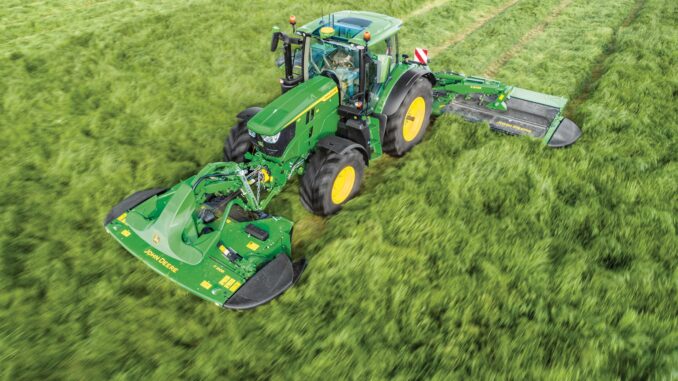
Introduction: John Deere 4755 overview
The John Deere 4755 is a heavy‑duty row‑crop tractor from the 55‑series, built for serious field work rather than small home lawns. It typically runs a turbocharged diesel engine, full Powershift or SyncroPlus transmission, with high‑capacity hydraulics and three‑point hitch for large implements.
This guide is written for owners and operators who are comfortable with basic maintenance and some intermediate repairs, but who still need clear boundaries between realistic DIY work and jobs that should go straight to a dealer or experienced shop. You will find a symptom‑first troubleshooting approach, common repair procedures, parts information, maintenance schedules, and FAQ coverage – all focused on keeping your John Deere 4755 running reliably.
General overview of the John Deere 4755
The John Deere 4755 sits in the 55‑series row‑crop lineup above smaller models like the 4055/4255 and below the big 4955. It is commonly used for tillage, planting, spraying, baling, and heavy PTO applications where engine torque and hydraulic capacity really matter.
Key systems you will deal with on a John Deere 4755 include:
-
Engine and fuel system – turbocharged diesel, rotary or inline injection pump, dual fuel filters.
-
Cooling system – large radiator, viscous fan drive, coolant overflow tank, thermostats.
-
Transmission and drive – Powershift or SyncroPlus gearbox, differential, final drives, and front axle on MFWD units.
-
Hydraulic system – main hydraulic pump, SCVs, rockshaft, steering and brake circuits.
-
Electrical system – alternator, starter, batteries, lighting, cab electronics, and safety interlocks.
Common service parts that owners regularly buy for the John Deere 4755 include:
-
Engine oil filter – DZ101880 or equivalent.
-
Fuel filters – primary and secondary cartridges (e.g. AR86745).
-
Air filters – primary and secondary air elements for the intake system.
-
Cab air filters – fresh air and recirculation filters for HVAC.
-
Coolant and hydraulic filters – transmission/hydraulic filters (e.g. AR94510) and suction screens.
-
Fan belts and alternator belts – drive belts for cooling fan, alternator, and A/C.
-
Batteries – large 12V starting batteries matched to Deere specs.
Always cross‑check part numbers against your serial number and configuration, especially for filters and belts, because early and late 55‑series builds can differ.
Troubleshooting approach for John Deere 4755
Effective troubleshooting on the John Deere 4755 starts with what you see and feel in the seat – not with a random part change. Begin by defining the main symptom, then work through basic checks, and only then move into deeper component testing or teardown.
For this tractor, the main symptom categories are:
-
Starting issues – cranks but won’t fire, slow cranking, no crank.
-
Running issues – low power, surging, black/white smoke, stalling.
-
Hydraulic/drive problems – weak hydraulics, hitch not lifting, poor steering, transmission faults.
-
Vibration and noise – driveline rumble, hydraulic howl, engine knock, cab vibrations.
-
Overheating and leaks – engine temperature climbing, coolant or oil leaks, hydraulic oil loss.
-
Electrical and warning systems – intermittent dash lights, charging issues, lighting faults, safety switch problems.
Work methodically: start with easy, non‑invasive checks (fluids, filters, visible leaks, wiring, fuses) before you ever open up a pump, transmission, or engine.
Emergency and immediate repair needs on John Deere 4755
Some problems on the John Deere 4755 must be dealt with immediately because they can damage expensive components or create unsafe operating conditions. This section highlights what you should treat as “stop work now” issues.
Starting issues on John Deere 4755
When a John Deere 4755 refuses to start, what you see may be a slow crank, clicking only, or full‑speed cranking with no fire. It matters because repeated hard cranking can damage the starter and batteries, and starting problems often hint at deeper fuel or electrical issues.
Common causes:
-
Weak or failing batteries.
-
Corroded or loose battery cables and grounds.
-
Faulty starter or solenoid.
-
Air in fuel system or empty fuel filters.
-
Safety or neutral switches not engaging.
Basic checks and steps:
-
Verify battery voltage and condition; clean terminals and grounds.
-
Confirm transmission is in park/neutral and PTO is disengaged.
-
Check fuses and visible wiring at starter and key switch.
-
Prime fuel system if filters were recently changed or tank ran dry.
-
If starter still only clicks or smokes, stop and plan a proper starter test or replacement rather than continued cranking.
Running and power problems – John Deere 4755
Running issues on a John Deere 4755 show up as loss of power under load, surging, excessive smoke, or the engine stalling when you demand hydraulic flow or PTO torque. These matter because working a struggling engine or pump can lead to overheating and long‑term damage.
Common causes:
-
Dirty fuel filters or restricted tank outlet/strainer.
-
Blocked air filter or intake restriction.
-
Issues with the injection pump or injectors.
-
Low fuel supply pressure or air in the system.
-
Turbocharger problems on turbo models.
Basic checks and steps:
-
Inspect and replace fuel filters if hours are unknown or long overdue.
-
Check the air filter; clean or replace elements that look packed or torn.
-
Look for visible fuel leaks and cracked lines; bleed air from the system.
-
Monitor exhaust smoke – black under load suggests fuel/air imbalance, white suggests cold cylinders or fuel issues.
-
If no improvement after basic service, schedule fuel system diagnosis or pump/injector testing with a professional.
Vibration and noise – John Deere 4755
On the John Deere 4755, vibration and abnormal noise may present as a driveline rumble, hydraulic whine, loud gearbox chatter, or knocking in the engine at certain RPMs. These are critical because they can indicate failing bearings, gears, or hydraulic components.
Common causes:
-
Worn universal joints or driveline components.
-
Failing bearings in hubs, PTO, or transmission shafts.
-
Cavitating hydraulic pump.
-
Loose cab mounts or exhaust system.
Basic checks and steps:
-
Reduce engine speed and note if the noise changes with RPM or ground speed.
-
Inspect front and rear driveshafts, U‑joints, and PTO shaft for play or damage.
-
Check hydraulic oil level and look for foaming or aeration.
-
Walk around the tractor safely to spot loose cab mounts, exhaust brackets, or panels.
-
If noise is deep inside transmission, rear end, or engine, stop work and book a dealer inspection – internal failures are expensive and time‑sensitive.
Overheating and leaks – John Deere 4755
Overheating or any significant leak on a John Deere 4755 is an immediate concern because the tractor’s engine, transmission, and hydraulics depend on clean fluids at correct levels. Running hot or low on fluid can quickly cause serious damage.
Common causes:
-
Low coolant or blocked radiator cores.
-
Stuck thermostat or failing water pump.
-
Oil or hydraulic leaks from hoses, seals, or gaskets.
-
Fan drive or belt issues reducing airflow.
Basic checks and steps:
-
Stop and let the tractor cool; never remove a hot radiator cap.
-
Check coolant level once cool and inspect for visible leaks.
-
Clean debris from radiator, coolers, and grille.
-
Check belts and fan drive operation.
-
For major oil/hydraulic leaks, shut down, contain the spill, and repair before further operation.
Transmission and drive problems – John Deere 4755
Transmission or drive issues on the John Deere 4755 show up as slipping in gears, harsh shifting, failure to move, or poor MFWD/front axle behavior. These are serious because they can indicate hydraulic pressure loss or internal wear.
Common causes:
-
Low or contaminated transmission/hydraulic oil.
-
Blocked suction screens or failing filters.
-
Faulty clutch packs or control valves in Powershift units.
-
Mechanical issues in differential or final drives.
Basic checks and steps:
-
Check transmission/hydraulic oil level and appearance.
-
Replace filters and clean suction screens according to schedule.
-
Observe any warning lights or codes if fitted.
-
Do not “power through” slipping – this accelerates damage.
-
Consult the technical manual or dealer for pressure checks and deeper diagnosis.
Electrical problems – John Deere 4755
Electrical issues on a John Deere 4755 may look like dim or dead lights, flat batteries, warning lamps that won’t clear, or intermittent cab controls. These matter because safety systems and starting/charging depend on reliable electrical circuits.
Common causes:
-
Worn alternator or voltage regulator.
-
Aging batteries and corroded grounds.
-
Damaged wiring looms, especially around the engine and cab entry points.
-
Faulty switches or relays.
Basic checks and steps:
-
Inspect and clean battery connections and main grounds.
-
Check fuses and relays; replace obviously burnt components.
-
Inspect wiring harnesses for rubbed insulation or pinch points.
-
Verify alternator output with a meter if available.
-
For cab electronics, use wiring diagrams from the technical manual to avoid guess‑work.
DIY or dealer? Repair decision guide for John Deere 4755
Because the John Deere 4755 is a large, complex agricultural tractor, the “DIY line” is different from a small lawn tractor. Routine maintenance and minor repairs are realistic for many owners, but deep engine, transmission, and hydraulic work often belongs with a dealer or experienced independent shop.
Good DIY jobs on a John Deere 4755
-
Engine oil and filter changes.
-
Fuel and air filter replacement.
-
Cab air filter service and HVAC cleaning.
-
Battery replacement and basic electrical checks.
-
Greasing chassis and linkages.
-
Simple belt changes (fan/alternator where access allows).
-
Replacing common hoses and clamps if routing is straightforward.
Advanced DIY or dealer jobs
-
Injection pump and injector replacement or calibration.
-
Internal transmission or Powershift repairs.
-
Hydraulic pump replacement and SCV valve overhaul.
-
Cylinder head work and internal engine repairs.
-
MFWD front axle internal work and differential rebuilds.
-
Complex electrical troubleshooting inside cab modules.
Skill level guide
-
Beginner: fluid checks, greasing, battery changes, outer filter service, visual inspections.
-
Intermediate: full service (filters, belts), coolant changes, basic hydraulic hose replacement, cab trim and switch swaps using manuals.
-
Advanced: clutch packs, transmission teardown, internal hydraulics, engine disassembly – best left to trained technicians with proper tools and data.
Parts needed, OEM vs aftermarket for John Deere 4755
Before ordering parts for your John Deere 4755 you should always gather key machine details so you get the correct components the first time. This is especially important for parts that vary by serial number or configuration.
Information to gather:
-
Full model name: John Deere 4755.
-
Product Identification Number (PIN) / serial number – stamped on the tractor.
-
Transmission type (Powershift vs SyncroPlus).
-
2WD vs MFWD/front‑wheel drive.
-
Engine configuration – turbocharged diesel with specific build code.
John Deere 4755 common service parts
Use this table as a starting point – always verify against your serial number and local parts source:
OEM vs aftermarket guidance:
-
Use OEM or premium matched parts for filters, hydraulic components, and any safety‑critical items – these are fit‑sensitive and affect system performance.
-
Aftermarket can be acceptable for some engine oil filters, fuel filters, and batteries, as long as they are clearly cross‑referenced to John Deere 4755 specifications.
-
Be cautious with cheap aftermarket hydraulic components, electrical switches, and structural parts – quality varies and failures can be costly.
Where to find John Deere 4755 parts diagrams and service manuals
For a John Deere 4755 tractor, your best documentation sources are official Deere publications plus a few reputable third‑party providers. These will give you exploded diagrams, electrical schematics, and detailed repair procedures.
Key sources:
-
John Deere Manuals and Training – operator’s manuals, parts catalogs, and technical publications:
-
https://www.deere.com/en-us/parts-owner-support/manuals-training
-
-
4555/4755/4955 Tractors Repair Technical Manual (TM) from specialist manual sites (e.g. Therepairmanual, EPCatalogs, Alltractormanuals).
-
Model‑specific parts and maintenance guides from Deere‑focused parts retailers (e.g. Green Farm Parts, Sloan Implement, or equivalent).
Use the operator’s manual for day‑to‑day maintenance, fluid specs, and safety information. Use the technical manual for system overviews, diagnostics, and full repair procedures. Parts catalogs and online diagrams help you identify part numbers and assembly order before you order or disassemble anything.
How to locate model, serial and engine numbers on John Deere 4755
Correct identification of your John Deere 4755 is essential when ordering parts or using manuals, because many components vary by serial range and configuration. The PIN/serial and engine plate are the references your dealer or parts site will ask for.
Steps to find the numbers:
-
Locate the tractor Product Identification Number (PIN) plate – typically on the frame near the engine or transmission, often on the right‑hand side.
-
Clean the plate gently and record the full PIN, including any prefix and suffix.
-
Find the engine data plate on the engine block or rocker cover area; note the engine model and serial.
-
Check for any secondary identification plates or stickers in the cab, near the instrument cluster or door post.
-
Keep these numbers written in your service log or phone notes so you can reference them quickly when ordering parts or manuals.
Buying John Deere 4755 parts online and in stores
A simple parts‑buying strategy will reduce delays and returns when maintaining your John Deere 4755. Use online resources for research and OEM numbers, but don’t overlook the value of your local Deere dealer, especially for serial‑specific and hydraulic components.
Options:
-
Online: Use OEM part numbers from Deere catalogs, then order from reputable sites like the official John Deere Store, Green Farm Parts, or other established dealers’ online shops. Always check that listings explicitly mention “John Deere 4755.”
-
Dealer counter: Best for complex or serial‑specific items such as hydraulic pumps, transmission components, and electronics. Bring your PIN and describe the symptoms.
-
Retail stores: Suitable for generic fluids, lubricants, and some batteries – but packaging must clearly state compatibility with heavy agricultural equipment and meet Deere spec requirements.
Useful starting URLs (for your browser, not as endorsements):
-
https://www.deere.com/en/parts-and-service/
-
https://greenfarmparts.com/
Step‑by‑step fitting guide – common John Deere 4755 jobs
This section covers several high‑impact DIY tasks that most John Deere 4755 owners can realistically handle with basic tools and good safety habits.
Changing engine oil and filter – John Deere 4755
This job improves engine life, reliability, and cold‑start performance.
-
Park the tractor on level ground, apply parking brake, and shut down the engine.
-
Allow the engine to cool, then place a drain pan under the engine oil sump and remove the drain plug.
-
Once drained, replace the drain plug with a new washer if required and tighten to spec.
-
Remove the spin‑on oil filter, clean the mounting surface, and install a new filter after oiling the gasket.
-
Fill the engine with the recommended grade and quantity of oil, then start the tractor and check for leaks and correct oil level.
Replacing fuel filters – John Deere 4755
Fresh fuel filters help prevent power loss, pump wear, and injector issues.
-
Shut the tractor off and close any fuel shut‑off valves if fitted.
-
Place a container under the filter area, remove the old fuel filters carefully, and dispose of them properly.
-
Clean the filter heads and sealing surfaces, then install new filters, pre‑filling them with clean diesel if the manual recommends it.
-
Use the hand primer or bleed screws to remove air from the system until fuel flows steadily.
-
Start the engine and let it idle; check for leaks and smooth running under light load.
Servicing air filters – John Deere 4755
Having a clean intake path protects the engine and maintains power.
-
Open the air filter housing according to the instructions on the canister or operator’s manual.
-
Remove the primary air element; tap gently or blow with low‑pressure air from inside out if the manual allows, or replace if heavily loaded.
-
Inspect the secondary (safety) element; replace if dirty or damaged – do not attempt to clean it with compressed air.
-
Clean the housing and ensure the dust ejector system is clear.
-
Refit elements securely, close the housing, and verify that all clamps and seals are tight.
Changing transmission/hydraulic filter – John Deere 4755
Clean hydraulic filters help preserve pumps, valves, and clutches.
-
Park the tractor safely, lower all implements, and relieve hydraulic pressure.
-
Place a drain pan beneath the transmission/hydraulic filter location.
-
Remove the old filter and allow any residual oil to drain.
-
Install the new filter, ensuring the seal is lightly oiled and properly seated.
-
Check oil level, top up with correct hydraulic/transmission fluid, then run the tractor and operate hydraulics to purge air. Recheck level and inspect for leaks.
Maintenance to prevent recurring problems on John Deere 4755
Preventive maintenance on a John Deere 4755 is about staying ahead of wear, contamination, and adjustment drift. A regular routine reduces downtime, protects expensive systems, and makes troubleshooting easier when issues do occur.
Focus areas:
-
Starting reliability – keep batteries healthy, terminals clean, and starter/alternator in good condition.
-
Fuel and air management – replace filters on schedule and keep tanks clean to prevent power loss and pump wear.
-
Cooling and fire prevention – maintain coolant quality, keep radiators and coolers clean, and watch for oil or fuel leaks.
-
Drive performance – service transmission/hydraulic filters, monitor oil levels, and inspect drive components regularly.
-
Electrical reliability – check lighting, fuses, and wiring harness condition; keep moisture out of connectors and cab electronics.
John Deere 4755 maintenance schedule and year‑round checklist
Base your maintenance routine on the official charts in the operator’s and technical manuals, adapted to your hours and local conditions. The outline below reflects typical 55‑series tractor intervals – always cross‑check with your manual.
Daily / before each use
-
Walk‑around inspection for leaks, damage, or loose components.
-
Check engine oil level and coolant level.
-
Check fuel level; drain water separators if fitted.
-
Verify tire condition and inflation.
-
Confirm lights and warning indicators work correctly.
After 8–10 hours (end of working day)
-
Clean debris from radiator, coolers, and grille.
-
Inspect air intake and pre‑cleaner for dust buildup.
-
Grease key points if working in severe conditions (as per manual).
Every 25 hours
-
Inspect front axle and steering components for wear or looseness.
-
Check belt condition and tension where accessible.
-
Inspect hydraulic connections, SCVs, and hoses for seepage or abrasion.
Every 50 hours or every season
-
Grease all lubrication points listed in the manual.
-
Check cab air filters; clean or replace as required.
-
Inspect battery electrolyte level and clean terminals.
-
Check wheel bolt torque and hitch hardware.
Every 250 hours
-
Change engine oil and filter, using recommended oil grade.
-
Replace fuel filters and bleed the system.
-
Inspect and service primary air filter element; replace if necessary.
-
Check and adjust brakes and clutch controls if applicable.
Every 500 hours or yearly
-
Replace transmission/hydraulic filter; clean suction screens if specified.
-
Flush and replace coolant if the manual specifies a time‑based change.
-
Inspect hydraulic pump and steering/brake performance; address early symptoms.
-
Inspect front axle (MFWD) oil levels and hub conditions.
Every 1500 hours or major interval
-
Clean or service hydraulic charge pump suction screens (steel or nylon).
-
Conduct a detailed inspection of driveline, differential, and final drives.
-
Review valve clearances and engine performance with a technician if needed.
Seasonal checklist (pre‑season / in‑season / end‑of‑season)
-
Pre‑season: Full service (fluids and filters), complete leak check, tire inspection, and cab cleaning.
-
In‑season: Weekly radiator and air filter checks, plus mid‑season fluid level review.
-
End‑of‑season: Clean tractor thoroughly, repair known issues, stabilize fuel, and store with batteries maintained.
John Deere 4755 – repair, upgrade, or replace?
The John Deere 4755 is a durable, high‑value tractor, and many units remain worth repairing and upgrading rather than replacing outright. However, decisions depend on overall condition, hours, and the cost of major failures.
Repair if:
-
The tractor has solid engine and frame condition with isolated issues (e.g. hydraulic leak, electrical fault).
-
Repair costs are well below the value of the machine and you rely on it for work.
-
You have good local support for Deere 55‑series parts and service.
Upgrade if:
-
The tractor is mechanically sound but lacks desired features (e.g. guidance, better lighting, newer seat or cab comforts).
-
You can add aftermarket improvements (LED lights, better seats, monitoring tools) at modest cost.
-
You want improved efficiency and operator comfort without changing the tractor.
Replace if:
-
The engine, transmission, and hydraulics all need major work that exceeds machine value.
-
Structural damage (frame, axle housings) or severe corrosion is present.
-
Your operation has outgrown the tractor’s horsepower or hydraulic capacity, making a larger or newer model more economical.
Expanded troubleshooting FAQ – John Deere 4755
1. Why will my John Deere 4755 not start?
Non‑starting on a John Deere 4755 usually comes down to electrical supply or fuel delivery. Check that the batteries are fully charged and terminals are clean, then verify that the tractor is in park/neutral with PTO off. If the engine cranks but will not fire, inspect fuel filters and ensure there is no air in the system, especially after recent filter changes or running the tank dry. Safety switches and wiring at the key and starter can also prevent engagement, so a careful visual inspection is worthwhile before assuming major engine problems.
2. Why does my John Deere 4755 crank slowly?
Slow cranking is typically a battery or cable issue rather than an internal engine fault. Confirm battery voltage and test under load if you have access to a tester, then clean and tighten all cable ends and grounds. Cold weather, old batteries, and high resistance in corroded terminals all reduce cranking speed. If power supply is good but the starter still struggles, the starter motor or solenoid may need inspection or replacement by a shop.
3. Why does my John Deere 4755 lose power under load?
Power loss under load often points to restricted fuel or air supply. Check the fuel filters, tank outlet, and any strainers for blockage, and replace filters if hours since last service are unknown. A clogged air filter or restricted intake will also reduce power and increase smoke. If basic service does not restore performance, the injection pump, injectors, turbocharger, or boost settings may require professional testing.
4. What causes black smoke from my John Deere 4755 exhaust?
Black smoke indicates excessive fuel or limited air. Common causes include a dirty air filter, restricted intake plumbing, or over‑fueling from the injection system. Begin by inspecting and servicing air filters, then check that the turbocharger and hoses are intact. Heavy black smoke under all conditions suggests the fuel system is delivering more fuel than the air can burn, which is best addressed with specialist pump and injector evaluation.
5. Why is my John Deere 4755 producing white or grey smoke?
White or grey smoke can result from cold cylinders, water in fuel, or incomplete combustion. Check that the engine reaches full operating temperature; a stuck‑open thermostat may keep it running too cool. Inspect fuel quality and drain any water separators. Persistent white smoke, particularly accompanied by coolant loss, may point to head gasket issues or internal coolant leaks, which require immediate diagnosis.
6. Why does my John Deere 4755 stall when I use hydraulics?
If the tractor stalls or bogs heavily when you operate the hydraulics, it may be working against high system loads or restricted flow. Verify hydraulic oil level and filter condition, as clogged filters and suction screens can starve the pump. If specific functions such as steering or hitch cause stalling, there may be localized valve or pump issues needing pressure checks. Avoid holding hydraulic controls at full stall positions for long periods, as this creates heat and strain.
7. Why won’t the three‑point hitch lift on my John Deere 4755?
A non‑lifting hitch can be caused by low hydraulic oil, a failed pump, valve problems, or mechanical link issues. Start by confirming oil level and looking for leaks around hydraulic components. Listen for pump noise when you attempt to lift; a loud whine suggests cavitation or restriction. Check that hitch controls and draft settings are correctly positioned. If oil and controls are correct but movement is weak or absent, a technician should test hydraulic pressures and valve operation.
8. Why is steering heavy on my John Deere 4755?
Heavy steering indicates hydraulic assistance is reduced or absent. Confirm hydraulic oil level and inspect filters, then check for leaks or damage in steering lines and cylinders. If steering is intermittently heavy, it may be a pump output or priority valve issue. Because steering is safety‑critical, any loss of assist should be treated promptly and deeper system testing undertaken by a professional.
9. Why does my John Deere 4755 transmission feel rough or harsh when shifting?
Harsh shifting can stem from hydraulic pressure problems, worn clutch packs, or control valve issues in Powershift transmissions. Ensure transmission/hydraulic oil is at the correct level and changed on schedule, and that filters and screens are clean. If the transmission behaves differently in particular ranges or gears, internal wear may be present. Continued operation with harsh or slipping shifts risks expensive damage, so seek dealer diagnostics sooner rather than later.
10. Why does my John Deere 4755 slip in certain gears?
Gear slipping usually indicates clutch pack wear or pressure loss in the transmission. Check whether slipping occurs only under heavy load or in specific ranges, and avoid using those gears if possible. Verify oil level and service history for filters and screens. Ultimately, a transmission pressure test and detailed inspection are required to determine whether internal repairs or rebuild are necessary.
11. What causes vibration in the driveline of my John Deere 4755?
Driveline vibration often comes from worn universal joints, out‑of‑balance shafts, or misaligned components. Inspect the front and rear shafts, PTO, and MFWD components for play or visible damage. Check tire condition and wheel balance if vibration occurs mainly at road speed. Addressing worn U‑joints or supports early can prevent more serious driveline failures and reduce operator fatigue.
12. Why does my John Deere 4755 make a whining noise from the hydraulics?
Hydraulic whining frequently relates to cavitation or fluid flow through restrictions. Confirm that hydraulic oil level is correct, and replace filters that may be blocked. If noise is louder when certain functions are used, those valves or circuits may have internal issues. Continuous high‑pitch whine under all conditions merits a hydraulic pressure and flow test to prevent pump damage.
13. Why is my John Deere 4755 overheating?
Overheating can arise from low coolant, blocked radiator fins, failing fan drive, or internal cooling system faults. Inspect and clean the radiator and coolers, checking for crop debris and dirt. Verify coolant level and condition, and ensure belts and fan drive mechanisms work correctly. If overheating persists, thermostats, water pump, and coolant flow passages should be investigated systematically.
14. Why do I see coolant leaks on my John Deere 4755?
Coolant leaks may show up as drips under the tractor, wet areas around hoses, or staining at joints. Carefully inspect radiator tanks, hoses, clamps, and water pump for signs of leakage. Never remove the cap when hot; wait for cooling to avoid injury. Small leaks may be fixed with hose or clamp replacement, but cracking tanks or failed pumps require parts replacement to avoid overheating.
15. What causes hydraulic oil leaks on my John Deere 4755?
Hydraulic leaks can come from hoses, seals, couplings, or damaged housings. Look for wet, dusty areas along lines and fittings, because oil attracts dirt. Replace damaged hoses and seals promptly; running with low oil or spraying hydraulic fluid can be unsafe. If leaks originate inside major components like the pump or valve blocks, professional repair or replacement is usually necessary.
16. Why are my John Deere 4755 lights dim or not working?
Dim or non‑working lights usually signal poor electrical connections, blown bulbs, or charging issues. Check fuses and relays first, then inspect lamp units for broken filaments or corrosion. Clean and tighten ground points and connectors. If multiple lights are dim or batteries flatten quickly, the alternator or regulator may need testing and replacement.
17. Why are my John Deere 4755 batteries always going flat?
Chronic battery drain can result from an under‑charging alternator, internal battery failure, or parasitic loads. Test alternator output and confirm that batteries meet recommended capacity. Inspect cab electronics and aftermarket additions for devices left powered when the tractor is off. If batteries are old or repeatedly deeply discharged, replacement may be necessary to restore reliable starting.
18. How often should I change oil and filters on my John Deere 4755?
Typical intervals for a John Deere 4755 are engine oil and filter every 250 hours, with fuel and air filters inspected and replaced on a similar schedule depending on conditions. Transmission/hydraulic filters and suction screens are normally serviced around 500 hours, with coolant changes at manufacturer‑specified time or hour limits. Always adjust intervals for heavy dust, extreme temperatures, or intensive use.
19. Which engine oil should I use in my John Deere 4755?
Use diesel‑rated engine oils that meet or exceed the specifications in your operator’s manual, commonly multi‑grade oils suited to your climate. The viscosity range is chosen based on ambient temperatures and workload. Avoid mixing random oils; stick with reputable brands and ensure filters match the oil’s spec for best protection.
20. How do I know which hydraulic/transmission oil is correct for my John Deere 4755?
The correct hydraulic/transmission oil type is listed in the operator’s and technical manuals and is usually a specific Deere‑approved fluid. Using the wrong oil can affect clutch, brake, and hydraulic performance. Check the product label for explicit mention of John Deere wet‑brake and Powershift compatibility and follow the capacity guidelines in your documentation.
21. Can I use aftermarket filters on my John Deere 4755?
Aftermarket filters are acceptable when they are high‑quality, cross‑referenced correctly, and designed for heavy agricultural use. Cross‑check part numbers against John Deere 4755 listings and avoid unknown brands. For hydraulic and transmission filters, many owners prefer OEM parts due to their impact on critical systems.
22. What should I do if my John Deere 4755 three‑point hitch is jerky?
Jerky hitch movement often results from air in the hydraulic system, sticky valves, or contamination. Verify oil level and change filters on schedule, then observe whether jerkiness changes with temperature. If the problem persists, hitch control valves and linkage adjustments need inspection, which is best done with the help of maintenance charts and pressure tests from the technical manual.
23. Why does my John Deere 4755 PTO stop under load?
PTO that disengages or slows under load may indicate clutch wear, incorrect adjustments, or hydraulic pressure problems. Check for warning lights and review oil level and filter condition. Avoid using heavy PTO implements until the issue is investigated, as slip can damage both tractor and implement. Professional clutch and pressure checks are usually required to pinpoint the cause.
24. How can I improve ride comfort in my John Deere 4755?
Ride comfort can be improved by servicing the seat suspension, checking cab mounts, and adjusting tire pressures to recommended levels. Upgrading to a modern suspension seat or fitting better cab dampers can reduce operator fatigue. Regularly inspecting the cab interior and fixing rattles also helps create a more comfortable working environment.
25. How do I safely support the John Deere 4755 for repairs?
Always work on level ground and use appropriately rated jacks and stands when lifting axles or components. Chock wheels and lower implements to the ground. Follow the safety instructions in the manuals, disconnect the battery for electrical or major mechanical work, and never rely solely on hydraulic lifting devices to support the tractor.
26. Why is my John Deere 4755 cab air conditioner weak or not cooling?
Weak or failed cab A/C may be due to clogged cab filters, low refrigerant, or problems with the compressor or controls. Start by replacing cab air filters and cleaning the condenser and evaporator surfaces. Check belt drive to the compressor and inspect lines for obvious leaks. Refrigerant work should be handled by qualified A/C technicians, especially where regulations require proper handling.
27. How can I reduce electrical faults on my John Deere 4755 over time?
Preventive electrical care includes keeping batteries healthy, maintaining clean grounds, and protecting wiring from abrasion and moisture. Inspect harnesses for rubbing points and secure them properly. Avoid uncontrolled modifications; when adding accessories, use appropriate fuses and relays to keep the system safe.
28. What is the best way to store my John Deere 4755 off‑season?
For off‑season storage, clean the tractor thoroughly, repair known leaks, and complete any overdue maintenance. Store with the fuel tank treated and filled to reduce condensation, and maintain battery charge with a smart charger or regular checks. Park under cover if possible and protect cab interior from moisture and rodents.
29. How do I decide whether to do a repair myself or call a dealer on my John Deere 4755?
Consider safety, complexity, and tool requirements. Routine fluid changes, basic filter service, and simple electrical work are usually within reach of careful DIY owners. Jobs involving internal transmission, hydraulics, or engine work require specialist tools, lifting equipment, and technical data, so they are best handled by dealers or experienced shops. When in doubt, err on the side of professional help for critical systems.
30. Where can I find electrical and hydraulic diagrams for my John Deere 4755?
Complete electrical and hydraulic schematics are typically found in the official technical manual for the John Deere 4755 and in detailed aftermarket manuals from reputable sites. Use your tractor’s PIN when ordering manuals to ensure you receive the correct coverage. Diagrams are essential for accurate troubleshooting, so treat them as long‑term investments rather than one‑time downloads.
31. Why do my John Deere 4755 warning lights come on intermittently?
Intermittent warning lights often stem from sensor connections, wiring issues, or marginal system conditions. Check connector integrity and look for corrosion or loose plugs. If a particular warning recurs, note the conditions (RPM, load, temperature) and refer to the manual’s diagnostic section to identify which system needs attention. Ignoring warning lamps can lead to preventable failures.
32. How can I improve fuel economy on my John Deere 4755?
Fuel economy improves when the tractor is properly serviced and operated efficiently. Keep filters clean, maintain correct tire pressures, and match implements and gear selection to load rather than lugging the engine. Avoid excessive idling and ensure the cooling and intake systems are clean, allowing the engine to run within its optimal temperature range.
33. What routine checks should I do before working a John Deere 4755 hard?
Before heavy work, perform a walk‑around inspection, check engine oil and coolant levels, verify fuel level, and inspect tires and hitch hardware. Clean radiator screens and assess hydraulic connections and SCVs. Confirm all lights and safety features work properly. These quick checks help catch early issues and reduce the chance of mid‑field breakdowns.
34. How do I keep my John Deere 4755 hydraulics healthy long term?
Long‑term hydraulic health depends on clean oil, intact filters, and leak‑free circuits. Follow recommended intervals for filter and oil changes, keep suction screens clean, and never ignore small leaks. Avoid contamination from dirty drums or funnels when topping up. Regular functional checks of steering, brakes, hitch, and SCVs help you catch declining performance early.
35. What’s the most important single maintenance habit for a John Deere 4755 owner?
The single most important habit is to follow a consistent service schedule and record what you do and when. Keeping a log of oil changes, filter replacements, coolant flushes, and repairs creates a clear picture of tractor health. This makes troubleshooting easier, protects your investment, and supports resale value if you eventually move the machine on.