
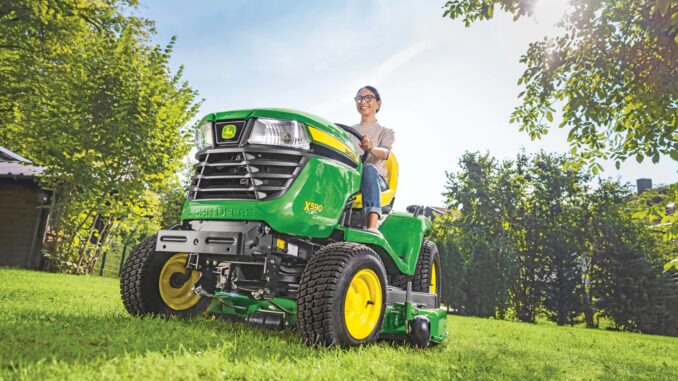
The John Deere S110 is a 100 Series lawn tractor aimed at homeowners who want a simple riding mower for regular grass cutting, light towing and general yard work around small to mid-size properties. This guide covers practical troubleshooting, realistic DIY repairs, routine maintenance and an expanded FAQ for USA and Canada owners using the 42-inch deck version commonly sold with this model.
John Deere S110 overview
The John Deere S110 sits in the 100 Series lineup alongside models such as the S100 and S120, and the operator’s manual groups those tractors together for controls, operation and service guidance. On the S110, the key owner-service systems are the single-cylinder gasoline engine and fuel system, the 42-inch mower deck and belt drive, the hydrostatic drive controls, and the basic electrical and safety-interlock system.
And See:
For most homeowners, the John Deere S110 is best used as a mowing tractor rather than a heavy-duty ground-engaging machine. Owners commonly end up buying service parts such as the 42-inch blade set GY20850, 42-inch mower deck belt GX20072, oil filter GY20577, fuel filter GY20709, air filter GY21055, mulch cover GY00115, and the LG262 home maintenance kit that bundles routine annual tune-up parts.
Troubleshooting the John Deere S110 by symptom
The fastest way to diagnose this tractor is to begin with the symptom the owner actually sees: cranks but will not start, starts then dies, leaves an uneven cut, vibrates, leaks, loses drive or will not engage the deck. The operator’s manual also separates troubleshooting and service by system, which is a good reminder that guessing at parts before basic checks usually wastes time and money.
Main symptom groups on the John Deere S110 usually fall into these categories:
-
Starting issues, including no crank, slow crank and crank-no-start.
-
Running issues, including surging, stalling, poor power and smoke.
-
Cut-quality problems, including uneven cut, scalping, streaking and poor discharge.
-
Vibration and noise, often related to blades, pulleys, spindles or belt damage.
-
Overheating, hot-running and leak concerns, especially where grass buildup is left around cooling or exhaust areas.
-
Drive and transmission complaints, such as weak forward motion or failure to move.
-
Electrical and safety-switch issues, including bad ignition switch, seat-switch or brake/start interlock faults.
John Deere S110 problems that need immediate repair
Some faults on the John Deere S110 need attention before the tractor is used again because they either create a direct safety risk or can quickly damage larger assemblies. The most urgent ones are blade or belt failures, fuel leaks, fire-causing debris buildup, damaged safety switches, severe vibration and any condition where braking or steering feels abnormal.
4.1 John Deere S110 starting issues
A John Deere S110 that will not crank or only clicks can leave you stranded, but the bigger concern is that owners sometimes bypass interlocks or keep trying to crank through an electrical or fuel problem. That can overheat the starter circuit, drain the battery and hide the original cause.
Common causes:
-
Brake pedal not fully depressed or park brake not correctly set.
-
PTO/attachment engagement left on.
-
Weak battery or dirty battery terminals.
-
Faulty ignition switch such as GY20074.
-
Seat switch or wiring issue.
-
Bad fuel, clogged fuel filter or fouled spark plug.
Basic owner checks:
-
Sit in the seat, depress the brake fully and make sure the mower engagement lever is off.
-
Check battery connections for looseness or white/green corrosion.
-
Confirm fuel is fresh and the fuel shutoff path is not restricted by a plugged filter.
-
Inspect the spark plug lead and air filter area for obvious damage or heavy dirt.
-
If the dash powers inconsistently or the switch feels loose, test the ignition switch circuit before replacing parts at random.
4.2 John Deere S110 cut-quality problems
If the John Deere S110 leaves streaks, scalps the lawn or discharges clumps, the tractor may still run but the problem usually worsens if blades, deck level or belt condition are ignored. Poor cut quality also pushes owners to mow lower or slower than needed, which can mask the real issue.
Common causes:
-
Dull, bent or mismatched blades.
-
Deck out of level side-to-side or front-to-back.
-
Worn or slipping deck belt GX20072.
-
Anti-scalp wheels set incorrectly.
-
Wet or overgrown grass.
-
Grass buildup under the deck.
Basic owner checks:
-
Clean the underside of the deck with the engine off, key removed and spark plug disconnected.
-
Inspect blades for bends, chips and uneven wear; replace in pairs if damaged.
-
Check tire pressures first, then level the deck on a flat surface.
-
Confirm front blade tip height is about 3-6 mm lower than the rear.
-
Inspect the deck belt for glazing, cracking or slack.
4.3 Vibration and noise on the John Deere S110
Strong vibration on a John Deere S110 should be treated as a stop-now issue because a bent blade, loose pulley or failing spindle can damage the deck shell and spindle housings quickly. A new noise after striking an object is especially important to investigate before mowing again.
Common causes:
-
Bent blade after impact.
-
Loose blade hardware.
-
Blade set installed incorrectly.
-
Worn spindle bearings or damaged pulley.
-
Frayed or twisted mower belt.
-
Debris wrapped around spindles.
Basic owner checks:
-
Shut the tractor down immediately if vibration starts suddenly.
-
Inspect both blades and blade mounting areas for impact damage.
-
Spin pulleys and spindles by hand with the plug wire disconnected, listening for roughness.
-
Check the top of the deck for packed debris around belt guards and pulleys.
-
Do not continue mowing until the source is found and corrected.
4.4 John Deere S110 overheating and leaks
The John Deere S110 relies on clean cooling-air passages and a clean machine to prevent overheating and fire risk. Fuel leaks, oil seepage and heavy dry grass packed around the muffler, engine screen or transmission area need immediate attention because Deere specifically warns that debris and leaks can contribute to equipment fires.
Common causes:
-
Grass and chaff packed around cooling fins, intake screens and muffler.
-
Engine oil overfill or leak.
-
Fuel line or filter seepage.
-
Running in heavy debris without cleanout.
-
Restricted air filter.
Basic owner checks:
-
Let the machine cool, then remove debris from the engine compartment, muffler area and top of the deck.
-
Clean the engine intake screen and inspect cooling-fin areas.
-
Check engine oil level before adding oil.
-
Inspect the fuel filter and fuel lines for wetness or cracks.
-
Replace a dirty air filter and precleaner rather than trying to stretch service life too far.
4.5 John Deere S110 drive problems
If the John Deere S110 loses forward or reverse drive, owners often assume the transmission has failed, but basic external causes should be checked first. Problems that keep the tractor from climbing even mild grades or moving consistently should not be ignored because repeated slipping and overheating can shorten driveline life.
Common causes:
-
Parking brake not fully released.
-
Freewheel/roll-release setting not fully engaged back to drive position.
-
Drive linkage issue.
-
Low traction from wet grass or slope misuse.
-
Internal transaxle wear.
Basic owner checks:
-
Confirm the park brake is fully released and pedals return normally.
-
Check that the machine has not been left in push/freewheel mode.
-
Test operation on level ground before judging hill performance.
-
Inspect for linkage damage or anything binding under the frame.
-
If travel remains weak after external checks, dealer diagnosis is usually the safer next step.
4.6 John Deere S110 electrical problems
Electrical faults on the John Deere S110 usually show up as no-crank, intermittent power, blown fuses, dead lights or a tractor that shuts off when an interlock changes state. Because the tractor uses several safety circuits, random jumper-wire testing is a bad idea for most owners.
Common causes:
-
Weak battery or poor grounds.
-
Corroded fuse or fuse-holder area.
-
Faulty ignition switch GY20074.
-
Seat, brake or PTO safety-switch failure.
-
Damaged wiring near battery or under left side panel.
Basic owner checks:
-
Clean and tighten battery terminals first.
-
Inspect the fuse area and nearby wiring under the left side panel.
-
Check whether the failure is constant or only happens when you leave the seat, release the brake or engage the deck.
-
Replace obviously broken switches or connectors only after confirming the symptom pattern.
-
Leave harness repairs and repeated fuse blowing to a dealer or experienced electrical DIYer.
DIY or dealer on the John Deere S110
The usual line on the John Deere S110 is simple: routine service and straightforward mower-deck repairs are realistic DIY jobs, while internal transmission work, deeper engine diagnostics and persistent electrical faults are usually dealer territory. Owners with normal hand tools can do a lot on this tractor, but safe support, correct part identification and attention to interlocks matter.
Good DIY jobs
-
Engine oil and filter changes using the specified routine service interval.
-
Air filter, fuel filter and spark plug replacement.
-
Blade sharpening or blade replacement with the deck safely supported.
-
Deck cleaning, inspection and basic deck leveling.
-
Deck belt inspection and replacement when access and routing are clear.
-
Battery replacement and terminal cleaning.
Advanced DIY or dealer jobs
-
Spindle replacement if fasteners are seized or deck damage is present.
-
Wiring diagnosis involving interlock circuits or repeated blown fuses.
-
No-compression, valve-clearance or internal engine work.
-
Hydrostatic/transaxle diagnosis when the tractor barely moves or loses drive hot.
-
Steering or brake repair beyond simple adjustment.
Skill levels
-
Beginner: Oil change, air filter, fuel filter, spark plug, blade inspection, battery checks.
-
Intermediate: Blade replacement, deck leveling, deck belt replacement, ignition switch replacement.
-
Advanced: Spindle work, electrical diagnosis with a meter, valve-clearance service, driveline troubleshooting.
Parts for the John Deere S110
Before ordering parts for a John Deere S110, gather the exact model name, the tractor Product Identification Number, the engine serial number and the deck size or attachment version. Deere specifically tells owners that the serial or PIN information is needed when ordering parts, and that matters because running changes and engine variations can affect the correct part.
OEM parts are usually the safest choice for belts, ignition/safety-switch components and other fit-sensitive items on the John Deere S110 because belt length, switch indexing and deck fit can be less forgiving than they look. Aftermarket parts can be reasonable for items like filters, blades, batteries and tune-up parts when the seller clearly cross-references the exact S110 application and engine specification.
John Deere S110 manuals and diagrams
Owners looking up service information for the John Deere S110 should start with Deere’s official operator and parts resources, then use a reputable parts seller for illustrated application pages.
-
Official operator’s manual PDF — best for safety, controls, deck leveling, service intervals and basic troubleshooting.
-
Official S110 owner support page — useful for model-specific manual access, parts support and owner how-to links.
-
Deere Technical Publications — where owners can buy official technical and parts publications when they need deeper service information.
-
JDParts / Shop.Deere — useful for confirming OEM numbers and checking current Deere part listings.
-
Green Farm Parts parts lookup — useful for illustrated aftermarket ordering once the correct OEM number is known.
Finding John Deere S110 model and serial numbers
These numbers matter because two tractors that look identical can still have different serial breaks, engine builds or revision-level parts. Recording them before you start shopping saves time and reduces wrong-part orders.
-
Park the tractor safely on level ground, switch it off, remove the key and let hot parts cool.
-
Find the tractor PIN plate on the left side of the frame, where Deere shows the machine Product Identification Number location.
-
Record the full PIN exactly as stamped, including all characters.
-
Find the engine serial number on the engine, as shown in the manual’s engine serial number location section.
-
If you are ordering deck or attachment parts, also confirm that the tractor is using the 42-inch deck setup referenced in the S110 parts sheet.
Buying John Deere S110 parts
The best strategy is to confirm the OEM number first, then compare official Deere pricing with one or two Deere-focused parts sellers. That approach works better than shopping by appearance, especially for belts, switches and engine parts.
-
Online: use the model support page and Deere parts listings for OEM numbers first, then compare with Deere-focused retailers that list the same number clearly.
-
Dealer counter: best for serial-sensitive parts, wiring, interlocks, engine-specific parts and anything where the old part number has been superseded.
-
Retail stores: acceptable for common consumables such as oil, batteries, spark plugs or filters only when the package clearly lists the John Deere S110 and matching engine application.
Useful links:
Fitting common John Deere S110 parts
These are the common jobs most owners tackle first because they directly affect starting, mowing quality and routine reliability.
Replacing the John Deere S110 air filter
A fresh air filter helps cure rich running, power loss and hard starting caused by restricted intake airflow.
-
Park safely, switch off the engine and remove the key.
-
Open the hood and locate the air cleaner housing on the engine.
-
Remove the housing cover and take out the old precleaner and filter element.
-
Wipe dust from the housing without pushing dirt into the intake tube.
-
Install the new filter and precleaner in the same orientation, then refit the cover securely.
Changing the John Deere S110 oil and filter
This service protects the engine and is one of the highest-value maintenance jobs on the tractor.
-
Warm the engine briefly, then park on level ground and shut it off.
-
Check the manual procedure, drain the old oil safely and remove the old oil filter.
-
Lightly oil the gasket on the new GY20577 filter and install it hand-tight.
-
Refill with the correct oil, then check the dipstick rather than guessing by bottle volume.
-
Start the engine, check for leaks and recheck the level after shutdown.
Replacing John Deere S110 blades
New or sharpened blades restore cleaner cutting and reduce tearing that leaves brown grass tips.
-
Park safely, remove the key and disconnect the spark plug wire.
-
Raise and support the front of the tractor safely so the deck can be accessed.
-
Remove each blade carefully, noting its orientation before installation.
-
Install the replacement GY20850 blade set or sharpened originals in matched condition.
-
Tighten hardware to the specification in the manual and verify both blades rotate freely by hand.
Replacing the John Deere S110 deck belt
A new deck belt helps when the blades slip, engagement is weak or the old belt is cracked and glazed.
-
Park safely, lower the deck and remove the key.
-
Remove belt guards as needed and note the exact routing before disassembly.
-
Release belt tension and remove the worn GX20072 belt from the pulleys.
-
Route the new belt exactly as the original, making sure it sits fully in pulley grooves and guides.
-
Reinstall guards, engage the deck briefly at low risk conditions, then recheck tracking.
Preventing repeat John Deere S110 problems
Most repeat failures on the John Deere S110 come from deferred cleaning, dull blades, stale fuel and missed annual service. Keeping the tractor clean and serviced does more than improve reliability; it also reduces fire risk and avoids avoidable belt, spindle and starting complaints.
Focus areas:
-
Starting reliability: use fresh fuel, replace the fuel filter on schedule and keep battery terminals clean.
-
Cut quality: sharpen or replace blades, level the deck and inspect the deck belt regularly.
-
Fire and overheating prevention: remove debris from muffler, engine screens, cooling fins and deck-top belt areas.
-
Drive performance: avoid abuse on wet slopes and confirm freewheel and brake settings before assuming transmission failure.
-
Electrical reliability: keep the battery area and fuse/wiring zone clean and dry.
John Deere S110 maintenance schedule
The S110 maintenance sheet gives a compact owner schedule, and the operator’s manual expands daily checks and service procedures. The list below stays close to Deere’s official intervals for this model family.
Daily or before each use
-
Check and test safety systems.
-
Check tire pressure and brakes.
-
Check fuel level and engine oil level.
-
Remove grass and debris from engine compartment, muffler area and top of mower deck.
-
Clean the air intake screen.
-
Check below the machine for fluid leaks and loose hardware.
After 8 hours
-
Lubricate mower spindles and pivot points.
-
Lubricate front axle pivot and axle spindles.
-
Lubricate front axle wheel bushings.
Every 25 hours
-
Check or replace mower drive belt as needed.
-
Lubricate mower spindles and pivot points.
-
Lubricate front axle pivot and axle spindles.
-
Lubricate front axle wheel bushings.
Every 50 hours or yearly
-
Change engine oil and replace filter.
-
Clean or replace air filter precleaner and element.
-
Replace fuel filter.
-
Sharpen or replace mower blades.
-
Check mower deck spindle brakes on manual-PTO models.
Every 200 hours
-
Check and adjust valve clearance; Deere says to have the dealer perform this service.
-
Lubricate front axle pivot and axle spindles.
-
Lubricate front axle wheel bushings.
Seasonal checklist for the John Deere S110
-
Spring: inspect battery, change oil if due, install sharp blades and level the deck before the main mowing season.
-
Mid-season: clean cooling areas often, inspect the deck belt and keep the underside of the deck free of packed clippings.
-
Fall or end of season: clean the machine thoroughly, inspect for leaks or worn parts and stabilize fuel or prepare for storage exactly as the manual recommends.
Repair, upgrade or replace the John Deere S110?
For the John Deere S110, repairing usually makes sense when the tractor is structurally sound and the fault is limited to service items, deck wear parts or simple electrical components. Upgrading or replacing starts to make more sense when repeated failures point to heavier use than the S110 was designed for, or when major engine or transmission work overlaps with broader wear across the tractor.
Repair if
-
The problem is a belt, blade, filter, battery, switch or other routine wear item.
-
The tractor starts and drives normally aside from one identifiable issue.
-
The deck shell, frame and steering are still in good condition.
Upgrade if
-
You regularly ask the tractor to handle tougher terrain, heavier towing or more mowing acreage than an entry 100 Series unit suits.
-
You want features beyond the S110’s simple manual deck engagement and homeowner-focused setup.
-
Multiple subsystems are still working, but the machine no longer matches your workload.
Replace if
-
The engine and transmission both need expensive work at the same time.
-
The deck shell, frame or steering system is badly worn or damaged.
-
Safety-related damage or neglect makes the tractor uneconomical to restore properly.
John Deere S110 troubleshooting FAQ
1. Why will my John Deere S110 not start?
Most no-start complaints on the John Deere S110 come down to one of three things: the safety interlock is not satisfied, the battery is weak, or fuel and ignition service is overdue. Start with the brake pedal, PTO disengagement, battery connections, fresh fuel and plug condition before assuming a major failure.
2. Why does my John Deere S110 click but not crank?
A click usually points to low battery voltage, poor cable connections or a starter circuit problem rather than bad fuel. Clean and tighten the battery terminals first, then check whether the battery can hold charge under load.
3. Why does my John Deere S110 crank but not fire?
When the engine cranks normally but will not fire, focus on fuel quality, fuel delivery, spark and air restriction. A clogged fuel filter, dirty air filter or fouled plug is much more common than internal engine trouble on a homeowner tractor.
4. Can a bad ignition switch stop a John Deere S110 from starting?
Yes, a faulty ignition switch can cause no-power or inconsistent start symptoms, and GY20074 is a common replacement switch used on Deere lawn tractors in this family. If dash power comes and goes with key movement, the switch should be tested rather than guessed at.
5. Why does my John Deere S110 start and then die?
That pattern often points to restricted fuel flow, stale gasoline, a safety-switch problem or severe air restriction. Check the fuel filter, air filter and seat/interlock behavior before chasing more complex causes.
6. Why is my John Deere S110 running rough?
Rough running usually means bad fuel, dirty air filtration, spark-plug issues or debris affecting cooling and combustion quality. Annual tune-up parts are inexpensive compared with the time lost guessing at symptoms one part at a time.
7. Why does my John Deere S110 surge at idle or part throttle?
Surging is often related to fuel quality, partial restriction in the fuel path or air leaks and contamination from sitting. Start with fresh gasoline, a new fuel filter and a clean air filter before assuming carburetor replacement is necessary.
8. Why does my John Deere S110 smoke?
Smoke can mean oil overfill, a dirty air filter causing rich running, or a more serious engine issue if it continues after service checks. Check the oil level first because overfilling is easy to do after a routine oil change.
9. Why is my John Deere S110 losing power while mowing?
Loss of power under load commonly comes from dull blades, heavy wet grass, deck clogging or overdue engine service. The tractor may be healthy overall and simply unable to maintain blade speed because the deck and engine are working harder than normal.
10. Why does my John Deere S110 cut unevenly?
Uneven cutting usually comes back to tire pressure, deck level or blade condition before anything else. Deere’s deck-level procedure is worth following closely because a small front-to-rear error can show up across the whole lawn.
11. Why does the John Deere S110 scalp my lawn?
Scalping happens when cutting height is too low for the ground contour, anti-scalp wheels are set wrong or the deck is not adjusted correctly. Check wheel adjustment and deck pitch before blaming the tractor itself.
12. Why does my John Deere S110 leave strips of uncut grass?
Streaks or strips usually point to dull blades, slow blade speed from a worn deck belt, or mowing conditions that are too heavy for one pass. Cleaning the deck and restoring blade condition often solves the issue quickly.
13. Why does my John Deere S110 clump wet grass?
Wet grass sticks under the deck, loads the belt drive and reduces discharge efficiency. The best cure is usually to wait for drier conditions, mow more often and keep the deck underside clean.
14. Why is my John Deere S110 vibrating badly?
Severe vibration usually means a bent blade, loose blade hardware, damaged spindle or belt trouble, especially if it started after impact. Stop mowing immediately because continued operation can damage the deck and spindle assemblies.
15. Can a bent blade damage a John Deere S110 deck spindle?
Yes, a bent blade can overload spindle bearings and create ongoing vibration that damages pulleys, housings and deck structure. That is why Deere tells owners to inspect the machine after striking an object.
16. Why does the John Deere S110 make a squealing noise when I engage the deck?
A squeal often points to a worn or slipping deck belt, seized pulley or spindle drag. Inspect the GX20072 belt first because it is a normal wear item and one of the most common mowing-drive complaints.
17. How do I know if the John Deere S110 deck belt is bad?
Look for cracking, glazing, frayed edges, uneven width or a belt that rides incorrectly in the pulleys. If the deck loses blade speed under load, belt wear should be near the top of the checklist.
18. What blades fit a John Deere S110?
The Deere S110 parts sheet lists the 42-inch mower blade two-pack GY20850 for the common deck used on this model. Always confirm the deck size before ordering because blade length and center-hole fit are not interchangeable across all Deere decks.
19. How often should I change John Deere S110 blades?
Deere lists sharpen or replace mower blades yearly or every 50 hours on the S110 maintenance sheet, with more frequent attention as mowing conditions require. Sandy ground, sticks and rough lawns can shorten that interval substantially in real use.
20. Why will my John Deere S110 not move forward or reverse?
Check the obvious first: parking brake release, freewheel setting and pedal/linkage operation. If those are normal and the tractor still barely moves, especially once warm, the issue may be deeper in the driveline and worth dealer diagnosis.
21. Why is my John Deere S110 weak on hills?
Some hill complaints are really traction or slope-limit issues rather than transmission failure. Deere warns against exceeding recommended slope limits, and wet grass can reduce grip even when the tractor itself is functioning normally.
22. Can I mow reverse with a John Deere S110?
The tractor includes a Reverse Implement Option switch, but Deere still discourages mowing in reverse and emphasizes looking down and behind before and while backing. Treat reverse mowing as an exception, not a routine technique.
23. Why does my John Deere S110 shut off when I get off the seat?
That usually means the seat safety circuit is doing exactly what it is supposed to do, or that the seat switch is faulty if shutdown behavior is erratic. Check whether the brake is set and the attachment is disengaged before deciding the switch has failed.
24. Where is the John Deere S110 PIN located?
Deere shows the machine Product Identification Number location on the left side of the frame. Record that full number before ordering parts or asking a dealer to confirm fitment.
25. Where do I find the engine serial number on a John Deere S110?
The operator’s manual includes an engine serial number location illustration for this tractor family. That engine number matters for tune-up, ignition and air-intake parts that may vary by engine build.
26. What maintenance kit fits the John Deere S110?
Deere lists the LG262 Home Maintenance Kit as a routine service kit for the S110. It is a convenient way to buy annual OEM maintenance parts together instead of sourcing each small item separately.
27. How often should I change oil in a John Deere S110?
The S110 maintenance sheet says to change engine oil and replace the filter yearly or every 50 hours, whichever comes first. Service should be more frequent in dusty or severe conditions.
28. How often should I replace the air filter on a John Deere S110?
Deere says to clean or replace the air-filter precleaner and element yearly or every 50 hours, and more often in dusty conditions. A visibly dirty filter that is restricting airflow should not be left until the calendar says so.
29. How often should I replace the fuel filter on a John Deere S110?
The official S110 maintenance sheet lists fuel-filter replacement yearly or every 50 hours. If the tractor has been stored with old fuel, replacing the filter sooner is often sensible.
30. Does the John Deere S110 need valve adjustment?
Yes, the maintenance sheet includes valve-clearance check and adjustment every 200 hours, and Deere says to see your dealer for that service. Most homeowners will treat that as dealer work unless they already have solid small-engine experience.
31. Why does my John Deere S110 run hot or smell like burning grass?
Packed debris around the muffler, cooling fins, engine screen or deck-top belt area can trap heat and create a fire hazard. Deere specifically tells owners to inspect and clean these areas regularly during use and before storage.
32. Can I use aftermarket parts on a John Deere S110?
Yes, but aftermarket parts work best when the seller clearly cross-references the exact S110 application and the part is not highly fit-sensitive. OEM is the safer route for belts, safety switches and other parts where exact fit strongly affects performance.
33. What manual should I get for a John Deere S110 repair?
Start with the official operator’s manual for service intervals, safety, controls, deck leveling and routine maintenance, then use Deere Technical Publications if you need deeper service literature. For most homeowner work, the operator’s manual plus illustrated parts lookup is enough.
34. Is the John Deere S110 a good DIY mower to maintain?
Yes, within reason: Deere publishes a clear owner service schedule and the routine items are straightforward for a homeowner with basic tools. The limits usually appear when the problem moves beyond normal service items into electrical diagnosis, valve adjustment or transmission work.