
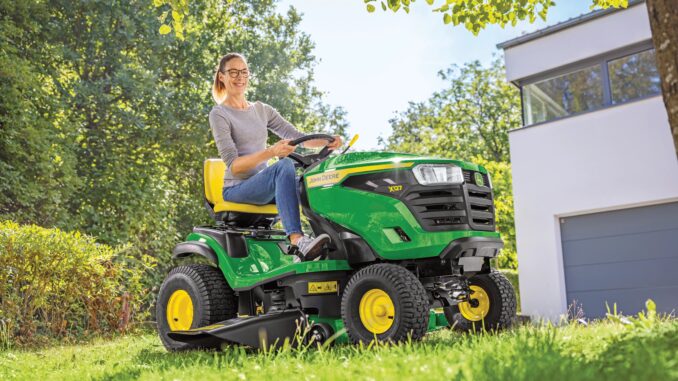
The John Deere D160 is a 100 Series lawn tractor aimed at homeowners who want a larger 48-inch deck, hydrostatic drive, and a V-twin gasoline engine for regular mowing on medium to larger residential lawns. This guide is built for USA and Canada owners and focuses on practical repair decisions, symptom-first troubleshooting, routine maintenance, common parts, and a detailed FAQ so owners can decide what is realistic DIY work and what is better handled by a dealer.
John Deere D160 model overview
The John Deere D160 sits in the D100 Series lineup and shares its operator manual platform with the D140, D155, and D170 models. Deere identifies the D160 as a hydrostatic model, and the specification material shows a Briggs & Stratton V-twin engine with 724 cc displacement, regular 87-octane fuel, and a 48-inch mower deck configuration.
For most owners, the John Deere D160 is a lawn tractor first, not a heavy ground-engaging machine. It is best suited to mowing, towing light yard attachments within Deere guidance, and routine property work where cut quality, starting reliability, and deck drive condition matter more than raw pulling power.
General overview of the John Deere D160
The main systems owners usually deal with on a John Deere D160 are the engine and fuel system, mower deck and blade system, hydrostatic drive system, steering and chassis points, and the electrical/safety interlock system. In day-to-day ownership, the parts that most often affect reliability are the air filter, fuel filter, spark plugs, oil filter, mower belt, traction drive belt, battery, ignition switch, and blades.
Common service parts owners often buy for the John Deere D160 include engine oil filter AM125424, fuel filter AM116304, air filter cartridge MIU11515, air filter pre-cleaner MIU11517, traction drive belt GX20006, mower belt GX21833, 48-inch blade GX21784, ignition switch GY20074, key GY20680, and battery TY25878. Deere also lists two spark plug options depending on engine specification, M78543 or MIU11020, which is why matching the engine model and serial number matters before ordering ignition parts.
Troubleshooting approach
The best way to diagnose a John Deere D160 is to start with the exact symptom the owner sees, then narrow the likely system rather than replacing parts at random. On this model, the main symptom groups are starting problems, poor running, weak or uneven cutting, vibration and noise, overheating or fuel/oil leaks, drive complaints, and electrical or safety-switch faults.
A symptom-first approach matters because several John Deere D160 problems overlap. For example, a mower that seems underpowered can come from a dirty air filter, dull blades, a worn deck belt, wet grass load, or buildup under the deck, so the visible symptom has to be separated before ordering parts.
John Deere D160 starting issues that need immediate attention
If the John Deere D160 will not crank, only clicks, or starts and immediately dies, stop and work through the basic fuel, battery, and safety-interlock checks before repeated key cycling. Repeated attempts can overheat wiring, drain the battery, and hide the original issue.
4.1 Starting issues
A no-start condition matters immediately because it can be caused by a weak battery, dirty fuel delivery, a failed ignition switch, or an interlock fault that prevents safe starting. It can also point to neglected annual service items such as spark plugs, air filter, or fuel filter.
-
Common causes: weak or failing battery, corroded battery terminals, old fuel, plugged fuel filter, fouled spark plugs, dirty air filter, failed ignition switch, seat/brake/PTO interlock issue.
-
Basic owner checks:
-
Confirm the PTO is off, brake is fully set, and the operator is seated correctly.
-
Check battery cable tightness and terminal corrosion.
-
Inspect fuel level and fuel age; replace stale fuel if needed.
-
Replace or inspect the fuel filter, air filter, and spark plugs if service is overdue.
-
If it still will not crank or repeatedly blows fuses, move to dealer-level electrical diagnosis.
-
4.2 John Deere D160 cut-quality problems
Poor cut quality on a John Deere D160 usually shows up as stragglers, scalping, uncut strips, clumping, or an uneven deck side-to-side. These issues matter because owners often blame the engine when the real cause is blade condition, deck level, belt wear, spindle problems, or packed grass under the shell.
-
Common causes: dull or bent blades, wrong tire pressure, deck out of level, worn mower belt GX21833, spindle/brake issues, heavy wet grass, deck packed with debris.
-
Basic owner checks:
-
Clean the underside of the deck after the machine cools and is made safe.
-
Inspect blades for wear, bends, and edge condition.
-
Check tire pressures and deck level using the leveling procedure and gauge where applicable.
-
Inspect mower belt condition and tension-related behavior.
-
If spindle bearings are noisy or blade brake function is questionable, stop mowing until repaired.
-
4.3 John Deere D160 vibration and noise
Sudden vibration on a John Deere D160 should be treated as an immediate stop-and-inspect problem, especially after hitting an object. Deere specifically instructs operators to stop the machine and inspect it after impact or abnormal vibration before operating again.
-
Common causes: bent blade, loose blade hardware, damaged spindle, debris wrapped around spindle area, worn idler or belt issue, loose deck or wheel hardware.
-
Basic owner checks:
-
Shut the machine down, remove key, and wait for all movement to stop.
-
Inspect blades and blade bolts carefully.
-
Check deck shell, spindle area, and belt path for debris or damage.
-
Check wheel hardware tightness and obvious chassis looseness.
-
Do not keep mowing with vibration because it can damage spindles, belts, and deck components.
-
4.4 Overheating and leaks
Heat and leak issues on a John Deere D160 should be dealt with quickly because Deere’s manual repeatedly ties debris buildup, cooling-fin blockage, and fuel or oil leaks to fire risk and premature failure. On this tractor, dry grass packed around the muffler, engine screens, deck top, or transmission area is a real maintenance problem, not just cosmetic dirt.
-
Common causes: blocked cooling fins, debris near muffler or engine screen, leaking fuel line or cap area, overfilled crankcase, neglected oil service, heavy mowing load in hot dry conditions.
-
Basic owner checks:
-
Let the tractor cool fully before cleaning.
-
Clean engine screens, cooling-fin areas, muffler surroundings, transmission area, and top of deck.
-
Inspect for wet oil or fuel traces around lines, filter, cap, and engine.
-
Verify oil was changed on schedule and filled correctly.
-
If a leak reaches hot exhaust parts or the engine continues running hot, stop using the machine until repaired.
-
4.5 John Deere D160 transmission and drive problems
Drive complaints on a John Deere D160 typically look like weak hill performance, slow response, failure to move, or belt-related slipping rather than classic gear transmission issues. Because the model uses hydrostatic drive and Deere lists a traction drive belt as a key replacement item, belt condition and linkage issues are common owner-side checks before deeper transmission diagnosis.
-
Common causes: worn traction drive belt GX20006, linkage adjustment problems, bypass left engaged after moving the tractor manually, low traction on slopes or wet ground, internal hydrostatic wear.
-
Basic owner checks:
-
Confirm the freewheel/bypass setting is returned to normal drive position after pushing the tractor.
-
Inspect traction drive belt condition and routing externally where visible.
-
Test on level ground before assuming the transmission is failing.
-
Avoid diagnosing hill performance on wet grass, because traction loss can mimic a drive problem.
-
If the tractor still will not pull correctly after belt and linkage checks, dealer diagnosis is usually the sensible next step.
-
4.6 John Deere D160 electrical problems
Electrical issues on the John Deere D160 usually show up as no crank, intermittent starting, blown fuse symptoms, dead lights, or erratic safety-switch behavior. Because the machine relies on several safety devices and Deere stresses keeping those devices in place and working, bypassing them is not a sensible repair path.
-
Common causes: weak battery TY25878, dirty battery terminals, ignition switch GY20074 failure, loose wiring, failed headlight bulb AD2062R, seat or brake switch faults.
-
Basic owner checks:
-
Clean battery terminals and confirm cable tightness.
-
Check whether lights, solenoid click, and crank behavior are consistent.
-
Inspect visible wiring near battery, ignition, and seat area for damage.
-
Replace simple wear items such as bulb, battery, or ignition switch only after confirming the symptom path.
-
Persistent electrical faults are usually faster to solve with wiring diagrams and proper test equipment.
-
DIY or dealer work on the John Deere D160
The normal line on a John Deere D160 is straightforward: routine service and simple bolt-on wear parts are realistic DIY jobs, while electrical tracing, valve adjustment, hydrostatic internal issues, and major engine work are better left to experienced technicians.
Good DIY jobs
-
Engine oil and oil filter service.
-
Air filter and pre-cleaner replacement.
-
Fuel filter replacement.
-
Spark plug replacement.
-
Blade removal, sharpening, or replacement.
-
Deck cleaning, leveling checks, and visible belt inspection.
-
Battery replacement and terminal cleaning.
Advanced DIY or dealer jobs
-
Deck belt replacement if routing or brake adjustment is unclear.
-
Spindle replacement or spindle brake diagnosis.
-
Safety-switch testing with a meter.
-
Traction-drive diagnosis beyond external belt inspection.
-
Valve clearance check and adjustment, which Deere lists at 200 hours with dealer service guidance.
Skill level guide
-
Beginner: filters, battery, spark plugs, deck cleaning, blade inspection.
-
Intermediate: blades, deck belt, deck leveling, ignition switch, fuel system consumables.
-
Advanced: electrical diagnosis, spindle/brake work, drive system diagnosis, valve adjustment, engine internal repairs.
Parts needed for John Deere D160 repairs
Before ordering John Deere D160 parts, gather the full model name, machine PIN, engine model and serial number, and confirmation that the tractor has the 48-inch deck setup tied to the D160 maintenance sheet. Deere’s operator manual says the tractor PIN is on the left side of the frame, and the manual also distinguishes between V-twin engine serial locations and serial-number-sensitive parts such as the fuel cap.
OEM parts usually make the most sense for belts, ignition/safety-related items, and fit-sensitive deck or drive parts because exact routing, dimensions, and switch behavior matter. Aftermarket parts are commonly acceptable for items like batteries, filters, and blades when the cross-reference is exact and the source is reputable, but serial-sensitive Deere numbers should still be checked before purchase.
John Deere D160 manuals and diagrams
For official information, the most useful sources are Deere’s D100 Series operator manual, Deere’s D160 48-inch parts and maintenance sheet, Deere’s owner support or JDParts lookup, and a Deere-focused retailer with model-specific diagrams.
-
John Deere D100 Series operator manual — best for safety, controls, service intervals, lubrication, mower service, troubleshooting, storage, and PIN location.
-
Deere D160 48-inch parts and maintenance PDF — best quick reference for common part numbers, kit numbers, and maintenance consumables.
-
John Deere Owner Support / parts lookup — useful for official parts support and Deere service resources.
-
Green Farm Parts D160 page — useful for illustrated retail parts browsing when you already know the model.
How to find John Deere D160 serial numbers
These numbers matter because the John Deere D160 uses engine-specific tune-up parts and at least some serial-break parts such as the fuel cap. Getting them first reduces wrong-part orders and wasted downtime.
-
Park the tractor safely on level ground, shut off the engine, remove the key, and let moving parts stop.
-
Locate the tractor PIN on the left side of the frame, as shown in Deere’s operator manual.
-
Record the full machine PIN before ordering chassis, deck, steering, or electrical parts.
-
Find the engine serial number on the engine itself; Deere shows separate example locations for single-cylinder and V-twin engines, and the D160 uses the V-twin layout.
-
Confirm the machine is the D160 with 48-inch deck before ordering deck-specific parts such as blades or mower belt.
Buying John Deere D160 parts
The best buying strategy is to confirm the Deere OEM part number first, then compare official and reputable aftermarket sources only after the number is locked down. That keeps common mistakes like wrong spark plugs, serial-break fuel caps, or incorrect 48-inch deck parts to a minimum.
-
Online: verify OEM numbers and serial-sensitive notes first, then compare Deere support, dealer sites, and specialist Deere retailers.
-
Dealer counter: best for unusual electrical parts, serial-number breaks, and anything where the parts diagram matters more than price.
-
Retail stores: acceptable for oil, fuel line clamps, batteries, or filters only when packaging clearly cross-references the D160 or the exact OEM number.
Useful sources include John Deere Owner Support, JDParts maintenance sheet access, and Green Farm Parts D160 listings.
John Deere D160 fitting guide for common parts
The jobs below cover the highest-impact maintenance items most owners replace on a John Deere D160 when curing hard starting, rough running, and poor mowing results.
Change the John Deere D160 air filter
A clogged air filter can make the John Deere D160 run rich, lose power, and foul plugs earlier than expected.
-
Park safely, shut down, remove key, and let the engine cool.
-
Open the hood and access the air cleaner housing.
-
Remove the old cartridge and pre-cleaner, noting how they sit.
-
Clean loose dust from the housing without forcing dirt into the intake.
-
Install new MIU11515 cartridge and MIU11517 pre-cleaner if fitted.
-
Refit the cover securely and inspect for proper sealing.
Replace the John Deere D160 fuel filter
Replacing the fuel filter helps cure fuel starvation, surging, and start-then-die complaints on the John Deere D160.
-
Work in a cool, ventilated area away from ignition sources.
-
Clamp or control fuel flow as needed and place a rag under the line.
-
Remove the old in-line filter AM116304 and note the flow direction.
-
Install the new filter in the correct direction toward the engine.
-
Secure the clamps, wipe spilled fuel, and check carefully for leaks before restarting.
Replace John Deere D160 spark plugs
Fresh spark plugs are one of the quickest ways to restore easier starting and smoother running when annual service is overdue.
-
Let the engine cool fully and remove the plug wire boots.
-
Remove both plugs and compare them for fouling, oiling, or uneven color.
-
Match the replacement to the engine specification: M78543 or MIU11020 as listed for the D160 sheet.
-
Install the new plugs carefully by hand first to avoid thread damage.
-
Refit the plug wires firmly and test start.
Change blades on the John Deere D160 48-inch deck
Blade service fixes many cut-quality and vibration complaints faster than chasing engine problems.
-
Park safely, disable ignition, and secure the tractor for deck work.
-
Inspect the three 48-inch deck blades for bends, cracks, and worn edges.
-
Remove and sharpen or replace the blades with the correct GX21784 pattern or Deere blade kit as applicable.
-
Reinstall blades as a balanced set and tighten hardware to specification from the manual or dealer information.
-
Test cut on level grass and recheck for vibration.
Preventing repeat John Deere D160 problems
Regular maintenance prevents most recurring John Deere D160 complaints because the trouble spots are predictable: fuel aging, dirty intake parts, worn deck drive parts, neglected blade condition, debris buildup, and battery corrosion. The official maintenance sheet and operator manual make that pattern clear.
-
Starting reliability: replace fuel filter, spark plugs, air filter, and oil filter on schedule; keep battery terminals clean.
-
Cut quality: sharpen or replace blades, keep the deck clean, check belt condition, and verify deck level.
-
Fire and overheating prevention: clean engine screens, muffler area, top of deck, and transmission area frequently in dry conditions.
-
Drive performance: inspect traction belt condition and avoid storing the tractor with neglected debris or obvious linkage issues.
-
Electrical reliability: keep terminals clean, protect wiring, and avoid repeated low-battery cranking.
John Deere D160 maintenance schedule
Deere’s quick maintenance sheet for the D160 with 48-inch deck gives a practical structure for owner servicing, with checks after 8 hours, every 25 hours, every 50 hours or annually, and every 200 hours. The operator manual also notes that the full service list should be checked there for complete intervals and procedures.
Daily or before each use
-
Check the machine for debris buildup around hot or moving areas.
-
Inspect blades, shields, discharge components, and visible hardware condition.
-
Check fuel level and look for obvious oil or fuel leaks.
-
Confirm safety devices are in place and functioning.
After 8 hours
-
Change engine oil.
-
Check and adjust mower deck belt tension.
-
Check and adjust mower deck spindle brakes.
-
Lubricate mower spindles, pivot points, and front axle wheel spindles and bushings.
Every 25 hours
-
Lubricate mower spindles.
-
Lubricate pivot points.
-
Lubricate front axle wheel spindles and bushings.
Every 50 hours or yearly
-
Change engine oil and replace oil filter.
-
Clean or replace air filter pre-cleaner and element.
-
Replace fuel filter.
-
Sharpen or replace mower blades.
-
Check or replace mower drive belt.
-
Check and adjust deck belt tension and spindle brakes.
Every 200 hours
-
Check and adjust valve clearance.
-
Deere directs owners to the dealer for this service.
Seasonal checklist
-
Spring: change overdue engine service items, inspect battery, install sharp blades, and clean the full machine before first heavy mowing.
-
Mid-season: recheck deck cleanliness, lubrication points, belt condition, and air filtration if mowing in dusty or dry conditions.
-
Fall or end of season: clean the tractor thoroughly, remove debris from engine and deck areas, address leaks, and store only after cooling and cleanup.
Repair, upgrade, or replace the John Deere D160
For a John Deere D160, repair usually makes sense when the chassis, deck shell, engine compression, and hydrostatic drive are still fundamentally sound and the issue is limited to wear parts or maintenance neglect. Upgrade makes more sense when the tractor still works but the owner wants easier parts support, newer features, or more capability, while full replacement is usually the practical choice when multiple major systems are failing at once.
Repair if
-
The problem is a belt, blade, battery, switch, filter, plug, or deck setup issue.
-
The engine starts and runs well after service, and the tractor drives normally.
-
The deck and frame are structurally sound.
Upgrade if
-
The John Deere D160 still works but the owner wants a newer 48-inch tractor with updated convenience features.
-
Repeated mowing demands exceed what a homeowner lawn tractor comfortably does.
-
The cost of several medium repairs is approaching the value of a better-spec replacement mower.
Replace if
-
The engine, hydrostatic drive, and deck all need major work at the same time.
-
The tractor has severe rust, crash damage, or long-term neglect across multiple systems.
-
Safety-critical systems cannot be restored economically.
John Deere D160 troubleshooting FAQ
1. Why will my John Deere D160 not start?
Most no-start complaints on a John Deere D160 come down to battery condition, stale fuel, plugged fuel filter, fouled spark plugs, dirty air filter, or a safety interlock condition such as PTO engaged or brake not fully set. Start with the simple checks before replacing parts, because Deere’s service layout makes these basic consumables the first likely causes on an otherwise healthy machine.
2. Why does my John Deere D160 click but not crank?
A click with no crank usually points to a weak battery, poor cable connection, terminal corrosion, or high resistance in the starting circuit. Clean and tighten the terminals first, then test battery condition before assuming the starter is bad.
3. Why does my John Deere D160 start and then die?
That symptom often means fuel flow is restricted or the engine is not getting enough air. Old fuel, a clogged AM116304 fuel filter, or a dirty MIU11515 air filter are common places to start.
4. Why is my John Deere D160 hard to start when cold?
Cold-start trouble often comes from neglected tune-up parts, especially spark plugs and air/fuel service items. If annual maintenance is overdue, replacing plugs, air filter, and fuel filter is a more sensible first move than chasing obscure faults.
5. Can bad gas cause John Deere D160 starting problems?
Yes, stale gasoline can contribute to hard starting, rough running, and start-then-die complaints. Deere specifies regular 87-octane unleaded fuel, and fresh fuel matters more than using higher octane in a neglected mower.
6. Why does my John Deere D160 run rough?
Rough running is commonly linked to dirty intake parts, partially restricted fuel flow, or worn spark plugs. Start with the scheduled service items before assuming deeper engine trouble.
7. Why does my John Deere D160 backfire?
Backfiring can follow poor tune-up condition, inconsistent combustion, or shutdown habits that leave fuel unburned. If the tractor also starts poorly or runs unevenly, service the plugs, filters, and fuel system first.
8. Why does my John Deere D160 lose power in heavy grass?
Loss of power in grass often means the deck load is too high for the current conditions, or the blades and deck are not in good working order. Wet grass, dull blades, deck buildup, and a worn mower belt can all make the engine feel weaker than it really is.
9. Why is my John Deere D160 leaving strips of uncut grass?
Uncut strips usually come from dull blades, wrong deck level, low blade tip performance due to belt wear, or mowing too fast for the conditions. Blade condition and deck setup are the first areas to inspect.
10. Why does my John Deere D160 cut unevenly?
An uneven cut often traces back to tire pressure differences, deck level being off, or one blade/spindle not performing like the others. Check the basics before replacing expensive parts.
11. Why is my John Deere D160 scalping the lawn?
Scalping usually means the deck height is too low for the terrain or the deck is not leveled correctly. It can also happen when the operator moves too fast over uneven ground.
12. Why does my John Deere D160 clump grass?
Clumping is commonly caused by wet growth, a dirty deck underside, dull blades, or trying to remove too much grass in one pass. Cleaning the deck and keeping blades sharp usually helps quickly.
13. Why does my John Deere D160 vibrate when mowing?
A mowing vibration often points to a bent blade, loose blade hardware, damaged spindle, or debris stuck in the rotating assembly. Deere says abnormal vibration is a stop-and-inspect situation, not something to keep mowing through.
14. Can a bent blade damage my John Deere D160 deck?
Yes, continued use with a bent blade can overload spindle parts, worsen vibration, and damage surrounding deck components over time. It is one of the simplest problems to correct early and one of the more expensive ones to ignore.
15. Why does my John Deere D160 belt keep slipping?
A slipping belt usually means wear, glazing, contamination, poor tension, or pulley/idler issues. On the deck side, the GX21833 mower belt is the main Deere-listed belt to inspect first.
16. How do I know if the John Deere D160 mower belt is bad?
Look for cracking, glazing, frayed edges, burning smell, poor blade performance, or inconsistent cutting under load. If cut quality drops even with sharp blades, the belt is a logical next inspection point.
17. Why are my John Deere D160 blades not engaging properly?
Poor engagement can be caused by belt issues, deck brake adjustment problems, damaged pulleys, or related linkage faults. Because the service sheet specifically calls for checking deck belt tension and spindle brakes, those items deserve early attention.
18. How often should I sharpen John Deere D160 blades?
Deere’s maintenance sheet lists sharpening or replacing blades every 50 hours or yearly. In practice, dusty ground, sticks, sand, and mowing frequency can justify doing it sooner.
19. What blades fit the John Deere D160 48-inch deck?
Deere lists GX21784 as the 48-inch 3-in-1 blade and GY20852 as a related 48-inch blade kit for the D160 maintenance sheet. Always confirm deck size before ordering because blade fit is deck-specific.
20. Why does my John Deere D160 smell hot after mowing?
A hot smell often comes from grass debris on hot engine or exhaust areas, belt slip, or an overworked deck in heavy conditions. Deere specifically warns that debris around the muffler, engine screens, deck top, and transmission can increase fire risk.
21. How do I stop my John Deere D160 from overheating?
Keep the cooling areas clean, service the engine on schedule, and avoid letting dry debris build up around the engine and exhaust. Overheating prevention on this tractor is mostly about cleanliness and routine service, not complicated modification.
22. Why is my John Deere D160 leaking fuel?
Fuel leaks can come from the filter area, hose connections, cap area, or damaged lines. Because gasoline and dry grass are a dangerous combination, the safe move is to stop using the tractor until the leak is found and corrected.
23. Why is my John Deere D160 battery always dead?
Repeated dead-battery complaints usually come from age, corrosion, poor charging, or repeated short runs with hard starting. Start by cleaning terminals and confirming the battery itself is still healthy before replacing other electrical parts.
24. What battery does the John Deere D160 use?
Deere lists TY25878 as the battery on the D160 48-inch maintenance sheet. Equivalent aftermarket batteries can work if the size, terminal layout, and rating cross-reference correctly.
25. Why won’t my John Deere D160 move?
If the engine runs but the tractor will not move, check whether the freewheel setting was left in the push position and inspect the traction belt condition. If those basics are fine, the problem may be linkage or hydrostatic internal wear.
26. Why is my John Deere D160 weak on hills?
Weak hill performance can be true drive weakness or just traction loss, especially on wet or marginal slopes. Deere’s manual emphasizes slope limits and warns that traction and stability issues increase rapidly as slope angle rises.
27. What is the traction drive belt part number for the John Deere D160?
Deere lists GX20006 as the traction drive belt for the D160. It is one of the key parts to inspect when owners describe slipping or weak movement.
28. Which oil filter fits the John Deere D160?
Deere lists AM125424 as the engine oil filter for the D160 with 48-inch deck. Matching the official number first is the safest way to cross-reference aftermarket filters.
29. Which air filter fits the John Deere D160?
The main air filter cartridge is MIU11515, and Deere also lists pre-cleaner MIU11517. Replacing both together is often the simplest annual-service approach.
30. Which spark plug does a John Deere D160 use?
Deere lists either M78543 or MIU11020 depending on engine specification. That is why the engine model and serial number should be checked before ordering plugs.
31. How often should I change oil in a John Deere D160?
The D160 quick sheet shows an initial oil change after 8 hours, then oil and filter service every 50 hours or yearly, with oil also shown in the recurring schedule through 250 hours. The operator manual remains the final source for the complete interval list and procedure details.
32. Does the John Deere D160 need grease service?
Yes, Deere lists greasing mower spindles, pivot points, and front axle wheel spindle and bushing areas in the schedule. Skipping lubrication can shorten component life and contribute to noise and wear.
33. When should valve clearance be checked on a John Deere D160?
Deere lists valve clearance check and adjustment at 200 hours. The same sheet directs owners to their John Deere dealer for that service, which is a good sign that it is beyond routine homeowner maintenance.
34. Where is the PIN on a John Deere D160?
The operator manual says the machine product identification number is located on the left side of the frame. Record it before ordering parts or asking a dealer to confirm serial-sensitive items.
35. Is the John Deere D160 a good DIY mower to maintain?
Yes, within limits. The John Deere D160 is owner-friendly for routine service parts and basic deck work, but it becomes a dealer-level machine once diagnosis moves into hydrostatic internals, valve adjustment, or time-consuming electrical tracing.