
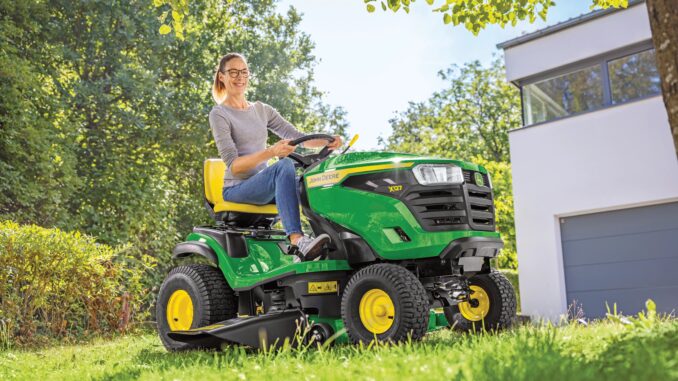
The John Deere 60 is a small vintage rear-engine lawn tractor built from 1966 to 1969, with a 6 HP single-cylinder Tecumseh gasoline engine, 6-speed gear transmission, two-wheel drive layout, and a 34-inch mid-mount mower deck as its main mowing setup. For homeowners and DIY users in the USA and Canada, it is best suited to lighter residential mowing and basic seasonal yard work rather than heavy towing or commercial-grade cutting.
This guide covers practical John Deere 60 troubleshooting, maintenance planning, parts lookup strategy, diagrams, manuals, and a realistic DIY-versus-dealer decision line for common repairs. Because the John Deere 60 is an older machine, successful repair usually depends on symptom-based diagnosis first and part-number matching second, especially where serial breaks, engine variants, or attachment differences may affect fit.
John Deere 60 overview
The John Deere 60 sits in Deere’s early lawn tractor lineup and predates the larger, more feature-heavy lawn and garden tractors that followed later. It was built in Horicon, Wisconsin, and uses a compact, straightforward mechanical layout that makes it appealing to owners who prefer basic service access over modern complexity.
The main systems that matter on a John Deere 60 are:
-
Engine and fuel system: Tecumseh 221cc single-cylinder gasoline engine, fuel tank, carburetor, air intake, ignition, and spark plug.
-
Mower system: 34-inch mid-mount deck, deck belt, spindle/blade hardware, lift linkage, and discharge path.
-
Drive system: 6-speed gear transmission, clutch/brake linkages, drive belt or drivetrain components depending on configuration, and rear axle hardware.
-
Electrical system: 12-volt battery system, starting circuit, ignition switch, wiring, and safety-related interlocks as applicable to the tractor’s setup.
Several service items owners commonly end up sourcing for machines like this include the spark plug, air filter, fuel line, inline fuel filter if added, deck belt, blade hardware, battery, ignition switch, and drive or clutch-related wear items. On a vintage John Deere 60, exact OEM numbers should always be confirmed by tractor serial number and by the engine identification tag before purchase.
John Deere 60 troubleshooting approach
The best way to diagnose a John Deere 60 is to begin with the symptom the owner actually sees, such as “won’t start,” “cuts unevenly,” “vibrates,” or “won’t move properly,” rather than ordering parts first. This is especially important on older Deere equipment because age, storage conditions, previous owner modifications, and non-original components often create more than one fault at the same time.
The main symptom groups for this model are:
-
Starting issues
-
Running issues
-
Cut-quality problems
-
Vibration and noise
-
Overheating or fuel/oil leaks
-
Transmission or drive problems
-
Electrical and battery problems
Emergency John Deere 60 repairs
Some faults on a John Deere 60 should be handled immediately because they affect safe operation or can turn a small repair into a major one if ignored. The most urgent examples are severe vibration, fuel leakage, loose blade hardware, failing steering or brake components, and any condition where the mower keeps running or moving unpredictably.
John Deere 60 starting issues
When a John Deere 60 cranks poorly or does not start at all, the problem often traces back to fuel delivery, ignition, stale fuel, battery weakness, or corroded electrical connections on an older machine. On a vintage tractor, long storage is one of the biggest causes of hard starting.
Common causes:
-
Weak or discharged 12-volt battery.
-
Dirty or loose battery terminals.
-
Faulty ignition switch or wiring.
-
Fouled spark plug.
-
Old fuel, blocked fuel line, or dirty carburetor.
-
Restricted air intake.
Basic owner checks:
-
Confirm the battery is charged and both cable ends are clean and tight.
-
Check for fresh fuel and make sure fuel can reach the carburetor.
-
Remove and inspect the spark plug for fouling, damage, or heavy carbon.
-
Inspect visible wiring for cracked insulation or poor terminal connections.
-
Check that the tractor is being started in the correct safe starting condition.
John Deere 60 cut-quality problems
If the John Deere 60 leaves streaks, scalps the lawn, or throws clumps, start with blade condition, deck cleanliness, tire pressure, and deck setup before assuming a major mechanical fault. Uneven cut often comes from simple wear or adjustment issues rather than a failed spindle.
Common causes:
-
Dull or bent blade.
-
Packed grass under the 34-inch deck.
-
Uneven tire pressure.
-
Deck out of level.
-
Worn belt causing poor blade speed.
-
Bent deck shell or damaged spindle area.
Basic owner checks:
-
Clean the underside of the deck with the engine off and the key removed.
-
Inspect the blade for wear, bends, or a poor sharpened edge.
-
Set tire pressures evenly left to right.
-
Check deck level side-to-side and front-to-rear.
-
Inspect the belt for glazing, cracking, or slack.
John Deere 60 vibration and noise
Unusual vibration on a John Deere 60 should be treated as urgent because it can quickly damage spindle parts, engine mounts, pulleys, or sheet metal if the tractor is kept in service. A vibration problem is often linked to rotating parts rather than the engine itself.
Common causes:
-
Bent or unbalanced blade.
-
Loose blade bolt or mounting hardware.
-
Worn spindle bearings.
-
Cracked pulley.
-
Loose engine mounting bolts.
-
Damaged deck belt.
Basic owner checks:
-
Stop using the tractor until the vibration source is identified.
-
Inspect the blade and blade fastener first.
-
Spin deck pulleys by hand with the engine off and check for roughness.
-
Check for loose fasteners around the engine, deck, and belt guards.
-
Replace obviously damaged rotating parts before mowing again.
Overheating and leaks on a John Deere 60
A small air-cooled lawn tractor engine can overheat fast when cooling fins clog, the mixture is wrong, or oil level is neglected. Fuel seepage is equally important because it raises both fire risk and reliability problems.
Common causes:
-
Debris packed around engine cooling areas.
-
Low oil level.
-
Carburetor running too lean or too rich.
-
Fuel line cracking with age.
-
Loose clamps or leaking shutoff components.
-
Old gaskets and seals on a machine stored for long periods.
Basic owner checks:
-
Clean all external debris from the engine cooling area.
-
Verify oil level before each use.
-
Inspect the fuel line from tank to carburetor for cracks or damp spots.
-
Replace brittle fuel hose immediately.
-
Stop running the tractor if raw fuel smell becomes strong or visible leakage appears.
John Deere 60 transmission and drive problems
When the John Deere 60 does not move correctly, slips under load, or is difficult to shift, the fault may be in clutch linkage adjustment, drive wear, belt issues, or transmission-related wear in the 6-speed gear setup. Owners should rule out linkage and external issues before assuming the gearbox itself has failed.
Common causes:
-
Clutch or brake linkage out of adjustment.
-
Worn belt or external drive component.
-
Shifter wear.
-
Axle key or wheel hub issues.
-
Internal transmission wear.
-
Old grease and seized pivots.
Basic owner checks:
-
Inspect linkages for free movement and obvious wear.
-
Check for loose wheel hardware or axle-related play.
-
Verify clutch and brake pedal travel feels normal.
-
Look for belt wear or contamination if the tractor’s configuration uses external belt drive components.
-
Stop before forcing shifts, as this can worsen internal damage.
John Deere 60 electrical problems
Electrical faults on a John Deere 60 often come from age, corrosion, brittle insulation, and poor grounds rather than one failed major component. Starting and charging complaints may overlap, so the battery and connections should always be checked first.
Common causes:
-
Weak battery.
-
Dirty or corroded grounds.
-
Faulty ignition switch.
-
Damaged wiring.
-
Poor terminal connections.
-
Starter-generator or charging-circuit issues, depending on setup.
Basic owner checks:
-
Clean battery posts and cable ends.
-
Inspect the ground path for rust or loose hardware.
-
Check for voltage drop during cranking.
-
Wiggle-test suspect connections carefully with the key off.
-
Replace visibly cracked wires or terminals before chasing more complex faults.
DIY or dealer work on a John Deere 60
The usual line on a John Deere 60 is simple: routine service, deck work, ignition tune-up, fuel-hose replacement, and basic linkage adjustment are realistic DIY jobs, while internal engine rebuilds, transmission teardown, and hard-to-source serial-specific diagnosis are better handled by an experienced small-engine or vintage Deere specialist.
Good DIY jobs
-
Spark plug replacement.
-
Air filter service.
-
Fuel line replacement.
-
Battery replacement.
-
Blade removal, sharpening, or replacement.
-
Deck cleaning and leveling.
-
Belt inspection and basic replacement where routing is confirmed by diagram.
Advanced DIY or dealer jobs
-
Carburetor overhaul and governor setup.
-
Starter-generator or charging diagnosis.
-
Spindle rebuilds requiring press work.
-
Gear transmission repair.
-
Internal engine work.
-
Fabrication or adaptation where original parts are obsolete.
Skill level guide
-
Beginner: Battery, spark plug, oil checks, deck cleaning, blade inspection.
-
Intermediate: Belt replacement, carburetor cleaning, deck leveling, switch testing, linkage adjustment.
-
Advanced: Engine teardown, charging-system diagnosis, transmission rebuild, precision deck/spindle restoration.
John Deere 60 parts, OEM vs aftermarket, and ordering info
Before ordering John Deere 60 parts, gather the full model name, tractor serial number, and engine identification from the engine tag because older Deere machines often have running changes, attachment differences, or swapped engines over their lifetime. If you are ordering deck parts, also confirm that you are working with the 34-inch mower deck and not assuming interchange with a different Deere attachment.
OEM is usually the safer choice for belts, switches, fit-sensitive deck parts, and safety-related items because routing, pulley engagement, and terminal layout matter more than headline price. Aftermarket parts are usually acceptable for consumables such as spark plugs, batteries, fuel line, and some blades, as long as the cross-reference is tied to the exact engine spec or deck setup.
John Deere 60 diagrams and manuals
The most useful sources for John Deere 60 diagrams and manuals are Deere’s manual portal, Deere’s parts catalog, TractorData for quick-reference model details, and a Deere-focused parts retailer that lets you move from illustrated diagram to orderable part number.
Useful sources:
-
John Deere Manuals and Training — official source for operator, technical, and parts publications.
-
John Deere Parts Catalog — official illustrated parts lookup, though access and indexing can vary by model and browser session.
-
TractorData John Deere 60 — quick-reference specs, serial location, and manual references.
-
Green Farm Parts Deere Parts Lookup — useful for illustrated lookup workflow after identifying the Deere part number.
How to find John Deere 60 serial and engine numbers
These numbers matter because the John Deere 60 is an older tractor, and the correct part may depend on the tractor serial sequence, attachment setup, or exact engine specification rather than the hood decal alone.
Steps:
-
Stand at the operator area and look below the steering wheel for the tractor serial-number plate, which is the published serial-number location for the John Deere 60.
-
Record the full serial exactly as stamped, including any prefixes or spacing.
-
If checking deck parts, inspect the mower deck for its own tag or stamped identification if still present.
-
Find the engine identification tag or stamping on the Tecumseh engine shrouding or engine body and record the full engine model/spec information.
-
Use all numbers together when comparing manuals, diagrams, and listings.
Buying John Deere 60 parts online and in stores
For the John Deere 60, the smartest buying strategy is to identify the exact OEM part number first, then compare availability across Deere sources and reputable aftermarket sellers rather than shopping by title alone. This matters more on vintage Deere machines because many listings use broad compatibility claims that may not reflect serial breaks or engine-spec changes.
Best routes:
-
Online: check OEM numbers first, then compare listings on Deere and Deere-focused parts sellers; good starting points are Deere Manuals and Training, John Deere Parts Catalog, and Green Farm Parts.
-
Dealer counter: best for serial-sensitive parts, switchgear, deck hardware, and any part where the old number may supersede to a newer number.
-
Retail stores: acceptable for common consumables such as a battery, spark plug, fuel line, and some filters, but only if the packaging cross-references the exact engine or part number.
Step-by-step fitting guide for common John Deere 60 parts
These are the highest-value DIY jobs on a John Deere 60 because they address the most common homeowner complaints: no-start, rough running, poor cut, and vibration.
Replace the spark plug on a John Deere 60
A new plug can fix hard starting, misfiring, and weak running if the old plug is fouled or worn.
-
Disconnect the plug wire and remove the old spark plug with the engine cool.
-
Compare the removed plug with the replacement matched to the exact engine spec.
-
Check and set the gap to the engine specification if the plug is not pre-gapped.
-
Thread the new plug in by hand first to avoid cross-threading.
-
Tighten correctly, then refit the plug wire securely.
Replace fuel line on a John Deere 60
This job helps with hard starting, fuel smell, and visible seepage on an older tractor.
-
Shut off fuel if a shutoff is fitted, or clamp the line safely before removal.
-
Remove the old hardened line and inspect it for cracks, swelling, or loose ends.
-
Cut new fuel-safe line to the same length without creating sharp bends.
-
Install with fresh clamps where needed and route it away from heat and moving parts.
-
Recheck for leaks before starting the engine.
Remove and service the mower blade on a John Deere 60
Blade service improves cut quality and reduces tearing of grass.
-
Remove the ignition key and secure the tractor so it cannot roll.
-
Raise access safely and block the blade from turning.
-
Remove the blade fastener and note blade orientation before removal.
-
Sharpen and balance the blade, or replace it if bent or heavily worn.
-
Reinstall in the correct direction and tighten hardware properly.
Inspect or replace the deck belt on a John Deere 60
A worn deck belt can cause weak cutting, poor discharge, and inconsistent blade speed.
-
Confirm the exact deck configuration and belt routing from a diagram before removal.
-
Remove guards or covers as needed and photograph routing if helpful.
-
Release belt tension and remove the old belt from pulleys carefully.
-
Check pulleys for wobble, rough bearings, or sharp edges before fitting the new belt.
-
Install the new belt exactly to diagram, then test engagement and tracking.
Maintenance to prevent John Deere 60 problems
Regular maintenance matters even more on a John Deere 60 because age-related failures tend to stack up: stale fuel affects starting, debris affects cooling, and neglected deck parts quickly lead to vibration and poor cutting. Small checks done often are usually more effective than occasional major repair sessions on a vintage lawn tractor.
Focus areas:
-
Starting reliability: keep fresh fuel in use, maintain the battery, and inspect ignition parts regularly.
-
Cut quality: keep the 34-inch deck clean, blade sharp, and tires evenly inflated.
-
Fire and overheating prevention: clean debris from the engine area and replace cracked fuel hose immediately.
-
Drive performance: inspect clutch, brake, and shift linkages before problems become wear-related failures.
-
Electrical reliability: clean grounds and terminals before chasing expensive parts.
John Deere 60 maintenance schedule
An exact maintenance chart should be taken from the applicable John Deere 60 operator’s manual version for your serial range, but the official manual references for this model are OM-M41604 and OM-M42248, and those should be your primary authority for interval confirmation. For publication purposes, the checklist below follows the kind of service pattern normally used for this class of lawn tractor while staying conservative and owner-focused.
Daily / before each use
-
Check engine oil level.
-
Check for fuel leaks or damaged fuel line.
-
Inspect blade area and underside of deck for packed debris.
-
Check tire condition and obvious loose hardware.
-
Confirm brakes, steering, and controls operate normally.
After the first 8 hours
-
Recheck external fasteners and deck hardware after any recent repair or seasonal recommissioning.
-
Inspect belt tracking and linkage operation.
-
Check battery hold-down and cable tightness.
Every 25 hours
-
Clean air intake and cooling areas.
-
Inspect spark plug condition.
-
Inspect deck belt and blade condition.
-
Lubricate moving linkage points where applicable.
-
Clean battery terminals and inspect wiring.
Every 50 hours or yearly
-
Replace spark plug if worn or fouled.
-
Service or replace the air filter as needed.
-
Inspect fuel line condition and replace any brittle sections.
-
Check deck level and blade balance.
-
Review clutch, brake, and shift linkages for wear or adjustment need.
Every 200 hours or long-term restoration interval
-
Perform compression and ignition system evaluation if starting or power problems persist.
-
Inspect transmission and axle components for wear or leakage.
-
Rebuild carburetor if storage issues or fuel varnish problems are recurring.
-
Inspect steering wear points and spindle/play in the deck system.
Seasonal checklist
-
Spring: fresh fuel, battery charge check, blade inspection, deck cleanout, test all controls.
-
Mid-season: inspect belt wear, sharpen blade, clean engine cooling surfaces, retighten visible hardware.
-
Fall or storage prep: drain or stabilize fuel, clean tractor thoroughly, remove battery for maintenance charging if storing long term, and inspect for off-season repair needs.
Repair, upgrade, or replace for a John Deere 60
For a John Deere 60, repair usually makes sense when the tractor is structurally sound, starts from a known baseline, and mainly needs wearable parts, tune-up work, or deck attention. Upgrade only when you are improving reliability without compromising fit, and replace the machine when hard parts, safety issues, and labor stack up beyond the tractor’s realistic homeowner value.
Repair if…
-
The engine has decent compression and only needs tune-up or fuel work.
-
The deck shell and frame are still solid.
-
Parts needed are mostly consumables and external wear items.
-
The tractor’s vintage simplicity is part of the value for you.
Upgrade if…
-
You want better battery reliability or modern equivalent consumables.
-
OEM parts are obsolete but a proven cross-reference exists.
-
You are already restoring the machine and want dependable seasonal use.
Replace if…
-
The transmission and engine both need major work.
-
Critical safety or structural parts are badly worn and hard to source.
-
You need faster mowing, heavier towing, or easier parts support than this model can realistically provide.
John Deere 60 troubleshooting FAQ
1. Why will my John Deere 60 not start?
On this model, start with the battery, spark plug, visible wiring, and fuel freshness before assuming a major fault. Many no-start problems on vintage lawn tractors come from weak voltage, corroded terminals, stale gasoline, or a dirty carburetor after storage.
2. Why does my John Deere 60 crank but not fire?
That usually points to a spark or fuel-delivery problem rather than a dead battery. Check whether the plug is wet or dry, confirm the plug is actually firing, and make sure fuel is reaching the carburetor from the tank.
3. Why does my John Deere 60 start and then die?
A tractor that starts briefly and stalls often has restricted fuel flow, a partially blocked carburetor, or venting issues in the fuel system. Old fuel residue is a common cause on machines that sit between seasons.
4. Why is my John Deere 60 hard to start when cold?
Cold-start difficulty usually comes from weak ignition, poor choke function, marginal compression, or stale fuel. Begin with the easy items first, especially plug condition, fuel quality, and correct starting procedure.
5. Why is the battery always dead on my John Deere 60?
The battery may be old, undercharged, or being drained by poor connections or a charging-system fault. Clean the terminals, confirm cable tightness, and test whether the battery is actually holding charge after sitting.
6. Why does my John Deere 60 run rough?
Rough running is commonly linked to fouled ignition parts, carburetor dirt, air restriction, or uneven fuel delivery. On older tractors, small issues often overlap, so a basic tune-up can restore smooth running.
7. Why does my John Deere 60 have no power in grass?
Loss of power under load can mean a dull blade, slipping deck belt, dirty carburetor, or an engine that is no longer making full power. Check the deck system and blade condition before assuming engine failure.
8. Why does my John Deere 60 smoke?
Smoke may point to oil overfill, engine wear, or fuel mixture problems. Persistent blue or black smoke means you should stop and identify whether the issue is oil burning or over-fueling.
9. Why does my John Deere 60 backfire?
Backfiring can be caused by ignition timing issues, lean running, exhaust leaks, or fuel-related imbalance in the carburetor. It also happens more often on engines with stale fuel or inconsistent spark.
10. Why does my John Deere 60 overheat?
This air-cooled tractor depends on clean cooling surfaces and proper engine condition to shed heat. Grass buildup, dirt, low oil, and incorrect mixture can all raise temperature quickly.
11. Why does my John Deere 60 leak fuel?
Fuel lines and seals on older tractors harden with age, so seepage at the hose, tank outlet, or carburetor is common. Treat any fuel leak as urgent because it creates a fire risk.
12. Why does my John Deere 60 cut unevenly?
Uneven cut is usually caused by deck-level issues, a dull or bent blade, uneven tire pressure, or buildup under the deck. These are all worth checking before replacing major parts.
13. Why does my John Deere 60 leave strips of uncut grass?
That often means the blade is dull, blade speed is low, or grass flow through the deck is poor. A worn belt or packed deck housing can reduce lift and discharge enough to leave streaks.
14. Why does the John Deere 60 scalp my lawn?
Scalping usually comes from low deck height, uneven terrain, deck pitch problems, or mismatched tire pressure side to side. Correct deck setup matters more than many owners expect.
15. Why does my John Deere 60 clump wet grass?
The 34-inch deck needs a clear discharge path and good blade speed to move grass efficiently. Wet, long, or overly dense grass can overwhelm a small vintage tractor more easily than a newer higher-capacity setup.
16. Why is the blade on my John Deere 60 loose?
A loose blade can come from improper installation, worn hardware, or damage around the mounting point. Stop mowing immediately because continued use can damage the spindle area or create a safety hazard.
17. Why does my John Deere 60 vibrate when mowing?
Vibration during mowing usually points to a bent blade, unbalanced blade, worn spindle, or damaged pulley. This is one of the faults that should be corrected before further use.
18. Why is my John Deere 60 noisy even with the deck off?
If the noise remains with the deck disengaged, look more closely at the engine, clutch, transmission, and chassis hardware. Loose mounts and aged rotating parts are common noise sources on older tractors.
19. Why does my John Deere 60 throw the belt?
Thrown belts usually happen because of wrong belt length, pulley misalignment, worn guides, or damaged pulleys. Confirm routing and deck configuration before fitting a replacement.
20. Why does the deck belt on my John Deere 60 wear out quickly?
Rapid belt wear usually means one of three things: wrong belt, bad pulley condition, or alignment/tension issues. Dirt, rust, and wobbling pulleys also shorten belt life fast.
21. How often should I sharpen the blade on a John Deere 60?
Sharpen when cut quality drops, the lawn tips look torn, or the blade edge is visibly rounded. For many homeowners, that means at least once per season and often more if the tractor hits sandy soil or debris.
22. Should I use OEM belts on a John Deere 60?
OEM is usually the safer route for deck and fit-sensitive belts because exact length and side profile matter to operation. Aftermarket can work, but only when the cross-reference is proven.
23. Can I use aftermarket parts on a John Deere 60?
Yes, but be selective. Aftermarket is generally more acceptable for consumables like spark plugs, batteries, and fuel line than for switches, specialty deck parts, and exact-fit belts.
24. Why won’t my John Deere 60 move properly?
Poor movement can come from clutch issues, linkage wear, axle hardware problems, or transmission wear. Start with external checks before assuming the gearbox has failed.
25. Why is my John Deere 60 hard to shift?
Hard shifting may mean clutch linkage is not fully releasing, pivots are sticky, or internal transmission wear is developing. Forcing shifts on an old gearbox can make the problem worse.
26. Why does my John Deere 60 creep or lurch?
Creeping or lurching usually indicates an adjustment issue, sticky linkage, or a drivetrain component that is not disengaging smoothly. Inspect the clutch and brake linkage first.
27. Why are the electrical connections on my John Deere 60 always giving trouble?
Age, corrosion, vibration, and outdoor storage all work against older wiring systems. Cleaning grounds and terminals often fixes more problems than replacing parts blindly.
28. Where is the serial number on a John Deere 60?
The published serial-number location is below the steering wheel. That is the first place to look before ordering manuals or parts.
29. Which manual do I need for a John Deere 60?
TractorData lists operator’s manual references OM-M41604 and OM-M42248 for this model. Start with the version that matches your tractor’s serial range, then use Deere’s manual portal to confirm availability.
30. Where can I find John Deere 60 parts diagrams?
The best starting points are Deere’s parts catalog, Deere’s manuals portal, and Deere-focused parts lookup sites that use illustrated diagrams. Use the tractor serial number and engine details to narrow results.
31. How do I identify the correct engine parts for a John Deere 60?
Do not order engine parts by tractor model alone. Match them to the exact Tecumseh engine identification tag because the engine spec determines plug, filter, carburetor, and internal service compatibility.
32. Is the John Deere 60 a good DIY tractor?
Yes, within limits. Its simple layout makes it friendly for routine homeowner maintenance, but age and parts availability mean deeper repairs can become time-consuming quickly.
33. Is it worth restoring a John Deere 60?
It can be worth restoring if the machine is complete, structurally sound, and mainly needs tune-up, deck, and cosmetic work. It makes less sense when major engine, transmission, and safety repairs all stack up at once.
34. What deck does a John Deere 60 use?
The commonly listed mower attachment for the John Deere 60 is a 34-inch mid-mount deck with manual lift. Confirm the actual deck on your tractor before ordering blades or belts.
35. What attachments were available for the John Deere 60?
Published attachment listings include a 34-inch mower deck, a 32-inch front-mount single-stage snow blower, and a 42-inch front blade. That makes the tractor useful for light year-round homeowner tasks, but still within the limits of a 6 HP vintage platform.