
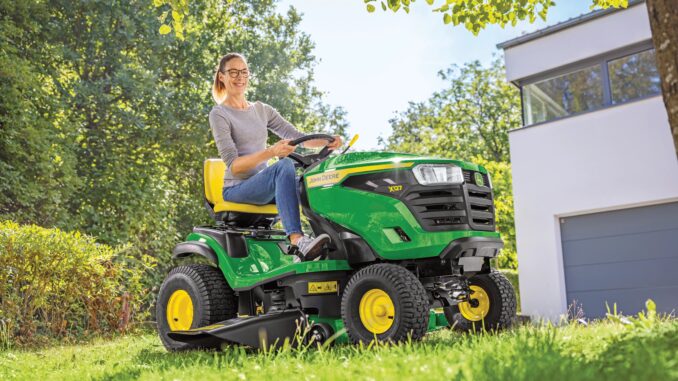
The John Deere X370 is a Select Series lawn tractor designed for homeowners who want a step up from entry-level riding mowers, with a 42-inch Accel Deep deck and a 21.5-hp Kawasaki engine commonly associated with this model family. It suits larger home lawns where cut quality, durability, and smoother control matter more than bare-minimum mowing capability.
This guide covers John Deere X370 repair basics, symptom-based troubleshooting, routine maintenance, service parts, buying advice, and a detailed FAQ for owners in the USA and Canada. The aim is to help DIY users handle realistic home maintenance jobs while recognizing where dealer-level tools or experience are the safer choice.
General overview of the John Deere X370
The X370 sits in John Deere’s Select Series lineup, above basic residential models and aimed at owners who want stronger build quality, power steering, and a machine intended for regular mowing rather than occasional light use. In practical terms, it is a premium lawn tractor rather than a garden tractor, so it excels at mowing and yard tasks but is not meant to replace heavier compact equipment.
Key systems on the John Deere X370 include the engine and fuel system, mower deck and blade drive, hydrostatic transmission and traction drive, and the electrical/safety interlock system. Common service parts owners actually buy for this model include fuel filter AM116304, engine oil filter AM125424, spark plug M805853, foam air filter MIU12554, paper air filter MIU12555, transmission filter MIU800986, traction drive belt M144044, mower drive belt M174994, standard blade M170639, mulching blade M170642, and battery TY25221 for the 42-inch Accel Deep deck setup.
John Deere X370 troubleshooting approach
The best way to diagnose a John Deere X370 is to start with the symptom the owner sees, not the part they think has failed. That matters because issues like no-start, poor cut, weak drive, or vibration can each have several causes, and replacing parts too early is one of the fastest ways to waste time and money.
Main symptom categories for the John Deere X370 include:
-
Starting issues, such as crank-no-start or no crank at all.
-
Running issues, such as surging, rough idle, loss of power, or stalling.
-
Cut-quality problems, including uneven cut, missed grass, or poor discharge.
-
Vibration and noise, often linked to blades, belts, pulleys, or deck buildup.
-
Overheating and leaks, especially around cooling fins, engine oil, or hydro oil service points.
-
Transmission and drive problems, such as weak movement or inconsistent response.
-
Electrical and safety-switch faults, including seat, PTO, brake, or ignition-switch related issues.
Emergency and immediate John Deere X370 repair needs
Some John Deere X370 problems need immediate attention because they affect safe operation or can quickly damage expensive components. If the machine has severe vibration, fuel leakage, overheats, loses braking/drive control, or repeatedly blows belts, stop using it until the fault is identified.
4.1 John Deere X370 starting issues
A starting problem may show up as no crank, slow crank, or normal cranking with no start. This matters because repeated cranking can drain the battery, overheat the starter circuit, and hide a simple interlock or fuel issue behind a low-voltage condition.
Common causes:
-
Weak or failing battery.
-
Dirty or loose battery terminals.
-
Faulty ignition switch or key switch connection.
-
Failed brake, PTO, or seat safety switch.
-
Clogged fuel filter or stale fuel.
-
Fouled spark plug or restricted air filter.
Basic owner checks:
-
Confirm PTO is off and brake pedal is fully applied.
-
Check battery voltage and inspect terminal corrosion.
-
Inspect the fuel level, age of fuel, and fuel filter condition.
-
Remove and inspect the spark plug for fouling or damage.
-
Check air filter foam and paper elements for blockage.
4.2 John Deere X370 cut-quality problems
Cut-quality issues usually show up as streaks, scalping, ragged tips, clumping, or uneven height side to side. These problems matter because they often point to deck setup, blade condition, or airflow issues that will keep returning until corrected.
Common causes:
-
Dull, bent, or wrong blades.
-
Grass packed under the deck.
-
Worn or slipping mower belt.
-
Incorrect tire pressures affecting deck level.
-
Deck out of level or worn gauge wheels.
-
Mowing too fast or in wet, overgrown grass.
Basic owner checks:
-
Clean the underside of the deck fully before judging cut quality.
-
Inspect blades for sharpness, bends, and correct installation.
-
Check mower belt condition and tension.
-
Set tire pressures correctly and verify deck level.
-
Slow ground speed in heavy grass and avoid mowing when the lawn is wet.
4.3 John Deere X370 vibration and noise
Vibration on a John Deere X370 can range from a slight deck buzz to severe shaking through the steering wheel or seat. It needs fast attention because a loose blade, damaged spindle, or failing pulley can quickly damage the deck or create a safety hazard.
Common causes:
-
Bent or unbalanced blade.
-
Blade bolt loose or blade installed incorrectly.
-
Debris wrapped around spindle shafts or pulleys.
-
Worn spindle bearings or idler pulleys.
-
Damaged belt.
-
Engine mounting or driveline-related issues.
Basic owner checks:
-
Stop the engine and inspect blades before running again.
-
Remove packed grass, wire, or twine from deck pulleys and spindle areas.
-
Check belt condition for fraying, glazing, or missing chunks.
-
Spin pulleys by hand with the belt removed if safe and practical.
-
If vibration remains with PTO off, inspect engine mounting and driveline professionally.
4.4 John Deere X370 overheating and leaks
Overheating or leakage may appear as hot-running symptoms, burnt-oil smell, visible drips, or oily dirt buildup around service areas. These issues matter because heat shortens engine life and leaks can lead to low oil or fluid levels before the owner notices a serious failure.
Common causes:
-
Blocked engine cooling fins.
-
Low or dirty engine oil.
-
Old hydrostatic oil or transmission filter restriction.
-
Damaged oil filter seal or drain point seepage.
-
Heavy grass buildup around engine and deck.
Basic owner checks:
-
Clean cooling fins and remove grass debris from engine shrouds.
-
Check engine oil level and service history.
-
Inspect oil filter area and drain points for fresh leaks.
-
Check hydro service records, especially if the tractor has reached the 50-hour break-in or 200-hour interval.
-
Stop operating immediately if the engine smokes, loses power sharply, or shows major leakage.
4.5 John Deere X370 transmission and drive problems
Drive problems on the John Deere X370 often show up as weak pulling power, delayed response, or inconsistent forward/reverse movement. These are important because a hydro issue that starts as sluggish performance can become a far more expensive transmission repair if ignored.
Common causes:
-
Transmission oil overdue for change.
-
Restricted or old transmission filter.
-
Worn traction drive belt M144044.
-
Linkage adjustment issues.
-
Low traction from incorrect tire condition or usage on slopes beyond design limits.
Basic owner checks:
-
Confirm the transmission has had the 50-hour break-in service if applicable.
-
Check whether the 200-hour transmission oil and filter service is overdue.
-
Inspect the traction belt for wear or glazing.
-
Test operation after full warm-up on level ground.
-
If the tractor still slips or hesitates, dealer diagnosis is the safer route.
4.6 John Deere X370 electrical problems
Electrical issues can include dead dash lights, no-crank conditions, intermittent shutdown, or PTO engagement faults. On the X370, these often trace back to battery condition, switch faults, wiring connections, or the safety interlock system rather than a major component failure.
Common causes:
-
Weak battery TY25221 or poor cable connections.
-
Faulty ignition switch AM133597.
-
Loose ground cable or corroded connectors.
-
PTO, brake, or seat safety switch failure.
-
Blown fuse or damaged harness section.
Basic owner checks:
-
Clean and tighten battery terminals first.
-
Check the main fuse and visible harness routing.
-
Test whether the machine reacts differently with brake/PTO/seat positions changed correctly.
-
Confirm the key switch feels normal and is not intermittent.
-
Leave harness continuity testing and deeper electrical tracing to a dealer or skilled technician.
DIY or dealer? Repair decision guide for the John Deere X370
For the John Deere X370, the normal DIY line is routine service, blade and belt work, and straightforward inspection-based repairs, while hydrostatic internal work, valve clearance, and complex electrical diagnosis usually belong on the dealer side. Owners with moderate skill can do more than basic maintenance on this model, but the safest rule is simple: if the repair requires splitting assemblies, precise adjustments, or electrical tracing beyond a switch test, dealer help is usually cheaper than mistakes.
Good DIY jobs:
-
Engine oil and filter changes.
-
Air filter and fuel filter replacement.
-
Spark plug replacement.
-
Blade sharpening or blade replacement.
-
Deck cleaning, belt inspection, and some belt replacement jobs.
-
Battery replacement and terminal cleaning.
Advanced DIY or dealer jobs:
-
Transmission oil and filter service.
-
Persistent no-start electrical diagnosis.
-
Spindle, pulley, or idler replacement when hardware is seized or alignment is in question.
-
Hydro drive troubleshooting beyond belt and service checks.
-
Valve clearance adjustment, which John Deere directs to the dealer in the service interval chart.
Skill level guide:
-
Beginner: air filter, fuel filter, battery, spark plug, deck cleaning.
-
Intermediate: blades, mower belt, basic electrical checks, transmission service if properly equipped.
-
Advanced: electrical tracing, deck rebuilds, hydro-drive diagnosis, valve-train related service.
John Deere X370 parts needed, OEM vs aftermarket, and what information you need
Before ordering John Deere X370 parts, gather the full model name, tractor Product Identification Number (PIN), engine model and serial number, and the deck size or attachment version fitted to the machine. That matters because belts, blades, filters, switches, and even common wear items can vary by deck and serial range, and wrong-fit parts are a common source of repeat repairs.
OEM parts are the safer choice for belts, safety-related switches, fit-sensitive deck parts, and transmission service items because exact length, profile, and compatibility matter on the X370. Aftermarket parts can be acceptable for some filters, blades, batteries, and tune-up items if the supplier cross-references the exact John Deere part number and the correct X370 deck configuration.
Where to find John Deere X370 parts diagrams and service manuals
Owners should start with the official operator’s manual and John Deere owner support page, then use a Deere-focused parts source for quick cross-checking of common wear items. That combination gives you service intervals, operating guidance, and practical part-number lookups without relying on guesswork.
Useful sources:
-
John Deere X370 owner support for operator manual access, support materials, and official owner resources.
-
John Deere operator manual view for Select Series X350/X354/X370/X380 for service intervals, operating checks, and maintenance guidance.
-
Green Farm Parts X370 maintenance guide for commonly bought service parts and quick OEM number reference.
-
Green Farm Parts illustrated parts lookup entry point for navigating Deere parts diagrams and confirming part-number fit.
How to locate model, serial and engine numbers on the John Deere X370
These identification numbers matter because the correct part often depends on the exact tractor and engine build, not just the hood decal. When ordering online or at the dealer, having these numbers ready usually prevents the most common fitment errors.
-
Park the John Deere X370 safely on level ground, remove the key, and let hot parts cool.
-
Find the tractor Product Identification Number tag on the tractor frame area identified in the operator information for the machine.
-
Record the full X370 model designation exactly as shown, including any serial or PIN details.
-
Locate the engine model and serial information on the engine label or shroud area and copy it exactly.
-
If ordering deck parts, confirm the installed deck size and any deck tag information before buying blades, belts, or gauge wheels.
Buying John Deere X370 parts online and in physical stores
The best buying strategy is to identify the exact OEM number first, then compare seller pricing and availability rather than shopping by description alone. That is especially important on the John Deere X370 because mower belts, blades, switches, and deck items are easy to confuse when listings lump several Deere models together.
-
Online: use exact OEM numbers, confirm deck-specific fitment, and double-check PIN-sensitive items before ordering.
-
Dealer counter: best for serial-specific parts, electrical items, hydro service components, and anything unclear from diagrams.
-
Retail stores: acceptable for oil, grease, some batteries, and some tune-up parts only when the packaging clearly cross-references the X370 and the Deere number.
Useful links:
Step-by-step John Deere X370 fitting guide for common parts
These are high-impact DIY jobs because they address the most common owner complaints: hard starting, weak running, poor cut quality, and belt-related deck problems. Always remove the key, disconnect the spark plug when working around blades or belts, and support lifted components safely.
Replace the John Deere X370 air filter
A clogged air filter can cause hard starting, rich running, and power loss.
-
Park safely, switch off the engine, and open the air cleaner housing.
-
Remove the foam and paper elements carefully so loose dirt does not fall into the intake.
-
Inspect the housing and wipe it clean with a dry cloth.
-
Install the new foam element MIU12554 and paper element MIU12555 in the correct order.
-
Refit the cover securely and test run the tractor.
Replace the John Deere X370 fuel filter
A restricted fuel filter can cause surging, no-start complaints, or stalling under load.
-
Clamp or manage the fuel line safely and work in a well-ventilated area away from ignition sources.
-
Note the fuel-flow direction on the old filter before removal.
-
Release the clamps and remove the old filter AM116304.
-
Install the new filter with the arrow pointing in the correct direction of flow.
-
Refit clamps securely, check for leaks, and restart the engine.
Replace the John Deere X370 spark plug
A fresh spark plug helps starting reliability and smoother running, especially when annual service is overdue.
-
Allow the engine to cool and remove the spark plug lead.
-
Remove the old spark plug M805853 and inspect its condition for fouling or oiling.
-
Verify the new plug matches the correct specification for the engine setup.
-
Install the new plug carefully by hand first to avoid cross-threading.
-
Tighten to specification, refit the plug cap, and test start the tractor.
Replace John Deere X370 blades
Blade service fixes poor cut quality, ragged tips, vibration, and missed strips.
-
Remove the key, disconnect the spark plug, and raise the deck safely for access.
-
Mark blade orientation before removal so the new or sharpened blades go back correctly.
-
Remove the old blades and inspect the blade bolts and spindle areas.
-
Install the correct blades, such as M170639 standard blades or M170642 mulching blades where applicable.
-
Tighten hardware correctly, spin-check for clearance, and test mow on level grass.
Replace the John Deere X370 mower deck belt
A worn deck belt can cause weak blade speed, poor discharge, squeal, or complete PTO drive loss.
-
Park the tractor safely and lower or remove the deck as needed for proper access.
-
Photograph the belt routing before removal.
-
Release belt tension carefully and remove the old mower belt M174994.
-
Inspect idlers and pulleys for roughness or wobble before fitting the new belt.
-
Route the new belt exactly, verify it is seated in all pulley grooves, and test PTO engagement at low throttle first.
Maintenance to prevent John Deere X370 problems reoccurring
Regular maintenance on the John Deere X370 prevents the same failures from coming back, especially starting complaints, weak cut quality, overheating, and belt wear. Most repeat problems on lawn tractors are maintenance-related rather than true sudden failures, so a consistent schedule saves both downtime and parts money.
Focus areas:
-
Starting reliability: keep the battery charged, replace spark plugs on schedule, and change the fuel filter and air filters as required.
-
Cut quality: clean the deck underside, keep blades sharp, and inspect the mower belt regularly.
-
Fire and overheating prevention: remove dry grass buildup and clean cooling fins.
-
Drive performance: service the X370 transmission oil and filter at the break-in and 200-hour intervals.
-
Electrical reliability: keep terminals clean and replace damaged switches or corroded connections promptly.
John Deere X370 maintenance schedule and year-round checklist
John Deere’s published X370 service intervals include an 8-hour engine oil/filter break-in service, a 50-hour transmission oil/filter break-in service, 50-hour lubrication tasks, 100-hour or annual engine and deck service items, and a 200-hour transmission service plus dealer valve-clearance check. Owners in the USA and Canada should also shorten intervals in very dusty, hot, or heavy-use conditions, which Deere-focused maintenance guidance specifically notes.
Daily / before each use
-
Check engine oil level.
-
Inspect the area for fuel, oil, or hydro leaks.
-
Check mower deck and discharge area for grass buildup.
-
Verify tire condition and safe operation of controls.
Break-in after 8 hours
-
Change engine oil and filter.
Break-in after 50 hours
-
Change transmission oil and filter on the John Deere X370.
-
Check rear wheel bolt torque to 65 lb-ft.
Every 50 hours or annually
-
Lubricate front axle pivot and axle spindles.
-
Lubricate mower spindles, pivot points, and lift pedal.
-
Lubricate idler arm pivot for 42M, 48A, and 54A decks.
Every 100 hours or annually
-
Change engine oil and filter.
-
Replace spark plugs.
-
Replace foam and paper air filter elements.
-
Replace fuel filter.
-
Clean engine cooling fins.
-
Check mower belt.
-
Sharpen or replace blades.
-
Clean bottom side of deck.
-
Check tire pressure.
Every 200 hours
-
Change transmission oil and filter on the John Deere X370.
-
Have valve clearance checked or adjusted by a John Deere dealer.
Seasonal checklist
-
Spring: fresh fuel, battery check, blade inspection, deck cleaning, and oil-service review.
-
Mid-season: inspect belt wear, air filters, tire pressures, and cooling-fin cleanliness.
-
Fall or storage prep: clean the tractor thoroughly, inspect fuel system condition, and address overdue annual service before storage.
Repair, upgrade, or replace?
For most owners, repairing a John Deere X370 makes sense when the engine, frame, and transmission are fundamentally sound and the work mainly involves service parts, blades, belts, or normal wear items. Upgrading makes sense when your mowing area, comfort needs, or attachment plans have outgrown the tractor, while replacement becomes more logical if major hydro, engine, or structural issues stack up at the same time.
Repair if:
-
The issue is limited to routine wear parts like blades, filters, battery, or belts.
-
The tractor still starts, drives, and cuts well apart from one system fault.
-
Service history has been mostly kept up.
Upgrade if:
-
You need more deck width, more traction features, or a different attachment capability than the X370 is built for.
-
The machine is still sound but no longer matches the size or complexity of your property.
Replace if:
-
The tractor has major hydro, engine, and deck problems together.
-
Repair costs approach the value of a sound replacement machine.
-
Structural wear, chronic neglect, or repeated major failures make it unreliable.
Expanded troubleshooting FAQ
1. Why will my John Deere X370 not start?
If the John Deere X370 will not start, begin with the simple interlock checks: PTO off, brake fully applied, and battery connections clean and tight. After that, look at battery condition, fuel freshness, fuel filter restriction, spark plug condition, and air filter blockage, because those are common X370 service items tied directly to no-start complaints.
2. Why does my John Deere X370 crank but not fire?
A crank-no-start problem usually means the starter circuit works but fuel, spark, or air is missing. On the X370, likely causes include stale fuel, a clogged AM116304 fuel filter, fouled spark plug M805853, or badly restricted air filter elements.
3. Why is my John Deere X370 battery always going flat?
Frequent battery discharge is often caused by age, poor terminal contact, or a charging-system problem rather than the battery alone. Since TY25221 is a common replacement battery for this setup, first confirm the battery is healthy, the terminals are clean, and there is no key-switch or wiring issue leaving a parasitic drain.
4. Why does my John Deere X370 start then stall?
If the X370 starts and stalls, suspect a fuel delivery problem first, especially restricted flow through the fuel filter or old fuel. A dirty air filter, poor spark, or a safety-switch fault can also shut the machine down shortly after starting.
5. Why is my John Deere X370 running rough?
Rough running on the John Deere X370 often points to tune-up items that are due at the 100-hour or annual interval. Replacing the spark plugs, air filters, and fuel filter is a sensible first step if service is overdue.
6. Why does my John Deere X370 surge at idle or part throttle?
Surging usually indicates inconsistent fuel delivery, restricted airflow, or stale fuel quality. Check the fuel filter, inspect the air filter elements, and make sure the machine is not simply being run on old fuel left too long in storage.
7. Why does my John Deere X370 lose power in tall grass?
Loss of power in heavy grass often comes from dull blades, a dirty deck underside, a worn mower belt, or trying to mow too fast for conditions. The fix is usually to restore blade condition, clean the deck, inspect belt health, and reduce ground speed.
8. Why is my John Deere X370 cutting unevenly?
Uneven cutting is commonly caused by unequal tire pressures, a dirty deck, worn blades, or deck-level issues. Because Deere specifically includes tire-pressure checks, blade service, and deck cleaning in its routine maintenance guidance, those should come before more complicated diagnosis.
9. Why does my John Deere X370 leave strips of uncut grass?
Uncut strips usually mean the blades are dull, the deck is not moving enough air, or the overlap between passes is too small. Check blade condition, clean the deck underside, and inspect the mower belt M174994 for slipping.
10. Why are the grass tips ragged after mowing with my John Deere X370?
Ragged grass tips nearly always indicate dull blades rather than a serious machine fault. Sharpen or replace the blades, and make sure you are using the correct blade type for the 42-inch deck setup.
11. Why does my John Deere X370 scalp the lawn?
Scalping happens when deck height is too low for the terrain, anti-scalp support is poor, or the deck setup is not correct. Inspect gauge wheels such as GX10168, verify tire pressures, and review deck height settings before assuming a deeper problem.
12. Why is the John Deere X370 mower deck vibrating?
Deck vibration usually points to blade damage, blade imbalance, loose hardware, or a spindle/pulley issue. Stop mowing right away, inspect the blades first, and do not keep running the PTO until the source is identified.
13. Why does my John Deere X370 shake even with the PTO off?
If the tractor shakes with the PTO off, the issue may be outside the deck, such as engine mounting, driveline, or another rotating component. That is a stronger sign to move beyond DIY checks unless you quickly find something obvious and safe, like loose external hardware.
14. Why is my John Deere X370 mower belt squealing?
A squealing mower belt usually means glazing, wear, contamination, weak tension, or a pulley problem. Since the X370 commonly uses mower drive belt M174994, confirm the belt is the correct part and that the pulleys spin smoothly before replacing anything else.
15. Why does my John Deere X370 keep throwing the deck belt?
Repeated belt loss often means the issue is not the belt alone. Check for bent guides, worn pulleys, misrouting, seized bearings, or debris buildup, because a new belt will fail again if the underlying alignment problem remains.
16. Why does my John Deere X370 cut fine at first then lose blade speed?
If blade speed fades during mowing, the deck may be loading up with wet grass or the belt may be slipping as it heats up. Clean the underside of the deck, inspect belt condition, and avoid mowing wet or overgrown grass too aggressively.
17. Why does my John Deere X370 smell hot while mowing?
A hot smell often comes from grass packed around the engine or deck, a slipping belt, or overdue oil service. Because Deere lists cooling-fin cleaning and deck cleaning as routine tasks, treat heat smell as a warning to stop and inspect before continuing.
18. Why is oil leaking on my John Deere X370?
Oil leaks can come from the engine oil filter area, drain point, or another seal around a recently serviced component. Check whether the leak started after an oil change and confirm the correct filter, sealing surface, and oil level.
19. Why is my John Deere X370 running hot?
Running hot usually points to blocked cooling fins, heavy external debris, or overdue maintenance. Clean the engine cooling area thoroughly and confirm the engine oil is clean and at the proper level.
20. Why does my John Deere X370 move slowly uphill?
Weak uphill performance can mean a worn traction belt, overdue hydro service, or operating beyond the tractor’s intended traction conditions. Start with the belt and transmission service history, especially the 50-hour break-in and 200-hour hydro intervals.
21. Why is my John Deere X370 hydrostatic transmission jerky?
Jerky hydro response can happen when fluid condition is poor, service is overdue, or linkage action is not smooth. If the machine is due for transmission oil and filter service, do that first before assuming internal hydro damage.
22. Why will my John Deere X370 not go forward or reverse properly?
Poor forward or reverse response can come from traction-belt wear, hydro service neglect, or more serious transmission issues. Because the X370 has specific transmission oil and filter intervals, checking service history is one of the most useful first steps.
23. Why does my John Deere X370 lose drive when hot?
A tractor that drives worse once warmed up may have fluid, filter, or hydro wear problems that become more obvious at operating temperature. If the transmission service interval has been missed, servicing it is the logical first move before deeper diagnosis.
24. Why is the John Deere X370 steering heavier than normal?
Heavier steering can be caused by front-end lubrication neglect, tire issues, or wear in steering components. Since Deere includes front axle pivot and axle spindle lubrication in the 50-hour or annual service list, missed greasing is a realistic first suspect.
25. Why did my John Deere X370 PTO stop working?
If the PTO stops working, inspect the mower belt, PTO engagement behavior, and the electrical interlock side of the system. Belt failure, switch faults, or related wiring issues are more common than assuming the entire PTO system has failed.
26. Why do I keep replacing blades on my John Deere X370?
Frequent blade replacement usually means the tractor is hitting debris, roots, or rocky ground, or the blades are being kept in service too long after damage. Also confirm you are using the correct blade type, such as M170639 or the matching mulching setup, for the actual deck configuration.
27. Why does my John Deere X370 battery light or electrical system act intermittently?
Intermittent electrical faults are often connection-related rather than a major component failure. Clean all visible battery and ground connections first, then inspect the ignition switch AM133597 and visible harness routing for looseness or corrosion.
28. Why does my John Deere X370 shut off when I get off the seat?
That behavior can be normal safety-interlock operation depending on PTO and brake position. If it happens unexpectedly, inspect the seat switch and verify the machine is being operated exactly as described in the operator guidance.
29. Why does my John Deere X370 backfire or pop?
Popping or backfiring can be linked to fuel quality, ignition issues, or shutdown habits that leave unburned fuel in the exhaust. Start with fresh fuel, spark plug inspection, and full tune-up items if annual service is overdue.
30. How often should I change oil on a John Deere X370?
The official X370 interval calls for engine oil and filter change at 8 hours for break-in, then every 100 hours or annually after that. In dusty, hot, or severe-use conditions, more frequent service is sensible.
31. How often should I service the transmission on a John Deere X370?
The John Deere X370 transmission oil and filter are due at 50 hours for break-in and again every 200 hours. That is one of the most important model-specific maintenance items owners overlook.
32. When should I replace the spark plugs on a John Deere X370?
John Deere lists spark plug replacement every 100 hours or annually on this model family. If the tractor is hard to start or running rough and service is overdue, replacing them sooner is practical.
33. When should I replace the air filter on my John Deere X370?
Both foam and paper air filter elements are listed for replacement every 100 hours or annually. If the tractor works in dusty mowing conditions, inspect them more often and replace earlier when restricted.
34. Is aftermarket OK for John Deere X370 parts?
Aftermarket can be fine for some filters, blades, and batteries, but exact cross-reference matters. For the John Deere X370, OEM is the better choice for belts, safety-related parts, and fit-sensitive items where a small mismatch can create repeat failures.
35. What maintenance matters most on a John Deere X370?
If an owner only stays on top of a few things, the big ones are engine oil service, hydro service at the correct intervals, clean filters, sharp blades, deck cleaning, and cooling-fin cleaning. Those tasks directly affect starting, drive performance, cut quality, and long-term reliability on the X370.