
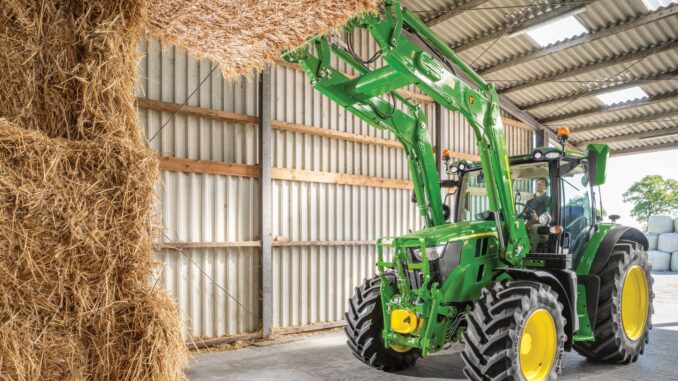
The John Deere 4110 is a compact utility tractor built for homeowners and small-acreage users who need more capability than a lawn tractor but still want a manageable machine for mowing, loader work, light grading, snow removal, and general property maintenance. Official Deere material places it in the 4000 Ten compact utility lineup, and published specifications show a Yanmar diesel engine with about 20 gross horsepower and a 5.8-gallon fuel tank.
This guide is written for DIY owners in the USA and Canada who are comfortable with routine servicing and some intermediate repairs. It covers John Deere 4110 troubleshooting, common repair decisions, maintenance intervals, service parts, parts lookup strategy, and a large FAQ built around real-world owner symptoms rather than just component names.
General overview of the John Deere 4110
The John Deere 4110 sits in Deere’s 4000 Ten compact utility range alongside the 4010 and 4115. It uses a liquid-cooled Yanmar 3-cylinder diesel engine, mechanical front-wheel drive, a rear 3-point hitch, and either a collar-shift transmission or hydrostatic transmission depending on configuration.
For repair and maintenance purposes, the key systems are:
-
Engine and fuel system: diesel fuel supply, sediment bowl/filter, air intake, cooling system, glow/cold-start related starting support, and alternator belt.
-
Hydraulic and drive system: transmission/hydraulic oil, suction screen, transmission oil filter, MFWD front axle lubrication, brakes, steering, and PTO operation.
-
Electrical system: battery, fuses, neutral start circuit, PTO safety switch, seat switch, lights, and charging system.
-
Chassis and implement interface: 3-point hitch, drawbar, SCV linkage where equipped, wheel hardware, ballast setup, and PTO driveline safety.
Common John Deere 4110 service parts owners regularly buy include:
-
Engine oil filter: M806418.
-
Fuel filter: CH15553.
-
Transmission oil filter for 4110/4115: LVU800097.
-
Primary air filter: M113621.
-
Secondary air filter: M123378.
-
Filter kit for 4110: LVA21197.
John Deere 4110 troubleshooting approach
The best way to diagnose a John Deere 4110 is to start with the symptom the owner actually sees: hard starting, poor running, hydraulic weakness, PTO problems, overheating, abnormal noise, or loss of drive. Deere’s operator literature separates troubleshooting into engine, electrical system, tractor, brakes, and steering, which is a good framework for owner diagnosis.
Main symptom groups on this model include:
-
Starting issues.
-
Running power loss or rough running.
-
Overheating or coolant/fuel/oil leaks.
-
Transmission or drive complaints.
-
Hydraulic or steering performance issues.
-
PTO and implement operation problems.
-
Electrical and safety-switch faults.
-
Vibration, noise, and loose hardware concerns.
A good rule is to check the simple items first: battery condition, fuel supply, filters, fluid levels, visible leaks, loose wiring, clogged screens, and recent maintenance history. On a compact diesel like the John Deere 4110, neglect in the fuel, air, cooling, or hydraulic system often shows up as a bigger problem somewhere else.
Emergency and immediate John Deere 4110 repair needs
Some John Deere 4110 problems should be dealt with immediately because they can make the tractor unsafe or turn a moderate repair into an expensive one very quickly. The biggest examples are overheating, hydraulic or fuel leaks, brake or steering issues, severe driveline noise, PTO safety faults, and wheel hardware looseness.
4.1 John Deere 4110 starting issues
A no-start or hard-start condition matters because repeated cranking can flatten the battery, overheat cables, and hide the real cause. On a diesel compact tractor, starting problems are usually tied to battery condition, switch logic, fuel restriction, air in the fuel supply, or operator-control interlocks.
Common causes:
-
Weak or failing battery.
-
Dirty or loose battery terminals.
-
Neutral start or PTO safety switch fault.
-
Fuel shut-off valve closed.
-
Dirty fuel filter or contaminated diesel.
-
Air leak on the fuel side.
-
Blown fuse or poor ground.
Basic owner checks:
-
Confirm PTO is off, transmission/range is in the correct start position, and seat/safety conditions are met.
-
Check battery terminals for corrosion and verify battery charge.
-
Make sure there is fresh diesel in the tank and the fuel shut-off is open.
-
Inspect the sediment bowl and fuel filter for contamination or restriction.
-
Check fuses and visible wiring at the starter circuit and ignition switch area.
4.2 John Deere 4110 running and power issues
If the John Deere 4110 starts but lacks power, smokes, or runs unevenly, continuing to work it can raise exhaust temperature, increase fuel use, and stress the cooling system. Diesel compact tractors often lose performance gradually when the air, fuel, or cooling side is neglected.
Common causes:
-
Plugged primary or secondary air filter.
-
Dirty fuel filter.
-
Old or water-contaminated fuel.
-
Partially blocked radiator screen or cooling fins.
-
Low engine oil or overdue service.
-
Injection-related fault needing dealer diagnosis.
Basic owner checks:
-
Clean the grille, side screens, radiator screen, and visible cooling fins.
-
Inspect the air filter restriction condition and service filters if dirty.
-
Replace the fuel filter if service history is unknown or fuel flow is poor.
-
Verify engine oil level and confirm the last oil/filter service interval.
-
If smoke, misfire, or persistent power loss remains, stop before assuming a simple filter issue.
4.3 John Deere 4110 vibration and noise
Vibration or sudden new noise should never be ignored because it can point to loose wheel hardware, driveline wear, PTO issues, front axle problems, or implement faults. Deere specifically includes wheel-bolt checking and PTO safety awareness in the operator material, which reflects how important these areas are on compact tractors.
Common causes:
-
Loose wheel hardware.
-
Worn or damaged PTO driveline parts.
-
Front axle oil neglect.
-
Implement imbalance.
-
Loose loader or attachment mounting hardware.
-
Fan/alternator belt issues.
Basic owner checks:
-
Park safely on level ground and inspect wheel bolts, tire condition, and visible axle leaks.
-
Disengage PTO and test whether the noise changes with engine speed only, tractor movement only, or PTO engagement.
-
Inspect belts, shields, and driveline guards.
-
Remove any damaged attachment from service until it is checked.
4.4 Overheating and leaks on the John Deere 4110
Overheating is one of the fastest ways to damage a diesel compact tractor. The John Deere 4110 operator material specifically calls out coolant service, radiator hose inspection, cleaning screens and fins, and fire prevention around the engine compartment.
Common causes:
-
Blocked radiator screen or cooling fins.
-
Low coolant level.
-
Loose or deteriorated radiator hose.
-
Alternator/fan belt issue.
-
Engine oil too low.
-
Fuel leak or hydraulic leak attracting dirt and heat.
Basic owner checks:
-
Shut the tractor down and let it cool before opening anything pressurized.
-
Clean screens, grille openings, and radiator/oil cooler areas.
-
Check coolant level and inspect hoses/clamps for seepage.
-
Check engine oil level and inspect for external leaks.
-
Do not continue operating if coolant loss or repeat overheating is present.
4.5 John Deere 4110 transmission and drive problems
Drive complaints on the John Deere 4110 often show up as weak movement, jerky hydro response, poor traction, noisy front axle operation, or hydraulic sluggishness. Because this tractor shares transmission and hydraulic service areas, low fluid or a restricted filter can affect more than one symptom.
Common causes:
-
Low transmission/hydraulic oil.
-
Overdue transmission oil filter.
-
Dirty suction screen.
-
Wrong oil type.
-
Front axle oil neglect.
-
Linkage adjustment issue.
-
Internal wear requiring advanced diagnosis.
Basic owner checks:
-
Verify fluid level using the correct procedure for gear or hydro model.
-
Confirm the transmission oil filter service history and whether the initial 50-hour service was ever done.
-
Inspect for external hydraulic leaks or seepage around lines and housings.
-
Check front axle oil level if MFWD noises or front-drive complaints are present.
-
Stop and escalate if the tractor loses drive, whines heavily, or contaminates oil with metal.
4.6 John Deere 4110 electrical problems
Electrical faults on the John Deere 4110 often feel random to owners, but many come back to battery condition, grounds, fuses, switch contacts, or safety interlocks. Deere includes specific tests for the neutral start switch, PTO switch, seat switch, and indicator lights in the operator documentation.
Common causes:
-
Weak battery.
-
Corroded battery posts or ground strap.
-
Blown fuse.
-
Neutral start switch fault.
-
PTO switch fault.
-
Seat switch or interface fault.
-
Charging issue from alternator/belt problem.
Basic owner checks:
-
Clean and tighten battery terminals.
-
Inspect fuses before replacing expensive parts.
-
Confirm charging system belt condition.
-
Test switches by symptom pattern, for example crank/no crank with PTO or seat changes.
-
Treat recurring fuse failure as a wiring problem until proven otherwise.
DIY or dealer? John Deere 4110 repair decision guide
The normal DIY line on a John Deere 4110 is straightforward: routine fluid/filter service, basic electrical checks, cooling cleanup, battery work, and visible bolt-on replacement jobs are realistic for many owners, while hydraulic internals, injection issues, clutch/transmission internals, and major safety-system diagnosis are better left to a dealer or experienced compact-tractor technician. Deere’s materials cover routine service procedures and operator-level checks, but the deeper technical work goes beyond normal owner maintenance.
Good DIY jobs:
-
Engine oil and filter change.
-
Fuel filter replacement.
-
Air filter service.
-
Battery cleaning or replacement.
-
Cleaning radiator screen and cooling fins.
-
Front axle oil change.
-
Transmission/hydraulic fluid and filter service if you have the right setup and can work cleanly.
Advanced DIY or dealer jobs:
-
Injection pump or injector diagnosis.
-
Persistent no-start with switch and wiring tracing.
-
Hydrostatic performance diagnosis.
-
Internal transmission repairs.
-
PTO clutch or driveline repairs beyond external inspection.
-
Steering or brake internal work.
-
Repeated overheating with no obvious blockage or fluid loss cause.
Skill level guide:
-
Beginner: engine oil, air filter, battery service, cleaning screens, visual leak checks.
-
Intermediate: fuel filter replacement, front axle oil service, fuse/switch diagnosis, transmission oil/filter change.
-
Advanced: hydraulic suction screen service, electrical tracing with a meter, driveline diagnosis, deeper transmission/hydro troubleshooting.
Parts needed for the John Deere 4110: OEM vs aftermarket
Before ordering John Deere 4110 parts, gather the full model name, Product Identification Number (PIN), transmission type, engine details, and any attachment/deck/implement information tied to the tractor. Deere’s operator material specifically includes product identification records, and the official quick-reference guide separates some service information by model and transmission version.
Use OEM parts first where fit and system performance are critical, especially filters with exact housing specs, safety switches, hydraulic/transmission components, belts, and PIN-sensitive parts. Quality aftermarket options can be fine for batteries, some filters, some wear items, and general consumables, but only when the cross-reference is exact and the seller clearly lists John Deere 4110 compatibility.
John Deere 4110 manuals, parts diagrams and service information
These are the most useful sources for owners looking up John Deere 4110 service and repair information:
-
Official operator’s manual: Deere’s Technical Information Store operator manual for 4110/4115 covers identification, operation, safety interlocks, service intervals, lubrication, engine, transmission, electrical, troubleshooting, and specifications.
-
Official quick-reference maintenance PDF: Deere’s 4000 Series 4010/4110/4115 quick reference lists filters, kits, intervals, and capacities in a condensed form.
-
Deere manuals and training portal: Deere’s manuals page is the best starting point for finding current operator literature and official documentation paths.
-
Deere parts catalog portal: Deere’s parts catalog site is the main route for exploded diagrams and exact serial-number-aware parts lookup, although access behavior can vary by browser or region.
Useful links:
How to locate John Deere 4110 model, PIN and engine numbers
These numbers matter because Deere parts can change by serial range, transmission type, and engine build. If you order by “4110” alone, you increase the chance of getting a close-but-wrong part.
Use this process:
-
Find the tractor Product Identification Number plate and record it exactly as shown. Deere’s operator material includes a product identification section for recording these details.
-
Confirm whether your machine is the 4110 and whether it is CST or hydrostatic where relevant to service parts and fluid procedures.
-
Record the engine model and serial information from the engine tag before ordering fuel, air, or engine-service items. Deere specifically provides space for recording identification numbers.
-
If the tractor is used with a mower deck, loader, snowblower, or other implement, record that attachment’s model and serial separately because those parts are not identified by tractor model alone.
-
Keep photos of each tag on your phone so you can match diagrams at the dealer counter or online checkout.
Buying John Deere 4110 parts online and in stores
The best buying strategy is to identify the exact OEM part number first, then decide whether to buy Deere-branded or a properly cross-referenced aftermarket equivalent. This is especially important on the John Deere 4110 because filters, hydraulics, electrical switches, and transmission-related parts are less forgiving than generic mower consumables.
Use these channels:
-
Online: best for comparing part numbers, kits, and availability; always confirm PIN-sensitive items first.
-
Dealer counter: best for switchgear, hydraulic parts, transmission items, serial-break parts, and anything unclear from a generic listing.
-
Retail stores: acceptable for oil, coolant, batteries, and some cross-referenced filters if the packaging explicitly lists John Deere 4110 fitment.
Useful buying links:
John Deere 4110 fitting guide for common service parts
These are high-impact DIY jobs that solve many common owner complaints on the John Deere 4110. Always park safely, lower implements, shut the engine off, remove the key, and allow hot parts to cool first.
Change the John Deere 4110 engine oil and oil filter
This job helps with hard starting, engine wear reduction, and general reliability. Deere lists M806418 as the correct engine oil filter for the 4110 and calls for replacement after the initial 50 hours and then every 200 hours.
-
Warm the engine briefly so the oil drains better, then park safely and shut it down.
-
Drain the old engine oil into a suitable pan and remove the old filter.
-
Lightly oil the gasket on the new M806418 filter and install it correctly.
-
Refill with the correct engine oil to the proper capacity for the 4110, then start and check for leaks.
-
Recheck the level after shutdown and top off if needed.
Replace the John Deere 4110 fuel filter
This job often helps with power loss, surging, and hard starting caused by restricted fuel flow. Deere lists CH15553 as the 4110 fuel filter and gives a 500-hour replacement interval.
-
Shut off fuel if applicable and place a container under the filter/sediment area.
-
Remove the old filter carefully and inspect fuel for water or debris.
-
Install the new CH15553 filter and ensure seals seat correctly.
-
Restore fuel flow and follow the proper restart/air purge approach for your setup.
-
Start the tractor and check closely for leaks.
Service the John Deere 4110 air filters
This job helps with black smoke, low power, and dusty-operation reliability. Deere lists M113621 as the primary air filter and M123378 as the secondary element, with inspection after every 500 hours and replacement as needed.
-
Open the housing carefully so dirt does not fall into the clean side.
-
Remove the primary filter and inspect the secondary element without damaging seals.
-
Clean out loose debris from the housing and dust valve area.
-
Replace damaged or heavily restricted elements with the correct part numbers.
-
Reassemble carefully and check that clamps and intake hoses seal properly.
Change the John Deere 4110 transmission oil filter
This job matters when protecting hydraulic and drive performance. Deere lists LVU800097 for the 4110 transmission oil filter, with an initial 50-hour change and then every 400 hours in the quick-reference guide.
-
Verify whether your tractor is CST or HST so you follow the correct fluid-level and service procedure.
-
Drain or prepare the system as required and keep the work area very clean.
-
Remove the old transmission oil filter and inspect what drains out for contamination.
-
Install the correct LVU800097 filter, refill with the specified fluid, and service the suction screen if your procedure calls for it.
-
Run the tractor, cycle hydraulics, recheck the level, and inspect for leaks.
Maintenance to prevent John Deere 4110 problems recurring
Regular maintenance prevents most recurring John Deere 4110 complaints because the same neglected items repeatedly affect starting, power, cooling, and hydraulic response. Deere’s service schedule for this tractor emphasizes daily checks, break-in service, and recurring 200-hour, 400-hour, and 500-hour tasks.
Focus areas:
-
Starting reliability: keep the battery clean, terminals tight, and fuel system serviced.
-
Engine performance: keep air and fuel filters in good condition and use clean diesel.
-
Overheating prevention: clean grille screens, radiator screen, fins, and oil cooler areas regularly.
-
Drive and hydraulic performance: keep transmission/hydraulic fluid at the correct level and change the filter on schedule.
-
Electrical reliability: test safety interlocks when symptoms suggest them and replace blown fuses only after checking the cause.
-
Fire prevention: remove dry debris and oily buildup from the engine area.
John Deere 4110 maintenance schedule and yearly checklist
The official schedule for the John Deere 4110 includes break-in checks after 1 hour and first 50 hours, daily or every 10 hours, then 200-hour, 400-hour, 500-hour, and two-year/2000-hour service points. The quick-reference PDF confirms the major filter intervals and fluid capacities.
Daily / before each use
-
Check engine oil level.
-
Check transmission/hydraulic oil level using the correct model procedure.
-
Inspect for leaks, loose hardware, and tire issues.
-
Clean grille, screens, and debris from cooling areas as needed.
-
Confirm lights, brakes, and safety systems are operating normally.
Break-in / first 50 hours
-
Complete the first scheduled service after break-in. Deere lists break-in at 1 hour and first 50 hours in the operator manual.
-
Replace engine oil filter at the initial 50-hour point.
-
Replace transmission oil filter at the initial 50-hour point.
Every 200 hours
-
Change engine oil and replace the engine oil filter M806418.
-
Perform scheduled engine and tractor service items listed in the operator chart.
Every 400 hours
-
Replace transmission oil filter LVU800097.
-
Perform transmission/hydraulic service items listed in the operator schedule for your configuration.
Every 500 hours
-
Replace fuel filter CH15553.
-
Check air filters and replace as needed.
-
Review cooling-system and fuel-system condition closely.
Every two years or 2000 hours
-
Perform the long-interval service items shown in the official operator schedule.
Seasonal checklist
-
Spring: change due fluids and filters, inspect battery, clean cooling pack, grease fittings, and check PTO/safety functions.
-
Mid-season: inspect for leaks, clean screens and radiator fins, recheck wheel hardware, and watch filter condition in dusty work.
-
Fall/winter prep: service fuel and cooling systems, clean debris buildup, and prepare the tractor for storage if it will sit.
Repair, upgrade, or replace the John Deere 4110?
In general, a John Deere 4110 is worth repairing when the tractor is structurally sound, starts well after normal service, and only needs catch-up maintenance, filters, hoses, battery work, or external hydraulic/electrical repairs. Replacement becomes easier to justify when the machine has stacked problems across engine, transmission, hydraulics, and attachments at the same time.
Repair if:
-
The issue is limited to maintenance neglect, external leaks, battery/switch faults, or normal wear items.
-
Engine compression, drive performance, and hydraulics are otherwise healthy.
Upgrade if:
-
You need more lift, more PTO power, or more hydraulic capacity than the John Deere 4110 can realistically deliver.
-
Your attachments and workload have outgrown a 20 hp compact platform.
Replace if:
-
It needs major engine, hydro/transmission, and hydraulic work at the same time.
-
Critical parts costs start to exceed the value of a sound used compact tractor in your market.
John Deere 4110 troubleshooting FAQ
1. Why will my John Deere 4110 not start?
The most common reasons are a weak battery, dirty terminals, safety interlock issues, fuel restriction, or a shut fuel valve. Deere’s operator material includes checks for the neutral start switch, PTO switch, and seat switch, so those should be part of your diagnosis before assuming a major failure. Start with battery condition, fuse checks, fuel supply, and switch logic.
2. Why does my John Deere 4110 crank but not fire?
A crank-no-start issue usually points to fuel delivery, air in the fuel system, contaminated diesel, or a filter restriction rather than a dead starter. Check the fuel filter, sediment bowl area, fuel shut-off position, and whether the tractor has been sitting with old fuel. If those basics are good, deeper fuel-system diagnosis may be needed.
3. Why is my John Deere 4110 hard to start when cold?
Cold starting gets harder when battery performance is marginal, the fuel system is slightly restricted, or maintenance is overdue. Clean connections, confirm strong cranking speed, and make sure the fuel and air filters are not overdue. Repeated cold-start trouble after service can point to a deeper engine or fuel issue.
4. Why does my John Deere 4110 lose power under load?
Low power commonly comes from restricted air flow, a dirty fuel filter, stale diesel, or cooling-system blockage that makes the engine run hot. Service the air and fuel side first, then clean the radiator screen, grille, and fins. If it still bogs badly with smoke or misfire, stop loading it heavily.
5. Why is my John Deere 4110 smoking?
Smoke color matters, but in general the first owner checks are air restriction, fuel quality, injector-side issues, and engine temperature. A dirty air filter can quickly affect diesel combustion, especially in dusty mowing or property work. Persistent smoke after basic service usually moves the job out of beginner DIY territory.
6. Why is the John Deere 4110 overheating?
The operator manual puts heavy emphasis on cleaning the radiator screen, fins, grille, and oil cooler area, which tells you how common airflow-related overheating is. Low coolant, hose seepage, and belt issues are also possible. Shut the tractor down promptly and do not keep working it hot.
7. Why is coolant disappearing on my John Deere 4110?
Coolant loss can come from loose clamps, aging hoses, radiator issues, or a deeper engine problem. Start with a cold visual inspection of hoses, clamps, and the radiator area. If you cannot find the leak externally, that is a good point to escalate the diagnosis.
8. Why does my John Deere 4110 battery keep going flat?
Repeated battery discharge often comes from poor cable connections, a weak battery, or charging trouble. Deere includes battery service and alternator belt service in the operator literature, so inspect terminal corrosion, grounds, and belt condition before replacing expensive electrical parts. A load test often saves guesswork.
9. Why are the lights or dash indicators not working on my John Deere 4110?
Start with fuses, bulb condition, battery voltage, and ground quality. Deere specifically covers fuse and bulb replacement, plus indicator-light testing, which makes these logical first checks. Random multi-circuit issues usually point to power supply or ground problems rather than several failed components at once.
10. Why does my John Deere 4110 click but not crank?
A click with no crank usually means low battery voltage, bad terminal connection, weak ground, or starter-circuit resistance. Clean and tighten the connections first, then test battery strength under load. If voltage stays strong but the starter still does not crank, the starter circuit needs deeper testing.
11. Why does my John Deere 4110 stall after starting?
A tractor that starts and then dies often has restricted fuel flow, contaminated fuel, or air entering the fuel side. Replace the fuel filter if history is unknown and inspect the tank supply and shut-off path. If the stalling only happens under load, also inspect the air side and cooling condition.
12. Why does my John Deere 4110 run rough?
Rough running on this tractor usually traces back to air, fuel, or temperature issues before anything else. Dirty filters, poor fuel, or restricted cooling airflow can all make the engine feel uneven. Once those basics are ruled out, injector-related diagnosis becomes more likely.
13. Why does my John Deere 4110 surge?
Surging often suggests inconsistent fuel delivery, partial restriction, or air intrusion on the fuel side. A fresh fuel filter and a close look at the fuel path are good starting points. If surging remains after clean fuel and filter service, stop throwing parts at it and test more methodically.
14. Why does my John Deere 4110 have weak hydraulic performance?
Because transmission and hydraulic service overlap on this machine, weak hydraulics can come from low fluid, overdue filter service, contamination, or internal wear. Check the fluid level and confirm the transmission oil filter interval first. If steering and implement hydraulics are both weak, treat it as a system issue, not just an attachment issue.
15. Why will my John Deere 4110 barely move?
Poor movement can be caused by low transmission/hydraulic fluid, filter restriction, linkage issues, or deeper transmission wear. Verify whether your tractor is CST or HST and follow the correct level-check procedure. A tractor that suddenly loses drive or makes heavy whining noises needs prompt attention.
16. Why does my hydrostatic John Deere 4110 feel jerky?
Jerky hydro response can come from incorrect fluid level, dirty fluid, filter restriction, or linkage problems. Because hydro performance depends on clean oil and correct service, overdue maintenance is a common starting point. Internal hydro issues are possible, but they should not be your first assumption.
17. Why is the John Deere 4110 front axle noisy?
Front axle noise often points to lubrication neglect, tire mismatch issues, driveline stress, or worn components. Deere lists front axle oil service in the operator manual and gives front axle capacity information in the quick reference. Check oil level and inspect for leaks before using MFWD heavily.
18. Why is my John Deere 4110 hard to steer?
Hard steering can come from low hydraulic performance, front-end loading, tire pressure issues, or mechanical wear. Check tire condition and pressures, hydraulic fluid level, and whether steering is worse hot or cold. Steering faults are safety-related, so do not keep using it if effort becomes abnormal.
19. Why do the brakes on my John Deere 4110 feel weak?
Brake complaints can be adjustment-related, wear-related, or tied to broader drivetrain condition. Deere includes brakes in the troubleshooting section, so treat weak braking as something to diagnose early rather than live with. Any loss of predictable braking is a stop-use issue on slopes or when towing.
20. Why will the PTO on my John Deere 4110 not engage?
The problem may be the PTO switch, seat/safety interface, linkage, or a deeper driveline fault. Deere specifically includes PTO switch and seat-switch testing procedures in the operator material, so start there. If the switch logic checks out but the PTO still will not engage, the repair may go beyond routine DIY.
21. Why does the PTO stop when I get off the seat?
That can be normal depending on how the tractor is being operated and whether it is in an allowed PTO mode. Deere documents seat-switch and PTO interface behavior, so always verify intended operating procedure before assuming something is broken. If the behavior does not match the operator logic, test the safety system.
22. Why does my John Deere 4110 vibrate at higher rpm?
Higher-rpm vibration can come from loose hardware, belt issues, PTO driveline problems, or an attachment problem transferring vibration into the tractor. Start by separating engine-only vibration from vibration that appears only with an implement attached or PTO engaged. Wheel hardware and visible driveline guards should also be checked.
23. Why do I hear a whining noise from my John Deere 4110?
Some hydrostatic or hydraulic sound is normal, but a new or louder whine can signal low fluid, filter restriction, aeration, or internal wear. Check fluid level and service history before going further. If the whine is accompanied by weak movement or weak hydraulics, stop using the tractor hard.
24. Why is fuel leaking on my John Deere 4110?
Fuel leaks commonly come from hose aging, filter-seal issues, sediment bowl problems, or disturbed lines after service. Clean the area first so you can identify the source accurately. Because diesel leaks are also a fire-risk contamination issue, fix them promptly.
25. Why is hydraulic oil leaking on my John Deere 4110?
Hydraulic leaks can start as seepage at hoses, fittings, filters, or seals and then attract dirt that worsens wear and heat retention. Check the filter area, hose connections, and visible hydraulic lines. Avoid putting hands near pressurized leaks because Deere warns about high-pressure fluid hazards.
26. Why does my John Deere 4110 keep blowing fuses?
Recurring fuse failure means there is an underlying short, overloaded circuit, or damaged wiring. Replacing fuses repeatedly without tracing the cause risks larger electrical damage. Look for rubbed insulation, moisture, or a failed component in the affected circuit.
27. Why does my John Deere 4110 only start in certain positions?
That usually points to a neutral start, PTO, seat, or shift-position safety issue. Deere includes specific safety interlock checkout procedures for both gear and hydro models, which makes those switches a prime suspect when starting behavior depends on lever or operator position. This is often fixable, but only after correct testing.
28. Why should I care about the first 50-hour service on a John Deere 4110?
Because Deere identifies the initial 50-hour interval as a distinct break-in service point, and both the engine oil filter and transmission oil filter have initial change requirements there. Missing that early service can shorten fluid and filter life and increase contamination in the system. On used tractors, unclear 50-hour history means you should inspect maintenance records closely.
29. How often should I change the oil on a John Deere 4110?
The official quick-reference guide lists the engine oil filter change initially at 50 hours and then every 200 hours, and the operator manual includes the service interval structure for ongoing maintenance. In practice, time-based yearly service also makes sense for lightly used homeowner machines. Use official intervals as the baseline and shorten them for severe use.
30. How often should I replace the fuel filter on a John Deere 4110?
Deere lists the CH15553 fuel filter at a 500-hour replacement interval for the 4110. That said, contaminated fuel, storage problems, or visible sediment can justify earlier replacement. If the tractor has unknown history, replacing the fuel filter is usually cheap insurance.
31. How often should I replace the transmission filter on a John Deere 4110?
The official 4110 quick-reference guide lists the transmission oil filter LVU800097 as an initial 50-hour change and then every 400 hours. Always confirm your transmission type and follow the correct Deere procedure for fluid checking and service. Clean working practices matter a lot on hydraulic systems.
32. How often should I replace the air filters on a John Deere 4110?
Deere says to check the primary and secondary air filters after every 500 hours and replace them as needed. In real homeowner use, dusty mowing, gravel work, and dry summer conditions can justify much more frequent inspection. Never assume the filter is fine just because the hour meter seems low.
33. Can I use aftermarket filters on a John Deere 4110?
You can, but only when the cross-reference is exact and the supplier is trustworthy. OEM is the safer choice for fit-sensitive and system-critical items, especially transmission/hydraulic filtration and switch-related parts. For routine engine-service items, some owners successfully use quality aftermarket equivalents, but the burden is on the buyer to verify.
34. Is the John Deere 4110 a good DIY tractor to maintain?
Yes, within reason. The John Deere 4110 is old enough and mechanically straightforward enough that many owners can handle oil, filter, battery, cooling, and basic inspection tasks, and Deere provides solid operator-level service guidance. The line is crossed when diagnosis moves into injection, hydrostatic internals, advanced electrical tracing, or safety-critical repairs you cannot test properly.
35. When should I stop repairing and call a dealer for my John Deere 4110?
Call for help when the tractor has repeat overheating, no-start after basic electrical and fuel checks, major hydraulic weakness, metal contamination, heavy driveline noise, or safety-system faults you cannot verify confidently. Those problems can become expensive fast if guessed at. A good rule is simple: if the next step involves pressure testing, internal drivetrain work, or deep wiring diagnosis, dealer-level support is usually worth it.