
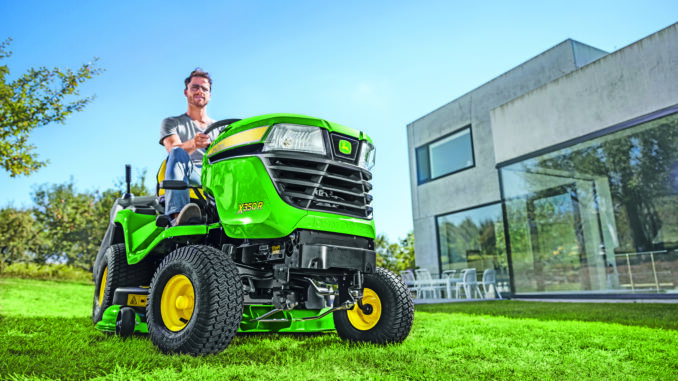
The John Deere 400 is a heavy-duty garden tractor aimed more at serious homeowner and estate use than light lawn-only work, with a 19.9 hp Kohler twin-cylinder gasoline engine, hydrostatic drive, hydraulic lift, and optional attachments including a 60-inch mower deck and snowblower. This guide is written for USA and Canada owners who want a practical, symptom-first repair and maintenance reference before deciding whether a job is realistic DIY work or better left to a dealer or specialist.
John Deere 400 model overview
The John Deere 400 was built in Horicon, Wisconsin as a garden tractor and sat above lighter lawn tractors because it combined a hydrostatic transmission, hydraulic lift, power steering, and support for heavier attachments. TractorData lists the 400 with a 19.9 hp Kohler 879 cc two-cylinder gasoline engine, 52-inch wheelbase, 975-pound operating weight, and optional front and rear PTO-related equipment, which helps explain why many surviving units are still used for mowing, snow work, and property maintenance.
For most owners, the John Deere 400 is best suited to larger home properties, hobby acreage, and tasks where a lighter lawn tractor would feel underbuilt. In this article, the focus is on repair symptoms, common service parts, parts lookup strategy, manual sources, maintenance intervals, and practical FAQs based on the model’s main systems.
General overview of the John Deere 400
The key systems on the John Deere 400 are straightforward but important to separate during diagnosis: the Kohler engine and fuel system, the hydrostatic drive and two-speed rear axle, the mower/PTO system, the hydraulic lift and steering system, and the 12-volt electrical and safety-start system. When owners describe “it won’t start,” “it moves weakly,” or “the deck won’t cut right,” the fix usually lives in one of those systems rather than everywhere at once.
Common service parts identified in the available specifications include the engine oil filter AM34770, hydrostatic fluid filter AM35176, battery AM31186, matched PTO belt set AM35380, and spark plug options including Champion H10 AM514T and resistor-type Champion RH10 AM37129. Those are useful anchor points for a parts table, but owners should still confirm the exact deck, PTO arrangement, and serial/PIN details before ordering because attachments and production differences can change what fits.
John Deere 400 troubleshooting approach
A good John Deere 400 diagnosis starts with the owner symptom, not the first part that seems easy to replace. On this model, the main symptom groups are starting issues, poor running, weak or uneven mowing, vibration and mechanical noise, overheating or fluid leaks, hydrostatic drive problems, and electrical or switch-related faults.
That approach matters because the tractor combines engine, hydraulic, and PTO systems, and one complaint can have several causes. For example, a weak-moving tractor may point to low hydrostatic fluid, a restricted filter, belt/PTO confusion, brake drag, or internal wear rather than a single “bad transmission.”
John Deere 400 emergency repair needs
Some problems on a John Deere 400 should be treated as immediate stop-use faults because they create safety risk or can damage expensive parts quickly. Fuel leaks, severe vibration, hot bearings, hydrostatic fluid loss, brake problems, and a PTO system that is slipping or binding all belong in that category.
1. Starting issues
If the engine will not crank or cranks slowly, the problem matters because repeated attempts can overheat electrical components and leave the tractor stranded in an unsafe place. TractorData identifies the system as 12-volt negative-ground, and the specifications page lists battery AM31186 as the original style battery reference.
Common causes:
-
Weak or failing battery.
-
Dirty or loose battery cables and grounds.
-
Faulty starter solenoid or starter circuit; TractorData notes AM53945 as the starter solenoid reference in its Q&A area.
-
Faulty safety switch or start interlock.
-
Ignition or fuel delivery problems after cranking begins.
Basic checks:
-
Check battery voltage and cable tightness.
-
Inspect ground connections for corrosion.
-
Confirm PTO is disengaged and controls are in the correct start position.
-
Listen for a click at the solenoid when turning the key.
-
If it cranks but will not fire, move to spark, fuel, and choke checks.
2. Cut-quality problems
Poor mowing quality usually shows up as uneven cut, uncut strips, ragged grass tips, or deck discharge issues, and it matters because owners often misdiagnose a deck setup problem as an engine problem. Since the 400 commonly used a 60-inch mid-mount deck, blade condition, belt condition, deck level, and spindle health all matter.
Common causes:
-
Dull or bent blades.
-
Worn or slipping PTO/deck belt; the specifications page lists front PTO as belt-driven with matched set AM35380.
-
Deck out of level.
-
Plugged deck housing or poor underside airflow.
-
Worn spindle bearings or loose hardware.
Basic checks:
-
Inspect blades for sharpness and straightness.
-
Remove packed grass from the deck underside.
-
Check belt wear, glazing, and tension.
-
Verify deck side-to-side and front-to-rear level.
-
Spin spindles by hand with the engine off and PTO disengaged to feel for roughness.
3. Vibration and noise
Unusual vibration on the John Deere 400 should be addressed quickly because a heavy tractor can hide a failing rotating part until it becomes destructive. Noise from the deck, PTO, engine, or driveline can escalate into spindle, bearing, belt, or engine mounting damage if ignored.
Common causes:
-
Bent blade or unbalanced blade set.
-
Worn spindle or PTO bearings.
-
Loose engine mounting hardware.
-
Failing idler pulley.
-
Tire damage or wheel hardware issues.
Basic checks:
-
Stop using the tractor if vibration appears suddenly.
-
Inspect blades and blade bolts first.
-
Check pulleys and idlers for wobble.
-
Inspect tires for separated tread or uneven inflation.
-
Trace whether the noise changes with PTO engagement or tractor movement.
4. Overheating and leaks
Air-cooled engine overheating and hydrostatic or fuel leaks need quick attention because heat and fluid loss can turn a manageable repair into engine or transmission damage. The John Deere 400 uses an air-cooled Kohler engine, so cooling-fin cleanliness matters more than many owners expect.
Common causes:
-
Packed grass, dust, or oil around engine cooling fins.
-
Low engine oil or delayed oil changes.
-
Old fuel lines or carburetor seepage.
-
Hydrostatic fluid leak or restricted hydro filter AM35176.
-
Operating under heavy load with neglected maintenance.
Basic checks:
-
Clean cooling fins and engine shrouds.
-
Check engine oil level before use.
-
Inspect under the tractor for fresh fuel or hydrostatic fluid.
-
Check hydro filter area and hose connections for wetness.
-
Stop operation until the leak source is identified.
5. Transmission and drive problems
Weak movement, hesitation, or poor hill performance on the John Deere 400 usually points to hydrostatic-system condition, linkage adjustment, braking drag, or internal wear. Because the model uses a hydrostatic transmission and two-speed rear axle, owners should separate “engine lacks power” from “engine runs fine but tractor does not pull.”
Common causes:
-
Low or old hydrostatic fluid.
-
Restricted hydrostatic fluid filter AM35176.
-
Brake drag or axle issues.
-
Linkage out of adjustment.
-
Internal hydro wear on older machines.
Basic checks:
-
Confirm engine reaches normal operating speed.
-
Check fluid condition and service history.
-
Inspect for brake drag after a short drive.
-
Verify linkage movement is smooth and full-range.
-
Treat internal hydro work as advanced repair.
6. Electrical problems
Electrical faults matter because they can look random when they are really caused by age, corrosion, or poor grounds. On an older John Deere 400, many “mystery faults” begin with terminals, connectors, switches, and the charging circuit rather than the most expensive component.
Common causes:
-
Corroded terminals or grounds.
-
Weak battery or poor charging.
-
Failing ignition switch or safety switch.
-
Solenoid issues.
-
Damaged wiring insulation on an older tractor.
Basic checks:
-
Clean and tighten battery terminals.
-
Inspect visible harness sections for rub-through.
-
Test battery condition before replacing switches.
-
Confirm charging after startup.
-
Replace damaged connectors before chasing deeper faults.
DIY or dealer repair decision guide for the John Deere 400
The John Deere 400 is very owner-serviceable for routine work, but it crosses into advanced territory faster than lighter lawn tractors because of its hydraulic lift, hydrostatic transmission, older wiring, and optional PTO/hitch equipment. In practical terms, filters, plugs, blades, belts, battery work, and most deck service are good DIY jobs, while hydro internal work, engine internals, and complex hydraulic repairs are usually better for an experienced small-engine or Deere specialist.
Good DIY jobs
-
Engine oil and filter service using AM34770-equivalent oil filter verification.
-
Air filter service after confirming the correct element by engine specification.
-
Spark plug replacement and gap setting to 0.035 inch.
-
Blade removal, sharpening, balancing, and replacement.
-
Deck cleaning, leveling, and basic belt replacement.
-
Battery and cable service using the 12-volt Group 22F reference.
Advanced DIY or dealer jobs
-
Carburetor rebuild and governor diagnosis.
-
Hydrostatic linkage diagnosis beyond basic external checks.
-
Hydraulic lift or steering leak repair.
-
PTO clutch or front PTO drive issues beyond belt replacement.
-
Rear axle, brake teardown, or internal hydro repairs.
-
Full engine teardown on the Kohler K532QS.
Skill level guide
-
Beginner: Oil changes, spark plugs, battery replacement, deck cleaning, visual inspections.
-
Intermediate: Blade service, belt replacement, fuel-line renewal, deck leveling, electrical testing with a multimeter.
-
Advanced: Carburetor tuning, wiring diagnosis, hydraulic or hydrostatic repairs, engine internal work.
Parts for the John Deere 400: OEM, aftermarket, and what to confirm
Before ordering parts for a John Deere 400, gather the full model name, the tractor serial or PIN information, the engine model and serial, and the deck or attachment size currently installed. That matters because the tractor itself may be a John Deere 400, but the service part you need could depend on the Kohler engine spec, a 60-inch deck setup, or another attachment-specific configuration.
OEM parts are safest for belts, hydraulic filters, fit-sensitive PTO parts, and safety-related switches because exact dimensions and function matter. Aftermarket parts are often fine for batteries, common tune-up items, some filters, and blades if the cross-reference is exact and the seller clearly lists the John Deere 400 application.
John Deere 400 diagrams and manuals
The most useful official source is the John Deere Technical Information Store, which allows owners to search for operator’s manuals, parts catalogs, and technical manuals by equipment model, part number, or serial number. Deere’s manuals and training page also explains that owners can download, view, and purchase operator and technical manuals plus parts catalogs for John Deere equipment.
Useful manual and parts sources:
-
John Deere Technical Information Store for official operator’s manuals, parts catalogs, and technical manuals.
-
John Deere Manuals and Training for Deere’s overview of manual types and access routes.
-
John Deere Parts and Services for official parts lookup entry points and dealer-backed parts search.
-
TractorData John Deere 400 reference page for quick reference on specs, serial number ranges, and attachment overview before deeper parts lookup.
TractorData also identifies the operator’s manual reference as OM-M48676 for the John Deere 400 Hydrostatic Tractor, which helps narrow your publication search when Deere’s search results are broad. Use unofficial manual sellers carefully and treat them as convenience sources rather than the final authority for parts fitment.
How to locate John Deere 400 serial and engine numbers
These numbers matter because older John Deere 400 tractors may have been repowered, modified, or paired with different decks and attachments over time. Without the tractor serial and engine details, it is easy to order a part that is close but still wrong.
-
Check the tractor identification tag on the frame and compare it with known serial ranges published for the 400.
-
Record the full tractor model name exactly as shown on the tag.
-
Locate the Kohler engine model and serial information on the engine shroud or engine identification plate.
-
Measure or confirm the mower deck width and note any deck tag or attachment model plate.
-
Take clear photos of every tag before ordering parts online or visiting a dealer counter.
Buying John Deere 400 parts online and in stores
The safest buying strategy is to identify the OEM number first, then shop by that number rather than by a vague listing title. This is especially important on the John Deere 400 because many listings mix lawn tractors, compact tractors, and non-matching vintage Deere products under similar search terms.
-
Online: Start with Deere publication and parts resources, then compare exact OEM numbers on reputable sellers.
-
Dealer counter: Best for serial-sensitive parts, hydraulic items, and anything unclear from photos alone.
-
Retail stores: Fine for oil, grease, batteries, and some spark plugs if packaging clearly cross-references the John Deere 400 or the Kohler engine spec.
Useful sources:
Step-by-step fitting guide for common John Deere 400 parts
These are the most practical DIY jobs because they solve common reliability issues without opening major systems.
Replace the engine oil filter on a John Deere 400
This helps with engine life and is one of the easiest preventive jobs on the tractor.
-
Warm the engine briefly, then shut it off and secure the tractor on level ground.
-
Drain the engine oil according to the operator’s procedure and remove the old filter.
-
Lightly oil the gasket on the new AM34770-equivalent filter.
-
Install the new filter hand-tight, refill with the correct oil type for the season, and recheck the level.
-
Start the engine, inspect for leaks, and top off if needed after shutdown.
Change the spark plug on a John Deere 400
This can fix hard starting, rough running, and misfire complaints.
-
Let the engine cool fully and remove the spark plug lead.
-
Remove the plug and inspect it for fouling, oiling, or heavy deposits.
-
Install the correct replacement plug, such as the listed Champion H10 or resistor-type RH10 where specified.
-
Set the gap to 0.035 inch before final installation.
-
Refit the lead securely and test-start the engine.
Replace or service mower blades
Blade service directly affects cut quality, vibration, and discharge performance.
-
Disable the ignition and secure the deck safely before working underneath.
-
Remove the blades and mark their orientation.
-
Sharpen evenly or replace bent or badly worn blades.
-
Balance the blades before reinstalling them.
-
Tighten hardware correctly and test for smooth operation at low speed first.
Inspect and replace the PTO/deck belt set
A worn belt can cause weak blade speed, poor cutting, and noise.
-
Remove the necessary belt guards and note the routing before disassembly.
-
Inspect the belt for glazing, cracking, stretching, or burned spots.
-
Check pulleys and idlers for bearing noise or wobble before fitting the new belt.
-
Install the correct matched set if your setup uses the listed AM35380 PTO arrangement.
-
Recheck routing and engagement before mowing under load.
John Deere 400 maintenance to prevent repeat failures
Regular maintenance prevents most repeat faults on the John Deere 400 because age-related problems compound quickly when heat, vibration, and dirt are ignored. This is especially true on a tractor with an air-cooled engine, hydrostatic drive, and mechanical PTO-related components.
Focus areas:
-
Starting reliability: Keep battery terminals clean, use the correct spark plug, and avoid stale fuel.
-
Cut quality: Sharpen blades, clean the deck underside, and replace worn belts before they slip.
-
Fire and overheating prevention: Remove chaff around the engine and inspect fuel lines regularly.
-
Drive performance: Service the hydrostatic filter and watch for fluid leaks or weakening pull.
-
Electrical reliability: Clean grounds and protect older connectors from corrosion.
John Deere 400 maintenance schedule
The official operator’s manual is the best final source for exact intervals, but the published maintenance-related specifications clearly point to regular attention for engine oil, filters, hydrostatic fluid and filter, spark plugs, and lubrication points. Because many John Deere 400 tractors are now older restored or working machines, condition matters as much as hours.
Daily or before each use
-
Check engine oil level.
-
Check fuel level and look for leaks.
-
Inspect tires and general tractor condition.
-
Clear grass and debris from engine cooling areas.
-
Verify safe PTO and control operation.
After early break-in or first service interval
-
Inspect belt condition and pulley hardware.
-
Recheck blade hardware and deck fasteners after heavy use.
-
Watch for seepage around filters and hose connections.
Every 25 hours
-
Lubricate grease fittings with multipurpose lubricant.
-
Clean the air intake and inspect the air filter element.
-
Inspect battery condition and cable ends.
-
Check deck cleanliness and blade edge condition.
Every 50 hours or yearly
-
Change engine oil and replace the engine oil filter AM34770.
-
Inspect or replace spark plugs and confirm 0.035-inch gap.
-
Inspect fuel lines and clamps for age cracking.
-
Review brake and steering operation.
Every 200 hours or major annual service
-
Replace the hydrostatic fluid filter AM35176 and service fluid as required by the manual.
-
Inspect hydrostatic linkage and axle/driveline condition.
-
Check charging and starting circuit performance.
-
Inspect attachment drive components closely before another season of heavy work.
Seasonal checklist
-
Spring: Oil service, blade service, deck leveling, battery test, cooling-fin cleaning.
-
Mid-season: Recheck belt wear, grease points, and debris buildup.
-
Fall or pre-storage: Stabilize fuel or drain appropriately, clean the tractor thoroughly, inspect hydro leaks, and store with the battery maintained.
Repair, upgrade, or replace the John Deere 400?
A John Deere 400 is often worth repairing when the tractor is structurally solid, the engine has good compression, the hydrostatic drive still performs decently, and the owner needs a heavy garden tractor rather than a lightweight mower. Replace or move on when the tractor needs major engine, hydro, hydraulic, electrical, and deck work all at once, because project costs can outrun the value of a good running example.
Repair if:
-
The issue is limited to maintenance items, belts, blades, battery, or tune-up parts.
-
The tractor starts and drives but has one isolated system fault.
-
The frame, steering, and deck structure are still sound.
Upgrade if:
-
You need better parts support and easier dealer sourcing than a vintage machine offers.
-
You want newer safety features or more modern operator comfort.
-
Your main use is weekly mowing and not attachment-heavy estate work.
Replace if:
-
The hydrostatic system is badly worn and the engine also needs rebuilding.
-
The tractor has severe corrosion, missing attachments, and wiring issues throughout.
-
You need dependable turnkey operation more than you enjoy vintage equipment ownership.
John Deere 400 troubleshooting FAQ
1. Why will my John Deere 400 not start?
If the engine does not crank at all, start with the battery, cable connections, grounds, ignition switch path, and starter solenoid. If it cranks but will not fire, shift the diagnosis to spark, fuel delivery, choke operation, and plug condition. On an older tractor, poor connections are as common as failed parts.
2. Why does my John Deere 400 crank slowly?
Slow cranking usually points to a weak battery, corroded cable ends, poor grounding, or a tired starter circuit. The published battery reference is a 12-volt Group 22F type, so confirm that the installed battery is correct and healthy before replacing other parts. Heat-soak and old cables can worsen the symptom.
3. Why does my John Deere 400 start and then die?
That symptom usually suggests fuel starvation, choke misadjustment, carburetor issues, or ignition weakness once the initial start fuel is consumed. Check fuel flow, tank venting, and plug condition before assuming the carburetor needs a full rebuild. If the tractor has sat with old gasoline, stale fuel becomes a leading suspect.
4. Why is my John Deere 400 running rough?
Rough running often comes from spark plug fouling, poor fuel quality, partial carburetor blockage, vacuum leaks, or ignition tune issues. Because the 400 uses a Kohler twin-cylinder engine, uneven firing can feel more dramatic under load than at idle. Start with the plug, air filter, and fresh-fuel basics.
5. Why is my John Deere 400 low on power?
Low power can be engine-related or hydrostatic-related, so first decide whether the engine sounds weak or the tractor simply does not pull well. Dirty cooling fins, old oil, poor fuel delivery, and tune-up neglect affect engine output, while hydro filter restriction and fluid issues affect drive performance. Split the symptom before buying parts.
6. Why won’t my John Deere 400 move properly?
If the engine runs normally but travel speed is weak or inconsistent, inspect hydrostatic fluid condition, hydro filter service history, linkage movement, and brake drag. The model uses hydrostatic drive with a two-speed rear axle, so old fluid or external adjustment issues can mimic deeper internal trouble. Internal hydro wear is possible on older tractors, but it should be the last conclusion, not the first.
7. Why does my John Deere 400 lose power on hills?
Hill weakness can expose a hydrostatic system that is marginal even if flat-ground driving still seems acceptable. Check fluid, filter, engine rpm under load, and whether the brakes are dragging after use. A tired engine and a tired hydro can feel similar, so observe both sound and travel response.
8. Why is my John Deere 400 leaking hydrostatic fluid?
Leaks near the filter, hoses, fittings, or transmission case need prompt attention because fluid loss can damage the hydro. Start by cleaning the area thoroughly so you can identify the fresh leak source after a short run. Do not keep topping off and operating until the source is known.
9. Why is my John Deere 400 overheating?
The 400 uses an air-cooled engine, so blocked cooling fins and debris packed around the shrouds are common overheating causes. Low oil, heavy load, and old sludge buildup also contribute. Cleaning is often the first and most important fix.
10. Why does my John Deere 400 backfire?
Backfire can come from stale fuel, ignition timing issues, carburetor problems, or an engine shutting down hot with an over-rich or unstable mixture. Check plug condition, fuel freshness, and whether the engine is running too lean or too rich before digging deeper. Persistent backfire usually needs more than a parts-swap guess.
11. Why does my John Deere 400 smoke?
Blue smoke suggests oil burning, black smoke suggests an over-rich fuel condition, and white or light smoke can sometimes just be startup condensation depending on conditions. If smoking is continuous under load, move beyond tune-up items and assess compression, breather condition, and carburetor setup. Smoke color helps narrow the repair path.
12. Why won’t the blades engage on my John Deere 400?
Blade engagement problems often relate to the PTO drive arrangement, belt condition, mechanical engagement issues, or seized deck components. Since the front PTO is belt-driven with a matched set reference, worn or incorrect belts can be part of the issue. Also check that the deck itself turns freely by hand with the machine safely shut down.
13. Why does my John Deere 400 cut unevenly?
Uneven cutting usually comes from deck leveling issues, dull or mismatched blades, tire pressure differences, or spindle wear. Because deck geometry matters as much as blade sharpness, always verify level before replacing more parts. A clean deck also helps airflow and finish quality.
14. Why does my John Deere 400 leave strips of uncut grass?
That usually points to dull blades, low blade speed, deck buildup, or mowing too fast for the grass conditions. A slipping PTO/deck belt can reduce blade speed even if the tractor itself runs fine. Check the simple airflow and belt issues before blaming the engine.
15. Why are the blades on my John Deere 400 turning too slowly?
Slow blade speed is commonly caused by belt wear, pulley issues, PTO drive trouble, or engine rpm that is lower than normal under load. Inspect the matched PTO belt set condition and make sure pulleys are not dragging or wobbling. Old belts often glaze and slip before they fail outright.
16. Why is my John Deere 400 vibrating when mowing?
Mowing vibration usually comes from bent blades, unbalanced blades, damaged spindle bearings, or debris wrapped around rotating parts. Sudden vibration after striking an object strongly suggests blade damage first. Stop use until the source is confirmed because continued mowing can damage the spindle system.
17. Why does my John Deere 400 make a squealing noise?
A squeal often points to belt slip, a dry or failing idler pulley, or a bearing starting to seize. Listen for whether the sound appears only when the PTO is engaged or only while driving, because that separates deck/PTO faults from driveline faults. Belt glazing is common on older setups.
18. Why does my John Deere 400 deck belt keep coming off?
Repeated belt loss usually means incorrect routing, worn pulleys, bent guides, deck misalignment, or the wrong belt dimensions. Vintage tractors especially punish “close enough” belt choices, so verify the exact application and routing before trying another replacement. Also inspect for pulley wobble.
19. Why does my John Deere 400 break belts so often?
Frequent belt failure usually means an alignment problem, seized bearing, overheating from slippage, or the wrong belt profile. OEM belts or exact cross-referenced replacements are a safer choice on fit-sensitive Deere drive systems. Replacing the belt without fixing the underlying drag just repeats the failure.
20. Why are my John Deere 400 blades getting dull so fast?
Fast dulling often comes from sandy soil, hidden debris, mowing too low, or using blades that were already thin from repeated sharpening. Heavy garden tractors encourage owners to tackle rougher ground, which can shorten blade life compared with clean suburban lawns. Inspect the blade edge and sail condition together.
21. Why is my John Deere 400 steering heavy?
The 400 uses hydraulic power assist, so steering effort can increase if hydraulic issues, front-end wear, or low system performance develops. Also rule out simple causes like underinflated front tires or dry pivot points before assuming a hydraulic fault. Steering that changes suddenly deserves fast inspection.
22. Why are my John Deere 400 brakes weak?
Weak brakes can come from adjustment issues, wear, or contamination, and the risk is greater on a heavy 975-pound tractor than on a lighter mower. If stopping distance has increased, pause use on slopes until the cause is corrected. Brake work is often manageable for an experienced owner but should not be delayed.
23. Why is my John Deere 400 battery not charging?
A no-charge condition can come from wiring faults, poor grounds, a bad regulator or charging component, or a battery that no longer accepts charge. Always test the battery first because a failed battery can mimic charging-system problems. Clean connections before replacing electrical parts.
24. Why does my John Deere 400 blow fuses?
Fuse failure usually means a short to ground, chafed wiring, or a failing electrical component drawing too much current. Older insulation and vibration make harness rub-through more likely on vintage tractors. Do not install larger fuses as a shortcut fix.
25. Why does my John Deere 400 stall when I engage the mower?
If the engine stalls when the deck is engaged, check for seized spindle bearings, packed deck debris, belt drag, or an engine already running weak at baseline. The PTO can expose underlying engine weakness quickly. Separate deck drag from engine tune issues by checking whether the deck spins freely when off.
26. Why is fuel leaking from my John Deere 400?
Fuel leaks usually come from old hoses, clamps, carburetor seepage, or cracked fuel-system components. Stop using the tractor until the leak is fixed because fire risk matters more than finishing the job. Replace aged rubber parts proactively on an older machine.
27. What oil should I use in a John Deere 400?
The published spec page lists SAE 30 for summer conditions above 32°F and SAE 5W-20 for winter conditions below 32°F, using John Deere Torq-Gard references as examples. Follow the operator’s manual for your climate and service pattern, especially if the engine or lubrication setup has changed over time. Seasonal viscosity matters on older engines.
28. What spark plug does a John Deere 400 use?
The published specifications list Champion H10 as AM514T, AC 45-L as AM1535T, Prestolite 14-L78 as AT17208, and resistor-type Champion RH10 as AM37129. The spark plug gap is listed as 0.035 inch. Confirm the exact engine specification before ordering a plug by brand alone.
29. How often should I change the hydrostatic filter on a John Deere 400?
Use the operator’s manual as the final authority, but the hydrostatic filter AM35176 is a core maintenance part and should not be ignored on a working tractor. On older machines with uncertain service history, many owners treat hydro service as high priority rather than waiting for a problem. Clean fluid and a good filter are cheaper than hydro repairs.
30. Is the John Deere 400 worth restoring?
It often is, because the 400 was a premium garden tractor with hydrostatic drive, hydraulic lift, power steering, and support for substantial attachments. It makes the most sense when the frame, engine base, hydro, and major attachments are present and usable. Restoration makes less sense when several expensive systems are missing or worn out at once.
31. Where can I find a John Deere 400 operator’s manual?
The best starting point is Deere’s Technical Information Store and Deere’s manuals page, which both direct owners to operator’s manuals, technical manuals, and parts catalogs. TractorData also identifies the operator’s manual reference as OM-M48676, which can help narrow the search. Use the exact model and serial information when searching.
32. Where can I find John Deere 400 parts diagrams?
Deere’s official parts and technical publication resources are the strongest starting points for diagrams, parts catalogs, and publication lookup. A reference site like TractorData is useful for confirming the general model and attachments, but official Deere resources are better for actual parts breakdowns. Always cross-check by model and serial details.
33. Can I use aftermarket parts on a John Deere 400?
Yes, but use more caution with belts, hydraulic filters, and safety-related parts where fit and function are critical. Aftermarket options are often more acceptable for batteries, common tune-up parts, and some blades when the cross-reference is exact. On a vintage tractor, a poor-fit bargain part can waste more time than it saves money.
34. What attachments were available for the John Deere 400?
TractorData lists attachments including a 60-inch mid-mount mower deck, snowblower, blade, front-end loader, and backhoe for the John Deere 400. That versatility is one reason the model remains popular among vintage Deere owners. Attachment identification matters because service parts may belong to the attachment rather than the tractor itself.
35. How do I know if my John Deere 400 should be repaired or replaced?
Repair is usually sensible when the problem is isolated and the engine, hydro, frame, and deck are fundamentally sound. Replace or move on when multiple major systems need overhaul and you need dependable ready-to-work performance rather than a long-term project. The tractor’s value lies in its heavy-duty design, but only if the costly systems are still viable.