Kubota BX Compact Tractor Models and Maintenance Guide
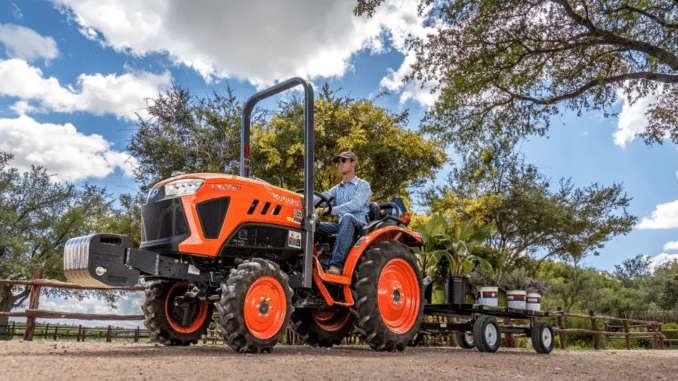
The Kubota BX series is a family of diesel sub-compact tractors designed for mowing, landscaping, snow removal, garden preparation, light material handling, and general property maintenance. Introduced in 2000, the BX gives homeowners and acreage owners a machine that combines lawn-tractor maneuverability with four-wheel drive, hydraulic implement operation, a rear PTO, and a three-point hitch. Kubota Canada positions current BX models for properties of approximately 1–10 acres, although workload, terrain, and attachment requirements matter more than acreage alone.kubotausa+1
This page is an across-time directory covering current BX tractors, discontinued generations, and the dedicated tractor-loader-backhoe models. Use the model table to find a starting point for model-specific specifications, maintenance procedures, attachment information, and troubleshooting.
The broader General Kubota Compact Tractor Guide provides the top-level overview. This BX directory narrows the focus to the models, service considerations, and ownership questions that matter when maintaining a new or used Kubota sub-compact tractor.
About the Kubota BX Compact Tractor Series
Across its North American history, the BX family spans approximately 15–26 advertised engine horsepower, depending on model and rating convention. The legacy BX1500 occupies the lower end, while BX2660, BX2670, and BX2680 models represent the higher-powered end of the range. Current North American product listings identify the BX1880, BX2380, BX2680, and BX23S.kubota+2
These are sub-compact tractors rather than larger compact utility machines. Current conventional BX tractors weigh roughly 1,300–1,500 pounds before adding a loader, mower, ballast, or other equipment. Their low stance and compact dimensions suit lawns, restricted access, and maneuvering around buildings, but limit ground clearance and heavy-duty implement capability.kubotausa
The North American BX models covered here use hydrostatic transmission, generally with high and low travel ranges, and four-wheel drive. They are not gear-drive or glide-shift tractors. Current specifications include hydraulic power steering, a 540-rpm rear PTO, a 2,500-rpm mid PTO, and a Category I three-point hitch; the BX23S requires particular attention to optional hitch equipment and backhoe configuration.kubotausa+1
Depending on generation and equipment package, BX features include cruise control, folding ROPS, LA-series loaders, mid-mount mower decks, quick-attach loader carriers, and optional third-function hydraulics. Current cab availability refers to an optional dealer-installed enclosure rather than a separate BX factory-cab model family. Do not assume newer loader, mower, or cab equipment fits an older BX.kubotausa+1
Within Kubota’s range, the BX is the mowing-friendly, property-maintenance choice. B/B01 tractors provide a small-frame compact alternative; LX models occupy a more premium compact position; Standard L and Grand L tractors address progressively larger utility workloads. The General Kubota Compact Tractor Guide should handle those broader comparisons.
A BX is most useful when one tractor must mow, move modest material loads, maintain a driveway, and handle seasonal chores. The BX23S and its predecessors add dedicated backhoe capability without turning the machine into a full-size construction backhoe.kubotausa+2
Kubota BX Compact Tractor Models: Across-Time Directory
The following table brings together the publicly documented North American BX tractor generations and dedicated tractor-loader-backhoe models. It includes the identifiable “-1” revisions rather than treating them as interchangeable with the original BX70 models. Legacy dates are approximate generation or production references, not guarantees of first or last retail sale in both countries. Dealer inventory may have sold later.messicks+1
Horsepower figures are approximate engine ratings, not PTO ratings. All rows describe sub-compact diesel tractors with HST and 4WD; “TLB” identifies a dedicated tractor-loader-backhoe configuration. The suggested tasks are guide-routing categories, not confirmation that a particular used tractor has the required attachment package.
Current BX80 Models
Kubota’s current USA and Canada listings identify four models. Current listings give the BX2680 a 23.3-hp engine rating, while earlier official BX80 brochures show 24.8 hp. Consequently, BX2680 guides should identify the applicable specification sheet rather than present one rating as universal across its entire sales history.kubotausa+3
| Model | Approx. HP / configuration / tractor class | Typical tasks / use case | See Specific Article |
|---|---|---|---|
| Kubota BX1880 | Current; 16.6 hp in current North American listings; lower-powered BX80 sub-compact; ROPS with compatible dealer-installed cab options | Residential mowing, snow clearing, gardening, light loader work | Kubota BX1880 maintenance & troubleshooting guide |
| Kubota BX2380 | Current; approximately 21.6 hp; general-purpose BX80 sub-compact; ROPS with compatible dealer-installed cab options | Mowing, loader chores, driveway maintenance, tilling, seasonal property work | Kubota BX2380 maintenance & troubleshooting guide |
| Kubota BX2680 | Current; approximately 23.3 hp in current listings; earlier official literature lists 24.8 hp; higher-powered BX80 sub-compact | PTO-intensive mowing and garden work, snowblowing, mixed property maintenance | Kubota BX2680 maintenance & troubleshooting guide |
| Kubota BX23S | Current; approximately 21.6 hp; dedicated BX80-generation TLB; standard loader and backhoe; compatible dealer-installed cab options | Trenching, landscaping excavation, material handling, mowing with compatible equipment | Kubota BX23S maintenance & troubleshooting guide |
Current model configurations and ratings are supported by Kubota’s USA and Canadian listings.kubota+3
Discontinued and Legacy Conventional BX Models
The conventional BX lineage progresses through the original BX00 machines, BX30, BX50, BX60, BX70, and revised BX70 “-1” tractors before reaching BX80. The BX1500 is an additional early entry-level model and should not disappear from an ownership directory simply because later brochures focus on larger engines.tractordata
| Model | Approx. HP / configuration / tractor class | Typical tasks / use case | See Specific Article |
|---|---|---|---|
| Kubota BX1500 (discontinued) | Approximately 15 hp; early entry-level sub-compact; roughly 2003–2005 | Lawn mowing, light snow removal, small-garden and property chores | Kubota BX1500 maintenance & troubleshooting guide |
| Kubota BX1800 (discontinued) | Approximately 18 hp; original BX00-generation sub-compact; early 2000s | Residential mowing, light loader work, snow clearing | Kubota BX1800 maintenance & troubleshooting guide |
| Kubota BX2200 (discontinued) | Approximately 22 hp; original BX00-generation sub-compact; early 2000s | Mixed mowing and loader work, garden preparation, driveway upkeep | Kubota BX2200 maintenance & troubleshooting guide |
| Kubota BX1830 (discontinued) | Approximately 18 hp; BX30-generation sub-compact; roughly 2004–2006 | Mowing, landscaping, light material handling | Kubota BX1830 maintenance & troubleshooting guide |
| Kubota BX2230 (discontinued) | Approximately 22 hp; BX30-generation sub-compact; roughly 2004–2006 | Mowing, tilling, snow removal, small-acreage maintenance | Kubota BX2230 maintenance & troubleshooting guide |
| Kubota BX1850 (discontinued) | Approximately 18 hp; BX50-generation sub-compact; roughly 2006–2008 | Lawn care, light loader chores, residential maintenance | Kubota BX1850 maintenance & troubleshooting guide |
| Kubota BX2350 (discontinued) | Approximately 23 hp; BX50-generation sub-compact; roughly 2006–2008 | Mowing, garden cultivation, loader work, seasonal chores | Kubota BX2350 maintenance & troubleshooting guide |
| Kubota BX1860 (discontinued) | Approximately 18 hp; BX60-generation sub-compact; roughly 2009–2013 | Mowing-focused ownership, snow clearing, light implement work | Kubota BX1860 maintenance & troubleshooting guide |
| Kubota BX2360 (discontinued) | Approximately 23 hp; BX60-generation sub-compact; roughly 2009–2013 | General property upkeep, loader work, tilling, mowing | Kubota BX2360 maintenance & troubleshooting guide |
| Kubota BX2660 (discontinued) | Approximately 25–26 advertised hp; higher-powered BX60 sub-compact; roughly 2008–2013 | Mowing and PTO work, snowblowing, mixed acreage chores | Kubota BX2660 maintenance & troubleshooting guide |
| Kubota BX1870 (superseded) | Approximately 18 hp; original BX70 version; roughly 2013–2014 | Residential mowing, snow removal, light loader work | Kubota BX1870 maintenance & troubleshooting guide |
| Kubota BX2370 (superseded) | Approximately 23 hp; original BX70 version; roughly 2013–2014 | Mowing, loader work, garden preparation, driveway maintenance | Kubota BX2370 maintenance & troubleshooting guide |
| Kubota BX2670 (superseded) | Approximately 25–26 advertised hp; higher-powered original BX70 version; roughly 2013–2014 | PTO-driven chores, mowing, snowblowing, landscaping | Kubota BX2670 maintenance & troubleshooting guide |
| Kubota BX1870-1 (discontinued) | Approximately 18 hp; revised BX70 model; roughly 2015–2016 | Mowing, snow removal, light material handling | Kubota BX1870-1 maintenance & troubleshooting guide |
| Kubota BX2370-1 (discontinued) | Approximately 23 hp; revised BX70 model; roughly 2015–2016 | Mixed mowing, garden, loader, and property-maintenance work | Kubota BX2370-1 maintenance & troubleshooting guide |
| Kubota BX2670-1 (discontinued) | Approximately 25–26 advertised hp; revised higher-powered BX70 model; roughly 2015–2016 | Mowing, snowblowing, tilling, mixed implement work | Kubota BX2670-1 maintenance & troubleshooting guide |
The legacy model names, approximate horsepower bands, and generation dates follow the published tractor directory, with generation changes corroborated by a North American Kubota dealer’s historical comparison.messicks+1
Discontinued and Legacy BX Tractor-Loader-Backhoe Models
The TLB sequence uses different naming from the conventional four-digit BX tractors. In particular, BX24, BX25, and BX25D should not be assumed to have engine horsepower equal to their model numbers. The documented progression is BX22, BX23, BX24, BX25, BX25D, and BX23S, with a later BX25D-1 revision also identifiable in public records.messicks+2
| Model | Approx. HP / configuration / tractor class | Typical tasks / use case | See Specific Article |
|---|---|---|---|
| Kubota BX22 (discontinued) | Approximately 22 hp; early dedicated BX TLB | Small trenches, landscaping excavation, loader chores | Kubota BX22 maintenance & troubleshooting guide |
| Kubota BX23 (discontinued) | Approximately 22–23 hp; early dedicated BX TLB; distinct from BX23S | Drainage projects, garden landscaping, light digging and loading | Kubota BX23 maintenance & troubleshooting guide |
| Kubota BX24 (discontinued) | Approximately 23 hp; BX50-era dedicated TLB | Trenching, landscaping, loader work, property projects | Kubota BX24 maintenance & troubleshooting guide |
| Kubota BX25 (discontinued) | Approximately 23 hp; BX60-era dedicated TLB | Light excavation, material handling, mixed property work | Kubota BX25 maintenance & troubleshooting guide |
| Kubota BX25D (superseded) | Approximately 23 hp; BX70-era dedicated TLB; BX25DLB appears in parts identification | Loader and backhoe work, drainage projects, seasonal maintenance | Kubota BX25D maintenance & troubleshooting guide |
| Kubota BX25D-1 (discontinued; revision designation) | Approximately 23 hp; later BX25D revision; verify full identification and serial number | Similar digging and loader duties to BX25D, with revision-specific parts checks | Kubota BX25D-1 maintenance & troubleshooting guide |
The TLB lineage is documented in dealer history; Kubota’s USA parts system also identifies BX25DLB, while public equipment records identify BX25D-1. These suffixes warrant a parts-identification note rather than assumptions about universal component interchangeability.kubotausa+2
Model Names, Suffixes, and Directory Boundaries
Use the complete tractor identification when ordering parts or selecting a manual. A short marketplace description such as “BX25” or “BX2370” may omit a revision or package designation. A mower deck, loader, and backhoe also have their own identification and service requirements.
This directory indexes the principal tractor models and identifiable revisions rather than creating separate tractor entries for every loader bundle, tire package, or cab installation. It also excludes overseas-market names such as BX231 and BX261 from the USA/Canada model table; those names appear in Kubota’s European BX range and should not automatically be treated as North American equivalents.kuk.kubota-eu+1
Important Differences Between BX Generations
Several historical changes matter more to owners than styling alone:
-
Early BX00 and BX30 machines have more restrictive three-point lift geometry, often described as limited Category I. Check actual implement clearance and transport height rather than relying only on hitch-pin size.messicks
-
Early loader arrangements can leave the control valve attached to the removed loader, affecting use of other front hydraulic attachments. Later generations improved this arrangement.messicks
-
BX50-generation tractors introduced plastic body panels. Used-machine inspections should include panel cracking and the relevant support arrangements. Later BX60 tractors returned to metal hood and fender construction.messicks
-
BX70 introduced further operator-platform changes and drive-over mower options; the later “-1” revisions included additional detail changes.messicks
-
BX80 brought major loader attachment improvements, including available skid-steer-style quick attachment and third-function equipment. These features do not make every skid-steer attachment appropriate for a BX.kubotausa+1
BX Compact Tractor Maintenance Guides
Routine Service and Inspection Points
A BX maintenance plan should follow the operator’s manual for the exact tractor, supplemented by the separate loader, backhoe, mower, and implement manuals. Do not transfer the service chart from a BX23S to a BX2200 simply because both belong to the BX family.
Before routine use, check engine oil, coolant condition and level as directed, transmission-fluid level, visible leaks, radiator-screen cleanliness, tire condition, and loose or damaged components. Mowing dust and grass accumulation make cooling-system cleanliness especially important. The BX maintenance documentation also includes fuel-filter checks, belt inspection, HST control checks, and brake adjustment.teamtractor+1
A useful service framework is:
| Service area | Common BX maintenance approach | Important qualification |
|---|---|---|
| Initial service | Review the first-50-hour requirements | The break-in service is not necessarily the recurring interval |
| Engine oil and filter | Follow the model’s hour-based and applicable calendar schedule | The BX25D manual specifies recurring 200-hour engine oil and filter service |
| Air cleaner | Inspect regularly; clean or replace as instructed | Dusty conditions require more frequent attention |
| Fuel filters | Inspect for restriction or contamination and replace on schedule | Filter location and procedure must match the tractor |
| Transmission/HST | Check fluid level; service filters, fluid, and strainers as specified | A filter change does not automatically mean all fluid is due |
| Front axle | Check for leakage and follow axle-oil service requirements | Use the lubricant approved for that model |
| Cooling system | Keep screens clean and service coolant on time | The BX25D manual specifies 2,000 hours or two years, whichever comes first |
| Grease points | Follow tractor and attachment schedules separately | Loader and backhoe requirements may be more frequent than tractor lubrication |
The interval examples above come from published BX maintenance material and the BX25D operator’s manual; they are not a universal service chart for every BX generation.teamtractor+1
For low-hour seasonal tractors, calendar limits remain important. An engine that accumulates few hours still needs scheduled attention to filters, coolant, hoses, and deteriorating components. The BX25D documentation, for example, specifies an air-cleaner replacement limit of 1,000 hours or one year, whichever comes first.rentalex
Battery terminals, cable connections, fan-belt condition, fuel hoses, hydraulic hoses, and electrical wiring should form part of the inspection routine. Grease only the points identified in the relevant manual; not every steering or driveline joint necessarily has a serviceable fitting.
Use “BX compact tractor service interval checklist” as the scheduling reference, and “Kubota BX engine oil, filters, and fluid service guide” for model-specific fluid specifications, capacities, filter identification, and service procedures.
Mower, PTO, and Implement Maintenance
A BX used primarily for mowing needs attention to the complete cutting system, not just engine servicing. Deck setup, belt condition, blade condition, spindle service, and PTO driveline condition all influence cutting quality and vibration.
Current Canadian BX listings show several deck widths across the range, but availability differs by tractor. Confirm the exact deck model, mounting kit, and driveline before buying a used mower advertised simply as “BX compatible.”kubota
Mower and implement inspections should cover:
-
Tire pressures before checking deck level.
-
Side-to-side leveling and front-to-rear pitch using the deck manual.
-
Blade condition, correct installation, and specified fastener torque.
-
Belts, pulleys, spindle bearings, and gearbox lubricant where applicable.
-
Mid-PTO shaft locking, shielding, and clearance.
-
Rear PTO shaft guards, universal joints, telescoping sections, and retaining devices.
-
Correct PTO shaft length throughout the implement’s permitted movement.
-
Loader couplers, locking pins, hoses, and attachment-carrier latches.
-
Three-point lift arms, stabilizers, top link, and retaining pins.
The BX25D manual includes safe PTO and implement operation requirements alongside the tractor’s maintenance instructions. Stop the engine, remove the key, and wait for rotating components to stop before working on a deck or driveline.rentalex
“Mower deck maintenance on Kubota BX tractors” should organize deck-leveling and cutting-system content. “PTO and implement driveline service for BX models” should handle shaft identification, lubrication, shielding, and safe coupling procedures.
Steering, Front Axle, Tires, and Chassis Maintenance
BX tractors combine a compact wheelbase with the ability to carry substantial attachments. Chassis condition and setup therefore deserve attention whenever the tractor changes from mowing to loader or winter work.
Inspect front axle seals and housings, steering joints, wheel fasteners, axle-pivot condition, and the four-wheel-drive driveline. Investigate fresh oil around a hub, unusual steering free play, or vibration rather than treating these as normal signs of age. BX maintenance documentation includes toe-in checks and front axle pivot adjustment.teamtractor+1
Tire pressure should suit the fitted tires, axle loading, and tractor instructions. Avoid using one copied pressure figure for turf, industrial, and hybrid tires. Current BX equipment offerings include several tire types, each intended to balance traction, turf protection, and operating conditions.kubotausa
Include loader mounts, backhoe mounting points, frame fasteners, brake operation, parking brake, ROPS condition, seat belt, and safety-interlock operation in the inspection routine. Keep the ROPS and restraint system in the configuration required by the operator’s manual; folding the ROPS for access is not the normal working arrangement.kubotausa+1
“Front axle and steering maintenance across Kubota BX tractors” should cover wear inspections and model-specific procedures. “Tire, ballast, and chassis setup for Kubota BX compact tractors” should address operating configuration without suggesting that ballast increases the tractor’s structural or hydraulic ratings.
BX Compact Tractor Troubleshooting Guides
Starting, Engine, Fuel, and Electrical Problems
Start a BX diagnosis by identifying the symptom precisely: no cranking, slow cranking, normal cranking without firing, or an engine that starts and then stops. These conditions require different checks.
Record the full model, serial number, hours, ambient temperature, recent service, fuel history, and whether the problem occurs cold, hot, or under load. The model-specific operator’s manual remains the starting point for control positions, safety conditions, and basic checks.kubotausa+1
A practical diagnostic sequence is:
| Symptom | Initial checks | Route to the relevant guide |
|---|---|---|
| No crank | Battery connections, main electrical supply, prescribed starting-control positions, safety-interlock operation | Kubota BX starting problems – diagnostics and fixes |
| Slow crank | Battery state, terminal condition, ground connection, cable condition, temperature-appropriate oil | Battery, charging, and electrical troubleshooting for Kubota BX models |
| Cranks but will not start | Fuel supply, filter condition, required bleeding procedure, glow-plug operation in cold conditions | Engine and fuel system issues across BX compact tractors |
| Starts, then loses power | Fuel restriction, air restriction, contaminated fuel, load conditions | Engine and fuel system issues across BX compact tractors |
| Overheating during mowing | Radiator screen, cooling airflow, coolant, fan belt, excessive load | Kubota BX overheating diagnosis and cooling-system checks |
| Intermittent stopping | Fuel delivery and wiring or interlock faults, assessed from the operating conditions | Kubota BX intermittent stalling troubleshooting guide |
These are starting points for inspection, not proof that a particular component has failed. BX maintenance documentation specifically identifies air-cleaner, fuel-filter, belt, cooling-system, and electrical-system checks relevant to this process.teamtractor+1
Smoke colour can help describe a fault, but it should not become a diagnosis by itself. Note whether smoke appears only at cold start, persists after warming, or develops under load, then follow the relevant engine guide. Do not begin fuel-system work by loosening high-pressure injection components.
Safety switches should be tested and repaired rather than bypassed. Likewise, cold-start procedures and any starting aid must follow the exact operator’s manual.rentalex
Each symptom guide should lead to individual model pages, such as “Kubota BX2200 starting problems” or “Kubota BX2380 fuel-system troubleshooting,” where control layout, filter arrangement, and electrical details can be addressed accurately.
Hydraulic, Loader, PTO, and Implement Problems
Separate a system-wide hydraulic complaint from a fault affecting only one function. A slow loader, weak three-point hitch, and abnormal steering together suggest a different investigation from a loader that lifts normally but will not curl its bucket.
Begin with basic checks identified in the tractor and attachment documentation: correct fluid level and condition, operating temperature, service history, control settings, coupler connection, and attachment installation. Keep couplers clean and follow the pressure-relief procedure before connecting or disconnecting hydraulic equipment.kubotausa+1
For weak or slow loader response, the broader guide should examine:
-
Whether the tractor is at the prescribed operating speed.
-
Whether the attachment exceeds the permitted load.
-
Whether the fault changes as the oil warms.
-
Whether couplers are fully seated and correctly connected.
-
Whether filters or strainers are overdue for service.
-
Whether the complaint affects lift, curl, or all hydraulic functions.
“Hydraulic and loader problems on Kubota BX tractors” should route readers through these checks before model-specific pressure or flow testing. Hydraulic whine alone does not establish pump failure, and relief-pressure adjustment should not be used to compensate for an oversized load.
For a three-point hitch that will not lower, distinguish the lowering-speed control from a lifting failure. For a deck that will not move as expected, identify the mower-lift arrangement and controls before condemning the hydraulic system. These operating details belong in the exact model guide.rentalex
“3-point hitch and PTO troubleshooting for BX models” should cover control selection, engagement conditions, linkage, and load-related symptoms. “Implement vibration and driveline issues on Kubota BX compact tractors” should separate blade, spindle, belt, shaft, joint, and implement faults.
Stop operation when vibration is severe or new. Lower the implement, shut down, and inspect before continuing; the PTO and implement safety procedures in the operator’s manual remain applicable during diagnosis.rentalex
Transmission, Drive, 4WD, and Traction Problems
BX drive troubleshooting should focus on hydrostatic operation, range selection, braking, fluid service, and four-wheel-drive engagement. Gear-transmission clutch faults and glide-shift troubleshooting do not belong in this BX directory. The high/low range selector is still a mechanical control and should be used according to the operator’s instructions.kubotausa+1
A tractor that travels normally but struggles while pushing into a pile may have a workload or range-selection problem rather than an internal transmission failure. The diagnostic guide should first establish range, engine speed, pedal use, attachment load, and whether the symptom changes with temperature.
“Transmission and drive problems on Kubota BX tractors” should distinguish:
-
Engine power loss from loss of drive.
-
Normal speed changes under load from abnormal slipping or weakness.
-
Pedal-return or neutral-control problems from internal faults.
-
Parking-brake or brake drag from transmission resistance.
-
Cold-fluid behaviour from persistent hot-operation symptoms.
-
Range-selector stiffness from a broken or damaged control.
BX maintenance schedules include HST neutral-control and brake adjustments, underscoring the need to inspect external controls before assuming a transmission overhaul is required.teamtractor+1
“4WD and traction issues across Kubota BX models” should address engagement procedure, linkage condition, correct tire combinations, driveline inspection, and surface conditions. Do not force an engagement lever or continue driving with unexplained axle noise or driveline vibration.
“How ballast, tires, and terrain affect Kubota compact tractor performance” should explain why spinning tires and poor stability are not automatically transmission faults. Kubota’s BX equipment guidance identifies rear ballast as an essential part of loader setup, while tire choice changes the balance between traction and turf protection.kubotausa
Attachments and Implements for the Kubota BX Compact Tractor Series
The BX attachment range supports year-round ownership: mowing during the growing season, garden and driveway work in spring and autumn, and snow removal in winter. Compatibility depends on the exact tractor generation, attachment mounting system, PTO arrangement, and operating limits—not the BX name alone.
Kubota’s current BX material includes loaders, mower decks, front snow equipment, pallet forks, lightweight grapples, rear blades, landscape rakes, tillers, spreaders, and other property-maintenance implements. However, broad online implement listings should not replace a model-specific compatibility check.kubotausa
Loaders, Pallet Forks, and Grapples
A loader suits mulch, loose soil, gravel, compost, and similar material-handling work within the tractor and loader’s ratings. Match the LA-series loader and mounting hardware to the tractor rather than assuming that any BX loader will fit.
Current BX loader equipment can include Swift-Tach removal, a single-lever hydraulic connection, an optional two-lever quick-attach carrier, and optional third-function hydraulics. Older tractors may have different bucket connections and hydraulic arrangements.kubotausa+1
Fork and grapple selection requires attention to attachment weight as well as mounting style. A fork frame’s own load rating does not mean the tractor can lift that load. Likewise, a skid-steer-style carrier establishes a connection standard, not sufficient hydraulic flow, lifting capacity, or stability for every skid-steer implement.
“Attachments and implement options for Kubota BX compact tractors” should separate suitable lightweight tools from equipment that merely shares a mounting pattern.
Backhoes and TLB Configurations
The BX22, BX23, BX24, BX25, BX25D, BX25D-1, and BX23S belong in the backhoe section of the directory. Their backhoe equipment and mounting arrangements must be identified individually; the current BX23S uses a newer attachment system than its predecessors.messicks+1
Do not assume a conventional BX1880, BX2380, or BX2680 is equivalent to a BX23S simply because it has similar dimensions or horsepower. An aftermarket backhoe proposal requires verification of manufacturer approval, mounting structure, hydraulic connection, and operating limits.
For three-point work on a TLB, confirm the required hitch equipment and backhoe-removal procedure. The current BX brochure identifies the BX23S three-point hitch as optional equipment.kubotausa
Mid-Mount Mowers, Rear Finish Mowers, and Baggers
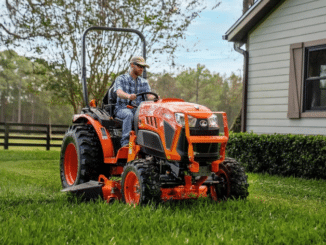
Mid-mount mowing is a central BX use case. Current Canadian listings show deck options from approximately 48 to 60 inches across the family, with different choices by tractor. Older decks, lift hardware, PTO shafts, and drive-over arrangements require their own compatibility checks.kubota+1
A rear finish mower offers an alternative where the implement’s PTO requirement, weight, hitch geometry, and driveline suit the tractor. Baggers and mulch kits also need to match the specific deck and installation package.kubotausa
“Setting up loaders, mowers, and rear implements on Kubota BX models” should help readers identify the complete installation rather than only the main attachment.
Rotary Cutters, Tillers, and Ground-Engaging Implements
Small rotary cutters, appropriately sized tillers, box blades, grading scrapers, rear blades, and landscape rakes can expand BX usefulness. Select them using all of the following:
-
Minimum required PTO horsepower.
-
Implement weight and centre of gravity.
-
Three-point lifting capacity at the stated measurement point.
-
Available lift height and ground clearance.
-
Working width, soil conditions, and expected draft load.
-
PTO shaft length and safe operating angles.
Current BX2680 specifications list approximately 680 pounds of three-point lift at 24 inches behind the lift point. That figure is not interchangeable with a lift rating at the hitch pins, nor does it establish suitability for every implement weighing less than 680 pounds. Early BX hitch geometry adds another reason to check physical fit and transport clearance.kubota+1
Sub-compact-specific implements are often the most useful starting point. Kubota’s current attachment material includes lightweight tillers, blades, grading scrapers, landscape rakes, and quick hitches intended for this class.kubotausa
Snow Equipment and Seasonal Tools
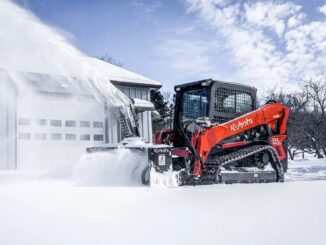
Depending on tractor and installation, BX snow equipment can include front blades, front-mounted snowblowers, rear blades, rear PTO snowblowers, and loader-mounted pushers. Front-powered equipment may require the correct front hitch, driveshaft, mid-PTO connection, and control components—not simply the blower itself.kubotausa+1
For winter preparation, check:
-
Tractor and attachment compatibility.
-
PTO and hydraulic requirements.
-
Tire and chain clearance.
-
Required ballast.
-
Shear protection and driveline condition.
-
Cab fit, visibility, lighting, and wiper equipment where installed.
-
Cold-weather fuel, battery, and starting arrangements.
“Snow removal and seasonal attachment setup for Kubota BX tractors” should connect these topics to model-specific installation and maintenance guides.
Aerators, spreaders, landscape rakes, rollers, and other small-acreage tools can also suit BX ownership. As with larger attachments, verify loaded weight and hitch suitability: a spreader’s empty weight is not its operating weight. Kubota lists several of these tool types within its BX attachment offerings.