
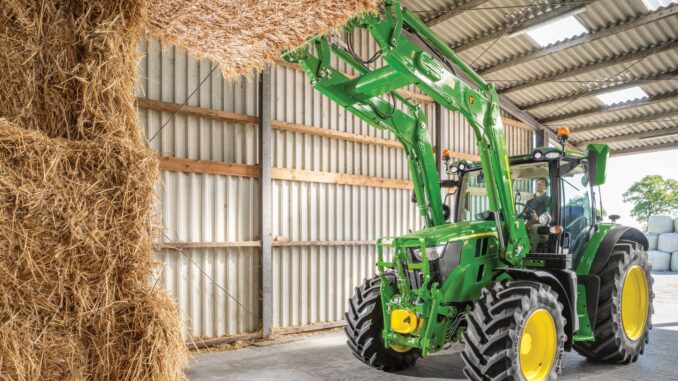
The John Deere 5055E is a 5E Series utility tractor built for light farm work, acreage jobs, loader work, mowing, and general property maintenance rather than simple lawn-only use. Deere’s operator information for the 5055E covers the engine, fuel, transmission, hydraulic, PTO, electrical, hitch, and troubleshooting systems, which makes it a solid platform for owner maintenance so long as the repair stays within safe DIY limits.
This guide is written for USA and Canada owners who want a practical, symptom-first reference for repair decisions, routine service, common parts, and realistic troubleshooting. It focuses on what the owner notices first, what checks make sense at home, and when a John Deere 5055E problem should go straight to the dealer to avoid safety risks or expensive damage.
General overview of the John Deere 5055E
The John Deere 5055E sits in Deere’s 5E utility tractor range, alongside related 5065E and 5075E models covered in the same operator manual family. In practical terms, that places it well above lawn and garden tractors in size, hydraulic capability, hitch capacity, and job scope, while still being simple enough for owners to handle routine service themselves.
The main systems owners should understand are the diesel engine and fuel system, the transmission-hydraulic system, front axle and steering components, PTO and 3-point hitch hardware, cooling system, and the basic electrical and starting circuits. Deere’s operator manual also includes dedicated troubleshooting sections for the engine, transmission, hydraulic system, brakes, rockshaft/3-point hitch, remote hydraulics, and electrical system, which is a good sign that these are the core systems to evaluate when faults appear.
Several service parts come up repeatedly for this model family, including engine oil filter RE519626, hydraulic oil filter RE45864, primary air filter RE282286, secondary air filter RE282287, FT4 fuel filter R536698, Tier 2 fuel filter RE60021, fan belt R216949, ignition switch RE61717, thermostat RE501052, and battery TY25272. Common lighting and small repair items also include headlight bulbs 54M7166 and 57M7166, warning bulb AD2062R, and tail/turn lamp parts such as AR48041 and R136239.
John Deere 5055E troubleshooting approach
The best way to diagnose a John Deere 5055E is to begin with the exact symptom, not the part you think is bad. Deere’s own manual separates troubleshooting by system, and that works well in the field because the same complaint, such as hard starting or weak hydraulics, can come from several different causes.
Main symptom groups for this tractor include:
-
Starting issues, such as no crank, slow crank, or hard starting.
-
Running issues, such as low power, stalling, smoke, or rough operation.
-
Hydraulic and hitch problems, such as weak loader response, slow remotes, or poor 3-point lift.
-
Transmission and drive complaints, such as poor movement, clutch issues, or axle/oil concerns.
-
Overheating and leak problems, including coolant, fuel, hydraulic oil, or hose issues.
-
Electrical and safety-switch related issues, including battery, fuses, lights, neutral start concerns, and ignition switch faults.
A useful owner rule is simple: verify fluid level, filter condition, battery condition, visible belt/hose condition, and obvious loose or damaged wiring before assuming an internal failure. On a John Deere 5055E, many “major” complaints still trace back to service neglect, contaminated fuel, low voltage, clogged air filtration, or overdue hydraulic maintenance.
Emergency and immediate repair needs
Some John Deere 5055E faults should be handled immediately because they affect safe operation or can quickly damage expensive components. If you see active fuel leakage, hot running, hydraulic hose failure, brake loss, severe driveline noise, or warning-light/electrical issues that prevent safe starting and stopping, park the tractor until the cause is found.
4.1 Starting issues
A starting problem matters immediately when the tractor will not crank, cranks slowly, or starts and dies in a work area where you need reliable machine control. Low battery voltage, dirty battery connections, fusible link or fuse issues, ignition switch trouble, fuel bleeding issues, or neutral start system problems are all realistic causes on this platform.
Common causes:
-
Weak, discharged, or failing battery.
-
Corroded battery terminals or poor ground connection.
-
Blown fuse or fusible link fault.
-
Faulty ignition switch RE61717 or damaged wiring.
-
Air in the diesel fuel system after filter service or fuel run-dry condition.
-
Neutral start system out of adjustment.
Basic owner checklist:
-
Check battery charge and terminal cleanliness before chasing other faults.
-
Verify the transmission/range controls and clutch are in the correct starting position for your tractor configuration.
-
Check visible fuses, fusible link area, and ignition switch operation.
-
If the engine cranks but will not fire, inspect fuel level, drain water/sediment as required, and review whether the fuel system needs bleeding after filter work.
-
Stop DIY work if you suspect injection system or high-pressure fuel problems, because Deere specifically warns against opening high-pressure fuel components casually.
4.2 John Deere 5055E running and power problems
If a John Deere 5055E starts but lacks power, surges, smokes, or stalls under load, the issue can often become expensive if you keep working it hard. Restricted air intake, dirty fuel, a plugged fuel filter, overdue oil service, cooling-system restriction, or injection-related faults can all show up first as “it runs, but not right”.
Common causes:
-
Clogged primary or secondary air filter.
-
Fuel contamination or overdue fuel filter service.
-
Engine overheating from dirty radiator, screen, or cooler area.
-
Crankcase vent or belt condition problems affecting normal operation.
-
Injector or pump issues that go beyond normal DIY diagnosis.
Basic owner checklist:
-
Inspect and service the air cleaner if it is dirty or the tractor has been working in dust.
-
Replace the fuel filter at the proper interval and drain water/sediment when required.
-
Clean the grille, screens, radiator, and oil cooler area before assuming a deeper engine problem.
-
Confirm engine oil level and oil service history.
-
Move to dealer diagnosis if the tractor still smokes heavily, loses power sharply, or shows signs of fuel-system/injector trouble.
4.3 Vibration and noise
Unusual vibration or noise on a John Deere 5055E should never be ignored because it can point to loose hardware, fan belt issues, front axle wear, wheel hardware problems, bearing wear, or implement driveline trouble. Deere specifically calls for inspecting loose hardware, tire condition, wheel hardware, front axle pivot points, and belt condition as part of normal service logic.
Common causes:
-
Loose wheel or axle hardware.
-
Tire damage or incorrect inflation.
-
Worn front axle pivot or steering spindle lubrication points.
-
Fan/alternator belt wear or poor adjustment.
-
Bearing or driveline wear beyond simple owner adjustment.
Basic owner checklist:
-
Stop the tractor and inspect tires, wheels, and visible hardware first.
-
Check belt condition and belt tension/adjustment where applicable.
-
Lubricate the front axle pivot and steering spindle points on schedule.
-
Inspect attached implements and PTO driveline condition if the noise only appears under PTO work.
-
Treat persistent knocking, grinding, or axle noise as an advanced repair issue.
4.4 John Deere 5055E overheating and leaks
Overheating, coolant loss, oil leaks, hydraulic leaks, or fuel seepage deserve immediate attention because diesel engines and hydraulic systems get expensive fast when run low or hot. Deere’s service information places strong emphasis on coolant checks, hose inspection, radiator cleaning, correct fluid handling, and safe cooling-system service.
Common causes:
-
Dirty radiator, grille, or oil cooler.
-
Low coolant level or overdue coolant flush.
-
Loose or aging radiator hoses and clamps.
-
Hydraulic or engine oil leaks from hoses, filters, or fittings.
-
Fan belt condition problems reducing cooling performance.
Basic owner checklist:
-
Shut the tractor down and let it cool before opening or inspecting the cooling system.
-
Check coolant level, engine oil level, and obvious leak points.
-
Clean external debris from the grille, screens, radiator, and oil cooler.
-
Inspect upper and lower radiator hoses, clamps, and belt condition.
-
Use dealer help for internal coolant loss, repeated overheating, or hydraulic leaks under pressure.
4.5 Transmission and drive problems
Drive complaints on a John Deere 5055E usually show up as poor movement, weak pull, clutch issues, or hydraulic/transmission oil concerns. These matter because low oil, neglected hydraulic filters, clutch adjustment problems, or axle service neglect can turn a manageable repair into a major transmission job.
Common causes:
-
Low transmission-hydraulic oil level.
-
Overdue hydraulic oil and filter service.
-
Pickup screen contamination.
-
Clutch free play out of adjustment.
-
MFWD axle oil or bearing issues on equipped tractors.
Basic owner checklist:
-
Check transmission-hydraulic oil level first.
-
Review whether the hydraulic oil filter and oil are overdue for service.
-
Inspect for external leaks at filters, lines, and axle areas.
-
Check clutch pedal free play against the service requirement.
-
Send persistent no-move, slipping, internal noise, or contaminated oil findings to a dealer or experienced tractor technician.
4.6 John Deere 5055E electrical problems
Electrical faults usually show up as no-crank conditions, weak charging, lighting failures, gauge issues, or intermittent starting. They are often DIY-traceable at the battery, fuse, bulb, wiring, or switch level, but electrical faults tied to charging output, harness damage, or repeated fuse failure need more careful testing.
Common causes:
-
Battery TY25272 at end of life.
-
Dirty terminals, poor grounds, or weak charging output.
-
Blown fuse or fusible link failure.
-
Ignition switch RE61717 fault.
-
Burned-out bulbs such as 54M7166, 57M7166, AD2062R, AR48041, or R136239.
Basic owner checklist:
-
Start with battery voltage, terminal condition, and cable tightness.
-
Check fuses and the fusible link before replacing larger parts.
-
Inspect bulbs and lamp housings for simple failures.
-
Look for rubbed-through or loose wiring around the battery, starter, alternator, and lighting circuits.
-
Move to dealer-level testing if the charging system is not maintaining voltage or if fuses continue to fail.
DIY or dealer?
The normal line on a John Deere 5055E is this: routine maintenance, simple bolt-on parts, filters, battery work, basic belt work, and visible leak or wiring checks are realistic DIY tasks, but injection-system work, internal transmission repairs, hydraulic pressure diagnosis, clutch splitting work, and safety-critical brake or steering repairs are usually dealer or advanced-shop jobs.
Good DIY jobs
-
Engine oil and filter service.
-
Air filter replacement.
-
Fuel filter replacement and normal fuel-system bleeding per operator guidance.
-
Battery replacement and terminal cleaning.
-
Cooling package cleaning, hose inspection, and bulb replacement.
-
Basic fan belt inspection and replacement where access is straightforward.
Advanced DIY or dealer jobs
-
Injection pump, injectors, or high-pressure fuel diagnosis.
-
Internal hydraulic or transmission repairs.
-
Clutch work requiring adjustment beyond basic checks or tractor splitting.
-
Front axle internal repairs, wheel bearing packing beyond your experience, or major steering issues.
-
Persistent electrical faults involving charging-system diagnosis or wiring harness damage.
Skill level guide
-
Beginner: air filters, battery service, fluid level checks, radiator/screen cleaning, light bulbs.
-
Intermediate: oil and filter changes, fuel filter replacement, belt replacement, hose and clamp replacement, basic bleeding procedures.
-
Advanced: clutch/free-play diagnosis, hydraulic contamination diagnosis, axle service, repeated no-start diagnosis, wiring fault tracing with a meter.
Parts needed for a John Deere 5055E
Before ordering anything, gather the full tractor model, the Product Identification Number or tractor serial information, the engine serial number, and the exact configuration such as open-station or cab and MFWD or 2WD. Deere’s operator information includes identification-number recording points for the tractor, front axle or MFWD axle, ROPS, engine, and transmission because those details affect fit and service parts accuracy.
Use the table below as a starting point, not a substitute for checking your specific serial-number break and emissions version. The same John Deere 5055E badge can still have different filter or emissions-related parts depending on build version, especially for Tier 2 versus FT4 tractors.
OEM parts are usually the safer choice for belts, filters that must match exact Deere specs, safety-related switches, and fit-sensitive cooling or electrical components. Aftermarket parts can be fine for batteries, some filters, bulbs, and wear items when the supplier cross-references the exact OEM number and your John Deere 5055E serial/emissions version correctly.
John Deere 5055E manuals and diagrams
For official information, start with Deere’s operator manual, then move to Deere parts and technical publications when you need diagrams or deeper service detail. A model-specific parts seller page can also help with common part numbers, but it should never override the official manual or serial-number lookup.
Useful sources:
-
John Deere 5055E/5065E/5075E operator’s manual — best for operation, safety, maintenance intervals, identification numbers, and basic service procedures.
-
Green Farm Parts 5055E maintenance guide — useful for common service part numbers and quick maintenance-kit cross-checking.
-
Deere filter overview PDF for North American 5E tractors — useful for filter numbers and interval summaries across 5045E/5055E/5065E/5075E models.
-
John Deere Technical Information Store — the place to look for official technical publications and deeper service literature when the operator manual is not enough.
How to locate model, serial, and engine numbers
These numbers matter because they separate one John Deere 5055E configuration from another and help prevent ordering the wrong filter, switch, axle part, or emissions-related component. Deere specifically provides recording points for tractor serial, axle serial, ROPS serial, engine serial, and transmission serial information in the identification section of the manual.
-
Park safely on level ground, lower implements, shut off the engine, and remove the key before searching for identification tags.
-
Find and record the tractor PIN or serial information from the identification plate location described in the manual’s identification section.
-
If equipped, record front axle or MFWD axle serial information as listed in the same identification-number section.
-
Find and record the engine serial number from the engine identification area referenced by Deere in the manual.
-
Keep those numbers with your maintenance records before ordering parts or booking dealer service.
Buying parts online and in stores
The best parts-buying strategy is to identify the OEM number first, then buy from the source that gives the best confidence on fit. On a John Deere 5055E, this matters most for filters, electrical parts, cooling-system parts, and anything affected by serial number or emissions version.
-
Online: use the OEM number, confirm fit by model and serial range, and be careful with Tier 2 versus FT4 filter listings.
-
Dealer counter: best for serial-sensitive items, wiring parts, hydraulic parts, and any repair where the parts diagram matters.
-
Retail stores: acceptable for common consumables such as batteries, bulbs, or fluids only when the package clearly cross-references your model and OEM number.
Helpful sources include John Deere manuals, Green Farm Parts, and Deere filter overview PDF for cross-checking service items.
Step-by-step fitting guide for common parts
These are high-value DIY jobs because they address many common starting, running, and reliability complaints on a John Deere 5055E. Always park safely, lower attachments, shut off the engine, and follow the operator manual’s safety steps before service.
Engine oil and filter
This job supports starting quality, engine protection, and overall longevity because the operator schedule calls for an initial engine oil/filter change at 100 hours and then regular changes afterward. Deere’s filter overview also notes that interval extensions may depend on using Deere Plus-50 II oil and Deere filters.
-
Warm the engine briefly, park safely, and shut it down.
-
Drain the old engine oil into a suitable container and remove the old oil filter.
-
Install the correct new filter, lightly oiling the gasket if required by the filter instructions.
-
Refill with the correct engine oil grade/spec from the operator guidance and recheck the level.
-
Start the tractor, look for leaks, shut it off, and confirm the final oil level.
John Deere 5055E air filters
Air filter service often fixes low-power complaints and helps prevent dust damage, especially on tractors used for loader work, mowing, or dry-lot chores. Deere lists service at 250 hours or annually, with additional service as conditions require, plus annual element replacement.
-
Open the hood and access the air cleaner housing.
-
Remove the primary element carefully and inspect for heavy dirt or damage.
-
Check the secondary element and replace it if required rather than trying to “save” a damaged element.
-
Clean the housing sealing surfaces and reinstall the correct filters in the proper order.
-
Recheck the intake system for leaks or poor sealing before closing up.
Fuel filter replacement
This is one of the most useful John Deere 5055E DIY service jobs because restricted or contaminated fuel commonly causes hard starting, rough running, and power loss. Deere lists fuel filter replacement at 500 hours, and the manual includes fuel-system bleeding procedures after service.
-
Shut the tractor down safely and clean around the filter area before opening the system.
-
Remove the old fuel filter and install the correct replacement for your emissions version, such as R536698 on FT4 listings.
-
Drain any water or sediment as required by the maintenance chart.
-
Follow the operator procedure to bleed the fuel system if air was introduced during service.
-
Start the engine and check carefully for leaks before returning to work.
Battery replacement and cable cleanup
Battery and cable work is a high-impact repair because many starting and electrical faults begin with low voltage or poor connections. Deere includes battery access, battery service, charging, and replacement specifications in the service section.
-
Park safely, switch everything off, and access the battery.
-
Remove the ground cable first, then the positive cable.
-
Clean corrosion from cable ends and inspect for damaged terminals or broken insulation.
-
Install the replacement battery, reconnect positive first and ground last, and secure it properly.
-
Confirm cranking speed and charging performance after startup.
Maintenance to prevent repeat problems
Regular maintenance matters more on a utility tractor than reactive repair because dirt, vibration, fuel contamination, and heat gradually create the very problems owners later call “sudden.” Deere’s schedule for the John Deere 5055E is built around catching those issues before they turn into no-starts, overheating, hydraulic damage, or electrical trouble.
Focus areas:
-
Starting reliability: keep the battery clean, charged, and secure; replace fuel filters on time; drain water and sediment as required.
-
Engine and power reliability: keep air filters serviced and the cooling package clean.
-
Fire and overheating prevention: inspect hoses, clamps, leaks, and debris buildup around the engine and radiator.
-
Drive performance: keep transmission-hydraulic oil and filters on schedule and watch for axle oil issues.
-
Electrical reliability: inspect bulbs, fuses, battery cables, and charging-system connections before they strand the tractor.
John Deere 5055E maintenance schedule
The schedule below is based on Deere’s operator manual and the North American filter overview for the 5E series. Real-world conditions such as dust, heat, loader work, and short-trip use may justify more frequent inspection and cleaning, but the official intervals are the correct baseline.
Daily / before each use
-
Check engine oil level.
-
Check coolant level.
-
Drain water and sediment from the fuel tank and fuel filter as required in the 10-hour service section.
-
Lubricate as necessary and perform daily prestart checks.
Every 50 hours
-
Check transmission-hydraulic oil level.
-
Check MFWD axle oil level if equipped.
-
Clean and check the battery.
-
Inspect tires, lubricate front axle pivot pins and steering spindles, and inspect for loose hardware.
Every 100 hours
-
Change engine oil and filter for the initial service interval.
Every 250 hours
-
Change engine oil and filter, unless using an approved extended interval under Deere guidance.
-
Service the air cleaner.
-
Inspect and adjust the alternator/fan belt.
-
Lubricate the 3-point hitch, check the neutral start system, and check clutch pedal free play.
Every 500 hours
-
Replace the fuel filter.
-
Clean cab fresh-air or recirculation filters if equipped, with annual replacement guidance on those cab filters.
Every 600 hours
-
Change MFWD axle oil if equipped.
-
Clean the engine crankcase vent tube.
-
Pack front wheel bearings on adjustable front axle versions and inspect hoses/clamps.
-
Lubricate rear axle bearings, check engine idle speeds, and inspect the front axle pivot pin.
Every 1000 to 1100 hours
-
Change transmission-hydraulic oil and filter at 1000 hours.
-
Clean the transmission-hydraulic pickup screen at 1000 hours.
-
Check and replace the water separator bowl at 1100 hours.
Annual / 2 years
-
Replace air cleaner elements annually.
-
Flush the cooling system every 2 years or 2000 hours, whichever comes first.
Seasonal checklist
-
Spring or return-to-work season: battery check, coolant check, air filter inspection, radiator/screen cleaning, tire inspection.
-
Mid-season: recheck belt condition, battery cleanliness, hydraulic oil level, and front axle lubrication points.
-
Fall or pre-storage: clean the tractor thoroughly, inspect hoses, service overdue filters, and follow Deere storage/removal-from-storage guidance.
Repair, upgrade, or replace?
For most owners, a John Deere 5055E is worth repairing when the problem is isolated to normal wear parts, service neglect, or a bolt-on component because the tractor is designed around maintainable systems and long service intervals. The replace decision usually comes much later than with lawn tractors, but it changes when a tractor has repeated hydraulic, transmission, engine, or structural issues that exceed its market value or your planned workload.
Repair if:
-
The fault is a filter, belt, battery, hose, switch, bulb, or external leak.
-
The tractor is otherwise sound and the issue was caught early.
-
The repair cost is small compared with current used utility-tractor values.
Upgrade if:
-
Your work has outgrown the tractor’s hydraulic, PTO, traction, or comfort setup.
-
You are repeatedly adapting the machine for heavier work than it was bought for.
-
A newer configuration better fits loader, hay, snow, or road-use demands.
Replace if:
-
The tractor has major engine, transmission, and hydraulic issues at the same time.
-
Parts and labor costs are approaching the value of a sound replacement unit.
-
Reliability is poor enough that downtime now costs more than ownership savings.
Expanded troubleshooting FAQ
1. Why will my John Deere 5055E not start?
Start with the basics: battery condition, cable connections, fuse/fusible link condition, and correct starting-control position. If it cranks but will not fire, move next to fuel supply, water contamination, filter condition, and whether the fuel system needs bleeding after recent service.
2. Why does my John Deere 5055E crank slowly?
Slow cranking usually points to a weak battery, corroded terminals, poor ground, or charging-system trouble rather than a fuel problem. Cold weather, undersized replacement batteries, or worn cables can make the symptom worse even when the starter itself is still usable.
3. Why does the John Deere 5055E start and then die?
That pattern often suggests fuel restriction, air in the fuel system, water contamination, or a filter problem. It can also happen after fuel-filter replacement if the system was not bled properly before trying to work the tractor.
4. Why is my John Deere 5055E hard to start after sitting?
Check for battery drain first, then look at fuel condition and whether moisture or sediment has collected in the fuel system. A tractor that sits for long periods also benefits from checking cable condition, battery charge retention, and basic storage preparation.
5. Why does my John Deere 5055E have low power?
Low power commonly comes from restricted air flow, dirty fuel, an overdue fuel filter, or overheating from debris-packed cooling components. If those checks are good and power still falls off under load, deeper injector or fuel-system diagnosis may be needed.
6. Why is my John Deere 5055E blowing smoke?
Smoke color matters, but in practical owner terms the first checks are air restriction, fuel quality, and whether the engine is overheating or lugging badly. Persistent smoke after basic service checks usually pushes the repair beyond simple DIY work.
7. Why does my John Deere 5055E overheat?
The usual owner-level causes are low coolant, debris blocking the grille or radiator, hose issues, or poor fan-belt condition. Do not keep working a hot tractor, because heat can quickly turn a simple cooling issue into gasket, head, or hydraulic damage.
8. Why is my John Deere 5055E leaking coolant?
Start by checking hose connections, the upper and lower radiator hoses, and visible clamp areas. If coolant loss continues without an obvious external leak, the tractor needs more advanced diagnosis before further use.
9. Why is my John Deere 5055E leaking hydraulic oil?
External leaks often come from hoses, filter areas, fittings, or axle-related seals. Because hydraulic oil can be hot and under pressure, treat active spraying or high-pressure leaks as a safety issue rather than a casual DIY fix.
10. Why does my John Deere 5055E have weak hydraulics?
Check hydraulic oil level, service history, filter age, and whether the tractor is due for transmission-hydraulic service. Slow or weak hydraulic response can also indicate internal issues, contamination, or pickup-screen restriction that require shop-level diagnosis.
11. Why will the 3-point hitch on my John Deere 5055E not lift properly?
Start with hydraulic oil level and whether the hitch controls are adjusted and used correctly. If the hitch is slow, weak, or erratic after the fluid and filter basics are confirmed, the problem may be internal to the hydraulic or rockshaft system.
12. Why does my loader feel slow on the John Deere 5055E?
A slow loader often tracks back to hydraulic oil level, filter restriction, cold oil, or a tractor that is overdue for hydraulic service. It can also be a sign of an implement or loader-valve issue rather than a tractor pump failure.
13. Why will my John Deere 5055E not move properly?
Check transmission-hydraulic oil level, clutch free play, visible leaks, and whether the issue affects all gears or only certain conditions. A no-move or slipping complaint that is not fixed by these basics is usually no longer a beginner repair.
14. Why is the clutch on my John Deere 5055E acting up?
Too much or too little free play can affect shifting and drive feel, and Deere includes clutch pedal free-play checks in the service schedule. If adjustment will not hold or the clutch slips under load, the repair may require major teardown.
15. Why does my John Deere 5055E make a squealing noise?
A squeal often comes from the alternator/fan belt, especially if the tractor has dust buildup, belt wear, or poor adjustment. Check the belt before assuming a bearing failure, but do not ignore persistent noise after belt inspection.
16. Why is my John Deere 5055E vibrating badly?
Start with tire condition, wheel hardware, implement driveline condition, and front axle lubrication points. Severe vibration that appears suddenly should be treated as a stop-work issue until loose hardware or driveline damage is ruled out.
17. Why are my lights not working on the John Deere 5055E?
Check bulbs, fuses, battery condition, and visible wiring before replacing switches. Common bulb part numbers are listed for this model, which makes lighting faults one of the more straightforward owner repairs.
18. Why does the battery keep going dead on my John Deere 5055E?
Repeated battery discharge usually means the battery itself is weak, the charging system is underperforming, or the connections are dirty enough to reduce charging efficiency. Storage without a maintainer can make the symptom worse, but repeated dead-battery events still need a charging-system check.
19. Why does my John Deere 5055E blow fuses?
Fuse failure usually points to a short, rubbed wire, wrong bulb, or failing electrical component rather than “just a bad fuse.” Repeated fuse blowing should be treated as a wiring diagnosis problem, not a parts-guessing exercise.
20. Why is the neutral start system causing problems on my John Deere 5055E?
Deere includes neutral start system checks in the routine service schedule, which tells you it can drift out of correct adjustment. If the tractor only starts intermittently depending on shifter or clutch position, that system deserves inspection before you blame the starter.
21. Why does my John Deere 5055E use more fuel than expected?
Excess fuel use can come from dirty air filters, poor operating habits, unnecessary idling, or using the wrong engine speed for the job. Deere specifically discusses recommended engine speeds and fuel-saving operation in the operator information.
22. How often should I change oil in a John Deere 5055E?
The official schedule shows an initial engine oil and filter change at 100 hours, then regular service at 250 hours, with some interval extension possible when approved Deere oil and filters are used. Always confirm the exact interval against your manual and oil choice rather than assuming a universal number.
23. How often should I change the fuel filter on a John Deere 5055E?
The North American service information lists fuel filter replacement at 500 hours. If the tractor sees questionable fuel quality, water contamination, or storage-related fuel issues, earlier replacement may still be sensible based on condition.
24. How often should I service the air filter on a John Deere 5055E?
Deere lists air-cleaner service at 250 hours or annually, and as required by conditions, with annual element replacement noted in the operator schedule. Dusty mowing, loader, and livestock work can shorten the practical interval significantly.
25. How often should I change hydraulic oil in a John Deere 5055E?
The operator schedule lists transmission-hydraulic oil and filter service at 1000 hours, along with pickup-screen cleaning. Low oil, contamination, water entry, or abnormal hydraulic symptoms can justify earlier corrective service.
26. What battery does a John Deere 5055E use?
A common battery listing shown on a model-specific 5055E maintenance page is TY25272. You should still verify dimensions, terminal layout, cold-cranking rating, and your exact tractor configuration before buying a replacement.
27. What oil filter fits a John Deere 5055E?
Common North American 5E listings show RE519626 as the engine oil filter used for this model family. Because serial range and emissions version matter, verify the fit before ordering instead of relying on a generic marketplace listing.
28. What hydraulic filter fits a John Deere 5055E?
A common service listing for the hydraulic oil filter is RE45864. As with other utility-tractor parts, it is smart to confirm by PIN or serial lookup before purchase.
29. What air filters fit the John Deere 5055E?
The common North American FT4 service listings are RE282286 for the primary element and RE282287 for the secondary element. Some earlier tractors may cross to different pre-emission part numbers, so do not assume one answer fits every build year.
30. What fuel filter fits the John Deere 5055E?
For FT4 tractors, common listings show R536698, while earlier Tier 2/iT4 listings show RE60021. That is why emissions family matters before ordering even a part that seems as simple as a fuel filter.
31. Can I use aftermarket filters on a John Deere 5055E?
Yes, but only when the aftermarket brand clearly cross-references the exact Deere number and tractor version correctly. Filters that fit poorly or have the wrong specification can create hard starting, restricted flow, leaks, or shortened component life.
32. Is a John Deere 5055E realistic for DIY maintenance?
Yes for routine service, inspection, minor electrical work, and common wear parts, because Deere provides a strong operator maintenance schedule and service guidance. No for high-pressure fuel work, major hydraulic repairs, transmission internals, and jobs that require splitting the tractor or advanced test equipment.
33. When should I stop troubleshooting and call the dealer for my John Deere 5055E?
Stop when the fault involves high-pressure fuel components, repeated overheating, internal hydraulic or transmission symptoms, brake or steering safety issues, or electrical problems that keep recurring after basic checks. At that point, continued owner trial-and-error usually costs more than a proper diagnosis.
34. Is the John Deere 5055E worth repairing?
Usually yes when the repair is a normal wear item or a contained external fault, because utility tractors are built for long-term service and parts support. The calculation changes when multiple major systems are failing together or downtime is becoming more expensive than replacement value
John Deere 5055E common hydraulic issues and solutions
Common hydraulic issues on the John Deere 5055E are usually tied to oil level/contamination, filter or pickup restriction, internal leakage, or PTO/hitch load and control problems. Most of the owner‑fixable issues sit around fluid, filters, and obvious leaks; deeper pressure or internal faults are dealer territory.
Typical John Deere 5055E hydraulic symptoms
The most common symptoms owners report include:
-
Weak or slow loader and 3‑point hitch movement, especially when hot.
-
Jerky or chattering hydraulic functions, sometimes with pump noise.
-
PTO that engages briefly and then slips or stalls under load.
-
Hitch that will raise but not lower properly, or vice versa.
-
Hydraulic oil running hot, sometimes enough to soften plastic components on similar Deere utility models.
These patterns almost always point to some combination of low oil level, clogged filters or pickup screens, internal leakage, or contamination‑related wear.
Low hydraulic oil level or wrong oil
Running low on transmission‑hydraulic oil is one of the most common root causes of weak hydraulics and PTO problems on Deere utility tractors. Because the 5055E shares oil between transmission, hydraulics, and often MFWD axle components, a low level affects multiple systems at once.
Simple checks and fixes:
-
Park level and check the transmission‑hydraulic oil level against the dipstick or sight glass, as outlined in the operator’s manual.
-
Top up only with the specified hydraulic/transmission oil grade; mixing unknown oils can cause foaming or clutch and valve issues.
-
Inspect for external leaks around filters, hoses, axle seals, and hydraulic couplers, especially if the level keeps dropping.
If topping up and fixing visible leaks does not restore normal loader, hitch, or steering performance, the problem may involve internal leaks or pump issues that need pressure testing.
Clogged filters and suction screens
A clogged main filter or suction screen is a classic cause of slow or jerky hydraulics on Deere tractors; debris from brake wear or water‑contaminated oil is a known issue across several Deere series. When the filter or screen restricts flow, the pump can cavitate, chatter, and lose pressure intermittently.
Owner steps:
-
Check when the transmission‑hydraulic filter and oil were last changed; intervals around 1000 hours are typical for the 5E series, but contamination can justify earlier service.
-
If the filter is overdue or the oil looks dark, milky, or metallic, plan a full oil and filter change, following the 5055E maintenance chart.
-
On tractors where the suction screen is serviceable, remove and clean it according to the manual; independent Deere mechanics highlight this as essential when brakes or clutches have started to shed material.
Persistent jerky function or pump chattering after fresh oil and filters usually means there is deeper internal leakage or pump damage rather than a simple restriction.
Water contamination and internal corrosion
Water in the hydraulic/transmission oil is a frequent cause of sticking rockshaft pistons and erratic hitch behaviour on Deere tractors. Over time, condensation, poor storage, or damaged seals let water enter the rear housing, leading to internal rust and corrosion.
What owners typically see:
-
Hitch that raises but lowers slowly or sticks, or vice versa.
-
Jerky lift or inconsistent hitch position control, especially in cold weather.
-
Milky or frothy hydraulic oil when inspected on the dipstick or through inspection plugs.
Basic owner actions:
-
If oil looks milky, schedule a full drain and refill, including replacement of the hydraulic filter and cleaning of the suction screen where applicable.
-
Store the tractor under cover and avoid leaving it outside with open or damaged breathers and caps; this reduces future water ingress.
-
If the hitch still sticks after clean oil and proper bleeding where specified, a dealer may need to remove and service the rockshaft piston and internal components.
Loader and 3‑point hitch weak or slow
Loader and hitch complaints on a John Deere 5055E usually come down to three things: supply problems (oil level and filters), internal leakage (valves, cylinders, or pistons), or pump/pressure issues.
Owner‑level checks:
-
Confirm hydraulic oil level and filter age first; many weak loader and hitch complaints disappear after basic service.
-
Inspect quick couplers for being partially connected, damaged, or mismatched; a poor connection can restrict flow or trap pressure.
-
Check for external cylinder leaks or hoses that bulge under pressure; visibly leaking components should be repaired before further use.
If the loader or hitch still feels weak after oil, filters, couplers, and external leaks are addressed, the next step is to measure hydraulic pressure at the test port and compare with specifications—a job better suited to a dealer or hydraulic shop.
PTO hydraulic pressure and clutch issues
On the 5055E, PTO engagement relies on adequate hydraulic pressure; low pressure or contamination leads to clutches that slip, stall under load, or engage only briefly.
Common PTO‑related symptoms:
-
PTO light flickers or fails to stay on.
-
PTO engages, then disengages when load is applied, or stalls when the implement meets resistance.
-
Vibration or clunking when engaging the PTO, especially at high RPM.
Owner‑friendly checks:
-
Verify hydraulic oil level and condition, and replace old or contaminated oil and filters before assuming clutch failure.
-
Inspect for visible hydraulic leaks, especially around PTO valves and lines.
-
Avoid engaging the PTO at high engine speed; repeated high‑RPM engagement accelerates clutch wear.
If the PTO continues to slip or stall with clean oil and correct level, pressure checks and clutch‑pack inspection are needed; this is normally a dealer or experienced shop repair because it involves internal clutch components and precise pressure testing.
Hydraulic overheating
Hydraulic oil that runs excessively hot can cause serious internal damage, including melted seals and o‑rings; independent users have reported situations on Deere tractors where hydraulic heat was high enough to damage nearby plastic tanks. Overheating often stems from restricted cooling, internal leakage, or prolonged operation with low oil level.
Owner‑level prevention and checks:
-
Keep the transmission and differential housing clean so heat can dissipate normally; heavy debris and mud trap heat.
-
Maintain correct oil level and use the proper grade to avoid unnecessary heat from shear and friction.
-
Address external leaks and slipping clutches or brakes promptly; these conditions convert power into heat inside the oil system.
If the rear housing is too hot to touch or you notice plastic components softening or smelling hot, stop operation and seek professional diagnosis before further damage occurs.
Spongy or inconsistent brakes tied to hydraulics
On some Deere models, braking issues are linked to the hydraulic system because brake wear debris contaminates the suction screen and oil, leading to both braking and hydraulic problems. “Spongy” first press on the brakes can also indicate underlying issues with brakes and hydraulic circuits that share the same oil.
Owner steps:
-
If brakes feel inconsistent and hydraulics are also weak, inspect and service the suction screen and hydraulic oil as soon as possible.
-
Avoid continued operation if you suspect brake material is shedding into the oil; this debris circulates through the hydraulic system and damages valves and clutches.
Because internal brake repairs are invasive and safety‑critical, they are usually better left to a dealer or specialist workshop.
Practical DIY vs dealer line for 5055E hydraulics
DIY‑friendly tasks for hydraulic issues on a John Deere 5055E include:
-
Checking and correcting hydraulic oil level.
-
Changing hydraulic/transmission filters and oil on schedule.
-
Cleaning accessible suction screens where the manual allows it.
-
Inspecting and replacing external hoses, couplers, and cylinders when leaks are obvious.
Dealer‑level tasks include:
-
Measuring and interpreting system hydraulic pressures.
-
Diagnosing internal leaks in valves, rockshaft, or hitch pistons.
-
Rebuilding PTO clutch packs or main hydraulic pumps.
-
Dealing with severe contamination from failing brakes or clutches.
For your specific use, it can help to track each hydraulic problem by symptom (weak loader, jerky hitch, PTO slip, etc.) and record what oil level, filter age, and visible leaks look like before deciding whether to attempt a repair yourself or book dealer time.