
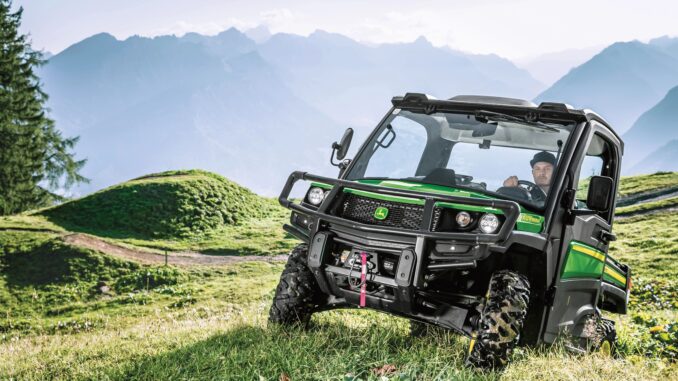
Introduction to the John Deere AMT 600 Parts – Service and Repair Guide
The John Deere AMT 600 is an all‑material transporter designed for hauling loads over uneven ground, work sites, and rural properties rather than mowing lawns. It uses a five‑wheel layout with a front steering wheel and a driven rear axle to carry tools, materials, and light farm or landscaping loads.
This John Deere AMT 600 Parts – Service and Repair Guide is written for owners in the USA & Canada who do their own maintenance and some repairs. It focuses on practical troubleshooting, common service parts, basic system checks, and when to draw the line and hand the job to a John Deere dealer.
General Overview of the John Deere AMT 600 Parts and Systems
The AMT 600 sits in Deere’s All Material Transporter line up and predates modern Gator utility vehicles. It is closer to a small off‑road work truck than a garden tractor, with a front steering wheel, rear dual‑axle drive, and a dump box.
Key systems on the John Deere AMT 600 include:
-
Engine and fuel system (single‑cylinder gasoline engine, gravity feed or pump‑fed fuel system, carburetor)
-
Drive system (belt‑driven clutch, chain drive to rear axle, drive sprockets, hubs)
-
Chassis and steering (front fork, steering shaft and linkages, wheel bearings)
-
Electrical system (starter, battery, charging system, lights, safety switches)
-
Hydraulic/mechanical dump box hardware (lift linkage, latch, pivots)
Common John Deere AMT 600 parts owners regularly buy include:
-
Engine oil filter and air filter elements
-
Spark plug
-
Primary drive belt and secondary belts
-
Drive chain and relevant sprockets
-
Brake shoes or pads, cables, and springs
-
Battery
-
Light bulbs and basic electrical switches
Troubleshooting Approach for John Deere AMT 600 Parts and Repairs
Diagnosing the John Deere AMT 600 should always start from the symptom the owner notices, not the part name. Begin with a clear description of what you see and feel: does it fail to start, bog under load, roll poorly when loaded, or make noise from the rear axle.
For the John Deere AMT 600, the main symptom categories are:
-
Starting issues (no crank, cranks but won’t fire, starts then stalls)
-
Running issues (lack of power, surging, misfire, smoke)
-
Drive and traction problems (no movement, uneven pulling, chain issues)
-
Vibration and noise (from engine, drive belt, chains, or wheels)
-
Overheating and fluid leaks (engine oil, fuel, hydraulic or gearbox oil)
-
Electrical and safety switch faults (dead battery, no starter, lights not working)
Work through one symptom category at a time, starting with simple checks (fuel, battery, connections, obvious damage) before diving into teardown repairs.
Emergency and Immediate Repair Needs on the John Deere AMT 600
Some John Deere AMT 600 problems need immediate attention because they make the machine unsafe or risk damage to expensive components if you keep using it. If you see fluid leaks, hear severe grinding, or lose drive unexpectedly on uneven ground, stop and inspect before continuing.
Starting Issues on the John Deere AMT 600
Starting issues show up as the AMT 600 not cranking at all, cranking slowly, or cranking normally but not firing. This matters because repeated failed starting attempts can drain the battery, overheat the starter, and leave you stranded with a loaded machine.
Common causes:
-
Weak or discharged battery
-
Corroded battery terminals and ground connections
-
Faulty ignition switch or safety switches
-
Fuel turned off, clogged fuel filter, or stale fuel in the tank
-
Dirty carburetor jets or stuck choke
Basic owner checks:
-
Verify the parking brake is set and all safety switches are in the “run” position.
-
Check battery terminals for corrosion; clean and tighten as needed.
-
Test battery voltage and charge if low; replace an old battery that no longer holds charge.
-
Confirm fuel is fresh, the fuel shutoff is open, and the fuel filter is not clogged.
-
Inspect the spark plug for fouling and correct gap, replacing if necessary.
Drive and Traction Problems on the John Deere AMT 600
Drive issues on the John Deere AMT 600 appear as the unit revving but not moving, moving only on level ground, or jerky engagement of the rear wheels. This is critical because drive failure under load can cause loss of control, especially on slopes.
Common causes:
-
Worn or slipping primary drive belt
-
Loose or damaged drive chains
-
Worn drive sprockets or hubs
-
Misadjusted clutch or engagement linkage
-
Low or incorrect lubricant in the rear axle or gearbox
Basic owner checks:
-
Inspect the drive belt for glazing, cracks, or excessive slack; replace if worn.
-
Check drive chains for proper tension and lubrication; adjust and lube as needed.
-
Look for broken, hooked, or sharp‑edged sprocket teeth.
-
Confirm the clutch engagement linkage moves smoothly and returns properly.
-
Verify axle or gearbox lubrication level per the operator’s manual.
Vibration and Noise on the John Deere AMT 600
Abnormal vibration or noise is usually felt through the steering wheel or frame and heard from the rear of the machine or engine area. It matters because sustained vibration can quickly damage chains, bearings, and mounts.
Common causes:
-
Loose drive chains or misaligned sprockets
-
Worn wheel bearings or hub components
-
Engine misfire or loose engine mounts
-
Bent rims or unevenly loaded cargo box
Basic owner checks:
-
Inspect chains and sprockets for alignment, tension, and obvious wear.
-
Spin the wheels off the ground if possible and listen for bearing noise.
-
Check engine mounting bolts for tightness and look for cracked mounts.
-
Confirm cargo is evenly distributed in the box, avoiding overly rear‑biased loads.
Overheating and Leaks on the John Deere AMT 600
Overheating shows as hot engine smell, vapor, or high gauge readings where fitted, while leaks leave visible spots under the machine and wet components. These should be addressed immediately to avoid engine failure or fire risk.
Common causes:
-
Low engine oil level or wrong oil grade
-
Blocked cooling fins on the cylinder and shroud
-
Fuel line cracks or loose clamps
-
Leaking seals around gearbox or axle housings
Basic owner checks:
-
Check engine oil level and correct with the recommended oil grade.
-
Clean cooling fins and shroud vents of dirt, grass, and debris.
-
Inspect fuel lines, filter area, and fittings for dampness and cracks.
-
Look for oil around seals, gaskets, and drain plugs; tighten or replace as needed.
Electrical Problems on the John Deere AMT 600
Electrical issues appear as no crank, intermittent starting, or non‑functioning lights. It matters because the AMT 600 relies on a safe starting circuit and may have safety switches that prevent operation when faulty.
Common causes:
-
Aged battery or poor charging system output
-
Loose or corroded ground connections
-
Faulty ignition switch or relay
-
Damaged wiring to safety switches or lights
Basic owner checks:
-
Confirm battery state of charge and load test if possible.
-
Clean and tighten main grounds and battery leads.
-
Wiggle the ignition switch harness and look for intermittent operation.
-
Inspect visible wiring looms for chafing and broken insulation.
DIY or Dealer? Repair Decision Guide for the John Deere AMT 600
On the John Deere AMT 600, the realistic DIY line sits at routine maintenance, bolt‑on parts, and basic adjustments. Jobs involving internal engine work, major gearbox repairs, or complex safety circuit diagnostics are better left to an experienced John Deere dealer with the technical manual and tools.
Good DIY jobs:
-
Engine oil and filter changes
-
Air filter and spark plug replacement
-
Battery replacement and basic wiring clean‑up
-
Drive belt and chain inspection, adjustment, and replacement
-
Brake cable adjustment and simple brake shoe replacements
Advanced DIY or dealer jobs:
-
Carburetor rebuilds and re‑jetting
-
Clutch or gearbox internal repairs
-
Steering shaft and bearing replacements
-
Major electrical diagnostics and harness repair
-
Engine teardown, piston, valve, or crank work
Skill level guide:
-
Beginner: Oil changes, filters, battery, simple visual checks.
-
Intermediate: Belt and chain replacement, brake adjustments, basic electrical testing with a multimeter.
-
Advanced: Carburetor and engine internal work, gearbox overhauls, complex wiring repairs and diagnostic testing.
Parts Needed for John Deere AMT 600: OEM vs Aftermarket
Before ordering John Deere AMT 600 parts, gather the key identifiers so you don’t end up with the wrong belt, chain, or filter. Always note the full model name, the Product Identification Number (PIN), and any engine identification data from the engine tag.
For the AMT 600, useful information includes:
-
Model: AMT 600 (All Material Transporter)
-
PIN: stamped or labeled on the frame
-
Engine model and serial number (on engine shroud or block tag)
Core John Deere AMT 600 Parts Table
Below is a typical set of service parts used on a John Deere AMT 600. Always cross‑check part numbers against your PIN and engine serial in an official parts catalog or Deere parts site.
OEM parts are strongly recommended for:
-
Drive belts and chains (correct length and strength are critical)
-
Safety‑related components (brakes, safety switches, steering parts)
-
Fit‑sensitive parts like ignition switches, engine gaskets, and specific filters
Quality aftermarket parts can be acceptable for:
-
Batteries (match voltage, CCA, dimensions)
-
Some filters and spark plugs that cross‑reference correctly
-
Light bulbs and basic hardware, provided they meet the same specifications
Where to Find John Deere AMT 600 Parts Diagrams and Manuals
Good documentation makes John Deere AMT 600 parts and repairs much easier. Use both official Deere sources and reputable AMT‑focused parts sites for diagrams and cross‑reference information.
Key online sources:
-
John Deere Technical Publications and operator’s manuals for AMT 600 (search “John Deere AMT 600 technical manual” on the official Deere publications site).
-
Official John Deere parts catalog/online parts store for exploded diagrams and OEM numbers (search “AMT 600” in the John Deere parts catalog or the All Makes Parts section).
-
One or more dedicated small‑engine or utility vehicle parts sites that host an AMT 600 model page with interactive diagrams and parts breakdowns.
Use the operator’s manual for routine maintenance schedules, fluid types, and basic adjustments, and the parts catalog for diagram‑based part identification and PIN‑specific part numbers. Technical service manuals give deeper diagnostic and repair procedures but are more suited to advanced DIY or dealer technicians.
How to Locate Model, Serial, and Engine Numbers on the AMT 600
Model, serial, and engine numbers are essential when ordering John Deere AMT 600 parts or checking diagram coverage. They ensure you get parts that fit early or late production changes and engine variations.
To find them:
-
Look for the model and PIN plate on the frame, usually near the front or side of the machine where it is visible at ground level.
-
Clean the plate or stamped area with a cloth to reveal the engraved numbers before writing them down.
-
Locate the engine tag or stamping on the engine shroud or block, often near the recoil starter or flywheel housing.
-
Record the engine model and serial exactly as shown, including any letters.
-
Keep these numbers written in your maintenance notes or taped inside your operator’s manual for quick reference.
Buying John Deere AMT 600 Parts Online and In Store
A simple parts‑buying strategy reduces delays and wrong orders for John Deere AMT 600 owners. Start with an accurate parts list using your PIN and engine number, then cross‑check any aftermarket part against the OEM number.
Online:
-
Use official John Deere parts sites and trusted parts catalogs where you can input AMT 600 and your PIN to see diagrams and part numbers.
-
Cross‑check aftermarket listings against OEM numbers and descriptions before ordering.
Dealer counter:
-
Best for complex, PIN‑specific items or when you need confirmation on superseded part numbers.
-
Bring your model, PIN, engine serial, and a written symptom description.
Retail stores:
-
Suitable for consumables like oil, some filters, and batteries where packaging clearly lists compatibility with John Deere AMT or small utility vehicles.
Include links such as the main John Deere parts and service page, and one reputable small‑engine/utility vehicle parts site with AMT coverage, in your own references or notes when working on the machine.
Step‑by‑Step Fitting Guide for Common John Deere AMT 600 Parts
Here are four high‑impact DIY jobs for John Deere AMT 600 owners. Always work on a cool machine, with the parking brake set, on level ground.
Replacing the John Deere AMT 600 Engine Oil and Filter
Changing engine oil and filter improves engine life and reliability.
-
Warm the engine briefly to thin the oil, then shut it off and set the parking brake.
-
Place a drain pan under the drain plug, remove the plug, and let the oil drain fully.
-
Remove the spin‑on oil filter, wipe the mounting surface, and install the new filter with a light film of clean oil on the gasket.
-
Reinstall the drain plug with a new washer if required and tighten to the recommended torque.
-
Fill with the specified oil type and quantity, then check the level with the dipstick and top off as needed.
Replacing the John Deere AMT 600 Air Filter
A clean air filter reduces carburetor issues and improves power.
-
Turn off the engine and allow it to cool.
-
Open the air cleaner housing, typically secured by clips or screws.
-
Remove the old air filter element and inspect the housing for dust and debris; clean with a dry cloth.
-
Install the new filter, ensuring it seats evenly in the housing.
-
Close and secure the housing, verifying a good seal all around.
Changing the John Deere AMT 600 Spark Plug
A fresh spark plug can resolve misfires and hard starting.
-
Remove the plug wire from the existing spark plug.
-
Use a spark plug socket to unscrew the plug from the cylinder head.
-
Check the new plug’s gap against specifications and adjust carefully if needed.
-
Thread the new plug in by hand, then snug with a socket—do not overtighten.
-
Push the plug wire back onto the plug until it seats firmly.
Inspecting and Replacing John Deere AMT 600 Drive Belts and Chains
Healthy belts and chains are crucial for safe drive engagement.
-
Secure the machine on level ground, set the parking brake, and remove any guards covering the belt and chain drives.
-
Inspect the primary drive belt for cracks, glazing, or frayed edges; note the routing before removal.
-
Loosen tensioners or mounting hardware to remove the old belt and install the new belt according to the original routing.
-
Inspect drive chains for stretched links and dry joints; replace if badly worn and set proper tension.
-
Lubricate chains as recommended, reinstall guards, and test engagement slowly in a safe area.
Maintenance to Prevent John Deere AMT 600 Problems Returning
Regular maintenance dramatically reduces repeat failures on the John Deere AMT 600. Focus on keeping the engine healthy, the drive system clean and adjusted, and the electrical system free of corrosion.
Key focus areas:
-
Starting reliability: Maintain battery charge, clean terminals, and replace spark plugs and filters on schedule.
-
Drive performance: Inspect and adjust belts and chains, keep sprockets aligned, and lubricate moving components.
-
Overheating prevention: Clean cooling fins and shrouds, check oil levels, and address leaks early.
-
Brake and safety reliability: Keep brake cables adjusted, inspect shoes or pads, and test safety switches regularly.
-
Electrical reliability: Protect wiring looms from chafing, secure grounds, and replace failing switches promptly.
Maintenance Schedule and Year‑Round Checklist for the John Deere AMT 600
Base your John Deere AMT 600 maintenance on the official chart in the operator’s manual, adapting the routine to your usage pattern and environment.
Daily / Before Each Use
-
Check engine oil level and look for leaks.
-
Inspect the fuel level and ensure the cap is secure.
-
Walk around the machine to look for loose hardware, damaged chains, or obvious issues.
-
Test brakes, steering, and basic electrical functions before heading out.
After 8 Hours of Operation
-
Inspect the drive belt and chains for tension and wear.
-
Check wheel lug tightness and look for unusual tire wear.
-
Clean dirt and debris from the engine cooling fins and air intake areas.
Every 25 Hours
-
Clean or replace the air filter element as conditions require.
-
Inspect brake cables and linkage, adjusting free play if necessary.
-
Check battery terminals and wiring connections for corrosion and tightness.
Every 50 Hours or Yearly
-
Change engine oil and replace the oil filter.
-
Thoroughly inspect drive belts, chains, and sprockets; replace worn components.
-
Check rear axle and gearbox lubrication levels and top up if required.
-
Lubricate pivot points, steering linkage, and dump box hardware.
Every 200 Hours (If Applicable)
-
Review clutch engagement and free play per the manual and adjust.
-
Inspect engine mounting hardware and frame for cracks or damage.
-
Perform a comprehensive inspection of electrical systems and switches.
Seasonal Checklist (Pre‑Season / In‑Season / End‑of‑Season)
Pre‑season:
-
Perform fluid changes and filter replacements due for the year.
-
Inspect all belts, chains, and brakes before heavy use.
In‑season:
-
Keep the machine clean, especially cooling surfaces and drivetrain areas.
-
Address small issues as soon as they appear, rather than deferring.
End‑of‑season:
-
Clean thoroughly and check for damage or wear that needs off‑season attention.
-
Stabilize fuel or drain as recommended, and store the machine under cover.
-
Disconnect the battery or maintain it with a smart charger.
Repair, Upgrade, or Replace the John Deere AMT 600?
For many owners, the John Deere AMT 600 remains a useful workhorse if maintained properly. As the machine ages, it may reach a point where repeated repairs on major systems make an upgrade or replacement more cost‑effective.
Repair if:
-
Issues are confined to consumables and external components (belts, chains, filters, brakes).
-
The frame, axle, and engine are fundamentally sound and not excessively worn or damaged.
Upgrade if:
-
You need better lighting, improved seat comfort, or minor convenience improvements.
-
You can improve reliability with upgraded battery, wiring repairs, or more robust tires.
Replace if:
-
The frame or structural components show cracks or deformation that are not economical to repair.
-
The engine or gearbox requires major rebuilds that approach or exceed the AMT 600’s value.
-
Your workload has grown to a level where a newer utility vehicle or compact tractor is more suited.
Expanded Troubleshooting FAQ – John Deere AMT 600 Parts, Service and Repair
1. Why will my John Deere AMT 600 not start?
If your AMT 600 will not start, begin by confirming the basics: adequate fuel, correct controls, and a charged battery. Check that all safety switches are engaged (parking brake set, neutral selected) because a faulty or open switch can block the starter circuit. Inspect battery terminals for corrosion and make sure the fuel shutoff is open and fuel is fresh. If the machine still cranks but will not fire, inspect the spark plug and consider a carburetor cleaning.
2. Why does my John Deere AMT 600 crank slowly?
Slow cranking is often caused by a weak battery or poor electrical connections. Test the battery’s voltage and, if possible, perform a load test to rule out internal failure. Clean and tighten both battery terminals and main grounds, as corrosion can significantly reduce cranking power. Cold temperatures or thick, old oil can also contribute; using the correct oil grade helps.
3. Why does my John Deere AMT 600 crank but not fire?
When the AMT 600 cranks but does not fire, focus on fuel and spark. Make sure there is fresh fuel in the tank and that the fuel filter is not clogged. Remove the spark plug to check for fouling and verify a strong spark while cranking. If the plug is dry and there is spark, the carburetor may be blocked by varnish or debris and may need cleaning or rebuilding.
4. Why does my John Deere AMT 600 start and then stall?
Starting and then stalling can indicate fuel starvation or a blocked idle circuit. Check that the fuel cap vent is open and the fuel shutoff is in the correct position. Inspect the fuel filter and lines for restrictions or air leaks. If the engine idles briefly and then dies, the carburetor idle jet or passage may be dirty and require cleaning.
5. Why does my John Deere AMT 600 lack power under load?
Power loss under load usually points to fuel delivery problems, air intake restriction, or drive system issues. Confirm the air filter is clean and not restricting airflow. Inspect the fuel system for clogs, including the filter and carburetor main jet. Also check the drive belt and chains for slipping or misalignment, which can make the machine feel weak even when the engine is healthy.
6. Why is my John Deere AMT 600 using more fuel than normal?
High fuel consumption can result from rich running, poor maintenance, or excessive load. Check the air filter condition and replace it if dirty, as a restricted filter can cause rich mixtures. Inspect the carburetor for leaking float valves or incorrect adjustments. Operating with heavy loads, steep terrain, or long periods at full throttle will also increase fuel use, so consider your operating habits.
7. Why does my John Deere AMT 600 backfire or pop?
Backfiring on the AMT 600 can be caused by lean mixtures, timing issues, or exhaust leaks. Check for vacuum leaks around the carburetor and intake manifold. Inspect the spark plug and ignition components to ensure correct firing. If the exhaust system has holes or loose joints, it can amplify popping noises, so repair or replace damaged sections.
8. Why is my John Deere AMT 600 smoking?
Smoke type matters: blue smoke suggests oil burning, black smoke suggests rich fuel mixture, and white smoke can be condensation or coolant in some engines. For blue smoke, check oil level and quality and look for worn rings or valve seals. Black smoke indicates you should inspect the air filter and carburetor settings. Persistent white smoke with fluid loss may require more advanced diagnosis.
9. Why does my John Deere AMT 600 engine overheat?
Overheating often results from poor cooling airflow or low oil level. Clean all cooling fins and shroud openings to restore airflow around the cylinder. Check the engine oil level and top up or change if needed, using the recommended grade. Operating at low speeds with heavy loads or on very hot days can also stress the cooling system, so adjust workload and allow cooldown periods.
10. Why is my John Deere AMT 600 leaking oil?
Oil leaks on the AMT 600 may occur at drain plugs, gaskets, or seals. Inspect the drain plug and gasket for proper sealing, and retighten if necessary. Clean the engine and gearbox case to identify the exact source of the leak. If a seal or gasket is leaking badly, plan a repair and avoid heavy use until it is fixed to prevent further damage.
11. Why won’t my John Deere AMT 600 move when I press the throttle?
If the engine revs but the AMT 600 does not move, the drive belt or chains may be slipping or broken. Check the primary drive belt for wear and tension and replace it if glazed or cracked. Inspect the drive chains and sprockets for missing links or broken hardware. A failed clutch or gearbox issue is more advanced and may warrant dealer assistance.
12. Why does my John Deere AMT 600 lurch or jerk when moving?
Jerky movement suggests inconsistent engagement of the drive system. Inspect the clutch linkage for free movement and correct adjustment. Look for tight spots in the drive chains or damaged sprocket teeth that could cause intermittent engagement. Also confirm that cargo is loaded evenly to reduce sudden shifts in weight during acceleration.
13. Why does my John Deere AMT 600 pull to one side?
Pulling to one side can be caused by uneven tire pressure, brake adjustment, or drive engagement. Check tire pressures and correct them to match specifications on both sides. Inspect brake cables and shoes for unequal wear or adjustment. In some cases, one side of the drive may engage more strongly due to chain or sprocket issues, which should be inspected and corrected.
14. Why is my John Deere AMT 600 noisy from the rear?
Rear noise often comes from chains, sprockets, or axle bearings. Inspect the chains for lubrication and tension, and listen for grinding or clicking sounds as you roll the machine slowly. Check sprocket teeth for wear or damage. If noise persists, axle bearings may be worn and should be inspected by removing wheels and checking for play.
15. Why does my John Deere AMT 600 vibrate at certain speeds?
Speed‑dependent vibration usually points to rotating components out of balance or misaligned. Inspect the wheels for bent rims or uneven tire wear, and ensure wheel nuts are tight. Check chains and sprockets for misalignment and tension issues. Engine vibration can also occur at certain RPMs; confirm engine mounts are secure and not damaged.
16. Why do my John Deere AMT 600 brakes feel weak?
Weak brakes may result from worn shoes, stretched cables, or contamination. Inspect the brake shoes or pads and replace them if near the wear limit. Adjust the brake cables to restore correct free play and engagement. Oil or grease on friction surfaces will reduce braking efficiency, so clean or replace contaminated components.
17. Why do my John Deere AMT 600 brakes drag?
Dragging brakes feel like the machine is resisting movement or slowing on its own. Check for over‑tightened brake cables or misadjusted linkages. Make sure return springs are intact and strong enough to release the brakes fully. Heat buildup from dragging brakes can quickly damage components, so correct the issue promptly.
18. Why does my John Deere AMT 600 battery keep going flat?
A battery that repeatedly goes flat may be old, undercharged, or affected by parasitic drain. Test the battery and replace it if it fails a load test. Check charging system output with a multimeter, ensuring the voltage rises appropriately when the engine runs. Inspect for accessories or wiring faults that keep drawing current when the machine is off.
19. Why won’t the starter on my John Deere AMT 600 engage?
Starter engagement issues may come from a weak battery, faulty solenoid, or safety circuits. Confirm the battery is charged and connections are clean. Listen for a click from the solenoid; no sound may indicate a failed solenoid or wiring issue. Safety switches that do not detect neutral or brake position can also block starter engagement and need inspection.
20. Why won’t the lights work on my John Deere AMT 600?
Non‑working lights usually involve blown bulbs, fuses, or wiring faults. Check whether any fuse protects the lighting circuit and replace if blown. Inspect bulbs and replace them if filament damage is visible. Trace wiring from the switch to the lights for breaks, corrosion, or loose connectors.
21. How often should I change oil on my John Deere AMT 600?
Follow the intervals in your operator’s manual, but in typical use, an annual oil change or every 50 hours is common. Heavy duty or dusty environments may justify more frequent changes. Always replace the oil filter at the same time for optimal engine protection and use the recommended grade of oil.
22. How often should I replace the air filter on my John Deere AMT 600?
Check the air filter at least every 25 hours of operation or more often in dusty conditions. Replace it when it appears blocked, excessively dirty, or damaged. Never run the AMT 600 without the air filter element, as this can allow dirt into the engine and cause rapid wear.
23. How often should I service the spark plug on my John Deere AMT 600?
Inspect the spark plug during each major service, typically every 50 hours or annually. Clean or replace it if fouled, and always set the correct gap before reinstalling. A fresh, properly gapped plug improves starting reliability and engine performance.
24. How often should I check John Deere AMT 600 drive belts and chains?
Drive belts and chains should be checked every 25 hours and before heavy work sessions. Inspect for wear, damage, and correct tension. Adjust or replace components as soon as you notice problems to avoid sudden failure under load.
25. What kind of oil should I use in my John Deere AMT 600 engine?
Use the oil grade specified in your operator’s manual, typically a high‑quality engine oil suitable for small gasoline engines and the temperatures in your region. In general, multi‑viscosity oils like 10W‑30 or 10W‑40 are common, but follow Deere’s recommendations. Avoid mixing oil types and always check the level after changes.
26. What grease and lubricants should I use on my John Deere AMT 600?
Use quality multipurpose grease for chassis fittings, steering pivots, and dump box pivots, applied with a grease gun where fittings are provided. Chains should be lubricated with chain lube or light oil suitable for outdoor use. Refer to the manual for any special lubricants recommended for the axle or gearbox.
27. How do I safely lift my John Deere AMT 600 for maintenance?
To lift the AMT 600 safely, park on a level surface and set the parking brake. Use a suitable jack under recommended lift points, such as frame rails or axle areas specified by Deere. Always support the machine with jack stands before working underneath and never rely solely on the jack.
28. How do I store my John Deere AMT 600 at the end of the season?
End‑of‑season storage should include cleaning, fluid checks, and battery care. Clean the machine thoroughly, removing dirt and debris from cooling fins and drivetrain areas. Change oil if due and stabilize or drain fuel according to the manual. Store the AMT 600 in a dry, sheltered area and disconnect or maintain the battery with a charger.
29. What safety steps should I follow before working on John Deere AMT 600 parts?
Always work on a cool machine with the engine off and key removed. Set the parking brake and block wheels if necessary. Disconnect the battery before working on electrical parts or near moving components. Wear appropriate PPE and follow any additional warnings given in the operator’s and technical manuals.
30. Can I use aftermarket parts on my John Deere AMT 600?
You can use reputable aftermarket parts for some items, such as batteries, filters, and spark plugs, if they cross‑reference correctly to the AMT 600. However, OEM parts are strongly recommended for belts, chains, safety switches, brake components, and any part where precise fit and performance are critical. When in doubt, consult a John Deere dealer.
31. How do I find the right belt size for my John Deere AMT 600?
Use your model and PIN to look up the belt in an official parts catalog or AMT 600 parts diagram. Do not rely solely on belt measurements, as routing and tensioning depend on the correct OEM specification. Verify part numbers before ordering, and avoid universal belts unless specifically approved for the AMT 600.
32. How do I know if my John Deere AMT 600 chain is worn out?
A worn chain will show increased slack, uneven tension, and elongated links. Lift the chain and check if it comes away from the sprocket teeth more than recommended. Visual inspection for rust, stiff links, and damaged rollers is also important. Replace chains that show significant wear to prevent sudden failure.
33. Why is the steering on my John Deere AMT 600 loose or wandering?
Loose steering can result from worn linkage, steering shaft components, or front wheel bearings. Inspect the steering connections for play and tighten or replace worn parts. Check front wheel bearings by lifting the front wheel and feeling for movement or roughness. Addressing steering looseness improves safety and control.
34. How do I adjust the brakes on my John Deere AMT 600?
Refer to the operator’s manual for brake adjustment points, usually at cables or linkage rods. With the machine securely parked, adjust free play so the brakes engage firmly without dragging. After adjustment, test braking performance in a safe area and fine‑tune if necessary.
35. When should I consider replacing my John Deere AMT 600 instead of repairing it?
Consider replacement when the AMT 600 needs repeated major repairs, such as engine rebuilds, gearbox overhauls, and structural frame welding. If safety‑critical systems are difficult to restore to reliable condition or parts availability becomes a serious problem, upgrading to a newer utility vehicle may be more practical. Balance repair costs against the machine’s value and your workload demands.