
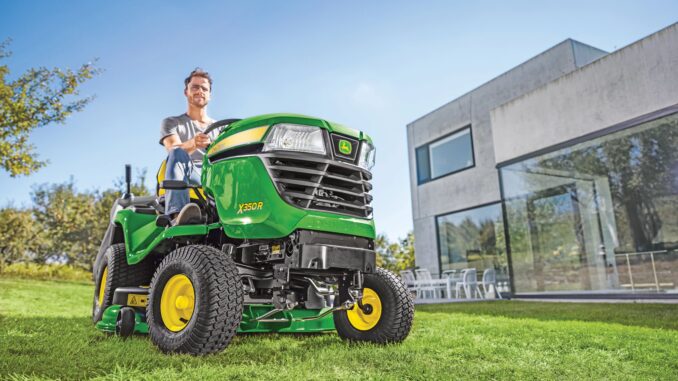
John Deere X700 Series Lawn and Garden Tractor Models and Maintenance Guide
The John Deere X700 Series is the premium end of John Deere’s lawn and garden tractor range, built for owners who need more than a basic riding mower. These machines are designed for large lawns, acreages, estates, long driveways, frequent cart towing, snow removal, and year-round property work. Depending on the model, an X700 Series tractor may combine gasoline or diesel power with hydraulic equipment lift, power steering, four-wheel steering, full-time four-wheel drive, and substantial attachment capability.
This page is a central directory for X700 Series model information, maintenance content, troubleshooting guides, mower deck service, attachment setup, and used-tractor research. It covers the early X700 and X720-era models through the current X730, X738, X739, X750, X754, and X758 tractors. For broader information covering all John Deere ride-on equipment families, see the General John Deere Lawn and Garden Tractor Guide.
About the John Deere X700 Series Lawn and Garden Tractor Series
The John Deere X700 Series occupies the heavy-duty garden tractor category. While John Deere S Series tractors are primarily intended for routine residential mowing, and X300 Series models are premium residential lawn tractors, the X700 Series is intended for owners who need a more durable chassis, stronger drivetrain, hydraulic equipment controls, larger mower decks, and more extensive attachment options.
Across its production life, the series has included gasoline models in roughly the 22 to 25.5 horsepower range and diesel models rated at approximately 24 horsepower. Earlier gasoline machines used liquid-cooled V-twin engines, while the diesel X740-family and later X750-family tractors use three-cylinder diesel engines. Current gasoline X730-family tractors use an electronic fuel-injected iTorque Power System.
All X700 Series tractors use hydrostatic drive arrangements rather than manual gear transmissions. Twin Touch forward and reverse pedals are common on later models, allowing the operator to control direction and speed without changing gears. The heavy-duty chassis, power steering, hydraulic lift system, electric PTO arrangement, and shaft-driven mower-deck systems distinguish these tractors from lighter lawn tractors.
The series has also been notable for its traction and steering configurations. Standard models use two-wheel drive and power two-wheel steering. Four-wheel-steer models offer a tighter turning radius around trees, landscaping, and obstacles. Full-time four-wheel-drive models are better suited to uneven ground, snow work, wet grass, slopes within safe operating limits, and towing applications where traction matters. Certain models combine both full-time four-wheel drive and four-wheel steering.
Mower deck options have varied by production generation, but the series is commonly associated with 48-inch, 54-inch, 60-inch, and some earlier 62-inch decks. Current models use a 48-inch Accel Deep mower deck or 54-inch and 60-inch High-Capacity drive-over mower decks. Earlier tractors may use 54X, 62X, 54-inch, or 62-inch deck systems, depending on the tractor and model year.
Typical X700 Series attachments include mid-mount mower decks, bagging systems, utility carts, front blades, snow blowers, rotary brooms, aerators, dethatchers, spreaders, sprayers, rear hitch equipment, and selected ground-engaging implements. Higher-capability configurations may support a front Quick-Hitch, three-point hitch, rear PTO, hydraulic outlets, front attachments, ballast systems, and seasonal cab equipment.
The X700 Series sits above the X500 Series in overall capability and attachment potential. It is also a modern equivalent in purpose to older John Deere 300 and 400 Series heavy-duty garden tractors, although attachment systems, deck designs, safety systems, electrical components, and parts fitment differ significantly by generation.
John Deere X700 Series Lawn and Garden Tractor Models
The following table is an across-time directory of known John Deere X700 Series tractors marketed in the United States and Canada. Horsepower ratings, deck availability, attachments, and specifications can vary by production year, serial-number range, and local market. Always identify the exact tractor model, serial number, engine type, steering configuration, and mower-deck model before ordering parts or selecting attachments.
And See
Early X700-generation gasoline and diesel tractors
The original X700-generation tractors established the main pattern for the series: a heavy-duty garden tractor chassis, hydrostatic transmission, hydraulic lift, power steering, mid-mount mower decks, and much greater attachment capability than a basic lawn tractor. The gasoline range included the X700, X720, X724, X728, and X729, while the diesel range included the X740, X744, X748, and X749.
The X700 and X720 were two-wheel-drive gasoline tractors. The X724 added four-wheel steering, making it useful for mowing around trees, landscaped beds, and obstacles. The X728 added full-time four-wheel drive, while the X729 combined four-wheel drive with four-wheel steering.
The diesel X740 family followed the same general pattern. The X740 used two-wheel drive and standard steering, the X744 added four-wheel steering, the X748 added four-wheel drive, and the X749 combined four-wheel drive with four-wheel steering.
When servicing or buying an early X700 Series tractor, identify the exact engine, drive arrangement, mower deck, hydraulic equipment, front hitch configuration, and rear hitch equipment. A component that fits an X720 may not fit an X728, while a part intended for a diesel X748 may not apply to a gasoline X724.
Later X730, X738, X739, and related gasoline models
The later gasoline X700 Series lineup includes the X730, X734, X738, and X739. These tractors use approximately 25.5 horsepower electronic fuel-injected gasoline engines and are built around the modern Signature Series configuration.
The X730 is the two-wheel-drive, power-two-wheel-steer model. It is generally the choice for large, relatively open lawns where premium mowing quality, power lift, towing capability, and attachment options are more important than maximum traction or steering maneuverability.
The X734 adds four-wheel steering. It is especially useful on properties with extensive landscaping, orchard-style mowing, trees, garden borders, and tight turns. Its rear steering arrangement can greatly reduce uncut grass around obstacles, but it also means that rear-steering components, rear tire condition, alignment, and attachment clearance need attention during maintenance.
The X738 uses full-time four-wheel drive and power two-wheel steering. It is the gasoline model most suited to properties with uneven terrain, soft ground, snow work, and regular towing. The X739 combines full-time four-wheel drive and four-wheel steering, making it the highest-capability gasoline configuration in the current range.
Diesel and high-capability X700 models
The current diesel side of the X700 Series includes the X750, X754, and X758. These tractors use approximately 24 horsepower three-cylinder diesel engines and share the same heavy-duty garden tractor concept as the gasoline models, but they require different service habits.
The X750 uses two-wheel drive and power two-wheel steering. The X754 adds four-wheel steering for maneuverability, while the X758 adds full-time four-wheel drive for improved traction. The current diesel lineup does not include a direct X759-style equivalent that combines diesel power, four-wheel drive, and four-wheel steering.
Diesel X700 Series tractors are often chosen by owners who mow for long periods, operate on acreage, tow regularly, or want diesel torque and fuel economy. They benefit from careful fuel management, clean fuel filters, routine cooling-system checks, proper cold-weather preparation, and prompt correction of leaks or air-entry problems in the fuel system.
X700 Series Lawn and Garden Tractor Maintenance Guides
Maintenance varies by model year, engine type, mower deck, attachment configuration, operating hours, and working conditions. However, all X700 Series tractors benefit from a structured routine that includes engine service, fluid checks, deck care, lubrication, steering inspection, tire checks, and seasonal preparation.
Routine Service and Checks
Start with the engine and follow the maintenance schedule for the exact model. Gasoline X700 Series tractors need regular engine-oil and filter changes, air-filter inspection, fuel-filter service, spark-plug checks, battery maintenance, and inspection of ignition wiring. Fuel quality matters, especially on machines that sit between mowing seasons. Old gasoline, water contamination, and blocked fuel filters can create hard-starting, surging, poor acceleration, and stalling complaints.
Diesel X740-family and X750-family tractors need clean diesel fuel, timely fuel-filter replacement, water-separator checks where fitted, and proper bleeding procedures after fuel-system service. Cold weather can make diesel problems more obvious, especially when fuel quality, glow-plug operation, battery condition, or fuel-filter condition is poor. Do not overlook cooling-system condition on liquid-cooled gasoline and diesel engines.
Check hydrostatic-drive and hydraulic-system fluid levels according to the tractor’s manual and maintenance interval. Look for leaks around hoses, fittings, filters, hydraulic cylinders, lift components, and front attachment couplers. A low fluid level can affect both travel performance and hydraulic lift response.
Routine inspections should also include tire pressures, wheel nuts, steering joints, front axle pivots, mower deck mounting hardware, drive belts, PTO-related wiring, pulleys, grease points, and attachment pivots. Store the tractor with a clean deck, stabilized fuel where applicable, charged battery, protected electrical connections, and dry air-cleaner components.
Useful internal resources include X700 Series lawn and garden tractor service interval checklist, DIY maintenance for X700 Series lawn and garden tractors, Gasoline engine maintenance for John Deere X700 Series tractors, and Diesel fuel and cooling-system service for John Deere X700 Series tractors.
Mower Deck, Cutting Quality, and Belt Care
A well-maintained mower deck has as much effect on mowing quality as the engine does. Remove grass buildup from beneath the deck regularly, particularly after mowing damp grass or tall growth. Packed debris can restrict airflow, reduce discharge quality, trap moisture, increase corrosion, and add unnecessary load to belts and spindles.
Inspect blades for dull edges, bends, cracks, missing material, and imbalance. Sharpen blades evenly and balance them before installation. An unbalanced blade can cause vibration that damages spindle bearings, deck brackets, belts, and fasteners. Replace damaged blades rather than attempting to straighten or weld them.
Deck leveling should be checked whenever the tractor produces an uneven cut, leaves strips, scalps high spots, or cuts one side lower than the other. Confirm tire pressures before adjusting the deck, because low or uneven tires can mimic a deck-leveling problem. Check gauge wheels, deck hangers, lift links, deck pitch, and mower height settings.
Inspect belts for cracking, glazing, fraying, missing chunks, contamination, and improper tension. Also inspect idler pulleys, pulley bearings, spindle bearings, belt guards, and the PTO engagement system. On drive-over deck systems, confirm that the deck is properly mounted and the driveline or coupling is correctly engaged.
Useful internal resources include Mower deck maintenance and cutting quality on X700 Series tractors, Deck belt and spindle service for X700 Series lawn and garden tractors, and Diagnosing uneven cuts and deck vibration on John Deere X700 Series tractors.
Steering, Axle, Hydraulic, and Chassis Maintenance
Steering systems vary significantly across the X700 Series. Two-wheel-steer tractors require regular inspection of tie rods, steering joints, wheel bearings, front axle pivots, steering cylinders where fitted, and steering-wheel free play. Excessive looseness can cause wandering, uneven tire wear, poor mowing appearance, and difficult handling when towing.
Four-wheel-steer models require additional attention because both front and rear steering systems affect tracking and turning. Inspect rear steering components for wear, leakage, binding, damaged boots, loose hardware, and abnormal tire wear. A four-wheel-steer tractor that does not track properly may have a tire-pressure problem, worn steering joint, alignment issue, or mechanical damage.
Full-time four-wheel-drive models need inspection of front driveline components, front axle parts, seals, couplers, and tires. Mismatched tire sizes, heavily worn tires, or substantially different tire pressures can affect traction and handling. Avoid fitting non-standard tires without checking their rolling dimensions and suitability for the drivetrain.
Hydraulic inspections should include hoses, fittings, couplers, lift cylinders, hydraulic outlets, filters, and attachment connections. Look for wet areas, cracked hoses, damaged protective sleeves, and slow lift operation. Before working beneath a raised mower deck or attachment, use safe support methods and never depend solely on the hydraulic lift system.
Useful internal resources include Steering and front axle maintenance across X700 Series lawn and garden tractors, Hydraulic system checks and repairs on John Deere X700 Series tractors, and Four-wheel-drive and four-wheel-steering service considerations for X700 Series models.
X700 Series Lawn and Garden Tractor Troubleshooting Guides
A symptom-based diagnosis helps avoid replacing good parts. Before troubleshooting an X700 Series tractor, identify the exact model, serial-number range, engine type, drive type, steering configuration, operating hours, attached equipment, recent repairs, and the exact conditions under which the problem occurs.
Starting, Engine, and Fuel / Ignition Problems
A no-start complaint should first be divided into two types: no-crank and cranks-but-will-not-start. A no-crank condition may relate to a weak battery, corroded terminals, damaged battery cables, poor engine ground, blown fuse, failed relay, starter-solenoid issue, PTO switch position, seat switch, brake-pedal switch, neutral interlock, or another safety circuit problem.
If the engine cranks but does not start, check fuel quality, fuel level, filter condition, fuel flow, air-filter restriction, spark on gasoline models, and the condition of electrical connections. Older gasoline machines may develop carburetor-related problems, while fuel-injected models can be affected by poor fuel, contaminated filters, weak fuel delivery, wiring faults, or sensor-related issues.
Surging, rough running, misfiring, black smoke, white smoke, overheating, and loss of power under load should be investigated systematically. A mower deck that is clogged with grass, fitted with dull blades, or dragging from failed bearings can overload an otherwise healthy engine. Do not assume the engine is at fault until the deck and drive system have been checked.
Diesel hard-starting can result from air entering the fuel system, contaminated fuel, a plugged fuel filter, water contamination, weak glow plugs, inadequate cranking speed, or low compression. In cold weather, battery performance and diesel fuel condition become especially important. Persistent smoke, severe overheating, major fuel leaks, or suspected injector issues may require professional diagnosis.
Useful internal resources include X700 Series lawn and garden tractor starting problems – diagnostics and fixes, Engine and fuel system issues across X700 Series tractors, and Diesel starting and fuel-system troubleshooting for John Deere X700 Series models.
Mower Deck, PTO, and Cutting Performance Problems
If the mower deck will not engage, begin with the PTO switch, safety switches, fuses, electrical connectors, battery voltage, PTO clutch, wiring harness, and deck-drive connection. A weak battery or poor charging system can sometimes create intermittent PTO engagement problems. On tractors with deck driveline systems, confirm that the deck is seated and coupled correctly.
Blades that stop under load may indicate a worn or slipping belt, seized idler pulley, failing spindle bearing, damaged blade, obstructed deck, poor PTO-clutch performance, or grass conditions beyond the selected mowing speed. Tall or damp grass should be cut at a slower travel speed or in multiple passes.
Uneven cutting can come from incorrect tire pressure, deck height differences, worn deck hangers, poor deck leveling, bent blades, missing gauge wheels, worn spindles, or inconsistent ground speed. Scalping usually relates to deck setup, gauge-wheel adjustment, mowing too low, uneven ground, or turning too sharply with the deck lowered.
Deck vibration should never be ignored. Stop the machine, remove the key, prevent accidental starting, and inspect the deck before continuing. Bent blades, damaged pulleys, worn spindle bearings, loose hardware, cracked deck shells, and debris wrapped around spindles are common causes.
Useful internal resources include PTO and deck engagement problems on X700 Series lawn tractors, Cut quality and deck vibration issues on X700 Series models, and John Deere X700 Series mower deck belt, spindle, and blade troubleshooting guide.
Drive, Transmission, Hydraulic, Steering, and Traction Problems
A tractor that will not move, moves intermittently, lacks speed, or loses pulling power after warming up should be checked for parking-brake drag, linkage problems, pedal return issues, drive-belt concerns where applicable, low hydraulic fluid, restricted cooling airflow, or hydrostatic transmission problems. Verify that the tractor is not being held back by a dragging attachment, seized mower deck, or brake issue.
Hydraulic lift problems may appear as slow lifting, weak lifting, erratic movement, excessive noise, or failure to hold an attachment at the selected height. Check fluid level, filters, external leaks, hose damage, couplers, lift linkage, and attachment weight. Never place hands near pressurized hydraulic leaks, as hydraulic fluid can penetrate skin.
On four-wheel-drive models, reduced traction may come from tire wear, incorrect tire pressure, drivetrain damage, unsuitable tire choice, or operating conditions. On four-wheel-steer models, poor tracking, uneven turning, wandering, or unusual rear-tire wear may point to a steering-system or alignment issue.
Traction complaints on slopes, wet grass, snow, loose soil, and towing work can sometimes be improved with correct tire pressure, appropriate tread, wheel weights, chains, ballast, and reduced ground speed. However, traction accessories do not make unsafe slopes safe. Avoid cross-slope mowing where possible, do not tow excessive loads downhill, and never test a suspected traction problem by deliberately operating in an unsafe area.
Useful internal resources include Drive and transmission problems on X700 Series lawn and garden tractors, Traction and hill performance issues across X700 Series models, Hydraulic lift and implement-control problems on John Deere X700 Series tractors, and Steering, tracking, and four-wheel-drive troubleshooting for X700 Series tractors.
Attachments and Implements for the John Deere X700 Series Lawn and Garden Tractor Series
The X700 Series is valued because it can serve as a mowing tractor in summer and a property-maintenance machine throughout the year. The exact attachment package depends on the model, serial-number range, deck system, front-hitch arrangement, hydraulic equipment, and whether the tractor is two-wheel drive, four-wheel drive, or four-wheel steer.
Mower decks are the most common attachment. Depending on model generation, an X700 Series tractor may use a 48-inch deck, 54-inch deck, 60-inch deck, or selected earlier 62-inch deck system. Current machines commonly use a 48-inch Accel Deep deck or 54-inch and 60-inch High-Capacity drive-over decks. A larger deck reduces mowing time on open lawns, while a narrower deck can be more practical around trees, gates, garden paths, and landscaped areas.
Bagging systems are useful for leaf cleanup, collecting clippings, and keeping formal lawns tidy. Mulching kits can reduce the need to collect clippings when grass conditions are suitable. However, bagger compatibility depends on the mower deck, chute arrangement, blower system, deck-drive setup, and rear collection hardware.
Snow blades, front blades, front-mounted snow blowers, rotary brooms, tire chains, wheel weights, and ballast systems can make an X700 Series tractor useful during winter. Four-wheel-drive models such as the X728, X729, X738, X739, X748, X749, and X758 are especially attractive for snow work and slippery surfaces, though correct ballast and tire setup remain important.
Utility carts, dump carts, lawn rollers, aerators, dethatchers, sweepers, spreaders, and sprayers can be used for normal property maintenance. Towing capacity and safe load limits must be respected, particularly on slopes or wet ground. A cart that is manageable on level ground can become difficult to control on a downhill section.
Higher-capability X700 configurations may support a front Quick-Hitch, three-point hitch, 540 RPM rear PTO, hydraulic outlets, rear hitch equipment, and selected garden implements. These features are not universal across the series. Confirm the tractor’s actual hitch, PTO, hydraulic, and electrical equipment before purchasing an attachment.
Four-wheel-steer tractors also require careful compatibility checks. Some rear-mounted equipment, trailers, and tight-turning attachments may behave differently behind a tractor whose rear wheels steer. Always check clearance at full lock, especially when using rear implements, baggers, carts, and snow equipment.
Useful internal resources include Attachments and implement options for X700 Series lawn and garden tractors, Setting up and using snow equipment and yard attachments on X700 Series tractors, John Deere X700 Series mower deck and bagger compatibility guide, and Towing, ballast, and traction setup for X700 Series garden tractors.
Buying, Identifying, and Supporting an X700 Series Tractor
When buying or taking over an X700 Series tractor, start by confirming the exact model and serial number. The X700 Series includes gasoline and diesel engines, two-wheel-drive and four-wheel-drive versions, standard steering and four-wheel-steer versions, and multiple mower-deck systems. A tractor described simply as an “X700” may actually be an X720, X728, X740, X738, or another model with very different parts and attachment requirements.
Identify the engine type and engine model, then confirm whether the tractor has two-wheel drive, full-time four-wheel drive, power two-wheel steering, or four-wheel steering. Verify the mower-deck model and width rather than assuming it is original equipment. A used tractor may be fitted with a deck from a different year or a different series, and deck compatibility should never be assumed from width alone.
Test the hydraulic lift, PTO operation, steering, charging system, brake system, mower deck, and travel system before purchase. Check the frame, front axle, rear steering components where fitted, tire condition, deck shell, spindles, pulleys, belts, hydraulic hoses, and attachment mounting points. Look for leaks, welded repairs, damaged wiring, excessive steering play, cracked plastic components, missing guards, and worn hitch hardware.
On gasoline tractors, inspect cold starting, idle quality, throttle response, fuel-system condition, battery condition, and signs of poor maintenance. On diesel tractors, evaluate cold-starting behavior, exhaust smoke, coolant condition, fuel-filter history, engine noise, and evidence of fuel leaks or overheating. A diesel tractor with poor starting, heavy smoke, or neglected cooling-system maintenance may need more than routine service.
Hour-meter readings are useful but should not be treated as the sole measure of condition. A 1,000-hour tractor with documented maintenance, clean fluids, good steering, a sound deck, and proper storage may be a better purchase than a low-hour machine that has been neglected outdoors.
Useful internal resources include Used John Deere X700 Series tractor buyer’s guide, How to identify John Deere X700 Series models, decks, and attachments, and Common inspection points before buying a used X700 Series garden tractor.