
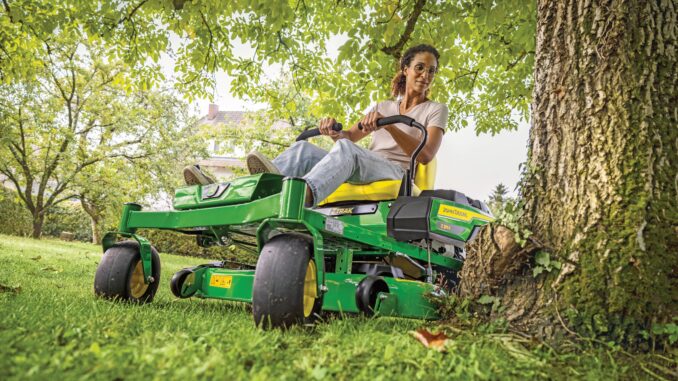
John Deere Z800 Series Lawn and Garden Tractor Models and Maintenance Guide
The John Deere Z800 Series was a professional-grade ZTrak zero-turn mower family built for demanding residential, estate, municipal, and commercial mowing work. Although these machines are not conventional lawn and garden tractors with steering wheels and implement-capable rear hitches, they belong in a complete John Deere lawn and garden equipment directory because they share the same core ownership needs: engine service, mower-deck care, hydraulic-drive maintenance, electrical diagnosis, and routine troubleshooting.
This page serves as a hub for model-specific guides, maintenance content, and troubleshooting content covering the Z800 Series. It is designed for owners maintaining an older Z810A, Z820A, Z830A, Z840A, Z850A, or Z860A, as well as buyers evaluating a used commercial zero-turn mower. For broader information on Deere residential and commercial mowing equipment, see the General John Deere Lawn and Garden Tractor Guide.
About the John Deere Z800 Series
The John Deere Z800 Series was an early professional ZTrak zero-turn mower range sold in North America during the late 2000s. It covered a broad power range, beginning with approximately 22-horsepower gasoline models equipped with 48- or 54-inch decks and progressing to high-output machines with about 34 horsepower and 60- or 72-inch commercial mower decks. The range included the Z810A, Z820A, Z830A, Z840A, Z850A, and Z860A.
These machines were designed primarily as commercial zero-turn mowers rather than multi-purpose garden tractors. Their strength is fast, manoeuvrable mowing around trees, landscape beds, buildings, fence lines, and open turf. Twin steering levers independently control the rear drive wheels, allowing a very small turning radius and rapid changes of direction. The drive system uses independent hydrostatic wheel drives rather than a conventional gear transmission, belt-drive rear axle, or foot-controlled lawn-tractor transaxle.
The Z800 Series includes both air-cooled gasoline machines and larger liquid-cooled equipment, depending on the model. The Z840A is especially notable as a liquid-cooled model, meaning coolant-system inspection and service are part of its maintenance programme in addition to normal engine, hydraulic, and deck work. Larger Z850A and Z860A models were intended for users who needed wide cutting widths, strong performance in heavy grass, and productive operation on larger properties or professional routes.
Typical Z800 Series features include a heavy commercial frame, commercial mower deck, independent hydrostatic transmissions, electric PTO clutch, operator-presence safety system, adjustable cutting height, anti-scalp wheels, parking brake, motion-control levers, and optional comfort or convenience equipment. Certain machines could be equipped with features such as a roll-over protective structure, suspension or upgraded seating arrangements, lighting, and Mulch-On-Demand deck equipment.
The Z800 Series sits above ordinary residential lawn tractors and compact consumer zero-turn mowers in durability, deck capacity, and intended annual use. It is closer in purpose to later Z900 commercial ZTrak models than to the S Series lawn tractors, X300 Series lawn tractors, X500 Series garden tractors, or X700 Series heavy-duty garden tractors. Unlike an X500 or X700 garden tractor, however, a Z800 is principally a mowing machine rather than a platform for ground-engaging rear implements, snowblower systems, or garden tillers.
John Deere Z800 Series Lawn and Garden Tractor Models
The Z800 Series is a legacy North American commercial zero-turn range rather than a current Deere product family. Model-year details, deck configurations, engine variants, and optional equipment can vary by product identification number, regional specification, and production date. Before ordering parts or using a repair procedure, identify the exact model, product identification number, engine model, deck width, and installed deck or attachment configuration.
Z800 Series Lawn and Garden Tractor Maintenance Guides
Routine Service and Checks
Z800 Series maintenance starts with frequent inspection rather than waiting for a performance problem. These machines were designed for demanding mowing work, so grass debris, dust, heat, vibration, and high operating hours can affect reliability if routine servicing is delayed.
Before each mowing session, inspect engine oil level, hydraulic oil level where applicable, fuel level, tires, deck condition, blade condition, belts, safety switches, loose hardware, and grass accumulation around the engine and hydrostatic transmission cooling areas. Pay particular attention to the transmission cooling fans and fins. Clogged cooling areas can contribute to excessive hydrostatic-drive temperatures, reduced performance, and shortened component life.
Routine engine service usually includes engine-oil and filter changes, air-filter inspection or replacement, fuel-filter replacement, spark-plug service on gasoline models, battery-terminal cleaning, and cooling-system checks on liquid-cooled versions. The Z840A requires special attention to coolant level, radiator or cooling-system cleanliness, hose condition, and signs of leaks or overheating.
Hydraulic and transmission service is particularly important on a commercial zero-turn mower. Inspect for hydraulic leaks around hoses, fittings, pumps, wheel motors, and filters. Follow the applicable service schedule for hydraulic oil and filter replacement. Use only the specified oil and filters for the exact machine configuration.
Useful internal maintenance resources for this family include:
-
Z800 Series lawn and garden tractor service interval checklist
-
DIY maintenance for Z800 Series lawn tractors
-
Z800 Series engine oil, air filter, and fuel system service guide
-
Hydraulic drive and transmission fluid service for Z800 Series zero-turn mowers
-
Z800 Series electrical system and battery maintenance guide
Mower Deck, Cutting Quality, and Belt Care
The mower deck is the working centre of a Z800 Series machine. A clean, level, properly adjusted deck helps protect cut quality, reduces belt wear, lowers vibration, and prevents unnecessary load on the engine and PTO system.
Inspect blades regularly for dull edges, bends, cracks, excessive wear, and imbalance. Sharpen blades evenly and balance them before installation. Replace a blade rather than attempting to repair one that is cracked, heavily worn, bent, or damaged by striking an object. A bent blade or damaged spindle can create vibration that affects bearings, deck hardware, belts, and the operator’s comfort.
Check deck belts for cracking, glazing, frayed edges, missing material, contamination from oil or hydraulic fluid, and loss of tension. Replace worn belts before they fail in service. Inspect belt guards, pulleys, idlers, tension springs, and electric PTO clutch engagement. A belt that repeatedly comes off may indicate a damaged pulley, failing idler bearing, bent deck component, incorrect belt routing, or deck obstruction.
Keep the underside of the mower deck free from packed grass, soil, and moisture. Accumulated clippings reduce airflow, weaken discharge performance, contribute to uneven cutting, and promote deck corrosion. After mowing wet or heavy grass, clean the deck and inspect discharge areas carefully.
Useful internal topics include Mower deck maintenance and cutting quality on Z800 Series tractors and Deck belt and spindle service for Z800 Series lawn and garden tractors.
Steering, Axle, and Chassis Maintenance
Although a Z800 Series mower does not use a conventional steering wheel, its handling depends on correctly adjusted motion-control levers, caster wheels, tire condition, hydrostatic tracking, and parking-brake operation. When the levers are released or returned to neutral, the mower should stop smoothly without excessive creeping. If it pulls to one side, surges, drifts, or requires noticeably different lever positions to travel straight, inspect the hydraulic system, tire pressures, neutral adjustments, linkage settings, and control-lever alignment.
Check caster wheels for free rotation, damaged tires, loose forks, worn bearings, bent components, and excessive play. Inspect rear drive wheels, wheel hardware, wheel-motor areas, and frame mounting points. Uneven tire pressure can cause poor tracking and an uneven mowing height, especially on wide-deck machines.
Inspect the main frame, deck-hanger system, foot platform, seat mounting, ROPS components where fitted, engine mounts, fuel tank supports, and all major fasteners. Commercial mowing vibration can gradually loosen hardware, particularly around the deck, caster assemblies, exhaust system, steering-lever mounts, and seat platform.
Useful internal topics include Steering and front axle maintenance across Z800 Series lawn and garden tractors, Z800 Series caster wheel and tire service guide, and Z800 Series tracking and motion-control lever adjustment guide.
Z800 Series Lawn and Garden Tractor Troubleshooting Guides
Starting, Engine, and Fuel / Ignition Problems
A no-start condition on a Z800 Series mower can result from a simple operating or safety-interlock issue, a low battery, an electrical fault, a fuel-system problem, or an engine fault. Begin with basic checks: confirm that the parking brake is applied, motion-control levers are in the required neutral or outward position, PTO is disengaged, battery connections are clean and tight, and the fuel tank contains fresh fuel.
If the engine cranks slowly, inspect the battery state of charge, cables, grounds, starter circuit, solenoid, and charging system. If it cranks normally but does not fire, check fuel delivery, fuel quality, fuel filter condition, ignition components, spark plugs, engine shutoff system, and the condition of safety switches.
Hard starting, surging, hesitation, stalling under load, or loss of power often relates to restricted fuel flow, water-contaminated fuel, a dirty air filter, carburetor contamination, ignition faults, overheating, or an engine being overloaded by a clogged deck or dull blades. On liquid-cooled models, inspect coolant level and cooling-system airflow before assuming a more serious engine failure.
Useful hub articles include Z800 Series lawn and garden tractor starting problems – diagnostics and fixes and Engine and fuel system issues across Z800 Series tractors.
Mower Deck, PTO, and Cutting Performance Problems
If the mower deck will not engage, begin with the PTO switch, safety-interlock system, fuses, wiring, battery voltage, electric PTO clutch, deck belt condition, and deck obstructions. A weak battery or charging fault can sometimes cause an electric clutch to engage inconsistently or release under load.
Blades stopping in heavy grass may be caused by a worn or slipping deck belt, failing PTO clutch, seized or dragging spindle, excessively tall or wet grass, incorrect ground speed, dull blades, or material packed under the deck. A Z800 Series mower should be operated at a suitable travel speed for turf conditions; trying to mow too quickly in dense grass can overload the deck and leave an uneven finish.
An uneven cut can result from unequal tire pressures, incorrect deck level, damaged anti-scalp wheels, dull or mismatched blades, worn spindles, bent blades, a damaged deck shell, or poor overlap between passes. Scalping often relates to an overly low cutting-height setting, rough terrain, poor anti-scalp wheel adjustment, excessive speed, or a deck that is not correctly levelled.
Deck vibration, rumbling, squealing, or a hot belt area should be investigated immediately. Shut the mower down, remove the key, wait for all movement to stop, and inspect before continuing. Common causes include blade damage, an unbalanced blade, a failing spindle bearing, damaged pulley, worn idler bearing, debris under a pulley cover, or incorrect belt routing.
Useful internal resources include PTO and deck engagement problems on Z800 Series lawn tractors and Cut quality and deck vibration issues on Z800 Series models.
Drive, Transmission, and Traction Problems
The Z800 Series uses independent hydrostatic wheel drives, so travel problems are usually different from those found on a belt-driven lawn tractor. Common complaints include no drive, weak drive, slow travel, poor tracking, creeping in neutral, one wheel pulling more strongly than the other, hydraulic noise, or loss of performance after the machine becomes hot.
Start with simple checks. Confirm that hydraulic bypass valves are fully returned to the operating position, the parking brake is released, tire pressures are correct, the traction-drive belt is in good condition, and transmission cooling areas are clean. A bypass valve left open after moving or servicing the mower can cause apparent loss of drive.
Weak or inconsistent drive can also result from low hydraulic oil, dirty hydraulic filters, hydraulic leaks, air entering the system, worn traction belts, overheating, contaminated oil, or internal pump or wheel-motor wear. Do not continue to operate a machine with pronounced hydraulic noise, sudden loss of power, hot oil smell, or obvious leakage. Further use can turn a repairable problem into major hydraulic-system damage.
Zero-turn mowers require care on slopes, wet grass, loose ground, and abrupt transitions in terrain. Their rear-wheel drive can lose traction on wet slopes, especially if the operator changes direction quickly or turns downhill. Use reduced speed, gradual control inputs, appropriate mowing patterns, and the manufacturer’s stated slope limits. Do not assume that a commercial frame or wider deck makes steep slopes safe.
Useful internal resources include Drive and transmission problems on Z800 Series lawn and garden tractors and Traction and hill performance issues across Z800 Series models. Individual model pages, such as a Z810A maintenance guide, Z840A cooling-system guide, or Z860A hydraulic-drive troubleshooting guide, can provide more model-specific diagnostic detail.
Attachments and Implements for the Z800 Series Lawn and Garden Tractor Series
The Z800 Series is primarily a dedicated mowing platform. Its principal working attachment is its mid-mounted commercial mower deck, offered in widths ranging approximately from 48 inches to 72 inches depending on the model. Buyers and owners should confirm the original deck model and deck width before purchasing blades, belts, spindle assemblies, mulch components, discharge parts, anti-scalp wheels, or deck-lift components.
Common Z800 Series accessories and equipment configurations may include:
-
Commercial mower decks in 48-inch, 54-inch, 60-inch, or 72-inch sizes
-
Mulching equipment or Mulch-On-Demand mower-deck components on compatible machines
-
Striping equipment for a more defined turf appearance
-
Rollover protective structure equipment where fitted or available
-
Comfort, seat, lighting, and convenience-package components
-
Trailer-loading, transport, and machine-storage equipment
-
Commercial turf-maintenance accessories compatible with the mower’s intended configuration
Unlike many X500 and X700 garden tractors, the Z800 Series generally should not be treated as a platform for rear tillers, ploughs, front snowblowers, heavy snow blades, or substantial ground-engaging implements. Its design priority is mowing productivity and manoeuvrability, not four-season implement work. Towing should be limited to loads and hitch arrangements specifically approved for the machine, with particular caution on slopes, wet turf, uneven ground, and around obstacles.
Compatibility depends on the exact Z800 model, production number, engine and deck configuration, deck mounting system, electrical arrangement, PTO-clutch specification, and available attachment brackets. A 60-inch deck component is not automatically interchangeable with every 60-inch Z800 deck, and similar-looking parts may vary by serial-number range.
Useful internal posts include Attachments and implement options for Z800 Series lawn and garden tractors and Setting up and using snow equipment and yard attachments on Z800 Series tractors.