
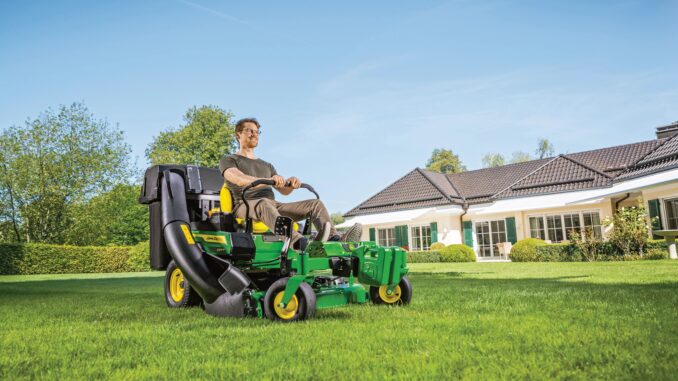
John Deere Z700 Series Lawn and Garden Tractor Models and Maintenance Guide
The John Deere Z700 Series is a premium zero-turn mower range designed for large residential properties, estates, contractor-style mowing work, and demanding turf-maintenance jobs. Although these are not conventional steering-wheel lawn and garden tractors, Z700 Series ZTrak machines occupy a similar upper-tier role for owners who need fast mowing, durable construction, larger commercial-style decks, and better operator comfort than a typical residential lawn tractor.
This page serves as a directory for model-specific guides, maintenance content, and troubleshooting information across the Z700 range. It is intended to help owners identify their mower, understand where it fits in the lineup, and find the most relevant service or repair information for its engine, hydrostatic drive system, mower deck, PTO, steering levers, and chassis. For broader information covering conventional riding mowers and garden tractors, use the General John Deere Lawn and Garden Tractor Guide as the top-level hub.
About the John Deere Z700 Series Lawn and Garden Tractor Series
The John Deere Z700 Series is a family of commercial-duty and premium property-maintenance zero-turn mowers. The range has typically covered approximately 23 to 27 horsepower, using air-cooled V-twin gasoline engines and fabricated mower decks in 48-inch, 54-inch, or 60-inch cutting widths. The series is aimed primarily at landowners maintaining several acres, professional grounds crews, landscape contractors, and users who value mowing productivity over the versatility of a conventional garden tractor.
A Z700 is normally a two-wheel-drive machine with independent hydrostatic wheel drives. Rather than a steering wheel, it uses dual control levers: pushing both levers forward drives the mower straight ahead, while varying one lever relative to the other turns the machine. Moving one lever forward and one backward can allow the mower to pivot tightly around its own footprint, which is the basis of the “zero-turn” name.
The range has been sold in E, M, and R equipment tiers. E models are generally the entry point into the commercial-style Z700 range, with a simpler specification and durable high-capacity deck options. M models add higher comfort and feature levels for users spending longer periods mowing. R models sit at the premium end, usually with more powerful engine choices, higher travel speed, enhanced seating, stronger control-lever specifications, and features intended for intensive use.
Typical equipment includes a fabricated High-Capacity PRO mower deck, electric PTO engagement, deck-height adjustment, commercial-style controls, a heavy-duty welded frame, large drive tires, and dual hydrostatic transmissions. Many versions also include comfort-oriented seat suspension, adjustable seat springs, improved operator controls, a large fuel tank, hour meter functions, and deck wash or cleaning provisions depending on model and production year.
The Z700 Series differs from John Deere S Series and X300 Series machines because it is a lever-steered zero-turn mower rather than a steering-wheel lawn tractor. It is generally more productive for open mowing and obstacle-filled lawns, but less suited to ground-engaging garden work, rear tillers, and many tractor-style attachments. Compared with the X500 Series and X700 Series, a Z700 typically gives faster mowing performance but does not provide the same conventional garden-tractor layout or implement versatility. It is best viewed as a high-capacity mowing machine first, with limited light-duty towing and property-maintenance capability.
John Deere Z700 Series Lawn and Garden Tractor Models
The Z720E is generally the starting point for buyers who need a true commercial-style zero-turn platform but do not require the highest travel speed, suspension specification, or premium control system. Its deck choices make it especially flexible: a 48-inch deck can suit tighter access and landscaped properties, while 54-inch and 60-inch options suit more open ground.
The Z735E is normally the E-Series choice for users prioritising a wider mowing path and more engine power. Its typical 60-inch deck makes it best suited to larger, relatively open properties where access restrictions are limited and mowing productivity matters more than compact dimensions.
The Z730M and Z735M sit in the middle of the range and are usually appropriate for users who mow frequently, cover substantial ground, and benefit from upgraded seating and longer operating comfort. The Z735M is especially useful where the owner wants more engine capacity while retaining a choice of deck widths.
The Z740R and Z760R are the premium Z700 models. These machines are aimed at high-use owners and commercial users who want higher specification engines, more advanced operator comfort, improved mowing speed, and a more substantial overall operating package. The Z760R is particularly suitable for large open areas, while the Z740R can be a strong choice where deck-width flexibility is important.
The earlier Z710A and Z720A models are important legacy entries for owners sourcing parts, manuals, belts, blades, spindles, engine components, hydrostatic-drive parts, and used-equipment information. Their exact configuration can vary by production year and deck option, so owners should confirm the complete model and serial number before ordering replacement parts.
Z700 Series Lawn and Garden Tractor Maintenance Guides
Routine Service and Checks
Routine maintenance is particularly important on Z700 Series mowers because these machines can cover large areas quickly and often accumulate operating hours faster than a small residential riding mower. An owner mowing several acres weekly can reach seasonal service intervals surprisingly quickly.
Start every work session with a visual walk-around inspection. Check engine oil level, fuel level, tire condition, mower deck condition, belt condition, loose fasteners, hydrostatic-drive area cleanliness, and any evidence of fuel, oil, or hydraulic leakage. Make sure the operator-presence system, parking brake, PTO switch, seat switch, and steering-lever safety functions operate correctly before mowing.
Engine-service requirements vary according to the exact engine fitted, but typical work includes changing engine oil and the oil filter at the prescribed interval, inspecting or replacing the air filter, checking the pre-cleaner where fitted, replacing spark plugs at the specified interval, inspecting fuel lines, and cleaning debris from cooling screens, cylinder-head fins, and air-intake areas. Air-cooled V-twin engines depend heavily on unrestricted cooling airflow, particularly during hot weather, dry conditions, or prolonged mowing in dusty grass.
Hydrostatic-drive components need careful attention. Keep cooling fans, transmission housings, intake screens, and belt areas clear of grass buildup. Do not assume that all hydrostatic components are owner-serviceable; fluid and filter procedures differ by model and transmission specification. A Z700 Series lawn and garden tractor service interval checklist should separate engine servicing from hydrostatic-drive servicing and include the exact procedures applicable to each mower.
Useful internal maintenance targets include:
-
Z700 Series lawn and garden tractor service interval checklist
-
DIY maintenance for Z700 Series lawn tractors
-
Z700 Series engine oil, filter, and air-cleaner service guide
-
Z700 Series hydrostatic-drive inspection and cooling-system cleaning guide
-
Seasonal storage and spring start-up for Z700 Series zero-turn mowers
-
Pre-mowing inspection checklist for Z700 Series ZTrak mowers
For winter storage or extended non-use, clean the mower thoroughly, stabilise or manage fuel according to the engine manufacturer’s requirements, protect the battery, inspect the deck for trapped wet grass, and prevent rodents from nesting around wiring, engine shrouds, and air-intake areas.
Mower Deck, Cutting Quality, and Belt Care
The mower deck is the main working system on a Z700 Series mower, and it should receive attention more often than many owners expect. Large fabricated decks can produce excellent results and cover ground quickly, but they must remain clean, level, sharp, and mechanically sound.
Inspect the blades regularly for dull edges, bends, cracks, chipped ends, heavy erosion, and damage from stones, roots, branches, or hidden ground obstacles. Sharpen blades evenly and maintain balance. An unbalanced blade can create vibration that damages spindles, bearings, deck brackets, belts, and fasteners over time.
Deck leveling matters as much as blade sharpness. A mower that cuts lower on one side, scalps turf, leaves uncut strips, or produces an uneven finish may have an incorrect deck pitch, unequal tire pressures, worn blades, bent deck hardware, damaged anti-scalp wheels, or a bent blade spindle. Before adjusting deck linkages, confirm that the mower is parked on a flat surface and that tire pressures are correct.
Inspect belts for glazing, cracking, frayed edges, missing ribs, excessive slack, and contamination from oil or grease. A belt that slips under load may be worn, incorrectly routed, contaminated, or affected by an idler, tensioner, pulley, or spindle problem. Keep the deck top and underside clean enough to allow airflow and prevent wet grass from holding moisture against steel components.
Useful internal maintenance targets include:
-
Mower deck maintenance and cutting quality on Z700 Series tractors
-
Deck belt and spindle service for Z700 Series lawn and garden tractors
-
Z700 Series blade sharpening, balancing, and replacement guide
-
Z700 Series mower deck leveling and anti-scalp wheel adjustment guide
Steering, Axle, and Chassis Maintenance
Unlike a steering-wheel lawn tractor, a Z700 Series mower turns through independent hydrostatic wheel control. The steering levers, linkage system, dampers, neutral-return mechanisms, and hydrostatic-control adjustments should operate smoothly and consistently. A mower that creeps in neutral, pulls strongly to one side, has uneven lever effort, or responds unpredictably needs inspection before continued use.
Check the front caster wheels and forks for looseness, damaged bearings, bent forks, worn bushings, cracked welds, and tire damage. Front caster wheels do not steer the mower in the conventional sense, but they are critical to deck tracking, ride quality, ground clearance, and smooth manoeuvring. Uneven caster-wheel wear can contribute to poor cut quality or an unstable feel over rough ground.
Inspect the main frame, ROPS or operator-protection equipment where fitted, deck hangers, engine mounts, seat mounts, control-lever hardware, foot platform, parking-brake components, and safety decals. Tighten hardware to the correct specification rather than simply overtightening bolts. Look closely for cracks around deck mounts, caster-wheel supports, rear drive-wheel areas, and locations subjected to vibration.
A useful cross-model internal resource is Steering and front axle maintenance across Z700 Series lawn and garden tractors.
Z700 Series Lawn and Garden Tractor Troubleshooting Guides
Starting, Engine, and Fuel / Ignition Problems
A no-start condition on a Z700 Series mower may involve a simple operating interlock, a discharged battery, corroded terminals, failed fuse, poor ground connection, faulty ignition switch, PTO safety issue, parking-brake issue, seat-switch problem, starter solenoid fault, or starter-motor problem. Begin with the basic checks before assuming the engine itself has failed.
The usual safe starting configuration is with the PTO disengaged, parking brake applied, and steering levers positioned as required by the mower’s operator-safety system. If the engine will not crank, verify the battery condition and terminal cleanliness, then examine the interlock system and starting circuit. If the engine cranks but does not start, investigate fuel delivery, spark, air supply, and engine compression in a logical order.
Fuel-related problems commonly include stale fuel, water contamination, blocked fuel filters, damaged fuel lines, restricted tank venting, carburetor deposits, fuel-pump faults, and debris in the carburetor or fuel system. A mower that starts but surges may have a fuel-delivery restriction, contaminated carburetor circuits, an intake-air leak, a governor issue, or an ignition problem. An engine that stalls under load may have a restricted air filter, fuel restriction, overheating issue, fouled spark plug, PTO/deck overload, or mechanical engine problem.
Useful internal troubleshooting targets include:
-
Z700 Series lawn and garden tractor starting problems – diagnostics and fixes
-
Engine and fuel system issues across Z700 Series tractors
-
Z700 Series battery, starter, fuse, and safety-switch troubleshooting guide
-
Z700 Series engine surging, stalling, and loss-of-power guide
Mower Deck, PTO, and Cutting Performance Problems
If the mower deck will not engage, first check the PTO switch, fuse, safety interlocks, battery and charging-system condition, deck belt routing, electric PTO clutch wiring, and connector condition. An electric PTO clutch may fail mechanically or electrically, but problems with switches, wires, fuses, grounds, or the safety circuit can produce similar symptoms.
A deck that engages but stops under load may have dull blades, a grass-packed deck, wet or overly tall grass, a worn drive belt, a slipping PTO clutch, seized or failing spindle bearings, damaged pulleys, or an engine that is not developing full power. Reducing travel speed can help in tall grass, but repeated bogging may indicate a mechanical issue that requires inspection.
Uneven cutting, scalping, streaking, uncut strips, vibration, and excessive deck noise should not be treated as normal. Check tire pressures, blade condition, blade installation, deck level, deck pitch, spindle play, belt tension, anti-scalp wheels, and deck-hanger adjustment. A sudden vibration after striking an object often points to a bent blade, damaged spindle, bent pulley, or debris wrapped around a spindle shaft.
Useful internal troubleshooting targets include:
-
PTO and deck engagement problems on Z700 Series lawn tractors
-
Cut quality and deck vibration issues on Z700 Series models
-
Z700 Series mower deck noise, belt slip, and spindle failure guide
-
Z700 Series uneven cut, scalping, and streaking diagnosis guide
Drive, Transmission, and Traction Problems
Z700 Series mowers rely on separate hydrostatic wheel drives, so drive problems may affect one side or both sides. Symptoms can include no movement, weak movement, slow travel speed, reduced hill-climbing ability, one side pulling weakly, excessive transmission noise, creeping in neutral, erratic steering response, or loss of drive after the mower becomes hot.
Before diagnosing a hydrostatic transmission fault, inspect the simple causes. Confirm that bypass valves are correctly positioned, the parking brake is fully released, drive belts are intact and correctly tensioned, the hydrostatic cooling area is clean, drive tires are properly inflated, and no brake linkage is dragging. Grass buildup around transmission fans and cooling screens can contribute to overheating and reduced performance.
A mower that loses traction on slopes may not have a mechanical fault. Zero-turn mowers can lose grip on wet grass, loose soil, steep slopes, side slopes, rutted ground, and uneven terrain. Large rear drive tires help, but they do not eliminate the limitations of a two-wheel-drive mower. Slow down, avoid abrupt lever movements, mow slopes with a safe planned direction, and do not use a zero-turn mower in conditions beyond the manufacturer’s slope guidance.
If one drive wheel turns weakly or the mower pulls to one side, inspect the corresponding hydrostatic system, wheel motor or transaxle arrangement, drive belt, linkage adjustment, tire pressure, and wheel-hub condition. Where hydrostatic service procedures require fluid changes, purging, internal diagnosis, or component replacement, use the correct model-specific manual and avoid mixing fluids or improvised repair methods.
Useful internal troubleshooting targets include:
-
Drive and transmission problems on Z700 Series lawn and garden tractors
-
Traction and hill performance issues across Z700 Series models
-
Z700 Series zero-turn mower creeping, pulling, and steering-control problems
-
Z700 Series hydrostatic-drive cooling and loss-of-speed troubleshooting guide
Individual model pages such as Z720E maintenance & troubleshooting guide, Z730M maintenance & troubleshooting guide, Z735M problems and fixes overview, Z740R maintenance & troubleshooting guide, and Z760R buyer’s guide can then provide more exact engine, deck, belt, electrical, and drive-system information for each configuration.
Attachments and Implements for the Z700 Series Lawn and Garden Tractor Series
The Z700 Series is primarily a mowing platform, so its attachment range is more limited than that of a conventional John Deere garden tractor. Its most important working equipment is normally the mid-mounted mower deck, selected in a width appropriate to the property, gate access, terrain, storage space, and expected mowing volume.
Common equipment and accessories may include mower decks, mulching components, side-discharge components, bagging systems where supported, grass-collection equipment, striping kits, utility carts, tow-behind aerators, tow-behind dethatchers, spreaders, rollers, sprayers, and light-duty lawn sweepers. Some owners also use approved hitch accessories for moving small trailers, garden tools, or yard materials.
Compatibility should always be checked before purchase. Deck components must match the exact deck width and deck type. Blades, belts, spindles, pulleys, baffles, chute parts, mulch kits, and bagging equipment may differ between 48-inch, 54-inch, and 60-inch decks even when the mower model name is similar.
Do not assume a Z700 can use the same attachments as an X500, X700, 300 Series, 400 Series, or conventional lawn tractor. A zero-turn mower has a different frame layout, hitch arrangement, drive system, deck mounting system, electrical system, and operator platform. It is generally not designed for heavy ground-engaging implements such as rear tillers, ploughs, cultivators, or tractor-style snow-blowing systems.
When towing, consider the mower’s rated tow capacity, terrain, load weight, trailer tongue weight, braking distance, tire traction, and stability. Avoid towing heavy loads on slopes, rough ground, wet turf, or loose surfaces. A zero-turn mower can become unstable more easily than a conventional garden tractor when a trailer pushes the machine downhill or sideways.
Useful internal resources include:
-
Attachments and implement options for Z700 Series lawn and garden tractors
-
Setting up and using snow equipment and yard attachments on Z700 Series tractors
-
Z700 Series mower deck, mulching kit, and bagger compatibility guide
-
Safe towing and utility-cart use with Z700 Series zero-turn mowers