
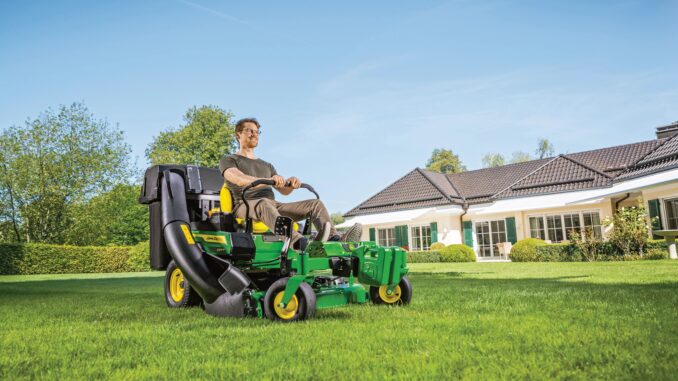
The John Deere Z345R is a residential zero-turn mower in the Z300 Series built for home lawn mowing, with a 42-inch Accel Deep deck, twin-lever zero-turn steering, and a service schedule centered around 8-hour, 50-hour, 100-hour, and 200-hour intervals. This guide is written for USA and Canada owners who want a practical, symptom-first reference covering repairs, troubleshooting, maintenance, parts, diagrams, manuals, and realistic DIY limits.
For most owners, the biggest wins come from identifying the symptom first, then checking the few systems most likely to cause it: starting and ignition, fuel and air, deck and blades, traction belt and transaxles, and safety interlocks. That approach avoids ordering the wrong parts and helps separate simple driveway fixes from jobs better left to a Deere dealer.
John Deere Z345R model overview
The John Deere Z345R sits in Deere’s residential Z300 lineup and is aimed at homeowners who want faster mowing and better maneuverability than a lawn tractor, especially around trees, beds, and landscaped yards. Deere’s replacement-parts guide for the Z345R covered here is specifically for the machine with the 42-inch Accel Deep deck sold in the USA and Canada market.
Key systems on the John Deere Z345R include the engine and fuel system, air intake and cooling system, electrical starting and safety interlock system, mower deck and blade drive, traction drive belt, and dual transaxles. Owners also regularly deal with service items such as the air filter MIU14395, spark plug MIU11020, fuel filter AM116304, oil filter AM125424, traction belt GX26401, deck belt GX25628, battery TY25221B, and 42-inch mower blade UC22008 for USA and Canada units.
Troubleshooting the John Deere Z345R by symptom
Diagnosis on this mower should start with what the owner actually sees: hard starting, rough running, poor cut quality, vibration, weak drive, hot-running conditions, or dead electrical functions. Because one symptom can have several causes, begin with the simple checks first: fuel, air, spark, belt condition, blade condition, tire pressure, deck level, safety switches, and visible debris buildup.
Main symptom groups on the John Deere Z345R usually include:
-
Starting issues, such as no crank, slow crank, or crank-no-start.
-
Running issues, such as surging, loss of power, or stalling in grass.
-
Cut-quality problems, such as uneven cutting, stragglers, or clumping.
-
Vibration and noise, often linked to blades, belts, spindle areas, or debris.
-
Overheating, smoke, burning smells, and leaks, often tied to clogged cooling areas or oil/fuel issues.
-
Transmission and drive complaints, including weak tracking or poor ground speed.
-
Electrical and safety-switch problems, including PTO engagement and no-start interlock faults.
Emergency John Deere Z345R repair needs
Some faults on the John Deere Z345R should be dealt with immediately because they affect safe operation or can quickly damage expensive parts. The most urgent examples are missing safety shields, fuel leaks, burned wiring, severe blade vibration, failed blade bolts, belt failures near hot components, and heavy debris packed around the muffler or engine cooling fins.
John Deere Z345R starting issues
Starting trouble may show up as a dead key switch response, a click with no crank, or normal cranking with no start. It matters because repeated unsuccessful starting attempts can flatten the battery, foul the plug, and hide an underlying interlock or fuel-delivery fault.
Common causes:
-
Weak or failed battery TY25221B.
-
Bad ignition switch, with part number depending on serial range: TCA22740 for S/N up to 080000, AUC14659 for S/N 080001 and up.
-
Dirty air filter or neglected fuel filter.
-
Spark plug wear or fouling.
-
Safety interlock issue involving brake, PTO, or seat switch circuits.
Basic owner checklist:
-
Confirm the PTO switch is off and the parking brake is fully applied.
-
Check battery connections for looseness or corrosion under the seat area.
-
Inspect the air filter and fuel filter service age against the 100-hour/annual interval.
-
Remove and inspect the spark plug if the engine cranks but does not fire.
-
If the unit still will not start, move to switch testing or dealer diagnosis.
John Deere Z345R cut-quality problems
Poor cut quality usually appears as scalping, streaks, uneven height, uncut tips, or clumps left behind. On this mower, those symptoms often come back to blade condition, deck cleanliness, tire pressure, and deck leveling rather than a major mechanical failure.
Common causes:
-
Dull, bent, or mismatched blades.
-
Worn or slipping deck belt GX25628.
-
Packed grass under the deck.
-
Incorrect tire pressure affecting deck attitude.
-
Deck out of level side-to-side or front-to-rear.
Basic owner checklist:
-
Clean the underside of the deck and inspect blade edges.
-
Check deck belt condition and tension feel.
-
Verify tire pressures before attempting deck adjustments.
-
Level the deck so side-to-side variation stays within 3 mm (1/8 inch), and front blade tips sit 3–6 mm (1/8–1/4 inch) lower than the rear tips.
-
Replace damaged blades in sets if wear or bends are obvious.
John Deere Z345R vibration and noise
New vibration, rattling, or knocking should be treated as an immediate stop-and-inspect issue. Severe vibration can mean a bent blade, loose blade hardware, debris packed around spindle or belt areas, or a failing rotating component that can cause secondary damage fast.
Common causes:
-
Bent or damaged blade.
-
Loose blade hardware or worn blade mounting parts.
-
Sticks, wire, or packed debris around deck pulleys and shields.
-
Belt damage or pulley wear.
Basic owner checklist:
-
Shut the machine down, remove the key, and wait for all moving parts to stop.
-
Inspect blade area and deck top for wrapped debris.
-
Check whether both blades match and are installed correctly.
-
Inspect the deck belt and pulleys for glazing, cracking, or wobble.
-
If vibration remains after blade replacement, dealer spindle or deck diagnosis is sensible.
John Deere Z345R overheating and leaks
Overheating symptoms include power loss in heavy grass, hot smells, smoke from debris near the muffler, or oil/fuel seepage. Deere specifically warns that grass and leaf buildup around hot or moving parts can cause fire, so this is not a symptom to ignore.
Common causes:
-
Debris on muffler components, engine cooling fins, intake screens, top of deck, transaxles, or under-seat area.
-
Engine oil leaks attracting dust and dry grass.
-
Fuel line or cap issues.
-
Restricted cooling airflow from dirty screens or fins.
Basic owner checklist:
-
Let the mower cool fully before cleaning.
-
Clear debris from the muffler, engine cooling fins, intake screens, deck top, belt areas, transaxles, and under-seat battery/wiring zone.
-
Check for fresh oil or fuel leaks after cleaning.
-
Confirm the oil is changed at the 50-hour or annual interval and the air filter at the 100-hour or annual interval.
-
Any persistent leak near exhaust or wiring is a stop-use issue until repaired.
John Deere Z345R transmission and drive problems
Drive complaints usually show up as weak hill performance, one side tracking differently, reduced speed, or a mower that moves poorly after belt wear. Because the traction system combines a belt drive with twin transaxles, owners should rule out simple belt or fluid-level checks before assuming a transaxle failure.
Common causes:
-
Worn traction belt GX26401.
-
Low transmission oil level in one or both transmissions.
-
Debris buildup around transaxle cooling fins.
-
Tire pressure mismatch affecting tracking.
Basic owner checklist:
-
Inspect the traction belt for wear, glazing, and damage.
-
Check oil level in both transmissions as part of the daily checklist.
-
Clean around transaxles and cooling fins.
-
Correct tire pressures evenly side-to-side.
-
If one side still feels weak, dealer testing is usually the next step.
John Deere Z345R electrical problems
Electrical faults often show as no crank, no PTO engagement, dead lights, or intermittent shutoff. Since the Z345R depends on safety interlocks to allow starting and mowing, a simple switch or connection issue can mimic a larger engine problem.
Common causes:
-
Weak battery or poor cable connection.
-
Ignition switch failure.
-
Fault in the safety interlock system.
-
Wiring contamination or corrosion under the seat area.
-
Blown headlight bulb AM143579 if lights alone fail.
Basic owner checklist:
-
Inspect battery terminals and cable tightness first.
-
Confirm the machine passes the safety interlock check.
-
Inspect under-seat wiring for moisture, corrosion, or rodent damage.
-
Replace obvious consumables like the light bulb if only lighting has failed.
-
For repeated fuse, switch, or wiring faults, dealer electrical diagnosis is usually faster.
DIY vs dealer for the John Deere Z345R
The normal DIY line on the John Deere Z345R is straightforward: routine service, blade work, deck cleaning, deck leveling, and visible belt or filter replacement are realistic for most careful owners, while internal engine, transaxle, and advanced electrical diagnosis usually belong to a dealer. That line matters because the mower is owner-serviceable in many areas, but Deere also points owners to authorized service support when procedures or stored-energy components go beyond routine maintenance.
Good DIY jobs on the John Deere Z345R
-
Engine oil and oil filter changes.
-
Air filter, spark plug, and fuel filter replacement.
-
Blade sharpening or blade replacement.
-
Cleaning the underside and top of the deck.
-
Deck leveling and gauge wheel checks.
-
Battery replacement and basic terminal cleaning.
-
Replacing an obviously worn deck belt or traction belt if access and routing are clear from diagrams.
Advanced DIY or dealer jobs
-
Tracing intermittent no-start wiring faults through the interlock circuit.
-
Spindle, pulley, or idler failures where alignment matters.
-
Transaxle performance issues beyond fluid-level and external inspection.
-
Valve clearance inspection and adjustment, which Deere places at 200 hours and specifically directs to the dealer.
-
Any repair involving severe vibration with uncertain root cause.
Skill level guide
-
Beginner: Oil, filter, spark plug, battery, deck cleaning, blade inspection.
-
Intermediate: Blade replacement, deck belt replacement, deck leveling, fuel filter, traction belt inspection.
-
Advanced: Electrical fault tracing, spindle work, transaxle diagnosis, valve clearance service.
Parts for the John Deere Z345R: OEM numbers and ordering details
Before ordering parts for a John Deere Z345R, gather the full model name, machine PIN, deck configuration, and engine serial number. Deere’s operator’s manual says the machine PIN and transaxle serial numbers are recorded from the machine, while the engine serial number is found on the engine blower housing.
OEM parts are usually the safest choice for belts, ignition switches, and fit-sensitive or safety-related items because routing, dimensions, and serial-break changes matter on this model. Aftermarket parts can be fine for batteries, common tune-up consumables, and some blades, but only when the cross-reference is exact for the Z345R and the 42-inch Accel Deep deck setup.
John Deere Z345R diagrams and manuals
For parts diagrams and manuals, the best sources are Deere’s own owner-information and publication pages first, then a Deere-focused model parts site for browsing illustrations.
-
John Deere Z345R owner information — good starting point for owner’s manuals, service information, and parts support.
-
John Deere Z345R replacement parts guide PDF — fast reference for common service parts and OEM numbers on the 42-inch deck machine.
-
John Deere operator’s manual — useful for operating, service, troubleshooting, and safety procedures on the Z335E/Z335M/Z345M/Z345R/Z355E/Z355R/Z375R family.
-
John Deere Technical Publications store — source for purchasing the technical manual or parts catalog if deeper service documentation is needed.
-
Green Farm Parts Z345R parts page — useful for illustrated browsing when confirming belt, blade, and maintenance-item fitment.
How to locate John Deere Z345R serial and engine numbers
These numbers matter because Deere and dealers use them to confirm serial breaks, correct ignition switch versions, and exact parts fitment. On the Z345R family covered by the operator’s manual, Deere says the product identification number should always be supplied when requesting service information.
-
Park the mower safely on a level surface and remove the key.
-
Find the machine Product Identification Number on the mower and record it exactly as shown in the product identification section guidance.
-
Locate the engine serial number on the engine blower housing.
-
If drive-system diagnosis is involved, record the transaxle serial numbers from the forward side of each transaxle housing.
-
Keep all numbers with your operator’s manual before ordering parts online or at the dealer counter.
Buying John Deere Z345R parts online and locally
The best buying strategy is to use Deere documentation to identify the OEM number first, then compare price and availability without guessing by appearance alone. That is especially important on serial-break items and on components that differ by market or deck version.
-
Online: Verify the exact OEM number, confirm the deck size, and double-check any serial-sensitive items before checkout; Deere directs owners to JDParts for online parts ordering and information.
-
Dealer counter: Best for ignition switches, transaxle-related items, technical questions, and anything where the PIN changes the part number.
-
Retail stores: Fine for consumables like oil, spark plugs, some filters, and batteries when packaging clearly lists Z345R compatibility or the exact Deere cross-reference.
Useful links:
John Deere Z345R fitting guide for common parts
These are the highest-impact DIY jobs on the John Deere Z345R because they directly affect starting, cut quality, reliability, and seasonal uptime. Always park safely, remove the key, and disconnect the battery negative cable or spark plug wire where the manual calls for accidental-start prevention.
How to replace the John Deere Z345R air filter
A fresh air filter helps cure hard starting, rich running, and gradual power loss in dusty mowing conditions.
-
Park safely and allow the engine area to cool.
-
Open the air-cleaner housing and remove the old filter element.
-
Wipe out loose dust from the housing without forcing dirt into the intake.
-
Install the new MIU14395 filter in the same orientation.
-
Close the housing securely and note the service date or hours.
How to change the John Deere Z345R spark plug
Replacing the spark plug is a simple tune-up job that often improves cold starts and smoother running.
-
Park safely and let the engine cool fully.
-
Pull off the spark plug boot carefully.
-
Remove the old plug and inspect it for fouling or oil deposits.
-
Install the new MIU11020 spark plug and refit the boot firmly.
-
Start the engine and confirm a clean idle and restart.
How to replace John Deere Z345R blades
Blade service restores cut quality and should be treated seriously because bent or damaged blades can also create dangerous vibration.
-
Park safely, disconnect the battery negative cable or spark plug wires, and wear gloves.
-
Raise the deck access area as needed and secure the machine safely before working underneath.
-
Remove the old blades and inspect blade bolts and mounting surfaces for damage.
-
Install matching replacement blades such as UC22008 for the USA/Canada 42-inch setup.
-
Tighten hardware to spec from the operator or technical manual and test for smooth operation.
How to replace the John Deere Z345R deck belt
A new deck belt can fix poor blade drive, weak cutting in thick grass, belt squeal, or visible cracking.
-
Park safely, lower the deck appropriately, and remove the key.
-
Remove the belt covers or shields as needed to access the deck drive path.
-
Note the routing carefully from the deck diagram before removing the old GX25628 belt.
-
Fit the new belt around the pulleys exactly as routed and confirm it sits fully in each groove.
-
Refit shields, rotate the system by hand if safe to do so, then test engagement at low throttle first.
Maintenance to prevent John Deere Z345R problems
Regular maintenance prevents most Z345R complaints long before they become repair jobs. Deere’s own schedule emphasizes oil, filters, blade condition, belt checks, deck cleaning, cooling-fin cleaning, lubrication, and deck level checks because those are the areas that most directly affect reliability and cut performance.
Focus areas:
-
Starting reliability: Keep the battery, spark plug, fuel filter, and air filter in serviceable condition.
-
Cut quality: Sharpen or replace blades, keep the deck underside clean, and check deck level.
-
Fire and overheating prevention: Clean the muffler area, engine cooling fins, intake screens, deck top, and under-seat zone regularly.
-
Drive performance: Inspect the traction belt and keep both transmission oil levels checked.
-
Electrical reliability: Keep battery terminals clean and inspect under-seat wiring during routine cleaning.
John Deere Z345R maintenance schedule
The official service information for the Z345R centers around daily checks plus 8-hour, 50-hour, 100-hour, and 200-hour intervals. For owners publishing a practical maintenance checklist, those intervals are the most useful framework because they are simple to follow and directly tied to Deere’s service chart.
Daily / before each use
-
Check engine oil.
-
Clean muffler area, air intake screens, and mower deck.
-
Check brake system.
-
Check fuel level and inspect under the machine for leaks.
-
Check safety interlock system, tire pressures, and oil level in both transmissions.
-
Clean the mower deck using the washout port after use.
After 8 hours
-
Check mower deck level.
Every 50 hours or annually
-
Replace fuel filter.
-
Change engine oil.
-
Change engine oil filter.
-
Check mower belt.
-
Sharpen or replace mower blades.
-
Lubricate mower deck spindles and mower idler arm.
-
Clean underside of deck, check tire pressure, check mower deck level, and clean engine cooling fins.
Every 100 hours or annually
-
Replace air filter element.
-
Replace spark plug.
Every 200 hours
-
Check and adjust engine valve clearance; Deere directs owners to a dealer for this service.
Seasonal checklist for the John Deere Z345R
-
Spring: Change overdue oil and filter, inspect belt condition, inspect blades, and confirm deck level before heavy mowing begins.
-
Mid-season: Clean cooling areas more often, inspect the traction and deck belts, and service filters if annual intervals are due.
-
Fall or pre-storage: Clean the entire machine thoroughly, repair leaks, and leave the mower serviced rather than storing it dirty.
Repair, upgrade, or replace the John Deere Z345R?
For most homeowners, the Z345R is worth repairing when the issue is limited to normal wear parts like blades, belts, filters, batteries, switches, and routine service items. The case for replacement gets stronger when a neglected mower has multiple major faults at once, especially if engine, transaxle, electrical, and deck repairs stack up together.
Repair if
-
The fault is clearly a service item or normal wear part.
-
The mower starts, drives, and cuts reasonably well after routine maintenance.
-
The frame, deck shell, and major drive components are still structurally sound.
Upgrade if
-
You want mulching capability through the MulchControl kit BUC10704.
-
You need better cut consistency and have been delaying blade, belt, and leveling work.
-
You want to refresh the mower with OEM maintenance kit LG276 and related tune-up parts before the season.
Replace if
-
The mower has repeated drive weakness that points to costly transaxle work on top of other repairs.
-
Severe vibration has already damaged multiple deck components.
-
The machine has chronic neglect issues including leaks, wiring problems, and heavy fire-risk debris accumulation.
John Deere Z345R troubleshooting FAQ
1. Why will my John Deere Z345R not start?
A Z345R that will not start usually comes down to battery condition, ignition switch function, fuel delivery, spark, or the safety interlock system. Start with the easy checks: brake on, PTO off, battery connections tight, fresh fuel, and basic filter and plug condition. If it cranks but will not fire, inspect the spark plug and fuel filter before assuming a major problem.
2. Why does my John Deere Z345R click but not crank?
A click with no crank often points to a weak battery, poor cable connection, or starter-circuit issue. Since the battery sits under the seat area that can collect dirt and moisture, clean and tighten the terminals first. If voltage is good and the symptom remains, switch or wiring diagnosis may be needed.
3. Why does my John Deere Z345R crank but not fire?
When the engine cranks normally but will not fire, the likely checks are spark, fuel, and air. A neglected spark plug, restricted air filter, or old fuel filter can all cause this symptom. If those items are current, inspect the interlock and ignition side next.
4. Why is my John Deere Z345R hard to start when cold?
Cold-start difficulty usually comes from weak ignition, dirty air intake parts, or stale fuel. Replacing the spark plug and air filter at the proper interval often helps more than owners expect. A weak battery can also show up more clearly during cold starts.
5. Why does my John Deere Z345R start and then stall?
A start-then-stall complaint often points to fuel restriction, safety-switch issues, or a dirty intake system. Check the fuel filter, confirm the fuel cap is venting normally, and inspect the seat and PTO interlock behavior. Under-seat wiring deserves a close look because that area is called out as a cleanout zone.
6. Why is my John Deere Z345R surging at mid throttle?
Surging often means inconsistent fuel or air delivery. Start with the air filter and fuel filter service history, then inspect for debris affecting cooling and intake flow. If the symptom stays after basic service, carburetion or dealer engine diagnosis may be needed.
7. Why does my John Deere Z345R lose power in tall grass?
Loss of power in heavy grass usually comes from dull blades, a dirty deck underside, airflow restriction, or belt slip. Clean the deck, inspect the GX25628 belt, and verify blade condition before chasing engine faults. Also check that the cooling fins and intake screens are clean so the engine can shed heat properly.
8. Why is my John Deere Z345R cutting unevenly?
Uneven cutting is commonly a deck-level or tire-pressure issue rather than a serious failure. Deere gives a side-to-side deck level tolerance of no more than 3 mm (1/8 inch), and the front blade tips should sit 3–6 mm lower than the rear. Set tire pressure first, then level the deck.
9. Why does my John Deere Z345R leave strips of uncut grass?
Stragglers usually mean blade edge wear, low blade speed from belt slip, or mowing conditions that are too heavy for the pass. Inspect blades first, then inspect the deck belt and clean the underside of the deck. If only one side leaves a strip, recheck blade installation and deck level.
10. Why does my John Deere Z345R scalp the lawn?
Scalping normally means the deck is set too low for the terrain or the anti-scalp setup is not right. Uneven tire pressure and poor deck leveling can make it worse. Check cutting height, wheel setup, and deck attitude before changing parts.
11. Why does grass clump under my John Deere Z345R deck?
Grass buildup under the deck is common when mowing damp growth, running dull blades, or delaying deck cleanout. Deere includes deck underside cleaning as a regular service item for this reason. Cleaning after use and keeping blades sharp usually cuts the problem dramatically.
12. Why are my John Deere Z345R blades not engaging properly?
If the blades do not engage well, look at the PTO engagement control, deck belt condition, and any electrical interlock issue first. A worn belt can reduce blade drive even if the PTO circuit still activates. If the switch works but blade drive is weak or inconsistent, inspect belt routing and deck pulleys.
13. Why does my John Deere Z345R vibrate badly when mowing?
Heavy vibration usually means stop immediately and inspect the blades and deck area. The most common causes are bent blades, loose hardware, or debris wrapped around rotating parts. Continued use can damage spindle and belt components, so do not keep mowing to “see if it clears up.”
14. Why is my John Deere Z345R making a squealing belt noise?
A squeal often points to belt wear, glazing, contamination, or pulley problems. Inspect both the deck belt and traction belt because owners sometimes focus on the deck only. Also clean any packed debris that may be affecting belt travel.
15. Why does my John Deere Z345R throw dust and debris near the engine?
This usually means the machine needs a full cleanout rather than a part replacement. Deere specifically identifies the muffler area, engine cooling fins, intake screens, deck top, transaxles, and under-seat area as key cleanout zones. Neglect here raises both overheating and fire risk.
16. Why is my John Deere Z345R running hot?
Hot running often comes from blocked cooling fins, dirty intake screens, or heavy debris around hot engine parts. Clean those areas first and inspect for oil leaks that attract more buildup. Also make sure the oil service interval has not been missed.
17. Why does my John Deere Z345R smell like burning grass or rubber?
That smell usually comes from debris contacting hot parts or from a slipping belt. Shut the mower down and inspect the muffler zone, deck top, and belt areas before mowing again. This is one symptom that should not be brushed off because Deere warns about debris-related fire risk.
18. Why won’t my John Deere Z345R drive strongly uphill?
Weak uphill performance can be caused by a worn traction belt, dirty transaxle cooling areas, or a transmission issue. Start with the belt and the daily transmission oil checks before assuming a major hydro failure. Also keep in mind Deere’s slope guidance and do not push the machine beyond safe limits.
19. Why does one side of my John Deere Z345R feel weaker than the other?
One-sided weak drive can come from uneven tire pressure, a drive-system problem on one side, or a transaxle issue. Record transaxle serial numbers if dealer help becomes necessary because Deere identifies each unit separately. First clean the area, check oil levels, and inspect the traction system externally.
20. Why does my John Deere Z345R creep or track unevenly?
Tracking complaints are often made worse by mismatched tire pressures or linkage adjustments. Start by correcting tire pressure and checking for obvious wear or binding in the motion-control setup. If the issue persists, dealer adjustment or transmission diagnosis may be required.
21. Why is my John Deere Z345R battery going flat?
A flat battery may simply be old, but it can also reflect poor terminal connections or charging problems. Because the battery area sits under the seat where moisture and debris can collect, clean and inspect that area carefully. If the battery repeatedly discharges after charging and cleaning, test the charging circuit.
22. Why do the lights on my John Deere Z345R not work?
If the mower runs but the headlights do not, start with the bulb and wiring rather than the engine systems. Deere lists headlight bulb AM143579 for this machine. If a new bulb does not restore function, inspect connections and switch-related wiring.
23. What oil does the John Deere Z345R use?
Deere’s replacement parts guide lists Turf-Gard 10W-30 engine oil under part number TY22029, with engine oil quantity shown as 1.9 L (2 qt). Always verify against the operator’s manual for the machine in front of you before filling. Using the listed oil and staying on schedule matters more than chasing exotic oil choices for this homeowner mower.
24. How often should I change John Deere Z345R oil?
The Z345R service information lists engine oil and oil filter changes every 50 hours or annually, whichever comes first. That interval is a good baseline for homeowner use, especially if mowing conditions are dusty, hot, or debris-heavy. Do not wait for the engine to sound rough before changing it.
25. How often should I replace the John Deere Z345R air filter?
The air filter is listed for replacement every 100 hours or annually. In dusty conditions, inspection should happen far sooner than the replacement deadline. A plugged air filter can affect starting, power, and fuel mixture.
26. How often should I replace the John Deere Z345R spark plug?
The spark plug MIU11020 is listed in the Deere parts guide at the 100-hour or annual service point. Replacing it on schedule is cheap insurance against hard starting and rough running. If the plug shows abnormal deposits, inspect the engine condition more closely rather than just fitting another plug.
27. How often should I replace the John Deere Z345R fuel filter?
The service information gathered here places the fuel filter replacement at every 50 hours or annually in one Deere maintenance source, while the replacement-parts guide lists the fuel filter as an annual/100-hour service part. In practice, owners should follow the operator’s manual for their exact machine and treat a restricted filter as an early-service item if symptoms appear. Either way, it is a routine maintenance item, not a lifetime part.
28. What is the deck belt part number for a John Deere Z345R?
For the USA and Canada Z345R with 42-inch Accel Deep deck, Deere lists mower deck V-belt GX25628. Always confirm the deck configuration before ordering because belt fitment follows deck setup, not just the mower model name. This is one of the best examples of why Deere diagrams matter.
29. What is the traction belt part number for a John Deere Z345R?
The Deere replacement-parts guide lists traction belt GX26401 for the Z345R covered here. If drive symptoms persist after replacing it, the next checks are usually transmission oil level, external cleanout, and transaxle diagnosis. Do not assume the transaxles are bad until the belt and basic checks are done.
30. What blades fit the John Deere Z345R?
For the 42-inch USA and Canada setup, Deere lists mower blade UC22008 and mulch blade M170642. Blades should be replaced in matching sets when damaged or badly worn. Mixing unmatched blades is a quick way to create cut-quality issues and vibration.
31. How do I level the John Deere Z345R deck?
Deere’s deck-leveling procedure starts with correct tire pressure, caster wheels positioned forward, and the deck set to the preferred cutting height. Side-to-side variation must not exceed 3 mm, and front blade tips should be 3–6 mm lower than the rear. Using Deere’s leveling gauge AM130907 makes the job easier but is not strictly required.
32. How do I know if my John Deere Z345R needs dealer service?
Dealer service makes sense when the problem involves valve clearance, persistent transaxle weakness, repeated electrical faults, or severe vibration with no obvious cause. Deere specifically directs owners to the dealer for valve clearance work at 200 hours. When a repair moves beyond visible service parts into diagnosis-heavy work, dealer time often saves money overall.
33. Where can I find a John Deere Z345R manual?
A good place to start is Deere’s Z345R owner-information page, which links owners to manual and service information. Deere’s operator’s manual page and Technical Publications store are also relevant if you need broader operating instructions or a purchasable technical manual. For quick common-part lookups, Deere’s replacement parts guide PDF is often the fastest reference.
34. Where can I find John Deere Z345R parts diagrams?
John Deere’s owner-information and JDParts ecosystem are the best starting points for official diagrams. Deere-focused retailers such as Green Farm Parts can also help owners browse model-specific illustrated parts by category. Always confirm any diagram against your machine PIN and deck configuration.
35. Is the John Deere Z345R a good DIY mower to maintain?
Yes, for routine homeowner service the Z345R is one of the more manageable Deere zero-turns because the common tasks are straightforward and well supported by parts guides and operator information. Oil, filters, blades, deck cleaning, deck leveling, and basic belt work are all realistic DIY jobs for careful owners. The main limit is diagnosis-heavy electrical, transaxle, and internal engine work, where dealer support becomes the practical choice.