
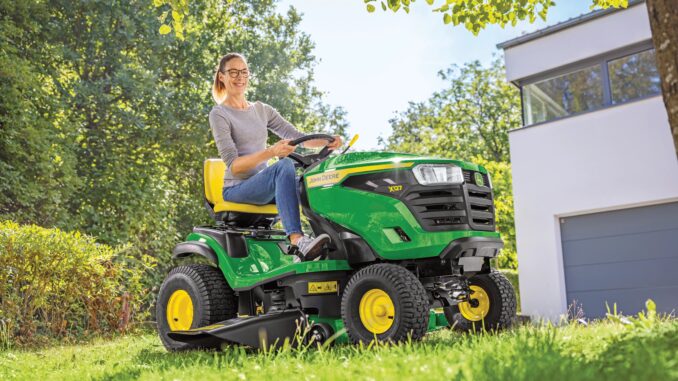
The John Deere 720 is an older garden tractor that owners still keep working because of its solid frame, shaft-drive layout, and straightforward service access compared with many lighter lawn tractors. Deere’s official operator information for the 720 family covers product identification, safety systems, engine service, transmission service, electrical service, troubleshooting, storage, and scheduled maintenance, which makes it a good foundation for an owner-focused repair guide.
For homeowners and DIY users in the USA and Canada, this guide is built around the problems you actually notice first: hard starting, weak cutting performance, vibration, charging trouble, and drive complaints. It also explains where to find John Deere 720 parts diagrams and manuals, what details you need before ordering parts, and which jobs are reasonable for DIY repair versus dealer or specialist work.
John Deere 720 model overview
The John Deere 720 sits in Deere’s older heavy-duty garden tractor class rather than the lighter lawn tractor category, and that matters because many repairs involve tractor-grade systems instead of simple consumer-grade assemblies. Owners typically use this model for mowing larger properties, pulling light ground-engaging attachments, and handling year-round utility work where durability matters more than modern convenience features.
What makes the John Deere 720 especially serviceable is that diagnosis usually breaks into a few predictable systems:
-
Engine and fuel system, including fuel delivery, air filtration, ignition, and cooling-related checks.
-
Mower or attachment drive system, including PTO-related operation and belt-driven deck components where fitted.
-
Transmission and final drive components, especially when the tractor loses pulling power or behaves abnormally under load.
-
Electrical and safety systems, including battery, switches, wiring, and starting circuit faults.
General overview of the John Deere 720 parts owners buy most often
John Deere owners usually start with wear items and service parts rather than major assemblies. Deere’s own parts support pages point owners toward blades, belts, filters, spark plugs, batteries, and maintenance items, while aftermarket vintage-tractor suppliers also list a wide range of John Deere 720 engine and drivetrain parts.
Common service and repair parts owners often search for include:
-
Air filter and pre-cleaner elements, when the engine runs rich, loses power, or starts hard.
-
Fuel filter and fuel line items, where fuel restriction or stale fuel causes poor running.
-
Spark plugs and ignition parts, especially when cranking is normal but the engine will not fire cleanly.
-
Battery, cables, and fuses, when the starter slows or the electrical system behaves erratically.
-
Mower blades, deck belt, spindle-related parts, and PTO-linked wear items on mowing setups.
-
Engine and internal service parts from Deere-focused or vintage suppliers when the tractor needs deeper overhaul work.
Because older John Deere 720 tractors may have been repaired, repowered, or fitted with different deck and attachment setups over time, the correct part often depends on the exact machine identification and installed equipment rather than the hood decal alone.
John Deere 720 troubleshooting approach
Diagnosis on the John Deere 720 should always begin with the symptom the owner sees, not with a random part swap. Deere’s manuals are organized around troubleshooting charts for engine, electrical, machine, mower, and steering systems, which matches the most practical DIY approach.
The main symptom groups for this tractor are:
-
Starting issues, such as no crank, slow crank, or cranks-but-won’t-start.
-
Running issues, such as rough operation, weak power, surging, smoke, or stalling.
-
Cut-quality problems, such as uneven mowing, uncut strips, clumping, or poor discharge.
-
Vibration and noise, especially after blade impact, belt wear, loose hardware, or spindle trouble.
-
Overheating and leaks, including blocked cooling surfaces, oil seepage, or fuel leaks.
-
Drive and transmission problems, where the tractor moves weakly, inconsistently, or not at all.
-
Electrical and safety-switch issues, including intermittent starting or PTO cut-out faults.
Emergency John Deere 720 repair needs
Some faults on the John Deere 720 need immediate attention because they create a safety risk or can damage expensive components quickly. Fuel leaks, severe vibration, hot-running problems, and any failure involving brakes, steering, PTO safety interlocks, or loose rotating parts should stop operation until corrected.
4.1 John Deere 720 starting issues
A starting fault may look minor at first, but repeated cranking can flatten the battery, overheat cables, and hide the real cause. On Deere equipment, the issue often sits in the battery, cables, switches, fuel delivery, ignition, or stale-fuel side of the system.
Common causes:
-
Weak or sulfated battery.
-
Dirty or loose battery terminals.
-
Faulty seat, brake, PTO, or start-circuit safety switch.
-
Bad spark plugs or ignition faults.
-
Fuel starvation, old fuel, or blocked filter.
Basic checks:
-
Confirm the PTO is off, brake is set, and the safety system is in a valid start condition.
-
Inspect battery terminals for corrosion and cable looseness.
-
Check fuel condition and confirm fuel reaches the carburetion system.
-
Remove and inspect the spark plugs for fouling, heavy carbon, or obvious failure.
-
If cranking remains weak, test battery condition and starter-circuit voltage drop before buying parts.
4.2 John Deere 720 cut-quality problems
When the mower leaves streaks, clumps, or an uneven finish, the visible symptom is usually the result of deck condition, blade wear, belt slip, or buildup under the deck rather than an engine problem. Deere specifically points owners toward blade service, deck cleaning, and tire-pressure checks as part of cut-quality maintenance.
Common causes:
-
Dull, bent, or unbalanced blades.
-
Deck packed with grass or debris.
-
Incorrect tire pressure affecting deck pitch and height.
-
Worn or slipping mower belt.
-
Damaged spindle or loose deck hardware.
Basic checks:
-
Clean the underside of the deck thoroughly before further diagnosis.
-
Inspect blade edges and compare both blades for damage or bend.
-
Check tire pressures and deck height settings.
-
Inspect the deck belt for glazing, cracks, or slack.
-
Spin spindle assemblies by hand with the deck safely secured and the engine disabled, listening for roughness.
4.3 Vibration and noise on the John Deere 720
A new vibration should never be ignored because it can quickly damage deck bearings, engine mounts, PTO components, or fasteners. The most common causes are blade damage, loose hardware, worn bearings, and belt or pulley problems.
Common causes:
-
Bent blade after striking an object.
-
Blade not balanced after sharpening.
-
Loose deck, engine, or wheel hardware.
-
Worn spindle bearings or idler pulleys.
-
Belt damage or pulley misalignment.
Basic checks:
-
Stop the tractor immediately and inspect blades before running again.
-
Check visible hardware around the deck, wheels, and engine mounting points.
-
Inspect belts and pulleys for fraying, wobble, or rubber dust.
-
Rotate deck pulleys and spindles manually to feel for rough bearings.
-
Do not continue mowing until the vibration source is identified.
4.4 John Deere 720 overheating and leaks
Heat and leaks often start as maintenance issues but can turn into major engine damage if ignored. Deere’s service information specifically calls for attention to engine oil, cooling-system service, radiator screen and fin cleaning, hose condition, and fuel handling safety.
Common causes:
-
Low engine oil level.
-
Dirty air intake or blocked cooling surfaces.
-
Radiator screen or fins packed with debris.
-
Failing hose, clamp, or gasket.
-
Fuel seepage from old lines or loose connections.
Basic checks:
-
Check engine oil before further running.
-
Clean the air intake screen and cooling surfaces.
-
Inspect radiator screen, fins, hoses, and clamps where fitted on the tractor family covered by Deere’s manual.
-
Look underneath after parking for fresh oil or fuel drips.
-
Repair leaks before returning the tractor to service.
4.5 John Deere 720 transmission and drive problems
A drive complaint matters because running a weak or contaminated transmission can turn a manageable service job into an expensive rebuild. Deere’s operator information includes transaxle oil checks and transmission service intervals, which should be the first reference point.
Common causes:
-
Low or old transmission fluid.
-
Restricted or overdue transmission filter service.
-
Linkage adjustment issues.
-
Drive-belt or PTO-related engagement problems on equipped systems.
-
Internal wear beyond normal DIY repair.
Basic checks:
-
Confirm the machine is not inadvertently in free-wheel or bypass mode if so equipped.
-
Check transmission fluid level and service history.
-
Inspect linkages and external movement points for binding or looseness.
-
Review whether the problem appears only when hot, under load, or in one direction.
-
Escalate to dealer or hydraulic specialist work if external checks do not explain the symptom.
4.6 Electrical problems on the John Deere 720
Electrical faults often show up as intermittent problems, which is why owners misdiagnose them. Deere’s service sections cover battery service, cable cleaning, fuse replacement, switch testing, and lighting faults, all of which should be checked before replacing major components.
Common causes:
-
Corroded battery posts or poor ground connection.
-
Blown fuse.
-
Weak battery.
-
Faulty safety switch.
-
Damaged wiring in high-vibration or rubbed-through areas.
Basic checks:
-
Clean and tighten battery terminals first.
-
Inspect and replace blown fuses only with the correct rating.
-
Test seat, brake, and PTO safety-switch function according to the operator procedures.
-
Check for rubbed, pinched, or heat-damaged wiring.
-
If charging remains poor, test the battery and charging circuit before fitting electrical parts blindly.
DIY or dealer for John Deere 720 repairs
The John Deere 720 is friendly to capable owners for routine maintenance and many straightforward repairs, but the line is crossed once diagnosis requires internal engine work, hydrostatic or transmission teardown, precision electrical testing, or repairs where safety systems must be set and verified correctly.
Good DIY jobs
-
Engine oil and filter service.
-
Air filter and spark plug replacement.
-
Battery cleaning or replacement.
-
Blade removal, sharpening, balancing, and refitting.
-
Deck cleaning, belt inspection, and basic belt replacement where access is clear.
-
Fuel filter replacement and routine fuel-system cleanup.
Advanced DIY or dealer jobs
-
Carburetor overhaul or fuel-system diagnosis beyond a filter change.
-
Charging-system testing and wiring repair.
-
Transmission oil and filter service if the owner lacks proper tools or clean working conditions.
-
Steering, brake, or axle repair.
-
Internal engine repair, head work, crankshaft work, or full overhaul.
Skill level guide
-
Beginner: battery care, air filter, spark plugs, deck cleaning, blade inspection.
-
Intermediate: oil service, fuel filter replacement, blade replacement, belt replacement, switch testing.
-
Advanced: electrical diagnosis with a meter, carburetion work, transmission service, steering repair, internal engine work.
John Deere 720 parts needed, OEM vs aftermarket, and the information required
Before ordering John Deere 720 parts, gather the exact model designation, tractor identification number, engine identification details, and any deck or attachment model information. Deere’s own parts support explains that the model number is shown on the identification tag, the serial number appears on that tag, and the engine number is located directly on the engine itself.
That matters because an older John Deere 720 may have attachment changes, running production differences, or engine-specific service parts that cannot be identified correctly by a casual description alone.
OEM parts are usually the safest choice for belts, safety switches, wiring-related components, and any fit-sensitive item where length, connector style, or engagement geometry matters. Aftermarket parts are often acceptable for batteries, some filters, and some blades, but only when the supplier provides a clear cross-reference to the exact John Deere 720 setup or engine specification.
John Deere 720 parts diagrams and manuals
There are four especially useful sources when looking up John Deere 720 parts diagrams and manuals or the closest official support material:
-
John Deere operator/manual pages, useful for maintenance schedules, safety-system checks, service intervals, and identification procedures.
-
John Deere lawn mower parts support, useful for general Deere parts lookup, maintenance sheets, repair guidance, and identification-tag examples.
-
Deere-focused parts diagram retailers such as Weingartz, useful for exploded views and category-based navigation through systems like electrical, engine, fuel and air, and hydraulics on Deere tractors.
-
Deere-focused aftermarket or specialty suppliers, useful when an older machine needs broader replacement-part availability or vintage components.
Useful links:
-
John Deere operator information for service intervals, lubrication points, troubleshooting sections, and identification guidance.
-
John Deere lawn mower parts support for model-tag help, common maintenance items, and DIY maintenance guidance.
-
Weingartz Deere parts diagrams as an example of exploded Deere diagram navigation by system.
-
Green Farm Parts Deere model pages as a Deere-focused parts source showing how model-specific catalog pages are organized.
How to locate John Deere 720 model, serial, and engine numbers
These identification numbers matter because they determine the correct parts breakdown, service procedures, and engine-specific consumables. Deere states that the machine model and serial details are on the identification tag, while the engine number is found on the engine itself.
-
Park the tractor safely, switch it off, and let hot components cool.
-
Find the tractor identification tag and record the full model and serial or PIN information exactly as shown.
-
Record the mower deck or attachment model from its own tag if the tractor has one installed.
-
Locate the engine identification label or stamped engine spec number directly on the engine.
-
Photograph all tags before ordering parts so you can compare listings without transcription errors.
Buying John Deere 720 parts online and in stores
The best buying strategy is to confirm the OEM number first, then compare equivalent listings only after you know the exact part reference. That reduces returns and helps avoid the common mistake of ordering by tractor name when the real fit depends on the engine or deck.
-
Online: best for price comparison and diagram-based shopping, but verify model/PIN fitment and watch for deck-specific or engine-specific variations.
-
Dealer counter: best for serial-sensitive parts, safety-switch issues, and confusing supersessions where one older number has been replaced by another.
-
Retail stores: acceptable for generic service items such as some spark plugs, batteries, and basic filters only when the packaging clearly cross-references the machine or engine.
Useful sources:
Step-by-step fitting guide for common John Deere 720 parts
Replace the air filter on a John Deere 720
This job helps when the engine runs rich, smokes, or loses power because restricted intake airflow forces the engine to work harder.
-
Park safely, remove the key, and let the engine cool.
-
Open the air-cleaner housing and remove the outer element and pre-cleaner.
-
Wipe dust from the housing without pushing debris into the intake.
-
Fit the new pre-cleaner and air element in the correct order and orientation.
-
Close the housing securely and check that the seal is even all the way around.
Replace the spark plugs on the John Deere 720
Fresh plugs can improve hard starting, rough idle, and weak running when the old plugs are fouled, oil-soaked, or worn.
-
Let the engine cool completely and disconnect the plug leads.
-
Remove each spark plug carefully to avoid thread damage.
-
Compare the removed plug condition to the engine symptom, such as carbon fouling or oil deposits.
-
Install the correct new plugs for the engine specification and tighten properly.
-
Refit the leads firmly and test start the engine.
Fit mower blades on the John Deere 720 deck
Blade replacement or sharpening restores cut quality and reduces vibration when the old edges are rounded or damaged.
-
Disable the tractor safely and secure the deck for access.
-
Remove the blade hardware and note blade orientation before disassembly.
-
Inspect each blade for bend, cracks, and balance problems.
-
Install sharpened balanced blades or new blades matched to the deck model.
-
Tighten hardware correctly and run the deck briefly to confirm smooth operation.
Replace the mower belt on the John Deere 720
A new belt can fix slipping, weak blade speed, squealing, or poor mowing output when the existing belt is glazed or stretched.
-
Confirm the exact deck model and belt routing before removal.
-
Lower and secure the deck, then release belt tension safely.
-
Remove the old belt and inspect idlers and pulleys for wear or wobble.
-
Route the new belt exactly as shown in the deck diagram for that setup.
-
Reapply tension, rotate the system by hand, and test at low speed first.
Maintenance to prevent John Deere 720 problems returning
Regular maintenance prevents many John Deere 720 failures because most owner complaints begin with neglected wear items, dirt buildup, stale fuel, or overdue fluid service rather than sudden catastrophic breakage. Deere’s operator information includes daily checks, first-service intervals, periodic lubrication, engine service, transmission service, cooling-system attention, electrical care, and storage preparation.
Focus areas:
-
Starting reliability: maintain the battery, clean terminals, inspect safety-switch function, and keep fuel fresh.
-
Cut quality: sharpen and balance blades, clean the deck underside, and inspect belts routinely.
-
Fire and overheating prevention: clear dry debris from cooling areas and repair fuel leaks immediately.
-
Drive performance: monitor transmission oil level and service intervals instead of waiting for weak motion symptoms.
-
Electrical reliability: replace damaged wiring, protect connections, and keep the battery secure and clean.
John Deere 720 maintenance schedule and year-round checklist
Deere’s published operator material for this tractor family includes a structured schedule with tasks after the first 8 hours, after the first 50 hours, every 100 hours or annually, every 200 hours or annually, every 200 hours, every 300 hours, and every 400 hours or 24 months. The exact task list should always be checked against the correct manual and engine version for the specific machine.
Daily / before each use
-
Check engine oil level.
-
Inspect the machine for loose hardware, leaks, and obvious damage.
-
Test that key safety functions and controls operate normally before mowing.
-
Check the mowing area and clear debris that could damage blades or be thrown.
-
Clean heavy debris from cooling and intake areas.
After first 8 hours
-
Complete the initial service items listed in Deere’s operator schedule for the tractor family.
-
Recheck machine condition after the first work period, especially fasteners and operating feel.
-
Note any early leaks, belt settling, or unusual noises before they turn into bigger faults.
Every 25 hours
-
Clean the deck and undercarriage more thoroughly if the tractor is used in heavy grass or dirty conditions, even where the official chart emphasizes inspection rather than replacement.
-
Inspect blades, belts, and visible pulleys for wear if the machine is mowing regularly through the season.
-
Check battery cleanliness and cable condition during active season use.
Every 50 hours or yearly
-
Perform the oil and filter service appropriate to the engine and exact Deere 720 setup.
-
Inspect or replace spark plugs and air-filter components as condition requires.
-
Review overall mower and drive-system wear before peak season work.
Every 100 hours or annually
-
Follow Deere’s 100-hour or annual service items from the operator schedule.
-
Service air-cleaner components and other routine wear items as specified.
-
Inspect fuel, electrical, and cooling-related service points carefully before another season.
Every 200 hours or similar
-
Follow Deere’s 200-hour or annual service items, including drivetrain-related checks where listed.
-
Check transmission service history and perform fluid or filter work if due.
-
Inspect steering and axle-related service points for wear or lubrication needs.
Seasonal checklist
-
Spring: install sharpened balanced blades, check battery condition, inspect belts, and confirm all controls work before first mowing.
-
Mid-season: clean the deck often, recheck tire pressures, watch for belt wear, and keep cooling surfaces clear.
-
Fall / storage prep: clean the tractor thoroughly, prepare the fuel and engine for storage, and follow Deere’s storage procedures before parking long term.
Repair, upgrade, or replace the John Deere 720?
For many owners, repairing a John Deere 720 still makes sense when the core tractor is structurally sound and the problem is limited to normal wear parts, tune-up work, deck service, or isolated electrical faults. Replacement becomes more logical when the machine needs repeated major engine, transmission, and attachment work at the same time, or when parts chasing and downtime outweigh the tractor’s working value.
Repair if…
-
The engine is fundamentally sound and compression-related issues are not severe.
-
The problem is limited to maintenance parts, deck wear items, battery, switches, or fuel-delivery service.
-
The frame, steering, and driveline are still solid.
Upgrade if…
-
You need a newer deck, different attachment setup, or improved parts availability without abandoning the Deere platform.
-
The tractor works well but your mowing width or property demands have changed.
-
You want easier ongoing parts sourcing through better-supported compatible equipment choices.
Replace if…
-
The tractor needs major engine work and major drivetrain work together.
-
Safety-critical systems are worn across multiple areas and restoration cost keeps climbing.
-
You cannot source the exact deck, engine, or attachment-specific parts needed to keep the machine practical.
John Deere 720 troubleshooting FAQ
1. Why will my John Deere 720 not start?
Most no-start complaints come down to battery condition, cable corrosion, safety-switch position, stale fuel, or lack of spark. Start by confirming the PTO is off, the brake is set, and the battery terminals are clean and tight. Then check fuel condition and inspect the spark plugs before assuming a major failure. Deere’s troubleshooting structure separates engine and electrical faults for exactly this reason.
2. Why does my John Deere 720 crank slowly?
Slow cranking usually points to a weak battery, dirty cable connections, poor ground, or starter-circuit voltage loss. Cold weather and long storage periods make the problem worse. Clean the terminals first, charge and test the battery, and only then move toward starter testing. Many tractors get replacement starters when the real issue is cable resistance.
3. Why does the John Deere 720 crank but not fire?
If it cranks normally but does not fire, think fuel and spark before anything else. Old fuel, a blocked filter, fouled plugs, or an ignition problem are common starting points. Pull the plugs, inspect them, and verify that fresh fuel is reaching the engine. Avoid repeated long cranking sessions because they can mask the original fault and drain the battery.
4. Why does my John Deere 720 start and then die?
This often happens when fuel delivery is restricted or when the engine is barely running on a marginal ignition setup. A partially blocked fuel filter, contamination in the fuel path, or air-intake restriction can all create this symptom. Check for steady fuel flow, inspect the air filter, and look at plug condition before moving deeper.
5. Why is my John Deere 720 running rough?
Rough running usually means the engine is not getting the right fuel-air-spark combination. Dirty air filters, fouled plugs, stale fuel, or carburetion issues are all likely causes. Start with the simple service items because they are faster, cheaper, and far more common than internal engine trouble. If the roughness remains after routine service, further diagnosis is justified.
6. Why does the John Deere 720 lose power under load?
Loss of power under load often shows up in tall grass or when pulling an attachment. Restricted air flow, weak ignition, poor fuel delivery, dirty cooling areas, or deck drag can all contribute. Clean the intake and deck, inspect the belt and blades, and make sure the engine is not overheating while working. A tractor that idles fine but bogs under load often has a service-related cause.
7. Why is my John Deere 720 blowing black smoke?
Black smoke usually means the engine is running too rich. Check the air filter first because a badly restricted filter can immediately change mixture behavior. Also inspect choke operation and fuel-system condition. Do not keep mowing heavily while it is smoking because that can foul plugs and worsen power loss.
8. Why does my John Deere 720 overheat?
Overheating is often caused by blocked cooling screens, dirty fins, low oil, or a cooling-system service issue on tractors equipped accordingly. Debris buildup is especially common during mowing season. Clean the cooling areas completely and inspect hoses and clamps where applicable. Continued operation while hot risks much more expensive engine damage.
9. Why is the John Deere 720 leaking fuel?
Fuel leaks often come from aged lines, loose clamps, or disturbed fittings after service. Even a small seep matters because fuel around a hot engine creates a fire risk. Stop using the tractor until the source is identified and repaired. Deere’s safety guidance puts fuel handling and fire prevention high on the service priority list.
10. Why is my John Deere 720 leaking oil?
Oil leaks may come from gaskets, seals, filters, or service points that were not tightened correctly. Clean the area first so you can tell whether the leak is active or just old residue. Then recheck after a short run. Small leaks can become serious if they lower the oil level enough to affect lubrication.
11. Why does the John Deere 720 cut unevenly?
Uneven cutting usually comes from dull blades, deck buildup, incorrect tire pressure, or deck-level issues. Start with the simple external causes because they are the most common. Clean the deck, sharpen or replace the blades, and check tire pressures before adjusting anything more involved. Poor cut quality rarely improves until the deck is physically clean and the blades are right.
12. Why does my John Deere 720 leave strips of uncut grass?
Uncut strips usually point to dull blades, low blade tip speed, or deck airflow problems from caked grass. A worn deck belt can also reduce cutting performance even when the engine sounds normal. Inspect the blades and belt together because owners often fix one and miss the other. Heavy wet grass can exaggerate the problem even on a healthy deck.
13. Why is the John Deere 720 clumping grass?
Clumping often happens when the underside of the deck is dirty or the grass is too wet or too tall for the mowing speed. Blade condition also matters because dull blades tear instead of cutting cleanly. Slow down, clean the deck, and mow more frequently if growth is heavy. Mechanical problems should be considered only after mowing conditions are ruled out.
14. Why are my John Deere 720 blades dull so quickly?
Fast blade wear usually means the tractor is hitting abrasive soil, stones, hidden roots, or debris in the mowing area. Blade quality and sharpening technique also matter. Deere recommends attention to mowing area inspection and blade maintenance because impact damage can affect both cut quality and vibration. A blade that keeps losing edge may need replacement rather than another sharpening pass.
15. Why does the John Deere 720 vibrate when the mower is engaged?
If vibration appears mainly with the deck engaged, suspect blades, spindle bearings, pulleys, or the deck belt system first. A bent blade from impact is one of the fastest ways to create sudden vibration. Stop mowing and inspect before more damage spreads to deck bearings or brackets. Ignoring vibration is how a simple blade problem turns into a spindle repair.
16. Why is my John Deere 720 vibrating all the time?
Constant vibration, even with the deck disengaged, suggests the source may be outside the deck itself. Loose engine mounts, drivetrain components, wheel issues, or engine imbalance become more likely. Check what changes when engine speed changes and what changes when PTO load is added. That symptom-first method narrows the fault much faster than replacing random parts.
17. Why does the John Deere 720 make a squealing noise?
Squealing often comes from a slipping belt, dry pulley bearing, or tension issue. The sound may appear only at startup, during engagement, or in heavy grass. Inspect belt condition for glazing or cracking and spin pulleys by hand with the machine safely disabled. A noisy belt path often gives warning before complete failure.
18. Why did my John Deere 720 throw a belt?
A belt usually comes off because it is worn, stretched, misrouted, or running on damaged pulleys or weak tension components. Belt routing errors after previous service are also common. Compare the routing to the correct diagram and inspect pulleys for wobble. Simply reinstalling the old belt rarely solves the real problem for long.
19. Why does my John Deere 720 deck belt keep breaking?
Repeated belt failure usually means there is another problem in the system. Common causes include pulley misalignment, seized bearings, belt guide damage, incorrect belt fit, or debris packed into the deck path. Check every pulley before fitting another belt. OEM belts are often worth the extra cost when fit and tracking matter.
20. Why does the PTO on my John Deere 720 not engage properly?
A PTO complaint may be electrical, mechanical, or adjustment-related depending on the setup. Safety-switch logic, wiring faults, worn linkage, or belt-path drag can all contribute. Start with switch and wiring checks if the PTO does nothing at all. If it engages poorly under load, inspect the driven system for belt and bearing issues as well.
21. Why is my John Deere 720 battery not charging?
Poor charging can be caused by a weak battery, dirty connections, damaged wiring, or a charging-system component failure. Battery condition should be tested first because a bad battery can mimic charging trouble. Clean all main connections and inspect for rubbed wiring before replacing electrical parts. Intermittent charging often points to connection issues rather than a major component.
22. Why does the John Deere 720 keep blowing fuses?
A fuse that fails repeatedly usually means there is a short, rubbed wire, incorrect replacement fuse, or a component drawing too much current. Never solve this by fitting a higher-rated fuse. Inspect the circuit for pinched insulation and recent repair history. Fuse failure is a symptom, not the fault itself.
23. Why will my John Deere 720 only start sometimes?
Intermittent starting usually points to safety switches, key-switch wear, marginal battery connections, or inconsistent grounding. Because the problem comes and goes, owners often replace the wrong part. The best approach is to check the exact start conditions when it fails and verify the switch chain systematically. Deere includes switch-testing procedures because intermittent faults are so common.
24. Why does my John Deere 720 shut off when I leave the seat?
That behavior is usually part of the normal safety interlock logic rather than a defect. However, if it shuts off unexpectedly while you remain seated, the seat switch or its wiring may be faulty. Test the seat-switch function according to the operator procedure before replacing anything. Safety circuits should be repaired properly, not bypassed.
25. Why is my John Deere 720 steering hard or loose?
Steering complaints often come from wear, poor lubrication, or looseness in the steering linkage or front axle points. Deere’s service information includes steering-related troubleshooting and lubrication items on supported models in the family. Check for dry pivots, worn joints, and hardware looseness first. Continuing to use a loose steering system can turn a minor repair into a larger one.
26. Why does my John Deere 720 not move or barely move?
If the engine runs but the tractor barely moves, start with the simplest possibilities. Check for free-wheel or bypass position if equipped, verify transmission fluid condition, and inspect linkages. If the symptom worsens when hot or under load, internal transmission wear becomes more likely. External checks should always come first because they are faster and cheaper.
27. Why does the John Deere 720 lose drive when hot?
A tractor that moves acceptably cold but weakens as it warms up often suggests hydraulic or transmission wear, contaminated fluid, or service overdue on related components. Heat can expose internal leakage or marginal performance. Review fluid condition and service history before assuming a total failure. This is usually where dealer-level diagnosis becomes sensible.
28. Why does my John Deere 720 use more fuel than normal?
Higher fuel use often comes with rich running, dirty air filters, choke problems, or mowing conditions that overload the deck. Check the air filter and confirm the tractor is not laboring against a dirty deck or dull blades. Fuel economy changes are often accompanied by smoke, roughness, or reduced power. Fixing the underlying running issue usually restores normal consumption.
29. Why does my John Deere 720 backfire?
Backfiring may be linked to fuel mixture problems, ignition issues, stale fuel, or shutdown behavior. Start by inspecting spark plugs and confirming clean fuel. Also check whether the engine has been running rich or irregularly before shutdown. Because several systems can produce the same symptom, random parts replacement is rarely efficient.
30. How often should I service a John Deere 720?
The right answer depends on the exact machine setup and manual, but Deere’s published schedule for the tractor family includes daily checks, initial break-in service points, annual or 100-hour service items, 200-hour service items, 300-hour items, and 400-hour or 24-month items. For practical homeowner use, oil, filters, blades, battery condition, deck cleaning, and seasonal storage prep should never be left until the tractor starts acting up. Scheduled maintenance is much cheaper than symptom-led repair.
31. What maintenance matters most for John Deere 720 starting reliability?
Battery care, clean cable connections, fresh fuel, and healthy spark plugs do the most to prevent no-start complaints. Owners often focus on major components when the real fix is basic preventive service. Checking oil and keeping the air and fuel systems clean also supports easier starting. Starting reliability usually reflects overall routine maintenance quality.
32. What maintenance matters most for John Deere 720 cut quality?
Sharp balanced blades, a clean deck underside, correct tire pressure, and a healthy deck belt have the biggest effect on cut quality. These are all routine service items that owners can monitor visually. Poor mowing results are often blamed on engine power when the deck is the real issue. Regular deck cleanup makes a bigger difference than many owners expect.
33. Should I buy OEM or aftermarket John Deere 720 parts?
OEM is usually the safer route for belts, safety switches, and fit-sensitive parts where dimensions and function matter exactly. Aftermarket can be acceptable for some batteries, filters, and blades when the supplier clearly cross-references the part to the right machine or engine. The key is to verify numbers before buying rather than choosing on price alone. On an older tractor, the wrong part can cost more time than it saves money.
34. Where can I find John Deere 720 parts diagrams?
Start with Deere-related parts support and diagram-based retailers. Deere’s own parts support helps with model identification and common maintenance parts, while Deere-focused diagram sites show system-by-system exploded views that are helpful for belts, engine items, electrical parts, and other assemblies. The exact best source depends on whether you need official maintenance guidance or a visual parts breakdown. Using both together usually works best.
35. Where can I find a John Deere 720 manual?
John Deere operator information is the best starting point because it covers safety, operation, service intervals, lubrication, troubleshooting, and storage procedures. Technical or repair manuals may also be available through Deere technical publications or specialist manual sellers for broader service coverage. Always match the manual to the exact model and equipment setup before relying on it. That matters far more on older machines than many owners realize.