
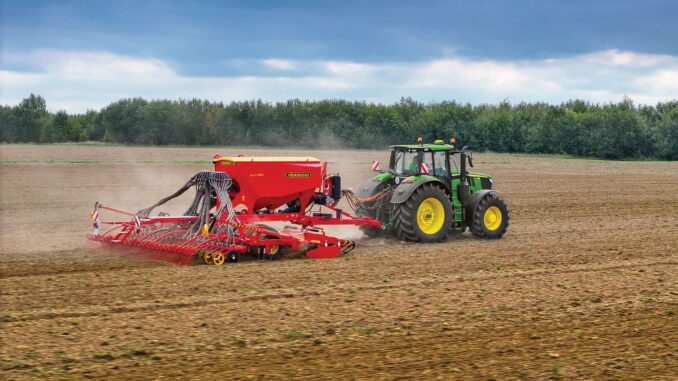
John Deere 3E Series Compact Tractor Models and Maintenance Guide
The John Deere 3E Series is an entry-level compact utility tractor range designed for acreage owners, small farms, estates, equestrian properties, landscaping work, and contractors who need more lifting, PTO capability, and implement capacity than a sub-compact tractor can provide. The three-model North American range spans roughly 25 to 37 horsepower and is built around simple open-station operation, standard four-wheel drive, hydrostatic drive, and a Category 1 three-point hitch.deere
This page is a working directory for the John Deere 3E Series, bringing together model-specific reference material, maintenance planning, common fault diagnosis, attachment selection, and ownership guidance. Use it as the starting point before moving to an individual 3025E maintenance & troubleshooting guide, 3032E problems and fixes overview, or 3038E buyer’s guide. For broader comparisons across Deere’s compact range, see the conceptual General John Deere Compact Tractor Guide.
About the John Deere 3E Series Compact Tractor Series
The John Deere 3E Series occupies the value-oriented end of Deere’s 3 Series compact tractor family. In the current North American line-up, it includes the 3025E, 3032E, and 3038E. These tractors provide approximately 24.7, 31.2, and 37.3 gross engine horsepower respectively, making them suitable for owners who have outgrown a 1 Series or 2 Series tractor but do not necessarily need the extra electronics, cab options, hydraulic refinement, and premium operating features found in the 3R Series.deere
All three are open-station compact utility tractors with standard four-wheel drive, two-range hydrostatic transmission, Twin Touch foot pedals, and Category 1 three-point hitch capability. Deere positions the range for practical tasks including loader work, digging, tilling, brush cutting, mowing, snow removal, material handling, and general property upkeep. The open-platform design keeps the tractors comparatively straightforward: there is no enclosed cab version in the core North American 3E range, and the emphasis is on accessible controls, simple daily checks, and broad implement compatibility.deere
In practical terms, the 3025E suits owners of smaller acreages who need a capable loader tractor, mower tractor, snow machine, or light-ground-engagement machine without moving into a large-frame compact. The 3032E adds useful PTO and engine power for heavier mowing, rotary cutting, tillage, and frequent loader work. The 3038E is the largest current 3E option and is generally the better match for more demanding brush cutting, heavier three-point implements, longer driveways, frequent material handling, or a property where slopes and larger workloads make extra power worthwhile.
The 3E tractors should be viewed as conventional compact utility machines rather than premium feature-heavy tractors. They use hydrostatic drive rather than a manual gear transmission, are four-wheel-drive machines, and focus on familiar mechanical systems. Features often associated with Deere’s higher-tier compact tractors—such as more advanced electronic driveline-management functions, premium operator controls, cab availability, and higher-spec hydraulic systems—are more closely associated with the 3R and 4R families rather than the basic 3E range.
Typical 3E Series equipment combinations include:
-
Front-end loaders for soil, mulch, gravel, feed, firewood, pallet forks, and general estate work.
-
Mid-mount mower decks where the tractor configuration and local attachment offering support them.
-
Rotary cutters for pasture edges, rough grass, paddocks, tracks, and light brush.
-
Rear finish mowers for larger lawns, orchards, parks, and estate grass.
-
Box blades, landscape rakes, rear blades, cultivators, and grading equipment.
-
Post-hole diggers, spreaders, sprayers, seeders, and light tillage equipment.
-
Snow blades, snow blowers, ballast boxes, tire chains, and rear counterweights for winter work.
John Deere’s own current 3 Series comparison identifies the 3E tractors as open-station, four-wheel-drive compact tractors using a two-range hydrostatic transmission and Category 1 three-point hitch.deere
John Deere 3E Series Compact Tractor Models
The North American 3E identity is closely tied to the 3025E, 3032E, and 3038E. Deere’s current US 3 Series product information lists those three models, while North American operator manuals and service documents confirm the same model family. Model-year changes, serial-number breaks, emissions updates, attachment revisions, and parts supersessions can matter when servicing a particular tractor, so always identify the tractor by its full model and serial number before ordering parts or relying on a service interval chart.manuals.deere+2
And See:
The 3025E is the lower-horsepower entry point in the present 3E group, with Deere listing approximately 19.4 PTO horsepower. The 3032E is listed at approximately 25 PTO horsepower, while the 3038E is listed at approximately 30 PTO horsepower. All three are listed as four-wheel-drive tractors with two-range hydrostatic transmission and a Category 1 three-point hitch.deere
For service purposes, do not assume every component is identical across all three tractors. Deere’s 3E service reference material shows differences in some filters and cooling-system capacities between models, particularly between the 3038E and the smaller tractors. It also identifies serial-number-dependent filter variations on the 3032E and 3038E.deere+1
3E Series Compact Tractor Maintenance Guides
A 3E Series tractor earns its reputation through routine servicing rather than occasional repair. The owner who keeps the cooling pack clean, uses clean diesel, checks hydraulic oil, greases the loader correctly, and deals with small leaks or loose linkage before they become major problems will usually have a more reliable machine and lower running costs.
The best approach is to use this series hub for broad maintenance topics, then route to the exact tractor guide for model-specific capacities, part numbers, serial-number breaks, and procedures.
Routine Service and Checks
Daily and regular-use checks should include engine-oil level, coolant level when cold, fuel quantity and water contamination, hydraulic/transmission oil level, front-axle oil condition, tyre condition, wheel hardware, loader pins, grease points, and the condition of the radiator screen and cooling pack. On a compact tractor used for mowing, brush cutting, dusty loader work, or dry summer field work, air-intake and cooling-system inspection can be just as important as oil changes.
Deere’s published 3E service overview specifies an initial engine-oil and filter replacement after the first 50 hours, followed by a 400-hour interval for the referenced oil filter schedule. It also gives recurring annual-or-400-hour replacement guidance for certain fuel-system filters and water-separator components, depending on model and serial number. These figures are useful planning references, but the operator’s manual for the tractor’s serial-number range should remain the controlling source.deere+1
A practical 3E maintenance schedule should include the following work:
-
Check engine oil, coolant, hydraulic oil, fuel condition, tyres, loader hardware, and visible leaks before work.
-
Grease loader pivots, steering joints, three-point hitch pivots, driveline points, and other scheduled fittings at the required interval.
-
Clean the grille screen, radiator area, oil cooler area, and air-intake system more frequently in dusty grass, hay, or brush-cutting conditions.
-
Change engine oil and replace the engine-oil filter according to the tractor’s service schedule and operating conditions.
-
Inspect and service primary and secondary air filters without over-cleaning or damaging the filter media.
-
Drain water from the fuel/water separator where fitted and replace fuel filters on schedule.
-
Inspect belts, hoses, battery terminals, wiring, and safety-switch connectors before seasonal heavy use.
-
Change transmission/hydraulic and front-axle lubricants at the stated interval using the specified fluid type and capacity for the individual tractor.
For the current 3025E, 3032E, and 3038E group, Deere’s reference document lists approximately 7.5 gallons of fuel capacity, 5.5 gallons for the transmission/hydraulic system, and 1 gallon for the front axle. It lists crankcase capacity with filter at approximately 1.1 to 1.12 gallons, while cooling-system capacity varies slightly between the 3025E/3032E and 3038E. Confirm exact capacities against the appropriate manual before filling, particularly if the tractor has an unusual configuration or if it has been partially drained during a repair.deere+1
Useful supporting internal links for a maintenance content hub include:
-
3E Series compact tractor service interval checklist.
-
DIY maintenance for 3E Series compact tractors.
-
3025E fluids, filters, and service specifications.
-
3032E maintenance schedule and common service parts.
-
3038E maintenance schedule and filter reference.
-
John Deere compact tractor grease-point inspection guide.
Hydraulics, Loader, and 3-Point Hitch
The hydraulic system does far more than raise the loader. It supplies steering assistance, loader movement, three-point hitch operation, and—in some setups—rear remote functions or hydraulic attachments. Slow response, noise, foamy fluid, weak lift, erratic movement, or a loader that will not hold position can result from something as simple as low fluid, a restricted filter, air entering the system, cold oil, an incorrectly connected quick coupler, or an overloaded attachment.
For routine care, inspect loader cylinders and hoses for oil seepage, damaged protective sleeves, rubbed hose sections, loose fittings, bent quick couplers, and cracked weld areas. Grease loader pivot pins on schedule, particularly if the tractor sees frequent bucket, pallet-fork, or manure-handling work. Grease should displace moisture and dirt, but excessive grease can attract abrasive debris around pins and bushings, so wipe away surplus.
The three-point hitch deserves the same attention. Check lift-arm balls, stabilisers, sway links, top link, draft-related linkage where fitted, hitch pins, retaining clips, and the lower-link telescoping sections if equipped. Loose or worn hitch hardware can make an implement unstable, difficult to level, or capable of damaging tyres, fenders, PTO shields, and hydraulic lines.
Useful conceptual internal links include Hydraulic maintenance and leak diagnosis on 3E Series tractors, Loader and 3-point hitch maintenance for 3E Series, and Front-loader grease points, pivot wear, and cylinder inspection.
Transmission and Drivetrain
The 3E Series uses a hydrostatic transmission with Twin Touch pedals, so tractor travel performance depends on correct engine speed, clean hydraulic oil, proper linkage condition, adequate fluid level, and sensible use of the selected range. Deere lists a two-range hydrostatic transmission across the 3025E, 3032E, and 3038E.deere
Owners should avoid treating range selection as a substitute for throttle control. Low range is normally the correct choice for heavy loader work, pulling, climbing, digging, snow pushing, or operating in conditions where maximum wheel torque is needed. High range is intended for lighter transport work on suitable surfaces. Trying to pull a heavy implement uphill in high range can produce poor performance, excessive hydrostatic load, heat, and the impression that the tractor lacks power.
Routine drivetrain attention should cover:
-
Front-axle oil level and condition.
-
Front-drive engagement and disengagement.
-
Propeller shaft and driveline guards where accessible.
-
Front-axle seals, steering knuckles, and wheel-end leakage.
-
Rear-wheel hardware, tyre pressures, and ballast.
-
Brake adjustment and parking-brake operation.
-
HST pedal return and neutral-start behaviour.
-
PTO shaft shielding, driveline lubrication, and implement overrunning-clutch condition where used.
A useful supporting post is Transmission and driveline maintenance across 3E Series compact tractors. Model-level pages should then cover exact oil specifications, fill points, drain plugs, linkage adjustment, and serial-number-dependent parts.
3E Series Compact Tractor Troubleshooting Guides
A good troubleshooting system begins with symptoms, not guesswork. A 3E owner searching for “tractor will not start,” “loader is slow,” or “PTO stops under load” needs a diagnostic route that starts with the simple, high-probability checks before moving toward components, electrical testing, hydraulic pressure testing, or dealer-level repair.
This hub should route readers to both general 3E symptom guides and model-specific content. A 3025E and 3038E may share broad operating principles, but their engine, emission-system details, parts, wiring revisions, and attachment configuration can differ.
Starting, Engine, and Fuel Problems
A no-start complaint on a 3E tractor should be divided into two questions: does the engine crank, and does it fire? If it does not crank, begin with battery condition, cable cleanliness, battery-ground connection, fuses, ignition switch function, PTO disengagement, range/neutral position, seat switch, brake or clutch-related safety interlocks where applicable, and starter-circuit connections.
If the engine cranks but will not start, move to fuel quality, fuel level, water contamination, a restricted fuel filter, blocked tank vent, air leaks on the supply side, fuel shutoff position, and the correct bleeding procedure after filter replacement. Cold weather introduces further possibilities, including weak batteries, unsuitable fuel treatment, fuel waxing, slow cranking speed, and inadequate use of the engine’s cold-start aids.
Loss of power under load can result from a fuel restriction, dirty air filter, clogged cooling pack, incorrect gear/range use, partially engaged brake, excessive implement size, poor PTO driveline condition, or an engine issue. The first checks should be inexpensive and visible: air intake, fuel/water separator, radiator screen, engine oil, hydraulic level, tyre condition, and whether the implement is correctly matched to the tractor.
Useful internal-link targets include:
-
3E Series compact tractor starting problems – diagnostics and fixes.
-
Engine and fuel system issues across 3E Series models.
-
3025E cranks but will not start troubleshooting guide.
-
3032E loss of power under load diagnostic guide.
-
3038E cold-start and fuel-delivery problems.
Hydraulic and Loader Performance Issues
Weak loader lift, slow response, jerky cylinders, poor three-point lift, or noisy hydraulics should be investigated systematically. Start by checking oil level and condition, correct fluid specification, visible leaks, loader quick couplers, hydraulic-hose damage, attachment weight, engine rpm, and whether the oil is cold. A hydrostatic compact tractor may feel unusually sluggish until hydraulic oil warms in cold conditions, but persistent slow operation after warm-up is a different issue.
A loader that will raise but not curl, or curl but not raise, can point toward the control valve, quick couplers, cylinder seals, hose routing, or a mechanical restriction. A three-point hitch that will not lift may be related to linkage settings, hydraulic controls, internal hydraulic supply, excessive implement weight, or an incorrectly configured attachment.
Avoid holding a hydraulic control against relief for long periods. This creates heat, wastes engine power, and can accelerate wear. When testing an implement, lower it safely to the ground before disconnecting hoses, inspecting couplers, or checking for leaks. Hydraulic oil under pressure can penetrate skin; suspected high-pressure leaks require professional caution and should never be checked with hands.
Useful internal-link targets include:
-
Hydraulic performance problems on 3E Series compact tractors.
-
Loader won’t lift or is slow on 3E Series models.
-
3-point hitch will not raise, lower, or hold position.
-
Diagnosing hydraulic whine, foam, overheating, and erratic operation.
Transmission, Drive, and PTO Problems
Poor travel performance on a hydrostatic tractor is frequently operational rather than catastrophic. Confirm that the engine is running at an appropriate rpm, four-wheel drive is engaged when traction demands it, the tractor is in the correct range, brakes are fully released, and the task is not exceeding the tractor’s weight, traction, or implement capacity.
If the tractor will not move, moves only in one direction, creeps in neutral, feels weak on hills, or behaves inconsistently after servicing, check the hydrostatic pedal linkage, neutral-return function, parking brake, bypass/tow valve position, hydraulic-oil level, filter condition, and any external linkage damage. Do not tow a hydrostatic tractor casually; follow the instructions for the specific model because improper towing can damage the transmission.
PTO issues often involve engagement controls, safety interlocks, an improperly connected implement driveline, excessive driveline length, damaged PTO shafts, worn shear bolts, slipping clutches, or an implement that requires more PTO power than the tractor can supply. Deere lists the current 3E models at approximately 19.4 to 30 PTO horsepower, so attachment sizing should be based on PTO horsepower and working conditions, not engine horsepower alone.deere
Useful hub articles include:
-
Drive and transmission problems on 3E Series compact tractors.
-
PTO won’t engage or drops out across 3E Series models.
-
Hydrostatic tractor loses drive or struggles uphill.
-
PTO shaft, implement clutch, and driveline troubleshooting guide.
Attachments and Implements for the 3E Series Compact Tractor Series
The 3E Series is designed around versatility. A tractor that handles weekly mowing in summer may become a snow-clearing machine in winter, a loader tractor during building work, and a grading or fence-maintenance machine when a property needs improvement. The key is matching attachment weight, PTO requirement, hydraulic demand, width, and intended workload to the particular model.
The 3025E is often best paired with lighter implements and modest working widths. The 3032E offers more room for heavier mower, rotary cutter, and ground-engagement work. The 3038E is the strongest choice within the 3E group when the owner regularly operates a larger rotary cutter, heavier rear blade, larger tiller, more demanding snow equipment, or a loader attachment that requires greater reserve power and ballast.
Common 3E Series attachments and implements include:
-
Front-end loaders with general-purpose buckets, light-material buckets, pallet forks, bale spears, and grapple-compatible configurations where hydraulic remotes are fitted.
-
Mid-mount mower decks and rear finish mowers for lawn, estate, and amenity mowing.
-
Rotary cutters for rough grass, pasture margins, tracks, and light brush.
-
Box blades, rear blades, landscape rakes, chain harrows, and grading implements.
-
Rotary tillers, cultivators, ploughs, seeders, spreaders, and aerators sized for the tractor’s PTO and traction capability.
-
Post-hole diggers and fencing equipment.
-
Snow blades, rear blades, snow blowers, ballast boxes, tyre chains, and winter traction accessories.
Compatibility begins with the tractor’s three-point hitch category, lift capacity, PTO horsepower, PTO shaft speed, tractor width, tyre choice, and hydraulic specification. The current 3E models use a Category 1 three-point hitch, which opens access to a wide range of compact-tractor implements. However, “Category 1 compatible” does not automatically mean every Category 1 implement is an appropriate match. A very heavy implement can exceed practical lift capacity or make steering unsafe, while an oversized rotary cutter or tiller can overload the available PTO horsepower.deere
Loader work requires rear ballast. This may be a ballast box, properly sized rear implement, liquid-filled rear tyres, wheel weights, or a carefully considered combination. Ballast improves rear-wheel traction, stabilises the tractor, reduces front-axle overload, and makes loader work more predictable. Keep loads low when moving, avoid turning quickly on slopes, and remember that pallet forks can place a load farther forward than a bucket, reducing effective lift capacity and increasing tipping risk.