
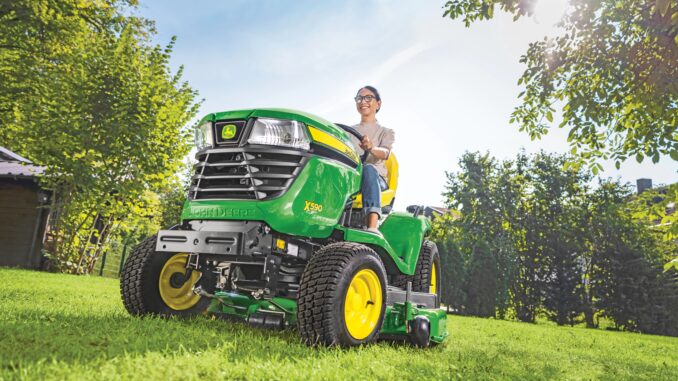
The John Deere 160 is an older lawn tractor built in Horicon, Wisconsin, with a 12.5 hp Kawasaki gasoline engine, two-wheel drive, a 5-speed gear transmission, and an independent mid-PTO for the mower deck. This guide is written for homeowner and DIY users in the USA and Canada, and it focuses on practical repair decisions, symptom-first troubleshooting, routine maintenance, and common ownership questions.
John Deere 160 model overview
The John Deere 160 sits in Deere’s older lawn tractor range and was commonly sold as a homeowner machine for routine mowing, light towing, and general yard work rather than heavy ground-engaging jobs. Typical attachments included a 38-inch mid-mount mower deck, and Deere also listed snowblower and blade options for seasonal use.
The main systems owners deal with on a John Deere 160 are straightforward: the Kawasaki engine and fuel system, the electric PTO and mower deck, the 5-speed gear drive and brake system, and the 12-volt electrical system with safety interlocks. Because it is an older machine, many problems owners see today are caused by age, storage, stale fuel, worn belts, corroded electrical connections, or deferred maintenance rather than a single dramatic failure.
Several service parts are commonly replaced on these tractors, including the air cleaner element, spark plug, fuel filter, engine oil and filter, mower drive belt, deck blades, battery, and safety switches. Deere’s operator literature also points owners to service intervals, lubrication points, mower blade service, belt replacement, battery service, and fuel filter replacement as regular ownership tasks.
Troubleshooting approach for the John Deere 160
The best way to diagnose a John Deere 160 is to start with the symptom the owner actually sees: it will not crank, it cranks but will not start, it runs rough, it cuts poorly, it vibrates, it leaks, or it will not drive correctly. That symptom-first approach helps avoid replacing good parts when the real issue is something simple like a safety switch, stale fuel, a loose belt, or a plugged cooling screen.
Main symptom groups on this model usually fall into these categories:
-
Starting issues, including no crank, weak crank, and hard starting.
-
Running issues, including surging, misfiring, poor power, and stalling.
-
Cut-quality problems, including uneven cut, missed strips, and poor discharge.
-
Vibration and noise, often linked to blades, pulleys, bearings, or loose hardware.
-
Overheating and leaks, especially around cooling fins, fuel lines, and old gaskets.
-
Transmission and drive complaints, such as poor motion, clutch or shift issues, or brake drag.
-
Electrical and safety-switch issues involving the PTO switch, seat switch, park brake switch, brake pedal switch, battery, and charging system.
Emergency repairs on a John Deere 160
Some faults on a John Deere 160 need immediate attention because they create a safety risk or can damage other parts quickly. Do not keep mowing if you have fuel leakage, severe vibration, a smoking belt, a blade strike, damaged wiring, or a brake or steering problem.
Starting issues
If the tractor will not crank or only clicks, the immediate concern is usually battery condition, cable corrosion, switch failure, or a bad connection in the starting circuit. Repeatedly trying to force a weak system can overheat cables or damage the starter.
Common causes:
-
Low or failed battery.
-
Dirty or loose battery terminals.
-
Faulty seat, brake, or PTO safety switch.
-
Starter, solenoid, or wiring fault.
Basic owner checks:
-
Confirm the PTO is off, the brake is set, and the operator is seated correctly.
-
Inspect battery terminals for corrosion or looseness.
-
Check for damaged wiring near the battery, solenoid, and under the seat.
-
Try a known-good, fully charged battery before condemning other parts.
John Deere 160 cut-quality problems
An uneven or ragged cut on a John Deere 160 usually points to deck setup, blade condition, ground speed, or a belt that is slipping instead of holding blade speed. Continuing to mow this way can overload the belt system and leave the owner chasing a problem that is mostly setup-related.
Common causes:
-
Dull, bent, or unbalanced blades.
-
Deck out of level side-to-side or front-to-rear.
-
Worn mower belt or weak belt tension.
-
Packed grass under the deck shell.
Basic owner checks:
-
Clean the underside of the mower deck safely with the engine off and key removed.
-
Inspect blades for bends, cracks, and poor edges.
-
Check deck level and gauge wheel adjustment.
-
Inspect belt condition and pulley alignment.
Vibration and noise
Sudden vibration matters because it may mean a bent blade, loose spindle hardware, damaged pulley, or an object wrapped around a shaft. If the vibration started right after striking something, stop using the machine until the deck and blades are checked.
Common causes:
-
Bent or unbalanced blade.
-
Loose blade bolt or spindle hardware.
-
Worn spindle bearings or idler pulley.
-
Debris packed around rotating parts.
Basic owner checks:
-
Shut the engine off and remove the key.
-
Inspect both blades and the deck shell for impact damage.
-
Check blade mounting hardware and visible pulley wobble.
-
Do not continue mowing until the source is identified.
John Deere 160 overheating and leaks
Heat and leaks on an air-cooled tractor can turn into engine damage or a fire hazard faster than many owners expect. On the John Deere 160, blocked cooling fins, dirty intake screens, leaking fuel lines, and oil leaks near hot surfaces should be fixed promptly.
Common causes:
-
Grass and debris blocking the cooling screen or engine fins.
-
Old fuel line or loose clamp leaking gasoline.
-
Oil leak at filter, drain point, or engine gasket area.
-
Running with low oil.
Basic owner checks:
-
Clean the air intake screen and visible engine cooling fins.
-
Check engine oil level before restarting.
-
Inspect the fuel filter and hose connections for seepage.
-
Stop using the tractor until active leaks are fixed.
Drive and transmission problems
Because the John Deere 160 uses a 5-speed gear transmission, owners often describe drive issues as weak motion, poor clutch response, hard shifting, or the tractor creeping unexpectedly. Some of these are linkage or adjustment issues, but persistent internal transmission faults are usually beyond casual DIY work.
Common causes:
-
Misadjusted clutch or brake linkage.
-
Belt or drive linkage wear, depending on the exact setup.
-
Brake drag.
-
Internal transmission wear.
Basic owner checks:
-
Confirm the brake releases fully.
-
Inspect external linkage for binding, looseness, or obvious wear.
-
Check whether the tractor shifts better with the engine off than with it running.
-
Escalate persistent internal drive issues to a dealer or experienced garden tractor technician.
John Deere 160 electrical problems
Electrical faults on older tractors are often intermittent, which makes owners suspect everything at once. On the John Deere 160, start by checking battery health, grounds, switch function, and brittle or corroded connectors before buying major electrical parts.
Common causes:
-
Weak battery or poor charging output.
-
Corroded ground or cable ends.
-
Faulty ignition or safety switch.
-
Damaged wiring insulation from age or vibration.
Basic owner checks:
-
Clean and tighten the battery terminals and main ground.
-
Test the safety systems in the order described by Deere.
-
Inspect visible wiring around the seat, PTO switch, and engine.
-
Replace damaged connectors before replacing expensive components.
DIY or dealer?
The normal line on a John Deere 160 is simple: routine service, blade work, belt replacement, and basic electrical checks are realistic DIY jobs, while internal transmission work, major engine repair, and complex wiring diagnosis are better left to experienced technicians.
Good DIY jobs
-
Engine oil and filter service.
-
Air filter inspection and replacement.
-
Spark plug service.
-
Fuel filter replacement.
-
Battery cleaning and replacement.
-
Mower blade removal, sharpening, balancing, and replacement.
-
Deck leveling and visible belt replacement.
Advanced DIY or dealer jobs
-
Carburetor diagnosis and adjustment.
-
PTO engagement adjustment beyond simple checks.
-
Spindle brake adjustment and deck timing-related work on certain decks.
-
Starter circuit diagnosis with a meter and wiring diagram.
-
Internal transmission repair or clutch overhaul.
-
Engine internal repair, governor issues, or major oil leak repair.
Skill level guide
-
Beginner: battery, filters, spark plug, blade inspection, deck cleaning.
-
Intermediate: blade replacement, belt replacement, deck leveling, fuel filter change, switch testing.
-
Advanced: carburetor tuning, electrical tracing, linkage adjustment, spindle or transmission-related work.
John Deere 160 parts and part numbers
Before ordering parts for a John Deere 160, gather the full model name, the tractor serial number or PIN, the engine model information, and the mower deck size or attachment version. That matters because older Deere tractors may have running changes, deck differences, and engine-specific service parts that look similar but do not interchange cleanly.
The operator’s literature includes a part-numbers section, but many older Deere 160 machines now rely on serial-number verification through Deere parts diagrams or a dealer counter before ordering. For that reason, the table below mixes verified OEM references with parts that should be confirmed by serial number before purchase.
OEM parts are the safer choice for belts, safety switches, deck-drive parts, and other fit-sensitive items because small differences in length, connector style, or stiffness can create new problems. Aftermarket parts are often acceptable for consumables such as filters, spark plugs, blades, and batteries when the cross-reference is exact and the brand is reputable.
Manuals and parts diagrams
A John Deere 160 owner should keep three resources handy: the operator’s manual for routine procedures, Deere’s technical publications and parts system for diagrams, and a reputable Deere-focused parts seller for photos and cross-references.
-
John Deere operator manual portal — useful for maintenance intervals, safety-system tests, blade service, deck adjustment, fuel filter replacement, and troubleshooting structure.
-
Deere Technical Publications / techpubs — useful for locating official manuals and technical literature referenced by TractorData.
-
JDParts / Deere parts catalog — useful for exploded diagrams, serial-number splits, and current part-number supersessions.
-
Green Farm Parts — useful for Deere-focused retail listings and quick cross-checking of common maintenance items.
How to locate numbers on a John Deere 160
Model, serial, and engine numbers matter because they separate one production version from another and help prevent ordering the wrong belt, blade, switch, or engine service part.
-
Park the tractor on level ground, switch it off, and remove the key.
-
Look on the left side of the tractor frame above the front axle for the John Deere 160 serial-number plate.
-
Record the complete serial exactly as stamped, including the prefix.
-
Locate the engine model and specification numbers on the engine identification label or shroud.
-
Check the mower deck itself for its model or deck identification so deck belts and blades can be matched correctly.
Buying parts for the John Deere 160
The best buying strategy is to identify the exact OEM number first, then decide whether OEM or aftermarket makes sense for that specific job. That reduces the risk of buying a close-looking part that fits poorly on an older tractor.
-
Online: verify the OEM number against the tractor serial number, engine spec, and deck size before checkout.
-
Dealer counter: best for serial-specific belts, safety switches, deck hardware, and superseded Deere numbers.
-
Retail stores: acceptable for oil, batteries, spark plugs, and some filters only when the packaging clearly cross-references the John Deere 160 or exact OEM number.
Useful sources include JDParts, Deere technical publications, and Green Farm Parts.
John Deere 160 fitting guide
These are the highest-value DIY jobs for most John Deere 160 owners because they solve many common no-start, poor-running, and poor-cut complaints before bigger repairs are needed.
Replace the air filter on a John Deere 160
A dirty air filter can cause hard starting, black smoke, weak power, and rich running.
-
Park safely, remove the key, and let the engine cool.
-
Open the air-cleaner housing and remove the old element.
-
Clean loose debris from the housing without pushing dirt into the intake.
-
Install the new element in the correct orientation and close the housing securely.
-
Replace any damaged pre-cleaner or seals at the same time if fitted.
Change the spark plug
A worn spark plug often shows up as hard starting, misfiring under load, or rough running.
-
Remove the spark-plug lead with the key out and engine cool.
-
Clean around the plug before removal so dirt does not enter the cylinder.
-
Remove the old plug and compare it to the replacement for thread length and seat style.
-
Install the new plug carefully by hand first, then tighten to the engine maker’s specification.
-
Refit the plug lead firmly.
John Deere 160 blade service
Blade service fixes ragged cutting, vibration, and missed strips when the deck itself is still in good shape.
-
Disable the tractor safely, remove the key, and secure the deck for access.
-
Remove each blade and inspect for bends, cracks, and severe wear.
-
Sharpen only serviceable blades and keep the cutting edges even.
-
Balance each blade before refitting.
-
Reinstall with the correct blade orientation and tighten the hardware correctly.
Replace the fuel filter
Replacing the fuel filter can cure lean running, surging, or fuel-starvation symptoms on an older John Deere 160.
-
Work in a ventilated area away from ignition sources.
-
Clamp the fuel line if needed and place a rag under the filter.
-
Remove the old filter and note the fuel-flow direction.
-
Install the new filter with the arrow pointing toward the engine.
-
Refit the clamps, check for leaks, and test-run the tractor.
Maintenance to prevent repeat problems
Regular maintenance is what keeps a John Deere 160 from drifting into the typical older-tractor cycle of stale fuel, dirty cooling fins, weak ignition, and worn deck parts. Most repeated breakdowns on this model come from ignored basics rather than rare failures.
Focus areas:
-
Starting reliability: keep the battery charged, terminals clean, the spark plug fresh, and the fuel filter clear.
-
Cut quality: keep blades sharp and balanced, deck underside clean, and deck level set correctly.
-
Fire and overheating prevention: clean intake screens and engine fins, and fix oil or fuel leaks immediately.
-
Drive performance: inspect clutch, brake, and shift linkages for proper movement and wear.
-
Electrical reliability: test safety systems and clean corroded connectors before they become intermittent faults.
John Deere 160 maintenance schedule
Deere’s operator literature for this tractor family lays out a regular service pattern that includes break-in work, 10-hour checks, 25-hour service, 50-hour or annual work, 100-hour service, and yearly as-needed tasks. Owners should always follow the exact manual for the tractor and deck combination on hand, but the schedule below reflects the official interval structure.
Before each use
-
Check engine oil level.
-
Perform the daily operating checklist.
-
Inspect the mowing area and tractor condition for safe operation.
-
Check visible fuel leaks, loose hardware, and tire condition.
After first 5 hours
-
Complete break-in service listed by Deere for the tractor family.
-
Recheck the machine for loose hardware and general condition.
-
Inspect belt and linkage operation after initial use.
Every 10 hours
-
Perform scheduled lubrication tasks.
-
Clean the machine and remove grass buildup.
-
Inspect safety-system operation.
Every 25 hours
-
Service lubrication points including front wheel spindles and lift-pedal points as applicable.
-
Check and clean the air-cleaner elements.
-
Inspect spark plug condition.
-
Check mower blades and deck condition.
Every 50 hours or yearly
-
Change engine oil and filter.
-
Replace the fuel filter.
-
Clean battery terminals and service the battery.
-
Inspect and service mower drive components.
Every 100 hours
-
Complete the Deere 100-hour maintenance items for the tractor family.
-
Recheck mower, drive, and electrical systems for wear or adjustment needs.
Seasonal checklist
-
Spring: fresh fuel, battery check, blade service, deck leveling, and full safety-system test.
-
Mid-season: clean cooling fins and deck, inspect belts, and recheck blade condition.
-
Fall or storage prep: stabilize or manage fuel as directed, clean the tractor thoroughly, and prepare the engine and machine for storage.
Repair, upgrade, or replace?
For a John Deere 160, repair usually makes sense when the tractor is structurally sound and the issue is limited to normal wear items, tune-up parts, deck service, or straightforward electrical faults. Upgrade or replacement becomes more logical when the machine needs several major systems at once, parts availability gets difficult, or the owner now wants capabilities the 160 was never designed to provide.
Repair if…
-
The engine has decent compression and no severe internal damage.
-
The frame, steering, and deck shell are still solid.
-
The fault is mainly belts, blades, switches, battery, filters, or routine service items.
Upgrade if…
-
You want a wider deck, easier parts support, or hydrostatic drive.
-
You mow more area than a basic gear-drive lawn tractor comfortably handles.
-
The tractor is usable but no longer ideal for your property.
Replace if…
-
The tractor needs major engine and transmission work at the same time.
-
The deck, steering, and electrical system are all heavily worn.
-
Safety-related repairs have been neglected long enough that restoring confidence would be expensive.
John Deere 160 troubleshooting FAQ
1. Why will my John Deere 160 not start?
The most common reasons are a weak battery, dirty cable ends, a safety switch not closing, stale fuel, or ignition-related problems. Start with the basics: PTO off, brake set, charged battery, clean terminals, fresh fuel, and a good spark plug before assuming a bigger failure.
2. Why does my John Deere 160 click but not crank?
A click usually means the starter circuit is trying to work but does not have enough power or the starter cannot turn the engine. Check battery voltage, cable corrosion, ground condition, and whether the engine can be turned by hand safely before replacing the starter.
3. Why does the John Deere 160 crank but not fire?
That usually means the problem is fuel, spark, or air rather than the cranking circuit. Old gasoline, a plugged fuel filter, a fouled plug, or a dirty air filter are common starting points on an older tractor.
4. Why does my John Deere 160 start and then die?
This often points to restricted fuel flow, stale fuel, carburetor contamination, or a venting problem in the fuel system. It can also happen when a safety circuit behaves intermittently, so inspect wiring and switches if the shutdown feels sudden and electrical.
5. Why does the John Deere 160 run rough at full throttle?
Rough running under load usually comes from a dirty air filter, weak spark, stale fuel, partial fuel blockage, or carburetor issues. Do the tune-up items first because they are cheaper and more common than internal engine faults.
6. Why is my John Deere 160 surging?
Surging often happens when the engine is hunting for fuel because the carburetor is dirty, the fuel filter is restricted, or the fuel itself has gone bad. Air leaks and governor issues are possible too, but they are not the first things to replace.
7. Why does the John Deere 160 backfire?
Backfiring can come from ignition issues, stale fuel, carburetor problems, or hot exhaust lighting off unburned fuel. It can also happen after repeated failed starting attempts that leave extra fuel in the engine.
8. Why is my John Deere 160 low on power?
Low power is often caused by poor tune-up condition, dirty cooling fins, a clogged air cleaner, dull blades loading the engine, or mowing too fast in heavy grass. A compression problem is possible, but it is not the first conclusion.
9. Why does my John Deere 160 smoke?
Black smoke usually means an overly rich condition, while blue smoke points more toward oil burning. A dirty air filter, overfilled oil, or engine wear are all possibilities, so match the smoke color to the likely system.
10. Why does the John Deere 160 overheat?
This tractor depends on clean air flow over the engine, so blocked intake screens and packed cooling fins are common causes. Running low on oil or mowing in heavy buildup without cleaning the engine area can make the problem worse.
11. Why is my John Deere 160 leaking gas?
Fuel leaks often come from cracked hose, loose clamps, a failing in-line filter connection, or carburetor seepage. Stop using the tractor until the leak is fixed because Deere specifically emphasizes fire prevention and safe fuel handling.
12. Why is my John Deere 160 leaking oil?
Oil leakage may come from the filter area, drain point, or engine gaskets. Clean the engine first so you can see the source clearly, then check the oil level before any more mowing.
13. Why does my John Deere 160 cut unevenly?
Uneven cutting usually means the deck is out of level, tire pressures are mismatched, blades are worn, or the deck is packed with debris. Deere includes side-to-side and front-to-rear deck adjustment procedures because setup matters as much as parts condition.
14. Why does the John Deere 160 leave strips of uncut grass?
Missed strips happen when blade speed drops, blades are dull, the deck is dirty, or ground speed is too high for the grass conditions. Check blade condition and the mower belt before assuming the deck shell is the issue.
15. Why does my John Deere 160 scalp the lawn?
Scalping usually means the deck height is too low, deck wheels are set incorrectly, or the deck pitch and level need adjustment. Uneven ground and mowing too aggressively also contribute.
16. Why does the John Deere 160 discharge poorly?
Poor discharge is usually grass buildup, dull blades, wet conditions, or reduced belt-driven blade speed. Cleaning the deck and sharpening the blades solve a large share of these complaints.
17. Why does my John Deere 160 vibrate when mowing?
The usual causes are bent blades, unbalanced blades, loose blade hardware, bad spindle bearings, or debris wrapped around rotating parts. Stop mowing until you inspect the deck because vibration can damage more parts quickly.
18. Why does the John Deere 160 make a squealing noise?
A squeal often points to a worn or slipping belt, an idler problem, or a dry or failing bearing. Listen for whether the noise begins only when the PTO is engaged because that helps separate deck faults from engine-side issues.
19. Why does my John Deere 160 throw belts?
Belts usually come off because of wear, incorrect routing, pulley misalignment, damaged belt guides, or seized bearings. Replacing only the belt without checking the pulleys often leads to the same failure again.
20. How do I know if the John Deere 160 blades are bent?
A blade strike, sudden vibration, poor cut, or visible wobble are the main clues. Deere’s service information includes checking for bent blades and balancing them after sharpening.
21. How often should I sharpen John Deere 160 blades?
There is no single universal hour count because conditions vary, but blades should be inspected regularly and sharpened whenever cut quality drops or edges become rounded. Do not keep grinding a blade that is cracked, badly thinned, or bent.
22. Why will my John Deere 160 not move well?
Poor movement can come from brake drag, clutch or linkage issues, shifting problems, or internal transmission wear. Because this is a gear-drive tractor, owners should check external adjustments first before assuming the transmission is finished.
23. Why is my John Deere 160 hard to shift?
Hard shifting can happen if the clutch is not releasing fully, linkages are worn, or the tractor is being shifted under load incorrectly. External linkage inspection is usually the best first step.
24. Why does my John Deere 160 battery keep going flat?
Repeated battery discharge can be caused by a weak battery, dirty terminals, poor grounds, charging problems, or a wiring issue. Check the battery first, then verify the charging system output before replacing switches or the starter.
25. Why do the John Deere 160 headlights not work?
Headlight problems are usually bulb, wiring, switch, or charging-related on an older tractor. Deere includes headlight bulb replacement and lens service in the operator information.
26. How do I test John Deere 160 safety switches?
Deere lays out tests for the mower engagement switch, seat switch, park brake switch, brake pedal switch, and RIO system in the operator material. Follow that sequence rather than bypassing switches, because bypassing safety devices creates a hazard.
27. What oil should I use in a John Deere 160?
Use the oil grade and capacity specified in the operator literature for the engine on the tractor, not a guess based on another Deere model. Older tractors may have engine-specific requirements, so match the oil to the manual and ambient conditions.
28. How often should I change oil in a John Deere 160?
Deere’s maintenance structure for this tractor family includes a 50-hour or annual service point for oil and filter work. If the tractor works in dusty or heavy conditions, many owners inspect more often and avoid stretching the interval.
29. Why does my John Deere 160 use so much fuel?
High fuel use can come from a dirty air filter, carburetor issues, over-rich running, poor tune-up condition, or mowing too aggressively. Black smoke or plug fouling would support a rich-running diagnosis.
30. Can I use aftermarket parts on a John Deere 160?
Yes, but use them selectively. Aftermarket filters, blades, spark plugs, and batteries can work well when properly cross-referenced, while OEM is the safer choice for belts, safety parts, and fit-sensitive deck components.
31. Where is the serial number on a John Deere 160?
The serial number plate is on the left side of the tractor frame above the front axle. Record it before ordering deck or drive parts because older Deere machines often have serial-number splits.
32. Where can I get a John Deere 160 manual?
Official Deere operator literature can be accessed through Deere’s manual and technical publication channels, and TractorData also points owners toward the official tech publications site. For parts diagrams, JDParts is usually the most useful starting point.
33. Is the John Deere 160 worth repairing?
It often is, if the machine is complete, structurally sound, and mainly needs normal service items plus a manageable repair or two. It makes less sense when engine, deck, transmission, and electrical issues all arrive together.
34. What deck came on a John Deere 160?
A 38-inch mid-mount mower deck is one of the attachments listed for the John Deere 160. Because older tractors may have had decks swapped over time, owners should still verify the actual deck on the machine before ordering blades or belts.
35. What manual covers the John Deere 160?
TractorData identifies the operator’s manual covering the 130, 160, 165, 180, and 185 models as OMM89684, and it also references technical manual TM1351 for these lawn tractors
How to adjust the John Deere 160 mower deck leveling
To level the mower deck on a John Deere 160, you set tire pressures, park on a flat surface, then adjust side‑to‑side and front‑to‑rear using the deck lift linkages until blade tip measurements are within spec.
Safety and setup
Before doing any deck leveling, always work safely and get the tractor properly set up.
-
Park on a flat, hard surface (garage floor or driveway), set the brake, and remove the key.
-
Set all four tires to the pressures listed in the operator’s manual (uneven tire pressure will throw off deck measurements).
-
Lower the mower deck to your normal cutting height (many owners use the mid‑range setting like “3”).
-
Disconnect or pull the spark plug lead so the engine cannot start while you are working near the blades.
Side‑to‑side leveling (left vs right)
The goal is to have the left and right blade tips at the same height so the tractor does not leave one high and one low strip.
-
Rotate one of the deck blades so it points straight out to the right side of the tractor (blade length perpendicular to the frame).
-
Using a deck leveling gauge or a ruler, measure from the floor to the tip of the blade at the cutting edge.
-
Rotate the same blade so it points straight out to the left side and measure from floor to tip at that side, in a matching spot.
-
Compare the two measurements; the left and right should be the same or within about 1/8 inch of each other for most Deere decks.
-
If one side is too high or too low, adjust the side lift linkage on that side:
-
Most Deere decks use a nut on the deck hanger or lift link; turning the nut clockwise raises that side, counter‑clockwise lowers it.
-
Adjust a little, re‑measure, and repeat until both sides read the same height.
-
Front‑to‑rear pitch
Once side‑to‑side is correct, set the deck “pitch” so the front blade tip is slightly lower than the rear for clean cutting and good discharge.
-
Rotate the center blade so it points front‑to‑back (parallel with the tractor).
-
Measure from the floor to the blade tip at the front edge, then to the blade tip at the rear edge.
-
Aim for the front to be about 1/8–1/4 inch lower than the rear (for example, 3.0 inches at the rear and 2.75–2.875 inches at the front if your cut height is set at 3).
-
Adjust the front draft rod or front deck hanger:
-
Tightening the adjusting nut (clockwise) raises the front of the deck; loosening it (counter‑clockwise) lowers the front.
-
Make small changes, then re‑measure front and rear blade tip heights until the difference is in the 1/8–1/4 inch range.
-
Final checks after leveling
After adjustment, do a couple of quick checks before mowing normally.
-
Confirm all deck hanger nuts and linkage hardware are snug and properly seated in their hangers.
-
Spin blades by hand (with the engine disabled) to ensure nothing contacts the deck shell or baffles.
-
Raise and lower the deck through its full range to verify it moves freely and the up‑stops still have the small gap specified by Deere at full lift.
-
Mow a small test area and check the cut; if you still see a slight lean, re‑measure and fine‑tune the appropriate side linkage.