
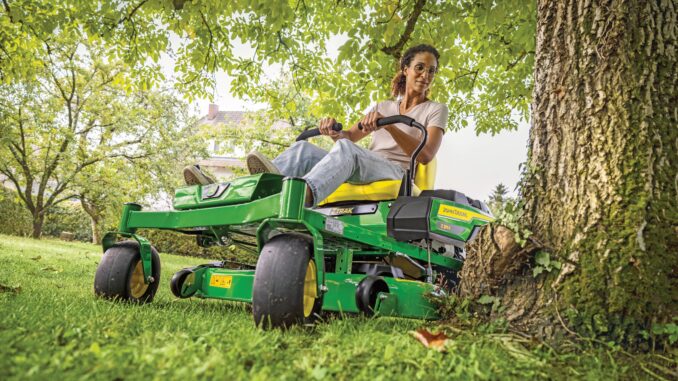
The John Deere Z540M is a residential zero-turn mower designed for larger home lawns where speed, cut quality, and maneuverability matter. It uses a 24 hp Kawasaki V-twin engine, dual hydrostatic transmissions, an electric PTO clutch, and typically a 48-inch, 54-inch, or 62-inch mower deck.
This John Deere Z540M repair guide covers the owner-level problems most likely to stop mowing: no-start faults, uneven cutting, belt and blade failures, hydro drive complaints, battery issues, overheating, and vibration. It also explains where to find parts diagrams and manuals, what repairs are realistic at home, and when dealer-level diagnosis is the safer option.
General overview of the John Deere Z540M
The John Deere Z540M sits in Deere’s residential ZTrak zero-turn range. It is more substantial than entry-level residential models and was commonly sold with a 48-inch Accel Deep deck, 54-inch Accel Deep deck, or 62-inch Edge cutting deck, depending on the configuration.
Its main repair and maintenance systems are:
-
Kawasaki FS730V 726 cc air-cooled V-twin engine
-
Fuel tank, fuel lines, fuel filter, carburetor, and fuel pump
-
12-volt battery, starter, ignition switch, fuses, safety switches, and electric PTO clutch
-
Dual hydrostatic transaxles and transmission drive belt
-
Motion-control levers, parking brake linkage, neutral switches, and tracking adjustments
-
Spindle assemblies, mower blades, deck belt, idler pulleys, gauge wheels, and deck-lift hardware
-
Air screen, engine shrouds, cooling fans, and engine oil system
The Z540M is a capable mower, but its large deck and high-output engine mean neglected cleaning and worn belts can quickly lead to expensive secondary damage. Grass buildup under the deck, plugged cooling screens, bent blades, loose spindle pulleys, and dirty hydro cooling fans are common causes of otherwise avoidable failures.
Common John Deere Z540M service parts owners often need include:
-
Engine oil filter
-
Engine air filter and foam pre-cleaner
-
Fuel filter
-
Spark plugs
-
Mower blades
-
Deck drive belt
-
Transmission drive belt
-
Spindle assemblies and bearings
-
Idler pulleys
-
PTO clutch
-
Battery and battery-terminal hardware
-
Deck gauge wheels
-
Safety switches and fuses
John Deere Z540M troubleshooting approach
Start with the symptom rather than ordering a part immediately. A mower that will not start may have a weak battery, blown fuse, faulty brake switch, failed PTO switch, dirty fuel system, or ignition problem. Replacing the starter first can waste money if the actual problem is a poor ground cable or safety interlock.
For the John Deere Z540M, divide diagnosis into these main groups:
-
Starting and cranking faults
-
Engine running, fuel, smoke, and power-loss issues
-
Cutting-quality problems
-
Vibration, noise, and deck damage
-
Overheating, oil leaks, and grass buildup
-
Hydrostatic drive, tracking, and traction problems
-
Electrical, PTO, battery, and safety-switch faults
Always park on level ground, disengage the PTO, set the parking brake, remove the key, and disconnect spark-plug wires before working under the deck or near rotating parts.
John Deere Z540M emergency repair needs
Some faults should stop mowing immediately. Continuing to run the machine can damage the engine, deck, hydrostatic transmissions, or electrical system.
Starting and electrical issues
A no-crank condition, burning-wire smell, repeatedly blown fuse, or hot battery cable needs attention before further use. Electrical faults can leave the mower stranded or create a fire risk.
Common causes include:
-
Corroded or loose battery terminals
-
Weak battery or failed battery cell
-
Blown main fuse
-
Faulty ignition switch
-
PTO switch left engaged
-
Parking-brake, seat, or motion-control safety switch fault
-
Damaged wiring near the engine, battery, PTO clutch, or deck
Basic checks:
-
Make sure both steering levers are in the neutral/park position and the PTO switch is off.
-
Check battery terminals for corrosion, looseness, or damaged cables.
-
Inspect the fuse and replace it only with the correct rating.
-
Listen for a click from the starter solenoid when turning the key.
-
Check visible wiring for chafing, melted insulation, or rodent damage.
John Deere Z540M cut-quality problems
Poor cut quality often appears as strips of uncut grass, uneven height, clumping, ragged grass tips, or one side of the deck cutting lower. Do not continue mowing if the deck is vibrating heavily or a blade is striking the deck shell.
Common causes include:
-
Dull, bent, cracked, or incorrectly installed blades
-
Uneven tire pressure
-
Deck out of level
-
Worn spindle bearings
-
Damaged deck belt
-
Grass packed under the deck
-
Mowing too fast for grass height or conditions
-
Incorrect deck gauge-wheel setting
Basic checks:
-
Park on level pavement and check tire pressures before adjusting the deck.
-
Inspect the underside of the deck after disconnecting spark-plug wires.
-
Remove packed grass, especially around baffles and discharge openings.
-
Check blade condition and tighten hardware to the correct specification.
-
Compare blade-tip height from side to side and front to rear.
Vibration and noise
Sudden vibration is an immediate stop-and-inspect symptom. A bent blade, broken spindle, loose pulley, or damaged belt can become much worse in only a few minutes of use.
Common causes include:
-
Blade struck a rock, stump, root, or edging
-
Bent blade or blade adapter
-
Loose blade bolt
-
Failed spindle bearing
-
Cracked spindle pulley
-
Belt cord failure or belt rubbing a guard
-
Debris caught around a spindle or pulley
-
Damaged caster wheel or wheel bearing
Basic checks:
-
Shut down immediately and wait for all rotating parts to stop.
-
Disconnect spark-plug wires.
-
Inspect every blade for bends, cracks, missing metal, and impact damage.
-
Spin each spindle pulley by hand and feel for roughness, wobble, or noise.
-
Inspect the belt path and idler pulleys for damage.
Overheating and leaks
The Z540M’s air-cooled Kawasaki engine depends on clean cooling screens and shrouds. Overheating can cause power loss, oil consumption, engine damage, and shortened ignition-component life.
Common causes include:
-
Grass or debris blocking the engine screen
-
Dirty engine cooling fins
-
Dirty air filter
-
Low engine oil
-
Oil leak around the filter, drain plug, valve cover, or crankcase area
-
Old fuel or lean-running fuel-system problem
-
Hydro cooling fans blocked with grass
Basic checks:
-
Stop mowing if you smell hot oil, see smoke, or notice major power loss.
-
Let the engine cool fully before checking oil level.
-
Clean the engine screen and surrounding debris.
-
Inspect the oil filter, drain plug, and engine for fresh oil residue.
-
Inspect hydro cooling fans and remove dry grass buildup carefully.
John Deere Z540M transmission and drive problems
A zero-turn mower that pulls to one side, lacks hill-climbing power, moves weakly, or will not move at all may have a belt, linkage, brake, bypass-valve, or hydrostatic transmission problem.
Common causes include:
-
Transmission drive belt worn, stretched, broken, or off a pulley
-
Parking brake partly engaged
-
Hydro bypass valves left open after moving the mower by hand
-
Neutral creep adjustment needed
-
Tracking adjustment needed
-
Dirty hydro cooling fans
-
Internal transaxle wear or fluid-related failure
-
Loose motion-control linkage
Basic checks:
-
Confirm the parking brake is fully released.
-
Check that the transmission bypass valves are returned to the operating position.
-
Inspect the transmission drive belt for cracks, glazing, missing ribs, or derailment.
-
Clean debris from hydro cooling fans and belt guards.
-
Test drive on level ground before assuming an internal hydro failure.
PTO and mower-engagement problems
If the mower deck will not engage, the PTO clutch may not be receiving power, or the clutch itself may be worn or damaged. Do not force the PTO switch or continue using a clutch that squeals, smokes, or slips.
Common causes include:
-
Blown fuse
-
Low battery voltage
-
Faulty PTO switch
-
Failed seat or safety switch
-
Damaged PTO-clutch wiring
-
Failed electric PTO clutch
-
Seized deck spindle or idler pulley overloading the belt system
Basic checks:
-
Check that the engine is running at the recommended mowing speed.
-
Inspect the PTO wiring connector for loose terminals or damage.
-
Check the deck belt and rotate pulleys by hand with the engine off.
-
Confirm the safety system operates correctly.
-
Have clutch voltage and air-gap diagnosis performed if wiring and belt condition appear normal.
DIY or dealer repair guide
The John Deere Z540M is manageable for homeowners who are comfortable with routine service and safe deck work. The dividing line is whether a repair requires special diagnostic equipment, lifting equipment, transmission work, or a precise adjustment that affects safe operation.
Good DIY jobs
-
Checking and changing engine oil and oil filter
-
Cleaning or replacing the air filter
-
Replacing the fuel filter
-
Replacing spark plugs
-
Installing a battery
-
Cleaning battery terminals
-
Replacing mower blades
-
Replacing a deck belt
-
Replacing gauge wheels
-
Cleaning deck buildup and engine cooling screens
-
Checking tire pressures
-
Replacing a fuse
-
Basic deck-level checks
Advanced DIY or dealer jobs
-
Diagnosing a no-crank electrical fault beyond battery and fuse checks
-
Testing the PTO clutch electrically
-
Replacing a PTO clutch
-
Replacing spindle assemblies or spindle bearings
-
Repairing wiring harnesses
-
Adjusting neutral creep and tracking when linkages are damaged
-
Replacing hydrostatic transaxles
-
Internal transmission repair
-
Carburetor cleaning or engine fuel-system overhaul
-
Engine compression testing, valve adjustment, or internal engine repair
Skill level guide
-
Beginner: Cleaning, tire-pressure checks, oil service, air-filter replacement, blade inspection, and battery maintenance
-
Intermediate: Spark plugs, fuel filter, blades, deck belt, gauge wheels, deck removal, and basic deck leveling
-
Advanced: Electrical diagnosis, PTO-clutch replacement, spindle replacement, motion-control linkage work, and hydrostatic-drive troubleshooting
John Deere Z540M parts and ordering information
Before ordering John Deere Z540M parts, collect the exact machine and deck details. The same model name can use different deck configurations, blade lengths, belts, and serial-number ranges.
You should have:
-
Full model name: John Deere Z540M
-
Product Identification Number, often called the PIN or serial number
-
Mower deck model and cutting width
-
Engine model and engine serial number
-
Existing part number, if readable from the old part
-
A photo of the part and its installation location
The table below lists commonly used service items. Verify every number against your mower’s PIN and deck model before buying because deck and serial-range differences matter.
OEM parts are usually the best choice for belts, PTO components, spindle assemblies, safety switches, deck hardware, and any fit-sensitive part. These components must match pulley geometry, length, electrical specifications, or safety design.
Aftermarket parts can be sensible for properly cross-referenced filters, batteries, blades, wheels, and some pulleys. Buy from established suppliers, compare the OEM number, and avoid universal-fit belts or blades when an exact replacement is available.
John Deere Z540M parts diagrams and manuals
Use official information first, especially before ordering belts, blades, electrical components, or deck hardware.
-
John Deere Z540M Owner Support is a starting point for maintenance schedules, service intervals, how-to guidance, parts support, and owner resources.
-
John Deere Z540M operator’s manual covers operating controls, safety systems, engine service, transmission checks, mower-deck service, troubleshooting, storage, and specifications.
-
John Deere Manuals and Training is useful for locating current operator manuals, parts catalogs, and technical publications.
-
Green Farm Parts Z540M parts catalog can be useful for browsing illustrated replacement categories, but always cross-check the OEM part number against Deere information and your PIN.
The operator’s manual is best for safe operation, maintenance intervals, deck removal, belt replacement procedures, oil service, battery service, and basic troubleshooting. A parts diagram is best for identifying washers, pulleys, springs, guards, deck components, and the exact routing or mounting order.
Finding model and serial numbers
The John Deere Z540M PIN, deck identification, and engine serial number prevent costly ordering mistakes. A 48-inch deck belt is not interchangeable with a 54-inch or 62-inch deck belt, and engine-related parts should be verified against the Kawasaki engine label rather than the mower model alone.
-
Park the mower on level ground, set the parking brake, remove the key, and allow the engine to cool.
-
Locate the machine identification label on the mower frame. Check the frame area near the operator platform, rear frame, or beneath/around the seat area.
-
Record the full PIN exactly as shown, including letters and numbers.
-
Locate the mower deck identification decal on the deck shell and record the deck model and serial number.
-
Find the Kawasaki engine identification label on the engine shroud or engine housing, then record its model, type, code, and serial information.
Take clear phone photos of each decal. This is often easier than trying to read faded labels while ordering parts online.
Buying John Deere Z540M parts
A good parts-buying strategy is to identify the OEM number first, then compare prices and availability. Do not order only from a search result based on “Z540M belt” or “Z540M blades” without confirming the deck width and serial applicability.
-
Online: Use official Deere owner support, parts diagrams, and established Deere-parts specialists. Check the OEM number, deck model, and fitment notes before checkout.
-
Dealer counter: Best for PIN-sensitive components, PTO clutches, safety switches, wiring parts, hydro components, major deck hardware, and parts where several versions look similar.
-
Retail stores: Fine for engine oil, grease, batteries, common spark plugs, and some filters only when the package clearly confirms the engine or OEM cross-reference.
Useful starting points include:
John Deere Z540M deck belt replacement
A deck belt replacement can cure blade drive slipping, squealing, poor discharge, or a deck that stops turning. Replace a belt that is cracked, glazed, stretched, missing material, or repeatedly comes off after pulley alignment has been checked.
-
Park on level ground, disengage the PTO, set the parking brake, remove the key, and disconnect both spark-plug wires.
-
Lower the deck to its lowest cutting position and remove the deck foot plate or belt guards as necessary.
-
Photograph the belt routing before removal, then release tension from the idler system according to the deck configuration.
-
Remove the old belt from the PTO pulley, spindle pulleys, and idlers without forcing it over pulley flanges.
-
Install the correct replacement belt in the exact routing shown in the deck diagram, making sure it sits fully in every pulley groove.
-
Rotate the blades by hand to confirm the belt tracks correctly, reinstall guards, reconnect spark-plug wires, and test engagement at low speed.
If a new belt immediately comes off, inspect idler pulleys, spindle pulleys, belt keepers, deck shell damage, and the PTO pulley alignment before fitting another belt.
John Deere Z540M blade replacement
Sharp, balanced blades reduce engine load and improve the finish of the cut. Replace blades that are cracked, severely worn, bent, or damaged by impacts; do not attempt to straighten a bent mower blade.
-
Park safely, remove the key, set the parking brake, disconnect spark-plug wires, and raise the front only with approved lifting equipment if needed.
-
Block the blade with a wood piece to stop rotation and remove the blade bolt with the correct socket and breaker bar.
-
Remove grass buildup from the blade mounting surface and inspect the spindle shaft for damage or looseness.
-
Install the blade in the correct orientation, with the cutting edge and lift wing facing the correct direction for the deck.
-
Tighten the blade bolt to the specification in the correct Z540M operator or technical manual for your deck.
-
Repeat for all blades, then test-cut a small area and inspect for vibration.
Always replace a damaged blade as a matched set when practical, especially if the remaining blades have significant wear.
Air filter and fuel filter service
A restricted air filter can cause power loss, rich running, increased fuel use, and poor mowing performance. A clogged or aged fuel filter can cause surging, stalling under load, or a mower that starts but will not stay running.
-
Let the engine cool, remove the key, and clean loose debris from around the air-filter cover.
-
Remove the air-filter cover and inspect the foam pre-cleaner and paper element.
-
Replace a damaged, oily, heavily dirty, or distorted paper element rather than trying to wash it.
-
For the fuel filter, clamp the fuel line if appropriate, note the flow direction, then remove the old filter carefully.
-
Install the new filter with the arrow pointing toward the engine and secure hose clamps correctly.
-
Start the mower outdoors, inspect for fuel leaks, and confirm smooth running before mowing.
Avoid blowing high-pressure compressed air directly through a paper filter. It can tear the media or create paths for dirt to enter the engine.
Engine oil and oil-filter change
Fresh oil is one of the most important ways to protect the Kawasaki engine in the John Deere Z540M. Change oil with the engine warm enough to flow, but not hot enough to burn you.
-
Park on level ground, set the parking brake, remove the key, and clean debris from around the oil-fill and filter area.
-
Place a drain pan under the drain point, remove the dipstick or fill cap, and drain the old oil safely.
-
Remove the old oil filter, check that its gasket did not remain stuck to the engine, and clean the filter mounting surface.
-
Lightly oil the new filter gasket, install the new filter by hand, and tighten according to filter instructions.
-
Refit the drain plug, add the specified oil gradually, and check the level with the dipstick.
-
Run the engine briefly, shut it down, check for leaks, wait a few minutes, and recheck the oil level.
Use the oil grade and capacity listed for the engine and temperature range in the operator’s manual. Do not overfill.
John Deere Z540M maintenance to prevent repeat failures
Regular maintenance reduces most starting, overheating, cut-quality, and belt-life complaints. The biggest preventive gains come from cleaning the mower after use, keeping blades and belts in good condition, and protecting the engine and hydro cooling systems from grass buildup.
Focus on these areas:
-
Starting reliability: Keep battery terminals clean, inspect cables, use fresh fuel, and replace restricted fuel filters.
-
Cut quality: Sharpen and balance blades, clean the deck underside, keep tire pressures equal, and check deck level.
-
Fire and overheating prevention: Remove dry grass from the engine screen, cooling fins, muffler area, deck, and hydro cooling fans.
-
Drive performance: Inspect belts, keep transmission cooling areas clean, and do not leave bypass valves open.
-
Electrical reliability: Check fuses, inspect PTO wiring, protect connectors from moisture, and address rodent damage promptly.
John Deere Z540M maintenance schedule
Follow the operator’s manual and any service-interval decal fitted to the mower. The exact interval can vary with operating conditions, but dusty mowing, wet grass, hills, towing, and high summer temperatures justify more frequent inspection and cleaning.
Before each use
-
Check engine oil level.
-
Check fuel level and inspect for fuel leaks.
-
Inspect tires for damage and correct pressure.
-
Check blades, deck belt, and visible deck hardware.
-
Clean loose debris from the engine screen, muffler area, deck, and hydro cooling areas.
-
Test that the safety system and parking brake operate correctly.
After the first hours of use
-
Recheck engine oil level and inspect for leaks.
-
Inspect the mower deck belt and transmission drive belt.
-
Check blade fasteners and deck hardware.
-
Check battery connections.
-
Look for loosened fasteners after initial operation or major service.
Every 25 hours
-
Clean the engine screen and cooling areas.
-
Check and clean the air-filter system as conditions require.
-
Inspect blades for sharpness, damage, and balance.
-
Inspect deck belt, pulleys, and belt keepers.
-
Lubricate service points specified for the deck and lift system.
Every 50 hours or yearly
-
Change engine oil and replace the oil filter, following the manual’s interval and seasonal guidance.
-
Inspect or replace the fuel filter as required.
-
Check spark plugs and replace if worn or specified by the maintenance schedule.
-
Inspect battery condition, terminals, and charging performance.
-
Check deck level, gauge-wheel adjustment, and spindle condition.
Every 200 hours or as specified
-
Replace air-filter elements if service conditions or the manual call for it.
-
Inspect transmission drive components closely.
-
Inspect hydro cooling fans and transmission areas for accumulated debris.
-
Have the mower professionally checked if there is loss of drive, persistent overheating, excessive oil use, or repeated belt failures.
-
Inspect steering-lever linkage and neutral-creep behavior.
Seasonal checklist
-
Spring: Change oil if due, inspect fuel system, install sharp blades, check battery condition, clean cooling areas, and level the deck.
-
Mid-season: Clean under the deck regularly, inspect belts and blades, replace damaged gauge wheels, and check tire pressures.
-
Fall: Remove grass buildup, inspect for worn parts, touch up damaged paint, and service blades before storage.
-
Storage: Use fuel stabilizer if storing with fuel, protect the battery, clean the mower thoroughly, and keep it in a dry location.
Repair, upgrade, or replace?
Most John Deere Z540M problems are worth repairing because the mower has a durable frame, strong engine platform, and widely available replacement parts. The decision changes when engine, hydrostatic transmission, deck shell, and electrical repairs overlap.
Repair if…
-
The engine starts and runs well after normal service.
-
The fault is limited to a belt, blade, pulley, filter, battery, switch, spindle, or deck hardware.
-
The hydrostatic drives remain smooth and responsive.
-
The deck shell is structurally sound.
-
The repair cost is reasonable relative to the mower’s condition and expected use.
Upgrade if…
-
You need a larger deck or more capacity for a growing property.
-
You regularly mow rougher ground than the residential mower was intended to handle.
-
You want a heavier fabricated deck, commercial-grade hydros, or suspension improvements.
-
Downtime has become costly because the mower is essential for frequent work.
Replace if…
-
The engine has major internal damage and the hydro drives are also weak.
-
The deck shell is severely rusted, cracked, or repeatedly breaking around spindle mounts.
-
The mower needs multiple expensive systems replaced at once.
-
Repairs approach the value of a newer mower with better capacity for your property.
John Deere Z540M troubleshooting FAQ
1. Why will my John Deere Z540M not start?
First check that the PTO switch is off, the parking brake is set, and both motion-control levers are in the required neutral/park position. Then inspect battery voltage, cable connections, fuse condition, and the seat and brake safety switches. If it cranks but does not fire, move to fuel, spark, and air-filter checks.
2. Why does my John Deere Z540M click but not crank?
A click often means the starter solenoid is receiving a start signal but the battery cannot supply enough current, the cable connection is poor, or the starter circuit has excessive resistance. Clean and tighten both battery terminals and the ground connection. If voltage drops sharply during cranking, charge-test or replace the battery.
3. Why does the John Deere Z540M crank slowly?
Slow cranking is usually caused by a weak battery, corroded cables, poor ground connection, or a starter beginning to fail. Cold weather and thick oil can make the symptom worse. Start with a fully charged battery and clean cable connections before replacing components.
4. Why does my Z540M start and then die?
Check fuel quality first, especially if the mower has been sitting for weeks or months. A clogged fuel filter, restricted fuel line, contaminated carburetor, or venting issue can allow starting but prevent sustained running. Also inspect the air filter and make sure the choke is moved to the normal running position.
5. Why does the engine surge while mowing?
Surging commonly points to stale fuel, a partially restricted fuel filter, dirty carburetor passages, air-filter restriction, or governor-related issues. Begin with fresh fuel and a filter inspection. If the problem remains, a dealer or experienced small-engine technician may need to clean and diagnose the fuel system.
6. Why does the John Deere Z540M lose power in tall grass?
Tall or wet grass increases load on the engine and deck. Raise the deck slightly, reduce ground speed, make narrower passes, and make sure blades are sharp. Also inspect the underside of the deck for packed grass and check the air filter, belt condition, and engine cooling screen.
7. Why is my Z540M blowing black smoke?
Black smoke usually means the engine is receiving too much fuel or too little air. Inspect the air filter first and replace it if it is heavily dirty or oil-soaked. If the filter is good, check choke operation and consider fuel-system diagnosis.
8. Why is my John Deere Z540M blowing blue or white smoke?
Blue smoke usually indicates oil entering the combustion chamber, while white-looking smoke can sometimes be oil burning on hot engine parts after overfilling or spilling. Check the oil level on level ground and do not overfill. Persistent blue smoke needs engine diagnosis, particularly if oil consumption is increasing.
9. Why does the Z540M overheat?
The most common reason is blocked airflow around the air-cooled engine. Clean the engine screen, shrouds, cooling fins, muffler area, and surrounding debris. Check engine oil level and air-filter condition, then stop using the mower if overheating continues.
10. Why does my John Deere Z540M battery keep going flat?
A battery may be old, undercharged, damaged by vibration, or drained by a wiring fault. Clean the terminals, check cable tightness, and fully charge the battery before testing. If the mower runs but the battery repeatedly loses charge, have the charging system and key-off electrical draw checked.
11. Why will the mower deck not engage?
Check the PTO switch, battery condition, fuse, safety switches, wiring connector, deck belt, and pulley condition. A seized spindle or idler can overload the drive system and stop the deck from turning. If voltage reaches the PTO clutch but it will not engage, the clutch may need replacement.
12. Why does the PTO clutch squeal or smoke?
Stop mowing immediately. A squealing or smoking PTO area can indicate a slipping clutch, seized spindle, damaged belt, incorrect belt routing, or pulley problem. Continuing to run it can damage the clutch, belt, wiring, and engine pulley.
13. Why is my John Deere Z540M leaving strips of uncut grass?
Uncut strips are often caused by dull blades, a slipping deck belt, poor overlap between passes, uneven deck setup, or mowing too fast. Inspect blade condition and deck cleanliness first. Make sure you overlap slightly and slow down in tall or wet grass.
14. Why is the cut uneven from one side to the other?
Check tire pressures before adjusting the deck because uneven tires change cutting height. Then inspect the deck lift linkage, gauge-wheel settings, bent blades, and deck-level measurements. A bent spindle or damaged deck shell can also cause a persistent side-to-side cut difference.
15. Why are grass tips ragged after mowing?
Ragged grass tips usually mean dull blades. Remove, inspect, sharpen, and balance the blades, or replace them if they are heavily worn or damaged. Mowing wet grass and driving too quickly can also tear grass instead of cutting it cleanly.
16. Why does the deck clog with grass?
Wet grass, a dirty deck underside, dull blades, a weak belt, or mowing too low can clog the discharge area. Mow when grass is drier where possible and clean the underside of the deck regularly. Raise the cutting height and slow down in dense growth.
17. Why does my Z540M vibrate when the blades are engaged?
Blade-related vibration usually comes from a bent, cracked, unbalanced, or loose blade. It can also come from a damaged spindle, pulley, belt, or foreign object under the deck. Shut off the mower and inspect before operating again.
18. Why does my John Deere Z540M vibrate even with the PTO off?
If vibration occurs with the deck disengaged, inspect the engine area, drive belt, hydro cooling fans, caster wheels, tires, and loose hardware. Engine misfire or damaged engine mounts can also create vibration. Avoid mowing until the source is identified.
19. Why does the mower deck belt keep coming off?
A belt that repeatedly derails may be worn, incorrectly routed, the wrong size, or running on a bent pulley. Inspect idler pulleys, spindle pulleys, belt keepers, deck guards, and the PTO pulley alignment. Do not keep reinstalling the belt without correcting the cause.
20. How often should I replace Z540M mower blades?
Replace blades when they are cracked, bent, excessively thin, badly nicked, or cannot be sharpened safely. Sharpening frequency depends on mowing conditions; sandy soil, sticks, stones, and large acreage wear blades quickly. Inspect them before each mowing session.
21. Can I sharpen the blades myself?
Yes, if you can safely remove them, preserve the original blade shape, and balance them afterward. Do not grind away excessive material or sharpen a cracked or bent blade. Replace questionable blades rather than trying to repair them.
22. Why does the Z540M pull to one side?
Check tire pressure, parking-brake release, bypass-valve position, and debris around the hydro cooling fans first. If the mower pulls consistently on level ground, tracking adjustment may be needed. Persistent weak drive on one side can indicate belt, linkage, or hydrostatic-transmission trouble.
23. Why will my John Deere Z540M not move forward or reverse?
Confirm the parking brake is released and the hydro bypass valves are closed after any manual pushing. Then inspect the transmission drive belt and linkage. If the belt and controls are correct but both drives remain weak or dead, professional hydrostatic-drive diagnosis is appropriate.
24. What are the bypass valves on a Z540M?
The bypass valves allow the mower to be moved manually when the engine is off. If they are left open, the hydrostatic drives cannot build normal pressure and the mower may not move correctly. Always return them to the operating position before driving.
25. Why does the John Deere Z540M creep in neutral?
Neutral creep means the mower slowly moves even when the steering levers are centered. Check that linkages are not damaged or obstructed and follow the operator manual’s neutral-creep adjustment procedure. If you are not confident making the adjustment, have a dealer set it correctly.
26. Why does the mower lose traction on hills?
Wet grass, loose soil, steep slopes, worn drive tires, and abrupt steering-lever inputs all reduce traction. Mow across suitable slopes only when conditions are safe and within the operator manual’s guidance. Do not rely on a drive-system repair to make unsafe slopes safe.
27. Why does the Z540M leak oil?
Identify whether the fluid is engine oil, fuel, or hydrostatic transmission fluid before ordering parts. Common engine-oil leak points include the filter, drain plug, valve-cover area, and spilled oil around the fill tube. Clean the area first, run briefly, and trace the fresh leak safely.
28. Why is there oil around the air filter?
An overfilled crankcase, steep mowing angle, or engine breather issue can push oil into the air-cleaner system. Check oil level on level ground and correct overfilling. Replace an oil-soaked air filter and seek engine diagnosis if oil returns quickly.
29. How often should I change the engine oil?
Use the Z540M operator manual and Kawasaki engine guidance as the controlling source, since intervals can vary by operating conditions and oil type. Check the oil before each use and change it at the specified service interval or at least seasonally when usage is limited. Dusty, hot, or heavy-use mowing may justify more frequent changes.
30. How often should I clean the engine screen?
Check it before every use and clean it whenever grass or debris is visible. In dry, dusty, or leaf-heavy conditions, it may need cleaning during the mowing day. Air-cooled engines depend on unrestricted airflow.
31. How do I know whether a spindle bearing is bad?
A failing spindle often makes grinding, rumbling, or squealing noise, and the blade may wobble when moved by hand with the engine off. Remove the belt and spin the pulley to feel for roughness. Replace the spindle assembly or bearing components before the pulley, belt, or deck shell is damaged.
32. Why does my deck make a squealing noise?
Squealing can come from a slipping deck belt, dry or failing idler pulley, failing spindle bearing, or debris around a pulley. Inspect the belt for glazing and the pulleys for roughness. Do not spray belt dressing as a permanent fix; repair the worn component.
33. Can I wash the John Deere Z540M with a pressure washer?
Use caution. Low-pressure water is safer around bearings, electrical connectors, engine cooling areas, hydro units, and decals. Avoid forcing water directly into spindle seals, electrical parts, air intake openings, and transmission areas; clean grass buildup with a scraper, brush, and controlled water flow.
34. What fuel should I use in a John Deere Z540M?
Use fresh gasoline that meets the fuel requirements in the operator and engine manuals. Avoid old fuel and use stabilizer if the mower will sit for an extended period. Keep water and debris out of the fuel tank, especially when filling from portable containers.
35. When should I take my John Deere Z540M to a dealer?
Use a dealer or qualified technician for persistent no-start faults, charging-system diagnosis, hydrostatic-drive problems, internal engine symptoms, damaged wiring harnesses, PTO-clutch testing, repeated belt failures, or structural deck damage. Dealer diagnosis is often cheaper than replacing expensive parts by trial and error.