Kubota F-Series Snowblowers: Models, Parts, Repairs, and Owner’s Guide
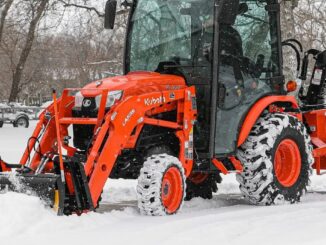
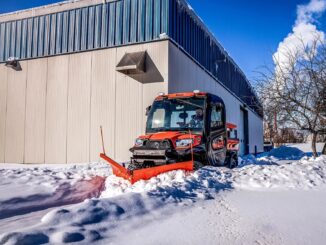
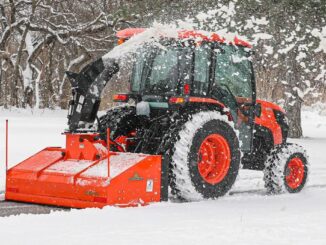
Kubota F-Series front mowers can become winter work machines when equipped with an approved snowblower, blade, or rotary sweeper. The correct setup depends on the exact mower, front hitch, PTO driveline, hydraulic controls, attachment weight, and installation package—not simply whether the attachment came from another Kubota F-Series.
For owners, identification is the first step in finding replacement parts and avoiding expensive repairs. The power unit, snowblower, quick hitch, connecting driveline, and optional controls may have separate model numbers and parts catalogs. Kubota’s parts system lists multiple generations of F-Series machines and separately cataloged snowblower revisions.kubotausa+1
This guide covers current and legacy US-market F-Series front mowers, related FZ models, snowblower parts, common faults, routine maintenance, and used-equipment inspections. It is written for owners maintaining an existing machine or assembling a complete, correctly matched winter package.
Kubota F-Series Models: Current and Legacy US Machines
The F-Series is a front-mount mower family, not a conventional compact tractor or zero-turn mower. Snow attachments must be approved for the power unit and its front equipment system.
Do not assume a front mower has a conventional tractor three-point hitch or rear agricultural PTO.
Current Kubota F-Series models
| Model | Published configuration | Winter ownership considerations |
|---|---|---|
| F2510E | Two-wheel-drive diesel front mower | Traction, approved attachment, ballast, and correct model-specific parts |
| F2510 | Four-wheel-drive diesel front mower | Correct hitch, driveline, control equipment, and tire arrangement |
| F3710 | Four-wheel-drive diesel front mower | Model-specific engine, emissions, PTO, and attachment service procedures |
Kubota’s current US F-Series brochure identifies the F2510E, F2510, and F3710. The F3710 uses a turbocharged common-rail diesel with a diesel particulate filter; its engine and emissions diagnosis differs from that of earlier, simpler F-Series machines.kubotausa+1
A current brochure does not establish that an older snowblower fits one of these machines. Confirm the complete application before purchasing mounting or driveline parts.
Legacy F-Series models
The following model identifications appear in Kubota’s US front-mower inventory or dealer parts resources.
| Family | Models and separately listed configurations | Parts and repair priority |
|---|---|---|
| Early F-Series | F2000 | Original front equipment, driveline, controls, and parts availability |
| F00 generation | F2100, F2100E, F2400 | Preserve the E designation and verify drive configuration |
| F60 generation | F2260, F2560, F2560E, F3060 | Match power-unit and attachment revisions |
| F80 generation | F2680E, F2880, F2880E, F3080, F3680 | Correct drive, engine, transmission, and front attachment application |
| F90 generation | F2690, F2690E, F3990 | Model-specific engine and emissions equipment |
| Additional catalog designations | F-2260-R, F3060-R, F2880-F, F2880E-F | Use the full catalog designation until its application is confirmed |
Kubota lists these machines separately in its US model resources. Do not remove an unfamiliar suffix when requesting parts; ask the dealer to establish the correct application from the identification plate and serial number.kubotausa+1
Historical references may shorten F2680E to F2680. Use the machine’s actual identification and the appropriate US parts listing rather than relying on a general model-history table.kubotausa+1
Related FZ front mowers
Kubota’s US model resources also list:
-
FZ2100.
-
FZ2400.
Treat these as separately identified machines. Their presence alongside F-Series equipment does not mean that the same hitch, blower, or connecting shaft fits both families.kubotausa
Two-wheel drive versus four-wheel drive
On the more recent F2690 family, Kubota identifies the F2690E as two-wheel drive and the F2690 as four-wheel drive. Earlier F2100 literature likewise distinguishes the F2100E two-wheel-drive version.kubotausa+1
Do not use a model-suffix rule as a substitute for inspecting the actual machine. Replacement axles, drivetrain repairs, traction equipment, and attachment recommendations must match the installed configuration.
Identify the Complete Snow-Removal Installation
An F-Series snowblower installation is more than the blower housing.
Record these details before ordering
Keep a permanent record of:
-
Power-unit model and serial number.
-
Engine identification.
-
Snowblower model and serial number.
-
Male and female hitch components.
-
Connecting PTO driveline.
-
Shaft supports and guards.
-
Hydraulic lift equipment.
-
Chute-rotation system.
-
Deflector-control system.
-
Cab or weather-enclosure identification.
-
Installed weights and traction equipment.
Photograph the complete installation before dismantling it. Include couplers, hose routing, shaft connections, brackets, locking pins, and wiring.
Keep the right manuals together
| Document | Main purpose |
|---|---|
| Power-unit operator’s manual | Safe operation, routine maintenance, approved fluids, and normal checks |
| Power-unit workshop manual | Diagnosis, measurements, and repair procedures |
| Snowblower operator’s manual | Attachment operation, adjustment, maintenance, and safety |
| Snowblower parts catalog | Replacement components and serial applicability |
| Quick-hitch instructions | Mounting, locks, pins, and installation |
| Driveline instructions | Shaft arrangement, guards, connection, and clearance |
| Accessory instructions | Chute controls, wiring, cylinders, motors, and switches |
An exploded diagram helps identify a component. It does not necessarily explain bearing fits, safe disassembly, shaft alignment, torque, or how a spring-loaded mechanism should be released.
Kubota F-Series Snowblower Models and Parts Families
Kubota’s US turf parts catalog lists several F-prefixed snowblower models and revisions.
Established attachment identifications
| Catalog identification | What owners should establish |
|---|---|
| F5210A | Exact serial range and installed components |
| F5210B two-stage snowblower | Correct blower parts catalog and tractor-side installation |
| F5220A two-stage snowblower | Complete attachment identity and applicable hitch |
| F5220B | Whether the listing matches the actual serial and configuration |
| F5220B 51-inch snowblower | Exact catalog selection rather than model number alone |
| F5220C 51-inch snowblower | Revision-specific parts and installation |
Kubota also lists a serial-specific F5210A catalog separately from the general F5210A entry. These distinctions make the attachment plate important when ordering bearings, shafts, housings, or drive components.shop.kubotausa
This is an identification list, not an interchange chart or a complete inventory of every attachment revision ever sold.
Quick-hitch identification matters
The same catalog lists separate hitch-related items, including the F5212A male quick hitch with a specified serial application. Other nearby F-prefixed entries are accessories or mounting equipment rather than snowblowers.shop.kubotausa
Do not assume every F52xx number refers to a complete blower.
Why the suffix matters
A revised snowblower may have changes affecting:
-
Shafts.
-
Bearing supports.
-
Gearbox components.
-
Auger assemblies.
-
Impeller assemblies.
-
Chute mechanisms.
-
Guards.
-
Mounting hardware.
Only the correct catalog or a confirmed supersession establishes whether an older component can be replaced by a later one.
Front Hitch, Lift, and PTO Repairs
A blower that will not run or lift may have a power-unit or installation problem rather than a fault inside the attachment.
Inspect the quick hitch
With the attachment lowered and power isolated, inspect:
-
Locking pins and retainers.
-
Latches.
-
Worn pivots.
-
Elongated holes.
-
Loose mounting hardware.
-
Bent brackets.
-
Cracked welds.
-
Lift-cylinder mounts.
-
Evidence of incomplete engagement.
A hitch that lifts the blower is not necessarily safe if its locking components are damaged.
Structural cracks and improvised welded repairs require professional assessment.
Inspect the complete driveline
Follow the manual’s power path from the machine to the attachment.
Check accessible:
-
PTO connections.
-
Universal joints.
-
Telescoping sections.
-
Shaft supports.
-
Coupler locks.
-
Splines.
-
Retaining components.
-
Guards.
Look for rust staining, missing retainers, damaged splines, looseness, and contact marks.
Do not run an exposed shaft to identify where motion stops. Dynamic PTO diagnosis requires an approved workshop procedure.
Watch for incorrect shaft fit
A shaft must have the correct length, overlap, alignment, and clearance throughout the attachment’s permitted movement.
Do not combine used shaft sections or shorten a shaft by guesswork. An incorrect driveline can bind, separate, or overload adjacent bearings.
Hydraulic lift problems
If the attachment lifts slowly or not at all:
-
Confirm correct coupler connections.
-
Check for incomplete seating.
-
Inspect accessible hoses.
-
Check fluid level using the prescribed procedure.
-
Allow proper cold-weather warm-up.
-
Check the applicable lift and control settings.
Do not search for hydraulic leaks with bare hands. High-pressure fluid can penetrate skin.
Snowblower Wear Parts Owners Should Inspect
Skid shoes
Check for uneven wear, worn-through metal, loose bolts, and distorted mounts.
Set the working clearance for the surface using the attachment manual. Gravel requires particular care because loose stones can enter the housing and become projectiles.
A blower that digs into the ground may have a shoe-setting or wear problem—not insufficient power.
Cutting edge
Inspect the edge before wear reaches the housing or mounting holes.
Where the design permits reversal, reverse or replace it at the appropriate stage. Match replacement parts to the actual attachment, not simply the clearing width.
Inspect the housing for distortion if the edge has caught a hidden obstacle.
Shear bolts and protective hardware
Use the specified fastener at each protected location.
A stronger substitute can defeat the protection system. An incorrectly sized bolt can fail prematurely and damage the holes.
Keep labeled spares for the actual attachment. Do not assume auger and driveline protection use the same bolt.
Auger and impeller
With the engine stopped, key removed, power isolated, and all movement stopped, inspect:
-
Bent flights.
-
Cracked welds.
-
Loose hardware.
-
Wrapped debris.
-
Housing-contact marks.
-
Damaged impeller blades.
-
Abnormal shaft movement.
Never reach into the auger, impeller, or chute. Stored mechanical energy can move parts after power is disconnected.
Rotating components with cracks, distortion, or recurring vibration require proper assessment.
Bearings and supports
Inspect bearing flanges, seals, retaining hardware, and shaft condition.
A failed bearing may result from misalignment, a bent shaft, water entry, or a damaged housing. Replacing only the bearing may leave the cause unresolved.
Bearing replacement can require pullers, pressing equipment, and model-specific installation information.
Gearbox, Chain, and Chute Repairs
Gearbox inspection
Check for:
-
Seal leakage.
-
Cracked housings.
-
Loose mounts.
-
Shaft movement.
-
Abnormal noise.
-
Contaminated lubricant.
-
Damaged vents or breathers, where fitted.
Use the specified lubricant and level-check procedure. Do not fill a gearbox completely or substitute grease for oil without explicit instructions.
Milky lubricant, metal particles, recurring leakage, or significant shaft movement warrants further diagnosis.
Chains and sprockets, where fitted
Inspect chain wear, sprocket teeth, alignment, adjustment hardware, and guards.
Use the attachment’s tension procedure. Excessive tension loads bearings; too much slack can cause impact or derailment.
Assess worn chains and sprockets together rather than fitting a new chain to badly worn teeth.
Manual chute rotation
Check for ice, bent linkage, loose supports, worn gears, and binding.
Thaw a frozen mechanism safely before forcing it. Excess leverage can bend the controls or damage their mounts.
Hydraulic chute controls
Check accessible hoses, couplers, and mechanical obstruction.
Relieve pressure only by the prescribed procedure. Do not loosen a pressurized fitting to check for oil flow.
Motor, valve, and pressure diagnosis requires suitable equipment.
Electric controls
Where fitted, inspect:
-
Correct fuse.
-
Ground connection.
-
Corroded connectors.
-
Chafed wiring.
-
Switch condition.
-
Motor or actuator mounting.
-
Mechanical binding.
Never increase fuse rating to overcome repeated failure.
Power-Unit Repairs That Affect Snow Removal
Hydrostatic transmission symptoms
The current F-Series uses a hydrostatic transmission, but older models require their own service information. Kubota describes the current family as having a two-range HST and hydrostatic power steering.kubotausa
Cold fluid, incorrect range selection, excessive working load, or a mechanical problem can produce poor response.
Check permitted routine items first. Persistent loss of drive, overheating, or unusual noise needs diagnosis.
Do not adjust pressure settings to compensate for an unidentified fault.
PTO engagement problems
A blower that stops under load may have an attachment obstruction, driveline fault, or power-unit PTO problem.
Check approved owner-service items with power isolated. Do not repeatedly engage the PTO against a jammed mechanism.
Internal clutch and PTO repairs require the correct workshop procedure.
Cooling-system problems
Snow can block screens and cooling areas. Keep the machine’s air passages clear without damaging fins or forcing debris deeper into the cooling system.
Inspect coolant condition and freeze protection when safe.
Do not assume a machine working in freezing weather cannot overheat.
Fuel and emissions faults
Earlier F-Series engines and later emissions-equipped models need different diagnosis.
The F3710’s common-rail system and DPF require model-specific procedures. Never loosen high-pressure injection lines or bypass emissions components to keep working.kubotausa
Repeated warnings, power reduction, or unsuccessful regeneration require qualified service.
Blades, Sweepers, and Other Winter Attachments
Kubota lists snowblowers, snow blades, rotary sweepers, and debris blowers among front-mower attachment options. Compatibility remains model-specific.kubotausa
Snow blades
Inspect cutting edges, shoes, pivots, hydraulic cylinders, hoses, and any trip mechanism.
Do not strike frozen banks at speed. Service loaded springs only according to the attachment instructions.
Rotary sweepers
A matched sweeper can be useful for light snow and cleanup.
Inspect brush wear, bearings, drive components, guards, and adjustment mechanisms. Avoid directing debris toward pedestrians, vehicles, or windows.
A sweeper is not a substitute for a deep-snow blower in every condition.
Spreaders and towing equipment
Do not assume an F-Series mower accepts a compact tractor’s three-point spreader, rear blower, or heavy tow-behind attachment.
Any spreader or towing arrangement requires confirmation of mounting, load, electrical, braking, and operating limits.
Traction, Tires, and Ballast
A front mower’s weight distribution and steering layout differ from those of a conventional compact tractor.
Tire and chain selection
Before fitting chains:
-
Confirm tire size.
-
Check machine approval.
-
Verify fender and chassis clearance.
-
Check steering movement.
-
Inspect proximity to hoses and other components.
-
Follow fitting and retensioning instructions.
Stop immediately if chains strike the machine.
Two-wheel-drive and four-wheel-drive versions should not be treated as equivalent winter performers. Four-wheel drive also does not prevent sliding or eliminate increased stopping distance.
Correct ballast
Use the approved weight arrangement for the machine and attachment.
Do not add improvised rear weights or apply a tractor ballast rule to a front mower. Excess weight can overload tires, axles, steering components, or transport equipment.
Include the blower, cab, and weights when calculating trailer load.
Winter Maintenance for Kubota F-Series Owners
Diesel fuel
Use clean fuel suited to expected temperatures.
No. 2 diesel generally provides greater energy content, while approved winter blends and No. 1 diesel can offer improved severe-cold flow.
Use approved anti-gel before cold-flow problems develop and at the specified rate. Do not add gasoline, alcohol, or unapproved solvents.
Check and drain accumulated water as instructed.
Battery and starting
Inspect terminals, cables, grounds, and hold-downs. Charge and test a weak battery before winter.
Use glow plugs and approved heaters according to the manual. Do not use starting fluid unless expressly permitted.
Never charge a frozen, cracked, swollen, or leaking battery.
Fluids and warm-up
Use the approved engine oil and transmission fluid for the machine and operating temperature.
Do not make an unverified low-temperature fluid conversion.
Warm up according to the manual, then confirm normal steering, braking, lift, and attachment response before loading the equipment.
Cab comfort and visibility
Kubota offers an optional hard cab for applicable front mowers, but cab equipment and compatibility vary.kubotausa
Inspect wipers, seals, lights, mirrors, and heater equipment where fitted.
Manage condensation through appropriate ventilation. Never assume an enclosure has adequate defrosting simply because it keeps wind off the operator.
Never idle in an enclosed building.
Troubleshooting F-Series Snowblower Problems
| Symptom | Likely causes | Safe first checks | When professional service is needed |
|---|---|---|---|
| Blower does not turn | Connection, protective-fastener, PTO, or drive fault | Isolate power and inspect manual-listed components | Internal PTO, gearbox, or shaft fault |
| One auger stops | Failed protection, obstruction, damaged connection | Inspect with power isolated | Bent shaft or recurring failure |
| Weak discharge | Excess feed, blockage, operating setting, drive fault | Reduce travel speed and review instructions | Persistent weakness or abnormal noise |
| Repeated shear failure | Obstacles, incorrect hardware, binding, damage | Verify parts and inspect for obstruction | Continued unexplained failure |
| Strong vibration | Debris, bent components, bearing or shaft damage | Stop immediately | Cracks, distortion, bearing or shaft repair |
| Gearbox leaks | Seal, housing, shaft, vent, or level problem | Check exterior and specified level | Metal debris or recurring leakage |
| Chute sticks | Ice, binding, control fault | Thaw safely and inspect accessible parts | Motor, hydraulic, electrical, or structural fault |
| Lift is slow | Cold fluid, coupler issue, low fluid, hydraulic fault | Warm correctly and check routine items | Persistent weak response or unusual noise |
| Machine loses traction | Ice, tire choice, excessive load, balance | Reduce load and review approved setup | Drivetrain fault or unsafe installation |
| Engine loses power | Excess load, fuel restriction, engine or emissions fault | Check approved routine items | Repeated power loss or warnings |
| Poor steering response | Ice, tire condition, load distribution, hydraulic fault | Stop and inspect safe routine items | Persistent or unpredictable response |
Routine cleaning, lubrication, inspection, and manual-listed adjustments are suitable owner tasks. Internal transmissions, common-rail injection, high-pressure hydraulics, structural damage, and complex electrical repairs require qualified service.
Buying a Used F-Series Snowblower
Ask for a complete inventory of the:
-
Blower.
-
Hitch components.
-
Power-unit brackets.
-
Connecting driveline.
-
Support bearings.
-
Lift components.
-
Guards.
-
Controls.
-
Hoses and couplers.
-
Installation hardware.
-
Manuals.
Have the proposed combination checked against your exact mower before paying.
Inspect for bent augers, impeller contact, gearbox leakage, bearing play, damaged splines, rusted-through metal, and improvised welding.
Confirm major-parts availability before dismantling. A catalog entry does not guarantee immediate supply.
Storage and Return to Service
After use, remove salt, grit, and packed debris, then allow the equipment to dry.
Lubricate specified points, protect exposed metal, cap couplers, and inspect wiring. Label detached shafts and mounting hardware.
Store attachments on approved stands or stable supports—not suspended by hydraulic pressure.
Before restarting:
-
Remove covers and tagged intake or exhaust protection.
-
Inspect for rodents, damaged wiring, and leaks.
-
Check fluids, battery, tires, and weights.
-
Inspect shafts, guards, hoses, and couplers.
-
Confirm attachment locks.
-
Start and warm up correctly.
-
Test steering, braking, lift, and attachment operation in a clear area.
-
Recheck for leaks and abnormal noise.
Frequently Asked Questions
Can every Kubota F-Series mower operate a snowblower?
No universal fit should be assumed. Verify the power unit, hitch, driveline, controls, attachment weight, and approved application.
Are F5210 and F5220 snowblower parts interchangeable?
Only where the applicable catalog confirms it. Kubota lists multiple suffixes and serial-specific applications.shop.kubotausa
Does the F2510 use the same snow equipment as the F2690?
Do not assume so. Obtain the current application and installation instructions for the exact mower and attachment.
Can a two-wheel-drive F-Series clear snow?
A correctly matched machine may be used within its approved limits, but traction, gradient, surface, attachment load, and ballast need careful assessment. Do not assume four-wheel-drive performance.
Why does my blower keep breaking shear bolts?
Check obstacles, incorrect fasteners, binding, worn holes, and damaged components. Stronger bolts are not a repair.
Can I fit an ordinary tractor snowblower to an F-Series?
Not without a verified, approved installation. A front mower’s hitch and PTO system should not be treated as a conventional tractor interface.
Can I replace the bearings myself?
Possibly, with the correct tools, service information, and skills. Damaged shafts, housings, or rotating assemblies need further assessment.
Should I keep the mower deck and snowblower parts together?
Keep each attachment’s hardware separately labeled, and retain a record of shared components. This reduces missing-part and incorrect-assembly problems during seasonal changes.
Complete Repairs Before the First Storm
Keep one parts record for the power unit, blower, hitch, driveline, and controls.
Resolve worn locks, damaged guards, recurring shear failures, vibration, and lubricant leakage before winter work begins. Use both machine and attachment instructions, and arrange specialist repairs before a minor fault damages a shaft, gearbox, or mounting structure.