
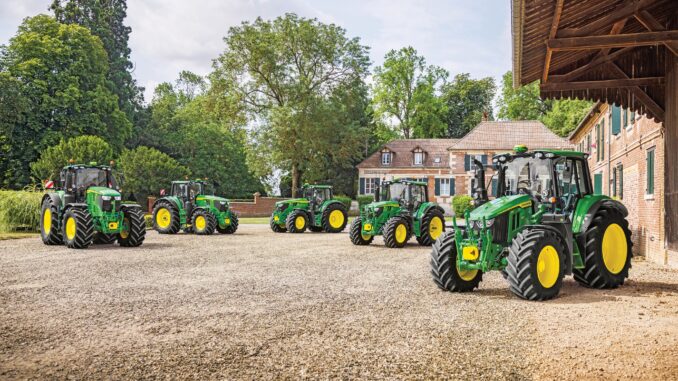
The John Deere 1023E is a 1 Series sub-compact utility tractor sold in North America, and Deere’s operator material covers engine, drivetrain, PTO, hydraulics, electrical, brakes, steering, and maintenance intervals in one platform-specific manual. This guide is written for homeowner and DIY users in the USA and Canada, with a symptom-first troubleshooting structure, clear DIY-vs-dealer boundaries, model-specific service parts, and a large FAQ ready to publish as a WordPress post.
Introduction to the John Deere 1023E
The John Deere 1023E is a sub-compact utility tractor in Deere’s 1 Series lineup, aimed at homeowners and acreage users who need more capability than a lawn tractor but still want a compact, easy-to-handle machine. In practical use, it fits jobs like mowing with a mid-mount deck, light loader work, material moving, snow work, and general property maintenance rather than heavy agricultural field work.
This John Deere 1023E repair, troubleshooting and maintenance guide covers the systems owners deal with most often: no-start complaints, rough running, poor mowing results, hydraulic and transmission concerns, electrical issues, and routine service that prevents expensive failures. It also highlights which jobs are realistic for a careful owner and which ones usually justify dealer-level tools, diagnostic skill, or workshop equipment.
General overview of the John Deere 1023E
The John Deere 1023E sits at the entry side of Deere’s 1 Series sub-compact range, and Deere’s manual groups it closely with the 1025R because the machines share many operating and service principles. That matters for owners because many common issues are tied to a few core systems: diesel engine and fuel delivery, hydrostatic drive, PTO and mower deck operation, hydraulic functions, cooling package, and the electrical/safety interlock system.
For repair and maintenance purposes, the main John Deere 1023E systems break down like this:
-
Engine and fuel system: engine oil, oil filter, primary and secondary air elements, inline fuel filter, main fuel filter, water separator, and cooling components.
-
Mower system: AutoConnect mid-mount deck compatibility, deck leveling, blade condition, deck belt condition, gauge wheel setup, and PTO engagement.
-
Drive system: hydrostatic transmission, front axle oil, hydraulic/transmission oil, driveshaft lubrication, MFWD use, and traction-related controls.
-
Electrical system: battery, alternator, relays, fuses, lights, key switch circuits, and safety interlocks that must be working before startup.
Several John Deere 1023E service parts commonly purchased by owners are listed directly in Deere’s replacement parts guide, including oil filter M806418, inline fuel filter AM116304, fuel filter MIU804763, primary air filter M113621, secondary air filter M123378, hydraulic filter LVA16054, battery TA15224, and alternator LVA12357. Deere also lists a filter pack, LVA21035, that bundles the main maintenance filters for the tractor.
John Deere 1023E troubleshooting approach
The best way to troubleshoot a John Deere 1023E is to start with the symptom the owner can see, hear, smell, or feel, then narrow the cause using the systems Deere covers in the operator’s manual troubleshooting and maintenance sections. That approach reduces wasted parts replacement and helps separate a simple maintenance problem from a real repair problem.
The main symptom groups for a John Deere 1023E are:
-
Starting issues, such as no crank, weak crank, or crank-but-won’t-start.
-
Running issues, such as low power, stalling, smoke, or rough operation.
-
Cut-quality problems, such as scalping, uneven height, or poor discharge with a 54D or 60D deck.
-
Vibration and noise, including deck vibration, driveline noise, belt noise, or rattling guards.
-
Overheating and leaks, including clogged screens, low coolant, fluid seepage, or oil contamination.
-
Transmission and drive issues, such as weak motion, poor hydro response, or MFWD/front axle concerns.
-
Electrical and safety-switch faults, such as intermittent starting, dead instruments, blown fuses, or PTO/safety interlock complaints.
Emergency and immediate repair needs
Some John Deere 1023E problems should be dealt with immediately because they create a safety risk or can damage expensive components very quickly. The big red-flag issues are fuel leaks, hydraulic leaks under pressure, overheating, failed safety interlocks, severe vibration, brake problems, and any PTO or driveline issue involving shields, couplers, or rotating parts.
4.1 John Deere 1023E starting issues
If the John Deere 1023E will not crank or will not start, the problem matters right away because repeated cranking can flatten the battery, overheat wiring, and hide the real cause. On a compact diesel, owners should think in terms of battery condition, fuel delivery, safety interlocks, and airflow before assuming a major engine problem.
Common causes:
-
Weak or failed battery.
-
Dirty or loose battery terminals.
-
Faulty seat, PTO, or range/safety interlock issue.
-
Restricted fuel filter or inline fuel filter.
-
Water in fuel or poor diesel quality.
-
Clogged air filter elements.
-
Blown fuse or relay problem.
Basic checks:
-
Confirm the PTO is off, range and parking conditions are correct, and the operator setup matches Deere’s starting procedure.
-
Inspect battery terminals for looseness or corrosion and check battery age/condition.
-
Verify clean fuel is present and inspect the filters and water-separator-related fuel path for restriction or contamination.
-
Check the air filter condition and clean debris from intake areas if needed.
-
Inspect fuses and basic electrical connections before moving on to deeper diagnostics.
4.2 John Deere 1023E cut-quality problems
Poor mowing quality on a John Deere 1023E usually shows up as uneven cut height, streaking, scalping, clumping, or poor discharge. These issues matter because owners often replace blades or belts first, when the real problem is deck level, gauge wheel setup, mowing speed, or damaged blades.
Common causes:
-
Blade edges dull, bent, or mismatched.
-
Deck side-to-side or front-to-rear level out of spec.
-
Gauge wheels adjusted incorrectly.
-
Deck packed with debris.
-
Wrong blade type for conditions.
-
Belt slip or weak PTO drive.
-
Ground speed too fast for grass volume.
Basic checks:
-
Clean the underside of the deck and chute area with the engine off and key removed.
-
Inspect blades for bends, cracks, and edge wear; replace as a matched set when needed.
-
Check deck level side-to-side and front-to-rear; Deere states front blade tips should be 3-6 mm lower than the rear for best cut quality.
-
Set gauge wheels so they are not carrying the deck continuously; Deere describes a 9.5 mm (3/8 in.) gap to the ground in the setup procedure.
-
Retest at a slower mowing speed if the grass is heavy or damp.
4.3 Vibration and noise
New vibration or noise on a John Deere 1023E should never be ignored because it can quickly turn a small issue into spindle, belt, driveline, or hardware damage. The owner’s first job is to decide whether the vibration comes from the engine, the deck/PTO, the driveline, or loose chassis parts.
Common causes:
-
Bent or damaged mower blade.
-
Debris wrapped around deck components.
-
Loose wheel or chassis hardware.
-
Worn or damaged belt.
-
Driveshaft or MFWD lubrication issue.
-
Loose shields or mounts.
Basic checks:
-
Stop using the tractor until the source area is isolated.
-
Inspect the mower deck and blades first if vibration appears only with PTO engagement.
-
Check visible hardware, wheel fasteners, and mounted attachment points.
-
Inspect belts and rotating shields for damage or rubbing.
-
If the vibration is present with no mower attached, move diagnosis toward engine, driveline, axle, or transmission areas.
4.4 Overheating and leaks
Overheating or visible leaks on a John Deere 1023E need prompt attention because Deere specifically includes cooling-system safety, radiator and cooling-fin cleaning, hose inspection, and fluid checks as routine service items. Continued use with low coolant, blocked screens, or hydraulic/oil leaks risks expensive engine or hydrostatic damage.
Common causes:
-
Debris clogging grille screens or cooling fins.
-
Low coolant level.
-
Aging radiator hoses or loose clamps.
-
Engine oil leak or hydraulic leak.
-
Front axle or transmission oil seepage.
-
Heavy load with poor airflow through the cooling package.
Basic checks:
-
Stop the tractor and let it cool before opening or inspecting the cooling system.
-
Clean front and side grille screens and inspect the radiator, fuel, and transmission cooling fins.
-
Check coolant level and inspect hoses and clamps.
-
Look underneath for fresh engine, transmission/hydraulic, or front axle fluid leaks.
-
Do not continue operating if temperature issues or active leaks persist after cleaning and fluid checks.
4.5 John Deere 1023E transmission and drive problems
Drive complaints on the John Deere 1023E usually show up as weak pull, slow response, poor hill performance, jerky hydro action, or front-axle/MFWD concerns. Because this tractor relies on shared transmission and hydraulic functions, fluid level, filter condition, and proper service intervals matter more than many owners realize.
Common causes:
-
Low transmission/hydraulic oil.
-
Hydraulic filter overdue or restricted.
-
Suction screen contamination.
-
Front axle oil neglected.
-
Linkage or control misuse.
-
Internal hydrostatic wear or hydraulic fault.
Basic checks:
-
Check transmission/hydraulic oil level according to Deere procedure.
-
Confirm the hydraulic filter service is current; Deere lists first replacement at 50 hours and then every 200 hours.
-
Inspect for external leaks or damaged hoses.
-
Check front axle oil level if MFWD performance seems abnormal.
-
If the tractor still lacks drive after fluid and filter checks, dealer diagnosis is usually the smart next step.
4.6 John Deere 1023E electrical problems
Electrical issues on a John Deere 1023E often feel random to owners because a weak battery, dirty terminals, a blown fuse, or a safety-interlock fault can all create similar symptoms. The manual’s electrical maintenance section focuses on battery service, booster-battery use, bulbs, relays, and fuses, which is a good clue that many “mystery” problems start in these simple areas.
Common causes:
-
Weak battery or poor charging.
-
Corroded terminals or bad ground.
-
Blown fuse or faulty relay.
-
Light circuit issues.
-
Safety-switch fault.
-
Alternator/charging problem.
Basic checks:
-
Clean and tighten battery terminals and inspect cables.
-
Test or substitute the battery if cranking is weak or intermittent.
-
Check fuses and relays before replacing larger components.
-
Confirm the tractor starts and behaves correctly only when the operator controls are in the proper positions.
-
If charging voltage remains low after basic checks, inspect the alternator belt and charging system further.
DIY or dealer? Repair decision guide
For the John Deere 1023E, the normal line is this: routine service, deck setup, filter changes, blade work, and visible bolt-on parts are realistic DIY jobs, while internal hydrostatic work, fuel injection issues, electrical diagnosis beyond basic circuits, and engine tear-down work are usually dealer territory. Owners who stay on the maintenance side of the line can solve a large share of common problems without taking on unnecessary risk.
Good DIY jobs
-
Engine oil and oil filter service.
-
Air filter and fuel filter replacement.
-
Hydraulic filter replacement at scheduled intervals.
-
Battery replacement and terminal cleaning.
-
Deck blade replacement, deck cleaning, and deck leveling.
-
Front axle and fluid level checks.
Advanced DIY or dealer jobs
-
Troubleshooting no-start issues after battery, fuse, and filter basics are ruled out.
-
Hydrostatic transmission or hydraulic performance diagnosis involving pressure testing.
-
Fuel injection pump or injector work.
-
Internal PTO, axle, or drivetrain repair.
-
Major electrical tracing involving harness faults or control modules.
-
Engine internal repair or compression-related diagnosis.
Skill level guide
-
Beginner: oil and filter service, air filter replacement, battery service, deck cleaning.
-
Intermediate: fuel filter changes, hydraulic filter service, blade replacement, deck leveling, belt inspection.
-
Advanced: deeper electrical diagnosis, driveline repair, hydraulic troubleshooting, or internal engine/drivetrain work.
Parts needed, OEM vs aftermarket, and what information you need
Before ordering John Deere 1023E parts, gather the full model name, Product Identification Number (PIN), engine identification, and the exact deck or attachment version fitted to the tractor. Deere’s own materials separate parts and service information by serial range, and even seat and air-filter applications in the parts guide change by serial break, so this step prevents expensive ordering mistakes.
OEM parts are usually the safest choice for belts, hydraulic filters, safety-related electrical switches, fit-sensitive deck parts, and anything tied to serial-number changes. Aftermarket parts can make sense for some batteries, common filters, and blades, but only when the cross-reference is exact and the seller clearly lists John Deere 1023E compatibility plus the correct deck or serial range.
John Deere 1023E manuals and parts diagrams
For John Deere 1023E owners, the best sources are Deere’s operator manual, Deere replacement parts guide, Deere parts systems, and a Deere-focused parts retailer with model pages. Each source does a different job, so using them together is usually faster than relying on one site alone.
Recommended sources:
-
John Deere 1023E/1025R Operator’s Manual — best for maintenance intervals, controls, troubleshooting categories, fluid specs, and service procedures.
-
John Deere 1023E Replacement Parts Guide PDF — best for fast lookup of common maintenance parts and capacities.
-
John Deere Parts and Service — useful for official parts lookup, dealer support, and model/serial-based parts confirmation.
-
Deere-focused parts retailers with model pages — useful for quick ordering once you have the correct OEM number, but always verify against Deere documentation first.
How to locate model, serial and engine numbers on a John Deere 1023E
These numbers matter because a John Deere 1023E can have serial-range differences, optional deck differences, and engine-specific parts that are not safe to guess from appearance alone. Getting the PIN and engine details first saves time, avoids returns, and helps dealers or parts counters identify the right breakdown immediately.
Use this process:
-
Locate the tractor Product Identification Number tag on the machine and record it exactly as shown.
-
Record the full model designation as listed on the machine identification information.
-
Find the engine identification directly on the engine and write down the model and serial details.
-
If a mower deck or attachment is fitted, record its own model and serial information separately.
-
Keep these numbers with your maintenance records so future parts ordering is faster and more accurate.
Buying John Deere 1023E parts online and in stores
The best buying strategy is to identify the part from Deere literature first, then compare availability and price between Deere channels, specialist parts sellers, and local retailers for common consumables. This works especially well on the John Deere 1023E because many owners buy the same routine service items repeatedly, while serial-sensitive repair parts still need exact confirmation.
Use these channels strategically:
-
Online: best when you already have the OEM part number and can confirm serial applicability before checkout.
-
Dealer counter: best for complicated parts, serial-break parts, hydraulic or drivetrain items, and anything unclear in the diagram.
-
Retail stores: acceptable for common consumables such as batteries or cross-referenced filters only when packaging clearly matches the tractor or engine application.
Useful links:
-
John Deere operator manual portal for procedures and service intervals.
-
John Deere replacement parts guide PDF for common filter and service numbers.
-
John Deere parts and service for official parts support and dealer assistance.
Step-by-step fitting guide for common John Deere 1023E parts
These are the high-impact service jobs most owners actually do on a John Deere 1023E, and each one can prevent a large share of common starting, running, and mowing complaints.
Change the engine oil and oil filter on a John Deere 1023E
Fresh oil and a clean filter support engine life and help protect a compact diesel that may see dusty or stop-start property work.
-
Park on level ground, lower attachments, shut the engine off, and let it cool.
-
Check the operator procedure, drain the engine oil safely, and remove the old oil filter.
-
Lightly oil the seal on the new M806418 filter and install it correctly.
-
Refill with the correct engine oil type and quantity specified by Deere.
-
Start the engine, check for leaks, shut down, and recheck oil level.
Replace the air filters on a John Deere 1023E
Air filter service often fixes low power, smoke, or hard-start complaints in dusty conditions.
-
Open access as required and remove the primary air filter element.
-
Inspect the primary element and replace it if dirty, damaged, or at the scheduled interval using M113621.
-
Inspect the secondary element and replace with M123378 if required.
-
Clean out loose debris from the housing without forcing dirt into the intake tract.
-
Reassemble carefully so seals seat properly and unfiltered air cannot bypass the elements.
Replace the fuel filters on a John Deere 1023E
Fuel filter service can correct power loss, hesitation, difficult starting, or poor running caused by restricted fuel flow.
-
Shut the tractor down safely and control fuel spillage before opening the system.
-
Replace the inline fuel filter AM116304 if it is due or visibly contaminated.
-
Replace the main fuel filter MIU804763 at the proper interval or sooner if fuel quality is suspect.
-
Check for water contamination and ensure clean diesel is being used.
-
Restart according to Deere procedure and inspect carefully for leaks.
Service blades and level the mower deck
Blade condition and deck setup have a bigger effect on cut quality than many owners expect.
-
Remove the key, wait for all motion to stop, and secure the deck safely before working under it.
-
Inspect blades and replace damaged or badly worn blades as a matched set; for 60-inch decks, Deere lists M163983 standard blades and TCU15881 high-lift blades among the options.
-
Check side-to-side level and adjust turnbuckles until the blade-tip measurements are within Deere’s limit.
-
Set front-to-rear pitch so front blade tips are 3-6 mm lower than the rear.
-
Adjust gauge wheels so they sit slightly above the ground in normal mowing, then test cut on level turf.
Maintenance to prevent problems reoccurring
Regular maintenance prevents most repeat John Deere 1023E problems because the machine depends on clean air, clean fuel, correct fluid levels, safe electrical connections, and proper deck setup. Owners who treat maintenance as a diagnostic tool usually catch issues before they become repair bills.
Focus areas:
-
Starting reliability: maintain the battery, keep terminals clean, and replace fuel and air filters on schedule.
-
Cut quality: keep blades sharp, deck clean, and deck leveling correct.
-
Fire and overheating prevention: clean screens, engine compartment areas, and cooling fins regularly.
-
Drive performance: watch hydraulic/transmission service intervals and fluid level closely.
-
Electrical reliability: check battery cables, fuses, relays, and safety interlock function routinely.
John Deere 1023E maintenance schedule and year-round checklist
Deere’s operator manual includes maintenance interval charts from daily checks through 400 hours, then additional longer intervals up to 6000 hours. The quick-reference parts guide also confirms several key replacement points, including oil filter at 200 hours, hydraulic filter first at 50 hours then every 200 hours, and fuel and air filters at 400 hours with daily or 10-hour air system checks.
Daily / before each use
-
Check engine oil level.
-
Test the safety interlock system before startup.
-
Check and service the air intake area and inspect filter condition as needed.
-
Check coolant level.
-
Inspect for leaks, loose hardware, and obvious tire or attachment issues.
After first 50 hours
-
Replace the hydraulic filter LVA16054.
-
Review drivetrain and transmission service points associated with initial break-in inspection.
-
Check wheel bolts and hardware.
Every 200 hours or yearly
-
Change engine oil and replace oil filter M806418.
-
Replace the hydraulic filter after the initial 50-hour service, then every 200 hours.
-
Check and service air system items listed at the 200-hour interval.
-
Clean radiator, fuel, and transmission cooling fins thoroughly.
Every 400 hours or yearly
-
Replace the inline fuel filter AM116304.
-
Replace the main fuel filter MIU804763.
-
Replace primary and secondary air filters as required, with 400 hours listed as the main replacement interval in Deere’s guide.
-
Inspect belts, hoses, and related wear items while access is open.
Longer intervals
-
Follow Deere’s 600-hour, 1000-hour, 2000-hour/two-year, and 6000-hour/six-year items exactly from the operator’s manual for coolant, drivetrain, and other major service points.
-
Use the service record section in the manual to track completion.
Seasonal checklist
-
Spring: change overdue fluids and filters, inspect battery condition, clean cooling areas, and set up the deck correctly before mowing season.
-
Mid-season: recheck blade sharpness, deck pitch, tire pressures, screens, and all fluid levels.
-
Fall or storage prep: clean the machine, prepare fuel and engine for storage, and remove the machine from service according to Deere’s storage section.
Repair, upgrade, or replace?
For most homeowners, a John Deere 1023E is worth repairing when the problem is isolated, the chassis and driveline are still sound, and the tractor still fits the property’s workload. Upgrade or replacement becomes more sensible when repeated repairs start stacking up, the machine is undersized for the jobs being asked of it, or major hydraulic, drivetrain, or engine work approaches a large percentage of the tractor’s market value.
Repair if:
-
The issue is maintenance-related, such as filters, battery, blades, belts, or deck setup.
-
The machine starts, drives, and hydraulics function normally apart from one localized fault.
-
The cost is modest compared with the value and usefulness of the tractor.
Upgrade if:
-
You need more hydraulic capacity, lift capability, comfort features, or mowing productivity.
-
Attachments and workload now exceed what a sub-compact entry model handles comfortably.
-
You are repeatedly pushing the machine beyond homeowner-duty use.
Replace if:
-
The tractor has severe engine, hydrostatic, or structural issues.
-
Repair needs are multiple and overlapping rather than one clear fault.
-
Safety-critical systems or major driveline components are failing together on a worn machine.
Expanded troubleshooting FAQ
1. Why will my John Deere 1023E not start?
A John Deere 1023E no-start is often caused by battery condition, terminal corrosion, safety interlock position, or fuel delivery issues rather than a major engine failure. Start with the simple checks: PTO off, proper starting setup, clean/tight battery terminals, good fuel supply, and clean filters. If it cranks strongly but still will not fire, move toward fuel restriction, contaminated fuel, or air intake problems.
2. Why does my John Deere 1023E crank but not fire?
When the starter turns the engine but it does not fire, think fuel flow, fuel quality, and air restriction first. Deere lists inline and main fuel filters plus air elements as core maintenance parts, so overdue service here is a common cause of hard starting. Also check for water contamination and confirm the machine is being started with the controls in the proper positions.
3. Why is my John Deere 1023E battery always going flat?
A flat battery can come from age, poor cable connections, charging issues, or repeated short run times. Deere’s service information includes battery cleaning, safe battery removal/installation, booster battery use, and alternator belt service, which points to the normal diagnostic path. Clean the terminals first, test the battery, then investigate charging output and the alternator if the problem returns.
4. Why does my John Deere 1023E start hard in cold weather?
Cold weather starting is harder on diesel equipment because fuel behavior changes and cranking demand rises. Deere’s operator material includes cold weather starting aids and diesel fuel guidance, so the basics are using proper diesel fuel, keeping the battery strong, and following Deere’s cold-start procedure. A weak battery or marginal fuel filter shows up faster when temperatures drop.
5. Why is my John Deere 1023E running rough?
Rough running usually points to restricted air or fuel, contaminated diesel, or neglected routine service. Check the primary and secondary air filters, fuel filters, and general fuel condition before assuming injector or internal engine trouble. If basic service does not improve it, the next step may be dealer-level fuel system diagnosis.
6. Why is my John Deere 1023E low on power?
Low power on a sub-compact diesel often comes from clogged filters, dirty cooling areas, or simply asking the tractor to do too much in heavy grass or under load. Start by restoring basic service condition, then make sure the deck is clean, blades are sharp, and mowing speed matches conditions. If power is weak in all tasks, not just mowing, look deeper into fuel delivery or engine condition.
7. Why does my John Deere 1023E stall under load?
Stalling under load usually means the engine is being starved of fuel or air, or the machine is being overloaded relative to traction, hydrostatic demand, or PTO load. Replace overdue filters, inspect for fuel contamination, and make sure the cooling and intake systems are clean. If the issue appears only when mowing heavy grass, reduce ground speed and inspect the deck for buildup.
8. Why is my John Deere 1023E smoking?
Smoke color matters, but in general owners should first check intake restriction, fuel quality, and whether the engine is being overloaded. A dirty air system can upset combustion, while poor fuel can cause rough operation and smoke. If smoke is severe, persistent, or accompanied by hard starting and oil use, that moves the tractor closer to dealer diagnosis.
9. Why won’t my John Deere 1023E move properly?
Weak or inconsistent movement often ties back to hydrostatic transmission and hydraulic system health. Check transmission/hydraulic oil level, service status of the hydraulic filter, and visible leaks first. If those basics are correct and the tractor still barely moves or acts erratically, internal hydro or hydraulic testing is usually needed.
10. Why is my John Deere 1023E hydrostatic transmission jerky?
Jerky hydro operation can be caused by fluid condition, low oil level, filter restriction, linkage feel, or deeper hydraulic issues. Because Deere specifies hydraulic filter service early at 50 hours and then every 200 hours, overdue service should be ruled out first. Persistent jerkiness after basic maintenance deserves closer inspection rather than continued use.
11. Why does my John Deere 1023E lose traction so easily?
Traction issues are not always a repair fault; they may be related to ground conditions, tire setup, ballast, MFWD use, or attachment load. Deere includes ballast, front-wheel-drive operation, and tire information in the operator material because correct setup matters on a small tractor. Before chasing drivetrain faults, verify tire condition, tire pressure, ballast, and whether MFWD is being used appropriately.
12. Why is my John Deere 1023E overheating?
Overheating usually starts with restricted airflow or low coolant rather than a catastrophic failure. Deere specifically calls for cleaning grille screens, engine compartment areas, and radiator/fuel/transmission cooling fins, which are easy to overlook on mowing and loader tractors. Stop operating, clean the cooling package, and verify coolant level before running it again.
13. Why is my John Deere 1023E leaking oil?
Oil leaks may come from the engine, transmission/hydraulic system, or front axle, so the first step is identifying the fluid and the location. Small seeps are common on aging equipment, but active drips should be addressed before they lower fluid levels or contaminate belts and deck components. Clean the area, monitor where fresh oil appears, and do not ignore leaks near hot surfaces.
14. Why is my John Deere 1023E leaking hydraulic fluid?
Hydraulic leaks matter more than many owners think because the transmission and hydraulic functions are closely tied on this tractor. Low fluid can hurt drive performance and hydraulic response, and leaks under pressure can be dangerous. If the leak is more than a minor seep from an accessible fitting, dealer help is often the safer path.
15. Why does the John Deere 1023E PTO not engage properly?
A PTO complaint may be electrical, control-related, safety-interlock-related, or mechanical depending on the exact symptom. First confirm the tractor is operating under the correct engagement conditions and that no interlock or operator-position issue is involved. If the PTO circuit seems normal but the attachment still does not run correctly, inspect deck belt condition, blade drag, and attachment setup.
16. Why is my John Deere 1023E cutting unevenly?
Uneven cutting is usually a deck setup issue before it is a major parts failure. Deere’s deck adjustment procedure focuses on side-to-side level, front-to-rear pitch, and gauge wheel setting, and those three checks solve a large share of homeowner complaints. Bent blades or tire pressure differences can also create the same symptom.
17. Why does my John Deere 1023E leave strips of uncut grass?
Streaking often comes from dull blades, low blade lift, deck buildup, or mowing too fast for the grass volume. Check blade condition first, then make sure the underside of the deck is clean and the deck is level. In heavier conditions, high-lift blades may improve discharge and reduce striping on suitable setups.
18. Why is my John Deere 1023E scalping the lawn?
Scalping usually means the deck is too low, the deck pitch is wrong, the gauge wheels are misadjusted, or the ground is more uneven than expected. Deere’s gauge wheel and deck leveling procedure is the right starting point before changing parts. Also slow down on uneven areas and verify tire pressures are even side-to-side.
19. Why does my John Deere 1023E clump wet grass?
Wet grass clumps because discharge flow drops and cut material sticks inside the deck housing. A dirty deck, dull blades, and excessive ground speed make the problem worse. Clean the deck, sharpen or replace blades, and mow slower or wait for drier conditions when possible.
20. Why does my John Deere 1023E mower deck vibrate?
Deck vibration usually comes from a bent blade, damaged blade hardware, packed debris, or a belt-related problem. Stop using the deck until the cause is found because vibration can quickly damage spindles and related hardware. If the vibration is only present with the PTO on, the deck is the first area to inspect.
21. Why do my John Deere 1023E blades wear out quickly?
Fast blade wear is usually a use-condition issue rather than a tractor issue. Sandy soil, sticks, hidden roots, stones, and frequent contact with the ground all shorten blade life, especially if gauge wheels or deck height are not set correctly. Keeping the deck level and avoiding impacts does more for blade life than switching brands repeatedly.
22. Which blades fit a John Deere 1023E with a 60-inch deck?
For 60-inch mower deck applications, Deere lists M163983 as a standard blade, TCU15881 as a high-lift blade, and M168223 as a mulch blade option. The important point is to match the blade to the exact deck and mowing goal, not just the tractor model. Always verify the deck size and current deck version before ordering.
23. Why does my John Deere 1023E deck belt keep slipping?
A slipping deck belt can be caused by wear, contamination, weak tension, pulley issues, or drag from debris and damaged bearings. Owners often blame the belt alone, but a deck packed with grass or a blade/spindle issue can overload the belt path. Inspect the whole drive path before replacing parts blindly.
24. Why does my John Deere 1023E battery not charge?
If the battery is not charging, start with the obvious items: cable condition, terminal cleanliness, battery health, and alternator belt condition. Deere lists both alternator service and battery service topics, which is where most owners should begin. If the battery still discharges after those checks, test the charging system more formally.
25. Why do the lights or dash stop working on my John Deere 1023E?
Dead lights or dash functions often point to blown fuses, relay issues, poor grounds, or battery/cable problems. Deere’s electrical maintenance section covers relays, fuses, bulbs, and battery service because these are common failure points. Check simple power supply issues before assuming a harness or switch failure.
26. Why does my John Deere 1023E blow fuses?
Blown fuses usually mean a short circuit, damaged wiring, a failing component, or incorrect replacement procedures. Replacing the fuse without finding the cause often just repeats the problem. If the fuse fails again quickly, stop and trace the affected circuit instead of fitting larger fuses or bypasses.
27. Why is the John Deere 1023E safety switch system acting up?
Intermittent safety-switch complaints can mimic battery, ignition, or PTO problems because the interlock system is designed to stop unsafe starting or operation. Deere specifically tells owners to test the safety interlock system before startup as part of regular maintenance. If the tractor behaves differently depending on seat position, PTO state, or control selection, the interlock system deserves attention first.
28. Why is my John Deere 1023E steering loose or vague?
Loose steering can come from wear in steering linkage, front-end parts, tire issues, or alignment-related component wear. Deere’s parts guide lists the tie rod MIA881641, which shows that steering wear items are identifiable as bolt-on service parts in some cases. Do not ignore steering looseness because it affects control and tire wear.
29. Why are the brakes weak on my John Deere 1023E?
Weak brakes are a safety issue and should be addressed immediately. Deere includes brake maintenance and related safety procedures in the operator manual, and the parts guide lists brake disk LVA16465 among service parts. Basic inspection is reasonable, but any uncertain brake repair is worth dealer attention because safe stopping is non-negotiable.
30. Why does my John Deere 1023E ride rough?
A rough ride can be caused by tire pressure, attachment setup, terrain, ballast mismatch, or loose front-end components. On a sub-compact tractor, the machine setup matters a lot, so check tire inflation, ballast, deck transport position, and visible hardware first. If roughness comes with steering play or vibration, inspect the front end more closely.
31. How often should I service my John Deere 1023E?
The main John Deere 1023E rhythm is daily checks before use, a first hydraulic filter change at 50 hours, oil and hydraulic service around 200 hours, and fuel/air filter replacement around 400 hours, with additional longer-interval items in the operator manual. Owners who mow frequently should also treat deck cleaning, blade inspection, and cooling-screen cleaning as regular in-season tasks.
32. What engine oil and fluids does the John Deere 1023E use?
Deere’s quick-reference guide lists approximate capacities of 2.7 L crankcase with filter, 3.7 L cooling system, 12.3 L transmission/hydraulic system, and 2.8 L front axle, with Deere fluid recommendations tied to those systems. The operator manual should always be the final reference for oil and fluid type selection based on temperature and service conditions. Using the wrong fluid in the hydraulic or front axle system is a bad place to economize.
33. Is the John Deere 1023E easy to maintain for a homeowner?
Yes, within reason: Deere provides clear maintenance intervals, common filters are easy to identify, and many routine jobs are realistic for a careful owner. Where homeowners get into trouble is moving from maintenance into diagnosis of hydrostatic, fuel injection, or complicated electrical faults without the right tools. Staying disciplined about that boundary keeps ownership far less frustrating.
34. Where can I find a John Deere 1023E operator manual or parts guide?
The best starting points are Deere’s online operator manual and the official replacement parts guide PDF. The operator manual is best for procedures, intervals, and troubleshooting categories, while the replacement parts guide is faster for routine filters, battery, and common maintenance part numbers. For serial-sensitive items, confirm through Deere’s parts and service channels before ordering.
35. Is it better to repair or replace my John Deere 1023E?
For most owners, repairing a John Deere 1023E makes sense when the issue is limited to service parts, deck work, battery/charging basics, or one isolated system fault. Replacement becomes easier to justify when the machine has major hydro, engine, and structural issues together, or when the tractor no longer matches the workload. The smarter decision usually comes from comparing repair cost against the tractor’s condition and how well it still fits your property.