
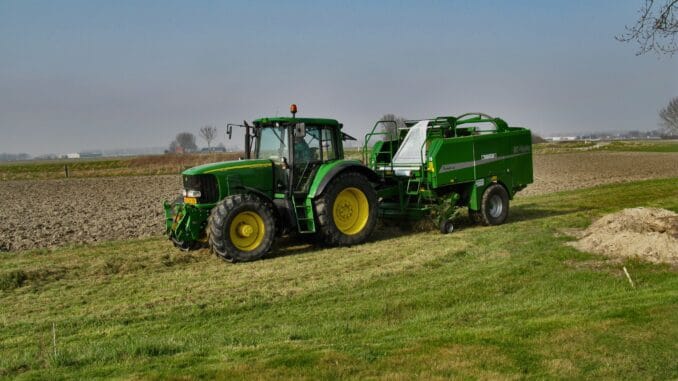
The John Deere 2640 is a utility tractor from Deere’s 2040 Series, built in Dubuque, Iowa from 1976 to 1982, and commonly used for loader work, mowing, PTO jobs, grading, light field work, and general property maintenance.
It is a more capable machine than a basic lawn tractor, so owners often handle routine service themselves but need to know where DIY ends and specialist hydraulic, transmission, and injection work should begin.
This guide covers the John Deere 2640 from an owner’s point of view: what usually goes wrong, how to troubleshoot by symptom, what maintenance matters most, which repairs are realistic at home, and what information you need before buying parts in the USA or Canada. Deere literature for the 2440/2640 family places strong emphasis on routine lubrication, cooling-system care, fuel-system service, batteries, brakes, and periodic hydraulic and transmission checks, which lines up well with the failures owners most often run into on older 2640 tractors.
General overview of the John Deere 2640
The John Deere 2640 sits in Deere’s utility-tractor range between smaller and larger 2040 Series machines, with about 70 PTO hp claimed and a heavier-duty chassis than a typical compact tractor. Deere offered it with a 4.5L diesel engine, closed-center hydraulics, hydraulic wet disc brakes, 12-volt electrical system, and rear PTO options including 540 or dual 540/1000 depending on configuration.
For troubleshooting and maintenance, the main systems that matter are:
-
Engine and fuel system: diesel engine, fuel filters, shut-off system, air cleaner, cooling system, injectors, and starting aids.
-
Drive and transmission system: collar-shift or reverser-based transmission layouts, clutch-related driveline behavior, final drives, and braking components.
-
Hydraulic system: closed-center hydraulics, remote couplers, steering, rockshaft, hitch, and PTO engagement functions.
-
Electrical system: battery, alternator, starter, key switch, circuit protection, lights, and wiring.
Common service items owners regularly buy for this tractor include engine oil and filter, fuel filters, air-cleaner elements, fan/alternator belt, coolant, battery, lamps, and brake or hydraulic service parts. Deere’s operator literature also highlights periodic service around the air cleaner, fuel filter, batteries, alternator, starter, brakes, and cooling system, so those are the parts categories most worth checking first on a newly purchased or long-stored 2640.
John Deere 2640 troubleshooting approach
The best way to diagnose a John Deere 2640 is to begin with the exact symptom the owner sees, not the part they think is bad. Deere’s operator manual includes separate troubleshooting coverage and service sections for engine difficulties, electrical service, fuel system, cooling system, brakes, hydraulic functions, and transmission-hydraulic lubrication, which is a good reminder that one symptom can come from several overlapping systems.
For this tractor, the main symptom groups are:
-
Starting issues.
-
Running and power-loss issues.
-
Hydraulic or steering problems.
-
PTO and hitch problems.
-
Vibration and unusual noise.
-
Overheating and leaks.
-
Transmission, clutch, and drive complaints.
-
Electrical and charging faults.
A practical owner-first rule is simple: confirm fuel supply, air flow, battery condition, fluid levels, visible leaks, linkage movement, and correct control settings before removing parts. On older utility tractors like the John Deere 2640, many “major” failures turn out to be fuel restriction, dirty connections, weak batteries, poor grounds, stale diesel, clogged air filtration, or low hydraulic/transmission oil.
John Deere 2640 emergency repair needs
Some problems on a John Deere 2640 need immediate attention because they create a safety risk or can turn a moderate repair into an expensive one. Shut the tractor down right away for sudden loss of oil pressure, severe overheating, hydraulic leaks under pressure, brake failure, PTO issues that prevent disengagement, major fuel leaks, or heavy driveline knock.
Starting issues
A no-start or hard-start problem matters most when repeated cranking begins to flatten the battery, overheat cables, or hide a fuel-system fault. On a diesel tractor, excessive cranking without fixing the actual cause can also pull contamination through the system or leave the owner chasing the wrong component.
Common causes:
-
Weak or discharged battery.
-
Dirty battery terminals or poor ground.
-
Faulty starter, solenoid, or key-switch circuit.
-
Fuel shut-off problem.
-
Air in fuel system.
-
Restricted fuel filter or contaminated diesel.
-
Cold-weather starting procedure issues.
Basic checks:
-
Confirm battery charge and clean cable connections.
-
Verify the engine is actually getting fuel and the shut-off is in the run position.
-
Check the fuel filter and sediment condition.
-
Bleed the fuel system if it has been opened or run low.
-
Listen for starter engagement versus a dead electrical circuit.
John Deere 2640 running and power-loss problems
If the John Deere 2640 starts but lacks power, smokes excessively, or stumbles under load, stop using it for heavy work until the cause is clear. Continuing to run a weak tractor under PTO or drawbar load can overheat the engine, strain the fuel system, and mask early cooling or injection issues.
Common causes:
-
Plugged fuel filter.
-
Air restriction at the cleaner.
-
Contaminated diesel fuel.
-
Injector or injection-pump issues.
-
Cooling-system problems causing heat-related power loss.
-
Incorrect throttle or PTO operating speed.
Basic checks:
-
Inspect and service the air-cleaner system.
-
Replace restricted fuel filters and inspect for water or debris.
-
Confirm the tractor reaches normal working rpm.
-
Check coolant level and radiator cleanliness.
-
Note smoke color and whether the problem appears only under load.
Vibration and noise
New vibration, rattling, or knocking should never be ignored on this model. A loose wheel, worn driveline part, damaged PTO attachment, failing bearing, or cracked mounting hardware can quickly become a safety issue.
Common causes:
-
Loose wheel hardware.
-
PTO shaft or implement imbalance.
-
Worn front-end or steering components.
-
Fan belt or pulley issues.
-
Engine-related knock.
-
Hydraulic pump or transmission noise from low oil or wear.
Basic checks:
-
Park safely and inspect wheels, tires, and visible hardware.
-
Isolate whether the noise appears at idle, with PTO engaged, or only while moving.
-
Check fluid levels before further operation.
-
Inspect belt condition and pulley alignment.
-
Disconnect or stop the driven implement if safe to do so and retest.
John Deere 2640 overheating and leaks
Overheating or visible leaks on a John Deere 2640 should be treated as immediate repair items. Deere’s service coverage specifically includes cooling-system service, radiator care, fan-belt attention, fuel-system service, and hydraulic oil-cooler related maintenance, which shows how closely heat and fluid loss are tied to overall tractor reliability.
Common causes:
-
Low coolant.
-
Blocked radiator fins or screen.
-
Loose or slipping fan belt.
-
Coolant hose leak.
-
Engine oil leak.
-
Hydraulic leak at hose, fitting, remote, or steering component.
-
Fuel leak at filters, lines, or shut-off area.
Basic checks:
-
Stop the tractor and let it cool before opening anything.
-
Inspect the radiator screen, fins, and coolant level.
-
Check the belt and hose condition.
-
Trace active leaks from the highest visible point downward.
-
Do not place hands near suspected high-pressure hydraulic leaks.
Transmission and drive problems
Drive complaints on the 2640 can involve clutch behavior, shift linkage, hydraulic-assist functions, internal transmission wear, brakes dragging, or final-drive issues. Because Deere offered different transmission arrangements on this model family, correct diagnosis depends on identifying the exact setup before ordering parts or assuming the fault is the same as another owner’s tractor.
Common causes:
-
Clutch adjustment or wear.
-
Linkage issues.
-
Low or contaminated transmission-hydraulic oil.
-
Internal transmission wear.
-
Brake drag.
-
Differential or final-drive problems.
Basic checks:
-
Confirm the symptom: slipping, grinding, no movement, or hard shifting.
-
Check transmission-hydraulic oil level and condition.
-
Inspect linkage travel and pedal free play.
-
Test whether the problem changes hot versus cold.
-
Stop using the tractor if gears grind heavily or movement becomes unpredictable.
Electrical problems
Electrical faults may show up as no crank, dim lights, weak charging, intermittent gauges, or dead warning lamps. Deere’s operator information identifies the battery, alternator, starter, circuit breaker, bulbs, and electrical system service as core maintenance points, so start there before blaming deeper wiring issues.
Common causes:
-
Weak battery.
-
Corroded cables.
-
Bad ground.
-
Failing alternator.
-
Faulty starter or solenoid.
-
Circuit breaker or fuse issue.
-
Worn ignition switch or wiring damage.
Basic checks:
-
Load-test the battery if possible.
-
Clean both ends of every battery cable.
-
Check charging output after starting.
-
Inspect visible harness damage around heat and vibration points.
-
Confirm the starter is receiving power during crank attempts.
John Deere 2640 DIY or dealer repair guide
The John Deere 2640 is very serviceable for a capable owner, but it is still a full-size utility tractor with diesel, hydraulic, PTO, brake, and transmission systems that can become dangerous or expensive when guessed at. Routine maintenance, external bolt-on parts, filters, belts, batteries, lamps, and many linkage jobs are realistic DIY work, while injection-pump work, internal hydraulic diagnosis, brake/hydraulic internals, clutch splitting, and major transmission repairs usually belong to a dealer or an experienced tractor shop.
Good DIY jobs:
-
Engine oil and filter changes.
-
Fuel filter changes and fuel bleeding.
-
Air-cleaner service.
-
Coolant checks and coolant changes.
-
Fan/alternator belt inspection and replacement.
-
Battery, cables, lamps, and simple wiring repair.
-
External hose replacement and visible leak correction.
-
Basic greasing and lubrication.
Advanced DIY or dealer jobs:
-
Injection-pump and injector diagnosis.
-
Internal hydraulic faults and pressure diagnosis.
-
Brake internal repairs or bleeding beyond basic service.
-
Clutch, reverser, or transmission internal work.
-
PTO clutch or internal PTO repairs.
-
Steering or front axle rebuilds.
-
Splitting the tractor for driveline repairs.
Skill guide:
-
Beginner: filters, fluids, greasing, battery service, lamps, radiator cleaning.
-
Intermediate: belt changes, basic fuel bleeding, hose replacement, electrical tracing, minor linkage adjustment.
-
Advanced: hydraulic diagnosis with gauges, clutch/transmission work, injector or pump work, brake internal repair, tractor splitting.
Parts needed for the John Deere 2640
Before ordering anything for a John Deere 2640, gather the full model name, tractor serial number/PIN area information, transmission type, PTO type, and engine identification details. Deere’s literature specifically tells owners to record the tractor serial number and provide it when ordering parts, and the 2440/2640 manuals are split by serial-number range, which means parts and procedures can change between early and later tractors.
Below is a practical parts table for the categories owners usually shop for most often. Because serial number breaks and engine variations matter on older utility tractors, the safest approach is to verify every part against Deere parts diagrams before purchase; where an exact OEM number cannot be safely confirmed from the sources here, that is noted rather than guessed.
OEM vs aftermarket guidance:
-
Use OEM for belts, hydraulic fit-sensitive components, brake-related parts, electrical switches, and serial-number-sensitive items.
-
Aftermarket is usually acceptable for batteries, common filters, lamps, hoses, and some maintenance consumables if the part is cross-referenced correctly.
-
For any internal hydraulic, driveline, PTO, or transmission part, Deere diagrams and serial-number matching are worth the extra time.
Where to find parts diagrams and service manuals
For the John Deere 2640, the best sources combine official Deere references with one or two established tractor-manual or parts sellers. The most useful mix is the official Deere technical publications path for manuals, Deere parts catalog access, the operator manual family references, and a Deere-focused aftermarket parts source for availability checks.
Recommended sources:
-
John Deere Technical Publications — best for official operator, technical, and service publications.
-
TractorData John Deere 2640 reference page — useful for model overview, serial number location, and major specs before ordering parts.
-
Jensales 2440/2640 operator manual listing — useful for identifying manual numbers and serial-range coverage.
-
Jensales TM1142 listing — useful if you need a technical service manual reference for pre-341000 tractors.
How to locate John Deere 2640 serial and engine numbers
These numbers matter because Deere split manuals and parts coverage by serial range, and older tractors are often repaired with swapped engines, changed electrical components, or non-original accessories. Ordering by “2640 only” is risky when the tractor may fall into a different serial break or equipment configuration.
Use this process:
-
Find the tractor serial number plate on the right side of the frame above the front axle.
-
Record the full number exactly as stamped, not just the year estimate.
-
Confirm whether your tractor falls before or after serial 341,000, since Deere literature differs across that break.
-
Record the engine identification details directly from the engine tag or block area before buying engine service parts. Deere literature instructs owners to provide serial information when ordering parts.
-
Note transmission, PTO, and front axle configuration because those options can affect parts selection.
Buying John Deere 2640 parts online and in stores
The safest buying strategy is to identify the symptom first, confirm the tractor serial range second, and only then order parts. On a John Deere 2640, parts mistakes usually happen when owners buy by model name alone and ignore serial break, transmission variant, or battery/electrical configuration.
-
Online: use Deere diagrams or a trusted cross-reference, especially for hydraulic, transmission, brake, and belt parts. Good starting points are John Deere Technical Publications, TractorData, and Jensales manuals.
-
Dealer counter: best for serial-specific or diagram-dependent items, especially internal transmission, hydraulic, PTO, and brake components.
-
Retail stores: fine for common consumables like battery, lamps, coolant, hoses, and some filters if the packaging clearly matches the correct application.
John Deere 2640 fitting guide for common parts
These are the most practical owner-level jobs on a John Deere 2640 because they solve many common hard-starting, overheating, and poor-running complaints without opening major systems. Always park safely, lower implements, remove the key, and allow hot components to cool before service.
Changing the fuel filter on a John Deere 2640
A fresh fuel filter often fixes hard starting, weak running, and poor throttle response on an older diesel tractor. Deere’s maintenance material includes fuel-filter service and fuel-system bleeding, so this is a core owner task.
-
Shut the tractor off and close the fuel supply if equipped.
-
Clean around the filter area before loosening anything.
-
Remove the old filter and seal, then fit the new filter and gasket.
-
Reopen fuel supply and bleed the system as required by the manual.
-
Start the tractor and check carefully for leaks.
-
Recheck after a few minutes of running.
Servicing the air cleaner
A restricted air cleaner can cause black smoke, weak power, and extra fuel use. Deere specifically calls out air-cleaner inspection, hose-clamp checks, and restriction monitoring in service coverage.
-
Open the housing and inspect both the element and dust condition.
-
Replace dirty or damaged elements rather than over-cleaning old media.
-
Inspect intake hoses and clamps for cracks or looseness.
-
Empty dust collection areas if equipped.
-
Reassemble carefully so no unfiltered air bypasses the housing.
Replacing the battery and cleaning cables
Many no-start complaints on the John Deere 2640 trace back to poor battery condition or dirty cable ends rather than the starter itself. Deere lists specific battery configurations and electrical system service in the operator manual, so cable condition matters as much as battery voltage.
-
Disconnect the ground cable first.
-
Remove the battery and inspect the tray and hold-downs.
-
Clean both cable ends and ground points until bright metal is visible.
-
Install the correct battery configuration for your tractor.
-
Connect positive first, then ground.
-
Start the tractor and confirm charging.
Checking and replacing the fan belt
A loose or worn belt can contribute to overheating, weak charging, and squeal. Deere includes fan-belt attention in regular service, so this is one of the highest-value inspections on any working 2640.
-
Inspect belt condition for cracks, glazing, and frayed edges.
-
Check belt tension against manual guidance for your setup.
-
Loosen mounting hardware on the driven component as needed.
-
Remove the old belt and install the replacement in the correct pulley path.
-
Retension the belt and tighten hardware.
-
Run the engine briefly and recheck tracking and tension.
Maintenance to prevent John Deere 2640 problems
Regular maintenance prevents most repeat failures on this tractor because diesel starting, cooling, hydraulics, and charging all depend on basic service being done on time. Deere’s own maintenance sections are organized around daily/10-hour, 50-hour, 100-hour, 200-hour, 600-hour, 1200-hour, annual, and as-required service, which shows that the 2640 rewards steady upkeep more than occasional repair bursts.
Focus areas:
-
Starting reliability: keep the battery charged, terminals clean, and fuel filters fresh.
-
Running quality: maintain clean air filtration and uncontaminated diesel fuel.
-
Overheating prevention: keep the radiator, screens, coolant, and belt system in shape.
-
Drive and hydraulic performance: maintain correct transmission-hydraulic oil level and fix leaks early.
-
Electrical reliability: inspect alternator output, cables, lamps, and grounds regularly.
John Deere 2640 maintenance schedule and checklist
The exact schedule should follow the correct Deere manual for your serial range, but Deere’s 2440/2640 operator material clearly breaks maintenance into routine time-based intervals. The list below stays aligned with those official categories and emphasizes the items most owners actually need to track.
Daily or before each use
-
Check engine oil level.
-
Check coolant level.
-
Check fuel supply and watch for contamination concerns.
-
Inspect for loose, missing, or damaged parts.
-
Clean debris from screens and visible cooling areas.
After first 50 hours or after major recommissioning
-
Change engine oil and filter after break-in or after putting a long-stored tractor back into dependable service. Deere includes early post-break-in oil/filter attention on comparable Deere interval charts and regular engine-oil service in 2440/2640 maintenance sections.
-
Check belt tension and hose clamp security.
-
Recheck wheel hardware and general fasteners after initial heavy use.
Every 50 hours
-
Lubricate tractor grease points. Deere lists periodic lubrication schedules beginning with daily/10-hour and 50-hour categories.
-
Inspect battery condition and cable security.
-
Check tires and wheel hardware.
-
Review transmission-hydraulic fluid condition and visible leaks.
Every 100 hours or yearly
-
Change engine oil and filter. Deere’s service organization includes 100-hour engine crankcase service.
-
Inspect starter and charging performance if cranking speed has dropped.
-
Check air-cleaner condition and restriction indicator.
Every 200 hours
-
Service parts of the cooling system and inspect radiator condition.
-
Check belt condition and tension.
-
Inspect and clean fuel-system components as required.
-
Lubricate 3-point hitch and related linkage points.
Every 600 hours or major annual service
-
Follow the manual’s 600-hour lubrication and transmission-hydraulic service items for your serial range and configuration. Deere’s index specifically lists 600-hour periodic lubrication for the 2440/2640 family.
-
Inspect braking, steering, and front-end wear more closely at this interval.
-
Plan dealer help if the tractor shows hydraulic weakness, hard shifting, or PTO issues.
Every 1200 hours
-
Perform the deeper transmission-hydraulic and axle-related checks listed in the manual’s 1200-hour periodic schedule. Deere’s index specifically references 1200-hour lubrication points for this family.
-
Inspect wheel bearings and major driveline wear points.
-
Review whether injectors, valve clearance, or other advanced service is due.
Seasonal checklist
-
Spring: change oil if due, inspect cooling system, charge battery, and check all lights and controls.
-
Mid-season: clean radiator fins/screens often, inspect belts, and watch for hydraulic seepage under heavier work.
-
Fall/winter: treat diesel correctly for cold weather, service batteries, and follow Deere’s cold-weather starting and storage guidance.
Repair, upgrade, or replace?
For a John Deere 2640, repair usually makes sense when the tractor is structurally sound, starts well or can be returned to reliable starting with normal service, and does not need simultaneous engine, hydraulic, transmission, and brake overhauls. Upgrade makes sense when the tractor still works but your jobs now demand better hydraulics, more PTO convenience, MFWD, cab comfort, or easier parts access, while replacement makes sense when repeated major driveline or hydraulic failures begin stacking labor costs beyond the machine’s practical value.
Repair if:
-
The problem is external, routine, or limited to one system.
-
Compression, oil pressure, and basic hydraulic performance remain acceptable.
-
The tractor still fits your property and attachment needs.
Upgrade if:
-
You need more hydraulic performance, operator comfort, or loader efficiency.
-
You want easier parts sourcing and newer safety features.
-
The tractor works, but downtime is starting to affect productivity.
Replace if:
-
It needs engine, clutch/transmission, hydraulic, and brake work at the same time.
-
Parts chasing has become serial-number dependent and expensive.
-
You no longer trust it for safe PTO or road/yard use.
John Deere 2640 troubleshooting FAQ
1. Why will my John Deere 2640 not start?
Most no-start complaints come down to battery condition, cable corrosion, poor grounds, fuel delivery problems, or air in the fuel system. Start by checking battery charge, cable cleanliness, the fuel shut-off position, and filter condition before assuming the starter or injection system has failed. Deere’s service coverage for this tractor family places batteries, starter, fuel system, and engine troubleshooting near the top of the list for a reason.
2. Why does my John Deere 2640 crank slowly?
Slow cranking usually means a weak battery, corroded cables, bad grounds, or a tired starter drawing too much current. Cold weather can make the problem worse, especially on a diesel with thick oil or marginal battery capacity. Clean connections first, then load-test the battery and check starter current draw if the problem continues.
3. Why does my John Deere 2640 start and then die?
If it starts and quits, suspect restricted fuel flow, air entering the fuel system, a blocked vent, or a shut-off issue. A partially clogged fuel filter can let the engine fire and then starve a few seconds later. Check for fresh fuel, clean filters, and proper bleeding after any fuel-system service.
4. Why is my John Deere 2640 hard to start in cold weather?
Cold diesel starting gets harder when battery performance drops, fuel quality is poor, or the tractor is not using the correct cold-weather starting procedure. Deere’s operator material includes cold-weather service and starting-aid information, so use the manual’s recommendations rather than extended cranking. Also make sure the battery is fully charged and the fuel system is free of water or waxing issues.
5. Why is my John Deere 2640 losing power under load?
Loss of power under load usually points to fuel restriction, air-cleaner blockage, overheating, or injector-related problems. On this model, the first checks should be the air-cleaner system, fuel filter condition, coolant level, and radiator cleanliness. If the tractor smokes heavily or falls on its face only during PTO or drawbar work, deeper fuel-system diagnosis may be needed.
6. Why is my John Deere 2640 blowing black smoke?
Black smoke normally means the engine is getting more fuel than air for the load and rpm available. Dirty air-cleaner elements, intake restrictions, overfueling, or lugging the engine too hard are common causes. Service the air intake first and make sure the tractor is being operated in the correct working rpm range.
7. Why is my John Deere 2640 overheating?
Overheating often comes from low coolant, plugged radiator fins, dirty screens, a loose fan belt, or internal cooling-system problems. Deere specifically highlights cooling-system and radiator service in the 2440/2640 manual, so start with airflow and coolant basics before suspecting major engine trouble. Never keep working an overheating tractor just to finish the job.
8. Why does my John Deere 2640 leak hydraulic oil?
Hydraulic leaks commonly appear at hoses, couplers, fittings, steering components, or seals on older tractors. Even a small leak matters because the 2640 relies on hydraulic performance for steering, hitch, remotes, and other functions. Clean the area first, trace the source carefully, and avoid hands-on checking near pressurized pinhole leaks.
9. Why is the steering hard on my John Deere 2640?
Hard steering can come from low hydraulic oil, air in the system, pump weakness, front-end load, or worn steering components. Since the tractor uses hydraulic-assisted systems tied to overall hydraulic health, steering complaints should be checked alongside hitch and remote performance. If multiple hydraulic functions are weak, the issue is likely bigger than the steering wheel alone.
10. Why won’t my John Deere 2640 three-point hitch lift properly?
A weak hitch can be caused by low oil, internal hydraulic leakage, control linkage issues, or pump/supply problems. First verify fluid level and whether the remote hydraulics and steering also seem weak. If several functions are affected at once, dealer-level hydraulic diagnosis with pressure testing may be the right next step.
11. Why does the John Deere 2640 hitch drift down?
Hitch drift usually points to internal leakage, valve wear, or sealing problems rather than a simple external adjustment. Slow drift may be manageable for light work, but fast drift is a sign to stop trusting the hitch with raised implements. External linkage checks are DIY; internal rockshaft hydraulic work is usually advanced repair territory.
12. Why is my John Deere 2640 PTO not engaging?
PTO engagement issues can involve linkage, hydraulic control problems, clutch-related faults, or internal wear depending on the exact PTO setup. Confirm the tractor’s PTO type and operating procedure first, because the 2640 could be equipped differently by configuration. If the PTO still refuses to engage after external checks, internal service is usually not a beginner repair.
13. Why does the John Deere 2640 PTO keep spinning when I think it should stop?
Some rotational movement can be mistaken for powered drive, especially with no implement attached, but a PTO that continues driving a load when disengaged points to a real control or clutch problem. That matters for safety and should be addressed before using PTO equipment again. Internal PTO clutch diagnosis is generally dealer or specialist work.
14. Why does my John Deere 2640 grind going into gear?
Grinding usually means clutch drag, incorrect pedal adjustment, or internal transmission wear. Check whether the clutch releases fully and whether the symptom changes with engine speed or oil temperature. Persistent grinding is a sign to stop forcing shifts before transmission damage gets worse.
15. Why won’t my John Deere 2640 move in one or more gears?
No movement in selected gears can be linkage-related, clutch-related, or internal to the transmission or reverser arrangement. Because Deere offered more than one transmission layout on this model, exact diagnosis depends on knowing which setup your tractor has. Verify linkage and oil level first, then move to specialist help if the problem remains.
16. Why is my John Deere 2640 hard to shift?
Hard shifting can come from clutch adjustment issues, incorrect idle speed, worn linkage, or internal wear. Older tractors also shift more cleanly when the operator follows the correct technique and does not rush gear engagement. If the tractor has become noticeably worse than normal, inspect clutch release and linkage before assuming a full transmission overhaul is needed.
17. Why does my John Deere 2640 slip under load?
A slipping feel under load can point to clutch trouble, brake drag confusion, hydraulic-assist issues, or an implement problem that feels like traction loss. Clarify whether the engine revs rise without forward speed, or whether the tractor simply lacks pulling power. True clutch slip is not a repair to ignore because it usually gets worse quickly.
18. Why are the brakes weak on my John Deere 2640?
Weak brakes may result from adjustment issues, contamination, internal wear, or hydraulic problems depending on the exact fault. Deere identifies brake service and bleeding in the operator manual, but not every brake complaint is a simple external adjustment. If braking becomes uneven or unsafe, park it until the system is properly repaired.
19. Why does my John Deere 2640 have electrical power but no crank?
If lights and gauges work but the starter does nothing, suspect the key-switch circuit, solenoid trigger circuit, safety-related wiring issues, or the starter itself. Check for voltage at the starter solenoid during a crank attempt. That separates a control-side problem from a bad starter more quickly than random parts replacement.
20. Why is the battery not charging on my John Deere 2640?
Poor charging usually comes from a loose belt, weak alternator, damaged wiring, or bad battery connections. Deere lists a 35-amp alternator and regular electrical-system service for this tractor family, so both belt condition and cable condition matter. Test charging voltage with the engine running before condemning the alternator.
21. Why do the lights on my John Deere 2640 keep failing?
Repeated light failures often mean vibration, poor grounds, incorrect bulbs, corroded sockets, or charging voltage problems. Older tractors that spend time outside often suffer from socket corrosion and harness wear. Fix the underlying voltage or grounding issue or the new bulbs will not last long.
22. Why is my John Deere 2640 fuel system losing prime?
Losing prime usually points to air leaks on the suction side, filter sealing issues, or deteriorated fuel lines. This can show up after the tractor sits, especially if the system has recently been serviced or run low on fuel. Check seals, line condition, and bleed procedures carefully before blaming the injection pump.
23. Why does my John Deere 2640 idle rough?
Rough idle can come from contaminated fuel, partial air restriction, injector imbalance, compression issues, or low idle speed that has fallen out of spec. Deere’s manual lists slow idle around 800 rpm and normal working range above that, so verify the basics before moving deeper. If rough idle is paired with smoke and hard starting, fuel-system diagnosis becomes more likely.
24. Why does my John Deere 2640 stall when I engage the PTO?
A stall during PTO engagement can mean the implement is overloaded or seized, the PTO is being engaged at the wrong engine speed, or the tractor already has a running-power issue. Disconnect the implement and test carefully to separate tractor from attachment faults. Never keep trying the PTO if the driveline is making sharp noise or jerking.
25. Why is my John Deere 2640 using too much fuel?
High fuel use often comes from dirty air filtration, poor injector condition, excessive idling, or operating in the wrong gear and rpm range. A tractor that is lugged constantly will feel busy but inefficient. Start with maintenance basics before chasing more complex engine causes.
26. Why does my John Deere 2640 have a coolant leak?
Coolant leaks usually show up at hoses, clamps, radiator seams, water-pump areas, or engine-side gaskets. Clean the engine first so the source can be identified accurately. A small seep is worth fixing early because repeated low-coolant operation can lead to a much bigger repair.
27. Why is there oil around the engine on my John Deere 2640?
Engine oil around the block may come from valve-cover sealing, filter area leaks, breather issues, or older seals beginning to seep. The first job is to determine whether it is a harmless seep, an active pressure leak, or fluid blown around by the fan. Clean it, run it briefly, and trace the source before ordering parts.
28. Why does my John Deere 2640 squeal at startup?
Startup squeal is commonly a slipping fan/alternator belt, especially in damp or cold conditions. It can also come from a failing pulley or bearing. Since belt condition affects both cooling and charging on this tractor, a squeal should be treated as a maintenance issue rather than just an annoyance.
29. Why does my John Deere 2640 shake at higher rpm?
Higher-rpm vibration can come from engine imbalance, loose sheet metal, driveline issues, front-end wear, or an attached implement causing the problem. The key is to determine whether the vibration appears with the tractor standing still, moving, or with PTO equipment engaged. That symptom split helps narrow the fault much faster than random part swapping.
30. Why is my John Deere 2640 leaking fuel?
Fuel leaks often occur at filter housings, line fittings, shut-off valves, and older hoses. Diesel leaks are messy and can also become a fire and contamination risk if they contact hot surfaces or collect dirt around components. Repair fuel leaks promptly and bleed the system correctly afterward.
31. Why does my John Deere 2640 start fine but lose hydraulic performance when hot?
Hydraulic weakness that gets worse hot often points to wear, internal leakage, or fluid condition problems rather than a simple cold-start issue. As oil thins, worn components may show their true condition. If steering, hitch, and remotes all weaken together once warm, professional hydraulic testing is usually the smartest next move.
32. Why does my John Deere 2640 keep needing battery boosts?
Repeated boosting usually means the tractor is not charging properly, has a battery drain, or has a battery that no longer holds capacity. Check charging voltage, cable condition, grounds, and storage habits before buying another battery. On older tractors, dirty connections waste a surprising amount of cranking power.
33. How often should I service a John Deere 2640?
Follow the correct Deere operator manual for your serial range, but the published service structure includes daily/10-hour checks plus 50-hour, 100-hour, 200-hour, 600-hour, 1200-hour, annual, and as-required maintenance categories. In practice, owners should watch fluids, cooling, air filtration, battery condition, and leaks constantly, then perform oil, filter, and lubrication work on schedule rather than by guesswork.
34. Is the John Deere 2640 a good DIY tractor?
Yes, for routine service and external repairs it is a very workable tractor, especially for owners comfortable with diesel basics and safe shop practice. The limit comes when the job moves into injection systems, internal hydraulics, clutch/transmission internals, or major brake work. Those jobs are still repairable, but not always practical without the correct manual, tools, and experience.
35. What manual should I buy first for a John Deere 2640?
Start with the operator manual that matches your serial range because it covers operation, maintenance, lubrication, troubleshooting, and service basics. For deeper repairs, add the correct technical/service manual for your tractor’s serial number. The operator manual references OMR62127 for the 2440/2640 family, while OMR70798 applies to serial 341,000 and up, and TM1142 is a commonly referenced technical manual for tractors up to serial 340,999.