
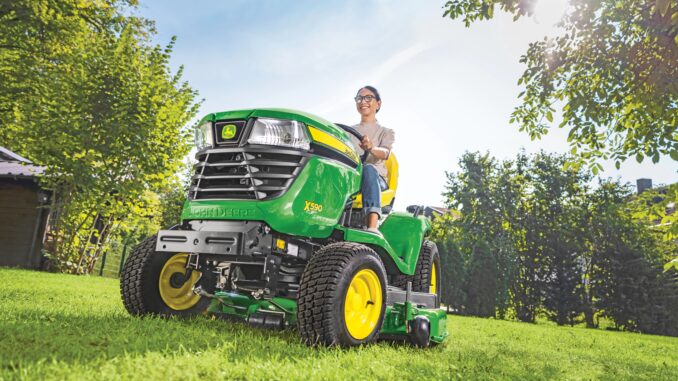
The John Deere L118 is a 42-inch residential lawn tractor designed for routine mowing, mulching, and bagging on typical homeowner lawns. It uses a 20 hp Briggs & Stratton V-twin gasoline engine, a belt-driven 42-inch Edge cutting deck, hydrostatic transmission, and an electrical safety-interlock system.
This John Deere L118 repair guide covers the problems owners see most often: no-start faults, rough running, poor cut quality, belt and blade problems, weak drive, electrical faults, routine maintenance, parts identification, manuals, diagrams, and practical DIY repair limits.
General overview of the John Deere L118
The John Deere L118 was part of Deere’s L100-series lawn tractor range. It was aimed at homeowners who needed more capability than an entry-level riding mower but did not require a larger garden tractor or commercial zero-turn mower.
The main systems to understand before repairing a John Deere L118 are:
-
Briggs & Stratton V-twin engine, fuel system, ignition, air cleaner, and cooling fins
-
42-inch mower deck, blade system, spindle assemblies, deck belt, idler pulleys, and gauge wheels
-
Hydrostatic drive system, traction belt, transaxle, brake linkage, and motion-control linkage
-
Battery, starter solenoid, ignition switch, PTO switch, fuse, safety switches, and charging circuit
-
Steering, front axle pivot, front wheel bushings, tires, and mower-deck lift linkage
Common John Deere L118 service and repair parts include:
-
Engine oil filter: GY20577 or AM125424, depending on the part reference and supplier listing
-
Air filter: GY20575
-
Fuel filter: GY20709 or AM116304, depending on version and replacement source
-
Spark plugs: M78543 or the engine-specific Briggs & Stratton equivalent
-
Standard mower blades: GX20249
-
Mulching mower blades: GX20433
-
Two-blade packaged set: GY20567
-
Mower deck belt: GX20072
-
Traction-drive belt: GX20006
-
Ignition switch: GY20074
-
Battery: TY25878
-
Deck maintenance kit: GY21086
-
Front deck gauge wheel: GX10168
Always verify the part number against your tractor’s Product Identification Number and deck configuration before ordering. The L118 commonly uses the 42-inch 3-in-1 deck, but parts should never be selected by model name alone.
John Deere L118 troubleshooting approach
Start with the symptom rather than immediately replacing a part. For example, a tractor that will not crank may have a weak battery, corroded cable, blown fuse, failed brake switch, PTO switch fault, solenoid issue, or starter problem. Replacing the starter before checking those basics wastes money.
The main John Deere L118 symptom categories are:
-
Starting and cranking problems
-
Rough running, surging, stalling, or loss of power
-
Poor mowing quality, missed grass, scalping, or uneven cut
-
Deck vibration, squealing belts, rattles, and blade noise
-
Overheating, smoke, oil leaks, or fuel leaks
-
Weak or lost forward and reverse drive
-
Electrical faults, dead battery, lights, PTO, and safety-switch problems
-
Steering looseness, poor turning, and front-end wear
Before working on the tractor, park it on level ground, set the parking brake, remove the key, disconnect the spark-plug wires for deck or engine work, and allow hot components to cool.
John Deere L118 emergency repairs
Some faults should be dealt with immediately. Continuing to use the tractor can turn a minor repair into a damaged engine, failed transmission, broken deck spindle, or safety hazard.
John Deere L118 starting issues
A no-start condition may mean the engine will not crank, cranks but will not fire, or starts briefly and then stalls. First establish which of those three conditions applies.
Common causes include:
-
Dead or weak battery
-
Loose, corroded, or damaged battery cables
-
Parking brake not fully applied
-
PTO switch left engaged
-
Faulty brake or seat safety switch
-
Blown fuse
-
Failed ignition switch, starter solenoid, or starter motor
-
Dirty fuel, blocked fuel filter, or stale gasoline
-
Fouled spark plugs or damaged ignition wiring
Basic checks:
-
Confirm the PTO is off and the parking brake is fully engaged.
-
Check battery terminals for corrosion, looseness, or damaged cables.
-
Inspect the fuse and replace it only with the correct rating.
-
Check that fresh fuel reaches the fuel filter and carburetor.
-
Remove and inspect the spark plugs for heavy carbon, oil fouling, cracked porcelain, or excessive gap.
Do not repeatedly crank the engine for long periods. Extended cranking overheats the starter and can flatten the battery quickly.
John Deere L118 cut-quality problems
Poor cut quality usually appears as strips of uncut grass, uneven height, ragged blade tips, scalping, clumping, or a deck that cuts lower on one side. The cause is often straightforward, but it may involve more than just sharp blades.
Common causes include:
-
Dull, bent, damaged, or incorrectly installed blades
-
Uneven tire pressure
-
Deck out of level
-
Grass buildup under the deck
-
Worn deck belt or slipping idler pulley
-
Worn spindle bearings
-
Mowing too fast for grass conditions
-
Wet, tall, or overly dense grass
Basic checks:
-
Check tire pressure and match side-to-side pressure before adjusting the deck.
-
Clean packed grass from the underside of the deck.
-
Inspect blades for bends, cracks, rounded edges, or missing lift.
-
Check the deck belt for cracking, glazing, frayed edges, or slack.
-
Measure deck height side-to-side and front-to-rear on level ground.
Stop mowing immediately if a blade is cracked, bent, loose, or contacting the deck.
Vibration and noise
New or worsening vibration is a warning sign. It may be caused by a blade problem, a bent spindle, debris wrapped around a pulley, loose hardware, or an engine-related fault.
Common causes include:
-
Bent or unbalanced mower blade
-
Loose blade bolt
-
Worn spindle bearing
-
Damaged spindle shaft
-
Debris around pulleys or belt guards
-
Broken or loose deck hangers
-
Worn idler pulley
-
Engine mounting hardware loosening
-
Damaged flywheel screen or cooling fan
Basic checks:
-
Shut off the engine, remove the key, and disconnect both spark-plug wires.
-
Inspect the blades and blade bolts before turning the deck by hand.
-
Spin each pulley by hand and feel for grinding, wobble, or roughness.
-
Inspect belt guides, deck hangers, and anti-scalp wheels.
-
Check for grass, string, wire, or other debris around spindles and pulleys.
Do not continue operating the tractor with severe deck vibration. A failed spindle can damage the deck shell, belt system, and blade hardware.
John Deere L118 overheating and leaks
Overheating is often caused by restricted airflow rather than a major engine failure. Grass and chaff can block the cooling screen and engine fins, especially when mowing dry or dusty grass.
Common causes include:
-
Grass buildup on the air-intake screen
-
Blocked cooling fins or blower housing
-
Low engine oil
-
Dirty air filter
-
Carburetor or ignition fault causing poor running
-
Fuel leak at hose, filter, or tank connection
-
Oil leak from filter, drain plug, crankcase gasket, or breather area
Basic checks:
-
Stop the engine and let it cool fully.
-
Check engine oil level on level ground.
-
Remove debris from the engine screen and external cooling areas.
-
Inspect the air filter and replace it if heavily dirty or damaged.
-
Look underneath for fresh oil or fuel and trace the leak before restarting.
Never operate with an active fuel leak. Fuel near a hot engine or exhaust can cause a fire.
Transmission and drive problems
The L118 uses a hydrostatic transaxle, so drive complaints may feel different from a manual-transmission tractor. A tractor may move weakly, fail to climb as before, creep with the pedal released, or stop moving entirely.
Common causes include:
-
Parking brake partially engaged
-
Drive-release control left in the push position
-
Worn or slipping traction-drive belt
-
Broken belt guide or idler pulley
-
Loose motion-control linkage
-
Low transaxle oil level where serviceable
-
Internal hydrostatic transaxle wear
-
Heavy towing, steep slopes, or repeated overheating
Basic checks:
-
Make sure the parking brake releases fully.
-
Confirm the freewheel or bypass control is in the normal drive position.
-
Inspect the traction belt and idler system with the engine off.
-
Check that the pedal linkage moves freely without binding.
-
Test drive on level ground before assuming the transaxle has failed.
A worn drive belt is a realistic DIY repair. Internal transaxle repairs or replacement are generally advanced work and are often uneconomical on an older lawn tractor.
John Deere L118 electrical problems
Electrical faults can cause no-crank conditions, dead headlights, a PTO that will not engage, repeated fuse failures, or a battery that repeatedly goes flat.
Common causes include:
-
Dirty or weak battery connections
-
Failed battery
-
Blown fuse
-
Failed ignition switch
-
Defective PTO switch
-
Faulty seat, brake, or reverse safety switch
-
Loose ground wire
-
Charging-system fault
-
Damaged wiring near the battery, engine, or deck
Basic checks:
-
Clean and tighten the battery terminals.
-
Check battery voltage and charge the battery before testing other components.
-
Inspect the fuse and visible wiring for chafing or burnt insulation.
-
Confirm the seat, brake, and PTO safety conditions are met.
-
Check whether the engine runs but the battery does not recharge, which may indicate a charging fault.
Repeated blown fuses usually mean a short circuit. Do not install a larger fuse to “solve” the problem.
DIY or dealer repair guide
Most John Deere L118 maintenance and external belt, blade, filter, and electrical checks are within reach of a careful homeowner with basic hand tools. The line is crossed when a repair requires internal engine work, transaxle disassembly, electrical diagnosis beyond simple continuity and voltage checks, welding, or major steering and chassis reconstruction.
Good DIY jobs
-
Changing engine oil and oil filter
-
Cleaning or replacing the air filter
-
Replacing spark plugs
-
Replacing the inline fuel filter
-
Charging or replacing the battery
-
Sharpening or replacing mower blades
-
Replacing the 42-inch deck belt
-
Replacing deck gauge wheels
-
Cleaning the deck and engine cooling screen
-
Checking tire pressures and leveling the deck
-
Replacing accessible switches, fuse, key, or ignition switch after diagnosis
-
Replacing a worn traction belt if the routing is documented first
Advanced DIY or dealer jobs
-
Carburetor overhaul or governor adjustment
-
Cylinder-head, valve, piston, or crankshaft repairs
-
Starter-motor rebuilding
-
Charging-system testing beyond basic battery checks
-
Hydrostatic transaxle repair or replacement
-
Major steering gear or front-axle repairs
-
Welding cracks in the deck or frame
-
Diagnosing intermittent wiring faults
-
Replacing mower spindles when shafts, housings, or deck mounting holes are damaged
Skill level guide
-
Beginner: Oil change, air filter service, spark plugs, battery cleaning, deck cleaning, tire-pressure checks
-
Intermediate: Blades, deck belt, traction belt, deck leveling, fuel filter, ignition switch, gauge wheels
-
Advanced: Carburetor work, spindle rebuilds, electrical diagnosis, steering repairs, transaxle removal, engine repairs
John Deere L118 parts and part numbers
Gather the following information before ordering parts:
-
Full model name: John Deere L118
-
Product Identification Number, also called the PIN or serial number
-
Engine model, type, and code from the Briggs & Stratton engine label
-
Deck size and configuration, usually the 42-inch 3-in-1 mower deck
-
Existing belt or blade number when replacing an aftermarket part
-
Whether the tractor has mulching, bagging, or other installed attachments
OEM belts are usually the safest choice because correct length, width, cord construction, and pulley fit are important. Use genuine Deere parts for safety switches, ignition components, blade hardware, belt guides, and other fit-sensitive or safety-critical items.
Aftermarket filters, blades, batteries, and spark plugs can be good value when they are from a reputable manufacturer and explicitly cross-reference to the correct Deere or engine part number. Avoid generic belts and blades that are described only as “fits many models.”
John Deere L118 diagrams and manuals
Use diagrams and manuals before dismantling the mower. They help you identify the correct part, confirm belt routing, understand safety interlocks, and avoid ordering a component that only fits a different deck or serial range.
Useful resources include:
-
John Deere L118 owner support for model-specific parts, maintenance schedules, manuals, and how-to information
-
John Deere operator and technical manuals for official operator manuals, technical publications, and parts catalogs
-
John Deere parts and owner support for the official parts catalog and parts lookup tools
-
John Deere L118 parts diagrams for illustrated assemblies that can help identify deck, steering, engine, and drive-system components
-
John Deere L118 maintenance parts guide for common maintenance items and service-part references
The official operator’s manual is best for safe operation, maintenance intervals, belt-routing instructions, and basic adjustment procedures. The parts catalog is best for exploded diagrams and OEM part identification. A technical manual is most useful for advanced repairs, diagnosis, and detailed component specifications.
Locate John Deere L118 serial numbers
Serial and engine numbers matter because Deere used component changes across production runs. Two tractors called L118 may require different parts if their PIN ranges, engine specifications, deck configurations, or electrical connectors differ.
-
Park the tractor on level ground, turn the engine off, remove the key, and set the parking brake.
-
Locate the tractor Product Identification Number label. It is commonly positioned on the frame near the rear of the tractor or beneath/around the seat area.
-
Write down the entire PIN exactly as shown, including letters, numbers, and serial-range details.
-
Locate the Briggs & Stratton engine identification label on the engine shroud, valve-cover area, or recoil/blower housing. Record the model, type, and code.
-
Check the mower deck for a deck identification label or compare the deck layout with an official parts diagram before ordering deck-specific components.
Take clear photographs of each label. This is often quicker and more accurate than trying to read a worn tag later.
Buying John Deere L118 parts
Use the OEM part number as the starting point, then confirm it against the PIN, engine number, and deck size. This approach reduces the chance of buying a belt with the wrong profile, blades with the wrong center hole, or an electrical switch with the wrong terminal pattern.
-
Online: Use the John Deere parts site or John Deere L118 owner-support page to check diagrams and part compatibility before ordering.
-
Dealer counter: Best for serial-number-sensitive, electrical, engine, transmission, steering, and attachment parts.
-
Retail stores: Suitable for engine oil, batteries, spark plugs, filters, and some blade replacements only when the package clearly lists the L118 or the verified OEM cross-reference.
-
Deere-focused parts suppliers: Useful for comparing OEM and aftermarket availability, but match every item to the Deere number rather than selecting by appearance.
Keep a small record of the parts you install, the date, engine hours, and the brand used. This makes future maintenance and fault diagnosis much easier.
John Deere L118 fitting guide
Change the engine oil and filter
Regular oil service protects the V-twin engine from accelerated wear, overheating, and internal damage. Change oil when the engine is warm enough to flow but not hot enough to burn you.
-
Park on level ground, set the parking brake, remove the key, and disconnect the spark-plug wires.
-
Clean debris from around the oil-fill cap, dipstick, oil filter, and drain area.
-
Place a suitable drain pan beneath the drain point and remove the drain plug or open the drain valve carefully.
-
Remove the old oil filter, lightly oil the gasket on the new filter, and install it hand-tight according to the filter instructions.
-
Refit the drain plug, add the correct engine oil gradually, and check the level with the dipstick.
-
Start the engine briefly, check for leaks, shut it down, wait a few minutes, and recheck the oil level.
Dispose of used engine oil and filters through an approved recycling point.
Replace the John Deere L118 air filter
A clean air filter helps the engine start more easily, maintain power, and avoid drawing dust into the cylinders. Service it more frequently when mowing dry, dusty grass.
-
Turn off the engine, remove the key, and disconnect the spark-plug wires.
-
Release the air-cleaner cover and remove the filter carefully.
-
Prevent loose dirt from falling into the intake opening.
-
Inspect the paper element and pre-cleaner, if fitted, for tears, oil contamination, heavy dust, or distortion.
-
Fit the correct replacement filter and ensure it seals properly around the housing.
-
Reinstall the cover securely and check that no tools or rags remain around the engine.
Never run the tractor without the air filter installed.
Replace mower blades
Sharp, balanced blades improve cut quality and reduce stress on the deck belt, spindles, and engine. Replace blades that are cracked, badly bent, thin from repeated sharpening, or damaged around the mounting hole.
-
Park on level ground, set the brake, remove the key, disconnect spark-plug wires, and raise the deck to a working position.
-
Safely support the deck or tractor if access is limited; never rely only on a hydraulic jack.
-
Mark the blade orientation before removal so the new blade is installed with the cutting edge and lift wing facing correctly.
-
Hold the blade with a wood block and remove the blade bolt, washer, and blade.
-
Install the matched replacement blade, use the correct hardware orientation, and tighten to the specification in the operator’s manual.
-
Rotate the blades by hand to confirm there is no contact with the deck, belt guards, or discharge opening.
Replace both blades together on a 42-inch deck. Mismatched blade weight or lift design can cause vibration and uneven mowing.
Replace the John Deere L118 deck belt
A worn deck belt can slip, squeal, cause weak blade speed, and leave uncut strips. Replace it if it is cracked, glazed, frayed, oil-soaked, or unable to maintain tension.
-
Park on level ground, disengage the PTO, remove the key, and disconnect spark-plug wires.
-
Lower the deck, remove the belt guards, and photograph the existing belt routing before removal.
-
Release tension from the idler pulley system as described in the operator’s manual.
-
Remove the belt from the engine pulley and then from the deck pulleys.
-
Route the new GX20072 deck belt correctly around every spindle pulley, idler pulley, and belt guide.
-
Refit guards, rotate the blades by hand to confirm correct tracking, then test the PTO at low engine speed before mowing.
A belt that jumps off repeatedly may indicate a bent belt guide, seized pulley, damaged spindle, incorrect routing, or loose deck component rather than a bad new belt.
John Deere L118 maintenance
Regular maintenance prevents many common L118 problems before they become repair jobs. Most no-start, overheating, poor-cut, and belt failures develop gradually through neglected cleaning, worn consumables, or skipped inspections.
Focus on these areas:
-
Starting reliability: Maintain the battery, clean terminals, use fresh fuel, inspect fuel lines, and replace spark plugs as scheduled.
-
Cut quality: Keep blades sharp and balanced, maintain tire pressure, level the deck, remove packed grass, and inspect the belt.
-
Fire and overheating prevention: Clean the engine screen, cooling fins, exhaust area, and deck after dusty mowing.
-
Drive performance: Inspect the traction belt, idler pulleys, linkage, tire condition, and parking-brake operation.
-
Electrical reliability: Keep wiring secured away from moving belts and hot exhaust components, and investigate blown fuses rather than bypassing them.
-
Long-term storage: Stabilize or manage fuel correctly, disconnect or maintain the battery, clean the deck, and protect the tractor from weather.
John Deere L118 maintenance schedule
The exact maintenance requirements can vary with engine specification and production range, so use the official manual for your PIN and engine. The following schedule reflects the normal service pattern for the L118 and similar Deere residential tractors.
Before each use
-
Check engine oil level.
-
Inspect for oil, fuel, or battery-acid leaks.
-
Check the mower blades, deck belt, and visible hardware for damage.
-
Remove grass and debris from the engine intake screen and exhaust area.
-
Confirm tire condition and inspect the mowing area for rocks, wire, branches, and debris.
After the first 25 hours
-
Change engine oil and oil filter.
-
Check and tighten loose hardware.
-
Check transmission oil level where applicable.
-
Check and clean the air-filter elements.
Every 25 hours
-
Inspect mower blades for damage, dullness, cracks, and secure mounting.
-
Clean grass buildup from under the deck.
-
Check deck components for loose or missing hardware.
-
Inspect the engine air-intake screen and cooling area.
Every 50 hours
-
Check and adjust tire pressure.
-
Clean or service the air-filter element more often in dusty conditions.
-
Inspect and clean around steering components and moving linkages.
-
Inspect belts for cracking, glazing, fraying, and improper tracking.
Every 100 hours or yearly
-
Change engine oil and filter.
-
Check and clean the battery and battery terminals.
-
Inspect and regap or replace spark plugs as required by the engine manual.
-
Clean engine cooling fins and air passages.
-
Inspect the mower drive belt and replace it if worn.
-
Sharpen or replace mower blades.
Every 200 hours or every two years
-
Replace the fuel filter.
-
Inspect fuel hoses for cracking, hardening, or leaks.
-
Inspect safety-switch wiring and terminals.
-
Check steering and front-axle components for wear.
Spring checklist
-
Change oil if it was not changed before storage.
-
Install a charged battery and clean terminals.
-
Inspect the fuel system and use fresh fuel.
-
Service the air filter and spark plugs.
-
Sharpen blades, inspect the deck belt, and level the deck.
Mid-season checklist
-
Clean the cooling screen and deck regularly.
-
Check cut quality and tire pressures.
-
Inspect blades and belts after striking debris.
-
Check battery charge if starts become slow.
-
Replace the air filter early if mowing is dusty.
Fall and storage checklist
-
Clean the mower deck, engine area, and grass buildup thoroughly.
-
Change engine oil if due.
-
Inspect belts, blades, and deck components so winter repairs can be planned.
-
Treat fuel appropriately for storage or follow the engine manual’s fuel-storage guidance.
-
Store the battery in a maintained condition and protect the tractor from moisture.
Repair, upgrade, or replace?
The John Deere L118 can remain useful for many years when its engine, frame, deck shell, and hydrostatic drive are fundamentally sound. Routine parts such as belts, blades, filters, batteries, switches, pulleys, and deck wheels are usually worth replacing.
Repair if…
-
The engine starts easily, has good compression, and does not smoke heavily.
-
The hydrostatic drive works normally once a worn traction belt or linkage issue is corrected.
-
The deck shell is solid and the repair is limited to blades, belt, pulleys, spindle assemblies, or gauge wheels.
-
The repair cost is reasonable compared with the tractor’s condition and expected remaining use.
-
You can obtain the correct OEM or high-quality replacement parts.
Upgrade if…
-
Your lawn has outgrown the 42-inch deck and mowing time is excessive.
-
You need a larger deck, stronger frame, better traction, or more ground-engaging capability.
-
You frequently mow steep, rough, or heavily landscaped ground.
-
You want a machine with easier deck removal, improved seat comfort, or newer service support.
Replace if…
-
The engine has major internal damage and the tractor also needs significant deck or transmission work.
-
The hydrostatic transaxle has failed and replacement cost approaches the value of a better machine.
-
The frame or deck shell is severely rusted, cracked, or repeatedly breaking.
-
Multiple major systems need repair at the same time.
-
Parts, labor, and downtime no longer make financial sense for your mowing needs.
John Deere L118 troubleshooting FAQ
1. Why will my John Deere L118 not start?
First determine whether it will not crank or whether it cranks but will not fire. For a no-crank fault, check the battery, terminals, fuse, brake switch, PTO switch, seat switch, ignition switch, solenoid, and starter circuit. If it cranks normally but does not start, check fresh fuel, fuel flow, spark plugs, air filter condition, and ignition spark.
2. Why does my John Deere L118 click but not crank?
A click often means the solenoid is receiving a start signal but the battery cannot supply enough current, the cable connection is poor, or the starter is failing. Charge and test the battery, clean both battery terminals, and inspect the ground cable where it attaches to the frame or engine. If voltage drops heavily during cranking, test the battery before replacing the starter.
3. Why does the John Deere L118 crank but not fire?
Check for fresh fuel, spark, and air. Stale fuel, a blocked fuel filter, fouled plugs, or a saturated air filter are common causes. If the engine has been sitting for months, old fuel can clog the carburetor passages even when the tank contains gasoline.
4. Why does my John Deere L118 start and then stall?
This is often a fuel-delivery problem. Check fuel level, fuel-filter condition, fuel-line flow, tank venting, and whether the carburetor is receiving clean fuel. Also inspect the air filter, because a heavily restricted filter can make the engine run poorly or stall under load.
5. Why does the John Deere L118 run rough?
Start with the simplest service items: air filter, spark plugs, fuel condition, and cooling cleanliness. A rough V-twin can also be caused by one cylinder not firing properly, a loose plug wire, carburetor contamination, or a governor issue. Avoid adjusting the carburetor until basic ignition and fuel checks have been completed.
6. Why does the engine surge at idle?
Surging commonly points to restricted fuel flow or a partially blocked carburetor circuit. Fresh fuel, a clean filter, and a clean air filter should be checked first. If the issue remains, carburetor cleaning may be needed, particularly after storage with untreated fuel.
7. Why does my John Deere L118 lose power while mowing?
A dirty air filter, partially blocked fuel filter, dull blades, packed deck, slipping deck belt, or mowing overly tall grass too quickly can overload the engine. Reduce ground speed and raise the deck for the first pass through tall grass. If power loss continues even with the deck disengaged, inspect the engine fuel and ignition systems.
8. Why is my John Deere L118 overheating?
Check for grass and debris blocking the intake screen, engine fins, or blower housing. Low oil, a dirty air filter, and excessive mowing load can contribute. Stop the engine and allow it to cool before cleaning; never spray cold water onto a hot engine.
9. Why is the John Deere L118 blowing smoke?
Black smoke usually suggests an overly rich fuel mixture or restricted airflow from a dirty air filter. Blue or gray smoke can indicate oil burning, overfilled oil, a machine operated on a steep slope, or internal engine wear. White vapor may simply be condensation on a cool day, but persistent smoke should be investigated.
10. Why does the L118 have an oil leak?
Common leak points include the oil filter gasket, drain plug, dipstick tube, crankcase breather, valve-cover gasket, and engine seals. Clean the engine first, run it briefly, and identify where fresh oil begins to appear. Do not assume the lowest wet area is the source because oil can travel along the engine and frame.
11. Why does the John Deere L118 leave strips of uncut grass?
Check blade sharpness, blade installation direction, deck belt condition, spindle operation, deck cleanliness, and engine speed. Mow at full governed engine speed with the PTO engaged, then control cutting load using ground speed. Strips are also common when mowing too fast or using an overlap that is too narrow.
12. Why is my John Deere L118 cutting unevenly?
Uneven tire pressure is one of the first things to check because it changes the deck’s cutting height. Then inspect deck level, blade condition, deck-hanger hardware, and anti-scalp wheels. A bent blade or worn spindle can also make one side cut differently.
13. Why does my John Deere L118 scalp the lawn?
Scalping occurs when the deck contacts high ground or the blades cut too low over uneven terrain. Raise the cutting height, slow down, and check deck level and gauge-wheel adjustment. Avoid sharp turns on uneven ground because the deck can swing and dig into the turf.
14. Why does grass clump under the mower deck?
Wet grass, a dirty deck, dull blades, low engine speed, and excessive ground speed all encourage clumping. Clean the underside of the deck after mowing and mow only when grass is reasonably dry where possible. If the lawn is tall, make two passes at different cutting heights.
15. Why are the mower blades not engaging?
First check that the PTO switch is operating and that the safety system is satisfied. Then inspect the deck belt, idler tension, belt routing, pulleys, and wiring to the PTO circuit. A damaged belt, failed PTO switch, wiring issue, or safety-switch fault can prevent normal blade engagement.
16. Why does the John Deere L118 deck belt keep coming off?
A repeatedly thrown belt is usually caused by incorrect routing, a bent belt guide, worn idler pulley, damaged spindle pulley, loose spindle, or a deck that has been struck. Compare the routing to the official diagram rather than guessing. A new belt will not fix a pulley or alignment problem.
17. Why does the mower deck belt squeal?
Squealing generally means belt slip. Inspect for a worn, glazed, oily, or stretched belt, but also check idler pulleys and spindle bearings for drag. Grass buildup and a sudden heavy mowing load can also cause temporary belt slip.
18. Why does the mower deck vibrate?
Stop immediately and inspect the blades, blade bolts, spindles, pulleys, and belt. A bent blade, missing blade material, loose bolt, or failed spindle bearing is common. Do not try to mow through the vibration because it can quickly damage the deck and spindle assemblies.
19. Can I sharpen John Deere L118 blades instead of replacing them?
Yes, if the blade is not cracked, bent, deeply notched, excessively thin, or damaged around the center mounting hole. Sharpen both blades evenly and balance them before refitting. Replace blades rather than grinding away large amounts of metal to repair severe damage.
20. How often should I replace L118 mower blades?
Replace blades when they are damaged, badly worn, repeatedly out of balance, or no longer have enough material for safe sharpening. Many owners inspect and sharpen blades at least once per season, but sandy soil, sticks, rocks, and long mowing hours can require more frequent attention.
21. Why will my John Deere L118 not move forward or reverse?
Check that the parking brake is fully released and the freewheel or bypass control is in the drive position. Then inspect the traction belt, idler pulleys, drive linkage, and pedal operation. If the belt and linkage are correct but drive remains weak or absent, the hydrostatic transaxle may require professional diagnosis.
22. Why does the John Deere L118 move slowly uphill?
A worn traction belt, slipping pulley, partially engaged brake, low tire pressure, or overloaded mowing condition can reduce hill performance. Hydrostatic tractors also lose performance when overheated or worn internally. Avoid towing heavy loads or repeatedly working on slopes beyond the tractor’s intended use.
23. Why does the L118 creep when the pedal is released?
Check the motion-control linkage and neutral-return mechanism for binding or wear. Make sure the parking brake holds the tractor securely when applied. If the tractor creeps significantly, stop using it on slopes until the neutral and brake functions are corrected.
24. Why is the John Deere L118 steering loose?
Loose steering can come from worn front wheel bushings, steering linkage joints, steering gear wear, front axle pivot wear, or loose hardware. Inspect the front end while someone gently moves the steering wheel. Replace worn components before they cause loss of control or abnormal tire wear.
25. Why does the John Deere L118 battery keep going dead?
The battery may be old, undercharged, corroded, or not receiving a charge from the engine. Clean terminals and test the battery first. If the engine runs normally but the battery repeatedly loses charge after mowing, inspect the charging circuit, regulator, wiring, and ground connections.
26. Where is the fuse on a John Deere L118?
The fuse is usually located in the tractor wiring harness near the battery, ignition circuit, or electrical panel area. Consult the operator’s manual and trace the wiring rather than fitting a random fuse. Replace it only with the correct rating and investigate any repeat failure.
27. Why does the John Deere L118 PTO switch not work?
A PTO problem may be caused by the switch, wiring, fuse, safety interlock, belt system, or a component that prevents blade engagement. Check whether the engine reacts when the PTO is switched on, then inspect both the electrical controls and mechanical deck-belt system. Do not bypass safety switches.
28. How often should I change oil in a John Deere L118?
Change oil and the filter after the initial break-in interval and then according to the operator’s manual, typically at least yearly or by the recommended operating-hour interval. Change it more often in dusty conditions, frequent short use, heavy mowing, or hot weather. Check oil level before each use.
29. How often should I change the L118 fuel filter?
Replace the fuel filter at the interval listed in the operator’s manual, commonly around 200 hours or every two years for this type of tractor. Replace it sooner if fuel flow is restricted, the filter is visibly contaminated, or old fuel has been left in the machine. Use correct fuel-line clamps and check for leaks after installation.
30. How often should I replace the John Deere L118 air filter?
Inspect it regularly and service it more often when mowing dusty or dry ground. Replace a paper filter if it is damaged, oil-soaked, heavily dirty, or cannot be cleaned safely according to the engine instructions. A clean filter is cheaper than engine wear or carburetor problems.
31. What spark plug does a John Deere L118 use?
The L118 commonly uses Deere part M78543 in maintenance references, but the correct plug must be verified against the Briggs & Stratton engine model, type, and code. Spark plugs are engine-specific, so do not order only by tractor model if the engine may have been replaced. Confirm the correct gap in the engine manual.
32. What size mower deck does a John Deere L118 have?
The John Deere L118 is commonly fitted with a 42-inch 3-in-1 mower deck. This deck uses two blades and a dedicated deck belt. Confirm the deck tag and parts diagram before ordering blades, belt, pulleys, or deck-maintenance components.
33. Is the John Deere L118 a hydrostatic lawn tractor?
Yes, the L118 uses a hydrostatic drive system rather than a manually shifted gear transmission. It provides variable ground speed in forward and reverse through pedal and linkage control. Drive issues should be diagnosed by checking brake position, bypass control, traction belt, pulleys, and linkage before blaming the transaxle.
34. Can I use aftermarket parts on a John Deere L118?
Yes, reputable aftermarket parts can work well for consumables such as filters, batteries, spark plugs, and blades when they properly cross-reference to the correct OEM number. Use OEM parts for belts, safety switches, ignition components, and precision-fit items when possible. Cheap universal parts often cost more when they fit poorly or fail early.
35. Is it worth repairing a John Deere L118?
It is usually worth repairing when the engine is healthy, the hydrostatic drive works, the deck shell is solid, and the repair involves routine wear parts. Consider upgrading or replacing if the machine needs major engine, transmission, deck, and electrical repairs at the same time. Evaluate the total repair cost against your mowing needs, available parts, and the condition of the whole tractor.