
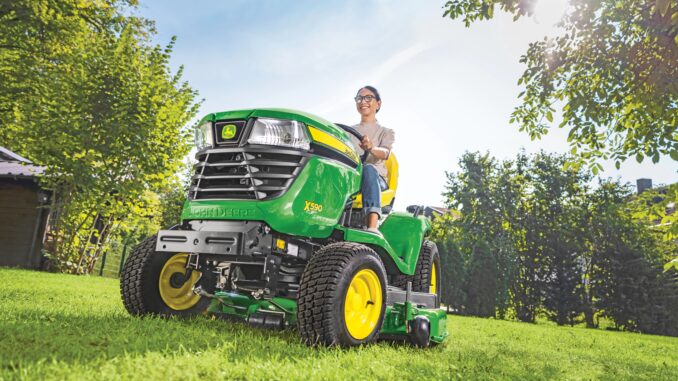
The John Deere 42 inch mower is one of Deere’s most common residential cutting setups, used across many 100 Series, S Series, X Series, and some ZTrak models, which makes it a familiar deck for homeowners who need practical repair, troubleshooting, and maintenance advice. This guide is written for DIY owners in the USA and Canada who want a symptom-first reference covering common faults, service parts, parts lookup sources, maintenance intervals, and realistic boundaries between home repair and dealer-level work.
John Deere 42 inch mower overview
In practical terms, the key systems owners deal with are the deck shell, spindle assemblies, mower blades, deck drive belt, idlers and tension system, anti-scalp wheels, lift linkage, and discharge chute.
Those are the parts most often involved when the mower cuts unevenly, throws a belt, vibrates, leaves strips, or starts making noise.
General overview of the John Deere 42 inch mower
Within the Deere lineup, the John Deere 42 inch mower normally sits as the standard deck size for entry-level and mid-range residential lawn tractors, giving a balance between maneuverability and enough cutting width for medium home lawns. Deere’s quick reference guide library specifically groups many 42-inch machines under residential lawn and garden equipment, which confirms that this deck size is a long-running core option rather than a niche attachment.
Common service parts owners regularly buy for John Deere 42 inch mower setups include the deck belt, mower blades, spindle hardware, spark plugs and engine filters for the tractor itself, and deck wheels or chute parts when damaged. Deere also points owners to its quick reference guides and publications portal for maintenance parts, service intervals, and manuals.
John Deere 42 inch mower troubleshooting approach
The best way to diagnose a John Deere 42 inch mower is to start with the symptom the owner actually sees, such as poor cut quality, vibration, a thrown belt, blade engagement problems, or abnormal noise. That approach prevents unnecessary parts swapping and helps separate deck faults from engine, PTO, or tractor linkage issues.
Main symptom groups usually include:
-
Starting or PTO engagement issues on the tractor powering the John Deere 42 inch mower.
-
Running and mowing issues such as bogging, poor discharge, or striping.
-
Cut-quality problems such as scalping, uneven height, and uncut grass.
-
Vibration and noise from blades, spindles, pulleys, or belt routing errors.
-
Overheating, debris buildup, and belt damage caused by packed grass under the deck.
-
Electrical and safety-switch issues that stop blade engagement or machine operation.
John Deere 42 inch mower emergency repairs
Some faults on a John Deere 42 inch mower need immediate attention because they create a direct safety risk or can destroy more expensive parts very quickly. The main examples are loose or damaged blades, failing spindle bearings, a belt running outside its guides, and a deck packed with dry debris near hot engine and exhaust areas.
Starting or PTO issues on the John Deere 42 inch mower
When the machine starts but the mower will not engage, or the PTO cuts in and out, the problem matters because owners often keep testing the system and can overheat belts or damage pulleys if the root cause is mechanical.
Common causes:
-
Worn or damaged deck belt.
-
Belt routed incorrectly after service.
-
Belt outside a keeper or guide.
-
PTO or engagement linkage issue on the tractor.
-
Damaged pulley or seized spindle.
Basic checks:
-
Park safely and remove the key before inspecting under the deck.
-
Confirm the belt is present, intact, and seated in every pulley groove.
-
Check that belt guides have not bent away from the pulleys.
-
Spin pulleys and blade spindles by hand with the engine off to feel for roughness.
-
If the deck still will not engage, shift diagnosis to the PTO circuit or tractor controls.
John Deere 42 inch mower cut-quality problems
Cut-quality complaints usually show up as strips of uncut grass, scalping, clumps, or one side cutting lower than the other, and they matter because owners often blame the blades when deck level or buildup is the real issue. Deere operator information specifically references mower level adjustment and deck wheel settings as part of correct setup.
Common causes:
-
Deck out of level.
-
Dull, bent, or badly worn blades.
-
Grass packed under the shell.
-
Tire pressure mismatch on the tractor.
-
Ground speed too fast for conditions.
Basic checks:
-
Check tire pressures before adjusting the deck.
-
Clean the underside of the deck completely.
-
Inspect both blades for damage or uneven wear.
-
Level the deck side-to-side and front-to-rear per operator guidance.
-
Test mow at a slower travel speed in dry grass.
John Deere 42 inch mower vibration and noise
Strong vibration, rattling, squealing, or a droning spindle sound should be treated as urgent because continued use can damage spindle housings, pulleys, the deck shell, or the engine PTO belt path. A John Deere 42 inch mower should run with normal blade noise, not harsh shaking through the tractor frame or footrest area.
Common causes:
-
Bent blade.
-
Blade installed incorrectly.
-
Loose blade hardware.
-
Failed spindle bearing.
-
Damaged idler or pulley bearing.
Basic checks:
-
Stop mowing immediately if vibration begins suddenly.
-
Inspect blades for bends, cracks, or impact damage.
-
Check blade bolts for tightness using the correct procedure for the machine.
-
Spin each spindle and idler by hand for noise or roughness.
-
Replace damaged rotating parts before further use.
Overheating, debris, and belt damage
A John Deere 42 inch mower can develop overheating-related problems when heavy debris packs under the deck, around shields, or near engine cooling areas, especially during wet mowing. This matters because belt heat, poor airflow, and combustible debris can quickly turn a minor maintenance problem into a major repair or fire risk.
Common causes:
-
Wet grass buildup under the deck.
-
Damaged belt dragging on a keeper.
-
Dirty engine cooling fins on the tractor.
-
Incorrect deck height for conditions.
Basic checks:
-
Let the machine cool fully before cleaning.
-
Remove packed grass from the deck underside and chute area.
-
Inspect the belt for glazing, fraying, or burnt spots.
-
Clean external engine cooling areas listed in the manual.
-
Avoid mowing heavy wet growth until the deck is clean and airflow is restored.
John Deere 42 inch mower electrical and safety problems
When the mower quits engaging after the operator shifts position, backs up, or releases a pedal, the issue may involve safety interlocks rather than the deck itself. These systems matter because bypassing them is unsafe and can also confuse diagnosis when the real fault is a switch, harness, or adjustment problem.
Common causes:
-
Seat switch fault.
-
Brake or PTO interlock issue.
-
Loose electrical connection.
-
Battery or charging weakness affecting clutch operation on equipped machines.
Basic checks:
-
Review the machine’s operator manual test procedure for safety systems.
-
Confirm the battery is fully charged and terminals are clean.
-
Inspect visible switch connectors before replacing parts.
-
Do not bypass safety switches for regular use.
-
Move to dealer-level diagnosis if the circuit remains inconsistent.
DIY or dealer for the John Deere 42 inch mower
For most homeowners, the John Deere 42 inch mower is realistic for routine DIY service and a fair amount of intermediate repair, but jobs involving spindle housings, repeated belt failures, PTO diagnosis, deck shell damage, or electrical tracing often cross the line into advanced repair work. The sensible dividing line is whether the repair requires only normal hand tools and visible parts access, or whether it needs pullers, torque specs, electrical testing, or serial-number-specific technical data.
Good DIY jobs
-
Cleaning the deck and chute.
-
Replacing blades.
-
Replacing the deck belt.
-
Setting deck level and anti-scalp wheels.
-
Basic engine air filter and spark plug service on the tractor.
Advanced DIY or dealer jobs
-
Spindle replacement when shafts, housings, or pulleys are seized.
-
Repeated belt-throwing diagnosis tied to bent keepers or pulley alignment.
-
PTO clutch or electric engagement faults.
-
Deck shell cracks, hanger damage, or lift linkage wear.
Skill level guide
-
Beginner: cleaning, blade inspection, deck leveling, checking belt condition.
-
Intermediate: blade replacement, deck removal and installation, belt replacement, wheel adjustment.
-
Advanced: spindle rebuilds, electrical diagnosis, structural deck repairs, PTO troubleshooting.
John Deere 42 inch mower parts, OEM numbers, and ordering details
Before ordering parts for a John Deere 42 inch mower, gather the full machine model, product identification number, exact deck size, and the engine model and serial if the repair touches engine service items rather than deck parts. That matters because Deere has used 42-inch decks across many tractors and zero-turns, and the same cutting width does not guarantee the same belt, blade, spindle, or linkage parts.
OEM parts are the safer choice for belts, safety-related switches, exact-fit pulley hardware, and any part where belt tracking or deck geometry matters. Aftermarket parts can be acceptable for filters, batteries, and some blade sets, but only when the cross-reference clearly matches the exact Deere model and deck version.
John Deere 42 inch mower diagrams and manuals
The most useful sources for John Deere 42 inch mower diagrams and manuals are Deere’s own publications tools plus one reputable Deere-oriented parts seller that shows OEM part numbers clearly.
-
John Deere Lawn & Garden Quick Reference Guides for maintenance part numbers, service intervals, and capacities by exact model.
-
John Deere Manuals and Training for operator manuals, technical publications, and parts catalog access.
-
Technical Information Store / Manual portal for model-specific operator and technical manual views where available.
-
Horizon Ag & Turf OEM belt listing as an example Deere-focused parts page showing a confirmed OEM 42-inch deck belt application range.
Use the quick reference guide first for routine service items, the manual portal for procedures and adjustments, and the full Deere publications area when you need technical or diagnostic information beyond basic owner maintenance.
How to identify your John Deere 42 inch mower
Correct identification matters because Deere has used several different 42-inch deck designs over many years, and the wrong assumption about deck family is one of the easiest ways to buy the wrong belt or blade set.
-
Find the tractor or mower product identification label on the machine frame in the location shown in the operator manual for that exact model.
-
Record the full model designation, not just “John Deere 42 inch mower.”
-
Confirm the deck width and, where applicable, the deck family name such as Edge, Edge Xtra, or Accel Deep if listed by the machine.
-
Record the engine model and serial number from the engine shroud or engine label if you are ordering tune-up parts.
-
Use all of those numbers in Deere’s guide, manuals portal, or dealer parts system before placing an order.
Buying John Deere 42 inch mower parts
The best buying strategy is to confirm the OEM part number first and then decide whether to buy from Deere, a dealer-linked online store, or a trusted retail source. That reduces returns and is especially important for John Deere 42 inch mower belts, blades, spindle parts, and serial-sensitive linkage or switch components.
-
Online: best for price checking and diagram lookup, but confirm OEM numbers before checkout. Good starting points are Deere’s manuals and guides plus a Deere-focused store page with clear fitment notes.
-
Dealer counter: best for serial-specific items, deck linkage parts, repeated belt issues, and anything where the parts staff may need the PIN to confirm revisions.
-
Retail stores: acceptable for common consumables such as spark plugs, air filters, batteries, and some blades when the packaging clearly lists the exact Deere machine fitment.
Useful sources include John Deere Manuals & Training, John Deere Quick Reference Guides, and Horizon Ag & Turf’s GX20072 listing.
Step-by-step fitting guide for the John Deere 42 inch mower
These are the highest-impact DIY jobs for a John Deere 42 inch mower because they directly affect cut quality, reliability, and belt life. Always park safely, remove the key, disconnect the spark plug wire where appropriate, and follow the operator manual for the exact machine before starting work.
Replacing John Deere 42 inch mower blades
Blade replacement fixes ragged cutting, vibration from impact damage, and poor lift in normal grass.
-
Park the machine safely and block the deck as needed for safe access.
-
Remove each blade using the correct tool and hold the blade safely during removal.
-
Inspect blade adapters, spindle shafts, and mounting surfaces for damage.
-
Install the new or sharpened blades in the correct orientation.
-
Tighten hardware to the specification in the operator or technical manual for the exact machine.
Replacing the John Deere 42 inch mower deck belt
A new belt is often the cure when the mower stops driving the blades, squeals, or repeatedly slips under load.
-
Remove deck shields or pulley covers as required on the machine.
-
Remove the deck if access is poor or if the model’s procedure calls for it.
-
Note the exact routing before removal, paying attention to where the V-side and flat side of the belt run.
-
Slip the old belt off, inspect pulleys and belt guides, and replace any rough or bent components.
-
Route the new belt correctly, reinstall covers, and verify it sits inside every guide before engaging the PTO.
Leveling the John Deere 42 inch mower deck
Deck leveling corrects uneven cutting, scalping, and striping more often than many owners expect.
-
Set tire pressures first because tire mismatch changes deck height readings.
-
Park on a hard, level surface and set the cutting height as specified in the manual.
-
Measure blade-tip height side to side and front to rear using the manual’s method.
-
Adjust the front lift rod or side linkage as required for the 42-inch deck procedure.
-
Recheck measurements and test mow before making fine adjustments.
Cleaning the underside of the John Deere 42 inch mower
Routine cleaning prevents clogging, poor discharge, belt heat, and premature rust or corrosion.
-
Park safely and let hot components cool.
-
Remove packed grass from under the shell and discharge area.
-
Check the belt area and pulley shields for wrapped debris.
-
Inspect blades and deck wheels while the underside is exposed.
-
Resume mowing only when airflow through the deck is clear.
Preventing repeat John Deere 42 inch mower problems
Regular maintenance prevents many of the repeat faults owners blame on poor-quality parts, especially when the real causes are dull blades, packed grass, incorrect deck setup, and worn belts left in service too long. Deere’s own owner resources emphasize maintenance parts, interval tracking, and routine checks for residential lawn equipment.
Focus areas:
-
Starting reliability: keep the tractor’s air filter, fuel filter, battery, and spark plug service current.
-
Cut quality: sharpen or replace blades, set tire pressures correctly, and level the deck when needed.
-
Fire and overheating prevention: clean grass buildup from under the deck and around engine cooling areas.
-
Drive performance: replace a worn deck belt before it starts slipping or burning.
-
Electrical reliability: inspect connectors and test safety systems according to the operator manual.
John Deere 42 inch mower maintenance schedule
John Deere’s residential operator information and quick reference material organize maintenance by recurring intervals, including before-use checks, 25-hour, 50-hour, 100-hour or annual, and longer-interval service tasks depending on the machine family. Owners should always default to the exact machine’s chart, but the schedule below reflects the official interval structure commonly used for Deere residential mowing equipment with 42-inch decks.
Daily / before each use for a John Deere 42 inch mower
-
Check under the deck and discharge chute for debris.
-
Inspect blades and visible belt condition.
-
Check tire pressure where the manual requires it.
-
Confirm safety systems and parking brake function.
Every 25 hours
-
Perform the machine-specific 25-hour checks listed in the operator guide.
-
Inspect mower deck components and linkage for wear or looseness.
-
Review lubrication points that apply to the exact deck and tractor model.
Every 50 hours or yearly
-
Check or replace engine service parts listed in the Deere quick reference guide for the tractor.
-
Check mower belt condition and replace if necessary.
-
Sharpen or replace mower blades.
-
Clean the underside of the mower deck thoroughly.
Every 100 hours or annually
-
Follow the official 100-hour or annual items in the operator manual for the exact machine.
-
Review mower deck adjustment, lubrication, and safety checks.
Every 200 hours or similar long interval
-
Carry out longer-interval engine or valve-clearance items only where listed for the exact machine.
-
Use dealer support for any procedure the operator information specifically assigns to a John Deere dealer.
Seasonal checklist for the John Deere 42 inch mower
-
Spring: inspect the belt, sharpen blades, check tire pressures, and level the deck before the first heavy mowing cycle.
-
Mid-season: clean packed debris, recheck belt wear, and inspect blades after impact damage or rough mowing conditions.
-
Fall or end of season: wash and dry the deck, inspect for rust or cracked paint, and replace worn parts before storage.
Repair, upgrade, or replace a John Deere 42 inch mower
For most homeowners, repairing a John Deere 42 inch mower makes sense when the deck shell is sound and the faults are limited to normal wear parts such as blades, belts, deck wheels, or routine tune-up items on the tractor. Upgrading or replacing starts to make more sense when the machine has chronic deck wear, repeated spindle or belt failures from structural damage, or the owner needs significantly more mowing capacity than a 42-inch residential setup offers.
Repair if
-
The problem is a routine wear part such as a belt, blade, filter, wheel, or switch.
-
The deck shell and hanger points are structurally sound.
-
The machine otherwise starts, drives, and mows normally.
Upgrade if
-
You need a more durable deck family or a wider deck for larger lawns.
-
The present machine is reliable but undersized for the property.
-
You want easier access to newer Deere service support and current parts listings.
Replace if
-
The deck shell is cracked badly or rusted through.
-
Multiple major systems need work at the same time.
-
Repair cost approaches the value of the machine.
John Deere 42 inch mower troubleshooting FAQ
1. Why will my John Deere 42 inch mower not cut at all?
If the tractor runs but the deck does not cut, start by checking whether the deck belt is intact, routed correctly, and still seated in every pulley. A seized spindle, damaged pulley, or PTO engagement problem can also stop blade drive even when the machine itself starts and moves normally.
2. Why does my John Deere 42 inch mower leave strips of grass?
Strips usually point to dull blades, deck buildup, incorrect deck level, or mowing too fast for grass height and moisture. Check tire pressure first, then clean the deck, inspect the blades, and confirm level before replacing parts.
3. Why is my John Deere 42 inch mower cutting unevenly side to side?
The most common cause is an out-of-level deck, often made worse by uneven tire pressure or worn adjustment hardware. Measure blade-tip height carefully on a level surface and adjust the deck using the machine’s exact procedure.
4. Why does the John Deere 42 inch mower scalp my lawn?
Scalping happens when the deck is too low, not level, or the anti-scalp wheels are not set correctly for the mowing height. It can also happen when mowing speed is too high over uneven ground.
5. Why does my John Deere 42 inch mower vibrate badly?
Sudden vibration usually means a blade has struck something, bent, loosened, or gone out of balance. Worn spindle bearings or pulley bearings can create a similar shake, especially if the vibration rises with blade speed.
6. Why does the John Deere 42 inch mower make a squealing sound?
A squeal often comes from a slipping or glazed deck belt, a dry or failing idler pulley, or a spindle beginning to seize. Inspect belt condition and spin pulleys by hand with the engine off before continuing to mow.
7. Why does my John Deere 42 inch mower keep throwing the belt?
Repeated belt loss usually means the belt is worn, misrouted, outside a guide, or running on a bent pulley or rough spindle. Replacing the belt alone will not fix the issue if a guide or pulley is out of position.
8. How do I know if the John Deere 42 inch mower belt is worn out?
Look for glazing, cracks, frayed edges, missing chunks, stretching, or signs of burning from slippage. Any of those signs justify replacement, especially if the mower has already started slipping under load.
9. What belt number fits many John Deere 42 inch mower decks?
GX20072 is a common OEM deck belt used on many Deere 42-inch deck applications in the 100, D100, E100, L100, LA100, and S200 families. It is still essential to verify the exact machine model because not every 42-inch Deere deck uses the same belt.
10. Why does my John Deere 42 inch mower clog in wet grass?
Wet grass reduces airflow and sticks to the underside of the deck, which makes discharge weak and encourages clumping. Cleaning the deck, raising cutting height slightly, and mowing only when conditions are drier usually improves performance.
11. Why does my John Deere 42 inch mower bog down in tall grass?
Tall or heavy grass increases load on the deck and belt system, especially if the blades are dull or the underside is packed with debris. Slowing ground speed and making sure the blades and deck are clean is usually the first correction.
12. Why are the blades on my John Deere 42 inch mower not engaging?
Start by checking the deck belt, its routing, and whether the system is being blocked by a safety interlock issue. If the belt path is sound, the problem may be in the PTO clutch, linkage, wiring, or an interlock switch.
13. Can I replace John Deere 42 inch mower blades myself?
Yes, blade replacement is a realistic DIY job for many owners using safe lifting or access methods and the correct tightening procedure. The key is confirming the correct blade orientation and hardware torque for the exact machine.
14. How often should I sharpen John Deere 42 inch mower blades?
Deere owner information includes sharpening or replacing mower blades as a recurring maintenance task rather than a one-time seasonal event. In practice, sharpen or replace them whenever cut quality drops, blade edges are damaged, or impacts have bent the blade.
15. Why does my John Deere 42 inch mower cut lower on one side?
A side-to-side height difference usually comes from deck level issues, tire pressure mismatch, or damaged linkage. Measure with the blades positioned correctly and adjust only after tire pressures are confirmed.
16. Why does my John Deere 42 inch mower leave clumps?
Clumping is commonly caused by wet grass, excessive ground speed, and a deck underside coated with packed clippings. Dull blades also reduce airflow and worsen discharge quality.
17. Should I use OEM blades and belts for a John Deere 42 inch mower?
OEM parts are the safest choice for belts and other fit-sensitive or safety-critical items because small fit differences can affect tracking and performance. Aftermarket can work for some consumables, but only when the fitment cross-reference is exact.
18. Where can I find John Deere 42 inch mower diagrams?
Start with Deere’s manuals and training portal, then use the quick reference guide or technical manual view linked to the exact machine. Those sources are better than guessing from generic listings because they are tied to model-specific publications.
19. Where can I find the operator manual for my John Deere 42 inch mower?
The Deere Manuals and Training page is the main entry point for downloading, viewing, or purchasing operator and technical manuals. You will still need the exact machine model because Deere organizes manuals by tractor or mower model, not by deck width alone.
20. How do I identify the exact John Deere 42 inch mower deck I have?
Record the full machine model, product identification number, and the deck designation used by Deere for that machine. A 42-inch width by itself is not enough to guarantee the same blades, belt, or spindle parts across Deere product families.
21. Why does my John Deere 42 inch mower smell like hot rubber?
That usually indicates belt slippage, a seized pulley, a rough spindle, or a belt riding outside a guide. Stop mowing and inspect immediately because continued use can destroy the belt and damage adjacent parts.
22. Why is the John Deere 42 inch mower discharge weak?
Weak discharge usually comes from deck buildup, dull blades, wet material, or slow blade tip performance caused by belt slip. Cleaning the deck and checking the belt and blades are the first steps.
23. Why does my John Deere 42 inch mower make a grinding noise?
Grinding points to a failing spindle bearing, damaged pulley bearing, or metal-to-metal contact after a blade impact. Do not keep mowing until the rotating parts are inspected.
24. Can I fit aftermarket parts to a John Deere 42 inch mower?
Yes, but only when the cross-reference is exact and the seller clearly lists compatibility with the exact model or OEM part number. Belts, safety parts, and fit-critical hardware are better kept OEM in most cases.
25. Why does my John Deere 42 inch mower rust underneath?
Grass and moisture trapped under the shell hold water against the painted steel, especially if the deck is put away dirty. End-of-season cleaning and drying help slow corrosion and make damage easier to spot.
26. Should I remove the John Deere 42 inch mower deck to change the belt?
On many Deere tractors, removing the deck improves access and reduces frustration during belt replacement. Some owners can change the belt in place, but better access makes it easier to confirm routing and pulley condition.
27. Why does my John Deere 42 inch mower shut off when I move in the seat?
That symptom often points to a seat safety switch or related interlock issue rather than a deck fault. Use the manual’s safety-system test guidance instead of bypassing the switch.
28. How often should I inspect the John Deere 42 inch mower belt?
Inspect it before use and again during routine interval service, especially in heavy mowing season. Deere owner material specifically includes checking mower belt condition and replacing it if necessary.
29. Why does my John Deere 42 inch mower cut fine at first and then worsen?
That pattern usually means the underside is gradually packing with clippings, the belt is heating up and slipping, or the blades are marginal and lose performance under load. Clean the deck and inspect the belt before assuming a more complex problem.
30. Can a bent blade damage my John Deere 42 inch mower spindle?
Yes, continued use with a bent blade can overload spindle bearings and increase vibration through the deck assembly. Replacing only the blade may not be enough if the spindle already feels rough afterward.
31. Why does my John Deere 42 inch mower scalp only in turns?
That often happens because the deck is set low, the anti-scalp wheels are not adjusted well, or the ground is uneven and weight transfers during turning. Slowing down and checking deck setup usually helps more than changing blades.
32. Is deck leveling really that important on a John Deere 42 inch mower?
Yes, because many cut-quality complaints come from setup rather than worn parts. Even a new belt and sharp blades will not fix an improperly leveled deck.
33. What should I check before ordering John Deere 42 inch mower parts online?
Confirm the exact machine model, PIN, deck size, deck family, and engine model if buying tune-up parts. That combination reduces the chance of ordering the wrong belt, blades, filters, or switch parts.
34. When should I take my John Deere 42 inch mower to a dealer?
Dealer support is sensible when the repair involves electrical diagnosis, persistent belt-throwing, structural deck damage, or any procedure the official information assigns to dealer service. It is also the safer route when the owner lacks the tools to confirm torque, alignment, or serial-number-specific parts revisions.
35. Is the John Deere 42 inch mower good for larger properties?
It works well for many home lawns, but Deere positions 42-inch decks mainly within residential equipment rather than larger-capacity mowing categories. Owners with larger acreage or consistently heavy mowing conditions may benefit from moving to a wider deck or heavier machine class.