
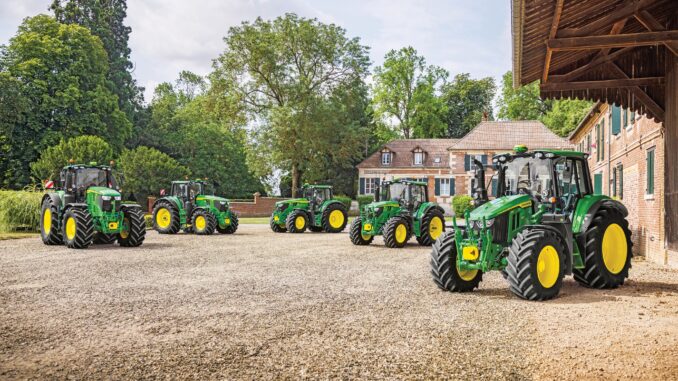
Introduction / John Deere Forklift Models Overview
John Deere forklift models used in yards, warehouses and farm operations are typically based on industrial tractor platforms with mast assemblies, hydraulic lift systems and either diesel or gasoline engines. They are designed for material handling rather than field work, but many components and service practices are familiar to anyone used to John Deere tractors.
This guide focuses on practical service, repair and troubleshooting for John Deere forklift models, written for USA and Canada owners who want to perform sensible DIY maintenance while knowing when to involve a dealer. It covers common symptoms, basic diagnostics, high‑impact service jobs, parts information, diagrams/manuals, maintenance schedules and an expanded FAQ.
General Overview of John Deere Forklift Models
John Deere forklift models sit in the industrial/utility segment of the Deere lineup, often sharing drivetrains and engines with compact and utility tractors while adding a mast, carriage and hydraulics tailored to lifting and moving pallets or bulk loads. Key systems you’ll deal with include the engine and fuel system (diesel or gas), hydraulic lift and tilt circuits, transmission/drive axle and steering, and the electrical/safety system (key switch, seat switch, mast limit switches, work lights and indicators).
Common service parts that owners regularly need include engine oil filters, fuel filters and air filters, hydraulic filters, engine drive belts, lift/tilt hydraulic hoses, ignition components (plugs or glow plugs), batteries, key switches and various safety/limit switches.
Typical part examples (you’ll need to confirm exact numbers for your unit): engine oil filter and fuel filter cartridges, spin‑on hydraulic filter canisters, V‑belts for alternator or fan drive, mast lift chains and chain anchor hardware, hydraulic hose assemblies for lift and tilt functions, and wear items like brake pads/shoes and steering components. Having the correct OEM part numbers before ordering will save time and avoid fit issues.
John Deere Forklift Models Troubleshooting Approach
With John Deere forklift models, the safest and most efficient way to diagnose problems is to start from what you see and feel: the symptom, not the suspected part. Begin with categories such as starting issues, running/performance problems, lift/tilt failures, vibration/noise, overheating or fluid leaks, transmission/drive issues, and electrical/safety switch faults. For each symptom, work through simple checks in order: controls and safety interlocks, fluid levels, visible damage, and then more detailed tests according to the operator’s manual or service documentation. When a symptom affects braking, steering, lifting or stability, treat it as safety‑critical and stop using the forklift until you have corrected the fault.
Emergency and Immediate Repair Needs on John Deere Forklift Models
Starting issues
If your John Deere forklift models will not crank or start, you’ll usually notice either silence when you turn the key, a slow crank, or the engine cranking without firing. This matters because repeated cranking can damage the starter or leave you stranded in a hazardous position, especially on inclines or near traffic lanes. Common causes include a weak or failed battery, corroded battery terminals, blown fuses, faulty key or seat switches, neutral/park safety interlock faults, low fuel, and cold‑weather glow plug issues on diesel units.
Basic owner checks:
-
Confirm transmission is in neutral/park and parking brake applied.
-
Check battery voltage, clean and tighten battery terminals.
-
Inspect key switch and safety switches for obvious damage or loose connectors.
-
Verify fuel level and, on diesel models, use proper cold‑start procedures.
-
If the starter does not engage after these checks, consult a dealer or qualified technician.
Lift and tilt problems on John Deere Forklift Models
A common urgent symptom is the John Deere forklift models mast refusing to lift, lifting weakly, or drifting down under load. This is critical because loss of lift capacity or uncontrolled drop can cause load spills, injuries and damage to racking or equipment. Typical causes include low hydraulic oil level, contaminated oil, clogged hydraulic filters, air in the hydraulic system, worn lift pump, leaking lift cylinders, or faulty control valves and relief valves.
Basic owner checks:
-
Park on level ground, lower forks fully and chock wheels.
-
Check hydraulic reservoir level and top up with the specified oil if low.
-
Inspect hoses, fittings and mast cylinders for external leaks.
-
Listen for pump noise (whine or cavitation) when operating lift/tilt.
-
If lifting remains weak or drift persists, stop using the forklift and arrange dealer inspection.
Vibration and noise
On John Deere forklift models, excessive vibration or new mechanical noise (grinding, clunking, whining) while driving or lifting should be treated as an immediate warning. Unchecked vibration can quickly damage bearings, chains, shafts and structural components, and noise in the mast can signal impending chain or carriage failure. Common causes include loose or damaged mast chains, worn chain guides, failing wheel bearings, unbalanced or damaged tires, engine or transmission mounts deteriorating, and loose hardware on the mast, overhead guard or counterweight.
Basic owner checks:
-
Visually inspect mast chains, guides and anchor points with forks lowered.
-
Check wheels and tires for flat spots, damage or looseness.
-
Look for loose bolts on mast, overhead guard and counterweight.
-
Note whether vibration changes with speed, direction or lifting.
-
If you suspect a structural or mast chain issue, stop operation and seek professional service.
Overheating and leaks
If John Deere forklift models show engine temperature warning, reduced power, or visible fluid leaks, you must act quickly to prevent severe damage or fire risk. Overheating often stems from low coolant, blocked radiator fins, failed cooling fan belts, stuck thermostats or heavy load in hot environments; leaks can involve engine oil, hydraulic oil, coolant or fuel. Fluid on the ground, on mast assemblies or near brakes and steering components is a direct safety concern.
Basic owner checks:
-
Shut down and allow engine to cool; never open a hot radiator cap.
-
Inspect radiator and cooler cores for debris; clean carefully with low‑pressure air or water.
-
Check coolant level and fan belt condition/tension.
-
Look for obvious oil or hydraulic leaks under the machine and along hoses.
-
Do not continue operation if overheating recurs or leaks persist; schedule repair promptly.
Transmission/drive problems
John Deere forklift models that struggle to move, lurch, lose drive, or show inconsistent speed under load may have transmission or axle issues that can escalate quickly. Symptoms include slipping, delayed engagement, grinding noises, or difficulty climbing ramps. Causes range from low or incorrect transmission fluid, contaminated oil, drive shaft or axle failures, worn clutches, or problems in hydrostatic drive components on certain models.
Basic owner checks:
-
Confirm parking brake is fully released and no warning lights are on.
-
Check transmission fluid level and condition as per the manual.
-
Note whether drive issues appear in forward, reverse or both.
-
Avoid high‑load work if drive feels weak or erratic.
-
For any grinding or sudden loss of drive, stop immediately and contact a dealer.
Electrical and safety switch faults on John Deere Forklift Models
Electrical and safety systems on John Deere forklift models include seat switches, neutral switches, mast height or tilt limit switches, warning lights, and sometimes electronic control modules. Symptoms such as intermittent starting, unexpected engine shutoff, dead lights, or inability to lift beyond a certain height can point to these systems. Because safety interlocks prevent unsafe operation, bypassing them is never an acceptable fix.
Basic owner checks:
-
Inspect fuses and relays in the main fuse panel.
-
Check obvious wiring damage, chafing or corrosion in high‑movement areas.
-
Verify seat and neutral switches are physically intact and properly mounted.
-
Test lights and indicators systematically to see what works and what doesn’t.
-
If a safety switch fault is suspected, have the system tested and repaired professionally.
DIY or Dealer? Repair Decision Guide for John Deere Forklift Models
On John Deere forklift models, the general rule is: owners can safely perform routine maintenance and simple repairs that don’t involve lifting structures, brake hydraulics, steering linkages or complex hydraulics, while leaving major structural, mast, brake and transmission work to trained technicians. Anything that directly affects lifting, stopping, stability or rollover protection should be treated as dealer‑level unless you have industrial equipment experience and proper workshop facilities. When in doubt, follow the operator’s manual guidance and err on the side of safety.
Good DIY jobs:
-
Regular engine oil and filter changes.
-
Air and fuel filter replacement.
-
Battery inspection and replacement.
-
Basic hydraulic filter changes and fluid top‑ups (without system teardown).
-
Greasing mast pivot points and steering linkages where accessible.
-
Simple electrical repairs like bulb replacement and basic terminal cleaning.
Advanced DIY or dealer jobs:
-
Mast chain inspection, tension adjustment and replacement.
-
Lift and tilt cylinder resealing or replacement.
-
Brake system repairs (lines, cylinders, pads/shoes).
-
Transmission or differential repairs and adjustments.
-
Steering system repairs beyond basic tie‑rod or joint checks.
-
Electrical troubleshooting involving control modules or complex safety circuits.
Skill level guide:
-
Beginner: Engine oil and filter change, air filter replacement, battery maintenance.
-
Intermediate: Fuel filter changes, hydraulic filter replacement, minor hose replacement, basic electrical fault tracing with a multimeter.
-
Advanced: Mast chain and carriage work, brake overhauls, transmission diagnostics, hydraulic pump and valve repairs.
Parts Needed, OEM vs Aftermarket for John Deere Forklift Models
Before ordering parts for John Deere forklift models, gather the full model designation from the data plate, the Product Identification Number (PIN), engine model and serial number, and any mast or attachment identifiers. Forklifts often have variations in mast height, carriage type, and tire options that affect part numbers for chains, hoses and hardware. For engine and drivetrain components, exact engine model and build information are essential; for hydraulic and lift systems, mast configuration and carriage type matter. Never rely solely on “looks about right” when dealing with lift chains, cylinders or structural components.
Key service parts table
As a parts strategy, OEM components are strongly recommended for belts, lift chains, hydraulic pumps, cylinders, safety switches and anything affecting structure or safety because tolerance and durability are critical. Aftermarket parts can be acceptable for some filters, batteries, and possibly certain hoses or electrical items if they come from reputable brands and are cross‑referenced correctly to your exact model and PIN. Avoid generic chain or structural parts that are not specifically listed for your forklift.
Where to Find Parts Diagrams and Service Manuals for John Deere Forklift Models
Accurate parts diagrams and service information for John Deere forklift models are available through official and reputable third‑party sources online. The operator’s manual for your specific forklift model provides safety instructions, basic maintenance intervals, and fundamental checks and is usually available through the John Deere documentation portal. Detailed parts diagrams and exploded views showing mast assemblies, hydraulic components, drivetrain parts and electrical layouts are found in the official parts catalog and, for deeper diagnostics, in technical or service manuals.
Useful links include:
-
John Deere Parts catalog and manuals: https://www.deere.com/en/parts-and-service/parts/
-
John Deere self‑repair and technical resources: https://www.deere.ca/en/stories/featured/repair/
-
Shop.Deere.com for OEM parts and some technical data: https://shop.deere.com/
-
A trusted independent manual/diagram repository (for reference only, always verify): https://therepairmanual.com/john-deere/
Use the operator’s manual for day‑to‑day checks and basic procedures, the parts catalog for diagrams and part numbers, and technical/service manuals for step‑by‑step repair instructions and diagnostic procedures.
How to Locate Model, Serial and Engine Numbers on John Deere Forklift Models
Correct identification numbers are essential for ordering parts and interpreting diagrams on John Deere forklift models because similar machines may have important differences in engine type, mast configuration or build year. Always take time to locate and record these numbers before contacting a dealer or supplier. They will typically ask for the PIN and sometimes engine serial and mast information before confirming parts.
To find these identifiers:
-
Look for the main data plate or decal on the truck frame, often near the operator’s seat, dash area, or side of the chassis; this plate carries the full model name and PIN.
-
Inspect the mast assembly for a tag or decal listing mast type, lift height and sometimes serial number; this matters for chains, rollers and cylinders.
-
Locate the engine identification plate or stamped markings on the engine block or rocker cover area; record the engine model and serial.
-
Check under the hood or in the operator’s compartment for additional decals giving model year and configuration details.
-
Keep a written record (or phone photos) of these plates to reference when ordering parts or consulting manuals.
Buying Parts Online and In Physical Stores for John Deere Forklift Models
For John Deere forklift models, an efficient parts‑buying strategy is to combine online ordering for OEM‑specific items with local dealer and retail options for consumables. Online OEM sources are ideal when you have confirmed part numbers from diagrams and know your PIN; they offer full catalogs and often ship quickly within the USA and Canada. Dealer counters are best for complex or serial‑sensitive items like mast chains, hydraulic pumps or control valves, and for professional confirmation that you have the correct part. Retail stores can be acceptable for general items such as engine oil, some filters, and batteries, as long as the packaging explicitly lists compatibility with your forklift or the underlying engine model.
Useful URLs:
-
Official John Deere parts catalog and ordering: https://www.deere.com/en/parts-and-service/parts/
-
Shop.Deere OEM parts for many models: https://shop.deere.com/
-
Reputable aftermarket manuals and references (to supplement, not replace OEM data): https://us.haynes.com/collections/john-deere-tractor-manuals
Always double‑check that online listings match your exact model and PIN, and use dealer support for any part that could affect lifting, braking or structural safety.
Step‑by‑Step Fitting Guide for Common John Deere Forklift Models DIY Jobs
Below are several high‑impact DIY service tasks that most owners of John Deere forklift models can perform with basic tools and safety precautions. Always park the forklift on level ground, apply the parking brake, lower forks fully and shut off the engine before working.
Engine oil and filter change (John Deere Forklift Models)
This job maintains engine health, improves reliability and reduces wear.
-
Warm the engine briefly, then shut it off and allow a few minutes for oil to settle.
-
Place a drain pan under the engine oil drain plug; remove the plug and let oil drain completely.
-
Remove the old oil filter using an appropriate wrench; check that the old gasket is not stuck to the mounting surface.
-
Lightly oil the new filter’s gasket, install it hand‑tight plus the recommended fraction turn.
-
Reinstall the drain plug with proper torque, fill the engine with the specified grade and quantity of oil.
-
Start the engine, check for leaks, then shut off and recheck oil level, topping up as needed.
Fuel filter replacement on John Deere Forklift Models
Replacing fuel filters helps prevent starting and running issues, especially on diesel forklifts.
-
Depressurize fuel system if required by the manual and set a drain pan or absorbent pads under the filter.
-
Remove the old fuel filter or filter bowl, carefully catching any fuel; dispose of fuel safely.
-
Install the new filter or cleaned bowl with a fresh element and seals, following orientation marks.
-
Prime the system using the hand primer or key‑on priming procedure, as indicated by the manual.
-
Start the engine and let it idle, checking for leaks and smooth running; bleed additional air according to the manual if needed.
Hydraulic filter change (John Deere Forklift Models)
Keeping hydraulic filters clean protects pumps, valves and cylinders and helps maintain lift performance.
-
Lower forks fully, relieve hydraulic pressure by cycling controls with engine off.
-
Locate the hydraulic filter (spin‑on or cartridge) and place a catch pan beneath.
-
Remove the old filter, clean the mounting surface and check for damaged threads or seals.
-
Install the new filter with a light film of hydraulic oil on the gasket, tightening to specification.
-
Check reservoir level and top up with specified hydraulic oil if needed.
-
Start the engine, operate lift and tilt slowly to circulate oil, and recheck for leaks and fluid level.
Battery replacement on John Deere Forklift Models
A healthy battery is vital for reliable starting and electronic control operation.
-
Switch off the ignition and remove the key; if possible, disconnect any charger or accessory connections.
-
Note the battery’s cable orientation, then disconnect the negative cable first, followed by the positive.
-
Remove any hold‑down clamps and lift out the old battery using proper lifting technique.
-
Clean the battery tray and terminals, removing corrosion with a suitable cleaner.
-
Install the new battery of correct group size and CCA, secure with hold‑downs, then reconnect positive followed by negative.
-
Test starting performance and ensure all electrical systems operate correctly.
Maintenance to Prevent Recurring Problems on John Deere Forklift Models
Preventive maintenance is the single most effective way to avoid repeated breakdowns and expensive repairs on John Deere forklift models. By following the recommended service intervals and paying attention to key systems, you can extend machine life, improve reliability and protect operators. Focus on keeping filters and fluids fresh, maintaining clean cooling and hydraulic systems, and regularly inspecting lift and drive components for wear or damage.
Key focus areas:
-
Starting reliability: Maintain batteries, clean terminals, replace fuel filters on schedule, and follow correct cold‑start procedures.
-
Lift performance: Keep hydraulic oil and filters clean, inspect mast chains and cylinders regularly, and address leaks early.
-
Fire and overheating prevention: Clean radiators and coolers, check coolant levels, use correct oil grades, and fix fuel or oil leaks promptly.
-
Drive performance: Maintain transmission fluid and check axle and tire condition; listen for early signs of drive‑line wear.
-
Electrical reliability: Inspect wiring for chafing, keep fuse panels clean and dry, and replace faulty switches or connectors.
Maintenance Schedule and Year‑Round Checklist for John Deere Forklift Models
While exact intervals depend on the specific John Deere forklift models and usage intensity, the following schedule broadly reflects typical factory recommendations for industrial trucks. Always cross‑check with your operator’s manual and adjust for heavy or harsh duty cycles.
Daily / before each use
-
Check engine oil level and look for visible leaks under the machine.
-
Inspect hydraulic oil level and scan mast, hoses and cylinders for leaks.
-
Verify brake operation, steering responsiveness and parking brake function.
-
Inspect tires for damage, correct inflation (if pneumatic) and tread condition.
-
Check lights, horn and safety devices, including seat and neutral switches.
After approximately 8 hours (or end of shift)
-
Clean debris from radiator, coolers and air intake screens.
-
Grease key fittings specified in the manual, especially mast pivots and steering linkages.
-
Inspect forks and carriage for cracks, bending or other damage.
-
Note any unusual noises, vibration or performance changes for follow‑up.
Every 25 hours
-
Inspect engine drive belts for wear, cracking or improper tension.
-
Check battery electrolyte level (if applicable) and clean terminals.
-
Examine hydraulic hoses and fittings more closely for abrasion or seepage.
-
Recheck wheel lug nut torque where specified in the manual.
Every 50 hours or yearly (whichever comes first)
-
Change engine oil and filter according to the recommended schedule.
-
Inspect and, if required, service brake components (pads/shoes, drums/discs).
-
Replace fuel filter elements, especially on diesel models.
-
Check mast chains for correct tension and wear; lubricate as specified.
-
Inspect steering linkages and front axle components for play or damage.
Every 200 hours or as specified
-
Change hydraulic filters and, if recommended, hydraulic oil.
-
Perform more detailed transmission fluid checks or changes (depending on model).
-
Inspect lift and tilt cylinders for rod wear, seal leakage and proper operation.
-
Conduct comprehensive inspection of chassis, counterweight mounting and overhead guard integrity.
Seasonal checklist (pre‑season / mid‑season / end‑of‑season)
-
Pre‑season: Complete a full service including oil, filters, cooling system check, brake and mast inspection before heavy use periods.
-
Mid‑season: Recheck filters, fluids and key wear points; address minor issues before they become failures.
-
End‑of‑season: Clean the machine thoroughly, correct any leaks, and complete needed repairs before storage; maintain battery and protect exposed metal from corrosion.
Repair, Upgrade, or Replace? Decisions for John Deere Forklift Models
With John Deere forklift models, deciding whether to repair, upgrade or replace depends on machine age, structural condition, hours, and the cost of required work versus the machine’s value. Generally, if the chassis and mast are sound and the forklift meets current capacity and safety needs, repair and targeted upgrades can provide many more years of service. If major structural components are cracked or severely worn, or if the forklift cannot economically be brought up to required safety or emissions standards, replacement often becomes the better long‑term decision.
Repair if…
-
Issues are limited to filters, hoses, belts, minor leaks or small electrical faults.
-
Engine compression and performance remain strong.
-
Mast, frame and overhead guard show no structural damage.
-
Repair costs are modest relative to machine value.
Upgrade if…
-
The forklift is mechanically sound but needs better lighting, updated safety accessories, or tire changes for different surfaces.
-
You can improve operator comfort and efficiency with seat, control or accessory upgrades.
-
Hydraulic performance can be enhanced with new hoses and valves without major component replacement.
Replace if…
-
Mast or frame show cracks or deformation that would require major structural work.
-
Engine, transmission and hydraulic systems all require overhaul at once, exceeding the forklift’s residual value.
-
The unit cannot safely or legally meet current load, height or environmental requirements for your operation.
Expanded Troubleshooting FAQ – John Deere Forklift Models (30–35 Questions)
1. Why will my John Deere forklift models not start?
Most starting failures come down to battery, safety switch or fuel issues. Check that the transmission is in neutral or park, parking brake applied, and that you have sufficient fuel. Inspect battery voltage and connections, then verify that seat and neutral switches are functioning. If the engine cranks but does not fire, look at fuel filters, glow plugs on diesels, and any error indicators before assuming a major failure.
2. Why does my John Deere forklift models crank slowly?
Slow cranking usually indicates a weak battery, corroded terminals or a failing starter. Test battery voltage under load, clean and tighten terminals, and ensure proper cable routing. If voltage is good but cranking remains sluggish, have the starter and associated wiring checked. Very cold conditions may also reduce cranking speed, making proper battery and oil selection more important.
3. Why does my John Deere forklift models start and then stall?
Starting followed by stalling often points to fuel delivery problems or safety interlock activation. Inspect fuel filters and lines for blockage or air leaks, and look for water contamination in diesel fuel. Ensure seat and mast limit switches are not intermittently cutting power. If stalling happens under load, consider fuel supply limitations or early signs of injection pump or governor issues.
4. Why does my John Deere forklift models run rough at idle?
Rough idle can come from dirty fuel injectors, worn spark plugs on gasoline units, clogged air filters or uneven cylinder compression. Start by checking air and fuel filters and replacing them if due. Examine ignition components on gas engines, or have injectors tested on diesels. Persistent roughness may require deeper engine diagnostics, including compression and valve checks.
5. Why does my John Deere forklift models lose power under load?
Loss of power under load usually indicates fuel, air or exhaust issues, or, less commonly, drivetrain drag. Check that filters are clean and that there are no restrictions in the intake or exhaust. Inspect the cooling system, as overheating can cause power reduction. If the engine seems healthy but drive feels weak, look at transmission or axle problems and consult a service manual.
6. Why won’t the mast lift on my John Deere forklift models?
If the mast will not lift, confirm that hydraulic oil level is within the recommended range and that the engine is running at proper speed. Inspect for warning lights or lockouts, and verify that lift controls are functioning. Low oil, dirty filters, or air in the hydraulic system can prevent lift. For persistent problems, suspect pump, valve or cylinder issues and seek professional help.
7. Why does my John Deere forklift models lift slowly or weakly?
Slow or weak lift suggests marginal hydraulic performance. Check hydraulic oil level, condition and filter service status. Listen for pump whine or cavitation noises, which indicate intake or pump problems. Examine mast chains and carriage for extra friction or binding. If simple maintenance doesn’t restore lift performance, pump output and system pressures should be tested.
8. Why do the forks on my John Deere forklift models drift down?
Drifting forks usually come from internal leaks within lift cylinders or valves. First ensure hydraulic oil level is correct and that external leaks are not present. If forks consistently creep down under load, it’s likely that seals in the lift cylinders or valve components are worn. Because uncontrolled drift is a safety issue, have the hydraulic system professionally inspected and repaired.
9. Why does my John Deere forklift models tilt unevenly or jerk?
Uneven or jerky tilt may be caused by air in the hydraulic lines, contaminated oil, or mechanical issues in the mast and carriage. Bleed or cycle the hydraulic system according to the manual, and replace hydraulic filters if due. Inspect mast rails, guides and carriage rollers for wear or binding. Persistent uneven movement warrants detailed hydraulic and mechanical inspection.
10. Why is my John Deere forklift models overheating?
Overheating usually starts with low coolant, blocked radiator fins, failing fan belts or heavy duty cycles in hot environments. Check coolant level, inspect radiator and coolers for dirt or debris, and verify that the fan belt is intact and properly tensioned. Clean cooling surfaces carefully and avoid overloading the machine. If overheating continues, thermostat or water pump faults may be involved.
11. Why do I see coolant leaks on my John Deere forklift models?
Coolant leaks may come from hoses, clamps, radiator seams, water pump seals, or the coolant reservoir. Identify the leak location by examining the engine compartment and under the machine. Tighten clamps where appropriate and replace damaged hoses. Radiator or water pump leaks often require component replacement. Always use the recommended coolant type when refilling.
12. Why do I see hydraulic oil leaks on my John Deere forklift models?
Hydraulic leaks commonly occur at hose fittings, deteriorated hoses, cylinder seals or valve bodies. Lower forks, relieve hydraulic pressure and inspect carefully for wet or oily areas. Replace worn hoses and seals promptly, as small leaks can escalate quickly and lead to pressure loss or contamination. Avoid operating with known leaks, especially on lift or tilt circuits.
13. Why does my John Deere forklift models make grinding noises when moving?
Grinding noises during movement often point to axle, bearing, brake or transmission issues. Listen closely to determine whether the noise is front or rear, and whether it occurs in forward, reverse or both. Check brake components, wheel bearings and driveline connections for damage. Do not ignore grinding; early diagnosis can prevent more serious failures.
14. Why is my John Deere forklift models vibrating more than usual?
Increased vibration can stem from tire problems, loose or damaged mast components, worn mounts, or drivetrain issues. Inspect tires and wheels first for damage or imbalance. Then evaluate mast chains, carriage rollers and mounting hardware. Check engine and transmission mounts for wear. If vibration changes with speed or load, consult a technician for a more thorough assessment.
15. Why does my John Deere forklift models pull to one side?
Pulling to one side usually indicates uneven tire pressure or wear, brake imbalance, or steering linkage problems. Check tire pressures and tread, adjust or replace as needed. Inspect brake components for sticking or uneven wear. Examine steering components for play or misalignment. Address pulling promptly, as it affects control and operator fatigue.
16. Why won’t my John Deere forklift models move even though the engine is running?
If the engine runs but the forklift will not move, verify that the transmission is engaged, parking brake released, and no safety interlocks are preventing motion. Check for warning lights on the dash. Low or incorrect transmission fluid, worn clutches, or severe driveline failures can also cause no‑move conditions. Do not force the machine; call for professional diagnosis.
17. Why does my John Deere forklift models move but feels weak or slow?
Weak or slow movement can come from transmission problems, brake drag, or engine power limitations. Ensure parking brake is fully released and that brakes are not binding. Check transmission fluid level and quality, and listen for unusual noises. If engine feels strong but travel remains sluggish, internal transmission issues may be present and will need specialist attention.
18. Why won’t the parking brake hold on my John Deere forklift models?
A parking brake that won’t hold is often due to cable adjustment, worn brake shoes or pads, or internal mechanism wear. Inspect cables and linkages for corrosion or slack. Follow the adjustment procedure in the manual if accessible. If holding power does not improve, have brake components inspected and replaced where necessary; a reliable parking brake is critical on ramps and uneven surfaces.
19. Why are the lights not working on my John Deere forklift models?
Non‑working lights usually trace back to blown fuses, failed bulbs or wiring issues. Check the fuse panel and replace blown fuses with the correct rating. Replace burned‑out bulbs and inspect wiring for chafing or loose connectors, particularly near moving parts and vibration points. If multiple lights fail simultaneously, suspect a common ground or circuit issue.
20. Why does my John Deere forklift models shut off unexpectedly?
Unexpected shutoff can be triggered by safety switches, electrical faults or fuel delivery problems. Verify seat switch and neutral switch operation and ensure that wiring to these components is sound. Look for intermittent connections near the key switch and control modules. If shutoff occurs under load, fuel starvation or overheating protection may be involved and should be investigated.
21. Why is my John Deere forklift models battery constantly going flat?
A battery that keeps going flat suggests charging system issues, parasitic draws, or simply an aging battery. Test alternator output and make sure belts driving the alternator are in good condition. Check for accessories left on or wiring faults that cause power drain. If tests show correct charging and no significant draw, replace the battery with an appropriate new unit.
22. Why do my John Deere forklift models hydraulic controls feel spongy?
Spongy hydraulic controls often indicate air in the hydraulic system or low fluid levels. Confirm reservoir level, then cycle the lift and tilt functions as indicated in the manual to help purge air. Replace hydraulic filters if due. If controls remain inconsistent, the system may need more thorough bleeding and inspection by a technician.
23. Why am I seeing black smoke from my John Deere forklift models exhaust?
Black smoke typically means excessive fuel, restricted air, or injection issues on diesel units. Check air filters and replace if dirty. Inspect fuel system for over‑fueling, which can result from worn injectors or incorrect pump adjustments. Do not ignore heavy black smoke, as it can indicate conditions that will shorten engine life and might violate emissions requirements.
24. Why am I seeing white smoke from my John Deere forklift models exhaust?
White smoke can come from unburned fuel in cold starts, coolant entering the combustion chamber, or low compression issues. Observe whether smoke clears as the engine warms up; if it does, it may be normal for very cold conditions. Persistent white smoke accompanied by coolant loss or overheating suggests internal engine problems and should be diagnosed professionally.
25. Why am I seeing blue smoke from my John Deere forklift models exhaust?
Blue smoke generally indicates oil burning due to worn piston rings, valve guides or seals. Check oil level and consumption rate. If the forklift uses noticeable oil and produces sustained blue smoke, plan for engine evaluation and possible overhaul. Operating with heavy blue smoke over time can lead to more significant damage and reliability issues.
26. Why does my John Deere forklift models horn or safety alarm not work?
Non‑functional horns and safety alarms often come down to simple electrical faults like blown fuses, bad switches, or broken wiring. Locate the horn or alarm, test power at its terminals, and inspect the relevant fuse. Replace faulty devices or switches and repair damaged wiring. Because alarms and horns contribute to workplace safety, restore them promptly.
27. Why is my John Deere forklift models steering stiff or noisy?
Stiff or noisy steering may signal low steering hydraulic fluid, worn linkages, or steering axle issues. Check fluid levels if your model uses hydraulic power steering and look for leaks. Inspect kingpins, tie‑rods and ball joints for wear and lubrication. Excessive stiffness or noise is not only uncomfortable but can precede component failure.
28. Why does my John Deere forklift models mast sway or feel loose?
Mast sway or looseness can arise from worn mast bearings, chains, guides or structural damage. Lower forks, visually inspect mast rails, rollers and chain anchor points. Look for cracked welds or bent components. If mast sway is noticeable during lifting or travel, remove the forklift from service and have the mast professionally inspected, as structural integrity is critical.
29. Why are my John Deere forklift models forks not level?
Uneven forks may result from chain adjustment discrepancies, carriage wear, or damage to the mast or carriage. Inspect chain tension on both sides and adjust according to the service manual. Check carriage rollers and guide surfaces for wear or distortion. Avoid operating with significantly uneven forks, as load stability is compromised.
30. Why are my John Deere forklift models forks difficult to slide on the carriage?
Difficulty sliding forks usually means buildup of rust, debris or damage on the carriage and fork hooks. Clean carriage bars thoroughly and inspect fork hooks for burrs or distortion. Lubricate contact surfaces lightly as recommended by the manual. If movement remains tight or uneven, check for bent components and replace forks or carriage parts as needed.
31. Why does my John Deere forklift models feel unstable when lifting high loads?
Instability when lifting can stem from overloaded forks, incorrect load positioning, uneven tire conditions or structural issues. Verify that loads are within rated capacity and correctly centered. Check tire condition and inflation on pneumatic units, and ensure no structural damage exists in the mast or frame. Do not continue lifting if instability persists; investigate and correct the underlying cause.
32. Why does my John Deere forklift models leak fuel?
Fuel leaks may occur at lines, pumps, injectors, filters or tank connections. Identify the leak area with the machine shut off and cool, then replace damaged components or seals. Fuel leaks present fire risks and environmental concerns, so address them immediately. Avoid operating the forklift until leaks are fully resolved.
33. Why does my John Deere forklift models emit a burning smell?
Burning smells can indicate overheated brakes, slipping belts, electrical shorts or oil contacting hot surfaces. Inspect brakes for dragging, check belt condition and tension, and look for oil or hydraulic fluid near exhaust or engine components. Electrical burning odors should prompt immediate inspection for short circuits or melted insulation.
34. Why does maintenance on my John Deere forklift models feel constant?
If maintenance feels excessive, you may be operating beyond the forklift’s intended duty cycle or neglecting scheduled tasks that prevent larger issues. Review the recommended maintenance schedule and ensure intervals are followed. Consider whether load size, operating environment or duty hours exceed what the model was designed for. In some cases, upgrading or replacing the machine may be more efficient than ongoing repairs.
35. How often should I service my John Deere forklift models for safe operation?
Service intervals vary by model and usage, but most John Deere forklift models benefit from daily checks, weekly or 25‑hour minor services, 50‑hour or annual oil and filter changes, and more comprehensive 200‑hour inspections. Follow your operator’s manual for exact timings, and shorten intervals in very dusty, hot or heavy‑duty conditions. Keeping up with these intervals is the best way to maintain safety and reliability.