
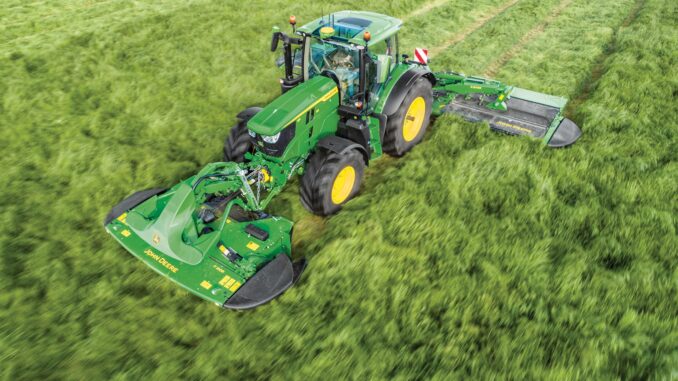
Biggest John Deere Tractors – Repair Guide: Parts, Diagrams, Manuals
Introduction / Model overview
This guide focuses on the biggest John Deere tractors commonly used by large‑property owners, small farms and serious acreage users in the USA and Canada. These are full‑size utility and row‑crop machines, with high‑horsepower diesel engines, heavy‑duty drivetrains and hydraulic systems designed for loader work, tillage, mowing and towing larger implements.
As a tractorsby.com owner guide, the aim here is practical: symptom‑first troubleshooting, realistic DIY repair boundaries, and clear pointers to parts, diagrams and manuals. You can use this as a baseline for the largest John Deere tractors in your fleet, adjusting details to your exact model and serial number.
General overview of the biggest John Deere tractors
The biggest John Deere tractors sit at the top of the utility and row‑crop lineup, above lawn tractors and compact utility units. They typically offer multi‑cylinder diesel engines, 4WD or MFWD front axles, multiple hydraulic remotes, heavy rear three‑point hitches and PTO options for demanding implements.
On these machines, the key systems you will touch during troubleshooting and repair are the engine and fuel system, cooling system, hydraulic system, transmission and final drive, PTO, steering, brake system and the full electrical/safety circuit. For owners who also run large batwing mowers or pull‑behind implements, there is a second layer of implement‑specific gearboxes, driveline components and blades that need regular attention.
Common service parts owners buy regularly for the biggest John Deere tractors include fuel filters, oil filters, hydraulic filters, air elements, engine oil, coolant, PTO and accessory drive belts, loader hydraulic hoses, batteries, light bulbs, fuses and safety switches. It is also typical to replace wear parts like brake discs, clutch components, front axle seals and hydraulic couplers over the life of the tractor.
Troubleshooting approach for the biggest John Deere tractors
On the biggest John Deere tractors, you should always start from the symptom: what you see, hear, feel or smell, rather than jumping straight to a suspected failed part. Think in categories first, then narrow down within that category.
For these large machines, the main symptom groups are starting problems, running and power issues, hydraulic and loader performance, PTO problems, transmission and drive behaviour, steering and braking, electrical faults and safety interlock issues, along with leaks, overheating and abnormal vibration or noise. In each section below, you’ll see these symptom categories broken down into practical checks you can do with basic tools.
Emergency and immediate repair needs on biggest John Deere tractors
On the biggest John Deere tractors, you must deal immediately with issues that affect safe operation or risk major component damage. That includes anything involving brakes, steering, hydraulics under load, engine oil pressure, coolant temperature, major leaks and electrical shorts or burning smells. Ignoring these symptoms can turn a manageable repair into an expensive engine, transmission or hydraulic rebuild.
Starting issues on biggest John Deere tractors
Starting problems range from the engine not cranking at all, to cranking but not firing, or only starting with ether or after long cranking. This matters because repeated hard starting can damage batteries, starters and even engine internals, and often points to underlying fuel or electrical issues.
Common causes:
-
Weak or failing battery.
-
Corroded or loose battery cables and grounds.
-
Faulty starter motor or solenoid.
-
Safety interlock not satisfied (seat, PTO, range selector).
-
Air in fuel system or clogged fuel filter.
-
Low compression or glow‑plug / intake heater problems on cold starts.
Basic checks:
-
Verify battery voltage with a meter; charge or replace if low.
-
Inspect battery terminals and grounds; clean until bright metal, then tighten.
-
Listen for starter click vs strong crank; if only clicking, suspect starter or solenoid.
-
Ensure PTO is off, gear selector in neutral, and operator presence switch is engaged.
-
Replace the primary fuel filter if it is old or contaminated and bleed according to the manual.
Cut‑quality and implement performance problems
On the biggest John Deere tractors, “cut quality” often refers to how a large mower or other implement performs behind or under the tractor. You may see uneven cutting, clumping, missed strips or poor shredding when running large rotary cutters or batwing mowers.
Common causes:
-
Dull or damaged blades on the mower.
-
Incorrect PTO speed or engine rpm.
-
Uneven tire pressures or deck height adjustments.
-
Slipping or failing PTO clutch.
-
Worn implement gearbox or driveline components.
Basic checks:
-
Confirm you are running at the recommended PTO speed (often 540 or 1000 rpm) using the tachometer.
-
Inspect mower blades; sharpen or replace if they are rounded, bent or chipped.
-
Check deck or implement height adjustments at all corners for level.
-
Inspect PTO shaft and clutch for signs of slip, burnt smell or excessive heat.
-
Verify tire pressures and ballast so the tractor rides level when mowing.
Vibration and noise on biggest John Deere tractors
Large tractors have more rotating mass, so vibration or noise often points to serious wear or imbalance. You might feel shaking through the seat or steering wheel, hear grinding or whining, or notice rattling under load.
Common causes:
-
Out‑of‑balance or damaged rear tires or wheels.
-
Worn universal joints in driveline or front axle.
-
Loose or failing engine or cab mounts.
-
Dry or failing bearings in mower, PTO or hydraulic pumps.
-
Gear noise from worn transmission or final drive components.
Basic checks:
-
Inspect tires and rims for damage, missing weights or mud build‑up causing imbalance.
-
Check driveline joints for play and lubrication; replace worn U‑joints.
-
Look at engine and cab mounts for cracks or broken rubber; replace as required.
-
Listen with the engine at different rpms and with PTO on/off to isolate noise sources.
-
Grease all specified fittings and see if noise improves, pointing to lubrication issues.
Overheating and leaks on biggest John Deere tractors
Overheating, coolant loss, hydraulic leaks or fuel leaks are critical issues on the biggest John Deere tractors. Overheating can quickly damage cylinder heads, head gaskets and turbochargers, while hydraulic leaks can cause system failure or fire risk.
Common causes:
-
Plugged radiator or coolers with chaff and dirt.
-
Low coolant level or failed thermostat.
-
Worn water pump or fan drive components.
-
Split hydraulic hoses or loose fittings.
-
Fuel line leaks at clamps, filters or injection pump.
Basic checks:
-
Stop operation immediately if the temperature gauge spikes; let the tractor cool.
-
Clean the radiator, oil cooler and charge air cooler surfaces with air and water, avoiding fin damage.
-
Check coolant level and top up with the recommended mix; inspect for leaks.
-
Inspect visible hydraulic hoses and fittings for wet spots, cracks or abrasion; replace damaged hoses.
-
Check fuel filter connections and lines for dampness; tighten or replace suspect fittings.
Transmission and drive problems on biggest John Deere tractors
The largest John Deere tractors often use powershift or continuously variable transmissions (CVT), and heavy planetary final drives. Symptoms include slipping under load, difficulty shifting, noises, jerky movement or loss of drive in certain ranges.
Common causes:
-
Low or incorrect transmission/hydraulic fluid.
-
Clogged transmission filters or screens.
-
Failing clutch packs or solenoids in powershift units.
-
Worn final drive gears or bearings.
-
Faulty range selector or linkage problems.
Basic checks:
-
Confirm fluid level and type against the operator’s manual; top up with the correct oil.
-
Replace transmission and hydraulic filters if they are due or contaminated.
-
Cycle through ranges while stationary and note any fault codes on the dash.
-
Listen for whine or grinding from axles under load; reduce work until inspected.
-
Inspect external linkages and cables for wear, bends or misadjustment.
Electrical problems on biggest John Deere tractors
Modern large tractors use complex electrical and electronic systems. Electrical problems may show up as intermittent starting, dead displays, warning lights, failed work lights or code messages.
Common causes:
-
Battery or alternator issues.
-
Damaged wiring looms or rodent damage.
-
Corroded connectors at critical sensors or control modules.
-
Failed relays, fuses or switches.
-
Software or control module faults.
Basic checks:
-
Test battery and charging voltage at the battery posts.
-
Inspect visible wiring for chafing or chew marks; repair or replace damaged sections.
-
Check fuses and relays against the legend under the fuse cover; replace suspect parts.
-
Unplug and re‑seat key connectors on sensors or ECUs, checking for corrosion.
-
Note trouble codes on the dash and reference the service manual before replacing components.
DIY or dealer? Repair decision guide for biggest John Deere tractors
With the biggest John Deere tractors, the line between DIY and dealer work is more important than on small lawn tractors. You can safely do routine maintenance and basic repairs, but high‑pressure hydraulics, transmission internals and electronic diagnostics often require dealer‑level tools, training and safety procedures.
Good DIY jobs:
-
Engine oil and filter changes.
-
Fuel, air and hydraulic filter changes.
-
Greasing all specified points.
-
Battery replacement and basic electrical checks.
-
Light bulb and simple switch replacement.
-
Tire pressure checks and ballast adjustments.
Advanced DIY or dealer jobs:
-
Hydraulic hose replacement in cramped or high‑pressure circuits.
-
Transmission and clutch pack repairs or calibration.
-
Front axle and final drive overhauls.
-
Injector replacement and fuel system tuning.
-
ECU programming and complex electrical diagnostics.
Skill level guide:
-
Beginner: Fluids, filters, grease points, simple electrical (fuses, bulbs).
-
Intermediate: Hose replacement, belt changes, brakes, loader attachments, minor hydraulics.
-
Advanced: Transmission internals, engine rebuilds, hydraulic pumps and valves, electronic diagnostics on CAN‑bus systems.
Parts needed for biggest John Deere tractors, OEM vs aftermarket
Before ordering any parts for the biggest John Deere tractors, gather the key identification details. You need the full tractor model name, the Product Identification Number (PIN), the engine model and serial number, and details on any major options such as transmission type and PTO configuration.
For tractor‑mounted implements or mowers, also note deck width, hitch type, PTO speed and any gearbox model numbers. Use these identifiers when searching OEM parts catalogues or aftermarket cross‑reference tools to avoid incorrect orders.
Key service parts for biggest John Deere tractors
These part numbers are examples only; always cross‑check your exact tractor model and PIN in the official parts catalogue or a reputable parts site.
OEM vs aftermarket guidance:
-
Use OEM or OEM‑quality parts for belts, hydraulic filters, transmission components, safety switches and any fit‑sensitive parts.
-
Aftermarket is fine for some engine oil and fuel filters, batteries, and certain lighting upgrades as long as the manufacturer provides proper cross‑reference to John Deere numbers.
-
For critical drivetrain or hydraulic components, dealer‑supplied OEM parts are strongly recommended.
Where to find parts diagrams and service manuals for biggest John Deere tractors
For the biggest John Deere tractors, the best starting point for manuals and diagrams is John Deere’s official publications and parts sites. These give you the factory breakdowns, wiring schematics and maintenance charts tailored to your machine.
Useful links:
-
Official manuals and training page: use John Deere’s “Manuals and Training” section to locate operator’s manuals, technical manuals and service guides for your tractor model and region.
-
Service and repair resources hub: John Deere’s “Service & Repair Resources” page pulls together owner support, repair guidance and technical information store access.
-
Technical Information Store / JDParts: you can purchase digital technical manuals and search the parts diagrams and catalogues by model and PIN.
-
Reputable Deere‑focused parts site: look for a site that offers model‑specific pages with exploded diagrams of your tractor’s engine, transmission, hydraulics and electrical systems (for example, a John Deere‑only parts catalogue site with free breakdowns).
Use the operator’s manual for routine maintenance and controls, the technical manual for deeper diagnostics and repair procedures, and the parts catalog for exploded diagrams and exact part numbers.
How to locate model, serial and engine numbers on biggest John Deere tractors
These numbers are critical because John Deere often changes components mid‑series or by production year, and parts, fluids and procedures can vary. Never rely solely on a generic “series” description when ordering parts or following repair steps.
Steps to find identification numbers:
-
Locate the tractor PIN plate, typically on the right‑hand side of the frame near the front axle or on the rear of the tractor frame. Clean the plate and record the full PIN.
-
Find the tractor model decal on the hood or side panels; this shows the marketed model name used in manuals and parts catalogues.
-
Open the engine side panel or hood and look for the engine data plate on the block or valve cover; note the engine model and serial.
-
If you run a loader or large mower, check those attachments for their own model/serial tags, usually on the main frame or gearbox housing.
-
Keep all these details written down in your workshop notebook or saved in your phone for quick access during parts ordering.
Buying parts online and in physical stores for biggest John Deere tractors
Your parts buying strategy should balance convenience, accuracy and price. For the biggest John Deere tractors, correct fit and specification are more important than saving a small amount of money on a critical component.
Online:
-
Use official John Deere online parts catalogues or trusted aftermarket sites.
-
Always search by tractor model and PIN, then verify OEM part numbers before ordering.
-
Double‑check that any aftermarket part explicitly lists compatibility with your specific tractor model.
Dealer counter:
-
Best choice for complex, serial‑specific components, hydraulic or transmission parts and items involved in safety systems.
-
Dealer staff can cross‑reference your PIN, check superseded part numbers and advise on updates or bulletins.
Retail stores:
-
Acceptable for common consumables like engine oil, grease, shop supplies and sometimes filters, provided the packaging clearly lists your tractor model or OEM number equivalent.
-
Avoid buying critical hydraulic or transmission parts from generic sources that do not supply exact cross‑reference details.
You can often combine these routes: getting filters and fluids from local retail, ordering non‑urgent parts online, and using the dealer for complex or time‑sensitive repairs.
Step‑by‑step fitting guide for common biggest John Deere tractor jobs
Below are practical fitting guides for high‑impact DIY jobs on the biggest John Deere tractors. Always follow your operator’s manual for torque specs and safety precautions.
Engine oil and filter change on biggest John Deere tractors
Changing the engine oil and filter protects the engine from wear and contamination and is one of the most important maintenance tasks.
-
Park the tractor on level ground, engage the parking brake and shut down the engine. Allow it to cool.
-
Place a suitable drain pan under the oil drain plug, remove the plug and allow the oil to drain completely.
-
Remove the old oil filter using a filter wrench; check that the old gasket comes off with the filter.
-
Lightly oil the gasket of the new filter, then spin it on until the gasket contacts, and tighten according to the filter instructions.
-
Reinstall the drain plug with a new washer if specified, then fill the engine with the correct oil grade and capacity from the manual.
-
Start the engine, check for leaks, then shut down and recheck the oil level, topping up if needed.
Fuel filter replacement on biggest John Deere tractors
Fuel filter changes help maintain starting reliability and protect injectors from dirt and water.
-
Shut off the engine and close any fuel shut‑off valve if fitted.
-
Place a catch tray under the filter housing and loosen the filter or bowl according to the manual.
-
Remove the old filter element, clean the housing and seals, and install the new filter with fresh O‑rings.
-
Follow the bleed procedure: use hand primer pumps or the key‑on cycle to purge air from the system.
-
Start the engine and let it idle, checking for leaks and smooth running.
Hydraulic filter and oil service on biggest John Deere tractors
Hydraulic and transmission oil service helps prevent drive and loader problems.
-
Park the tractor safely, lower all implements and relieve hydraulic pressure.
-
Place drain pans under the hydraulic/transmission drain points and remove plugs as specified.
-
Remove the hydraulic filters and any screens or suction strainers; inspect and clean or replace according to the manual.
-
Reinstall drain plugs, filters and screens, then refill with the specified hydraulic/transmission oil to the correct level.
-
Start the tractor, cycle the hydraulics to bleed air, and recheck oil level once the system stabilises.
Battery replacement on biggest John Deere tractors
Battery replacement restores starting performance and protects electrical components.
-
Switch off the tractor and remove the key; wear eye protection and gloves.
-
Access the battery compartment, note cable positions and take a photo if needed.
-
Disconnect the negative cable first, then the positive; remove any hold‑down clamps.
-
Lift out the old battery and install the new one with the same group size and CCA rating.
-
Reconnect the positive cable, then the negative, and tighten all clamps.
-
Test the starter operation and check that all electrical functions operate normally.
Maintenance to prevent problems reoccurring on biggest John Deere tractors
Regular maintenance is the single best way to avoid repeated failures on the biggest John Deere tractors. A good schedule keeps filters clean, fluids in spec, moving parts lubricated and early wear signs visible before they become breakdowns.
Focus areas:
-
Starting reliability: keep batteries healthy, terminals clean, and fuel and air filters within schedule.
-
Power and running quality: change engine oil and filters on time, monitor fuel quality and clean cooling systems.
-
Fire and overheating prevention: keep radiators, oil coolers and engine compartments free of chaff and debris; repair leaks quickly.
-
Drive performance: maintain transmission and hydraulic oil quality, replace filters and check for unusual noises or behaviours.
-
Electrical reliability: inspect wiring looms and connectors, protect against rodents and moisture, and replace failing switches and sensors promptly.
Maintenance schedule and year‑round checklist for biggest John Deere tractors
Below is a generalised maintenance pattern based on typical large John Deere tractor charts. Always adapt to the specific intervals and tasks in your operator’s manual.
Daily / before each use
-
Check engine oil level and look for leaks.
-
Check coolant level and radiator cleanliness.
-
Inspect tires and wheels for damage, pressures and ballast condition.
-
Walk around the tractor to spot hydraulic leaks or loose components.
-
Confirm lights, indicators and safety systems operate correctly.
After approximately 8 hours (end of workday)
-
Clean radiator, screens and coolers of dust and chaff.
-
Grease critical daily lubrication points, especially loader pivot pins.
-
Check fuel level and refuel with clean fuel; drain water separators if specified.
Every 25 hours
-
Inspect engine air filter restriction indicator; clean pre‑cleaner if fitted.
-
Check brake and clutch pedal free play and adjustment.
-
Inspect front axle joints and steering linkages for play and lubrication needs.
Every 50 hours or yearly
-
Change engine oil and filter according to heavy or normal duty cycles.
-
Grease all listed lubrication points, including driveline joints and front axle pivots.
-
Inspect battery condition and clean terminals.
-
Check hydraulic oil level and look for contamination or colour changes.
Every 200 hours (or as specified for your model)
-
Change fuel filters and bleed system.
-
Change hydraulic and transmission filters; adjust service interval if using heavy implements.
-
Inspect belts, hoses and coolant condition; consider coolant change per manual.
-
Check cab air filter and replace if dirty.
Seasonal checklist (pre‑season, mid‑season, off‑season)
Pre‑season:
-
Perform full fluid and filter review; correct any overdue items.
-
Inspect tires, brakes, steering and lights before heavy work begins.
-
Test PTO operation and implement attachment points.
Mid‑season:
-
Re‑check cooling system performance in hot weather.
-
Monitor hydraulic and transmission behaviour under peak loads.
-
Clean cab interior, filters and electrical connectors.
Off‑season:
-
Wash the tractor thoroughly and remove built‑up dirt and crop residue.
-
Store indoors or under cover where possible; disconnect battery or use a maintainer.
-
Top off fuel and treat with stabiliser; consider fogging or rust protection if storing long term.
Repair, upgrade, or replace for biggest John Deere tractors
For the biggest John Deere tractors, decisions about repair, upgrade or replacement carry higher cost and impact. In many cases, a major repair is still cheaper than replacing a large tractor, but aging machines with repeated failures may justify upgrading to newer technology or replacing entirely.
Repair if…
-
The tractor is structurally sound and has no major frame or axle damage.
-
Failures are limited to individual systems such as hydraulic pumps, transmissions or electrical modules.
-
You can obtain parts and service support at reasonable cost.
Upgrade if…
-
You want more lighting, better operator comfort or improved control systems.
-
You can add options like loader improvements, guidance systems or better tires to extend the tractor’s usefulness.
-
Software or electronic upgrades are available to improve performance.
Replace if…
-
Major components (engine, transmission, final drives) all show severe wear and high repair cost.
-
The tractor no longer meets your power, hydraulic or technology needs.
-
Parts availability is declining and downtime is hurting your operation.
Expanded troubleshooting FAQ – biggest John Deere tractors
1. Why will my biggest John Deere tractor not start?
Start by checking the battery voltage and connections, as weak or corroded batteries are the most common cause. Make sure all safety interlocks are satisfied: PTO off, transmission in neutral and operator presence switch engaged. If the engine cranks but won’t fire, look at the fuel system for air ingress or a clogged fuel filter. Cold weather starting problems can also point to glow‑plug or intake heater issues on diesel models.
2. Why does my biggest John Deere tractor crank slowly?
Slow cranking usually means low battery charge, internal battery failure or high resistance in the cables and grounds. Test the battery with a meter and load tester if available. Clean and tighten all terminals, especially grounds to the frame and engine block. If voltage is good but cranking is still slow, suspect a failing starter motor or damaged cables.
3. Why does my biggest John Deere tractor only start with ether?
Needing ether suggests poor fuel delivery, low compression or weak cold‑start aids. Check and replace fuel filters, then bleed the system to eliminate air. Inspect glow‑plugs or intake heaters according to the manual, and verify they receive power. If starting remains poor even when warm, a compression test may be needed to assess engine wear.
4. Why does my biggest John Deere tractor stall under load?
Stalling under load often indicates fuel starvation or issues with the governor and injection system. Ensure the primary and secondary fuel filters are within service interval and not partially blocked. Check for collapsed fuel lines or restricted tank vents. If filters and lines are clean, injection pump or governor problems may require dealer diagnostics.
5. Why does my biggest John Deere tractor blow black smoke?
Black smoke means excess fuel or insufficient air. Inspect and clean or replace the engine air filter and pre‑cleaner. Verify turbocharger hoses and clamps are intact and not leaking. If smoke continues, fuel injection timing or nozzle condition may be off and should be checked by a qualified technician.
6. Why does my biggest John Deere tractor blow white smoke at startup?
White smoke at cold start can be normal for a few seconds, but persistent white smoke often points to unburned fuel or coolant ingestion. Check glow‑plug operation and fuel injector condition. If you notice coolant loss or sweet smell in the exhaust, have the cooling system and cylinder head tested for leaks or gasket failure.
7. Why is my biggest John Deere tractor overheating?
Overheating is commonly caused by a plugged radiator, low coolant or failed thermostats. Clean the radiator and coolers thoroughly, paying attention to chaff and dust build‑up. Check coolant level and condition, and replace the thermostat if the engine does not stabilise at the correct temperature. Persistent overheating may indicate water pump issues or internal blockages.
8. Why is there oil leaking under my biggest John Deere tractor?
Oil leaks can come from engine seals, transmission housings, hydraulic lines or axle seals. Identify the type of fluid by colour and smell, then trace the leak to its source if possible. Minor seepage from gaskets can be monitored, but active dripping or spraying from pressurised lines requires immediate repair. Do not operate the tractor with unknown or severe leaks.
9. Why is my biggest John Deere tractor losing hydraulic power?
Loss of hydraulic power may stem from low hydraulic oil level, clogged filters or failing pumps. Check fluid level first and top up with the specified oil. Replace hydraulic filters according to the maintenance schedule or sooner if contamination is suspected. If the loader or three‑point remains weak, the hydraulic pump or internal leaks in valves and cylinders may need professional testing.
10. Why is the loader on my biggest John Deere tractor slow to raise?
Slow loader response is often a symptom of low hydraulic flow or restrictions. Verify engine rpm: high‑flow operations require running at recommended speeds. Inspect hydraulic hoses and quick‑couplers for restrictions, kinks or partial disconnection. Clean or replace hydraulic filters, and check that the loader control valve is functioning properly.
11. Why does my biggest John Deere tractor have spongy brakes?
Spongy brakes can arise from air in the brake system, worn brake components or fluid problems. Review the operator’s manual for brake bleeding procedures and fluid type. Inspect pedal linkage for wear or misadjustment. If braking remains weak, internal brake discs or seals may be worn and need dealer attention.
12. Why does the steering on my biggest John Deere tractor feel heavy?
Heavy steering suggests low hydraulic assistance, suction leaks or steering cylinder issues. Confirm hydraulic oil level and look for foaming, which hints at air ingress. Examine steering cylinders and linkages for binding or damage. If steering assistance is uneven or intermittent, the steering pump or priority valve may be failing.
13. Why is my biggest John Deere tractor making a whining noise when driving?
A whining noise under drive can originate in the transmission, hydraulic system or final drives. Determine whether the sound changes with gear, speed or hydraulic load. Check fluid levels and conditions, and inspect filters. Persistent whining, especially under load, is a sign to consult a dealer before major component damage occurs.
14. Why does my biggest John Deere tractor jerk when shifting?
Jerky shifting on powershift or CVT models can be caused by low fluid, incorrect calibration or worn clutch packs. Confirm fluid level and temperature range as per the manual. If the tractor supports calibration routines, follow them carefully. Any error codes related to shifting should be read and interpreted using the technical manual.
15. Why does my biggest John Deere tractor lose drive in certain gears?
Loss of drive in specific ranges or gears often points to internal transmission faults. Check external linkages and cables first to rule out simple alignment issues. If linkages are fine, clutch packs, solenoids or gear clusters may be failing inside the transmission. This is typically dealer‑level work.
16. Why does the PTO on my biggest John Deere tractor not engage?
Non‑engaging PTO can result from safety interlocks, low hydraulic pressure, faulty switches or mechanical clutch problems. Verify that the PTO selector and switches are in the correct positions and that safety switches are functioning. Check hydraulic oil level and any related fuses or relays. Mechanical PTO clutches that fail to engage may require adjustment or replacement.
17. Why does the PTO on my biggest John Deere tractor slip under load?
PTO slip shows up as implement slowdown or burning smells under load. Inspect PTO clutch components if accessible, and ensure you are not exceeding rated PTO power. Make sure fluid levels and filter conditions are correct. Persistent slip usually means the clutch pack is worn and needs rebuilding.
18. Why is my biggest John Deere tractor’s cab AC not cooling properly?
Poor cab AC performance can stem from dirty cab filters, low refrigerant, blocked condensers or electrical issues. Change the cab air filter and clean the condenser fins. Confirm that the compressor engages when AC is turned on. Refrigerant work is best performed by HVAC‑qualified technicians to avoid environmental and safety risks.
19. Why are my biggest John Deere tractor’s lights flickering?
Flickering lights often point to poor grounds, low battery voltage or alternator problems. Inspect and clean all ground connections near the battery and chassis. Test charging voltage with the engine running. Replace failing bulbs and check light switch wiring for wear.
20. Why do I keep blowing fuses on my biggest John Deere tractor?
Repeated fuse failures indicate a short circuit or overload on that circuit. Identify which system the fuse protects using the fuse legend. Inspect associated wiring looms for chafing, pinched sections or aftermarket accessory connections. Do not replace a fuse with a higher‑rated one; fix the underlying fault.
21. Why is my biggest John Deere tractor hard to start in cold weather?
Cold‑weather starting issues are usually linked to battery strength, glow‑plug or intake heater performance, and fuel condition. Use winter‑grade fuel and keep batteries fully charged. Test glow‑plug circuits and ensure they receive power for the correct duration. In very cold climates, block heaters and proper storage can make a big difference.
22. Why does my biggest John Deere tractor have uneven tire wear?
Uneven tire wear arises from misalignment, ballast imbalance or incorrect pressures. Check pressures regularly and adjust front‑to‑rear ratios per the manual. Inspect steering and suspension components for play or damage. Ballast systems (weights, fluid fill) should be balanced to match typical loads and implements.
23. Why is there a burning smell from my biggest John Deere tractor?
Burning smells may come from slipping clutches, overheated belts, electrical shorts or oil contacting hot surfaces. Stop operation and investigate immediately. Check the PTO clutch, drive belts and brake systems for overheating. Inspect wiring and connectors for melting or discoloration. Do not ignore burning smells, as they pose fire risk.
24. Why is my biggest John Deere tractor vibrating more at high rpm?
High‑rpm vibration can indicate imbalance in rotating components or driveline issues. Inspect tires, wheels and hubs for damage or mud build‑up. Check driveline joints, PTO shafts and engine mounts. If vibration is tied to PTO use, focus on implement driveline balance and mounting.
25. Why does my biggest John Deere tractor lose power going uphill?
Power loss uphill points to overall engine output, fuel delivery, or possibly transmission settings. Ensure the engine reaches and maintains correct rpm. Replace fuel filters and inspect air filter condition. On tractors with power management or eco modes, confirm you are in the correct performance mode for heavy work.
26. Why is my biggest John Deere tractor’s clutch pedal hard to press?
A heavy clutch pedal may be caused by mechanical linkage binding, incorrect adjustment or failing assist systems. Lubricate pivot points and inspect for rust or damage. Review adjustment procedures in the manual. Hydraulic‑assist or power‑assist systems may need inspection if mechanical issues are ruled out.
27. Why is the three‑point hitch on my biggest John Deere tractor slow or not lifting?
Three‑point hitch problems often relate to hydraulic flow, valve settings or load sense issues. Confirm hydraulic oil level and filter condition. Check that control levers and draft/position settings are correct. If the hitch is still slow or non‑functional, internal valve or cylinder problems may need dealer diagnosis.
28. Why does my biggest John Deere tractor’s engine run rough at idle?
Rough idle can come from injector issues, air leaks or fuel quality problems. Use clean, appropriate fuel and replace filters. Inspect injector lines for leaks and listen for uneven firing. In some cases, electronic control modules may require updates or recalibration.
29. Why is there excessive play in the front axle of my biggest John Deere tractor?
Excessive axle play suggests worn joints, bearings or bushings. Inspect kingpins, tie rods and steering joints for movement. Check hub bearings and lubrication. If you find significant wear, plan for replacement before the issue leads to steering failure or uneven tire wear.
30. Why is my biggest John Deere tractor using more fuel than usual?
Increased fuel consumption may be due to poor maintenance, incorrect operating habits or mechanical faults. Ensure filters are clean, tire pressures correct and implements properly adjusted. Operate within recommended rpm and load ranges. Persistent over‑consumption can point to engine efficiency issues that warrant professional testing.
31. Why does my biggest John Deere tractor have low hydraulic pressure warnings?
Low pressure warnings indicate the hydraulic system is not meeting demand. Check fluid levels and replace filters. Inspect for leaks and listen for pump noise. Electronic sensors and wiring to the pressure monitoring system may also need inspection if the system otherwise seems normal.
32. Why is my biggest John Deere tractor’s seat safety switch causing shutdowns?
Seat safety switches shut the engine or PTO down if they detect no operator presence. If they are overly sensitive or faulty, you may experience nuisance shutdowns. Inspect the switch for damage, ensure it is securely mounted, and adjust or replace if necessary. Avoid bypassing safety switches, as this compromises operator safety.
33. Why are error codes appearing frequently on my biggest John Deere tractor’s display?
Frequent error codes can result from genuine faults, wiring issues or sensor problems. Record the code numbers and refer to the technical manual for their meanings. Inspect related components and wiring. Clear codes if permitted and see if they return; persistent codes need proper diagnosis.
34. Why is my biggest John Deere tractor’s horn, lights or auxiliary electrics not working?
Non‑functional accessories usually point to a blown fuse, failed relay or wiring fault. Check the fuse box against the legend and replace blown fuses. Test relays by swapping with known good ones if possible. Inspect wiring to the affected components for damage.
35. Why does my biggest John Deere tractor need constant small repairs?
Constant minor repairs may reflect an underlying maintenance gap or ageing components reaching end‑of‑life. Review your maintenance schedule against the operator’s manual and correct any overdue tasks. Evaluate whether the tractor’s overall condition and downtime justify a larger overhaul, upgrade or replacement plan.