
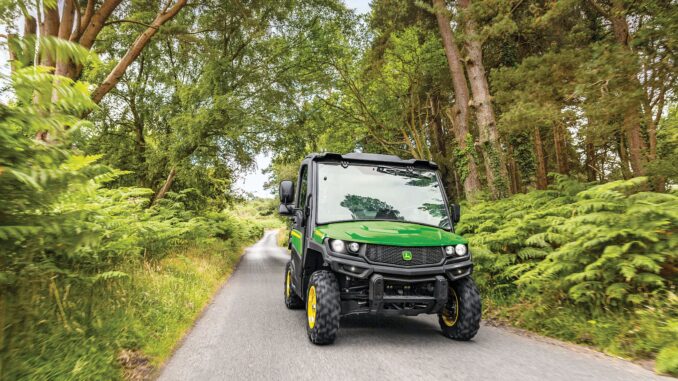
Introduction: John Deere AMT 600 Repair Guide
The John Deere AMT 600 is an All Material Transporter: a compact, three-wheel utility vehicle designed for hauling tools, supplies, feed, landscaping materials, and other loads around properties, farms, campuses, and work sites. It uses an air-cooled Kawasaki single-cylinder gasoline engine and a belt-driven variable-speed drivetrain, with steering, brakes, cargo-bed components, and electrical safety systems that all need periodic attention.
This John Deere AMT 600 repair guide is written for owners in the United States and Canada who need practical help with routine maintenance, symptom-first troubleshooting, replacement parts, diagrams, manuals, serial-number identification, and realistic DIY repairs. It covers the engine, fuel system, drive belt and clutch system, transaxle, brakes, steering, electrical system, wheels, cargo bed, and common work-quality problems.
John Deere AMT 600 Overview and Key Systems
The John Deere AMT 600 was part of John Deere’s early All Material Transporter lineup. It is not a Gator in the modern side-by-side sense; it is a three-wheel utility transporter with a front steering wheel and two driven rear wheels. That distinction matters when diagnosing handling, brake, drive-belt, transaxle, and wheel-hub problems.
The AMT 600 was built for low-speed hauling rather than highway use, aggressive off-road travel, or heavy towing. Many machines remain useful decades later because the basic design is simple, but age-related issues such as stale fuel, deteriorated wiring, worn belts, clutch wear, brake corrosion, and damaged cargo-bed hardware are increasingly common.
Owners should understand these main systems before beginning a John Deere AMT 600 repair:
-
Air-cooled Kawasaki gasoline engine
-
Fuel tank, fuel lines, fuel filter, carburetor, and fuel shutoff components
-
Electric starting, battery, ignition switch, starter solenoid, charging system, and safety circuits
-
Variable-speed drive belt, pulleys, clutches, and transaxle
-
Shift linkage, parking brake, service brake, rear axle, hubs, and tires
-
Steering wheel, steering gear, front fork or steering components, and front tire
-
Cargo box, tailgate, hinges, mounting hardware, and load-support structure
-
Muffler, heat shields, cooling fins, engine shrouds, and spark-arresting components
Common John Deere AMT 600 service and repair items include:
-
Engine oil and the correct engine-specific oil filter, if equipped
-
Engine air-cleaner element
-
Fuel filter and fuel line
-
Spark plug
-
Battery and battery cables
-
Drive belt
-
Clutch and pulley components
-
Brake linkage and brake components
-
Tires, wheel bearings, wheel hardware, and hubs
-
Ignition switch, fuses, solenoids, and safety switches
-
Cargo-bed latches, hinges, bushings, and mounting hardware
Because AMT 600 production spans multiple years and serial-number ranges, always verify the machine’s Product Identification Number before ordering. The AMT 600 parts catalog identifies 1987 through 1990 model-year serial-number groups, so a part that fits one machine may not necessarily fit every AMT 600.
John Deere AMT 600 Troubleshooting: Start With the Symptom
A good John Deere AMT 600 troubleshooting process begins with the symptom the operator actually sees, hears, feels, or smells. Replacing parts before confirming the problem can become expensive, especially with older utility vehicles where several age-related faults may exist at the same time.
Start by identifying whether the trouble happens when the engine is cold, after it warms up, when climbing a grade, when the cargo box is loaded, when shifting, or only when driving over rough ground.
Main John Deere AMT 600 troubleshooting categories include:
-
Engine will not crank or cranks slowly
-
Engine cranks but will not start
-
Engine starts but stalls, surges, smokes, or loses power
-
Battery will not charge
-
Engine overheats or smells hot
-
Machine will not move or moves weakly
-
Drive belt slips, squeals, or fails prematurely
-
Shifting is difficult or the transaxle makes noise
-
Brakes drag, feel weak, or will not hold the machine
-
Steering feels loose, stiff, or unstable
-
Machine vibrates, rattles, or makes grinding sounds
-
Cargo bed, hinges, latches, or mounting points are loose or damaged
-
Fuel, oil, or transaxle lubricant leaks are visible
Urgent John Deere AMT 600 Repair Problems
Some AMT 600 faults should be corrected before the machine is used again. Continuing to operate with a damaged belt, weak brakes, fuel leak, steering fault, loose wheel, overheated engine, or drivetrain problem can create a safety hazard and turn a modest repair into a major one.
John Deere AMT 600 Starting and Electrical Problems
A no-start condition may show up as silence when the key is turned, a clicking solenoid, slow cranking, repeated fuse failure, or an engine that cranks normally but has no spark. On an older AMT 600, battery condition and cable corrosion are often as important as the battery’s age.
Common causes include:
-
Weak or discharged battery
-
Dirty, loose, or corroded battery terminals
-
Poor ground cable connection
-
Blown fuse or damaged fuse holder
-
Faulty ignition switch
-
Faulty starter solenoid
-
Worn starter motor or poor starter connection
-
Brake or neutral safety-switch issue
-
Damaged wiring near the engine, frame, battery, or steering area
-
Charging-system failure
-
Ignition or spark-related fault
Safe first checks:
-
Park on level ground, set the parking brake, shift to neutral, remove the key, and inspect the battery area for corrosion or damaged cables.
-
Check battery-terminal tightness and inspect both ends of the positive and negative cables.
-
Inspect the fuse and fuse holder for corrosion, heat damage, or a loose connection.
-
Verify that the machine is in the correct starting position and that any required brake or neutral condition is met.
-
Listen carefully when turning the key: no sound, a click, slow cranking, and normal cranking with no start point to different systems.
Replacing a battery, cleaning connections, changing a fuse, or fitting an accessible solenoid can be reasonable DIY work. Diagnosis involving intermittent wiring faults, ignition modules, charging coils, or internal starter repair is usually better handled with a wiring diagram, multimeter, and technical manual.
John Deere AMT 600 Engine Running, Power, and Fuel Problems
If the AMT 600 starts but runs roughly, stalls under load, surges at steady throttle, produces black smoke, or loses power climbing hills, begin with fuel freshness, airflow, cooling, and spark. A utility vehicle that has sat through a season may have stale gasoline, varnish in the carburetor, hardened fuel hose, or water contamination in the fuel system.
Common causes include:
-
Old gasoline or water-contaminated fuel
-
Restricted fuel filter
-
Cracked, soft, or leaking fuel line
-
Blocked fuel-tank vent
-
Dirty air filter
-
Dirty carburetor or sticking float needle
-
Incorrect carburetor adjustment
-
Fouled, worn, or incorrectly gapped spark plug
-
Choked cooling fins or blocked engine shrouds
-
Governor-linkage problems
-
Low engine-oil level
-
Internal engine wear or low compression
Basic owner checks include confirming that fresh gasoline reaches the fuel filter, inspecting the air filter, checking engine-oil level, checking the spark-plug condition, and cleaning visible debris from the cooling area. Do not run the machine with fuel leaking near the carburetor, muffler, or engine.
Carburetor rebuilding, governor adjustments, compression testing, valve work, and internal engine repairs are advanced work. If the engine repeatedly floods, backfires, smokes heavily, or loses power after simple fuel and air checks, professional diagnosis is sensible.
John Deere AMT 600 Drive, Transmission, and Clutch Problems
A John Deere AMT 600 that runs normally but will not move, slips under load, accelerates poorly, or squeals from the belt area may have a belt-drive, clutch, linkage, brake-drag, or transaxle problem. The AMT 600 relies on its variable-speed drive system to transfer engine power to the rear drivetrain, so belt condition and pulley alignment matter.
Common causes include:
-
Worn, glazed, cracked, oil-soaked, or incorrectly fitted drive belt
-
Incorrect belt routing
-
Debris trapped around pulleys or belt guards
-
Worn clutch components
-
Seized or rough pulley bearings
-
Shift linkage out of adjustment
-
Brake dragging or parking brake partly applied
-
Transaxle lubricant problem or internal transaxle damage
-
Rear-wheel, hub, axle, or differential fault
-
Excessive load or tire-related traction issue
Before replacing a belt, inspect the entire drive path. Look for sharp pulley edges, wobbling pulleys, loose guards, oil leaks, damaged springs, and belt contamination. A new belt can fail quickly if the clutch, pulley, alignment, or transaxle input is the actual problem.
Drive-belt replacement can be appropriate for an experienced owner if access is straightforward and the correct routing is known. Clutch disassembly, transaxle repair, internal axle work, or diagnosis of a transmission noise should be treated as advanced repair work.
John Deere AMT 600 Vibration, Noise, and Mechanical Damage
Sudden vibration should never be ignored. A vibration that appears after hitting an obstacle, hauling a heavy load, or replacing a belt may indicate a loose wheel, bent pulley, damaged clutch, worn bearing, debris in the drivetrain, or a structural problem.
Likely causes include:
-
Loose wheel nuts or damaged wheel studs
-
Worn wheel bearings
-
Bent wheel rim or tire damage
-
Loose cargo-bed hardware
-
Worn drive belt or pulley
-
Loose engine mounting hardware
-
Damaged muffler or heat shield
-
Worn steering linkage
-
Loose brake linkage
-
Debris wrapped around a shaft, pulley, or axle
-
Internal transaxle damage
-
Loose or cracked frame components
Safe inspection checklist:
-
Park the AMT 600 on level ground and remove the key.
-
Set the parking brake and wait for hot engine and exhaust components to cool.
-
Inspect tires for bulges, cuts, low pressure, loose wheel hardware, and damaged rims.
-
Check the cargo bed, tailgate, hinges, and mounts for loose hardware or cracks.
-
Inspect the belt and pulley area without reaching into any guarded area.
-
Check for fresh rub marks, loose shields, missing fasteners, or debris around rotating parts.
Do not operate the AMT 600 if wheel hardware is loose, a tire is damaged, steering has excessive free play, the belt system is exposed, or a vibration suggests a rotating component may fail.
John Deere AMT 600 Overheating, Fluid Leaks, and Fire Risks
The AMT 600 uses an air-cooled engine, which means airflow around cooling fins, engine shrouds, and the muffler area is essential. Grass, leaves, oil residue, chaff, and rodent nesting material can trap heat and create a fire risk.
Common warning signs include hot-engine smell, loss of power after warming up, smoke from the engine area, fuel smell, visible oil leakage, belt smoke, or unusually hot exhaust shielding.
Inspect for:
-
Blocked cooling fins
-
Missing or damaged engine shrouds
-
Grass, leaves, or debris around the engine and muffler
-
Oil leaks that can attract dust and debris
-
Fuel leaks at the tank, fuel line, filter, carburetor, or shutoff
-
Loose fuel-line clamps
-
Belt slip or overheated drive components
-
Damaged exhaust heat shields
-
Dirty engine oil or low oil level
Stop using the AMT 600 immediately if fuel is leaking, smoke is coming from the engine or belt area, the engine overheats repeatedly, oil is leaking onto hot components, or a belt is visibly burning or shredding.
John Deere AMT 600 Hauling, Steering, Brake, and Work-Quality Problems
The AMT 600 is built for carrying material, but poor handling, weak braking, cargo-bed instability, or loss of traction can make the machine unsafe even when the engine and drive system seem normal.
Common owner complaints include poor hill climbing, loss of traction, steering pull, brake fade, a parking brake that will not hold, rough ride, a rattling cargo bed, or poor stability with a load.
Practical owner checklist:
-
Confirm tire pressures are equal where applicable and appropriate for the operator manual’s recommendations.
-
Inspect tires for dry rot, cuts, broken sidewalls, and excessive wear.
-
Check that the cargo bed is properly latched and not overloaded.
-
Inspect bed hinges, latch hardware, mounting points, and frame supports.
-
Check brake linkage operation and confirm the brake returns fully after release.
-
Inspect steering linkage for looseness, worn joints, missing fasteners, or bent components.
-
Avoid side-hill operation and sharp turns with a raised or uneven load.
-
Reduce load weight if drive-belt slip, brake weakness, or poor traction appears under normal work.
Do not compensate for poor brakes, steering problems, or tire damage by simply driving slower. Those conditions need correction before regular use.
DIY or Dealer? John Deere AMT 600 Repair Decision Guide
The normal DIY boundary for a John Deere AMT 600 includes maintenance, inspection, basic electrical work, accessible fuel-system service, tires, battery service, and uncomplicated belt replacement. Repairs become more complex when they involve internal engine work, clutch disassembly, transaxle repair, brake-system rebuilds, structural welding, or electrical diagnosis without a correct wiring diagram.
Good DIY Jobs for a John Deere AMT 600
-
Checking engine-oil level and changing oil as specified for the installed engine
-
Replacing the air filter
-
Replacing the spark plug with the correct engine-specified plug
-
Replacing the fuel filter and deteriorated fuel hose
-
Cleaning cooling fins, engine shrouds, and debris around the muffler
-
Replacing a battery and cleaning battery terminals
-
Replacing an accessible fuse
-
Checking tire condition and adjusting tire pressure
-
Inspecting cargo-bed hinges, latches, and mounting hardware
-
Cleaning the drive-belt area after safely removing guards as allowed by the service procedure
-
Replacing a known-correct drive belt when the routing and configuration are confirmed
-
Lubricating approved linkage points according to the operator’s manual
-
Replacing basic lamps or damaged accessible connectors
Advanced DIY or Dealer Jobs
-
Engine rebuilding, valve work, piston and ring repair, or crankshaft repair
-
Carburetor rebuilding when the correct settings and procedures are unknown
-
Governor repair or adjustment
-
Ignition-system testing beyond basic spark-plug checks
-
Charging-system diagnosis and stator repair
-
Starter-motor rebuilding
-
Clutch rebuilding or replacement
-
Transaxle disassembly and repair
-
Internal brake repair or major brake-linkage restoration
-
Steering-gear overhaul
-
Axle, differential, hub, or bearing repair requiring press tools
-
Welding or repair of cracked load-bearing frame components
-
Complex wiring diagnosis, harness repair, or ignition-switch circuit tracing
John Deere AMT 600 Skill-Level Guide
-
Beginner: Check fluids, inspect tires, clean debris, replace a battery, replace an air filter, replace a spark plug, and inspect cargo-bed hardware.
-
Intermediate: Change engine oil, replace fuel line and filter, replace a drive belt, diagnose basic starting faults with a multimeter, and inspect brake or steering linkage.
-
Advanced: Rebuild a carburetor, service clutches, repair transaxle components, overhaul steering or brakes, diagnose charging systems, or repair structural frame damage.
John Deere AMT 600 Parts: OEM, Aftermarket, and Ordering Information
Before ordering John Deere AMT 600 parts, collect the full model designation, Product Identification Number, serial number, engine model, engine serial number, and any readable number from the original part. The AMT 600 was produced over several years, and the engine, wiring, drive components, and replacement part numbers may vary by serial range or prior repairs.
Use the AMT 600 identification plate and engine information to confirm:
-
Full model name: John Deere AMT 600
-
Product Identification Number or serial number
-
Machine build year or serial-number range
-
Engine model and engine serial number
-
Existing part number from the failed part
-
Belt dimensions and original belt number, if readable
-
Tire size and wheel configuration
-
Brake, clutch, or transaxle configuration
-
Any aftermarket engine, carburetor, wiring, or drivetrain changes made by a previous owner
For OEM versus aftermarket parts, use a practical approach:
-
Prefer genuine John Deere parts for drive belts, fit-sensitive clutch components, switches, wiring-related parts, safety components, transaxle parts, and serial-number-sensitive assemblies.
-
Quality aftermarket spark plugs, batteries, fuel hose, filters, bearings, tires, and basic hardware can provide good value when the cross-reference is exact.
-
Do not order a belt, switch, solenoid, carburetor, or brake part based only on a seller’s photo or a vague “fits John Deere AMT” title.
-
Confirm serial range, engine model, dimensions, electrical terminals, and OEM cross-reference before placing an order.
John Deere AMT 600 Parts Diagrams and Service Manuals
The correct John Deere AMT 600 manual is one of the best investments an owner can make. The machine’s age means that prior owners may have installed non-original parts, altered wiring, changed engines, or improvised repairs. Diagrams and service information help separate original design from later modifications.
The operator’s manual is the starting point for safe operation, controls, load handling, lubrication, routine service, and maintenance intervals. The parts catalog is useful for exploded diagrams, original part numbers, fasteners, serial-number breaks, and assembly layout. The technical manual is intended for deeper diagnosis, repair procedures, adjustment information, wiring diagrams, and internal mechanical work.
For the AMT 600, commonly referenced publication numbers include OMW38914 for the operator’s manual, PC2152 for the parts catalog, and TM1363 for technical repair information. Confirm applicability before purchasing because publication revisions and serial-number coverage can vary.
How to Find John Deere AMT 600 Serial and Engine Numbers
The John Deere AMT 600 serial number and engine number are essential when ordering repair parts. The same model can have different parts across production years, serial-number breaks, engine versions, wiring revisions, and replacement-component updates.
Use this process before ordering parts:
-
Park the AMT 600 on level ground, set the parking brake, shift to neutral, stop the engine, remove the key, and allow hot engine and exhaust components to cool.
-
Locate the AMT 600 Product Identification Number or serial-number plate. On machines of this type, identification information is commonly found on a frame rail, under-seat structure, rear-frame section, or another protected area of the main chassis.
-
Record the full model designation and every serial-number digit exactly as shown on the plate.
-
Locate the engine identification marking. On the AMT 600, engine serial information may be stamped on the lower flange on the left side of the engine, but confirm the location on the installed engine because replacement engines and service changes are possible.
-
Photograph both labels and keep the images with the operator’s manual, service records, and receipts for filters, belts, and replacement components.
Do not assume the year from appearance alone. A serial number is more useful than paint condition, decal style, or a seller’s estimate when checking AMT 600 parts compatibility.
Buying John Deere AMT 600 Parts Online and Locally
The best AMT 600 parts-buying strategy balances price, shipping time, part accuracy, and access to local technical support. For routine service items, online ordering can save money. For drivetrain, electrical, brake, and serial-number-sensitive parts, a John Deere dealer or experienced parts specialist can prevent costly ordering mistakes.
Buying Online
-
Match the OEM part number whenever possible.
-
Use the AMT 600 serial number and engine identification before searching.
-
Read every listing for dimensions, superseded numbers, exclusions, and fitment notes.
-
Be cautious with listings that claim to fit “many John Deere models” without giving a specific OEM cross-reference.
-
Buy routine items such as filters, spark plugs, batteries, fuel hose, tires, and known-correct belts online only after fitment is confirmed.
-
Compare the old part with the listing’s dimensions, terminals, mounting holes, belt profile, and connector style.
Buying From a John Deere Dealer
-
Use a dealer for serial-number-sensitive components, drivetrain parts, clutch parts, wiring harnesses, switches, brake components, and complex assemblies.
-
Dealers can check current superseded part numbers and determine whether an older AMT 600 part has been replaced by an updated design.
-
Dealer support is useful when the problem has not been diagnosed clearly or when the repair affects steering, braking, drivetrain safety, or electrical protection.
Buying From Retail Stores
-
Retail stores are suitable for correctly specified engine oil, grease, fuel stabilizer, battery-terminal cleaner, universal fasteners, approved spark plugs, and some fuel-system supplies.
-
Do not substitute fuel line, electrical wire, fuses, or battery cables with unsuitable materials simply because they look similar.
-
Confirm that the packaging specifically matches the correct engine specification, electrical rating, hose size, or OEM cross-reference.
How to Replace Common John Deere AMT 600 Parts
Change John Deere AMT 600 Engine Oil
Fresh engine oil protects the AMT 600’s air-cooled Kawasaki engine from heat, wear, and contamination. Oil condition is particularly important on a utility machine that spends long periods at low speed under load.
Safety note: Park on level ground, set the brake, stop the engine, remove the key, and allow the engine to cool enough to avoid burns while keeping the oil slightly warm for drainage.
-
Confirm the correct oil type, capacity, and filter arrangement for the engine installed in your AMT 600.
-
Place a suitable drain pan beneath the engine drain point.
-
Remove the drain plug carefully and allow the oil to drain completely.
-
Replace the oil filter only if your engine configuration uses a serviceable filter and you have confirmed the correct replacement part.
-
Reinstall the drain plug, fill with the specified amount of oil gradually, and check the level using the dipstick or engine-specified procedure.
-
Start the engine briefly, check for leaks, stop the engine, wait several minutes, and recheck the oil level.
Avoid overfilling. Too much oil can cause smoke, oil leakage, fouled plugs, and crankcase-pressure problems. Use the operator’s or engine manual for exact capacity and service interval.
Replace the John Deere AMT 600 Air Filter
A clean air filter protects the engine and helps prevent hard starting, rich running, excessive fuel use, loss of power, and internal engine wear.
Safety note: Stop the engine, remove the key, and keep dirt from falling into the carburetor or intake opening while the filter housing is open.
-
Locate the air-cleaner housing on the installed engine.
-
Clean loose dirt from the outside of the housing before opening it.
-
Remove the cover and inspect the filter element for heavy dust, oil contamination, tears, or rodent damage.
-
Remove the old filter carefully without allowing debris into the intake.
-
Install the confirmed-correct replacement filter and make sure it seats properly.
-
Refit the cover, secure all clips or fasteners, and inspect for gaps that could allow unfiltered air into the engine.
Do not clean a paper filter with high-pressure compressed air unless the engine manufacturer specifically permits that practice. Damaging the filter media can allow abrasive dust into the engine.
Replace the John Deere AMT 600 Fuel Filter and Fuel Line
Replacing a restricted fuel filter or deteriorated fuel line can correct surging, stalling, fuel starvation, fuel smell, and poor power under load.
Safety note: Work outdoors or in a well-ventilated area away from cigarettes, sparks, pilot lights, heaters, battery charging, and other ignition sources. Keep a suitable fire extinguisher nearby.
-
Allow the engine to cool completely and turn the fuel supply off if the machine has a shutoff valve.
-
Place absorbent material under the filter and fuel-line connection points.
-
Note the fuel-flow direction marked on the existing filter before removal.
-
Remove the old filter and inspect the fuel hose for cracking, stiffness, swelling, or loose clamps.
-
Install a confirmed-correct fuel filter with the flow direction facing toward the carburetor or engine.
-
Restore fuel flow, inspect carefully for leaks, and do not start the engine until every connection is dry and secure.
Avoid using incorrect hose or ordinary hardware-store tubing that is not rated for gasoline. Replace damaged clamps rather than reusing weak or rusted hardware.
Replace a John Deere AMT 600 Battery
A properly secured battery improves starting reliability and protects the machine from intermittent electrical faults caused by loose or corroded connections.
Safety note: Wear eye protection, remove rings and metal jewelry, and keep sparks, flames, and smoking materials away from the battery area.
-
Park safely, remove the key, and locate the battery and hold-down hardware.
-
Disconnect the negative cable first, followed by the positive cable.
-
Remove the hold-down and lift the old battery carefully, keeping it upright.
-
Clean the battery tray and inspect the cables for corrosion, damaged insulation, or loose terminals.
-
Install a battery with the confirmed-correct size, terminal orientation, and hold-down fit.
-
Connect the positive cable first, then the negative cable, secure the hold-down, and apply terminal protectant if desired.
Avoid reversing cable polarity. Connecting a battery backward can damage electrical components and create a spark hazard.
Replace the John Deere AMT 600 Drive Belt
A worn or slipping drive belt can cause weak acceleration, poor hill climbing, belt squeal, inconsistent movement, and overheating around the pulley area.
Safety note: Stop the engine, remove the key, set the parking brake, disconnect the battery negative cable if access requires working near electrical components, and wait for all moving parts to stop.
-
Confirm the correct belt using the AMT 600 serial number, original belt number, and parts diagram.
-
Remove guards only as necessary and note the original routing before taking off the old belt.
-
Inspect pulleys, clutch components, guards, springs, and belt guides for damage, sharp edges, looseness, or oil contamination.
-
Remove the worn belt and route the new belt exactly according to the correct diagram.
-
Rotate accessible pulleys by hand only with the engine off to confirm that the belt is seated correctly.
-
Reinstall every guard, reconnect the battery if disconnected, and test movement in an open area at low speed.
Do not install a belt that is “close enough” in length or width. Incorrect belts can slip, overheat, damage pulleys, overload the engine, or create unsafe drive behavior.
John Deere AMT 600 Maintenance to Prevent Repeat Problems
Preventive John Deere AMT 600 maintenance is especially important because many surviving machines are older and may see seasonal use. A small amount of inspection before and after use can prevent stranded-machine problems, fire risks, belt failure, and expensive drivetrain damage.
Focus on these areas:
-
Starting reliability: Keep battery terminals clean, cables tight, and the battery properly charged to prevent slow cranking and solenoid damage.
-
Fuel-system protection: Use fresh fuel, inspect fuel lines and the filter, and avoid storing untreated gasoline for long periods.
-
Cooling-system cleanliness: Remove grass, dust, leaves, and debris from engine cooling fins, shrouds, and the muffler area to reduce overheating and fire risk.
-
Engine-oil service: Check oil level regularly and change oil according to the engine and operator-manual schedule to reduce wear in the air-cooled engine.
-
Drive-belt life: Keep the belt and pulleys clean, dry, aligned, and free from oil leaks or debris that can cause slipping and premature wear.
-
Brake safety: Check brake response and parking-brake holding ability before hauling loads or working on slopes.
-
Steering and tire safety: Inspect tires, wheel hardware, steering linkage, and front-wheel condition to reduce handling problems.
-
Cargo-bed security: Check hinges, latch operation, mountings, and frame supports so loads remain secure.
-
Electrical reliability: Inspect exposed wiring for abrasion, rodent damage, brittle insulation, and corroded connectors.
-
Seasonal storage preparation: Stabilize fuel as appropriate, protect the battery, clean debris from the engine area, and store the vehicle in a dry area.
John Deere AMT 600 Maintenance Schedule and Seasonal Checklist
Use the official operator’s manual and the installed engine manual as the final authority for service intervals. Because AMT 600 machines may have different engine conditions, replacement engines, and previous modifications, do not apply a generic interval from another John Deere model.
Before Each Use
-
Check engine-oil level using the correct engine procedure.
-
Inspect for fuel, oil, transaxle, or brake-fluid-related leaks where applicable.
-
Check tire condition, tire pressure, wheel hardware, and visible damage.
-
Test brake response and parking-brake holding ability.
-
Inspect the cargo bed, latch, hinges, and mounting hardware.
-
Remove grass, leaves, dirt, and other debris from the engine and muffler area.
-
Check that the drive-belt area is clear of debris and that guards are installed.
Every Service Interval Specified in the Operator’s Manual
-
Change engine oil according to the engine manufacturer’s and John Deere operator-manual guidance.
-
Service or replace the air filter as needed for dust conditions and the official maintenance schedule.
-
Inspect or replace the spark plug according to the engine service schedule.
-
Inspect the fuel filter and fuel hoses for restriction, cracking, or leakage.
-
Inspect drive-belt condition, pulley alignment, and belt guards.
-
Inspect brake linkage and steering components.
-
Check cargo-bed mounting hardware and frame fasteners.
-
Lubricate approved fittings and pivots where specified.
Annually or Seasonally
-
Change engine oil if annual service is due, even if hours are low.
-
Replace stale fuel or treat stored gasoline according to the operator’s and fuel-stabilizer instructions.
-
Inspect the battery, charging system, and cable condition.
-
Clean the engine cooling area thoroughly.
-
Inspect tires for dry rot and check rims for corrosion or damage.
-
Inspect brake function before returning the machine to hauling duty.
-
Check the drive belt and clutch area for rodent damage, nesting material, and corrosion.
-
Review the AMT 600 parts diagram before ordering seasonal repair items.
John Deere AMT 600 Seasonal Storage Checklist
-
Clean the cargo bed, underbody, engine area, and muffler area thoroughly.
-
Remove grass, leaves, dust, and oily debris that could retain moisture or create a fire risk.
-
Service engine oil and filters if due.
-
Treat fuel according to the official recommendation for the installed engine and the expected storage duration.
-
Disconnect, maintain, or properly charge the battery according to battery-manufacturer guidance.
-
Inspect the drive belt, tires, steering, brakes, and cargo-bed hardware before storage.
-
Store the AMT 600 on a dry, level surface away from fertilizer, chemicals, standing water, and rodent activity.
-
Cover the machine only with a breathable cover if it is stored in a dry, ventilated location.
Repair, Upgrade, or Replace a John Deere AMT 600?
Whether to repair, upgrade, or replace a John Deere AMT 600 depends on its engine condition, belt-drive and transaxle condition, brake and steering safety, frame integrity, parts availability, repair cost, intended workload, and resale value. A well-maintained AMT 600 can still be a useful property vehicle, but a machine with major transaxle damage, severe corrosion, unsafe brakes, failing steering, or a compromised frame may no longer be economical to restore.
Repair the John Deere AMT 600 If…
-
The engine, transaxle, frame, steering, and brakes are fundamentally sound.
-
The problem involves a wear item such as a belt, battery, tire, filter, fuel line, switch, or linkage component.
-
Replacement parts remain available or can be identified accurately through official diagrams.
-
The repair cost is reasonable compared with the machine’s remaining usefulness.
-
The AMT 600 still meets the property’s hauling and transport needs safely.
Upgrade the John Deere AMT 600 If…
-
The machine still works but no longer matches the workload.
-
You need four-wheel capability, greater load capacity, a larger cargo bed, more traction, better suspension, or modern safety features.
-
You regularly travel over rough terrain where a newer utility vehicle would be more suitable.
-
Repeated minor repairs are taking more time than the machine is worth, even though major systems remain serviceable.
Replace the John Deere AMT 600 If…
-
Major engine, transaxle, clutch, frame, brake, or steering repairs exceed the machine’s practical value.
-
Parts cannot be identified reliably or are difficult to obtain.
-
The frame, cargo-bed supports, steering structure, or brake system has severe corrosion or unsafe damage.
-
The machine cannot safely handle the loads, terrain, or operating conditions required.
John Deere AMT 600 Troubleshooting FAQ
1. Why will my John Deere AMT 600 not start?
Start with the battery, cable connections, fuse, ignition switch, starting position, and starter-solenoid response. If the engine cranks but does not fire, check for fresh fuel, a clean spark plug, and a clean air filter. A machine that has been stored may have stale fuel or carburetor deposits. If wiring is damaged or the machine has no spark after basic checks, use the correct wiring diagram and consider professional diagnosis.
2. Why does my John Deere AMT 600 crank slowly?
Slow cranking usually points to a weak battery, corroded cable ends, poor ground connection, loose terminals, or a starter drawing excessive current. Charge and test the battery before replacing it, and inspect both ends of the battery cables. A warm engine that cranks much more slowly than a cold one can also indicate starter or engine-condition problems. Do not repeatedly crank a weak electrical system because it can overheat cables and damage the solenoid.
3. Why does my John Deere AMT 600 click but not crank?
A click often means the solenoid is receiving a start signal but the battery, cables, solenoid contacts, or starter motor cannot deliver enough current. Check battery voltage and cable cleanliness before replacing electrical parts. Inspect the ground cable where it attaches to the frame or engine. If battery and cables test good, the solenoid or starter may require testing.
4. Why does my John Deere AMT 600 crank but not start?
If the engine cranks normally, divide diagnosis into fuel, spark, air, and compression. Check whether fresh fuel reaches the carburetor, inspect the fuel filter, inspect the spark plug, and make sure the air filter is not badly blocked. Old gasoline is a common cause after storage. If it has fuel and spark but still will not start, carburetor, ignition timing, valve, or compression diagnosis may be needed.
5. Why does my John Deere AMT 600 battery keep going dead?
A battery that repeatedly goes dead may be old, undercharged, loose in its tray, affected by corroded terminals, or not receiving charge from the engine charging system. First make sure the battery is correct for the machine and is fully charged. Check for accessories or wiring faults that may drain it while parked. If the battery passes a load test but loses charge during use, charging-system testing is appropriate.
6. Why will my John Deere AMT 600 not charge the battery?
Charging trouble can involve the stator, regulator, wiring, battery connections, ground circuit, or battery itself. Start by checking terminals, cable condition, and connector corrosion. Use a multimeter only if you understand safe electrical testing procedures. If charging output is low or erratic, use the correct AMT 600 and engine service information before replacing components.
7. Why does my John Deere AMT 600 run rough?
Rough running often comes from stale fuel, a partially blocked fuel filter, carburetor contamination, dirty air filter, fouled spark plug, governor-linkage issues, or cooling problems. Start with fresh fuel and basic maintenance items before adjusting the carburetor. Check for fuel leakage and damaged hoses. If the engine still runs rough after basic service, a carburetor cleaning or ignition diagnosis may be required.
8. Why does my John Deere AMT 600 surge at steady throttle?
Surging commonly indicates inconsistent fuel delivery, a restricted carburetor passage, an air leak, contaminated gasoline, or a governor issue. Inspect the fuel filter and fuel line, then confirm that the fuel cap vent is not blocked. A heavily dirty air filter can also affect engine response. Avoid making random governor or carburetor adjustments without a manual because incorrect settings can make the problem worse.
9. Why does my John Deere AMT 600 stall under load?
Loss of power under load can result from fuel starvation, restricted airflow, a weak ignition system, overheating, a slipping belt, brake drag, or excessive cargo weight. Check that the engine is not packed with debris and that fresh fuel is reaching the carburetor. If engine speed rises but vehicle speed does not, inspect the drive belt and clutch system. If the engine bogs heavily with a normal load, investigate fuel, spark, and compression.
10. Why is my John Deere AMT 600 smoking?
Black smoke usually indicates an overly rich fuel mixture, restricted air filter, choke problem, or carburetor issue. Blue or oily smoke may indicate overfilled crankcase oil, incorrect oil viscosity, excessive crankcase pressure, or internal engine wear. White-looking smoke may be fuel vapor or oil burning, depending on the conditions. Stop using the machine if smoke is accompanied by fuel smell, fire risk, or severe loss of power.
11. Why does my John Deere AMT 600 smell like gasoline?
Fuel smell should be treated seriously. Inspect the fuel tank, cap, shutoff, filter, hoses, clamps, carburetor area, and connections for wetness or staining. Hardened fuel hose and loose clamps are common on older machines. Do not start or operate the machine until the source is corrected, especially if fuel is near the exhaust or muffler.
12. Why does my John Deere AMT 600 overheat?
An air-cooled AMT 600 engine can overheat when cooling fins, shrouds, intake screens, or the muffler area are blocked by grass, leaves, oil residue, or rodent nests. Low engine oil, incorrect oil, overloading, and carburetor or ignition problems can also add heat. Shut the engine down and let it cool before cleaning. Repeated overheating needs diagnosis before further operation.
13. Why does my John Deere AMT 600 lose power when hot?
Power loss after warm-up may point to overheating, fuel-vapor problems, ignition breakdown, poor airflow, tight engine clearances, or a fuel restriction that becomes more noticeable under load. Check cooling fins and shrouds first. Make sure the fuel tank vent functions and the fuel filter is not restricted. If the problem occurs repeatedly only after the engine warms up, professional testing may save time and unnecessary parts purchases.
14. Why will my John Deere AMT 600 not move?
If the engine runs but the AMT 600 will not move, inspect the drive belt, belt routing, pulleys, clutch operation, shift position, brake drag, axle components, and transaxle. A broken or badly worn belt is a common cause, but do not assume the belt is the only issue. Look for pulley damage and oil contamination. Internal transaxle faults require more advanced diagnosis.
15. Why does my John Deere AMT 600 move slowly or lose speed on hills?
Weak movement can be caused by a worn or slipping drive belt, clutch wear, dragging brakes, low tire pressure, overloaded cargo bed, engine power loss, or transaxle trouble. Notice whether engine rpm rises while ground speed falls; that pattern often points toward belt or clutch slip. Reduce load and inspect the belt system before continued use. If the vehicle slows even on level ground with a healthy engine, investigate drivetrain resistance.
16. Why does the John Deere AMT 600 drive belt squeal?
A squealing belt may be worn, glazed, loose, contaminated with oil, routed incorrectly, or running on damaged pulleys. It can also occur when the vehicle is overloaded or a brake drags. Shut the machine off and inspect rather than spraying belt dressing onto the system. Belt dressing can hide the symptom without fixing incorrect belt fit, pulley damage, or clutch problems.
17. Why does my John Deere AMT 600 keep breaking drive belts?
Repeated belt failure usually means another problem is present. Check pulley alignment, belt guides, clutch operation, sharp pulley edges, seized bearings, debris, oil leaks, wrong belt profile, and incorrect routing. A belt that is too narrow, too long, or made for another machine can fail quickly. Use the AMT 600 serial number and the correct parts diagram before fitting another belt.
18. Why is shifting difficult on my John Deere AMT 600?
Difficult shifting can occur when the machine is not fully stopped, linkage is worn or misadjusted, brake drag is present, or the transaxle has internal wear. Do not force the shifter because that can damage linkage or internal components. Confirm proper operating procedure first, then inspect visible linkage for corrosion, looseness, or damage. Internal transaxle issues usually require a technical manual and experienced repair work.
19. Why does my John Deere AMT 600 make grinding noises?
Grinding can come from the belt system, clutch, pulley bearings, wheel bearings, brake components, transaxle, steering gear, or debris caught around rotating parts. Stop operation if the noise is sudden, loud, or accompanied by vibration. Inspect tires, wheel hardware, belt guards, and visible pulleys with the engine off. Grinding from inside the transaxle or a wheel hub should be addressed before using the vehicle again.
20. Why does my John Deere AMT 600 vibrate while driving?
Vibration may result from low or damaged tires, bent rims, loose wheel hardware, worn bearings, a damaged belt, loose pulley, failing clutch, loose engine mount, or cargo-bed hardware. Start with tire condition and wheel tightness because those faults can be dangerous. Inspect the machine after any impact or heavy load event. Do not operate with a vibration that changes rapidly with speed or becomes worse under load.
21. Why does my John Deere AMT 600 pull to one side?
A pull can be caused by unequal tire pressure, damaged tires, brake drag, worn steering parts, misaligned front steering components, or load distribution in the cargo bed. Check tire pressure and cargo placement first. If the machine pulls when braking, a brake linkage or brake-component problem may be involved. Persistent steering pull should be corrected before using the vehicle with heavy loads or on slopes.
22. Why are the brakes weak on my John Deere AMT 600?
Weak brakes may result from worn components, linkage corrosion, poor adjustment, contamination, damaged return springs, or a parking-brake problem. Test braking in a clear, level area before hauling a load. Do not operate on slopes if the brake pedal feels abnormal or the parking brake will not hold. Brake repair is a safety-critical job, so use the technical manual or qualified service if component condition is uncertain.
23. Why will the parking brake not hold my John Deere AMT 600?
A parking brake that will not hold can result from worn brake parts, incorrect linkage adjustment, corrosion, stretched hardware, damaged return springs, or brake drag that prevents correct engagement. Do not rely on wheel chocks alone as a permanent substitute for functional brakes. Park on level ground until the issue is repaired. Inspect the external linkage first, but internal brake work may require professional service.
24. Why does my John Deere AMT 600 steering feel loose?
Loose steering may be caused by worn linkage joints, loose fasteners, steering-gear wear, front-wheel bearing wear, bent steering components, or frame damage. Check for free play with the engine off and the front wheel unloaded only if it can be supported safely. Do not use unstable jacks or improvised supports. Excessive steering play is a safety issue, particularly when hauling material.
25. Why does my John Deere AMT 600 steering feel stiff?
Stiff steering can occur from dry or corroded linkage, damaged steering gear, front-wheel bearing problems, tire damage, improper tire pressure, or impact damage. Inspect the front tire and steering components before applying force to the steering wheel. Lubricate only points specified by the manual. If steering binds, catches, or suddenly releases, stop using the vehicle until the cause is found.
26. Why is the cargo bed loose on my John Deere AMT 600?
A loose cargo bed may have worn hinges, damaged latch hardware, missing fasteners, cracked mounting points, or overloaded supports. Empty the bed and inspect hinges, bed frame, latch, tailgate, and mounting bolts. Do not carry heavy material until the bed is secure. A cracked bed support or frame mount may require professional welding or replacement rather than temporary hardware fixes.
27. Why does my John Deere AMT 600 handle poorly with a load?
Poor loaded handling can result from overloading, uneven cargo, low tire pressure, worn tires, weak brakes, loose steering, suspension or frame damage, and operating on slopes beyond the vehicle’s safe capability. Keep loads centered, low, and secured. Reduce speed before turns and avoid side slopes. If handling changes suddenly compared with normal operation, inspect tires, steering, brakes, and cargo-bed mounts before continuing.
28. What oil should I use in a John Deere AMT 600?
Use the oil specification and viscosity listed for the installed Kawasaki engine and expected ambient temperature. Because engine configurations and replacements can vary on older AMT 600 machines, do not select oil based only on another owner’s recommendation. Check the engine model number and operator’s manual. Maintain the oil at the correct level and avoid overfilling.
29. How often should I change John Deere AMT 600 engine oil?
Follow the AMT 600 operator’s manual and the maintenance requirements for the engine currently installed. Service intervals can depend on hours, seasonal use, temperature, dust exposure, and oil type. Change oil more carefully when the vehicle works in dusty conditions, makes many short trips, or operates under repeated heavy loads. If maintenance history is unknown, inspect the oil and establish a documented service baseline.
30. How do I find the correct John Deere AMT 600 drive belt?
Start with the Product Identification Number, serial number, and existing belt number if it remains readable. Then use the official AMT 600 parts catalog or dealer parts lookup to confirm the correct belt. Verify belt profile, length, width, and routing before ordering. Do not rely on a listing that only says it fits an AMT without serial-number or OEM cross-reference details.
31. Where is the John Deere AMT 600 serial number located?
The identification plate is generally located on a protected portion of the machine frame or chassis, but exact placement can vary by production version and prior repair history. Look around the frame rails, under-seat structure, rear-frame area, and other main chassis locations. Clean dirt carefully rather than scraping aggressively across the plate. Record every character because serial-number breaks can affect parts selection.
32. Where can I find a John Deere AMT 600 parts diagram?
Use the official John Deere parts support system, Technical Information Store, or a John Deere dealer with your AMT 600 serial number. The AMT 600 parts catalog is commonly identified as PC2152, but confirm that it applies to your machine’s serial range. Parts diagrams are especially useful for belts, pulleys, brakes, steering, cargo-bed hardware, electrical components, and transaxle assemblies.
33. Where can I get a John Deere AMT 600 manual?
Start with the official John Deere Manuals and Training page or the John Deere Technical Information Store. The AMT 600 operator’s manual is commonly associated with publication OMW38914, while technical repair coverage is commonly associated with TM1363. Verify coverage before buying because manual editions may cover multiple AMT models or serial ranges. Use authorized sources rather than incomplete or unauthorized copies.
34. Should I buy OEM or aftermarket John Deere AMT 600 parts?
OEM parts are usually the safest choice for belts, switches, drivetrain components, brake parts, electrical items, and parts where exact fit matters. Quality aftermarket options can be appropriate for consumables such as batteries, spark plugs, tires, fuel hose, filters, and bearings when the cross-reference is exact. Compare dimensions and connector styles rather than trusting a photo. For safety-related or serial-specific parts, OEM confirmation is usually worth the extra cost.
35. How should I store a John Deere AMT 600 for winter?
Clean the engine, cooling fins, muffler area, cargo bed, belt area, and frame before storage. Service engine oil if due, treat fuel appropriately, protect the battery, and inspect tires and brakes. Store the AMT 600 in a dry, ventilated location away from fertilizer, chemicals, rodent nests, and standing moisture. Before using it again, inspect fuel lines, wiring, belts, brakes, tires, and cargo-bed hardware.
Many John Deere AMT 600 problems can be prevented or solved through regular maintenance, accurate parts identification, and symptom-first troubleshooting. Stop using the machine when there is a safety issue, serious vibration, fuel leak, overheating condition, brake problem, steering fault, or drivetrain failure. Use the AMT 600 model and serial number to confirm parts, and consult the correct official documentation before beginning complex repairs.