
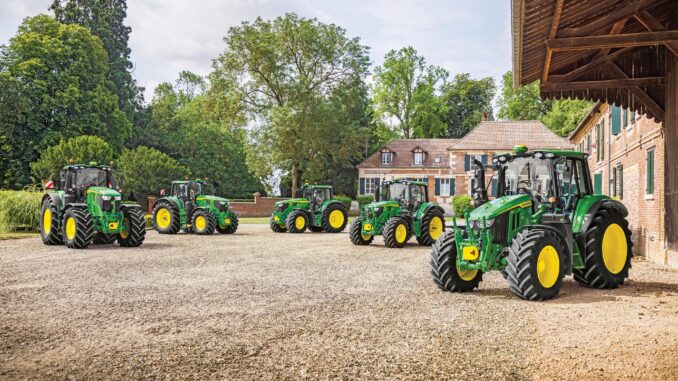
The John Deere 50 is a two-cylinder row-crop tractor built from 1952 to 1956, with roughly 31 horsepower, a 6-forward/1-reverse transmission, 540 PTO capability, and an open hydraulic system, so owners usually deal with old-fuel, ignition, cooling, clutch, brake, and hydraulic issues rather than modern electronic faults. This guide is written for DIY owners in the USA and Canada who want a practical, symptom-first repair and maintenance reference with clear limits on what is realistic at home and what is better left to an experienced tractor shop.
Because the John Deere 50 is now a vintage machine, the repair process often starts with identification, correct parts lookup, and a careful reading of the operator’s and parts manuals before any wrenching begins. The sections below cover common faults, urgent repairs, parts sourcing, manuals, fitting guidance, maintenance routines, and a detailed troubleshooting FAQ in the same owner-focused format commonly used for Deere repair guides.
John Deere 50 overview
The John Deere 50 sits in Deere’s early 1950s utility and row-crop tractor lineup and was sold before later 520 and 530 models, which makes it a true classic rather than a modern lawn or compact tractor. Most machines found today are gasoline versions, though parts documentation also covers LP-Gas variants, so model and fuel type matter when ordering engine and fuel-system components.
The main systems owners need to understand are the engine and fuel system, cooling system, clutch and transmission, PTO and Powr-Trol hydraulics, braking system, steering components, and the 12-volt electrical and starting equipment listed throughout the operator’s and parts manuals. Deere’s parts catalog breaks the tractor into engine, cooling, fuel, electrical, transmission, power shaft, steering, hydraulic mechanism, and instrument-panel sections, which is helpful when tracing old parts or diagram references.
Several service and repair parts that owners commonly search for include spark plugs, oil filter parts, fuel filter and fuel shut-off components, ignition switch parts, generator and regulator parts, water-pump and thermostat parts, brake components, and Powr-Trol hydraulic components. On a tractor of this age, it is also common to buy tune-up items, hoses, gaskets, wiring repairs, carburetor parts, and seat or lighting parts rather than only routine filters.
Troubleshooting the John Deere 50 by symptom
The best way to diagnose a John Deere 50 is to start with the symptom the owner can see, hear, smell, or feel, then work backward through the simplest checks before assuming a major internal failure. The operator’s manual itself groups many issues under tractor difficulties and service reminders, reinforcing the idea that diagnosis starts with what the tractor is doing wrong in use.
Main symptom groups for this tractor include starting issues, poor running, overheating, leaks, clutch or transmission trouble, weak hydraulics, brake problems, charging or lighting faults, steering play, and unusual vibration or noise. Because the John Deere 50 is mechanically simple but old, more than one small fault is often present at the same time, such as stale fuel plus weak ignition plus poor compression.
Immediate John Deere 50 repair needs
Some faults should be handled immediately because they create a safety risk or can quickly turn a repairable tractor into an expensive rebuild. Fuel leaks, brake failure, severe coolant loss, low oil pressure, major hydraulic leakage, and driveline noise under load all belong in the stop-and-inspect category.
Starting issues on a John Deere 50
When the tractor cranks slowly, will not crank, or starts only with difficulty, the problem matters because repeated hard starting strains the starter, wiring, battery, and ignition components.
-
Weak battery or poor cable connections.
-
Dirty or worn ignition-switch or starter-control parts.
-
Fouled or worn spark plugs.
-
Fuel contamination, poor carburetor delivery, or blocked fuel flow.
-
Ignition-system faults involving the coil, distributor, or timing components.
-
Check battery charge level and cable cleanliness first.
-
Verify fuel is fresh and flowing to the carburetor.
-
Remove and inspect the spark plugs for fouling or obvious wear.
-
Confirm the ignition switch and starter controls are operating normally.
-
If spark and fuel are present but it still will not fire, move on to timing and compression checks.
John Deere 50 running and power problems
A John Deere 50 that starts but runs rough, lacks power, smokes, or stumbles under load usually has a fuel, ignition, valve-train, or manifold-related issue rather than a mysterious fault. This matters because continued operation with poor mixture or weak ignition can foul plugs, wash cylinders, and overheat the engine.
-
Partially restricted fuel delivery.
-
Carburetor wear, dirt, or incorrect adjustment.
-
Incorrect manifold heat-control position for conditions.
-
Distributor timing problems.
-
Valve or tappet adjustment issues.
-
Confirm clean fuel reaches the carburetor.
-
Check the manifold heat-control setting for the weather and operating conditions.
-
Inspect spark plugs and ignition components.
-
Verify ignition timing if the tractor backfires or lacks pull.
-
Check tappet adjustment and compression if the misfire remains.
John Deere 50 vibration and noise
Heavy knocking, clutch chatter, brake drag noise, front-end rumble, or gear noise should not be ignored because worn driveline and chassis parts can damage housings and shafts on an older tractor.
-
Loose front-wheel or rear-wheel hardware.
-
Worn clutch, pulley, or brake components.
-
Transmission or reduction-gear wear.
-
Worn steering or front-end bearings.
-
Engine internal wear or poor flywheel/clutch condition.
-
Stop using the tractor under load.
-
Check wheel security, tire condition, and obvious play in the front end.
-
Listen for whether the sound changes with clutch engagement, braking, or PTO use.
-
Isolate the source before disassembly.
-
Move to dealer or specialist help if the noise is internal to the transmission, clutch housing, or engine.
John Deere 50 overheating and leaks
Coolant loss, overheating, or oil and fuel leaks should be fixed quickly because the manual specifically covers the cooling system, radiator, thermostat, water pump, crankcase, and fuel system as routine service areas.
-
Low coolant level or clogged radiator.
-
Thermostat or water-pump trouble.
-
Dirty cooling passages.
-
Fuel shut-off or fuel-line seepage.
-
Engine oil leaks around lines, covers, or filter components.
-
Let the tractor cool fully before inspection.
-
Check coolant level, visible hose condition, and radiator cleanliness.
-
Inspect for seepage at the fuel system and around oil lines or filter areas.
-
Confirm the fan and water-pump area are turning correctly.
-
Do not continue heavy work if the temperature keeps climbing.
John Deere 50 transmission and drive problems
A John Deere 50 with hard shifting, slipping under load, poor PTO performance, or brake issues may have clutch, gear, brake, or power-shaft wear that gets worse if ignored.
-
Clutch adjustment or wear.
-
Transmission-drive or reduction-gear problems.
-
Power-shaft clutch issues.
-
Brake wear or linkage trouble.
-
Lubrication neglect in transmission or related housings.
-
Confirm the clutch engages and releases consistently.
-
Check whether the problem is present in one gear or all gears.
-
Test brakes carefully in a safe area.
-
Verify PTO and hydraulic functions separately.
-
Escalate quickly if the tractor jumps out of gear or makes grinding noises.
Electrical problems on a John Deere 50
Electrical faults usually show up as no-crank, weak charging, dead lights, or intermittent ignition, and they matter because bad vintage wiring can also become a fire risk.
-
Weak battery.
-
Corroded terminals or grounds.
-
Faulty ignition switch.
-
Generator or voltage-regulator trouble.
-
Wiring damage at lamps, dash, or starting circuit.
-
Clean and tighten battery and ground connections.
-
Check whether the ammeter shows charging behavior.
-
Test lights and ignition separately to narrow the circuit.
-
Inspect visible wiring for brittle insulation or poor repairs.
-
Replace damaged cables or switchgear before chasing deeper faults.
DIY or dealer for the John Deere 50
The usual line on a John Deere 50 is simple: routine service, tune-up work, fluid checks, cooling-system cleaning, spark-plug work, and basic fuel-system cleaning are realistic DIY jobs, while internal engine, clutch, transmission, Powr-Trol, and differential repairs are better for experienced vintage-tractor mechanics with lifting equipment and model-specific knowledge.
Good DIY jobs
-
Spark plug inspection and replacement.
-
Battery and cable service.
-
Air-cleaner and fuel-system cleaning.
-
Coolant checks and radiator cleaning.
-
Basic wiring repairs.
-
External leak tracing.
-
Brake and clutch linkage inspection.
Advanced DIY or dealer jobs
-
Carburetor rebuild and tuning.
-
Distributor timing and deeper ignition diagnosis.
-
Water-pump and thermostat replacement.
-
Powr-Trol hydraulic repairs.
-
Clutch or pulley teardown.
-
Transmission, differential, or final-drive work.
-
Internal engine repairs and tappet or compression-related diagnosis.
Skill level guide
-
Beginner: battery service, spark plugs, fuel checks, coolant checks, visible wiring fixes.
-
Intermediate: ignition tuning, carburetor cleaning, thermostat or hose work, brake-linkage adjustment.
-
Advanced: clutch work, hydraulic repairs, steering rebuilds, transmission teardown, engine internals.
John Deere 50 parts you need before ordering
Before ordering parts, gather the full model name, the tractor serial number, fuel type, and any previous conversion details because the John Deere 50 was built across several years and the parts catalog also distinguishes gasoline and LP-Gas configurations. The serial number is listed on the rear of the transmission case according to both the operator’s manual and the parts catalog, so that is the first identification point to confirm.
For engine and tune-up work, also confirm exactly which ignition and fuel-system components are fitted today because many old tractors have been repaired over decades with mixed parts. For driveline and chassis work, compare your tractor against the parts diagrams for the engine, cooling system, fuel system, electrical system, transmission, steering, hydraulic mechanism, and PTO sections before clicking buy.
OEM parts are usually the safer choice for fit-sensitive, serial-number-sensitive, and safety-related items such as ignition-switch parts, hydraulic components, brake parts, steering pieces, and exact lighting or wiring components. Aftermarket can be acceptable for common service consumables or reproduction restoration parts, but only when the seller clearly cross-references the Deere number and your tractor’s serial range or fuel type.
John Deere 50 manuals and parts diagrams
The most useful starting point is Deere’s official manuals portal, which is where owners can search for operator, technical, and parts publications by model. For the John Deere 50 specifically, a reprinted operator’s manual and a reprinted parts catalog are also widely available and useful when the official publication is not easy to source in print.
Recommended sources:
-
John Deere Manuals and Training — official Deere portal for operator, technical, and parts manuals.
-
John Deere 50 Operator’s Manual PDF — useful for lubrication intervals, controls, operating guidance, and tractor-difficulties references.
-
John Deere 50 Parts Catalog PDF — useful for exploded diagrams, section breakdowns, and part-number lookup.
-
John Deere Parts Catalog — Deere’s official parts-catalog entry point, though access may depend on the site and region.
How to locate John Deere 50 serial and ID numbers
These numbers matter because serial breaks, fuel type, and component variation affect parts fitment on a tractor this old. Getting the number wrong can easily lead to ordering a part that looks right in photos but does not match your housing, linkage, or wiring layout.
-
Go to the rear of the transmission case.
-
Find the tractor serial-number location listed by Deere for the Model 50.
-
Record the number exactly as stamped, including any hard-to-read digits.
-
Compare that number against the manual or catalog before ordering.
-
If the tractor has replacement ignition, fuel, or electrical parts, note those separately because they may no longer match the original build.
Buying John Deere 50 parts online and locally
The best buying strategy is to identify the Deere part number first, then compare description, serial fit, fuel type, and image details instead of shopping by title alone. That matters more on the John Deere 50 than on newer homeowner tractors because many listings use broad labels like “fits John Deere 50” even when details vary.
-
Online: verify OEM numbers, compare diagram position, and confirm whether the seller means the classic Model 50 tractor rather than a newer mower-related “50” item.
-
Dealer counter: best for complex or serial-specific items and for verifying whether a number supersedes to a newer part.
-
Retail stores: acceptable for generic items such as battery cables, bulk wire, fluids, and some tune-up supplies if the packaging clearly matches the tractor’s requirements.
Useful links:
Step-by-step John Deere 50 fitting guide
The highest-value DIY jobs on a John Deere 50 are usually tune-up and inspection tasks that improve starting, running, and reliability without splitting the tractor. Always work on level ground, isolate the ignition where appropriate, and let hot engine and cooling components cool fully before touching them.
Replacing John Deere 50 spark plugs
This job helps with hard starting, misfire, and weak running because spark plugs are specifically listed in the operator’s manual service and difficulty references.
-
Park the tractor safely and switch off the ignition.
-
Remove one plug wire at a time so leads do not get mixed up.
-
Remove the old plug and inspect its condition for fouling or oiling.
-
Install the replacement plug carefully to avoid thread damage.
-
Refit the lead securely and repeat for the second cylinder.
-
Start the tractor and confirm smoother running.
Cleaning the John Deere 50 fuel system basics
This job often improves hard starting, poor idle, and hesitation because the parts catalog and operator’s manual both cover the fuel system, filter, shut-off, and carburetor sections in detail.
-
Shut off the fuel supply and work in a well-ventilated area.
-
Inspect the sediment, strainer, or fuel-filter area for contamination.
-
Clean or replace serviceable components as needed.
-
Confirm the fuel line is open and not kinked or leaking.
-
Reopen fuel flow and check for leaks before starting.
-
Test-run the tractor and monitor idle quality.
Servicing the John Deere 50 battery and cables
This is one of the best first checks for a no-crank or slow-crank complaint because the manuals cover batteries, starting equipment, and generator-related service.
-
Disconnect the battery safely.
-
Clean the posts, clamps, and main ground connection.
-
Inspect cables for corrosion, stiffness, or damaged insulation.
-
Reinstall and tighten all connections securely.
-
Charge or replace the battery if it still tests weak.
-
Verify the starter now cranks at normal speed.
Cleaning the John Deere 50 radiator and cooling area
This job helps prevent overheating because Deere specifically lists the radiator, cooling system, thermostat, and water-pump sections as key service areas.
-
Let the tractor cool completely.
-
Check coolant level and visible leaks first.
-
Clean debris and dirt from the radiator exterior carefully.
-
Inspect the water-pump and fan-drive area for looseness or seepage.
-
Refill coolant if needed and run the tractor until warm.
-
Watch the temperature behavior before returning to heavier work.
Maintenance to prevent John Deere 50 problems
Regular lubrication, cooling-system care, ignition service, and fuel-system cleanliness do more to keep a John Deere 50 reliable than chasing faults only after a breakdown. The operator’s manual includes lubrication and periodic service sections plus 10-hour, 30-hour, 60-hour, 120-hour, 500-hour, and yearly service reminders, which gives owners a solid framework even on restored or lightly used tractors.
Focus areas:
-
Starting reliability: keep the battery, ignition parts, and fuel delivery in good order.
-
Running quality: keep plugs, timing, carburetion, and manifold settings correct.
-
Overheating prevention: clean the radiator and monitor the thermostat and water-pump area.
-
Drive performance: inspect clutch, brakes, transmission lubrication, and PTO operation.
-
Hydraulic reliability: monitor Powr-Trol operation, leaks, and oil condition.
-
Electrical reliability: repair brittle wiring and poor grounds before they cause intermittent faults.
John Deere 50 maintenance schedule
The official operator’s manual organizes service around lubrication and periodic intervals rather than the homeowner-style calendar used on new lawn tractors, so the best approach is to follow Deere’s hour-based structure and adapt it to how often the tractor actually works. On a vintage machine, pre-use checks are especially important because age-related leaks, wiring issues, and loose hardware can appear between uses even at low annual hours.
Daily or before each use
-
Check engine oil level.
-
Check coolant level and look for leaks.
-
Inspect fuel level and obvious fuel-system seepage.
-
Check tire condition and visible loose hardware.
-
Verify brakes, steering feel, and basic controls before moving off.
Every 10 hours
-
Follow the 10-hour lubrication points listed in the operator’s manual.
-
Inspect grease fittings and general lubrication condition.
-
Watch for early signs of brake, clutch, or steering looseness.
Every 30 hours
-
Carry out the 30-hour lubrication service.
-
Inspect battery, generator belt, and starting system condition.
-
Check air-cleaner service needs depending on dust conditions.
Every 60 to 120 hours
-
Perform the 60-hour and 120-hour periodic services listed by Deere.
-
Check transmission, steering, and brake service points.
-
Inspect cooling-system and ignition-system condition.
Every 500 hours or yearly
-
Replace or service items covered in Deere’s 500-hour schedule.
-
Review oil filter, deeper lubrication, and annual storage-related service items.
-
Inspect the tractor more thoroughly for leaks, wiring repairs, and worn driveline components.
Seasonal checklist
-
Spring or return to service: check battery, fuel condition, ignition parts, tire condition, and coolant before the first longer run.
-
Mid-season: recheck lubrication points, fuel cleanliness, and any developing leaks or loose linkages.
-
Off-season storage: follow Deere’s storage guidance, stabilize or drain fuel as appropriate, clean the tractor, and protect the electrical system and battery.
Repair, upgrade, or replace a John Deere 50
Repair usually makes sense when the tractor is structurally sound, the engine and driveline are basically healthy, and the issue is limited to ignition, fuel, cooling, brakes, wiring, or other external systems. Upgrade makes sense when reliability or usability can be improved with better wiring, safer lighting, or corrected worn accessories, while replacement is the better route when major engine, clutch, transmission, and hydraulic problems stack up beyond the tractor’s value or intended use.
Repair if…
-
The tractor has one clear fault or a short list of service-related faults.
-
Compression, oil pressure, and driveline behavior are still acceptable.
-
Parts are available and the chassis is sound.
Upgrade if…
-
Original wiring, lights, or seat parts are tired but the tractor is otherwise solid.
-
You use the tractor regularly and want safer operation.
-
Existing repairs are functional but crude and worth correcting properly.
Replace if…
-
The tractor has major internal engine damage plus transmission or hydraulic trouble.
-
Safe braking or steering would require a full mechanical restoration.
-
You need a dependable daily worker more than a vintage-project tractor.
John Deere 50 troubleshooting FAQ
1. Why will my John Deere 50 not start?
Most no-start complaints come down to weak battery power, poor cable connections, dirty fuel delivery, fouled spark plugs, or ignition faults in the switch, coil, or distributor circuit. Start with battery and cable checks, then confirm fuel flow and spark before moving into timing or compression diagnosis.
2. Why does my John Deere 50 crank slowly?
Slow cranking usually points to battery condition, cable resistance, grounding problems, or starter-circuit wear. On an older tractor, corroded connections can rob far more cranking power than owners expect.
3. Why does my John Deere 50 start and then die?
That pattern often means the tractor is getting only a brief amount of fuel, or the ignition is dropping out once vibration or heat builds. Check fuel flow, sediment or filter restriction, and ignition components before assuming carburetor failure.
4. Why is my John Deere 50 hard to start when cold?
Cold starting can suffer when spark plugs are weak, the fuel mixture is poor, or the manifold heat-control setting is wrong for the weather. A tired battery also shows up more clearly in cold conditions.
5. Why does my John Deere 50 misfire under load?
A misfire under load commonly points to weak ignition, dirty fuel delivery, poor carburetor performance, or valve and timing issues. Load increases cylinder demand, so small tune-up faults become much more obvious.
6. Why does my John Deere 50 have low power?
Low power usually comes from restricted fuel flow, worn ignition parts, timing error, compression loss, or incorrect manifold heat management. Work through fuel and spark first because those checks are simpler than internal engine diagnosis.
7. Why is my John Deere 50 smoking?
Smoke can point to mixture problems, oil burning, or an engine that is not combusting cleanly because of weak ignition or wear. Plug condition and exhaust behavior together often give the first clue about whether the issue is fuel-rich or oil-related.
8. Why does my John Deere 50 overheat?
Overheating is usually tied to low coolant, radiator restriction, thermostat trouble, water-pump issues, or cooling-system contamination. Stop heavy operation until the cause is corrected because overheating can damage an already old engine quickly.
9. Why is my John Deere 50 leaking coolant?
Coolant leaks often come from hoses, radiator areas, gaskets, or water-pump-related points. Clean the area first, then trace the leak source before replacing parts blindly.
10. Why is my John Deere 50 leaking fuel?
Fuel seepage usually shows up around shut-off parts, lines, fittings, or carburetor-related areas. Because fuel leaks are both a fire and reliability issue, fix them before regular use.
11. Why is my John Deere 50 leaking oil?
Oil leaks can come from covers, lines, filter-related parts, or seals in an engine and chassis this old. The right move is to clean the tractor, run it briefly, and identify the fresh leak source before ordering gaskets.
12. Why does my John Deere 50 lose hydraulic power?
Weak Powr-Trol performance often means low oil condition, leakage, pump wear, valve issues, or internal hydraulic problems. External checks are reasonable at home, but internal hydraulic diagnosis often crosses into advanced repair.
13. Why is the John Deere 50 PTO not working correctly?
PTO issues can come from clutch problems, linkage trouble, or wear in the power-shaft system. If the PTO slips or grinds, stop using it before more damage is done.
14. Why does my John Deere 50 jump out of gear?
Jumping out of gear suggests internal wear, shift-fork issues, or driveline problems in the transmission. That is usually not a beginner repair because continued use can damage gears and housings.
15. Why is the clutch slipping on my John Deere 50?
A slipping clutch usually means wear, contamination, or adjustment problems in the clutch or pulley area. If the tractor loses pull under load, fix that early before heat and wear spread.
16. Why are the brakes weak on my John Deere 50?
Weak brakes can come from wear, poor adjustment, contamination, or neglected linkage. Because the tractor uses automotive-type internal-expanding rear wheel brakes, safe braking deserves immediate attention.
17. Why does my John Deere 50 make a knocking noise?
Knocking can come from engine internals, flywheel-related issues, clutch components, or driveline wear. The safest next step is to isolate whether the noise changes with engine speed, clutch use, or load before deeper teardown.
18. Why does the front end on my John Deere 50 feel loose?
Loose steering or front-end play usually points to wear in steering, pedestal, wheel, or bearing components. Vintage front ends often develop several small wear points at once.
19. Why is my John Deere 50 steering heavy?
Heavy steering can result from front-end wear, lubrication neglect, tire issues, or trouble in tractors fitted with power-steering components. Start with the obvious mechanical drag points before assuming a deeper steering fault.
20. Why are the lights not working on my John Deere 50?
Lighting faults usually come from bad bulbs, damaged wiring, poor grounds, or switch and charging issues. The parts catalog includes separate lamp, wiring, and switch sections, which helps when tracing missing pieces on restored tractors.
21. Why is my John Deere 50 not charging the battery?
No-charge complaints usually involve the generator, regulator, wiring, or connection quality. Watch the ammeter and test the circuit methodically rather than replacing parts at random.
22. Why does my John Deere 50 foul spark plugs?
Plug fouling usually points to mixture issues, weak ignition, excessive idling, or internal engine wear. Reading the removed plugs can help separate fuel-rich operation from oil-burning problems.
23. Why does my John Deere 50 backfire?
Backfiring commonly points to timing errors, ignition trouble, lean or uneven fuel delivery, or manifold-related issues. Check tune-up condition before adjusting deeper engine settings.
24. Why does my John Deere 50 run better with the choke partly on?
That usually suggests a lean fuel condition caused by restricted fuel flow, dirt in the carburetor, or an air leak. A tractor that needs choke to stay running almost always needs fuel-system attention.
25. Why does the John Deere 50 stall at idle?
Idle stalling often comes from dirty carburetor passages, weak spark, or unstable fuel delivery at low speed. Basic cleaning and tune-up checks should come before major parts replacement.
26. Why does my John Deere 50 use too much fuel?
High fuel use can come from rich running, poor tune-up condition, incorrect manifold heat setting, or engine wear. If power is also down, look for an underlying running issue rather than blaming fuel quality alone.
27. Why does my John Deere 50 get hot when working hard?
A tractor that only overheats under load may have marginal cooling efficiency, restricted airflow, or a water-pump or thermostat problem that shows up only when heat demand rises. Heavy work should wait until the cooling system proves stable.
28. Why does my John Deere 50 vibrate more than usual?
Extra vibration can come from engine imbalance, poor running, loose wheels, worn front-end parts, or clutch and driveline wear. Start with external checks because loose hardware is easier to fix than internal faults.
29. Why does my John Deere 50 have poor compression?
Poor compression usually points to valve issues, worn rings, cylinder wear, or head-gasket-related problems. That moves the repair toward advanced DIY or specialist work rather than routine maintenance.
30. Why is the John Deere 50 difficult to shift?
Hard shifting can come from clutch release problems, linkage wear, lubrication neglect, or internal transmission wear. Check clutch behavior first because poor release often mimics a gearbox problem.
31. Why does my John Deere 50 creep or move unexpectedly?
Unexpected movement can result from clutch, gear-selection, brake, or idle-speed issues. Treat that as a safety problem and stop using the tractor until the cause is understood.
32. How often should I lubricate a John Deere 50?
The operator’s manual includes 10-hour, 30-hour, 60-hour, 120-hour, 500-hour, and yearly service references, so lubrication should follow Deere’s published intervals rather than guesswork. If the tractor works in dust, mud, or long idle periods, inspections should be even more frequent.
33. What is the best manual for a John Deere 50 repair?
The best combination is the operator’s manual for maintenance and routine checks plus the parts catalog for exploded views and part identification, with Deere’s manuals portal as the official starting point. For deeper teardown work, a dedicated service manual is usually the next step beyond those two.
34. Are John Deere 50 parts still available?
Yes, manuals and many parts references are still available through Deere sources, reproduction manual sellers, and vintage-parts suppliers, although availability varies by component. Routine service and restoration parts are generally easier to find than uncommon internal hard parts.
35. Is a John Deere 50 a good DIY tractor?
Yes, within reason: it is mechanically straightforward compared with newer machines, but its age means seized hardware, mixed old repairs, and scarce parts can turn a simple job into a bigger one. It is a good DIY tractor for maintenance and external repairs, but not automatically an easy one for major internals.