
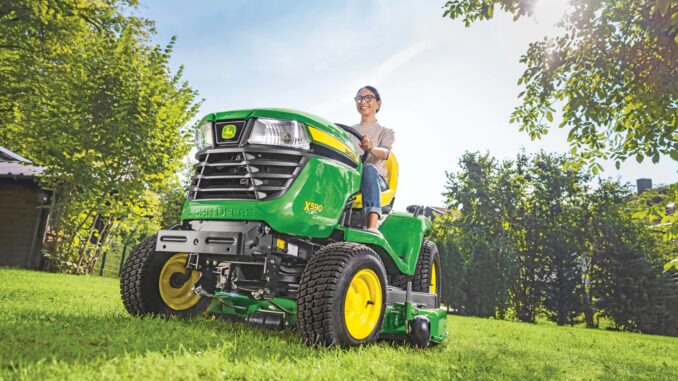
The John Deere LA115 is a 100 Series lawn tractor aimed at homeowner mowing, typically paired with a 42-inch deck, a Briggs & Stratton 31 single-cylinder engine, and hydrostatic drive. This guide is written for DIY owners in the USA and Canada and focuses on symptom-first troubleshooting, realistic repair boundaries, maintenance intervals, parts ordering, and a detailed FAQ.
John Deere LA115 overview
The John Deere LA115 sits in the 100 Series lineup and uses a 502 cc Briggs & Stratton 31 engine, hydrostatic transmission, 12-volt electrical system, and BCI Group U1 battery. With the 42-inch deck setup, it is best suited to routine homeowner mowing rather than heavy ground-engaging work or commercial use.
The key systems owners usually deal with are:
-
Engine and fuel system, including air filter, spark plug, fuel filter, crankcase oil, and oil filter.
-
Mower system, including the 42-inch deck, two blades, deck belt, spindle-related wear points, and deck-level/cut-height setup.
-
Drive system, including the hydrostatic transaxle and traction/ground-drive belt.
-
Electrical and safety system, including battery, charging circuit, ignition, seat switch/brake logic, and PTO-related interlock behavior.
Common service parts owners regularly buy include the 42-inch mower blade kit GY20850, mower drive belt GX20072, maintenance kit LG253, air filter GY20573 or M149171 cross-references, oil filter GY20577 or AM125424 cross-references, fuel filter GY20709 or AM116304 cross-references, spark plug M78543, and U1-size 12-volt battery replacements.
General overview of the John Deere LA115
Diagnosis on a John Deere LA115 should start with the symptom you actually see: crank-no-start, weak mowing, uneven cut, vibration, poor drive response, overheating smell, or dead electrical system. That matters because many owner complaints come from wear items, adjustment issues, stale fuel, dirty cooling fins, or belt/blade problems rather than one catastrophic failed part.
Main symptom categories for this model are:
-
Starting issues, such as no crank, slow crank, or crank-but-won’t-start.
-
Running issues, such as surging, sputtering, black smoke, or loss of power under load.
-
Cut-quality problems, such as uncut strips, ragged tips, scalping, or weak discharge.
-
Vibration and noise, often linked to blades, pulleys, debris, or bearing wear.
-
Overheating and leaks, especially around the engine, cooling system shrouds, or oil-filter area.
-
Transmission and drive complaints, including weak hill performance or no movement.
-
Electrical and safety-switch problems, such as intermittent starting or dying when PTO or brake position changes.
Immediate repair needs
John Deere LA115 starting issues
If the John Deere LA115 will not crank, only clicks, or cranks without firing, treat that as a priority because repeated attempts can drain the battery, overheat cables, and hide an underlying safety-switch or fuel-delivery problem. A no-start after recent maintenance is especially worth checking carefully because filter installation, plug connection, or fuel-line orientation mistakes are common.
Common causes:
-
Weak or failed U1 battery.
-
Dirty or loose battery terminals.
-
Seat, brake, or PTO interlock problem.
-
Old fuel, clogged fuel filter, or air in the line after service.
-
Fouled spark plug or disconnected plug wire.
Basic checks:
-
Confirm PTO is off and brake/clutch position matches the manual’s starting logic.
-
Check battery voltage and terminal tightness before chasing deeper faults.
-
Inspect the fuel filter, fuel level, and whether fuel is visibly reaching the carburetor.
-
Remove and inspect the spark plug for fouling, damage, or incorrect gap; the spec is 0.030 in.
-
If the tractor recently had service, recheck every item touched, especially fuel-filter direction and plug-wire seating.
John Deere LA115 cut-quality problems
Poor cut quality on a John Deere LA115 usually shows up as stragglers, clumps, scalping, ragged grass tips, or one side cutting lower than the other. This matters because owners often blame the deck belt first, but dull blades, incorrect deck level, low tire pressure, and mowing conditions are at least as common.
Common causes:
-
Dull, bent, or incorrectly installed blades.
-
Deck out of level side-to-side or front-to-rear.
-
Low or uneven tire pressure.
-
Worn or slipping 42-inch mower drive belt GX20072.
-
Heavy, wet, or overgrown grass.
Basic checks:
-
Check front and rear tire pressures against manual specs before adjusting the deck.
-
Inspect blades for sharpness, bends, and correct orientation.
-
Clean packed grass from the underside of the deck.
-
Inspect the deck belt for glazing, cracks, and slack.
-
Recheck deck level only after tires and blades are confirmed good.
John Deere LA115 vibration and noise
A John Deere LA115 that suddenly starts vibrating, rattling, or making belt squeal should be shut down and inspected before more mowing. Running it that way can damage spindles, pulleys, belts, or even the crankshaft if a blade has struck something.
Common causes:
-
Bent blade or loose blade hardware.
-
Debris wrapped around a spindle or pulley.
-
Damaged belt or worn idler pulley.
-
Loose deck hardware.
-
Blade installed upside down after service.
Basic checks:
-
Stop the engine, remove key, and inspect under the deck.
-
Check both blades for bends, nicks, and secure fastening; blade-nut torque for the 42-inch deck is 65 lb-ft.
-
Spin pulleys by hand with the belt off, listening for roughness.
-
Look for grass rope or wire around spindle shafts.
-
Do not keep mowing until the source is found.
John Deere LA115 overheating and leaks
Overheating on a John Deere LA115 usually shows up as power fade, burning smell, smoking debris around the engine, or oil weeping after hot operation. Air-cooled engines depend heavily on clean cooling fins and shrouds, so packed chaff can create both overheating and fire risk.
Common causes:
-
Dirty cooling fins or blower housing.
-
Engine oil low, old, or wrong grade.
-
Oil filter not sealing properly after service.
-
Grass buildup around muffler and engine screen.
-
Running in heavy growth for long periods without cleaning.
Basic checks:
-
Check engine oil level on level ground.
-
Clean grass and dust from engine screen, shrouds, and muffler area.
-
Inspect for fresh oil around the filter and drain area.
-
Confirm correct fill amount; LA115 capacity with filter is 1.5 qt.
-
Stop using the tractor if oil loss or heavy smoke continues.
John Deere LA115 transmission and drive problems
If the John Deere LA115 moves weakly, hesitates, or does not climb as it used to, check the simple external items before assuming the hydrostatic transaxle has failed. Weak drive complaints often come from traction-belt wear, poor linkage movement, or using the machine beyond its mowing role.
Common causes:
-
Worn or slipping traction drive belt GX20006 cross-reference.
-
Belt contamination from oil or debris.
-
Linkage or pedal issues.
-
Low performance under heavy towing or steep-slope use.
-
Internal transaxle wear in older, heavily used machines.
Basic checks:
-
Verify the tractor rolls and pedals return smoothly with engine off.
-
Inspect the traction belt for glazing, cracking, or oil contamination.
-
Check whether the complaint is worse hot than cold, which can point to wear.
-
Compare performance on flat ground before testing slopes.
-
Treat internal hydrostatic repair as advanced work or dealer-level diagnosis.
John Deere LA115 electrical problems
Electrical trouble on a John Deere LA115 often appears as intermittent no-start, dead lights, battery repeatedly going flat, or engine shutdown when the operator shifts position. Because the charging system is only 9 amp on this model group, weak batteries and poor connections show up quickly.
Common causes:
-
Aging U1 battery.
-
Corroded battery or ground connections.
-
Dirty area around steering switches.
-
Faulty seat, brake, or PTO interlock switch.
-
Charging-system problem.
Basic checks:
-
Load-test or substitute a known-good battery before replacing switches.
-
Clean battery posts and grounds.
-
Inspect visible switch connectors and harness routing.
-
Check charging output after the engine starts.
-
If diagnosis reaches wiring continuity or switch logic, many owners are better off with a dealer or experienced small-engine technician.
DIY or dealer?
For the John Deere LA115, the line is usually simple: routine maintenance and bolt-on wear parts are realistic DIY jobs, while internal engine work, hydrostatic transmission repair, and deeper electrical diagnosis are better left to an experienced technician or dealer.
Good DIY jobs:
-
Engine oil and filter change.
-
Air filter, fuel filter, and spark plug replacement.
-
Blade replacement and sharpening.
-
Deck-belt replacement and deck cleaning.
-
Battery replacement and terminal cleaning.
Advanced DIY or dealer jobs:
-
Traction drive belt replacement if access is awkward or linkage removal is needed.
-
Carburetor cleaning/rebuild after stale-fuel problems.
-
Hydrostatic transaxle diagnosis or replacement.
-
Wiring-harness testing and safety-switch troubleshooting.
-
Internal engine work such as valve adjustment, compression loss, or oil-burning repairs.
Skill guide:
-
Beginner: battery, spark plug, air filter, deck cleaning, blade inspection.
-
Intermediate: oil/filter service, blade replacement, deck-belt replacement, deck leveling.
-
Advanced: traction-belt work, carburetor service, electrical diagnosis, transaxle-related repairs.
John Deere LA115 parts information
Before ordering parts for a John Deere LA115, gather the full model name, tractor PIN, engine model/serial, and deck size. That matters because Deere parts support is often serial-number sensitive, and some aftermarket listings group LA models together even when engine or production changes affect fit.
OEM parts are the safer choice for belts, safety-switch items, and fit-sensitive deck or drive parts because routing, length, and pulley contact matter. Aftermarket can be reasonable for filters, blades, and batteries when the cross-reference is exact and the seller clearly lists the LA115 and relevant Deere/OEM number.
Manuals and diagrams
Useful sources for this tractor include:
-
Official operator’s manual, which covers operation, service intervals, troubleshooting, and number locations.
-
Deere owners support / parts page, which is the best starting point for official diagrams and parts lookup.
-
Deere specification page, which confirms engine, battery, tire, deck, and torque specs.
-
Deere service-interval page, which is useful for building the maintenance schedule.
These are the links to rely on first because they help prevent ordering the wrong part and keep torque, capacity, and interval information aligned with Deere documentation.
Locating ID numbers
These numbers matter because the same tractor family can share broad model names while still changing by production range or engine build. Using the PIN and engine serial is the easiest way to avoid ordering the wrong belt, switch, or engine-service component.
Steps:
-
Find the tractor Product Identification Number label on the tractor frame in the location shown in the operator’s manual.
-
Record the full model and serial/PIN exactly as shown, including any prefix characters.
-
Find the engine model, type, and code stamped or labeled on the Briggs & Stratton engine.
-
Confirm the mower deck width; the common LA115 deck is 42 inches.
-
Use those numbers when searching Deere diagrams or speaking to a dealer parts counter.
Buying parts
The best buying strategy is to confirm the Deere number first, then compare OEM and aftermarket options rather than shopping by a generic LA115 label alone.
-
Online: use the Deere owners support page first, then cross-check exact OEM numbers before buying elsewhere.
-
Dealer counter: best for PIN-sensitive belts, switches, electrical parts, and any confusing serial split.
-
Retail stores: fine for spark plugs, batteries, and some filters if the packaging clearly lists the OEM cross-reference and the LA115.
Useful sources include:
-
Deere owners support / LA115 for official lookup.
-
Deere GX20072 belt page for deck-belt confirmation.
-
Deere 42-inch blade kit page for blade reference.
Fitting guide for common parts
John Deere LA115 air filter and pre-cleaner
Replacing the John Deere LA115 air filter helps with hard starting, rich running, and loss of power under load.
-
Park on level ground, switch off, remove key, and let the engine cool.
-
Open the air-filter housing and remove the paper element and foam pre-cleaner.
-
Clean loose debris from the housing without blowing dirt into the intake.
-
Install the new foam pre-cleaner and paper element in the same orientation.
-
Close the housing securely and inspect for broken clips or poor sealing.
John Deere LA115 spark plug replacement
A fresh spark plug can fix misfire, hard starting, or rough running on the John Deere LA115.
-
Let the engine cool fully because the plug area sits near the exhaust.
-
Pull off the plug wire boot and remove the old plug with the correct socket.
-
Check or set the new plug gap to 0.030 in.
-
Install the plug carefully by hand first, then tighten to 15 lb-ft.
-
Refit the plug wire securely.
John Deere LA115 blades
New or sharpened blades restore cut quality and reduce tearing on a John Deere LA115.
-
Disconnect spark-plug wire, raise the front safely, and block the blades from turning.
-
Remove blade hardware and note blade orientation before removal.
-
Inspect each blade for bends or impact damage; replace damaged blades rather than sharpening heavily.
-
Install the replacement blades with cutting edges facing down toward the grass.
-
Torque blade nuts to 65 lb-ft.
John Deere LA115 deck belt
Replacing the John Deere LA115 mower deck belt helps when the deck slips, blades slow in heavy grass, or the PTO turns but cut performance is poor.
-
Park safely, remove key, and lower the deck for access.
-
Remove deck guards as needed and document the existing belt routing before removal.
-
Slip the worn belt off the pulleys and inspect pulleys and idlers for roughness or wobble.
-
Route the new GX20072 belt exactly as designed, making sure it sits fully in the pulley grooves.
-
Reinstall guards, engage the deck briefly, and listen for squeal or misrouting.
Maintenance to prevent repeat failures
Regular maintenance prevents most homeowner LA115 complaints because the common failures are usually neglected wear items rather than rare internal breakage. The operator’s manual schedule is simple enough that owners who follow it closely usually avoid many starting, mowing, and overheating problems.
Focus areas:
-
Starting reliability: keep fuel fresh, replace filters as needed, and inspect the spark plug on schedule.
-
Cut quality: keep blades sharp, deck clean, and tire pressures correct.
-
Fire and overheating prevention: clear debris from engine screen, cooling areas, and muffler zone.
-
Drive performance: inspect belts before they glaze or slip.
-
Electrical reliability: maintain a good battery and clean terminals and switch areas.
John Deere LA115 maintenance schedule
The Deere service-interval chart for this tractor family includes break-in and recurring service points rather than a long commercial-style schedule. The most important official tasks are oil and filter changes, air-cleaner service, spark-plug inspection, hardware checks, and cleaning around switch areas.
Daily / before each use
-
Check engine oil level.
-
Check the area around the engine and deck for debris buildup.
-
Look for loose hardware, damaged blades, or fresh leaks.
-
Confirm tires are properly inflated before chasing cut-quality issues.
After first 25 hours
-
Change engine oil and filter.
-
Check and tighten loose hardware.
-
Check transmission oil level.
-
Check and clean air-cleaner elements.
After first 50 hours
-
Change engine oil and filter.
Every 50 hours
-
Clean or service air-cleaner elements, more often in dusty conditions.
-
Clean the area around steering switches.
Every 100 hours or annually
-
Change engine oil and filter.
-
Inspect and regap spark plugs.
Annually
-
Check and tighten loose hardware.
Seasonal checklist
-
Spring / start of season: fresh fuel, oil/filter service if due, inspect battery, inspect blades and belt, clean deck and engine cooling areas.
-
Mid-season: clean air filter more often in dusty mowing, inspect deck belt, recheck tire pressures and cut quality.
-
Fall / end of season: clean thoroughly, inspect for worn parts, stabilize fuel or drain for storage, and store with battery maintained.
Repair, upgrade, or replace?
For the John Deere LA115, repairs make sense when the machine has normal homeowner wear, a sound engine, and no major hydrostatic failure. Replacement becomes easier to justify when the tractor needs multiple major systems at once, especially deck, engine, and transmission work together.
Repair if:
-
The issue is a belt, blade, battery, filter, spark plug, or switch-level fault.
-
The engine has good compression and the hydrostatic drive still responds normally.
-
The frame and deck shell are structurally sound.
Upgrade if:
-
You routinely mow heavier grass or larger acreage than the LA115 was really built for.
-
You want a heavier transmission, larger deck, or more durable long-term platform.
-
Repeated overheating or drive complaints come from using it beyond homeowner duty.
Replace if:
-
The hydrostatic unit is weak and the engine also has serious wear.
-
The deck shell, spindles, and major drive parts all need investment at once.
-
Repair cost approaches the value of a better replacement tractor.
Expanded troubleshooting FAQ
1. Why will my John Deere LA115 not start?
If the engine does not crank at all, start with the battery, cable connections, PTO position, brake position, and seat/brake safety logic. If it cranks but will not fire, move to fuel delivery, stale gasoline, spark-plug condition, and whether the fuel filter was recently changed or installed incorrectly.
2. Why does my John Deere LA115 click but not crank?
A click usually points to a weak battery, poor terminal contact, or starter-solenoid current loss rather than a fuel issue. Load-test the battery, clean the posts, and confirm the ground cable is tight before replacing electrical parts.
3. Why does my John Deere LA115 crank but not fire?
That usually means the starter circuit is working but combustion is not happening. Check for fresh fuel, a clear fuel filter, a connected plug wire, and a clean spark plug with the correct 0.030-inch gap.
4. Why did my John Deere LA115 stop starting after a tune-up?
Post-service no-starts often come from simple mistakes such as reversed fuel-filter flow, an unplugged spark-plug wire, pinched line, or air trapped after filter replacement. Recheck everything touched during the tune-up before assuming a new failure happened.
5. Why does my John Deere LA115 start and then die?
That pattern often points to fuel starvation, a partially blocked fuel filter, tank vent issue, or contaminated fuel. It can also happen when a dirty air filter or plug causes weak running under changing throttle load.
6. Why is my John Deere LA115 surging at idle?
Surging often comes from stale fuel, minor carburetor varnish, air-filter restriction, or partial fuel-flow problems rather than a major engine defect. Start by replacing consumables and using fresh fuel before considering carburetor work.
7. Why does my John Deere LA115 lose power in tall grass?
Loss of power in tall or wet grass is commonly a blade and deck issue, not just an engine issue. Check for dull blades, packed deck debris, a slipping mower belt, and grass conditions that exceed what a homeowner 42-inch mower handles comfortably.
8. Why is my John Deere LA115 blowing black smoke?
Black smoke usually means the engine is running rich, which can happen with a dirty air filter, over-choking, or fuel-system problems. Check the filter first because it is quick, cheap, and frequently overlooked.
9. Why does my John Deere LA115 backfire?
Backfire can follow stale fuel, ignition irregularity, hot shutdown after heavy mowing, or carburetion problems. It is also worth checking for a fouled plug or debris-related overheating that makes combustion less stable.
10. Why won’t the blades engage on my John Deere LA115?
If the engine runs but the deck does not cut, inspect the mower belt, pulleys, engagement system, and safety-interlock behavior first. A broken or badly glazed GX20072 belt is one of the simplest common causes.
11. Why does my John Deere LA115 leave uncut strips?
Uncut strips usually come from dull blades, poor overlap, low blade tip speed from a slipping belt, or a deck that is not level. Tire pressure differences can also make one side of the deck cut differently.
12. Why does my John Deere LA115 scalp the lawn?
Scalping often means the deck is set too low, the lawn is uneven, tire pressure is wrong, or the deck is not adjusted evenly. Fix tire pressure first, then recheck deck height and level.
13. Why is the John Deere LA115 cut ragged?
Ragged grass tips almost always point to dull blades or mowing when the grass is too wet or overgrown. Sharpen or replace the blades and reduce ground speed before replacing deck parts.
14. Why does my John Deere LA115 clump grass?
Clumping is usually a mowing-condition problem mixed with airflow loss under the deck. Clean the underside, mow more often, avoid very wet conditions, and make sure the blades and deck belt are still doing their job.
15. Why does my John Deere LA115 vibrate when mowing?
A sudden vibration while mowing often means a bent blade, loose blade, wrapped spindle debris, or pulley problem. Stop the tractor and inspect immediately rather than continuing to mow.
16. What causes John Deere LA115 deck belt squeal?
Deck-belt squeal usually means belt glazing, contamination, poor routing, weak pulley function, or overload in heavy grass. If a new belt squeals right away, double-check routing and pulley alignment before assuming the belt itself is bad.
17. How often should I replace the John Deere LA115 deck belt?
There is no fixed replacement hour listed in the sources reviewed, so condition matters more than age alone. Replace it when cracked, glazed, stretched, or slipping under normal mowing load.
18. What is the John Deere LA115 deck belt part number?
The 42-inch mower drive belt commonly listed for the LA115 is GX20072. It should still be confirmed against the tractor PIN on the Deere parts page before ordering.
19. What blades fit the John Deere LA115?
For the common 42-inch setup, Deere lists blade kit GY20850 for 42-inch decks. Because aftermarket blade listings may bundle many Deere models together, match by deck width and OEM number rather than just by model name.
20. What is the John Deere LA115 blade torque?
The 42-inch mower deck blade nut torque is 65 lb-ft. Using the correct torque helps prevent loose blades, vibration, and hardware damage.
21. Why does my John Deere LA115 battery keep going dead?
A repeated dead battery can come from an aging U1 battery, dirty terminals, bad grounds, short trips without enough recharge, or charging-system issues. Start by testing the battery itself before chasing switches or wiring.
22. What battery does a John Deere LA115 use?
The manual/spec source identifies the LA115 battery type as BCI Group U1, 12 volt. Deere also sells U1 batteries such as TY25221B, though local dealer stock and regional availability can vary.
23. Why does my John Deere LA115 die when I get off the seat?
That usually means the seat switch and interlock system are doing exactly what they are supposed to do, or the switch is malfunctioning. If it dies unexpectedly during normal seated operation, inspect the seat-switch connector and mounting before replacing the switch.
24. Why won’t my John Deere LA115 move?
If the engine runs but the tractor will not move, inspect the traction drive belt, linkage, and hydrostatic response before assuming the transaxle is ruined. Belt wear or dislodging is a simpler and more common cause than internal hydro failure.
25. Why is my John Deere LA115 weak on hills?
Weak hill performance can come from normal limitations, belt wear, or hydrostatic wear that shows up more under load. Test it on flat ground first and keep in mind this is a homeowner lawn tractor, not a heavy-duty slope machine.
26. Why does my John Deere LA115 move cold but not hot?
That can point toward hydrostatic wear or a traction-belt problem that worsens as heat builds. Once simple belt checks are done, deeper hydro diagnosis is usually beyond routine DIY.
27. What is the John Deere LA115 transmission belt part number?
Common parts sources cross the LA115 traction or transmission drive belt to GX20006. Because drive-belt fit is critical, confirm it by PIN through Deere before final purchase.
28. Why is my John Deere LA115 overheating?
The LA115 uses an air-cooled engine, so debris around cooling fins, screens, and shrouds can cause overheating quickly. Low oil, extended heavy mowing, and poor cleaning habits also contribute.
29. How much oil does a John Deere LA115 take?
The specification page lists crankcase capacity with oil filter at 1.5 qt for the LA115 model group. Fill carefully and verify on the dipstick rather than pouring blindly.
30. What spark plug does a John Deere LA115 use?
A common LA115 spark-plug reference is M78543, and the spec page gives a 0.030-inch gap with 15 lb-ft torque. Cross-reference at purchase time if you are buying an aftermarket equivalent.
31. How often should I change oil in a John Deere LA115?
The Deere service-interval page calls for oil and filter changes at break-in and then at 100 hours or annually, whichever comes first. If the tractor works in dusty, hot, or stop-start conditions, more frequent attention is still sensible even when the chart is simple.
32. How often should I service the air filter on a John Deere LA115?
Deere’s interval page calls for servicing air-cleaner elements every 50 hours and more often in dusty conditions. That “dusty conditions” note matters because many homeowner mowers operate in exactly that environment.
33. Can I use aftermarket filters on a John Deere LA115?
Yes, many owners do, but the safest approach is to match the OEM number exactly and buy from a supplier that clearly lists the LA115 fitment and cross-reference. For belts and some drive parts, OEM is usually the better bet because fit and routing tolerance matter more.
34. Is the John Deere LA115 a good DIY mower to keep?
Yes, in general it remains a practical DIY owner machine because the main service items are straightforward and widely available. It makes the most sense to keep when the engine starts well, the hydrostatic drive is still usable, and the deck shell is sound.
35. When is the John Deere LA115 not worth repairing?
It becomes harder to justify when it needs major hydrostatic work, serious engine work, and significant deck repair at the same time. In that situation, replacement often makes more sense than stacking multiple large repairs onto an older homeowner tractor.