
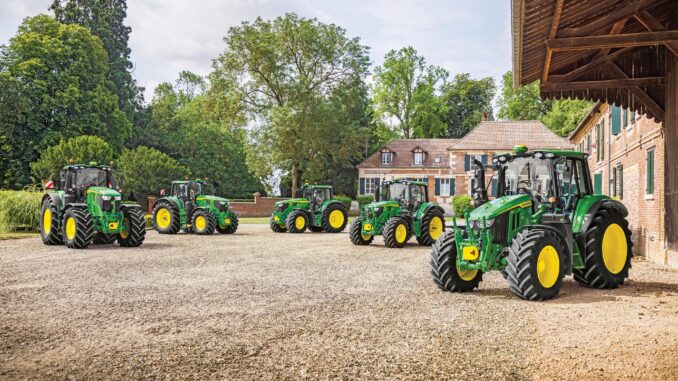
The John Deere 4400 is a 4000 Compact Series utility tractor built for acreage work, loader use, mowing, and light property maintenance rather than basic suburban lawn cutting. Deere-era specification sources list it with a Yanmar 1.6 L 3-cylinder liquid-cooled diesel, roughly 35.7 gross hp, and either a hydrostatic or 12-speed partially synchronized transmission, which makes it far more versatile than a typical lawn tractor.
For owners in the USA and Canada, the biggest day-to-day concerns are usually cold or slow starting, PTO and mower-deck issues, hydraulic leaks, charging problems, and wear in steering, driveline, or front axle components. This guide is structured around those real-world symptoms first, then covers maintenance intervals, parts-buying strategy, common DIY jobs, and a detailed FAQ in the same practical style used for owner-focused Deere guides.
General overview of the John Deere 4400
The John Deere 4400 sits in Deere’s compact utility lineup and was produced as part of the 4000 Compact Series from the late 1990s into the early 2000s. Available transmission choices and PTO ratings varied by configuration, with published sources listing about 29.5 PTO hp for gear models and 28.5 PTO hp for hydro models.
The main systems owners deal with on the John Deere 4400 are:
-
Engine and fuel system: Yanmar 3-cylinder diesel, glow-plug/cold-start related behavior, fuel filters, air filtration, and shutdown solenoid issues.
-
Drive system: hydrostatic or gear transmission, clutch/linkage on gear models, MFWD front axle components, brakes, and differential lock-related wear points.
-
PTO and mower system: mid-PTO/rear PTO configuration, deck belt and spindle issues on mower-equipped tractors, and attachment driveline setup.
-
Electrical system: battery, alternator/charging circuit, starter, safety interlock logic, and corrosion at grounds or terminals.
-
Hydraulic system: loader/3-point operation, hydraulic oil condition, filters, hoses, couplers, and seepage at fittings or cylinders.
Common service parts owners typically buy for a John Deere 4400 include engine oil and filters, fuel filters, air filters, hydraulic/transmission filters, belts, and mower blades or deck belts if the tractor is used with a mid-mount mower. Deere parts publications also show dedicated mower-deck documentation for 54-inch, 60-inch, and 72-inch decks used with 4100/4200/4300/4400/4500 tractors, so deck size matters before ordering blades or belts.
Troubleshooting the John Deere 4400 by symptom
The best way to diagnose the John Deere 4400 is to start with the symptom the owner actually sees: slow cranking, hard starting, black smoke, weak PTO performance, hydraulic loss, uneven mowing, or charging trouble. That approach prevents random parts swapping and matches the way Deere technical publications organize service information for the 4200, 4300, and 4400 family.
Main symptom groups for this model usually include:
-
Starting issues
-
Running and fuel-system issues
-
PTO and mower cut-quality problems
-
Vibration and unusual noise
-
Overheating, leaks, and hydraulic problems
-
Transmission or drive issues
-
Electrical and charging faults
Emergency John Deere 4400 repair needs
Some faults on the John Deere 4400 should be dealt with immediately because they create a safety risk or can quickly damage expensive components. Fuel leaks, hydraulic hose failures, severe driveline vibration, charging-circuit faults that leave the tractor dead in the field, and overheating all belong in the “stop and fix first” category.
John Deere 4400 starting issues
If the tractor cranks slowly, clicks, or will not fire, the immediate concern is whether the problem is electrical, fuel-related, or compression/cold-start related. Continuing to crank a weak system can flatten the battery, overheat cables, and make diagnosis harder.
Common causes:
-
Weak or aging 12-volt battery
-
Dirty battery terminals or bad ground
-
Faulty starter or solenoid
-
Fuel restriction from dirty filter or contaminated diesel
-
Air in fuel system
-
Cold-start or glow-related issues
-
Safety switch or PTO/interlock fault
Basic owner checks:
-
Confirm battery voltage and inspect both terminals and grounds for corrosion.
-
Verify PTO is disengaged and range/neutral controls are set correctly before retrying.
-
Check fuel level, fuel condition, and whether the filter bowl or lines show contamination or air.
-
Replace overdue fuel filters and bleed the fuel system if service history is unknown.
-
If cranking remains slow after a charged battery and clean cables, test starter draw and cable condition.
John Deere 4400 running issues
A John Deere 4400 that starts but runs rough, smokes, surges, or lacks power often points to air/fuel delivery problems before anything more serious. Diesel tractors that sit for long periods are especially prone to stale fuel, restricted filters, and sediment-related issues.
Common causes:
-
Dirty fuel filters
-
Water or algae contamination in diesel
-
Restricted air filter
-
Air leaks in fuel lines
-
Injector or pump-related issues
-
Incorrect throttle or shutdown linkage operation
Basic owner checks:
-
Replace the primary service filters if the service interval is unknown.
-
Inspect the air filter and pre-cleaner area for dust loading.
-
Drain contaminated fuel if water or debris is present.
-
Check for cracked hoses or loose clamps on the suction side of the fuel system.
-
Move to injector and pump diagnosis only after confirming clean fuel and air supply.
John Deere 4400 mower and PTO problems
When owners complain that the John Deere 4400 cuts poorly or bogs under the deck, the problem is often deck-condition related rather than engine failure. Deere parts sources confirm multiple compatible mower decks for this tractor family, so correct deck-specific parts are essential.
Common causes:
-
Dull or bent blades
-
Incorrect deck-level setting
-
Worn or slipping deck belt
-
Spindle bearing wear
-
PTO clutch or engagement issue
-
Grass buildup under the deck shell
Basic owner checks:
-
Confirm the exact deck model and cutting width before ordering parts.
-
Inspect blades for bends, damage, and incorrect installation orientation.
-
Check deck-belt condition, tension, and pulley alignment.
-
Clean heavy packed grass from the underside of the deck.
-
If the deck still loses drive, inspect PTO engagement and related linkage or clutch operation.
Vibration and noise
Strong vibration on a John Deere 4400 should never be ignored because it can damage shafts, bearings, deck components, and driveline parts. The source may be as simple as a damaged blade or as expensive as a worn U-joint, axle component, or PTO driveline problem.
Common causes:
-
Bent mower blade
-
Failing spindle or pulley bearing
-
Loose wheel hardware
-
Worn driveshaft U-joint
-
Front axle or steering wear
-
Attachment driveline imbalance
Basic owner checks:
-
Stop operation and inspect any rotating attachment first.
-
Check blade balance and spindle play on mower-equipped units.
-
Inspect wheel lug torque and tire condition.
-
Look for looseness in driveline U-joints and shaft guards.
-
Escalate to dealer-level driveline diagnosis if vibration persists with attachments removed.
John Deere 4400 overheating and leaks
Overheating and fluid leaks can quickly turn a manageable repair into a major one on the John Deere 4400. Diesel cooling systems, hydraulic hoses, and front radiator screens all need regular inspection, especially on tractors used for mowing or loader work in dusty conditions.
Common causes:
-
Plugged radiator screen or fins
-
Low coolant
-
Failing hose or clamp
-
Water pump issue
-
Hydraulic hose seepage or burst line
-
Engine oil or fuel leak onto hot surfaces
Basic owner checks:
-
Clean the grille, screen, and radiator fins carefully without folding them.
-
Check coolant level only when the engine is cool.
-
Inspect all visible hoses for wetness, cracking, or abrasion.
-
Repair fuel leaks immediately because of fire risk.
-
Do not continue operating a tractor that is overheating or losing hydraulic fluid rapidly.
Transmission and drive problems
Drive complaints vary depending on whether the John Deere 4400 has hydrostatic or gear transmission. Hydro models often show symptoms as weak pulling power or sluggish response, while gear models may show clutch, linkage, or shift issues.
Common causes:
-
Low or contaminated hydraulic/transmission oil
-
Restricted hydraulic filter
-
Linkage adjustment issues
-
Clutch wear on gear models
-
Front axle engagement problems
-
Brake drag or tire mismatch
Basic owner checks:
-
Confirm the transmission type before diagnosing.
-
Check fluid level and service history for hydraulic/transmission oil and filters.
-
Inspect pedals and linkages for free movement.
-
Verify tire sizes and pressures are correct for MFWD use.
-
Leave internal transmission work to a dealer or experienced compact-tractor technician.
Electrical problems
Electrical faults on the John Deere 4400 often show up as intermittent no-starting, weak charging, dead lights, or gauges behaving oddly. Published specs list a 12-volt system with alternator charging and about 40 charging amps, so battery and charging checks should be part of any electrical diagnosis.
Common causes:
-
Weak battery
-
Loose or corroded terminals
-
Faulty alternator or regulator
-
Bad ground strap
-
Damaged wiring
-
Failed safety switch or key switch
Basic owner checks:
-
Load-test the battery before replacing other electrical parts.
-
Check charging voltage with the engine running.
-
Clean and tighten grounds at the frame and engine.
-
Inspect harness areas near moving linkages or hot engine parts.
-
Replace switches only after verifying power and ground at the circuit.
DIY vs dealer on the John Deere 4400
The John Deere 4400 is realistic for a hands-on owner to maintain, but it is also a true compact utility tractor with heavier systems than a lawn tractor. Routine service, belts, blades, filters, hoses, batteries, and basic electrical repairs are usually good DIY work, while internal transmission, hydraulic pump, injector, and major front-axle or engine repairs are better left to a dealer or an experienced diesel/tractor shop.
Good DIY jobs:
-
Engine oil and filter changes
-
Air and fuel filter replacement
-
Battery and cable service
-
Blade replacement and deck cleaning
-
Deck-belt replacement on matched mower decks
-
Hose inspection and simple hose replacement
-
Basic switch and lighting repairs
Advanced DIY or dealer jobs:
-
Injector or injection-pump diagnosis
-
Hydrostatic transmission internal faults
-
Clutch splitting work on gear models
-
Hydraulic pump or SCV valve issues
-
Front axle teardown
-
PTO clutch/internal PTO repairs
-
Engine compression or head-gasket work
Skill level guide:
-
Beginner: filters, battery, blades, basic inspections.
-
Intermediate: belts, deck-level setup, switch diagnosis, minor hose replacement.
-
Advanced: driveline work, hydraulic troubleshooting, major electrical diagnosis, clutch or internal transmission repairs.
John Deere 4400 parts, OEM numbers, and what to check first
Before ordering parts for a John Deere 4400, gather the full tractor model, the product identification number, the transmission type, engine details, and any mower-deck or attachment model number. Deere’s documentation and parts listings for the 4400 family are configuration-sensitive, and mower parts especially depend on whether the tractor uses a 54-inch, 60-inch, or 72-inch deck.
Use OEM parts first for belts, safety switches, fit-sensitive deck parts, and hydraulic or driveline items where exact dimensions matter. Aftermarket parts are usually acceptable for some filters, blades, batteries, and tune-up consumables if the cross-reference is correct and the seller clearly matches the John Deere 4400 configuration.
Manuals and John Deere 4400 parts diagrams
The most useful references for John Deere 4400 owners are the official operator material, Deere technical publications, and Deere parts catalog resources for the tractor and mower deck. A Deere manual portal result, a technical manual covering the 4200/4300/4400 family, and Deere parts-catalog entries for compatible decks provide the core sources for service planning and parts lookup.
Useful sources:
-
John Deere manual viewer for operator information and routine maintenance guidance.
-
Technical manual covering 4200, 4300 and 4400 tractors for deeper troubleshooting and repair procedures.
-
Deere parts catalog entry for 54/60/72 mower decks used with 4400-family tractors for deck-specific parts identification.
-
Deere parts catalog entry for 48/54/60 mower decks and replacement decks for alternate deck configurations and parts families.
How to locate John Deere 4400 model, PIN, and engine numbers
These numbers matter because the John Deere 4400 was sold with different transmission and deck combinations, and Deere parts fitment often changes by serial range or component supplier. Ordering by “4400 only” is often not specific enough for filters, belts, switches, and attachment parts.
Use this process:
-
Find the tractor identification plate and record the full model and product identification number.
-
Record the transmission type, especially whether the tractor is hydrostatic or gear.
-
Locate the engine tag on the Yanmar diesel and note the model and serial.
-
If a mower deck is fitted, record the deck model and cutting width from its own tag.
-
Match those numbers to the Deere parts listing before buying anything beyond generic consumables.
Buying John Deere 4400 parts online and in stores
The best strategy is to identify the OEM number first, then compare dealer pricing with trusted aftermarket sources for non-critical consumables. For serial-sensitive or attachment-specific parts, the dealer counter is usually safer because a parts specialist can confirm fitment against the tractor PIN and deck model.
Buying options:
-
Online: use Deere parts diagrams first, then cross-check the exact OEM number on a reputable seller listing.
-
Dealer counter: best for hydraulic parts, switches, drivetrain items, and any part with serial-number breaks.
-
Retail stores: acceptable for batteries, fluids, and some filters if the packaging clearly lists the John Deere 4400 or exact OEM cross-reference.
Useful links:
Step-by-step fitting guide for common John Deere 4400 parts
These are the most worthwhile owner-level jobs because they solve many common complaints without tearing deeply into the tractor. Always verify part numbers by PIN and attachment model before starting.
Replacing the fuel filter on a John Deere 4400
A fresh fuel filter often fixes hard starting, poor throttle response, and power loss caused by restricted diesel flow. That makes it one of the first service jobs worth doing on an unfamiliar tractor.
-
Park safely, shut the engine off, and close any fuel shutoff if fitted.
-
Clean around the filter head before removal so dirt does not enter the system.
-
Remove the old filter and inspect the fuel for water, debris, or sludge.
-
Install the new filter, lubricating the gasket if required by the filter design.
-
Bleed or prime the fuel system as specified, then test-run and check for leaks.
Changing the air filter on the John Deere 4400
A restricted air filter can cause smoke, reduced power, and unnecessary fuel consumption on the diesel engine. Dusty mowing and loader work shorten air-filter life quickly.
-
Open the air-cleaner housing and remove the primary element carefully.
-
Inspect the housing for dust, chaff, or signs of poor sealing.
-
Replace the filter rather than blowing it out aggressively if it is heavily loaded or damaged.
-
Check any secondary element only as directed by the service procedure.
-
Reassemble carefully so the seal seats evenly.
Replacing mower blades on a John Deere 4400 deck
Sharp, straight blades restore cut quality and reduce deck vibration. Because the 4400 can use multiple deck sizes, confirm the deck model before buying blades.
-
Remove the key, disable PTO engagement, and support the deck safely.
-
Clean packed grass from around the blade hardware so the fasteners seat properly.
-
Remove each blade and inspect for bends, cracks, or badly worn sail edges.
-
Install matching replacement blades in the correct orientation and torque to spec from the deck manual.
-
Test for smooth operation and re-check cut height and level.
Replacing a John Deere 4400 mower deck belt
A worn deck belt often shows up as slipping in heavy grass, poor discharge, or blade speed loss. Deere deck documentation confirms the belt is deck-specific, so exact identification matters.
-
Record the exact deck model and cutting width before ordering the belt.
-
Remove belt guards and photograph the belt routing before disassembly.
-
Release spring tension carefully and remove the worn belt.
-
Inspect idlers, pulleys, and spindle bearings before fitting the new belt.
-
Install the new belt exactly to routing, restore tension, and test engagement at low speed first.
Maintenance to prevent repeat John Deere 4400 problems
Regular maintenance prevents most of the faults owners blame on age alone. On the John Deere 4400, the most important prevention areas are clean diesel fuel, unrestricted cooling airflow, correct hydraulic/transmission service, and deck or PTO upkeep when mowing attachments are used.
Focus areas:
-
Starting reliability: keep the battery charged, cables clean, and fuel filters fresh.
-
Power and running quality: service air and fuel filtration on time.
-
Overheating prevention: clean radiator screens and cooling surfaces regularly.
-
Drive performance: keep hydraulic/transmission oil and filters on schedule.
-
Cut quality: inspect blades, belt condition, spindle play, and deck cleanliness.
-
Electrical reliability: protect terminals and grounds from corrosion.
John Deere 4400 maintenance schedule and seasonal checklist
Deere technical material for the 4200/4300/4400 family emphasizes routine checks before use and timed service intervals for fluids, filters, and inspections. Exact intervals can vary by configuration and oil choice, so the operator’s manual and technical manual should always override a generic checklist.
Daily / before each use
-
Check engine oil level.
-
Check coolant level.
-
Check hydraulic/transmission fluid level.
-
Inspect for fuel, oil, or hydraulic leaks.
-
Clean grille screen or obvious debris from cooling areas.
Every 8–10 hours or frequent use
-
Grease loader, steering, or mower points as applicable to installed equipment.
-
Inspect tires and wheel hardware.
-
Check mower deck underside for buildup if mowing.
Every 25 hours
-
Inspect battery cables and clean if needed.
-
Check belt condition on mower-equipped units.
-
Inspect air intake system and dust-unloader areas.
Every 50 hours or yearly
-
Change engine oil and filter at the correct interval for oil type and usage pattern. Deere technical guidance notes different longer intervals may apply only when specified oil conditions are met.
-
Inspect fan-belt tension and general cooling-system condition.
-
Check brake and clutch or pedal/linkage operation.
Every 200 hours or similar major service interval
-
Replace fuel filters according to the manual schedule.
-
Replace air-cleaner elements as required by interval or condition.
-
Service hydraulic/transmission filters and fluid per the published schedule.
-
Inspect charging and starting system condition.
Seasonal checklist
-
Spring or preseason: full fluid-level check, battery test, fuel-system inspection, deck/blade service.
-
Mid-season: clean cooling pack, inspect belts and hoses, recheck blade condition and deck level.
-
Fall or storage prep: clean thoroughly, correct leaks, stabilize or refresh fuel strategy as appropriate, and charge or maintain the battery.
Repair, upgrade, or replace the John Deere 4400?
For a John Deere 4400, repair usually makes sense when the tractor is structurally sound and the issue is limited to service parts, hoses, deck components, electrical faults, or external hydraulic repairs. Upgrade makes more sense when the tractor still works but no longer fits the jobs being asked of it, while replacement becomes easier to justify when engine, transmission, and hydraulic system problems stack together at the same time.
Repair if:
-
The engine starts and runs well after routine fuel and air service.
-
Problems are limited to belts, blades, battery, hoses, filters, or switches.
-
Hydraulics and transmission still perform normally under load.
Upgrade if:
-
You need more loader capacity, PTO power, or modern operator features.
-
You are adding heavier implements than the 4400 was bought to handle.
Replace if:
-
The tractor has major engine wear plus transmission or hydraulic failure.
-
Repair cost approaches the value of a sound used compact tractor of similar size.
Expanded troubleshooting FAQ
1. Why will my John Deere 4400 not start?
On a diesel John Deere 4400, start with battery condition, cable connections, and safety-interlock position before assuming a fuel or starter problem. Slow cranking usually points to battery, cables, grounds, or starter draw, while normal cranking with no fire pushes diagnosis toward fuel delivery or cold-start issues.
2. Why does my John Deere 4400 crank slowly?
Slow cranking usually means voltage drop under load, most often from a weak battery, corrosion, or tired cables. Because the tractor uses a 12-volt electrical system with alternator charging, the fix is often found with a proper battery load test and voltage-drop check rather than random starter replacement.
3. Why does the John Deere 4400 start and then die?
This often happens when fuel flow is restricted or air is entering the diesel fuel system. Dirty filters, contaminated fuel, or suction-side leaks are common first checks, especially on tractors that have sat unused.
4. Why is my John Deere 4400 hard to start when cold?
Cold-start complaints usually come from weak cranking speed, marginal battery condition, or fuel-system issues that show up more in low temperatures. Start by confirming strong battery performance and clean fuel delivery before moving deeper into injection-related diagnosis.
5. Why is my John Deere 4400 blowing black smoke?
Black smoke usually means the engine is getting more fuel than clean air, or it is being heavily loaded. A dirty air filter, restricted intake, overloaded mower deck, or fueling issue should all be checked before suspecting major engine damage.
6. Why does my John Deere 4400 have low power?
Low power often comes down to restricted fuel flow, dirty air filtration, or an attachment demanding more than normal because of belt slip, dull blades, or buildup. The best sequence is air filter, fuel filters, fuel quality, then load-related checks.
7. Why is my John Deere 4400 surging at different throttle settings?
Surging can point to inconsistent fuel delivery, air leaks in the fuel system, or contamination in the diesel. If the tractor has been sitting, stale or water-contaminated fuel becomes more likely.
8. Why does my John Deere 4400 lose power under load?
If power loss happens mainly when mowing or using PTO equipment, inspect the attachment first. Deck drag, dull blades, wrong belt routing, or packed grass can overload the tractor even when the engine itself is healthy.
9. Why won’t the PTO engage on my John Deere 4400?
PTO problems can be mechanical, electrical, or linkage-related depending on the setup. Start with switch and safety inputs, then inspect linkage adjustment or clutch operation before assuming internal PTO damage.
10. Why is my John Deere 4400 cutting unevenly?
Uneven mowing is usually a deck setup problem rather than a tractor-engine problem. Check blade condition, tire pressures, deck level, and any spindle looseness before replacing parts.
11. Why does my John Deere 4400 leave strips of grass?
Stripping usually comes from dull blades, low blade tip speed, or incorrect deck overlap and level. A worn or slipping deck belt is another common cause on mower-equipped compact tractors.
12. Why does the John Deere 4400 mower deck belt keep coming off?
A belt that repeatedly comes off usually indicates pulley misalignment, worn idlers, bad bearings, incorrect routing, or the wrong belt for the deck model. Since Deere lists several deck options for the 4400 family, confirming the exact deck version is essential.
13. Why does my John Deere 4400 vibrate when mowing?
Most mowing vibration comes from bent blades, unbalanced blades, spindle-bearing wear, or wrapped debris around rotating parts. Shut it down immediately and inspect the deck before using it again.
14. Why is my John Deere 4400 noisy from the front axle area?
Noise at the front axle can come from MFWD components, bearings, steering wear, or driveline issues. If the noise changes with steering angle or front-drive engagement, axle and driveline inspection becomes a priority.
15. Why does my John Deere 4400 overheat?
Overheating usually starts with restricted airflow through the grille and radiator, low coolant, or cooling-system faults. Compact tractors used for mowing often pack the screen and radiator fins with debris faster than owners expect.
16. Why is my John Deere 4400 leaking hydraulic fluid?
Hydraulic leaks usually come from hoses, couplers, cylinder seals, or fittings rather than major internal failures. External leaks should be fixed quickly because low fluid can damage hydraulic performance and contaminate other components.
17. Why is the loader or 3-point hitch slow on my John Deere 4400?
Slow hydraulic response often points to low fluid, overdue hydraulic service, cold oil, or restriction in the filter or suction side. Start with fluid level and service history before blaming the pump.
18. Why won’t my John Deere 4400 move properly?
On hydro models, weak movement can come from hydraulic/transmission issues, while gear models may suffer from clutch or linkage faults. The first checks are fluid condition, linkage operation, and whether brakes are dragging.
19. Why does my John Deere 4400 lose drive going uphill?
This can indicate hydro weakness, low hydraulic oil, filter restriction, or traction and tire issues rather than a simple engine problem. If the engine holds rpm but ground speed falls away, transmission or hydraulic diagnosis moves higher on the list.
20. Why is my John Deere 4400 battery going flat?
A flat battery usually means poor charging, parasitic draw, or a battery that no longer holds capacity. Since published specifications show alternator charging around 40 amps, charging-voltage checks are a basic first step.
21. Why are the lights or gauges on my John Deere 4400 intermittent?
Intermittent electrical issues are commonly caused by dirty connections, weak grounds, rubbed-through wiring, or aging switches. Start with the simplest high-resistance points: battery posts, frame grounds, and harness plugs.
22. Why does my John Deere 4400 click but not crank?
A clicking sound usually means the solenoid is trying to work but full starter current is not getting through. Weak batteries, corroded terminals, bad grounds, or worn starter contacts are the usual suspects.
23. Why does my John Deere 4400 starter keep failing?
Repeated starter failure often means the real problem is elsewhere, such as low battery voltage, poor cables, or an engine that is hard to crank for another reason. Fix the root cause before fitting another starter.
24. Why is fuel leaking on my John Deere 4400?
Fuel leaks are an immediate repair item because diesel on hot surfaces and dirty engine bays is still a fire hazard. Check filter seals, hose connections, and any rubbed-through lines first.
25. Why is engine oil leaking on my John Deere 4400?
Oil leaks often come from hoses, seals, filter seating, or age-related gasket seepage. Clean the area first, then trace the highest wet point rather than guessing from where the oil collects.
26. Why does my John Deere 4400 smoke on startup only?
Brief startup smoke can happen more on older diesels, especially in cool conditions, but persistent smoke means something needs checking. Use color and duration as clues, then inspect air and fuel service condition first.
27. How often should I service a John Deere 4400?
Routine checks should happen before use, while oil, filters, and hydraulic service follow the operator and technical manual intervals for the exact configuration. Oil type and operating conditions can affect intervals, so Deere’s own chart should always govern final service timing.
28. What is the best first maintenance job on a used John Deere 4400?
If service history is unknown, start with engine oil and filter, fuel filters, air filter inspection, battery and cable cleanup, and a full fluid/leak inspection. That baseline service solves many complaints and makes later diagnosis far more accurate.
29. Are aftermarket parts okay for the John Deere 4400?
Yes, but only in the right places. Aftermarket filters, blades, and batteries can work well if the cross-reference is exact, while OEM is usually the safer choice for belts, safety parts, and fit-sensitive driveline or hydraulic items.
30. How do I find the right mower parts for my John Deere 4400?
Do not order by tractor model alone. Deere publishes separate parts information for different mower decks used with the 4400 family, so the deck model and width must be matched first.
31. Should I repair or replace my John Deere 4400?
If the tractor is sound overall and the issue is limited to service items, deck repairs, hoses, electrical work, or minor hydraulic fixes, repair is usually the better value. Replacement becomes easier to justify when major engine, transmission, and hydraulic repairs all arrive together.
32. Is the John Deere 4400 a good DIY tractor?
Yes, for an owner comfortable with compact-tractor service work. It is very suitable for routine maintenance and moderate repairs, but it still has enough hydraulic, driveline, and diesel-system complexity that some jobs are better treated as dealer-level work.
Common hydraulic pressure issues on John Deere 4000 series compact tractors
On 4000‑series John Deere compacts (like the 4200/4300/4400 family), “hydraulic pressure issues” usually show up as slow or dead loader/3‑point, chattering or whining relief valves, or functions that work fine cold but weaken as the oil heats up. Most problems trace back to basic flow/pressure losses (filters, oil, couplers, leaks) or to relief‑valve settings and internal leakage rather than an instantly “bad pump.”
Typical symptoms on 4000‑series compacts
Owners report broadly similar hydraulic behavior across small Deere compacts and other CUTs: loaders that will not lift or curl, 3‑point arms that quit, sudden loss of one function, or “lazy” hydraulics once hot.
Common visible symptoms:
-
Loader lifts but will not curl, or curls but will not lift.
-
Loader or 3‑point works cold, then slows or stalls as oil warms.
-
3‑point will not raise or drops erratically.
-
Steering gets heavy or jerky.
-
System makes a constant whining/squealing noise at the rear or under the seat when a function is held.
These same patterns show up repeatedly in general hydraulic troubleshooting guides and owner discussions, even when the example machine is not a Deere 4000 series.
Common root causes of hydraulic pressure loss
1. Loose or partially unplugged quick couplers
On compact tractors with quick‑detach loaders, one of the easiest “pressure issues” is simply a coupler that is not fully seated. A popular compact‑tractor troubleshooting video shows a front loader that will lift but not curl because a single hose at the loader coupler block has backed out just enough to choke flow.
What happens:
-
Oil cannot complete the circuit for one spool section.
-
One loader function is dead or very weak.
-
All hoses may “look” connected at a glance but one is slightly out.
Owner fix:
-
Shut the tractor off and jiggle the loader joystick to bleed trapped pressure.
-
Inspect the loader coupler block at the front or under the platform.
-
Push each quick coupler firmly until it clicks, focusing on the lower/awkward one that often backs out.
2. Leaks, low oil level, and aeration
General dealer‑level hydraulic troubleshooting guides emphasize that low fluid level, leak points, or air ingestion will quickly translate into weak hydraulics and cavitation noise.
Effects:
-
Loader and 3‑point slow or will not reach full height.
-
Pump may whine or chatter as it pulls air.
-
Hot oil exaggerates the loss because viscosity drops.
Checks:
-
Inspect hoses, cylinders, and fittings for external leaks.
-
Confirm reservoir level with 3‑point lowered and cylinders neutral.
-
Look for frothy or milky hydraulic oil, which indicates air or contamination.
3. Plugged suction or return filters and dirty lines
Blocked filters are a classic cause of low hydraulic pressure and flow on compact tractors. Troubleshooting guides flag plugged filters or dirty hydraulic lines as prime suspects.
Consequences:
-
Pump starves for oil on the suction side or cannot return oil freely.
-
Flow drops off and functions slow to a crawl.
-
Relief valves may chatter because the pump is straining.
Owner steps:
-
Replace hydraulic and transmission filters at the recommended interval or sooner if history is unknown.
-
Inspect any suction screens and clean as needed.
-
If the oil is visibly dirty or burnt, plan a full change after diagnosing the root cause.
4. Mis‑adjusted valves (3‑point rate/lock, remotes)
Many compact tractors, including Deere small chassis, have a 3‑point rate‑of‑drop or transport‑lock valve under the seat. A well‑known compact‑tractor tutorial demonstrates that closing this knob fully will “lock out” the 3‑point, making it appear that hydraulics have failed when the valve is simply shut.
Symptoms:
-
3‑point will not go up or down even though loader works.
-
No obvious noise change from the pump, just a dead hitch.
Fix:
-
Locate the small flow‑rate or lock knob under or beside the seat.
-
Turn it back out to restore flow to the 3‑point circuit.
5. Worn or mis‑set relief valves
Hydraulic specialists note that incorrect relief‑valve settings or contamination in a relief cartridge can cause the system to “dump” pressure too early, resulting in low working pressure at the loader, steering, or 3‑point.
What you see:
-
Functions move, but stall well below rated lift capacity.
-
Constant hissing or whining when a cylinder hits the end of stroke.
-
Gauge readings below spec at a convenient test port.
Typical causes:
-
Debris lodged in the relief-valve seat.
-
Spring fatigue or misadjustment after previous work.
6. Internal leakage in cylinders or valves
Internal bypass inside a cylinder or valve body is a frequent cause of “mystery pressure loss” when external leaks are absent. In a hydraulics Q&A, technicians explain that worn piston seals can allow oil to bypass inside a cylinder, so the pump still builds pressure but the cylinder cannot develop full force.
Clues:
-
Cylinder moves but stalls early or drifts under load without external leakage.
-
One loader arm drops faster than the other under weight (if cylinders differ in condition).
-
Pressure at the pump or main test port looks normal, but work output is low.
7. Pump wear or damage (true low‑output cases)
While owners often blame “the pump,” experienced mechanics and troubleshooting articles stress that pump replacement is typically the last conclusion after ruling out leaks, filters, couplers, valve issues, and internal leakage. Persistent low pressure at a properly chosen test point with correct oil, filters, and valves usually signals pump wear or drive problems.
Indicators:
-
Verified low pressure on a calibrated gauge at the specified test port, with relief settings confirmed.
-
Noise, heat, and metal contamination in the oil.
-
No improvement after filter changes and leak correction.
Basic diagnostic approach (owner‑level)
Across modern compact tractors, good practice is to follow a simple flow before touching relief settings or pumps. Dealer and service‑shop guides give similar sequences.
Recommended steps:
-
Verify oil level and type – correct level, correct spec oil, no obvious milkiness or burnt smell.
-
Check quick couplers and valves – fully seat loader and remote couplers; open any 3‑point flow/lock knobs.
-
Inspect for leaks and obvious damage – hoses, cylinders, fittings, and under‑seat valve areas.
-
Replace filters if overdue – suction and return filters according to the maintenance schedule.
-
Use a pressure gauge at a known port – compare system pressure against the spec for that 4000‑series model; look for relief‑valve noise when reaching the end of stroke.
-
Evaluate internal leakage – if pressure is good at the pump but work output is low, test suspect cylinders or valves for bypass.
For your own usage and content creation, the patterns above map neatly across 4000‑series CUTs: owner‑level fixes center on couplers, valves, fluid level, filters, and obvious leaks; true “pressure” faults that remain after those checks usually belong in a dealer/advanced‑DIY bucket because they involve relief calibration, cylinder testing, or pump replacement.