
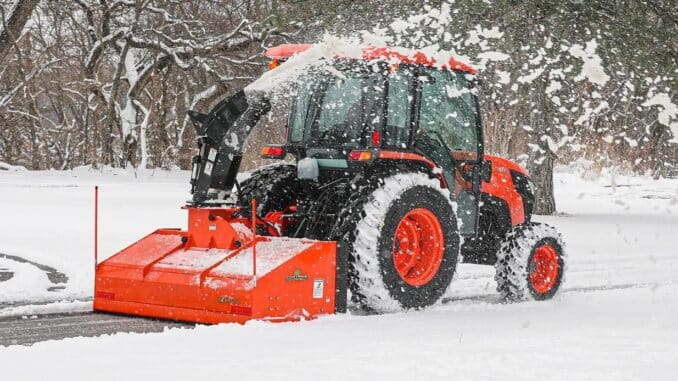
Kubota BX2751 Snow Blower Guide
The Kubota BX2751 is a front quick-hitch and subframe assembly, not the snow blower itself. It forms part of the mounting system used with compatible front-mounted attachments, including certain Kubota BX snow-blower configurations. A complete working setup also requires the correct blower, tractor-specific drive components, hydraulic connections, and controls.srm.magic.ms+1
That distinction matters when buying used equipment. A listing advertised as a “BX2751 snow blower” may include the blower and hitch together—or only part of the equipment needed to operate it.
This guide explains how to identify the components, verify compatibility, inspect a used package, prepare the tractor, and operate and maintain the snow blower safely.
What the Kubota BX2751 Does
The BX2751 provides the front mounting interface and supporting structure for an approved attachment. It is separate from the snow blower’s intake housing, augers, discharge fan, and chute.
Keep these components distinct when identifying a package:
| Component | Function | What to verify |
|---|---|---|
| BX2751 quick hitch and subframe | Supports and connects the approved front attachment | Correct version, complete mounting hardware, sound structure |
| Snow-blower head | Collects and discharges snow | Actual model and serial number, condition, approved application |
| Mid-PTO drive kit | Transfers mechanical power toward the front attachment | Correct application for the tractor and attachment |
| Connecting driveline | Connects the front drive arrangement to the blower | Correct shaft, locking couplings, guards, and condition |
| Hydraulic lift connections | Raise and lower the front assembly | Required valve arrangement, compatible couplers, sound hoses |
| Chute controls | Direct discharged snow | Complete controls appropriate to the blower and tractor |
The hitch number does not establish clearing width, intake height, chute-control specification, or tractor compatibility. Those details must be checked against the blower identification plate and the manuals for the complete installation.
Kubota BX2751 Compatibility and Snow-Blower Identification
Identify the blower separately
The BX2750 family is a relevant starting point when identifying a blower associated with this front-hitch system, but suffixes and serial numbers matter. For example, the BX2750D is identified as a 50-inch front-mounted snow blower; that specification belongs to the blower, not the BX2751 hitch.shop.kubotausa+1
Do not assume every BX2750-family blower has identical parts, controls, or installation requirements. Record the complete designation, including its suffix, before ordering components.
For any package, collect:
-
Tractor model and serial number.
-
Snow-blower model and serial number.
-
Hitch identification and applicable serial information.
-
Drive-kit identification.
-
Details of manual, hydraulic, or electrical chute controls.
-
Photographs of mounting brackets, shafts, couplers, and retaining hardware.
Do not assume every BX tractor uses the same drive kit
Kubota application information distinguishes between BX2752 and BX2753 mid-PTO kits for different tractor applications. The presence of a BX2751 hitch therefore does not prove that the accompanying drive kit fits your tractor.srm.magic.ms
Have an authorized dealer verify the complete combination, especially when transferring equipment between tractor generations. A shaft that appears close to the right length is not sufficient evidence of compatibility.
Confirm PTO location, operating speed, shaft specification, and installation requirements in the applicable manuals. Do not substitute rear-PTO components or modify a driveline to make an unverified combination fit.
Check conflicts with existing equipment
Before purchase or installation, establish whether the approved configuration requires removal of:
-
The loader or particular loader components.
-
The mid-mount mower.
-
Mower mounting or lift hardware.
-
A grille guard or other front accessories.
-
Equipment associated with another attachment system.
Treat these as configuration checks, not universal removal instructions. Follow the instructions for your tractor, hitch, drive kit, and blower together.
Buying a Used Kubota BX2751 Snow-Blower Package
A complete, compatible package can be more useful than a cheaper blower head with missing installation parts. Price the missing components before agreeing to buy.
Inspect the hitch and subframe
With the equipment lowered and securely supported, inspect:
-
Mounting brackets for distortion.
-
Welds and surrounding metal for cracks.
-
Pin holes for elongation.
-
Pins, retainers, and locking hardware for wear or absence.
-
The latch for complete engagement.
-
Hydraulic hoses for cracking, abrasion, or leakage.
-
Cylinder rods for pitting and damage.
-
Driveline supports and guards for missing pieces.
Fresh paint around a heavily loaded joint deserves closer inspection. Reject improvised mounting plates or structural repairs that cannot be verified as safe.
Inspect the blower head
Check the cutting edge, skid shoes, auger flighting, housing, discharge chute, and visible drive components. Look for impact damage, excessive corrosion, oil leakage, loose bearings, and evidence of repeated contact between rotating parts and the housing.
Ask whether the correct shear bolts are installed. Ordinary bolts are not an acceptable substitute simply because their diameter fits.
Any demonstration should take place outdoors with guards installed and bystanders clear. Never approach a turning shaft or reach into the intake to investigate a noise.
Mounting and Preparing the Front Attachment
Use the installation sequence in the applicable manuals. The following checks supplement those instructions rather than replacing them.
-
Park on firm, level ground and secure the tractor against movement.
-
Disengage the PTO, lower attachments, shut off the engine, and remove the key before hands-on work.
-
Install the approved subframe and drive components with the specified hardware.
-
Connect the blower using the prescribed hitching procedure.
-
Confirm that the hitch latch engages completely and its retaining device is fitted.
-
Connect the driveline and verify that every locking coupling is fully secured.
-
Route hydraulic hoses and control components clear of pinch points and rotating parts.
-
Reinstall every guard before testing.
If a fitting operation requires hydraulic movement, remain at the controls and keep everyone outside the attachment’s movement zone. Shut down again before approaching the connection.
The BX2750D attachment procedure specifically requires a locked hitch latch and securely engaged driveline couplings. Neither the hitch nor the shaft should be treated as secure merely because it appears seated.kubotabooks
Raise and lower the assembly cautiously during the prescribed functional test. Watch for hose stretching, control interference, binding, or contact with the tractor.
Never work beneath a blower supported only by hydraulic pressure. Use suitable stands or stable blocking where access underneath is necessary.
Traction and Ballast for the Kubota BX2751 Setup
Front attachment weight changes tractor balance, particularly when the blower is raised. Required counterweight must be established for the actual tractor and attachment combination.
Counterweight and grip serve different purposes
Counterweight helps provide the specified machine balance. Chains and suitable tires improve available grip. One does not automatically replace the other.
Check the approved requirements for:
-
Rear counterweights or a ballast box.
-
Wheel weights or liquid tire ballast.
-
Permitted rear implements used as ballast.
-
Axle, tire, hitch, and overall machine loading.
Do not assume that leaving a heavy rear attachment installed provides the correct ballast. Its weight, position, and approval for the configuration all matter.
Check chain clearance before use
Where chains are approved, size them for the actual tires and verify clearance throughout the relevant steering and suspension or axle movement.
Watch for interference with fenders, hoses, brake components, and steering parts. Recheck security after initial use.
Steel chains can mark asphalt, concrete, pavers, and decorative surfaces. Evaluate surface protection alongside traction needs rather than assuming the most aggressive chain is always best.
Four-wheel drive does not eliminate sliding, poor steering, or increased stopping distance. Travel slowly, avoid abrupt inputs, and keep the blower low during transport while maintaining necessary ground clearance.
Clearing Snow with the Front-Mounted Blower
Match ground speed to the snow load
A two-stage blower uses augers to feed snow to a separate discharge fan. Forward speed must allow that system to process the incoming material.
Engage the PTO at the speed specified in the manuals, then increase engine speed as directed. For the BX2750D, the operating instructions call for engagement at idle and operation at or near full throttle; low operating speed can encourage clogging in wet, sticky snow. Apply those instructions only to the relevant approved configuration.kubotabooks
Reduce forward travel speed when snow becomes deeper or heavier. On a hydrostatic tractor, use the travel control to reduce feed rate rather than dropping below the prescribed blower operating speed.
Handle drifts without pushing
Do not use the blower housing as a dozer blade. Forcing it into a packed bank can overload the drive and damage the attachment.
Take narrower passes when the intake is overloaded. Where the blower manual permits, remove deep snow in layers, keeping the attachment within its approved operating range.
Plan the discharge direction before entering the snow. Avoid throwing material toward people, animals, vehicles, windows, roads, or areas where it will create another hazard.
Set skid shoes for the surface
Adjust both skid shoes evenly so the cutting edge remains level.
-
On smooth pavement, use the clearance specified for the blower and surface.
-
On gravel or uneven ground, increase cutting-edge clearance as instructed to reduce stone pickup.
-
On decorative paving, assess shoe and cutting-edge contact before clearing the full area.
Loose gravel remains a projectile hazard even with increased clearance. Mark curbs, drainage structures, drop-offs, and other hidden obstacles before snowfall.
Choose the right tool for the property
A compatible front blower suits driveways and open areas where moving snow beyond the cleared edge is valuable. Its forward-facing working position can also reduce the repeated rearward viewing associated with conventional rear-mounted blowers.
A separate walk-behind machine may be more practical for narrow paths, enclosed spaces, or areas inaccessible to the tractor. Rear three-point blowers and inverted rear blowers use different mounting and drive arrangements; they are not attachments for the BX2751 hitch.
Daily Checks and Safe Blockage Removal
Before starting
-
Confirm the hitch latch, retaining hardware, and driveline locks are secure.
-
Inspect guards, hoses, shear bolts, skid shoes, and chute controls.
-
Check for ice binding the augers or fan.
-
Inspect tires, chains, ballast, and wheel hardware.
-
Clear lights, steps, cooling-air openings, and the operator area.
-
Keep bystanders outside the working and discharge areas.
Warm-up and working
Follow the tractor’s cold-start procedure and warm the engine and hydraulics gradually. Test steering, braking, lift response, and chute operation before entering deep snow.
Stop for unusual vibration, contact noises, hydraulic leakage, or a sudden change in performance. Never use engine power to break frozen rotating parts free.
Use the tractor’s ROPS and seat belt as instructed. Wear close-fitting winter clothing, suitable hearing and eye protection, and boots that preserve pedal control.
Clear a blockage safely
-
Stop travel and disengage the PTO.
-
Park securely and lower the attachment.
-
Shut off the engine and remove the key.
-
Wait until every moving component has stopped.
-
Use a suitable long clean-out tool as directed in the attachment manual.
-
Inspect for damage before restarting from the operator’s seat.
Never put hands or feet into the intake or discharge chute. A stopped mechanism must still be treated as hazardous.
Maintenance and Storage for the Kubota BX2751 Assembly
Maintain the hitch and driveline
Clean and inspect pins, pivots, latch components, shaft couplings, and guards. Lubricate the specified points and sliding driveline sections at the intervals in the relevant manuals.
Inspect hydraulic hoses without touching suspected leaks. High-pressure fluid injection requires immediate medical attention; damaged pressure lines and uncertain hydraulic faults need qualified repair.
Do not weld a cracked hitch, straighten a distorted mounting structure, or modify a PTO shaft as routine owner maintenance.
Service the blower by its own model
The blower manual governs its gearbox lubricant, chain adjustment, lubrication schedule, and shear-bolt specification. Those requirements cannot be established from the BX2751 designation.
When a shear bolt fails, isolate power, remove the obstruction safely, and investigate the cause. Use the specified replacement and follow any instructions for repositioning the augers.
Repeated bolt failure, fan contact, oil loss, or persistent vibration warrants professional inspection.
Prepare the tractor for winter operation
The BX2751 has no engine or fuel system. Winter engine maintenance applies to the host tractor.
For the diesel-powered BX tractor carrying the attachment:
-
Use clean, seasonally appropriate diesel.
-
Inspect and service the water separator and filters as directed.
-
Use only approved fuel treatments at their labeled rates.
-
Maintain the specified engine oil and transmission or hydraulic fluid.
-
Check coolant condition and freeze protection on the liquid-cooled engine.
-
Inspect the battery, cables, grounds, and approved heater equipment.
Apply preventive anti-gel treatment before fuel gels, following product and tractor requirements. Never add gasoline or unapproved solvents to diesel fuel.
Use a maintainer compatible with the installed battery chemistry. Do not charge a frozen, cracked, swollen, or leaking battery.
Store the attachment securely
Remove snow, dirt, and salt residue, then allow the equipment to dry. Lubricate specified points, inspect wear parts, and protect exposed metal with an appropriate product.
Disconnect components using the prescribed removal procedure. Cap hydraulic couplers, protect electrical connectors where fitted, and support the attachment on approved stands or stable blocking.
Keep the cutting edge and vulnerable parts away from damp ground. Never store the blower suspended by the tractor’s hydraulic lift.
Before returning it to service, inspect for corrosion, rodents, damaged hoses, missing guards, and seized controls. Recheck all mounting and driveline connections before the first operational test.
Troubleshooting
| Symptom | Likely causes | Safe first checks | When professional service is needed |
|---|---|---|---|
| Blower stops turning | Failed shear bolt, disconnected drive, obstruction | Shut down; inspect accessible shear bolts and couplings | Repeated failures, damaged shafts, internal drive faults |
| Poor discharge | Excessive feed rate, incorrect operating speed, blockage, wear | Verify prescribed speed; reduce travel speed; inspect after shutdown | Persistent loss of performance or fan damage |
| Repeated clogging | Wet snow, overload, restricted chute | Take narrower passes and inspect the chute safely | Mechanical damage or recurring problems despite correct operation |
| Strong vibration | Ice buildup, loose hardware, damaged auger or fan | Stop immediately and inspect externally | Bent parts, bearing damage, unresolved vibration |
| Hitch will not latch | Misalignment, packed ice, worn or distorted components | Lower and isolate equipment; clean and inspect | Structural damage or incomplete engagement |
| Lift is slow or erratic | Cold fluid, poor connection, leakage, hydraulic fault | Follow warm-up procedure; inspect couplers and fluid level | Pressure leaks, persistent weakness, internal faults |
| Tractor spins or steers poorly | Unsuitable traction, incorrect ballast, excessive snow load | Check approved ballast, chains, tires, and pass width | Unresolved balance or steering concerns |
Kubota BX2751 FAQs
Is the Kubota BX2751 a snow blower?
No. It is a quick-hitch and subframe assembly. Identify the separate blower model before checking dimensions, maintenance requirements, or replacement parts.
Will a BX2751 fit every Kubota BX tractor?
Do not assume universal compatibility. Verify the tractor, hitch version, blower, drive kit, and required controls as one complete installation.
Do I need a separate mid-PTO drive kit?
An approved front-blower installation needs the correct power-transfer components. A used package may already include them, but the hitch alone does not prove that the necessary drive kit is present or correct.
Can I use a rear snow blower with this hitch?
A rear three-point blower does not mount to the BX2751 front hitch. It requires its own approved rear hitch, PTO, driveline, and tractor match.
Can the blower clear a gravel driveway?
Where permitted by its manual, adjust the skid shoes to provide the specified clearance above gravel. Proceed cautiously because stones can still enter the intake and be thrown.
How much rear ballast is required?
Use the requirement for the exact tractor and front attachment. There is no universal ballast quantity for every BX2751 installation.
Why does the snow blower keep clogging?
Excessive forward speed, unsuitable operating speed, wet snow, and restricted discharge can contribute. Reduce feed rate and inspect safely; never reach into a blockage.
Can ordinary bolts replace broken shear bolts?
No. Use the specified shear bolts for the actual blower model and location. An unsuitable substitute can defeat the intended overload protection.
Priorities Before the Next Snowfall
Identify the blower separately from the BX2751 hitch, verify the complete mounting and drive package, and resolve worn latches, missing guards, questionable shafts, or ballast uncertainty before operation.
Keep the tractor, hitch, drive-kit, and blower manuals together. Correct installation and safe power isolation matter more than getting an incomplete used package working quickly.